
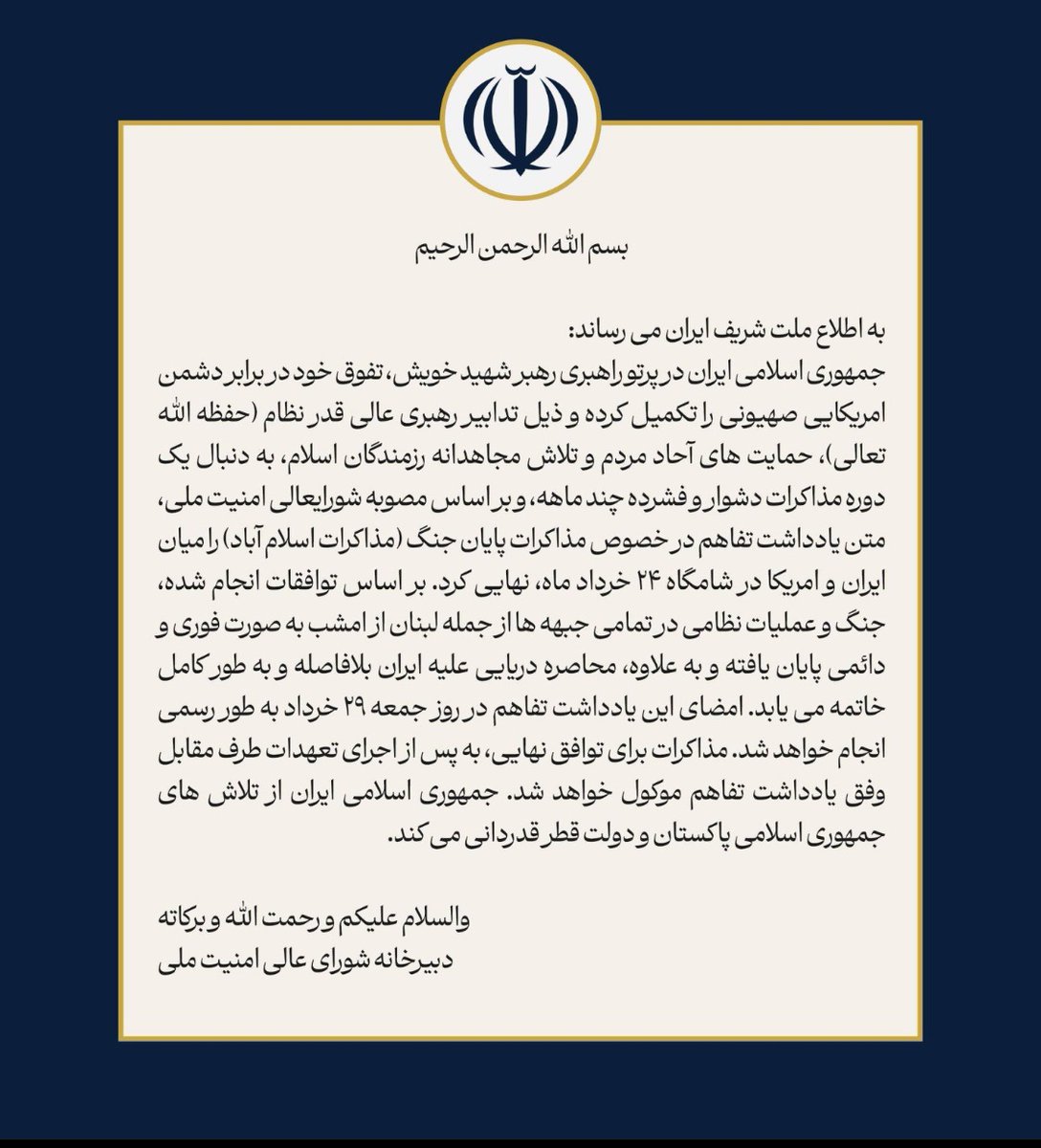
“War and military operations on all fronts, including Lebanon, end immediately and permanently from tonight. Naval blockade lifted immediately.
Official MoU signing is on Friday, June 19. That final deal will only happen after the U.S. fulfills its commitments.”
Jackson Wilberforce Wright III retweeted
Meh
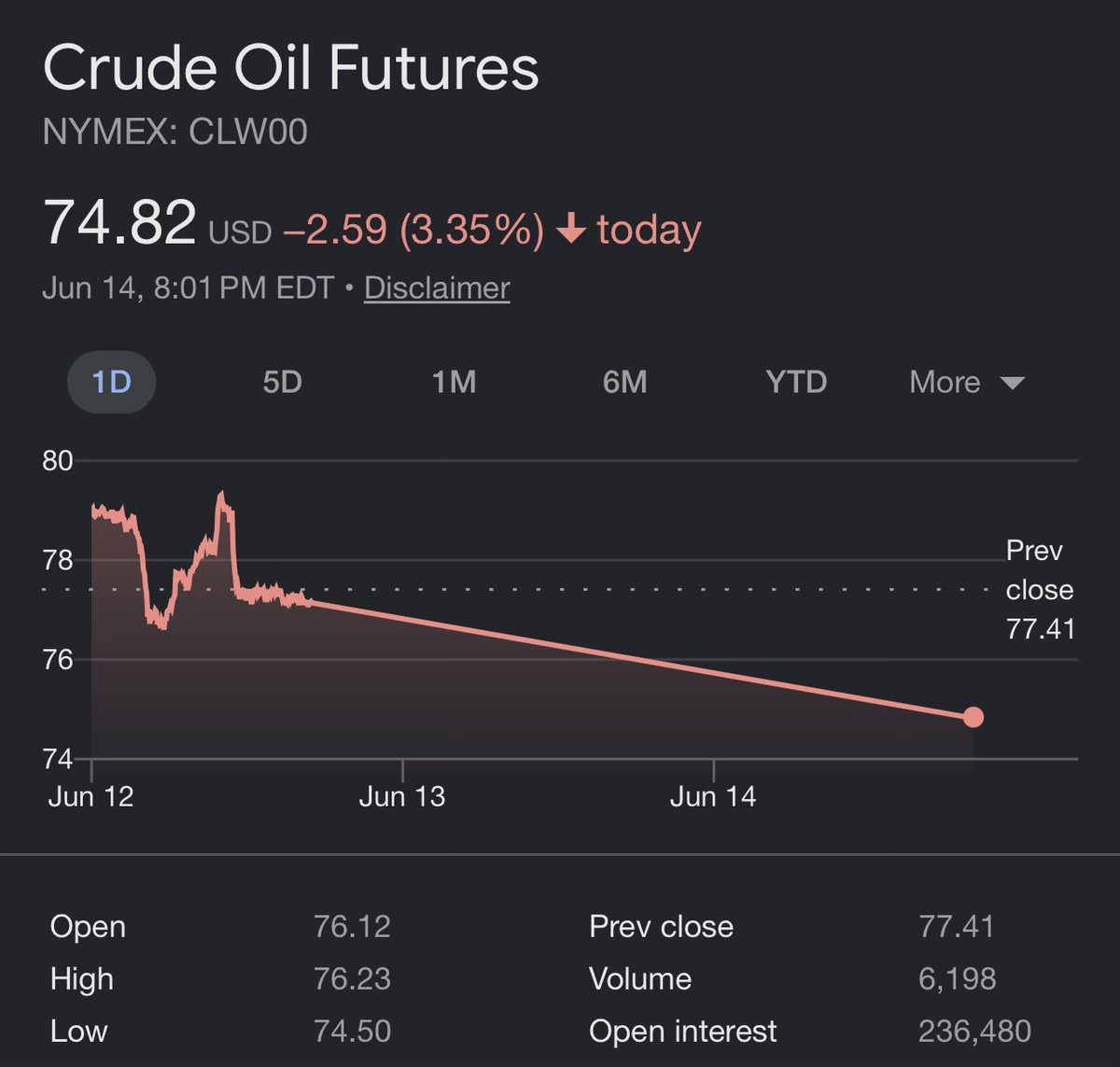
Market isn’t reading much into this deal announcement
Nor am I
I don’t expect Iran to live up to any commitments
I do expect their proxies to remain active and accuse others of breaking commitments
So everyone will wait to see if the Strait fully reopens
1
2
20

How many Commitments dob the LSU Tigers get this week?
0%
1
0%
2
0%
3
0%
4
0 votes • 23 hours
1

A ceasefire can pause a conflict, but it doesn't erase the underlying issues, the real measure of success is what happens after the headlines whether commitments are kept and lasting stability follows
1
2
RESTORE DEMOCRACY IN SIERRA LEONE retweeted

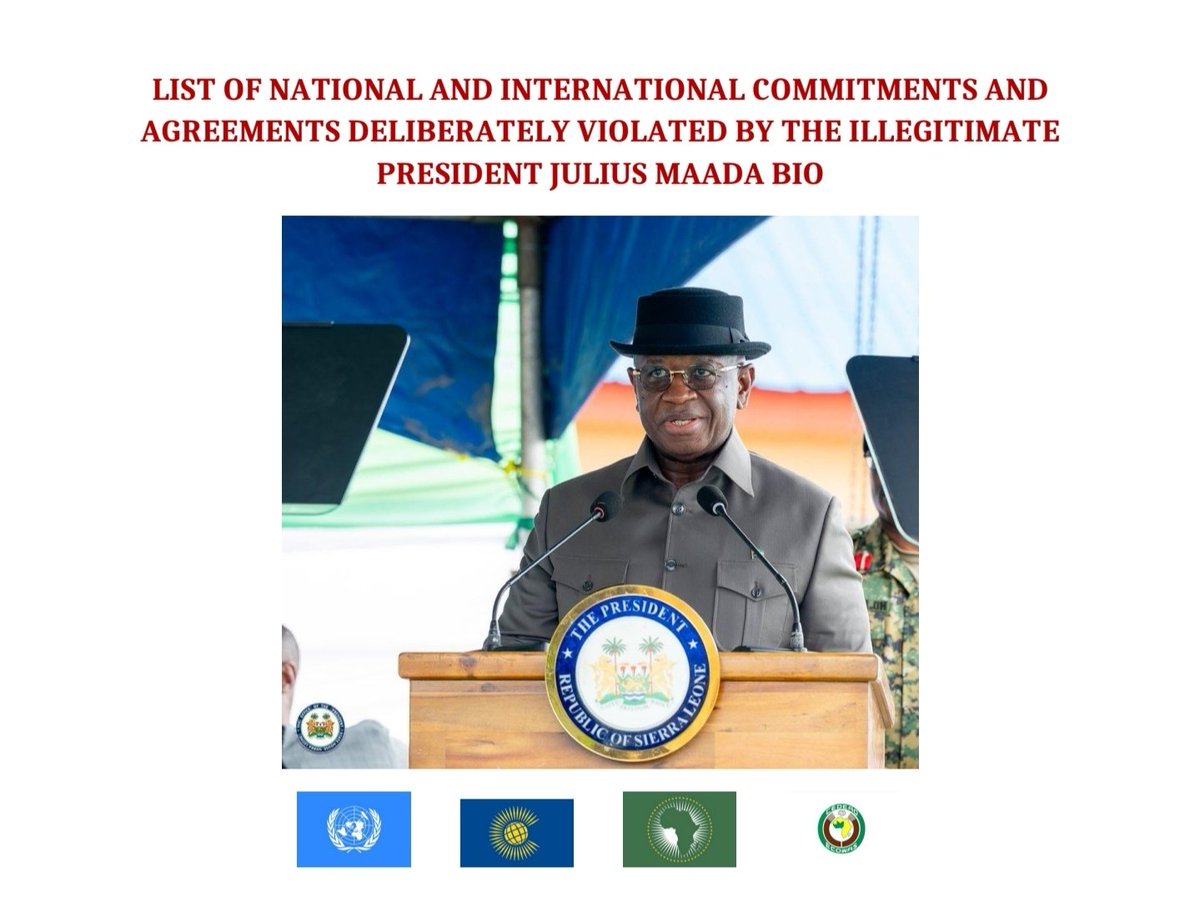
LIST OF NATIONAL AND INTERNATIONAL COMMITMENTS AND AGREEMENTS DELIBERATELY VIOLATED BY THE ILLEGITIMATE PRESIDENT JULIUS MAADA BIO
We are publishing a comprehensive list of national constitutional provisions and international commitments and agreements that the illegitimate President @julius_maadabio has deliberately violated and systematically refused to honour or implement.
The compromised President Julius Maada Bio continues to flagrantly breach multiple nationally and internationally ratified instruments, including the following:
1. U.S. @congressdotgov House Resolution 548, concerning commitments on the conduct of the 2023 Sierra Leone elections, introduced on June 23, 2023 (available via: congress.gov/bill/118th-con…).
2. United Kingdom- Commonwealth National Electoral Pledge framework, signed on 24 May 2023 (available via: thecommonwealth.org/news/com……).
3. Agreement for National Unity, signed on 18 October 2023 under the auspices of ECOWAS, the African Union, and the Commonwealth (available via: drive.google.com/file/d/1chQ……).
4. Tripartite Investigation Report, signed on 1 July 2024 by the United Nations @UNSierraLeone, the Government, and the APC (available via: drive.google.com/file/d/1I8K……).
4. Official Joint Communiqué of the 2025 EU–Sierra Leone Political Partnership Dialogue (dated 16 December 2025), which serves as a public declaration of renewed political will and concrete cooperation between the EU and Sierra Leone to robustly tackle organised crime and illicit drug trafficking (available via link:eeas.europa.eu/delegations/s…).
5. Grave violations of the Constitution of Sierra Leone and the Public Elections Act 2022 in the conduct of elections.
These constitute a litany of national and international obligations that the illegitimate President Julius Maada Bio has deliberately violated and refused to uphold. Despite substantial resources and diplomatic efforts by the international community to ensure his compliance with democratic norms, particularly in combating illicit narcotics trafficking and extraditing Europe’s most-wanted drug baron BOLLE JOS LEIJDEKKERS, he has failed to cooperate in good faith. This recalcitrance undermines Sierra Leone’s potential to become a stable, prosperous, and attractive destination for development and investment.
We urgently call on the international community, especially the moral guarantors the @UN, @commonwealthsec, @_AfricanUnion, and @ecowas_cedeao to revoke diplomatic immunity and activate enforcement mechanisms. Julius Maada Bio is not the legitimate President of Sierra Leone. The Tripartite Report irrefutably shows that DR. SAMURA M.W. KAMARA won with 57.15% of valid votes against Julius Maada Bio’s 39.80%. This is the only verified, certified, and constitutionally mandated document signed by all parties. Sierra Leoneans demand an immediate transfer of power to the rightful winner to end cocaine trafficking and restore constitutional order. @realDonaldTrump @Keir_Starmer @EmmanuelMacron @bundeskanzler @MinPres @AlboMP @sanchezcastejon @antonioguterres @RoyalFamily @koninklijkhuis @vonderleyen @eucopresident @kajakallas @JDMahama @officialABAT @WilliamsRuto @ymahmoudali @SecRubio @YvetteCooperMP @FBIDirectorKash @SGCommonwealth @SenateForeign @EUatUN @USAmbUN @UKUN_NewYork @franceintheus @EUtoAU @UK_AfricanUnion @US_AU @StateDept @EU_Commission @UN_UNOWAS @EUinSierraLeone @UKinSierraLeone @USEmbFreetown @IrlEmbFreetown @GERinSalone
2
2
1
213

For many years, many Americans believed that supporting Israel was ultimately in America's national interest.
After the Gaza war, however, many Americans began questioning that assumption. They saw rising debt, costly military commitments, and growing international isolation, and started asking whether these policies had truly benefited the United States.
Donald Trump himself has repeatedly argued that America spent more than $8 trillion on Middle Eastern wars during the first quarter of the 21st century.
Personally, I once believed that the damage America suffered from its close alignment with Israel was largely accidental — the unintended consequence of political decisions.
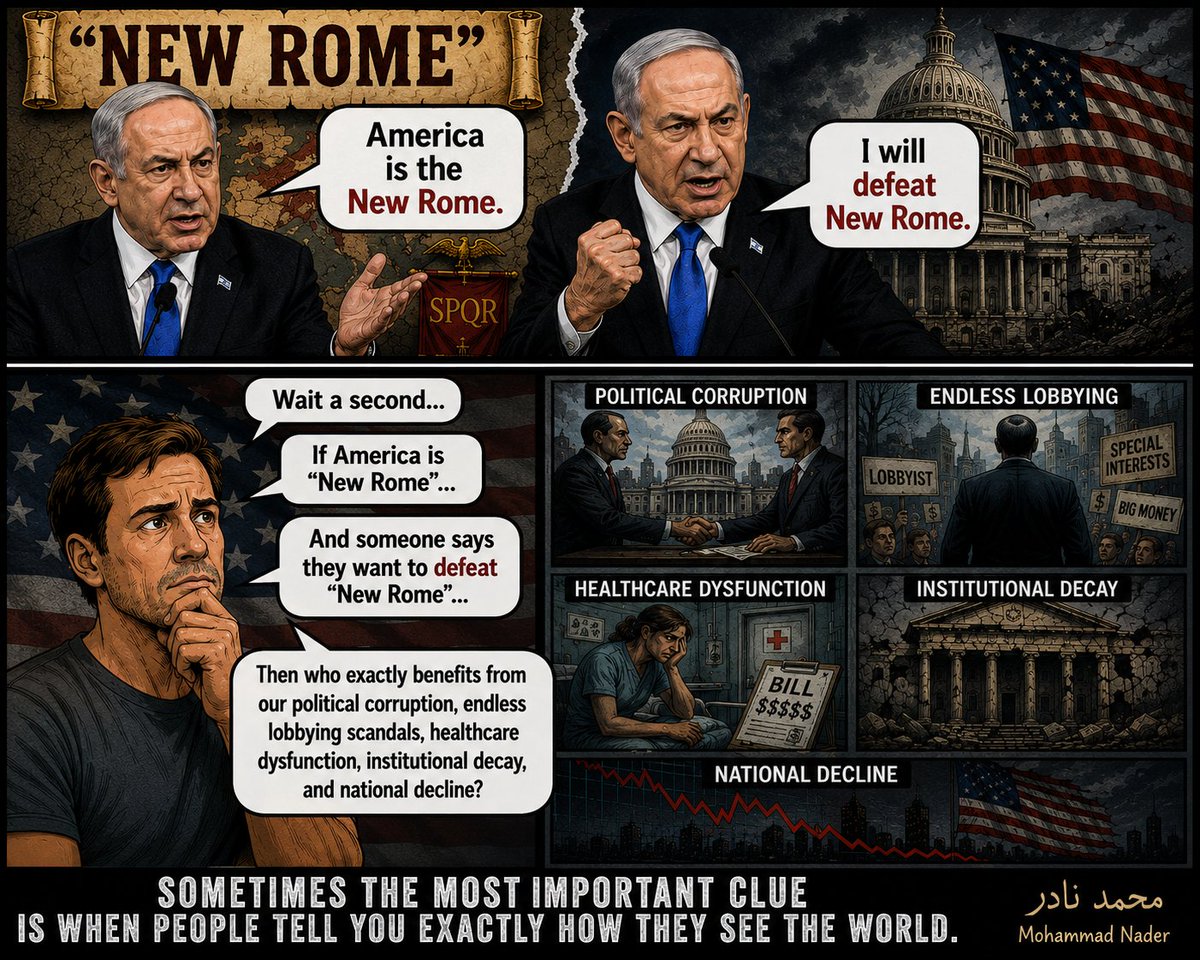
But after watching numerous speeches, interviews, and religious discussions, including statements attributed to Benjamin Netanyahu and various rabbis, I began to wonder whether some influential figures see history through a very different lens — one involving concepts such as “New Rome,” “Edom,” and prophetic struggles between civilizations.
Some Christian Zionists support Israel because they believe it helps fulfill biblical prophecy and accelerates events associated with the return of Christ.
At the same time, some critics argue that certain religious and ideological narratives view America and Europe as successors to ancient powers whose decline is part of a larger prophetic vision.
There is also another dimension that many people rarely discuss: consequences.
The United States has participated in wars, interventions, sanctions, and military campaigns that have affected millions of lives across multiple continents. Millions have been killed, displaced, or otherwise harmed by conflicts in which America played a role.
Many people around the world believe that actions on such a scale inevitably produce consequences — whether one calls them historical consequences, moral consequences, political blowback, or simply karma.
From this perspective, America's current challenges are not only the result of foreign influence, lobbying, or political corruption. They may also be the result of decades of decisions whose costs eventually returned home.
The question is no longer whether America paid a price.
The question is: how much of that price came from external influences, and how much came from America's own actions?
Has the picture become clearer yet?

1
1
21

Thailand also thanks the Brits for their netzero commitments, it allows the people here to continue running their car / motorbike engines when they go for a stroll around the supermarket.
1

Geneva & Normandy format commitments
Promised de-escalation, prisoner exchanges, and respect for Ukrainian sovereignty.
Russia escalated hostilities and refused to withdraw forces or disarm proxy militias.
UN Charter & International Law
Forbids aggressive war and territorial conquest.
Russia’s full-scale invasion (Feb 24, 2022) is a blatant violation of Article 2(4) of the UN Charter
Grain Export (Black Sea) Agreement (brokered by UN & Turkey)
Guaranteed safe export of Ukrainian grain to global markets.
Russia repeatedly blocked or attacked ports and ships, and finally withdrew from the deal in July 2023.
International Humanitarian Law (Geneva Conventions)
Prohibits targeting civilians, deportations, and destruction of non-military infrastructure.
Systematic violations: attacks on civilian areas, forced deportation of Ukrainian children, and torture of POWs.
1

US officials tonight deny Iranian media reports that Tehran gets $12 bln immediately, asserting that the deal is performance-based and Iran gets relief when it implements its commitments
84

I think Nishi has been struggling a little bit with Ichi, if I'm being honest, the dual workload cannot be easy (especially with her ADDITIONAL commitments to Iruma spinoffs), but her relationship writing is definitely her strength, I just need her to sharpen up here
1
1
65

More on the Iran Deal:
"The Deal with the Islamic Republic of Iran is now complete. Congratulations to all!" Trump said Sunday on Truth Social, adding that he had agreed to end the U.S. naval blockade on Iranian ports in exchange for Iran's reopening of the Strait of Hormuz and a continued halt to fighting.
The two sides plan to keep discussing the limits to Iran's nuclear program that Trump has sought. They're scheduled to sign the agreement on Friday. The timing of the announcement on Sunday allowed Trump to celebrate the deal on his 80th birthday.
U.S. officials said the deal was in jeopardy earlier in the day after Israel launched an air strike in the southern suburbs of Beirut, Lebanon's capital. As Iran prepared a retaliatory strike, Trump publicly rebuked Israeli Prime Minister Benjamin Netanyahu for endangering the talks.
"After the Israelis struck Beirut, we were very worried," Vice President JD Vance said in an interview with Fox News after the deal was announced. "We saw a lot of evidence that the Iranians were going to launch a large number of missiles at the Israelis."
During what Iran's deputy foreign minister, Kazem Gharibabadi, said were more than 14 hours of talks on Sunday, the Iranians ultimately stood down. They said the U.S. had made last-minute concessions in return, including speeding up the end of the naval blockade.
"The naval blockade against Iran will end immediately and completely," Iran's Supreme National Security Council said in a statement, according to the semi-official Fars news agency.
Pakistani Prime Minister Shehbaz Sharif said on social media that both sides "have declared the immediate and permanent termination of military operations on all fronts, including in Lebanon," and that an official signing ceremony will be on Friday in Switzerland. Mediators will hold a series of meetings this week, Sharif said.
The deal appeared to leave significant areas of disagreement unresolved and subject to further negotiations, especially Iran's nuclear program and the wide range of U.S. sanctions that have been imposed on Tehran. Gharibabadi said his government expected to discuss a full lifting of U.S. sanctions in talks he said would take place over the next 60 days, according to IRNA, a state-supported news agency.
Gharibabadi said those negotiations would only begin once Iran can verify that the U.S. has complied with the current agreement, which he said included unfreezing Iranian assets and lifting the naval blockade. U.S. officials, however, said Iranian assets would not be unfrozen until Tehran had demonstrated compliance with the agreement.
Neither side released the text of what they had agreed to. Trump said the Strait of Hormuz would be reopened on Friday to remove the mines that Iran has laid, which have obstructed shipping traffic and driven up oil prices for months.
Despite the question marks, oil futures prices began to decline on Sunday after the deal was announced.
Iranian leaders made clear that they believed there was much still to discuss. Iranian state-run media suggested Tehran still intended to exert oversight over the Strait of Hormuz in partnership with Oman.
If Iran continues to threaten closures, shipping oil from the Persian Gulf would become permanently riskier even if traffic started to approach pre-war levels.
Vance said in his Fox interview that the deal marked a major success for the U.S. because the Iranian leadership had agreed that "Iran will never have a nuclear weapon, and not just pursue a nuclear weapon, but procure or try to buy a nuclear weapon as well. That's built into this agreement."
Iran has long said that it does not seek a nuclear weapon and made agreements that it would not pursue one. Across multiple administrations, U.S. negotiators have typically focused on finding ways to impose limits on Iran's nuclear enrichment and devising surveillance that would ensure Tehran abides by the limits it has agreed to.
Iran's deputy foreign minister suggested Sunday that most of the thorny nuclear details were yet to be agreed.
Neither he nor the security council's statement mentioned any concrete commitments about nuclear issues, and the White House did not claim that Tehran had made any commitments beyond the overall promise not to build or buy a weapon.
Unfreezing Tehran's assets would be a significant concession, depending on how much of the billions of dollars are made available to Iranian leaders.
The seeming differences in scope between the U.S. and Iranian announcements sparked concern from Sen. Lindsey Graham (R-South Carolina), an Iran hawk who has long urged Trump to take an aggressive stance toward Tehran.
"I am somewhat concerned that Iran's view of the agreement seems different than what the American negotiating team is claiming," he said on X.
Despite the limits of the deal so far, the administration portrayed it in sweeping terms. Vance said that he was hopeful the negotiations could lead to a reshaped Middle East.
"If the Iranians comply with this deal, it is going to fundamentally transform the Middle East for the next 50 years," he told Fox. "It's going to mean a lot of prosperity, lower energy prices for the American people."
He added that "I know that this has been a hard time for a lot of Americans" because of high energy prices, "but this will be transformative."
Vance said he planned to attend the signing ceremony in Switzerland, but that it was possible that Trump would do it himself. The president plans to depart early Monday for three days of meetings in France with the leaders of the Group of Seven major economies.
The leaders of Britain, France, Germany and Italy, all of whom will see Trump at the summit, said that they stood ready to assist the effort to remove mines from the Strait of Hormuz and engage in other defensive efforts there.
Trump did not consult with European leaders before launching the attack on Iran on Feb. 28, but he blasted them afterward for being slow to aid U.S. efforts or otherwise criticizing his strategy. The war has been the latest strain on transatlantic relations in an era in which Trump has been skeptical of allies.
The February attack was launched in close coordination with Israel, and Netanyahu had convinced Trump in the weeks leading up to the war that the time was right to seek to depose Iran's leadership.
But Trump has gotten frustrated with Netanyahu in the months since, repeatedly criticizing the Israeli leader's aggressive attitude toward Iran and its proxy in Lebanon, Hezbollah.
Trump had said earlier Sunday that the U.S. and Iran were "very close" to agreeing on a deal to end the fighting — and urged all parties not to "blow it" after the Israeli attack in Beirut, which Israel said was aimed at a Hezbollah command center.
Trump on Truth Social on Sunday said Israel had the right to defend itself but criticized its strikes, saying they "should not have happened."
The president, in interviews with two outlets, Fox and Axios, said he spoke with Netanyahu and disparaged his judgment in launching the latest strike, using profanity to describe their tense conversation.
"It is so bad — I couldn't believe it. An hour before we are supposed to sign the deal," Trump told Axios, underscoring the tension that has become increasingly public as the Iran war has dragged on.
"Why did Bibi have to do a fucking attack? I was so pissed off. I let him know. He has no fucking judgment. I let him know that," Trump added.
Israel said the attack was in response to Hezbollah's launch of three projectiles toward northern Israel.
Iran has repeatedly called on the U.S. to prevent Netanyahu from expanding military operations in Lebanon as part of the negotiations over the extension of the U.S.-Iran ceasefire.
Officials from the U.S., Iran and Pakistan had earlier outlined the contours of the expected deal. The initial deal was expected to include an Iranian commitment over the next 60 days to work with the U.S. to dismantle nuclear material in the country that could be used to create a weapon, officials said.
In exchange, Iran would eventually receive relief from sanctions and the U.S. blockade, as well as access to billions of dollars in frozen assets — but would have to reach certain benchmarks that would be set through further negotiations.
1
6
693
For many years, many Americans believed that supporting Israel was ultimately in America's national interest.
After the Gaza war, however, many Americans began questioning that assumption. They saw rising debt, costly military commitments, and growing international isolation, and started asking whether these policies had truly benefited the United States.
Donald Trump himself has repeatedly argued that America spent more than $8 trillion on Middle Eastern wars during the first quarter of the 21st century.
Personally, I once believed that the damage America suffered from its close alignment with Israel was largely accidental — the unintended consequence of political decisions.
But after watching numerous speeches, interviews, and religious discussions, including statements attributed to Benjamin Netanyahu and various rabbis, I began to wonder whether some influential figures see history through a very different lens — one involving concepts such as “New Rome,” “Edom,” and prophetic struggles between civilizations.
Some Christian Zionists support Israel because they believe it helps fulfill biblical prophecy and accelerates events associated with the return of Christ.
At the same time, some critics argue that certain religious and ideological narratives view America and Europe as successors to ancient powers whose decline is part of a larger prophetic vision.
There is also another dimension that many people rarely discuss: consequences.
The United States has participated in wars, interventions, sanctions, and military campaigns that have affected millions of lives across multiple continents. Millions have been killed, displaced, or otherwise harmed by conflicts in which America played a role.
Many people around the world believe that actions on such a scale inevitably produce consequences — whether one calls them historical consequences, moral consequences, political blowback, or simply karma.
From this perspective, America's current challenges are not only the result of foreign influence, lobbying, or political corruption. They may also be the result of decades of decisions whose costs eventually returned home.
The question is no longer whether America paid a price.
The question is: how much of that price came from external influences, and how much came from America's own actions?
Has the picture become clearer yet?

1
1
5
SJU Basketball Fan retweeted

LIVE: Talking three more commitments for BC football! Who are they, and what do they mean for the program?
Come join me!
youtube.com/live/1z9DkJQOdJI…
1
1
176

BREAKING: 🇺🇸🇮🇷 A senior U.S. official has rejected Iran’s claim that $12 billion in frozen assets would be released upfront, saying any funds would be unlocked only after Tehran fulfills its commitments under the proposed agreement.
6
Appolife | بقا در بحران retweeted

IRAN MAKES NO COMMITMENTS TO REMOVE NUKES IN TRUMP PEACE DEAL
ONLY TO DISCUSS THE PROGRAM
19
28
228
6,418

For many years, many Americans believed that supporting Israel was ultimately in America's national interest.
After the Gaza war, however, many Americans began questioning that assumption. They saw rising debt, costly military commitments, and growing international isolation, and started asking whether these policies had truly benefited the United States.
Donald Trump himself has repeatedly argued that America spent more than $8 trillion on Middle Eastern wars during the first quarter of the 21st century.
Personally, I once believed that the damage America suffered from its close alignment with Israel was largely accidental — the unintended consequence of political decisions.
But after watching numerous speeches, interviews, and religious discussions, including statements attributed to Benjamin Netanyahu and various rabbis, I began to wonder whether some influential figures see history through a very different lens — one involving concepts such as “New Rome,” “Edom,” and prophetic struggles between civilizations.
Some Christian Zionists support Israel because they believe it helps fulfill biblical prophecy and accelerates events associated with the return of Christ.
At the same time, some critics argue that certain religious and ideological narratives view America and Europe as successors to ancient powers whose decline is part of a larger prophetic vision.
There is also another dimension that many people rarely discuss: consequences.
The United States has participated in wars, interventions, sanctions, and military campaigns that have affected millions of lives across multiple continents. Millions have been killed, displaced, or otherwise harmed by conflicts in which America played a role.
Many people around the world believe that actions on such a scale inevitably produce consequences — whether one calls them historical consequences, moral consequences, political blowback, or simply karma.
From this perspective, America's current challenges are not only the result of foreign influence, lobbying, or political corruption. They may also be the result of decades of decisions whose costs eventually returned home.
The question is no longer whether America paid a price.
The question is: how much of that price came from external influences, and how much came from America's own actions?
Has the picture become clearer yet?
1
1
6

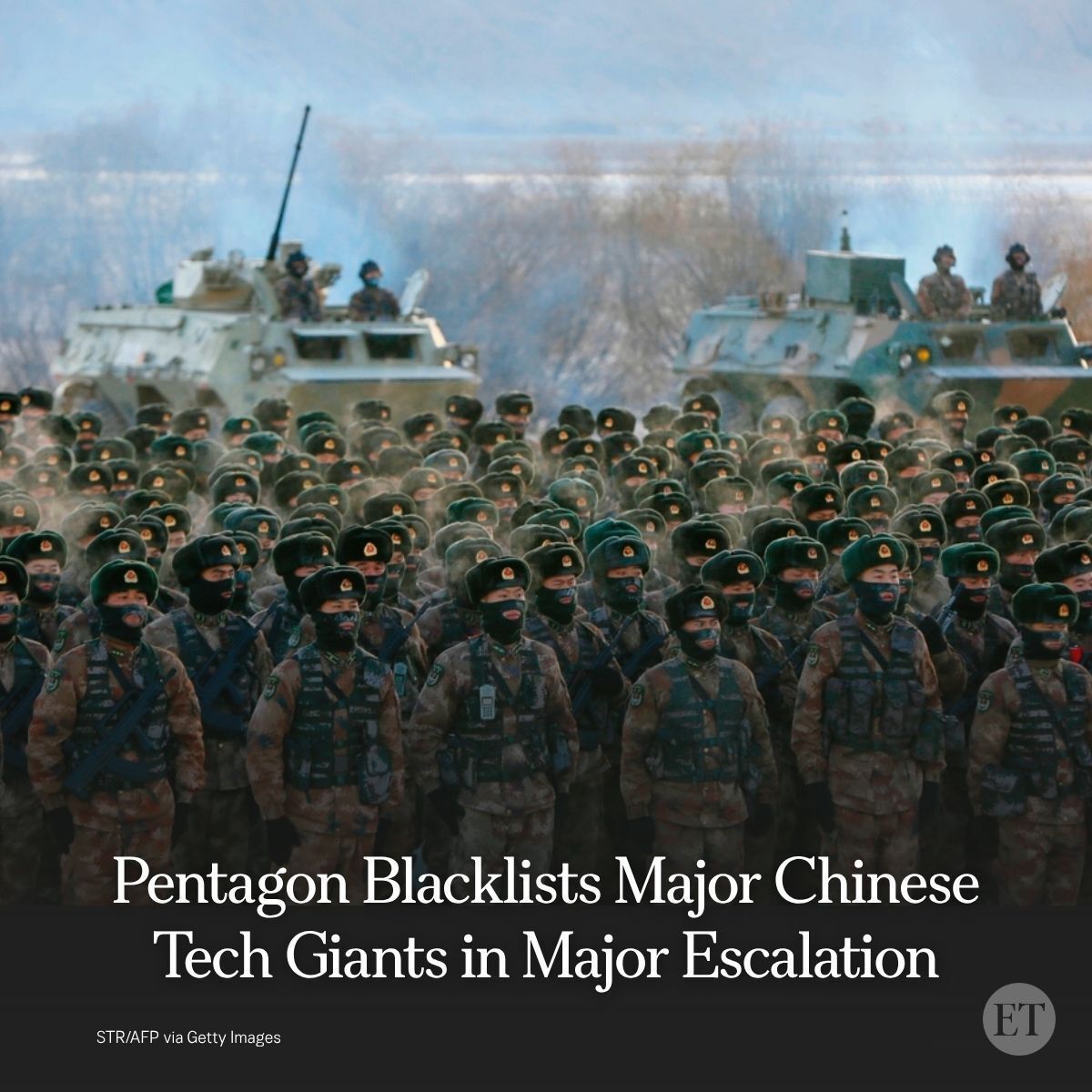
The Pentagon has expanded its blacklist of Chinese military-linked companies, naming major firms like Alibaba, Baidu, BYD, NIO, WuXi AppTec, Robosense, Trina Solar, and JA Solar.
This updated roster, now at 188 entities, bars the Pentagon from awarding contracts to these firms starting in June and from sourcing their products via third parties in 2027.
Several companies have pushed back, with WuXi AppTec filing a lawsuit, Baidu calling its listing unjustified, and BYD considering legal action.
Experts note the list highlights China's military-civil fusion strategy, where civilian tech serves military goals, and could disrupt the PLA's modernization.
It also warns global firms about ties that may aid Beijing's armed ambitions and infiltration efforts.
China's Commerce Ministry vowed strong countermeasures, while analysts say retaliation may have limited effect but risks broader trade and diplomatic tensions.
The move follows recent U.S.-China commercial commitments that now face uncertainty.
5
793

#Iran said on Sunday there was “no point” in peace talks with the #UnitedStates, accusing it of failing to uphold its commitments and casting doubt on a deal that Donald Trump had insisted would be signed imminently.
arab.news/prdbn
1
53
For many years, many Americans believed that supporting Israel was ultimately in America's national interest.
After the Gaza war, however, many Americans began questioning that assumption. They saw rising debt, costly military commitments, and growing international isolation, and started asking whether these policies had truly benefited the United States.
Donald Trump himself has repeatedly argued that America spent more than $8 trillion on Middle Eastern wars during the first quarter of the 21st century.
Personally, I once believed that the damage America suffered from its close alignment with Israel was largely accidental — the unintended consequence of political decisions.
But after watching numerous speeches, interviews, and religious discussions, including statements attributed to Benjamin Netanyahu and various rabbis, I began to wonder whether some influential figures see history through a very different lens — one involving concepts such as “New Rome,” “Edom,” and prophetic struggles between civilizations.
Some Christian Zionists support Israel because they believe it helps fulfill biblical prophecy and accelerates events associated with the return of Christ.
At the same time, some critics argue that certain religious and ideological narratives view America and Europe as successors to ancient powers whose decline is part of a larger prophetic vision.
There is also another dimension that many people rarely discuss: consequences.
The United States has participated in wars, interventions, sanctions, and military campaigns that have affected millions of lives across multiple continents. Millions have been killed, displaced, or otherwise harmed by conflicts in which America played a role.
Many people around the world believe that actions on such a scale inevitably produce consequences — whether one calls them historical consequences, moral consequences, political blowback, or simply karma.
From this perspective, America's current challenges are not only the result of foreign influence, lobbying, or political corruption. They may also be the result of decades of decisions whose costs eventually returned home.
The question is no longer whether America paid a price.
The question is: how much of that price came from external influences, and how much came from America's own actions?
Has the picture become clearer yet?

1
1
7