May 18
Clean. Structured. Correct.
And that code snippet is literally all it takes
Replace createConnection with createPool once at the top of your app.
Every request after that just borrows a connection, runs the query, returns it.
No overhead. No exhaustion. No 2AM incidents.
1
10
1,740
May 18
This is the deeper insight most people skip 👏
Everyone says "use a connection pool" but never explains why it's actually faster.
TCP handshake → auth → session setup
That's happening on EVERY request when you use createConnection.
Even if you never hit the connection limit the latency alone will kill your response times under load.
Pool skips all of that. Connections are already warm and ready
2
115
May 18
Simple. Correct. ✅
One line change at startup saves your entire production server.
createPool instead of createConnection and suddenly 200 concurrent users is nothing.
Most devs learn this the hard way. Now you don't have to.
1
3
276


Opportunities to #CreateMeaning, connection and enjoyment are not indulgent extras; they protect against chronic stress and burnout. buff.ly/82DMZFp #CreateConnection #CreateEnjoymentWorkplaceCulture #AvoidWorkplaceBurnout #CEO #HR #Manager

1
11

Feb 12
Opportunities to #CreateMeaning, connection and enjoyment are not indulgent extras; they protect against chronic stress and burnout. buff.ly/82DMZFp #CreateConnection #CreateEnjoymentWorkplaceCulture #AvoidWorkplaceBurnout #CEO #HR #Manager

3

20 Nov 2025
Day 2 at IAAPA here in Orlando with our MagicMakers® Group.
Huge thanks to #IAAPA and my MagicMakers family for creating an environment where connection grows
If you're attending, meet us at Booth #5444.
#IAAPA2025 #CreateConnection




1
131

1 Nov 2025
✨ We often chase the rare magic of luck, but the real power lies in the everyday magic we create for others. By lighting their paths and fostering connections, we unlock abundance for all. Let’s be the magic! ✨ #CreateConnection #AbundanceMagic
9

10 Sep 2025
Example: `class DatabaseFactory { createConnection(type) { ...} }` 💡💻🛠️
#designpatterns #databases #microservices
5

31 Jul 2025
Giverep’s art programs for seniors combat isolation. Donate, create connection. #CreateConnection @Giverep
20

29 Jul 2025
Tomorrow is International Day of Friendship. In addition to thinking of my wonderfully friendly clients, I’m also reminded of how often a good graphic design can be used to create connections between people.
#InternationalDayofFriendship #createconnection #designwithpurpose

11

25 May 2025
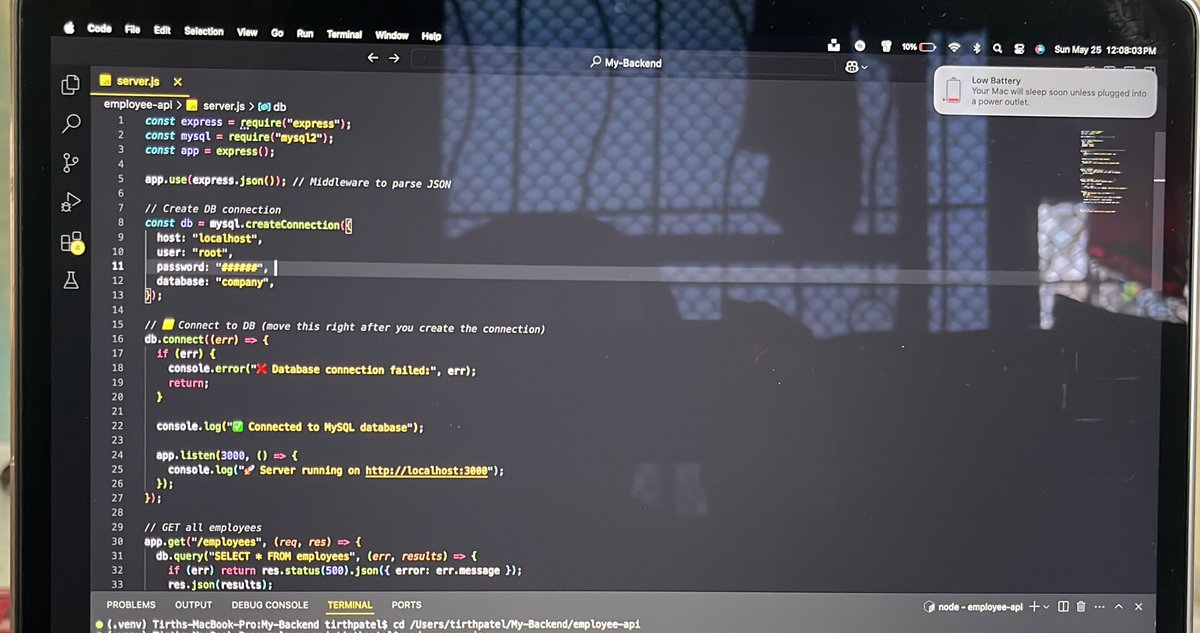
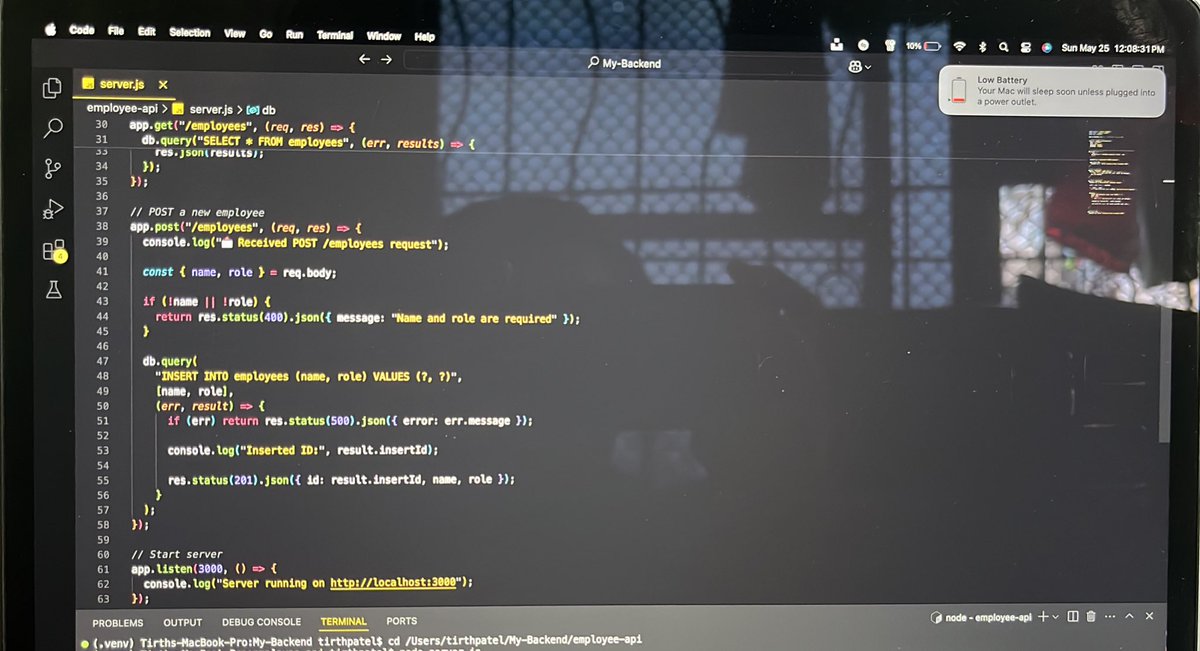
Here’s a quick look at the code where I connected to MySQL and ran my first query 👇
Using mysql2.createConnection() to link Node.js with the database.
Let’s go! 🚀
24

8 May 2025
التسويق الحقيقي هو الذي يترك أثرًا في القلوب قبل العقول!
True marketing leaves an impact on hearts before minds!
#EmotionalMarketing #SummitryMarketing #MarketingWithImpact #CustomerLoyalty #BrandBuilding #DigitalMarketing #MarketingStrategy #CreateConnection
2

5 May 2025
#100DaysOfCode – Day 17 ✅
🕒 Total: 5.5 hrs
🔹 DSA: 3 hrs – Knocked out 7 Qs (3E, 4M)
🔹 Dev: 2.5 hrs – Deep-dived into mongoose.connect vs createConnection, CRUD ops on local DB kicked off a new project
#DSA #WebDev #buildinpublic
3
49
4 May 2025
Spent an hour exploring Mongoose docs 🧠 just to learn:
🔹 mongoose.connect() uses the global conn (mongoose.connection) —⚠️ add listeners before connecting.
🔹 createConnection() gives a new conn — use conn.on(...).
👇Example in image!
#NodeJS #MongoDB #Mongoose
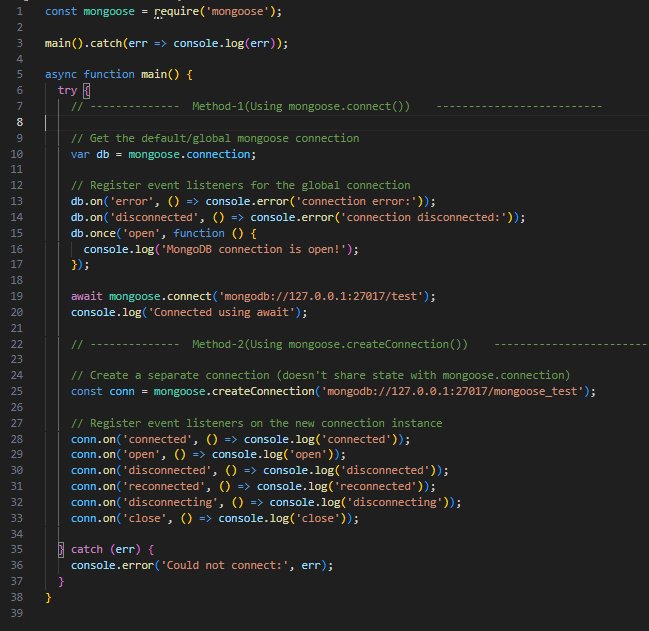
ALT mongoose.connect() vs mongoose.createConnection()
1
50

22 Apr 2025
Sometimes, the best marketing doesn’t come from critics — it comes from culture.
The biggest wins come when you stop trying to impress everyone, and start building experiences...
#MarketingMatters #AudienceFirst #CreateConnection #BrandStorytelling #CulturalMomentum
17

12 Apr 2025
#threatreport #HighCompleteness
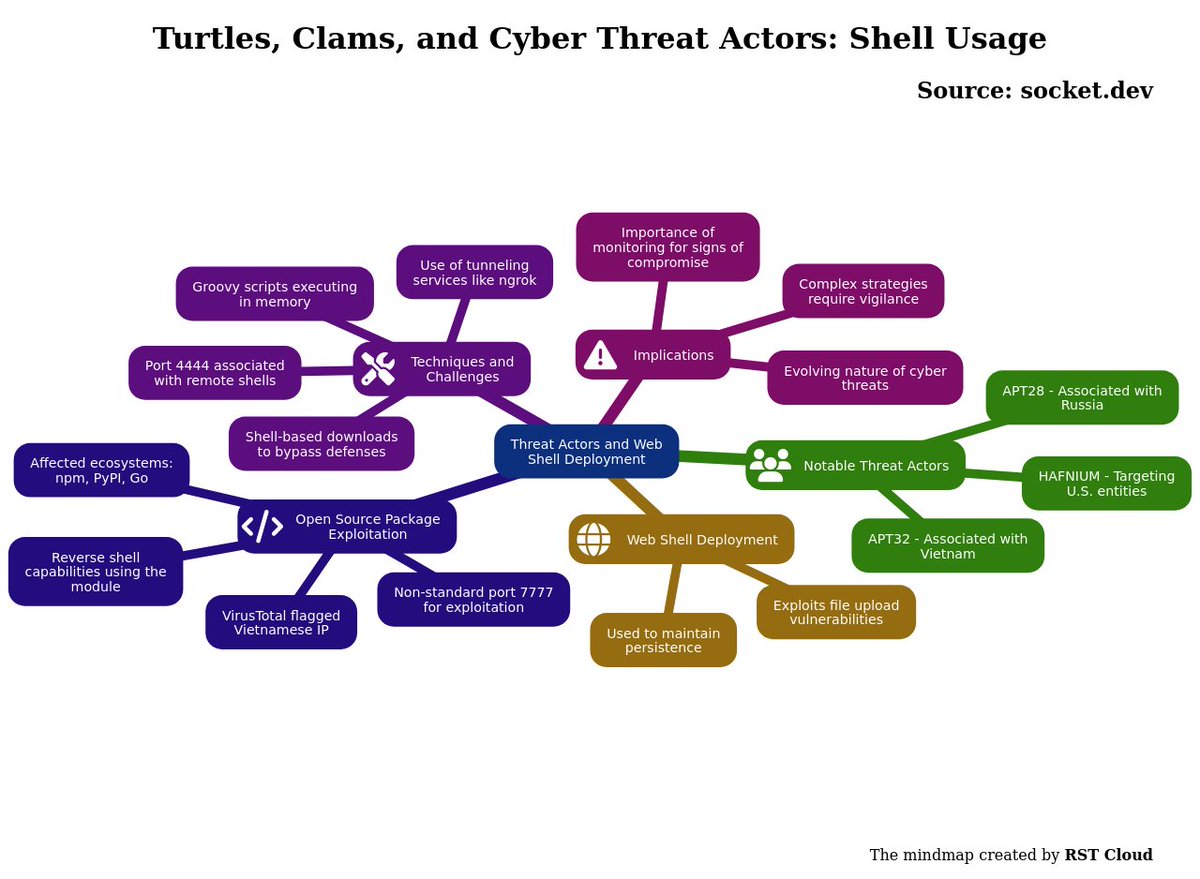
Turtles, Clams, and Cyber Threat Actors: Shell Usage | 11-04-2025
Source: socket.dev/blog/shell-usage
Key details below ↓
🧑💻Actors/Campaigns:
Fancy_bear
Oceanlotus
Hafnium
💀Threats:
Ngrok_tool, Metasploit_tool,
🌐Geo: Vietnamese, Russia, China
📚TTPs:
🤖LLM extracted TTPs:`
T1505.003, T1059, T1071.001, T1219, T1027, T1203, T1105
🧨IOCs:
- File: 32
- Domain: 1
- IP: 2
- Url: 2
💽Software: Oracle WebLogic Server, Jupyter Notebook, Node.js, curl
🔢Algorithms: base64
🔠Functions: createConnection, hrDrKbx, vMilIZxI, getShell
🗂️Win API: readFile, writeFile
📜Programming Languages: python, groovy, java
#threatreport:
APT28 and APT32 are notable threat actors associated with Russia and Vietnam, respectively, both known for utilizing web shells to maintain persistence within compromised environments. HAFNIUM, a Chinese threat actor, has demonstrated a focused interest in U.S. entities, utilizing web shells for server control and the exfiltration of sensitive information across various industries. A web shell is a malicious code uploaded to a web server, typically exploiting file upload vulnerabilities, which grants attackers unauthorized access.
Recent observations from Socket indicate that malicious actors are deploying web shells across multiple open source package ecosystems, including npm, PyPI, and Go. Most notably, the analysis uncovered several packages exhibiting reverse shell capabilities. One particular implementation utilizes the `os` module to create a reverse shell by establishing a TCP connection to an attacker-controlled IP address on port 7777, redirecting standard input, output, and error to this connection. The usage of non-standard ports like 7777 often indicates developers’ configurations, inadvertently leaving them open for exploitation. VirusTotal flagged this IP as malicious, linking it back to a Vietnamese technology firm.
Moreover, tunneling services such as ngrok complicate detection efforts by masking connections, while enabling enhanced interactivity in reverse shells through the use of pseudo-terminals. The illicit access often employs port 4444, commonly associated with various services including Oracle WebLogic and the Metasploit framework, which provides an efficient means of establishing remote access via reverse shells. One npm package evaluated attempted to connect through this port, masquerading itself as a remote client updater for Node.js, thus concealing its malicious intent.
The Go examples revealed comparable functionalities, wherein a command uses `curl` to download a remote shell script that executes silently. This tactic of hiding malicious actions within shell-based downloads enables attackers to bypass defensive measures and evade detection. Additionally, some code samples showcased the download and execution of Groovy scripts, a flexible alternative to Java, directly in memory, allowing attackers to exploit system permissions effectively.
These techniques highlight the evolving nature of cyber threats, underscoring the importance of vigilance in monitoring web servers and package registries for signs of compromise, while also reflecting the complexity of contemporary cyberattack strategies embraced by threat actors.
1
142

10 Apr 2025
Creating Space for Leaders to Be Themselves
In this interview excerpt, I share how creating a warm, personal studio experience helps guests drop their guard and tell powerful leadership stories. It's not about titles—it's about the human behind the leader.
Listen to the full interview at the Georgia Tech Empathy Bytes VIP YouTube channel: buff.ly/HqDFC1x
#BeBraveBeBadass #AuthenticLeadership #HumanFirst #LeadershipJourney #CreateConnection
1
82

5 Apr 2025
Build a fanbase, not just followers. Real supporters stream, share, and show up. #CreateConnection
1
13