
85% of AI coding agents execute attacker code via fake Sentry errors. Tenet Security confirmed 2,388 orgs exposed. Disable Sentry MCP now. decryptiondigest.com #AgentJacking #AISecurity #MCPSecurity #DeveloperSecurity #CyberSecurity #InfoSec
1
1
21

Agentjacking Attack Exploits Sentry API to Hijack AI Coding Agents
[SECURITY]
New 'Agentjacking' attack hijacks AI coding agents.
Why it matters: This attack vector bypasses existing security controls because it leverages authorized API interactions and exploits a fundamental architectural flaw in how AI agents trust system output. It poses a significant supply chain risk by enabling arbitrary code execution on developer machines, impacting a wide range of organizations from large enterprises to individual developers.
Follow DailyAIWire for the full brief.
🤔 How can AI agents be designed to critically evaluate system outputs, distinguishing malicious instructions from legitimate guidance?
#Agentjacking #AICodeSecurity #SentryVulnerability #SupplyChainAttack #DeveloperSecurity
1
23

Jun 11
This is a reminder that software supply chains are only as secure as the packages, dependencies, and credentials behind them.
✅ Review recently installed PyPI packages
✅ Rotate exposed or potentially compromised secrets
✅ Enforce MFA and least-privilege access
✅ Monitor CI/CD pipelines for unusual activity
✅ Use dependency scanning and software composition analysis tools
Cyber threats move fast—but proactive security moves faster.
Vistem Solutions helps organizations strengthen cybersecurity, reduce risk, and build secure, outcome-driven operations.
📩 Ready to elevate your security posture? Contact us: sales@vistem.com
#Cybersecurity #SupplyChainSecurity #PyPI #DeveloperSecurity #Malware #CyberResilience #VistemElevate #VistemSolutions #SecureInnovation #BusinessSecurity #ITInnovation
bleepingcomputer.com/news/se…
1
1
18

Jun 11
Episode 7 of The Fake Interview is out.
The Google Mirror.
A fake page asks the victim to believe the page.
A mirror lets the victim believe the browser.
This one is about identity traffic, developer trust, and why the interview itself is part of the attack surface.
Listen: open.spotify.com/episode/5wH…
#CyberSecurity #ThreatIntel #Lazarus #DPRK #Malware #Phishing #DeveloperSecurity #IdentitySecurity #RedTeam #DFIR #TheFakeInterview #RedAsgard
The Google Mirror: Browser Trust as the Attack Surface
The Fake Interview · Episode
open.spotify.com 24

Jun 10
We're heading to Zurich! SecureFlag is thrilled to be part of AREA41, Switzerland's premier hacker and security conference, from 18 to 19 June.
Come find us! We'd love to talk about secure coding and developer risk.
#SecureCoding #DeveloperSecurity #CyberSecurity

20

Jun 9
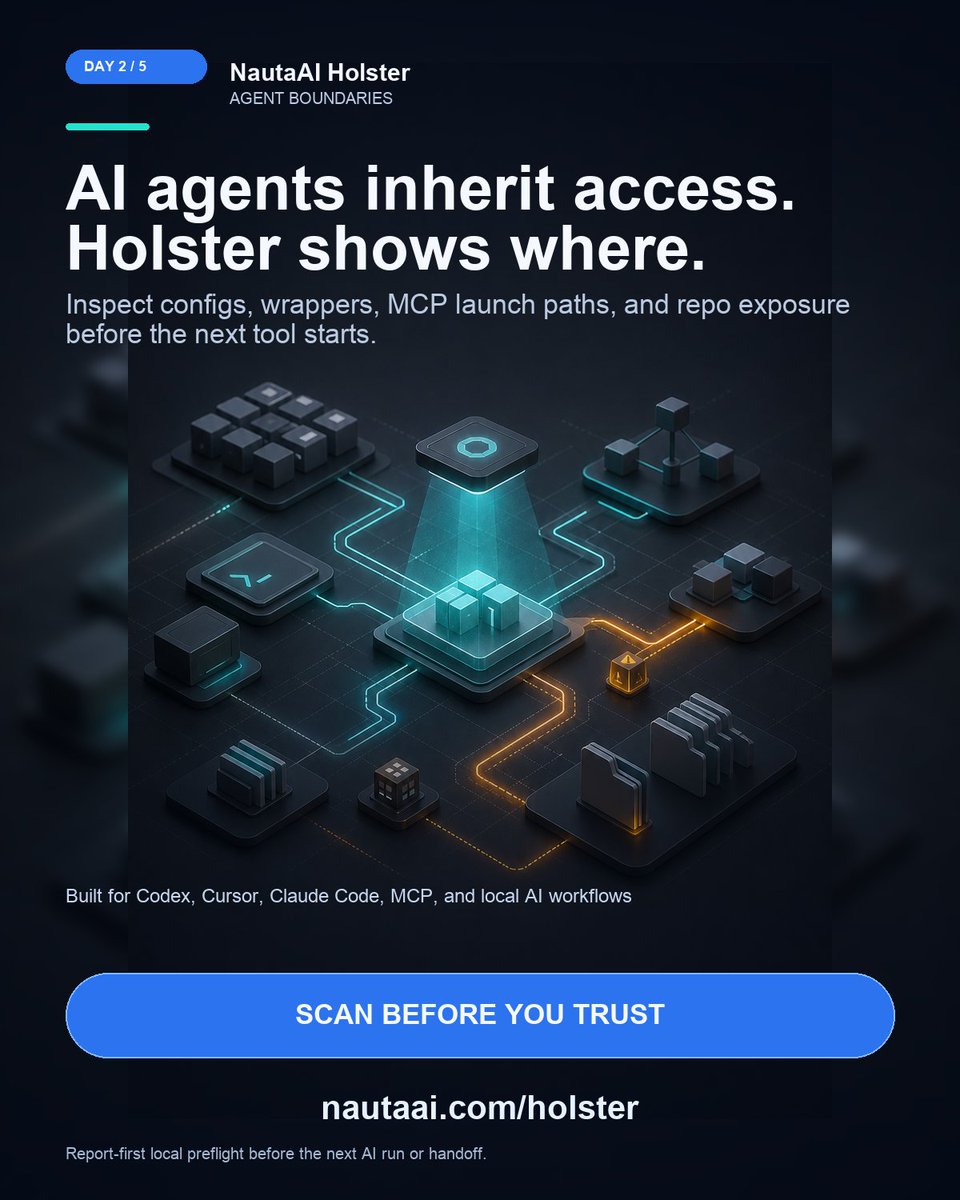
AI agents inherit access.
That is the part people underestimate.
The model may be smart, but the risk often lives in the surrounding setup:
MCP configs, shell wrappers, repo state, local paths, exported environment, and tool permissions.
Holster gives builders a preflight report before the next agent run starts.
Scan before you trust:
nautaai.com/holster
#AIagents #MCP #DeveloperSecurity #AgentOps #NautaAI
12

Jun 9
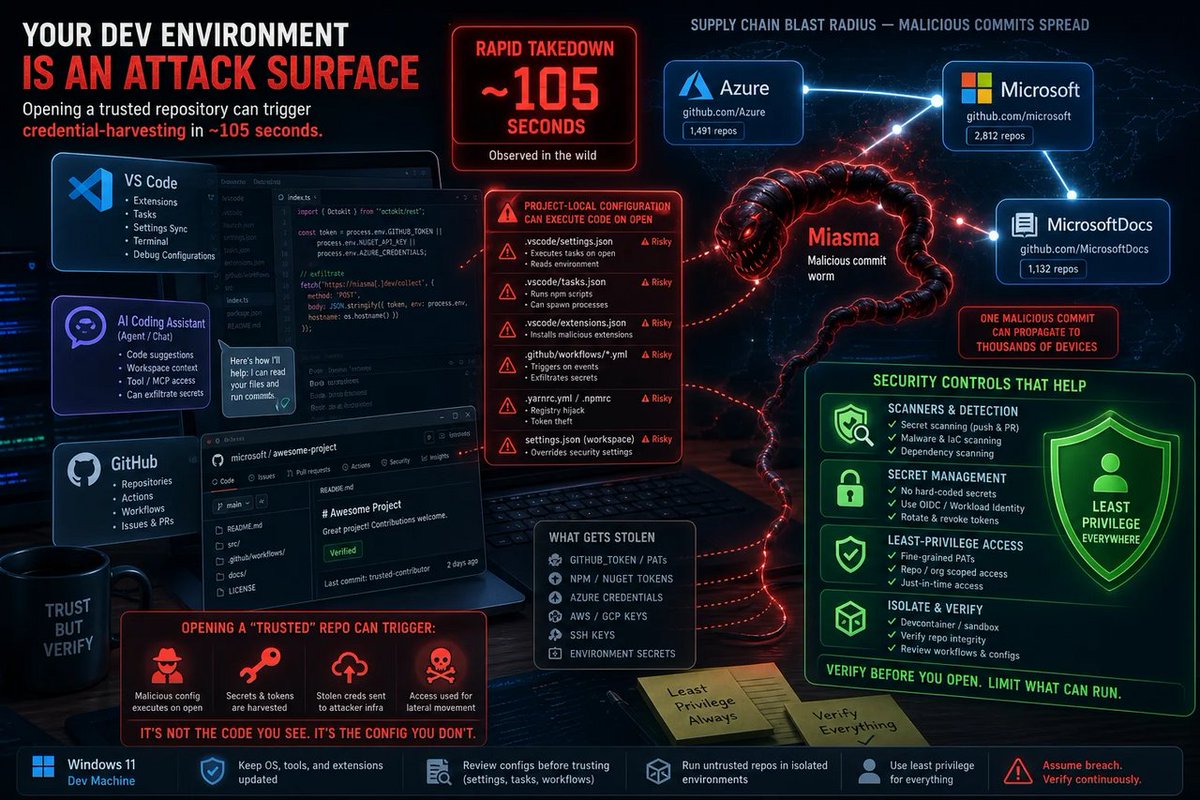
🪟 GitHub nuked 73 Microsoft repos in 105 seconds… and somehow the lesson still isn’t “trust no commit.” Dev workstations are now a legit attack surface, congrats.
windowsforum.com/threads/mia…
#SoftwareSupplyChain #DeveloperSecurity #AiCodingAssistants #GithubRepositories
15


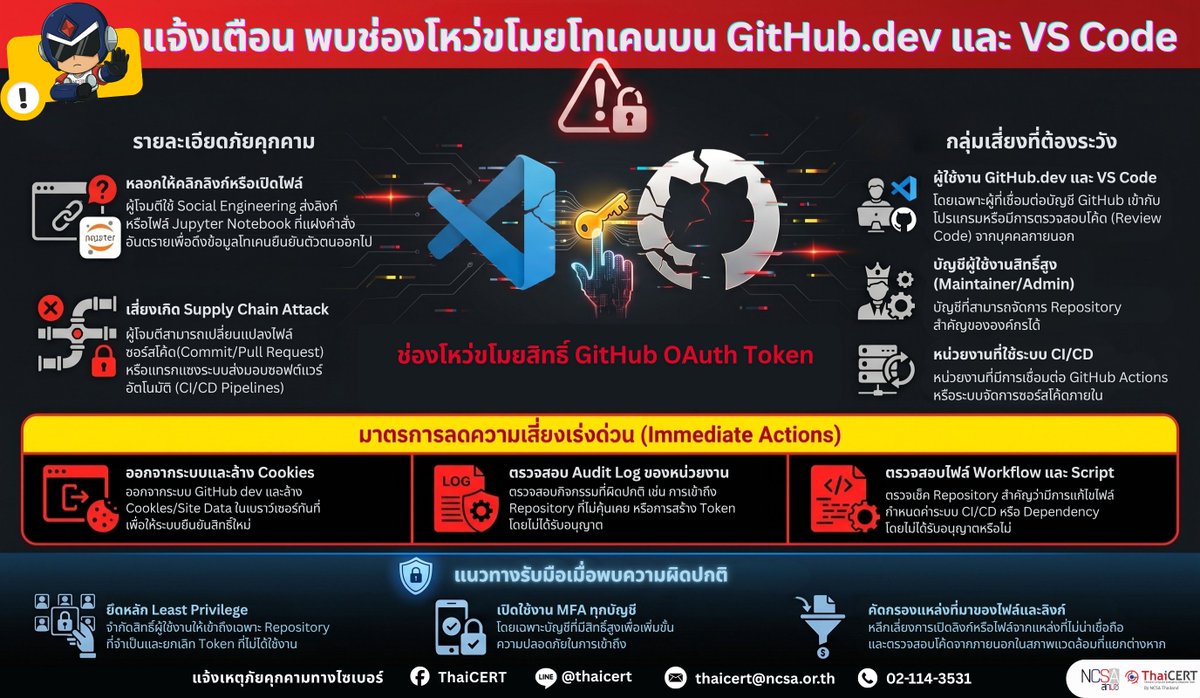
แจ้งเตือน พบช่องโหว่ขโมยโทเคนบน GitHub.dev และ VS Code
ศูนย์ประสานการรักษาความมั่นคงปลอดภัยระบบคอมพิวเตอร์แห่งชาติ (ThaiCERT) ขอแจ้งเตือนการพบช่องโหว่ระดับร้ายแรงในซอฟต์แวร์ Visual Studio Code (VS Code) และสภาพแวดล้อม GitHub.dev ช่องโหว่นี้เปิดโอกาสให้ผู้ไม่หวังดีขโมยสิทธิ์การเข้าถึง (GitHub OAuth Token) ผ่านการหลอกให้เหยื่อเปิดไฟล์หรือลิงก์อันตราย ส่งผลให้ผู้โจมตีสามารถสวมรอยเข้าถึงพื้นที่จัดเก็บซอร์สโค้ด (Repository) ขององค์กร และอาจนำไปสู่การโจมตีห่วงโซ่อุปทาน (Supply Chain Attack) ภัยคุกคามนี้ส่งผลกระทบโดยตรงต่อนักพัฒนา และองค์กรที่มีการเชื่อมต่อบัญชี GitHub เข้ากับระบบดังกล่าว [(1), (2)]
1.รายละเอียดของภัยคุกคาม
ช่องโหว่นี้เกิดจากข้อบกพร่องในการจัดการสิทธิ์ของบัญชีผู้ใช้งานบน GitHub.dev ซึ่งเป็นสภาพแวดล้อมการเขียนโค้ดบนเว็บเบราว์เซอร์ ผู้โจมตีจะอาศัยเทคนิค Social Engineering เพื่อหลอกให้นักพัฒนาเปิดลิงก์ที่สร้างขึ้นมาเป็นพิเศษ หรือเปิดไฟล์สมุดบันทึกโค้ด (Jupyter Notebook) ที่แฝงคำสั่งอันตราย หากการหลอกลวงสำเร็จ ผู้โจมตีจะสามารถดึงข้อมูลโทเคนยืนยันตัวตน (OAuth Token) ของเหยื่อออกไปได้ โทเคนนี้จะเปิดทางให้ผู้โจมตีได้รับสิทธิ์เทียบเท่าเจ้าของบัญชี สามารถเข้าถึงความลับขององค์กร เปลี่ยนแปลงไฟล์ซอร์สโค้ด (Commit/Pull Request) หรือแทรกแซงระบบส่งมอบซอฟต์แวร์อัตโนมัติ (CI/CD Pipelines) ปัจจุบันมีรายงานการเผยแพร่ชุดโค้ดทดสอบการเจาะระบบ (Proof-of-Concept) สู่สาธารณะแล้ว ทำให้มีโอกาสสูงที่จะเกิดการโจมตีจริง [(3), (4)]
2.ผลิตภัณฑ์และผู้ใช้งานที่อาจได้รับผลกระทบ
2.1 ผู้ใช้งาน GitHub.dev ที่เปิด Repository, ไฟล์ Jupyter Notebook หรือลิงก์จากแหล่งที่ไม่น่าเชื่อถือ
2.2 ผู้ใช้งาน Visual Studio Code ที่เชื่อมต่อบัญชี GitHub
2.3 นักพัฒนาโปรแกรมที่ตรวจสอบโค้ดจากบุคคลภายนอก เช่น Pull Request, Repository สาธารณะ หรือไฟล์ที่ได้รับจากภายนอกองค์กร
2.4 หน่วยงานที่มี Repository ส่วนตัวหรือ Repository สำคัญบน GitHub
2.5 องค์กรที่มีการใช้ GitHub ร่วมกับระบบพัฒนาและส่งมอบซอฟต์แวร์ เช่น CI/CD, GitHub Actions หรือระบบจัดการซอร์สโค้ดภายใน
2.6 บัญชีผู้ใช้งานที่มีสิทธิ์สูง เช่น Maintainer, Admin หรือบัญชีที่สามารถแก้ไข Repository สำคัญขององค์กรได้
3.คำแนะนำในการตรวจสอบและป้องกัน
ThaiCERT ขอแนะนำให้ผู้ใช้งาน หน่วยงาน และองค์กรที่มีการใช้งาน Visual Studio Code, GitHub.dev และ GitHub ดำเนินการดังนี้
3.1 หลีกเลี่ยงการเปิดลิงก์ GitHub.dev, ไฟล์ Jupyter Notebook หรือ Repository จากแหล่งที่ไม่น่าเชื่อถือ โดยเฉพาะไฟล์ที่ได้รับจากบุคคลภายนอกหรือแหล่งสาธารณะ
3.2 ตรวจสอบและทบทวนสิทธิ์ของ GitHub OAuth App, GitHub App และ Personal Access Token ที่เชื่อมต่อกับบัญชีผู้ใช้งาน
3.3 ยกเลิก Token หรือแอปพลิเคชันที่ไม่ทราบที่มา ไม่ได้ใช้งานแล้ว หรือมีสิทธิ์เกินความจำเป็น
3.4 ตรวจสอบสิทธิ์การเข้าถึง Repository โดยเฉพาะบัญชีที่มีสิทธิ์อ่านหรือเขียน Repository ส่วนตัวขององค์กร
3.5 จำกัดสิทธิ์ของผู้ใช้งานตามหลัก Least Privilege โดยให้เข้าถึงเฉพาะ Repository และระบบงานที่จำเป็นเท่านั้น
3.6 เปิดใช้งาน Multi-Factor Authentication (MFA) สำหรับบัญชี GitHub ทุกบัญชี โดยเฉพาะบัญชีที่มีสิทธิ์สูง
3.9 พิจารณาใช้นโยบายจำกัดการใช้งาน OAuth App และ GitHub App ในระดับองค์กร เพื่อป้องกันการเชื่อมต่อแอปพลิเคชันที่ไม่ได้รับอนุญาต
3.10 แนะนำให้นักพัฒนาเปิดตรวจสอบโค้ดจากภายนอกในสภาพแวดล้อมแยกต่างหาก เพื่อลดผลกระทบหากไฟล์หรือโค้ดดังกล่าวมีคำสั่งอันตรายแฝงอยู่
4.มาตรการลดความเสี่ยงเร่งด่วน
4.1 ผู้ใช้งานควรออกจากระบบ GitHub.dev และล้าง Cookies หรือ Site Data ของ github.dev ในเว็บเบราว์เซอร์ เพื่อให้ระบบแสดงหน้าต่างยืนยันสิทธิ์ใหม่ก่อนใช้งาน
4.2 หากเคยเปิดลิงก์หรือไฟล์ที่ไม่น่าเชื่อถือผ่าน GitHub.dev ควรตรวจสอบกิจกรรมของบัญชี GitHub โดยทันที
4.3 ผู้ดูแลระบบควรตรวจสอบ Audit Log ของ GitHub Organization เพื่อค้นหากิจกรรมผิดปกติ เช่น การเข้าถึง Repository ที่ไม่สัมพันธ์กับการใช้งานปกติ การสร้าง Token การติดตั้งแอปพลิเคชัน หรือการเปลี่ยนแปลงสิทธิ์
4.4 ตรวจสอบ Repository สำคัญว่ามีการแก้ไขไฟล์ Workflow, Script, Dependency หรือไฟล์กำหนดค่าที่เกี่ยวข้องกับระบบ CI/CD โดยไม่ได้รับอนุญาตหรือไม่
4.5 หากพบพฤติกรรมที่น่าสงสัย ควรยกเลิก Token ที่เกี่ยวข้อง เปลี่ยนรหัสผ่าน ตรวจสอบแอปพลิเคชันที่เชื่อมต่อ และบังคับให้ผู้ใช้งานเข้าสู่ระบบใหม่
4.6 องค์กรควรกำหนดแนวทางให้ผู้ใช้งานหลีกเลี่ยงการเปิดไฟล์ Notebook หรือลิงก์ GitHub.dev จากภายนอก จนกว่าจะตรวจสอบแหล่งที่มาและความน่าเชื่อถือแล้ว
4.7 เพิ่มการเฝ้าระวังเหตุการณ์ผิดปกติที่เกี่ยวข้องกับ GitHub API, GitHub Actions, Repository Permission และการเชื่อมต่อจากตำแหน่งหรืออุปกรณ์ที่ไม่คุ้นเคย
5.แนวทางรับมือเมื่อพบความผิดปกติ
หากหน่วยงานตรวจพบพฤติกรรมผิดปกติที่เกี่ยวข้องกับบัญชี GitHub, GitHub.dev หรือ Repository ขององค์กร เช่น มีการเข้าถึง Repository จากปลายทางที่ไม่คุ้นเคยหรือมีการติดตั้งแอปพลิเคชันที่ไม่ทราบที่มา มี Commit หรือ Pull Request ที่ไม่ได้เกิดจากผู้ใช้งานจริง หรือพบสัญญาณว่า Token อาจถูกนำไปใช้โดยไม่ได้รับอนุญาต ควรดำเนินการดังนี้
5.1 ระงับหรือจำกัดสิทธิ์บัญชีผู้ใช้งานที่เกี่ยวข้องชั่วคราวตามความเหมาะสม
5.2 ยกเลิก GitHub OAuth Token, Personal Access Token และ Session ที่อาจเกี่ยวข้องกับเหตุการณ์
5.3 เปลี่ยนรหัสผ่านบัญชีผู้ใช้งาน และตรวจสอบการเปิดใช้งาน MFA
5.4 ตรวจสอบ OAuth App, GitHub App และส่วนขยายที่เชื่อมต่อกับบัญชีหรือ Organization
5.5 ตรวจสอบ Audit Log, Security Log, GitHub API Log และประวัติการเข้าถึง Repository
5.6 ตรวจสอบ Repository สำคัญว่ามีการเปลี่ยนแปลงไฟล์ โค้ด Workflow หรือค่าการตั้งค่าโดยไม่ได้รับอนุญาตหรือไม่
5.7 ตรวจสอบ Secrets ที่เกี่ยวข้องกับ Repository, GitHub Actions และระบบ CI/CD หากสงสัยว่ามีการรั่วไหลควรดำเนินการ Rotate Secrets โดยทันที
5.8 ตรวจสอบระบบอื่นที่เชื่อมต่อกับ GitHub เช่น ระบบ Build, Deployment, Container Registry, Cloud Platform หรือระบบจัดเก็บ Artifact
5.9 เก็บรักษาหลักฐานที่เกี่ยวข้อง เช่น Audit Log, Commit History, Pull Request, Token Activity และข้อมูลการเชื่อมต่อ เพื่อใช้ในการสืบสวนเหตุการณ์
แหล่งอ้างอิง
[1] dg.th/6t2hj1uk7f
[2] dg.th/l6pfw0hvob
[3] dg.th/xphdeb6ylv
[4] dg.th/srkn7wt2hg
---
ด้วยความปรารถนาดี สำนักงานคณะกรรมการการรักษาความมั่นคงปลอดภัยไซเบอร์แห่งชาติ (สกมช.) / ThaiCERT
#ข่าวไซเบอร์ #CyberSecurity #ThaiCERT #GitHub #VSCode #GitHubDev #OAuthToken #SupplyChainAttack #DeveloperSecurity #AppSec #CICD #GitHubSecurity
1
244

May 30
🚨 New "TrapDoor" supply chain attack targets #Solana, #Sui, and #Aptos developers.
Attackers uploaded 34 malicious packages to npm, PyPI, and Crates.io, disguising them as security tools, productivity apps, and AI utilities.
The campaign abuses AI coding configuration files such as .cursorrules and CLAUDE.md to steal private keys, GitHub tokens, SSH credentials, and cloud access secrets.
As AI-powered development tools become mainstream, developers should carefully verify open-source packages and regularly audit AI configuration files.
blockchainseoul.kr/article/7…
#Crypto #Blockchain #Web3 #CyberSecurity #AI #OpenSource #DeveloperSecurity #SupplyChainAttack #PrivateKey #GitHub #Aptos #SuiNetwork #SolanaEcosystem

3
1
3
178

GitHub Confirms 3,800-Repo Breach Traced to TanStack npm Supply Chain Worm #cybersecurity #supplychain #GitHub #OpenAI #CICD #developerSecurity bleepingcomputer.com/news/se…
2
65

PyTorch Lightning and Intercom Client Users Exposed to Credential Stealing Campaign cysecurity.news/2026/05/pyto… #CloudCredentialExposure #CredentialTheft #DeveloperSecurity

2
1
424

🚨 لقد تعبت من هذا الإنترنت المليء بالأبواب الخلفية — $ICP ♾️ بواسطة @DFINITY هو إعادة ضبط معمارية
أسبوع جديد.
هجوم جديد على سلسلة توريد المطورين.
حملة جديدة لإضافات مزيفة.
وقصة جديدة عن بنية تحتية مليئة بالديدان والأبواب الخلفية وسرقة بيانات الاعتماد.
هذه المرة: GlassWorm v2.
أفاد الباحثون بوجود 73 إضافة VS Code مزيفة على مستودع Open VSX مرتبطة بحملة GlassWorm.
تم تأكيد أن 6 إضافات منها خبيثة، بينما يبدو أن باقي الإضافات كانت تعمل كحزم نائمة مصممة لبناء الثقة قبل تسليحها لاحقاً.
نموذج الهجوم قبيح:
استنساخ إضافات مطورين شرعية
نسخ نفس الأيقونة والوصف
استغلال “الثقة البصرية”
خداع المطورين لتثبيتها
سحب حمولة VSIX خبيثة من GitHub
التثبيت عبر بيئات تطوير مثل VS Code وCursor وWindsurf وVSCodium
سرقة بيانات الاعتماد والإشارات المرجعية وبيانات المطورين الحساسة
نشر قدرات RAT للتحكم عن بُعد
استهداف الأشخاص الذين يبنون سلسلة توريد البرمجيات نفسها
هذه هي الحقيقة القاسية:
الإنترنت الحديث يتعرض للهجوم من خلال أدواته نفسها.
المطورون أصبحوا الهدف.
الإضافات أصبحت أسطح هجوم.
مستودعات الحزم أصبحت ساحات معارك.
المتصفحات أصبحت خزائن بيانات اعتماد.
GitHub وnpm وبيئات التطوير ومفاتيح السحابة والمحافظ والأسرار كلها داخل نطاق الانفجار.
لهذا أقول دائماً إن المستقبل ليس فقط:
المزيد من التصحيحات.
المزيد من أدوات الفحص.
المزيد من أدوات SaaS.
المزيد من لوحات التحكم.
المستقبل هو هندسة أفضل.
وهنا تأتي أهمية $ICP بواسطة @dfinity.
$ICP ليس مجرد رمز.
وليس مجرد سلسلة أخرى لتحريك العملات.
إنه شبكة حوسبة كاملة على السلسلة، حيث يمكن للتطبيقات أن تعمل عبر:
منطق خلفي على السلسلة
بيانات على السلسلة
واجهات أمامية على السلسلة
عقود ذكية كـ Canisters مقاومة للعبث
تحقق تشفيري
تشفير Chain-Key
نموذج Reverse Gas
بنية تحتية لامركزية
دون الحاجة إلى خادم خلفي مركزي تقليدي لتشغيل التطبيق
غالباً ما يعني Web3 التقليدي:
الرمز على السلسلة.
الموقع خارج السلسلة.
واجهة API خارج السلسلة.
قاعدة البيانات خارج السلسلة.
أدوات المطورين مكشوفة.
الأسرار في كل مكان.
أما $ICP فيغيّر النموذج:
منطق التطبيق على السلسلة.
الحالة والبيانات على السلسلة.
الواجهة الأمامية على السلسلة.
التنفيذ قابل للتحقق.
البنية التحتية لامركزية.
GlassWorm v2 تحذير آخر.
سلسلة توريد البرمجيات تحت الهجوم.
بيئات المطورين تحت الهجوم.
بيانات اعتماد السحابة تحت الهجوم.
طبقة المتصفح تحت الهجوم.
وبنية الإنترنت الحالية أصبحت مرهقة.
نحن لا نحتاج فقط إلى إضافة أمنية أخرى.
نحتاج إلى بنية تحتية تقلل عدد الأماكن التي يمكن للمهاجمين السيطرة عليها.
هذه هي أطروحة $ICP.
ليس ضجيجاً.
ليس صخباً.
بل هندسة.
♾️ $ICP بواسطة @dfinity يبني World Computer.
إذا أعجبك المحتوى وترغب في دعم المزيد من أبحاث ونشر الوعي حول $ICP، فالمساهمات مرحب بها:
عنوان التبرع ICP:
1e672d038cebc619d93186418fa98f6499dbdb9cfdfac54f366c61a4a4ee4362
thehackernews.com/2026/04/re……
#ICP #InternetComputer #DFINITY #Cybersecurity #CloudSecurity #SoftwareSupplyChain #GlassWorm #VSCode #OpenVSX #DeveloperSecurity #OnchainCloud #WorldComputer #Canisters #ChainKey #Web3 #DecentralizedCloud #VerifiableCompute #CloudComputing #ZeroTrust #InfoSec #ThreatIntel #Blockchain #SovereignCloud
1
2
247
🚨 I’M TIRED OF THIS BACKDOOR-RIDDLED INTERNET — $ICP ♾️ BY @DFINITY IS THE ARCHITECTURAL RESET
Another week.
Another developer supply-chain attack.
Another fake extension campaign.
Another credential-stealing worm/backdoor infrastructure story.
This time: GlassWorm v2.
Researchers reported 73 fake VS Code extensions on the Open VSX repository linked to the GlassWorm campaign.
Six were confirmed malicious, while the remaining extensions appeared to act as sleeper packages designed to build trust before being weaponised later.
The attack model is ugly:
Clone legitimate developer extensions
Copy the same icon and description
Abuse “visual trust”
Trick developers into installing them
Pull a malicious VSIX payload from GitHub
Install across IDEs including VS Code, Cursor, Windsurf, and VSCodium
Steal credentials, bookmarks, and sensitive developer data
Deploy RAT capability
Target the people who build the software supply chain itself
This is the brutal truth:
The modern internet is being attacked through its own tooling.
Developers are now the target.
Extensions are now attack surfaces.
Package registries are now battlegrounds.
Browsers are now credential vaults.
GitHub, npm, IDEs, cloud keys, wallets, and secrets are all sitting inside the blast radius.
That is why I keep saying the future is not just:
More patches.
More scanners.
More SaaS tools.
More dashboards.
The future is better architecture.
That is where $ICP by @dfinity matters.
$ICP is not just a token.
It is not just another chain moving coins around.
It is a full-stack onchain compute network where applications can run with:
Backend logic onchain
Data onchain
Frontends onchain
Smart contracts as tamper-resistant canisters
Cryptographic verification
Chain-key cryptography
Reverse gas
Decentralized infrastructure
No traditional centralized backend server required for the application stack
Traditional Web3 often means:
Token onchain.
Website offchain.
API offchain.
Database offchain.
Developer tools exposed.
Secrets everywhere.
$ICP changes the model:
Application logic onchain.
State onchain.
Frontend onchain.
Execution verifiable.
Infrastructure decentralized.
GlassWorm v2 is another warning.
The software supply chain is under attack.
Developer environments are under attack.
Cloud credentials are under attack.
The browser layer is under attack.
The internet stack is tired.
We do not just need another security plugin.
We need infrastructure that reduces the number of places attackers can own.
That is the $ICP thesis.
Not hype.
Not noise.
Architecture.
♾️ $ICP by @dfinity is building the World Computer.
If you like my content and want to support more $ICP research and awareness, contributions are welcome:
ICP Donation Address:
1e672d038cebc619d93186418fa98f6499dbdb9cfdfac54f366c61a4a4ee4362
#ICP #InternetComputer #DFINITY #Cybersecurity #CloudSecurity #SoftwareSupplyChain #GlassWorm #VSCode #OpenVSX #DeveloperSecurity #OnchainCloud #WorldComputer #Canisters #ChainKey #Web3 #DecentralizedCloud #VerifiableCompute #CloudComputing #ZeroTrust #InfoSec #ThreatIntel #Blockchain #SovereignCloud thehackernews.com/2026/04/re…
1
3
181

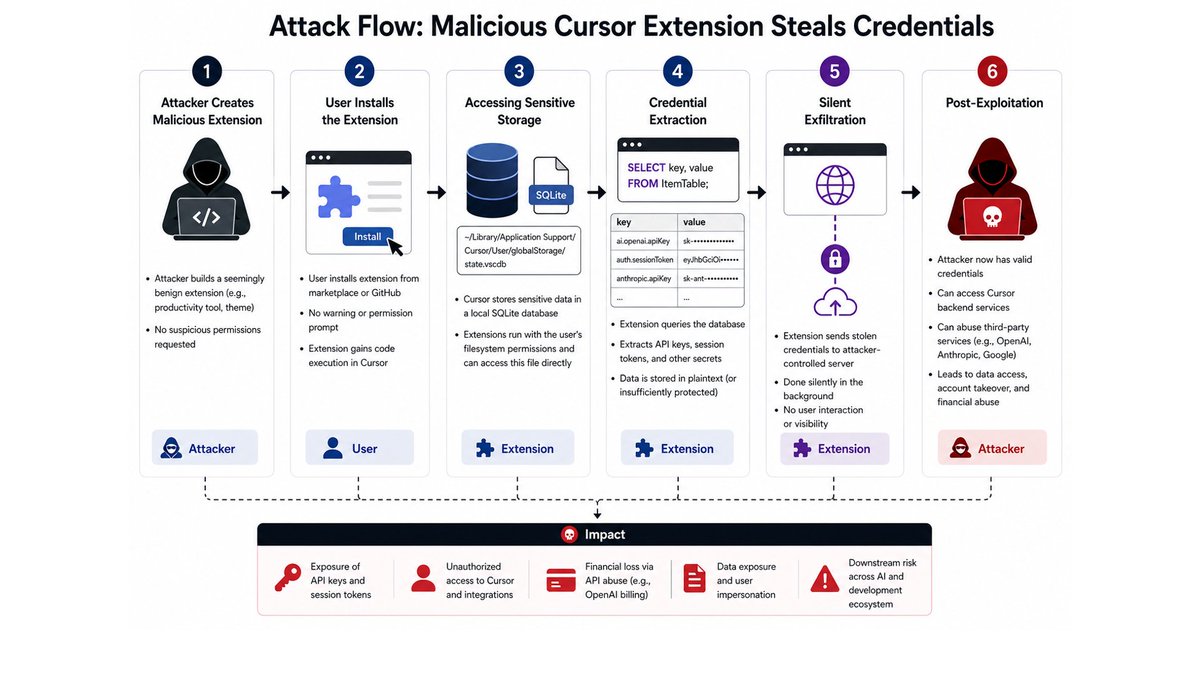
Cursor AI editor found storing API keys and tokens in an unprotected SQLite database, allowing extensions to steal credentials silently. CVSS 8.2. No patch yet.
#CursorAI #CyberSecurity #InfoSec #AI #DeveloperSecurity #APIKeys #CredentialTheft #Security
securityonline.info/cursor-a…
2
359

Apr 1
Employees are installing AI tools, MCP servers, and LLM-connected browser extensions at a pace that most security teams can't keep track of. Many of these tools have access to source code, internal documents, or credentials.
Anzenna inventories AI tools and MCP server installs across your fleet through scheduled device audits. Each one gets an AI-generated risk assessment evaluating what data it can access, who built it, and whether it poses a security concern.
One security team discovered that a popular AI coding assistant installed on 40 developer machines was configured to send code context to a third-party API with no data processing agreement in place. Without the audit, it would have stayed invisible.
Learn more: na2.hubs.ly/H03VD9R0
#AISecurity #ShadowIT #DeveloperSecurity #Cybersecurity #MCP
2
18

Mar 18
GlassWorm Supply Chain Attack Hits GitHub, npm, VSCode #glasswormcampaign #supplychainattack #developersecurity anavem.com/en/news/cybersecu…
1
3
5
1,576
Critical 9.7 CVSS flaw in TinaCMS (CVE-2026-28792) lets attackers hijack local developer machines via CORS and path traversal. Patch to 2.1.8 immediately.
#TinaCMS #CVE #CyberSecurity #InfoSec #PathTraversal #CORS #DeveloperSecurity #Vulnerability
securityonline.info/drive-by…

3
6
459

Feb 26
Secrets shouldn’t live in files. They should show up exactly when code runs.
What’s new:
🔐 Runtime, read-only access to 1Password Environments
⚙️ Use via CLI & SDKs
⏱️Scoped, read-only access for automation using service accounts
The result: fewer leaks, less friction, and safer dev workflows.
👉 Learn how this works and where it fits in your workflows: bit.ly/3MQx5Qo
#DeveloperSecurity #SecretsManagement #DevOps #AItools #1Password
11
5
78
17,972