
Secure your embedded designs for evolving threats with dsPIC33 Digital Signal Controllers (DSCs). Explore security solutions that support reliable Live Update, post-quantum cryptography readiness and protection for connected real-time control applications. Learn more: mchp.us/3RWXyhu. #EmbeddedSecurity #PQC #LiveUpdate
7
528

Jun 10
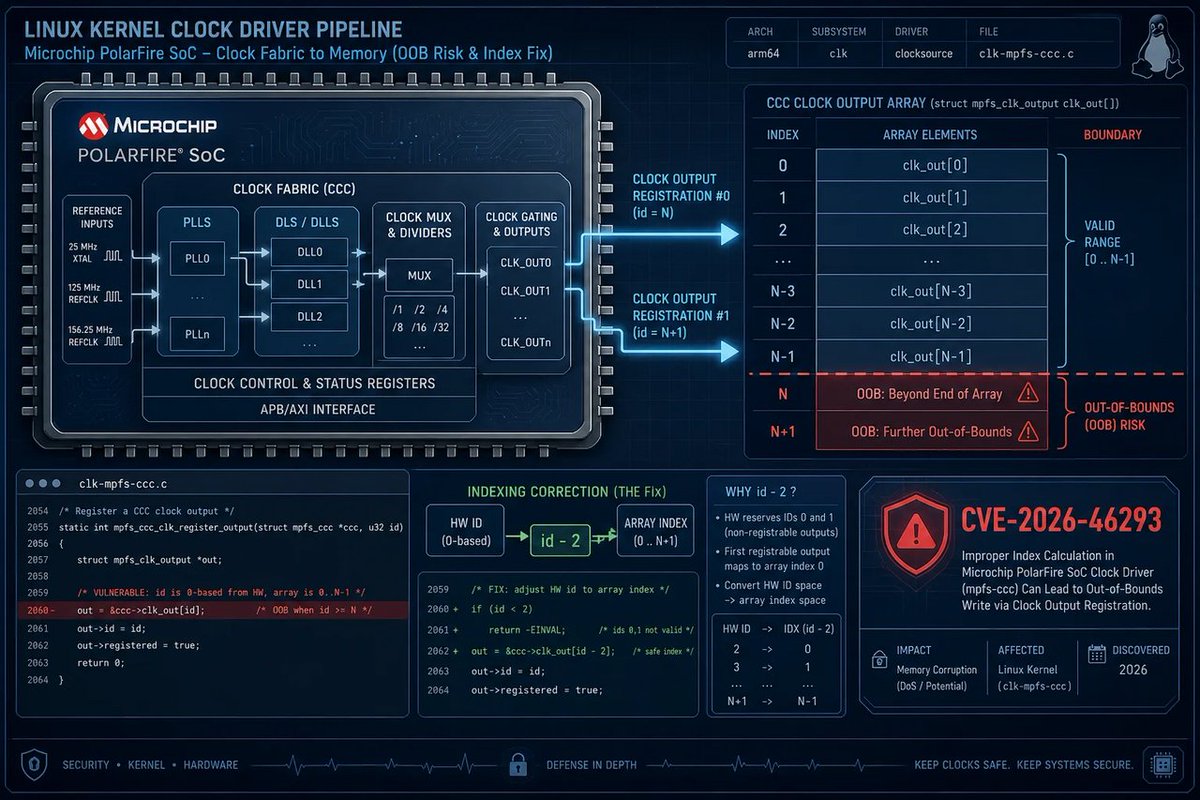
🪟 CVE-2026-46293 is why “kernel panic” isn’t a vibe—it’s a spectrum. Out-of-bounds in a clock driver might be niche, but it screams: regressions everywhere, patch responsibly. #WindowsForum #Microsoft #Linux #CVE
windowsforum.com/threads/cve…
#LinuxKernel #Cve #EmbeddedSecurity
46

🇼🇦🇳🇳🇦 🇭🇦🇨🇰 🇹🇭🇪 🇵🇱🇦🇳🇪🇹❓
Checkout #WHIDBOARD 👇👇👇
lab401.com/products/whidboar…
#HardwareHacking #IoTSecurity #EmbeddedSecurity #HardwareForensics #OffensiveHardwareSecurity #CertifiedHardwareHacker
2
2
364

May 31
Reverse Engineering Tools(part2)
1 Dumpulator Mandiant tool for emulating code from process dumps without running the full binary. Emulates only the target function from a crash dump — ideal for vulnerability analysis without deploying a malicious environment.
2 de4dot-cex Fork of de4dot with support for modern .NET obfuscators (ConfuserEx, .NET Reactor, SmartAssembly, etc.). Automatically strips protection before decompilation, restoring original logic even in heavily obfuscated assemblies.
3 Emux Emulator for rare architectures (TMS320, NEC V850, Renesas RL78). Lets you run and analyze embedded device firmware without physical hardware. Essential for pentesting industrial controllers and IoT
4 FirmWire Full-system emulation platform for modem firmware (LTE/5G) and base stations. Enables fuzzing radio protocols, debugging firmware at the physical layer, and discovering telecom vulnerabilities
5 Triton Framework for dynamic symbolic execution (DSE) and taint analysis. Used for automatically building data-flow graphs, deobfuscation, and generating exploits for non-standard architectures
6 Netconstructor Framework for reverse engineering binary protocols. Combines static traffic analysis with dynamic WinAPI call interception helps reconstruct packet structures of closed-source applications
Pro tip: Always analyze unknown binaries in an isolated VM with snapshot capability. One misstep can compromise your host system. Stay safe, stay curious
#InfoSec #CyberSecurity #ReverseEngineering #MalwareAnalysis #FirmwareRE #EmbeddedSecurity #EthicalHacking #SecurityResearch #MrRobot #CyberSec #Reverse #Analysis #Tools

7
12
99
3,084
May 30
Hacking HDD Firmware: A Reverse Engineering Journey
Working on an Xbox 360 race-condition exploit, I needed to modify HDD firmware to add read delays. Here's what I learned dumping & patching drives from WD, Samsung & Hitachi
The Process:
Dump firmware Found WD dump via HDD Guru forums; Samsung PM871a firmware updater on Lenovo's site
Analyze in IDA WD used modified LZHUF compression; Samsung used simple nibble obfuscation (reversed from updater)
Find the read handler Traced VSC (Vendor Specific Commands) via JTAG debugging to locate DMA READ EXT processing
Patch & test Injected ~200ms delay into read loop; actual delay ~450ms (close enough for PoC)
Key Discoveries:
• WD drives store code in overlay modules on the platters' service area not just in SPI flash
• JTAG debugging on live HDDs is possible (but fragile Windows timeouts are brutal)
• VSC command tables can be mapped by poisoning memory breakpoints
• Some Samsung firmware uses unknown ISAs — saved for Part 2 with AI-assisted RE
The Twist:
After weeks of firmware hacking… the Xbox 360 exploit started working *without* any HDD mods. The race condition resolved itself through other timing variables. Mission accomplished, but the firmware RE skills stay
Tools Released:
IDA loader plugins, firmware unpackers, VSC command scripts all open-sourced on GitHub. Hope this helps others dive into embedded RE
#FirmwareHacking #ReverseEngineering #InfoSec #EmbeddedSecurity #Xbox360 #HardDrive #WD #Samsung #JTAG #IDAPro #CyberSecurity #EthicalHacking #ExploitDev #OpenSource #TechResearch

6
11
41
1,641

ZANCUDO and the Future of Practical IoT Security Testing
IoT security work often exposes a hard truth: the protocols that power connected devices do not always have the same mature testing ecosystem we rely on in web application security. MQTT is a clear example. It is widely used, efficient, and well suited for embedded environments, yet deep inspection and manipulation of MQTT traffic can still require too much manual effort.
That is why VerSprite open sourced ZANCUDO.
Built from real world engagement experience, ZANCUDO gives security testers a more practical way to intercept, inspect, decode, and manipulate MQTT traffic during IoT and embedded device assessments.
What makes this important:
• MQTT security testing needs purpose built tooling
Testing IoT devices is not just web testing with a different protocol. Embedded systems often introduce custom certificate chains, proprietary payload formats, constrained environments, and device specific trust assumptions.
• Visibility is foundational to risk discovery
ZANCUDO helps transform opaque MQTT payloads into readable intelligence by supporting common text and binary formats such as JSON, XML, YAML, JWT, Protobuf, BSON, MessagePack, CBOR, and more.
• Certificate based controls still need to be tested realistically
With its gen_certs utility, ZANCUDO supports TLS MITM workflows by helping testers generate proxy certificates and mimic certificate authority behavior in controlled assessment conditions.
• Scriptability turns observation into validation
Through JavaScript based logic, testers can analyze custom payload formats, decrypt proprietary message structures when authorized, modify packets, drop traffic, and test authorization boundaries with precision.
• Open source raises the standard for the security community
Tools born in the field often solve the problems practitioners actually face. By releasing ZANCUDO, VerSprite is contributing not only code, but operational knowledge shaped by hands on AppSec and IoT security research.
At VerSprite, this reflects how we approach cybersecurity: understand the system, model the threat, test with discipline, and share meaningful capability back with the community.
ZANCUDO is more than a proxy. It is a reminder that strong security research should make complex testing more accessible, repeatable, and useful for defenders, builders, and breakers alike.
Read the full blog and explore the project here:
hubs.la/Q04hVGTr0
#ApplicationSecurity #IoTSecurity #CybersecurityResearch #PenetrationTesting #EmbeddedSecurity #MQTT #OpenSourceSecurity #ThreatModeling #AppSec #VerSprite
3
6
89

May 28
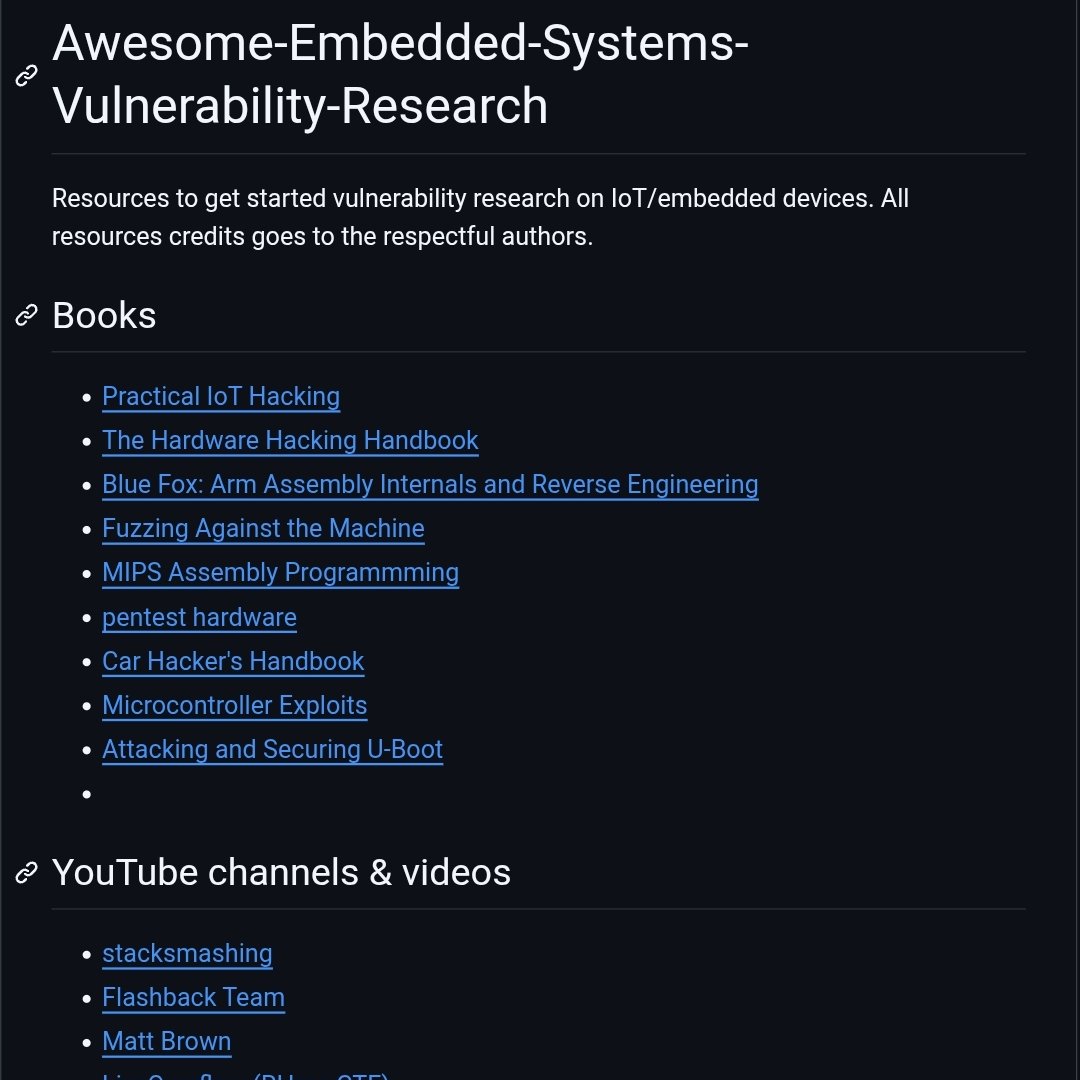
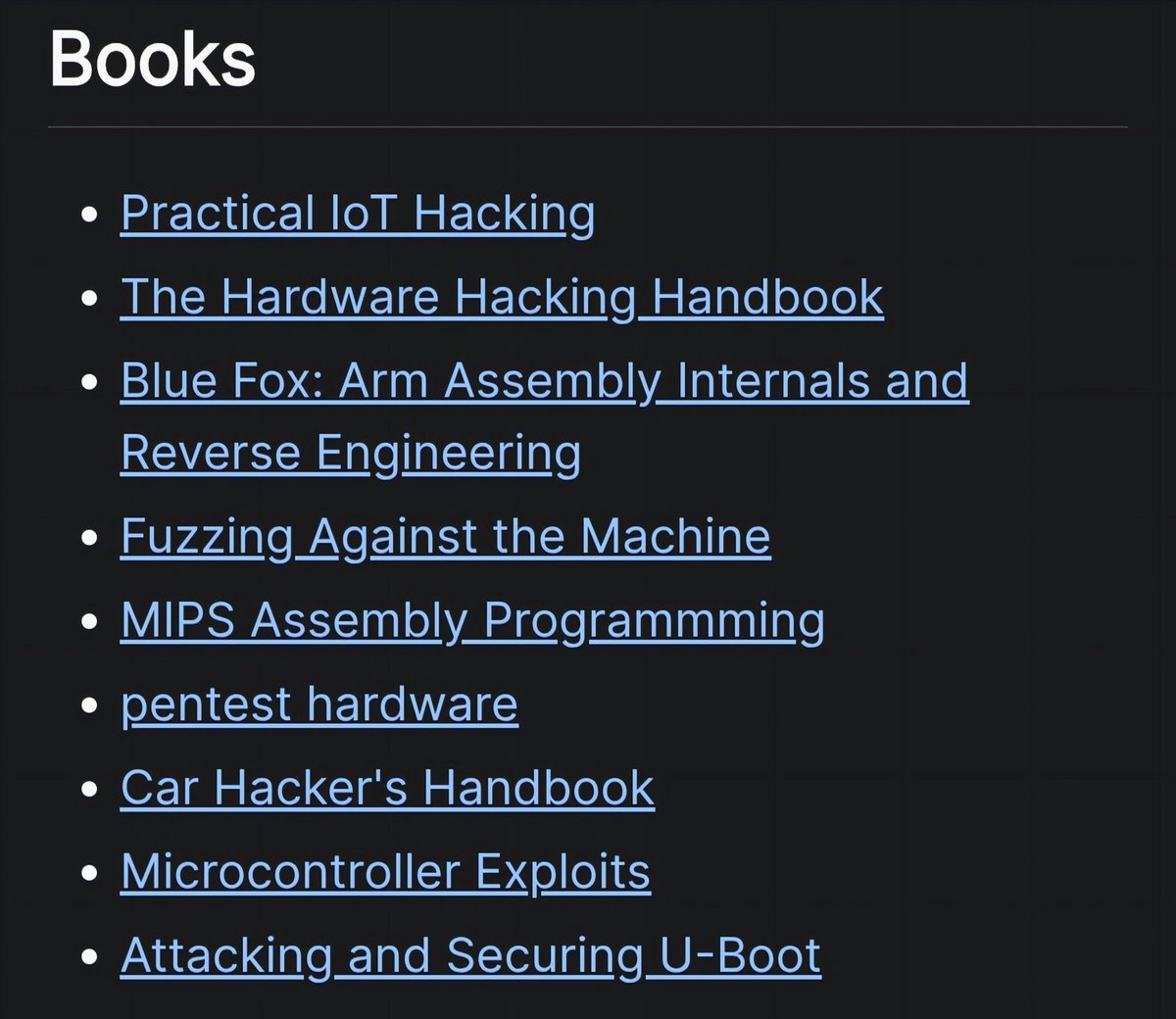
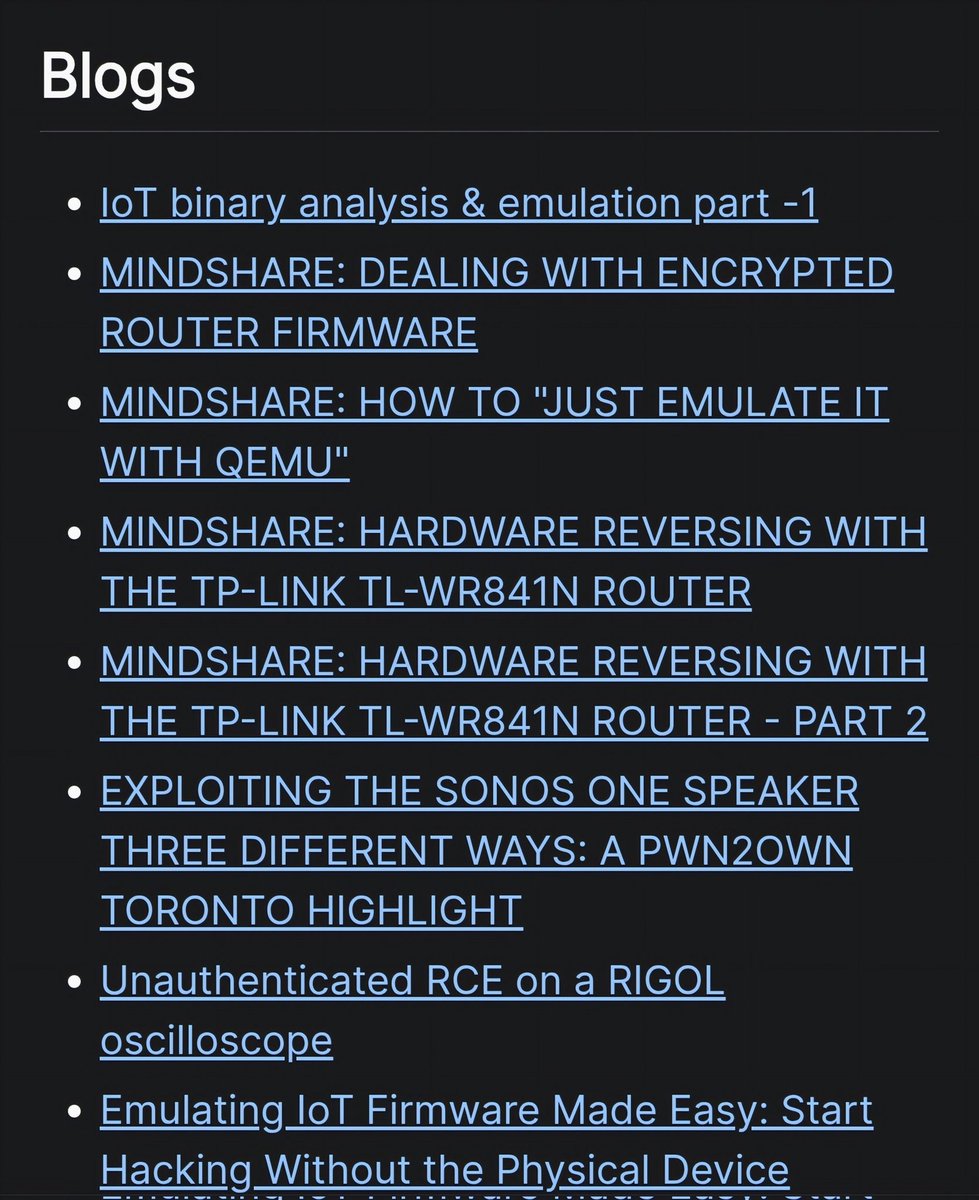
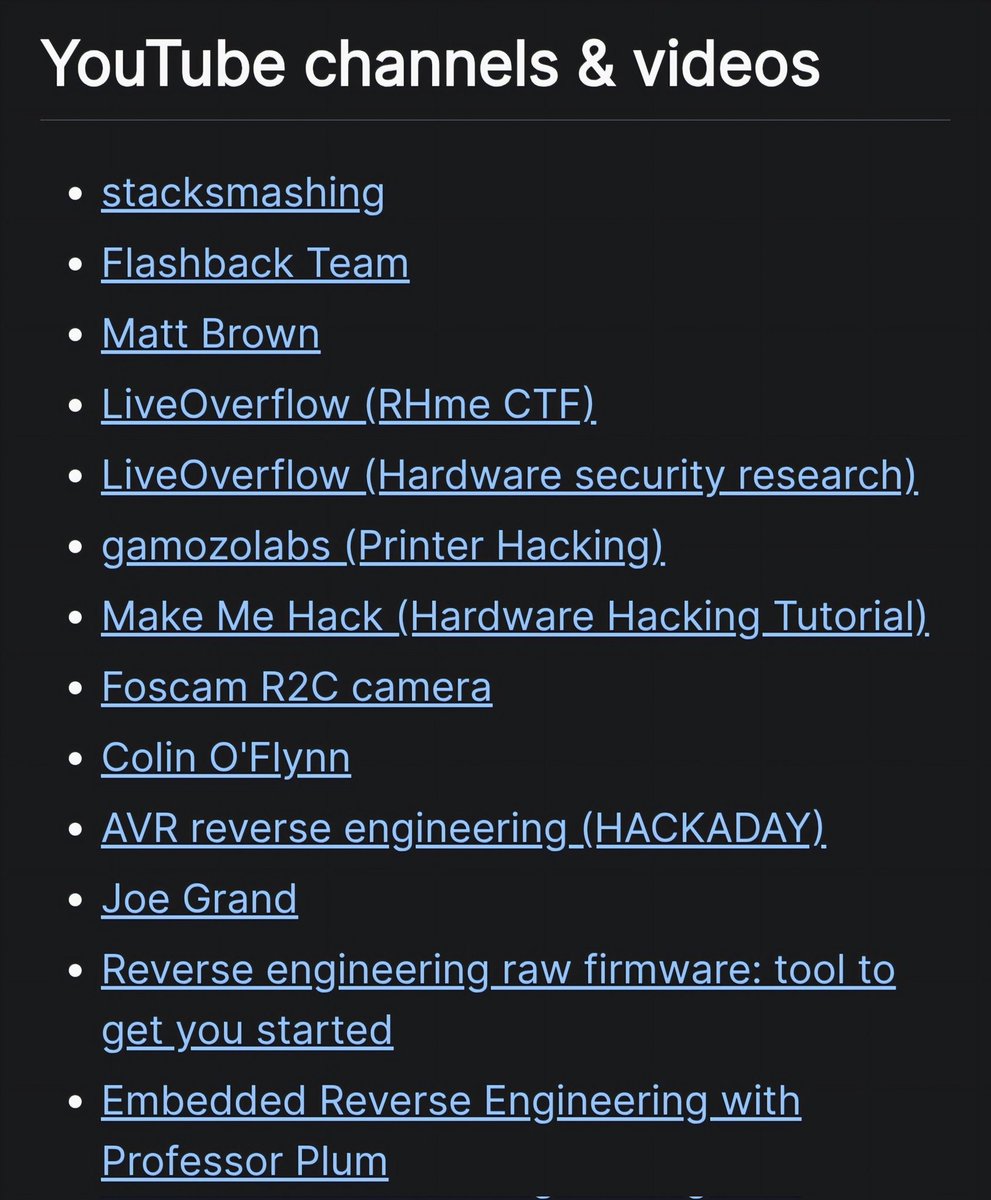
⚙️ Embedded Systems Vulnerability Research — One of the Best Curated Resources for IoT & Hardware Hacking
This repository is basically a roadmap for learning:
🔍 Firmware Reverse Engineering
📡 IoT Exploitation
🧠 ARM/MIPS Internals
⚡ Hardware Debugging
🛠️ Bootloader & UART Attacks
🔥 Router / Camera / Smart Device Exploitation
🎯 Fault Injection & Glitching
🚗 Automotive & CAN Bus Research
📦 Firmware Emulation & Fuzzing
Includes: 📚 Books
🎥 Conference talks
🧪 Labs & vulnerable targets
🧰 Tools like Ghidra, QEMU, AFL , Qiling, Binwalk
📝 Hundreds of real-world writeups & research blogs
If you want to move beyond web bug bounty and understand real device exploitation, firmware analysis, and embedded attack surfaces — this is gold.
Most people stop at web apps.
Very few understand how routers, cameras, smart TVs, IoT devices, payment terminals, or automotive systems actually get hacked.
That gap is a massive opportunity.
🔗 github.com/IamAlch3mist/Awes…
#CyberSecurity #IoT #EmbeddedSecurity #Firmware #ReverseEngineering
9
55
1,878
ZANCUDO Advances the Standard for MQTT Security Testing
Modern IoT environments depend on communication patterns that are often difficult to assess with conventional application security tools.
MQTT sits at the center of many connected ecosystems, carrying telemetry, commands, device state, identity signals, and backend interactions. When that traffic is protected by TLS, encoded in proprietary formats, or shaped by device specific logic, security testing requires more than visibility. It requires controlled interception, interpretation, and manipulation.
ZANCUDO was built for that reality.
VerSprite created ZANCUDO as an open source MQTT interception proxy for IoT and embedded device pentesting. It gives practitioners a practical way to evaluate MQTT based communication flows with the depth these environments demand.
The value is in making complex testing workflows more repeatable.
ZANCUDO helps security teams:
• Inspect MQTT traffic in authorized assessment environments
• Support TLS MITM testing through certificate generation
• Decode structured and binary payload formats
• Analyze and manipulate messages with JavaScript based scripting
• Validate device and backend trust assumptions through controlled traffic modification
This is the kind of contribution that reflects VerSprite’s role in the cybersecurity field.
Our research is shaped by hands on security work, but it is not limited to private findings or isolated engagements. When we identify a recurring challenge that affects practitioners, product teams, and the broader ecosystem, we look for ways to turn that insight into capability.
ZANCUDO is one example of that mindset.
It gives IoT security teams a focused tool for MQTT analysis while reinforcing a larger principle: effective security testing must meet systems where they actually operate.
For connected products, that means understanding the protocols, payloads, certificates, trust models, and behavioral logic that define real world risk.
Explore ZANCUDO:
hubs.ly/Q04gBwFl0
#IoTSecurity #Cybersecurity #ApplicationSecurity #MQTT #EmbeddedSecurity #SecurityResearch #PenetrationTesting #OpenSourceSecurity #VerSprite
2
3
47
Prepare systems for the post-quantum transition with hardware-based security. The TS1800 and TS50x Root of Trust controllers support PQC-ready secure boot and lifecycle management to address emerging security mandates. Learn more: mchp.us/4tvNGZ9. #EmbeddedSecurity #PQC
2
9
546

May 21
Industrial devices typically operate for 10, or even up to 20 years once deployed on the line. However, the upcoming EU CRA now demands manufacturers guarantee secure updates for at least 5 years or more.
The reality is that industrial equipment was never designed with "long-term security operations" in mind. Devices run for a decade with their security levels completely frozen at the exact state they were shipped. This is an industry-wide structural limitation:
• Lack of OTA Infrastructure: Only a fraction of devices can receive remote patches.
• Poor SBOM Management: A total lack of visibility into underlying firmware components.
• Low-Spec Constraints: Insufficient system resources to run standard security agents.
• Manual USB Patching: Relying on in-person engineer visits for updates.
• Unpatchable Legacy Equipment: The most critical unresolved blind spot.
A component supplier's consulting report can only tell you "what to do". But the EU CRA ultimately asks one critical question: "How will you guarantee secure security updates for the next 5 years, including for devices you have already sold?" Answering "how to securely operate it for 5 years" can only be guaranteed by technical mechanisms embedded directly into the product itself.
Peanut AI is purpose-built to fill this exact void by embedding "long-term operability" directly into the product.
• ModOn-I (Device Agent): A lightweight agent installed directly inside low-spec industrial devices without requiring hardware replacements.
• Legacy Coverage: Extends to already-shipped field equipment, resolving the retroactive reporting obligations of Article 69(3).
• Secure OTA: Transitions manual USB patching into a 5 year remote operational framework.
On top of the areas covered by standard component consulting, manufacturers must add Device-Level Embedded Security to fully complete the EU CRA’s 5-year liability requirements.
#EUCRA #IndustrialSecurity #OTSecurity #SBOM #LegacyDevices #EmbeddedSecurity #PeanutAI




2
25
May 21
산업기기는 "장기 운영"을 전제로 설계되지 않았습니다.
그런데 EU CRA는 5년을 요구합니다.
산업기기는 한 번 라인에 설치되면 10년, 길게는 20년 이상 가동되는 것이 일반적입니다. 하지만 다가오는 EU CRA(사이버복원력법)는 향후 최소 5년 이상의 '안전한 보안 업데이트 보장'을 완제품 제조사에 요구하고 있습니다.
딜레마의 시작은 산업 전체의 구조적 한계에서 비롯됩니다. 현실적으로 대부분의 산업기기는 애초에 '장기 보안 운영'을 전제로 설계되지 않았습니다. 출하 시점의 보안 수준이 그대로 동결된 채 가동될 수밖에 없는 구조적 한계가 존재합니다. 이는 단일 기업의 문제가 아닙니다.
• 원격 패치가 불가능한 OTA 체계 부족
• 펌웨어 내부 컴포넌트를 파악할 수 없는 SBOM 관리 미흡
• 보안 자원이 턱없이 부족한 저사양 디바이스 환경
• 엔지니어가 직접 현장을 방문해야 하는 USB 수동 패치
• 무엇보다, 이미 출하된 레거시 장비의 원격 패치 불가
부품사의 보안 컨설팅 리포트는 "무엇을 해야 하는가"에 대한 답만 줄 뿐입니다. 정작 EU CRA Article 13이 묻는 단 하나의 질문은, "이미 판매한 장비를 포함해, 향후 5년 이상 어떻게 안전하게 보안 업데이트를 보장할 것인가?" 입니다. "5년간 어떻게 실제로 운영할 것인가"는 완제품 자체에 심어둔 기술적 메커니즘으로만 보장할 수 있습니다.
Peanut AI는 완제품 안에 '장기 운영'의 메커니즘을 직접 심어 제조사의 빈자리를 해결합니다.
• ModOn-I (Device Agent): 하드웨어 교체 없이 디바이스 내부에 직접 설치되는 초경량 에이전트
• Legacy Coverage: 이미 출하된 현장 장비에도 동일하게 적용하여 Article 69(3)의 소급 보고 의무까지 완벽히 커버
• Secure OTA: 기존의 USB 수동 패치를 5년 이상의 원격 보안 라이프사이클 운영으로 전환
기존 부품사의 컨설팅 영역 위에 'Device-Level Embedded Security'를 더해야만 완제품 제조사의 EU CRA 5년 책임 요구를 완벽히 충족할 수 있습니다.
#EUCRA #IndustrialSecurity #OTSecurity #SBOM #LegacyDevices #EmbeddedSecurity #PeanutAI




2
26
🚨 𝐑𝐞𝐚𝐝𝐲 𝐭𝐨 𝐥𝐞𝐯𝐞𝐥 𝐮𝐩 𝐲𝐨𝐮𝐫 𝐜𝐲𝐛𝐞𝐫𝐬𝐞𝐜𝐮𝐫𝐢𝐭𝐲 𝐬𝐤𝐢𝐥𝐥𝐬? 🚨
🔥 𝐔𝐬𝐞 𝐜𝐨𝐝𝐞 𝐒𝐮𝐦𝐦𝐞𝐫𝐈𝐬𝐂𝐨𝐦𝐢𝐧𝐠 𝐭𝐨 𝐠𝐞𝐭 𝟑𝟎% 𝐎𝐅𝐅
📅 𝐕𝐚𝐥𝐢𝐝 𝐮𝐧𝐭𝐢𝐥 𝟐𝟏/𝟔
⚡#HandsOnLabs • #HardwareHacking • #EmbeddedSecurity • #CertifiedHardwareHacker ⚡🔓

1
3
5
375

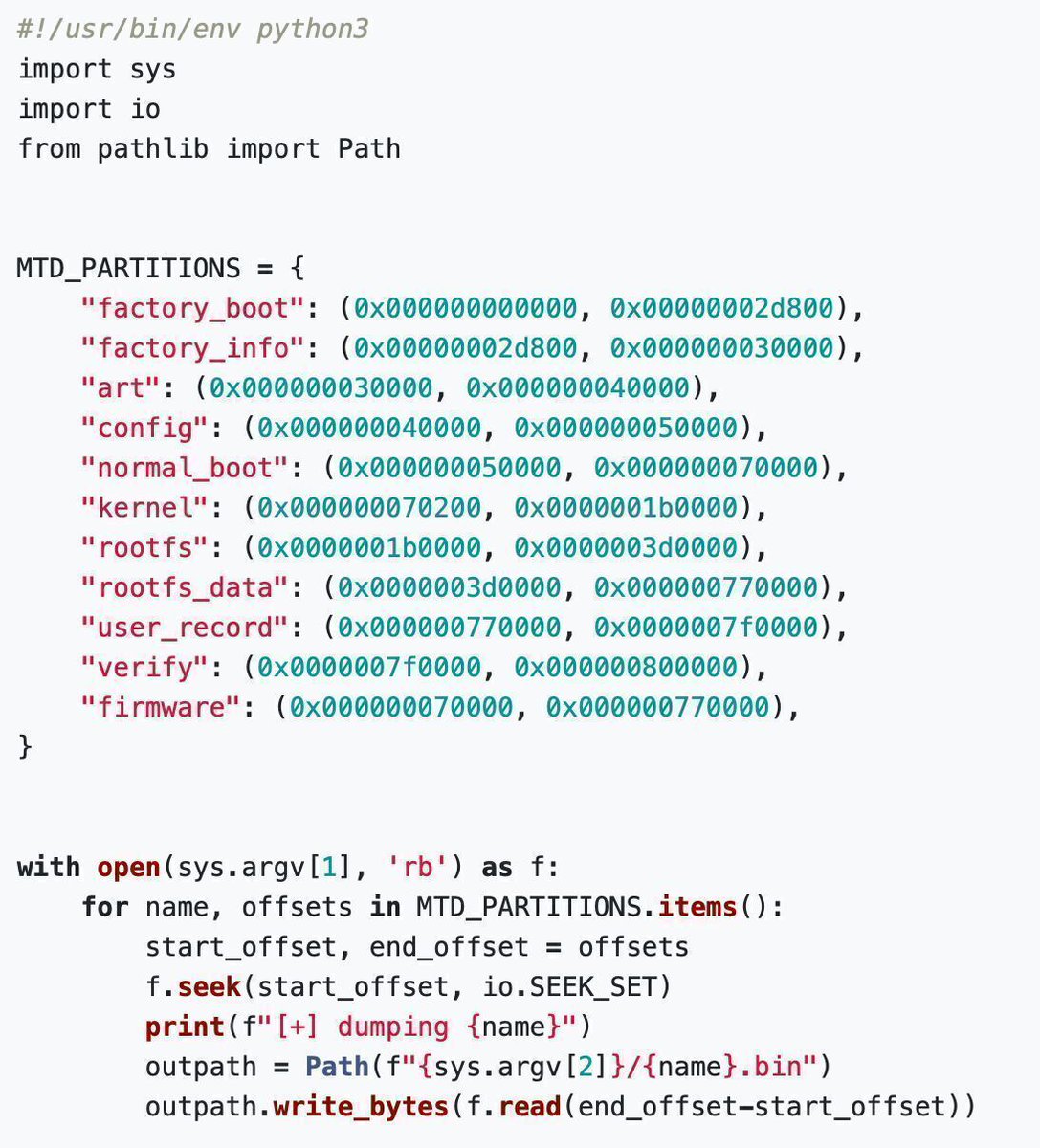
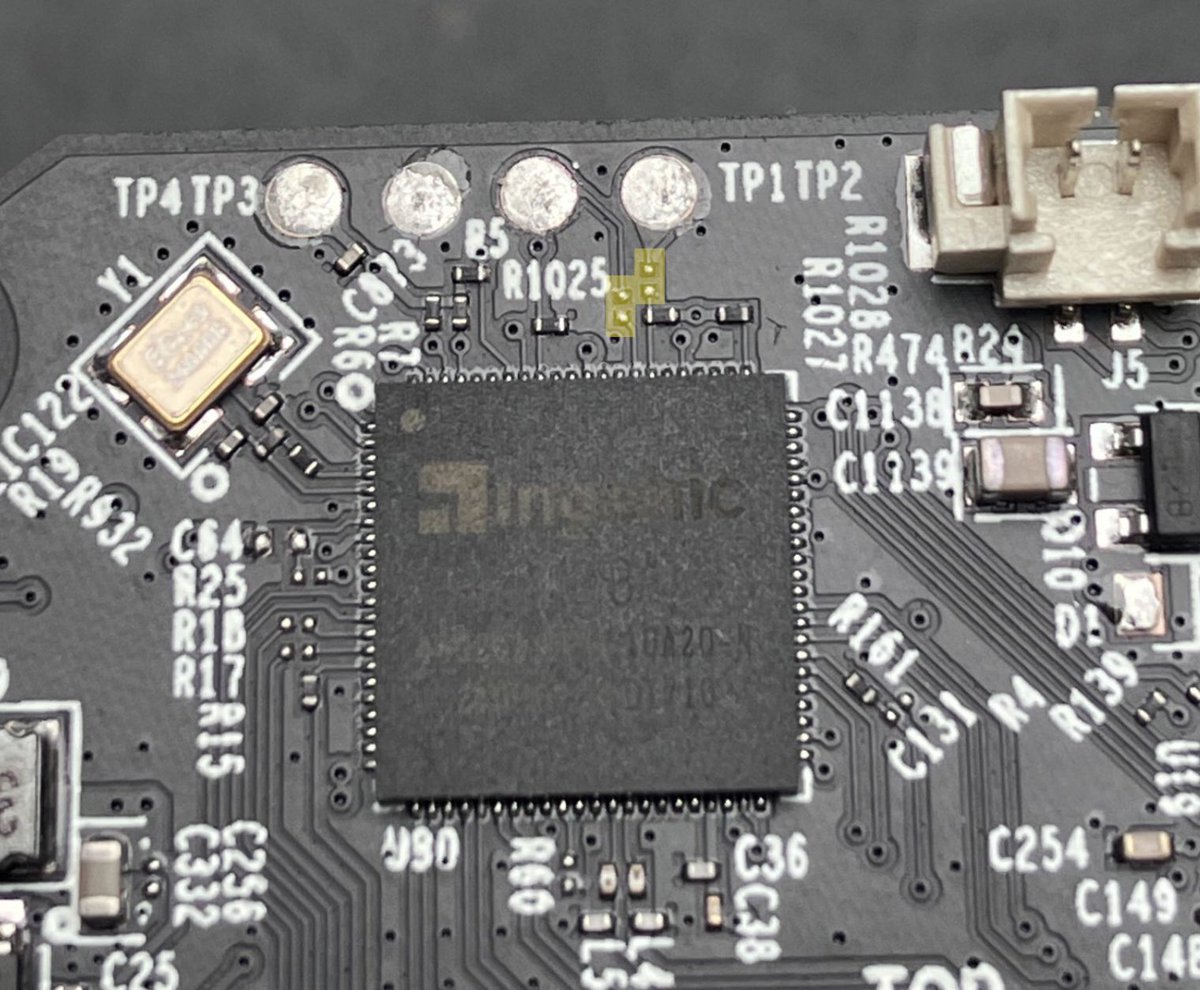
How to reverse engineer and get full root access on a TP-Link Tapo C200 (@qkaiser)
quentinkaiser.be/security/20…
#infosec #iot #embeddedsecurity
1
54
383
15,407

May 11
One week out.
Most professionals treating Secure Boot as a binary answer have not read the sequence carefully enough.
The platform does not simply “enable” or “disable” trust.
It transfers trust between stages:
UEFI → shim → GRUB → kernel → initramfs → runtime
Each stage inherits assumptions from the previous one.
That transfer is not purely cryptographic. It is operational.
And operational trust creates policy surfaces.
On May 18 I am running a 4-hour live masterclass on TrainSec focused entirely on operational Secure Boot assessment methodology.
Terminal only.
No firmware dumping.
No kernel exploit.
No fault injection.
No binary patching.
No “magic hacker tricks”.
Only evidence-driven trust reconstruction using:
• GRUB interaction
• kernel cmdline analysis
• dmesg telemetry
• /proc and /sys
• initramfs traces
• recovery workflows
• trusted operational behavior
The goal is not to “break Secure Boot”.
The goal is to understand how a system can:
• validate signatures correctly
• boot exactly as designed
• enforce Secure Boot correctly
• and still expose exploitable operational trust transitions
The session was designed for:
• Security architects
• Product security teams
• Secure Boot implementers
• R&D leaders
• Platform engineers
• Embedded/Linux developers
• Red teams and assessors
• AI/edge platform security engineers
The webinar includes a downloadable Secure Boot Challenge Lab VM built specifically for this methodology:
QEMU → OVMF → signed Ubuntu Secure Boot chain → initramfs orchestration
Over 4 hours we reconstruct the trust chain, map operational boundaries, enumerate recovery surfaces, recover trusted workflows, and drive the analysis all the way to privileged execution and protected payload replay.
$49 per seat.
Every registrant receives a matching $49 TrainSec course voucher.
Recording included.
Seats are disappearing much faster than expected.
Registration:
trainsec.net/bypassing-secur…
#CyberSecurity #SecureBoot #LinuxSecurity #EmbeddedSecurity #PlatformSecurity #ProductSecurity #SecurityArchitecture #ThreatModeling #RedTeam #SecurityAssessment #FirmwareSecurity #UEFI #Linux #Initramfs #KernelSecurity #AIInfrastructure #EdgeComputing #OffensiveSecurity #CyberResearch #TrainSec
2
5
1,317
Open Source IoT Security Needs Practical Tools
IoT security testing often reveals a tooling gap. While HTTP testing has mature interception workflows, MQTT based systems can still require custom scripts, manual traffic analysis, and significant setup just to gain visibility.
That is why VerSprite built ZANCUDO, an open source MQTT interception proxy for IoT pentesting.
Read the full post: versprite.com/blog/zancudo-o…
ZANCUDO reflects how VerSprite approaches security research: solve real problems from real engagements, then contribute practical capability back to the community.
Key takeaways:
• MQTT security testing requires protocol native tooling
• Visibility into device traffic is essential for meaningful assessment
• Packet modification, injection, and filtering are critical for testing real risk
• Open source tools help raise the baseline for IoT and embedded security
ZANCUDO was born from field work involving TLS, client certificates, custom CAs, and proprietary encryption. It is a practical example of research shaped by real world application security challenges.
Explore the full writeup:
versprite.com/blog/zancudo-o…
#ApplicationSecurity #IoTSecurity #Cybersecurity #OffensiveSecurity #PenetrationTesting #SecurityResearch #OpenSourceSecurity #MQTT #EmbeddedSecurity
3
3
48
Stop treating security as an afterthought. See how our IEC 62443-4-1 ML2 certification shows Microchip embeds cybersecurity across the product lifecycle. Read the blog for details: mchp.us/4sJ3qrr. #Cybersecurity #EmbeddedSecurity #CyberResilience

1
3
4
1,059
ZANCUDO and the Practical Future of IoT Security Testing
IoT security testing has a visibility problem.
In traditional web application security, interception, inspection, and manipulation are expected parts of the assessment workflow. In IoT and embedded environments, that same level of control is often harder to achieve. MQTT traffic, certificate based trust models, proprietary payload formats, and device specific constraints can turn a security assessment into a collection of manual workarounds.
That gap is why VerSprite built ZANCUDO.
ZANCUDO is an open source MQTT interception proxy created from real engagement experience. It reflects a core VerSprite belief: meaningful security research should not stop at identifying technical friction. It should turn that friction into repeatable methods that help the broader security community test better.
What makes ZANCUDO valuable for IoT pentesting:
• It helps testers intercept MQTT traffic in environments where TLS and custom certificate chains are part of the trust model
• It includes gen_certs, a utility designed to simplify certificate generation for authorized MITM testing
• It turns raw MQTT payloads into more readable intelligence by decoding common formats such as JSON, XML, YAML, JWT, Protobuf, BSON, MessagePack, CBOR, and more
• It supports JavaScript scripting so testers can analyze proprietary payload formats, modify packets, drop traffic, or test authorization assumptions in real time
• It gives practitioners a structured way to move from observation to validation, which is where real security testing happens
The larger lesson is not just about MQTT.
As connected devices become more embedded in business operations, healthcare, industrial environments, consumer platforms, and critical infrastructure, security teams need tooling that understands the protocols those systems actually use. IoT risk cannot be evaluated only through web assumptions. It requires purpose built research, protocol fluency, and the ability to model how real devices communicate under real constraints.
ZANCUDO represents that VerSprite contribution: field tested security research translated into open source capability.
Explore ZANCUDO here:
versprite.com/security-resou…
#IoTSecurity #ApplicationSecurity #Cybersecurity #PenetrationTesting #MQTT #EmbeddedSecurity
3
3
50
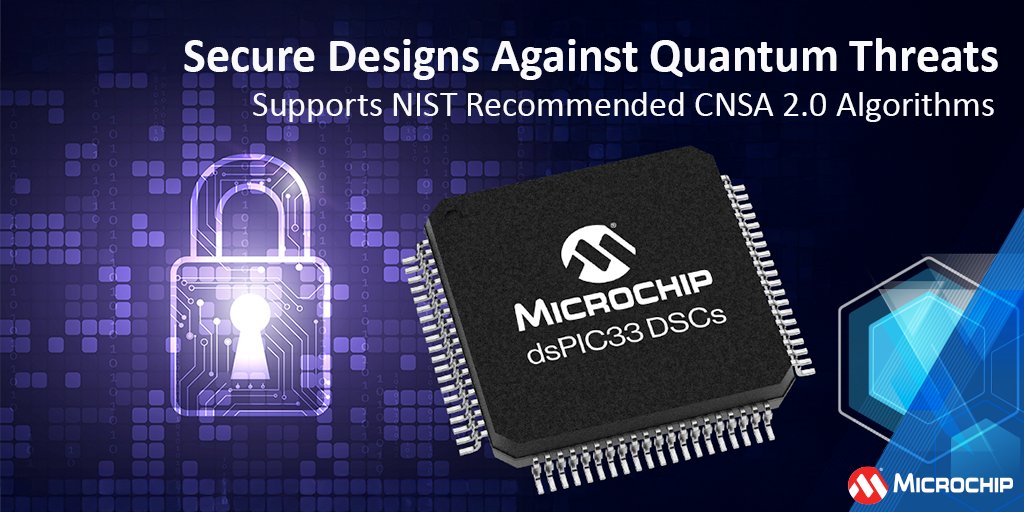
Secure your designs against quantum computer threat with dsPIC33 DSCs and Microchip’s free Post-Quantum Cryptography (PQC) library. The library supports NIST recommended CSNA 2.0 PQC algorithms and is optimized for dsPIC33 DSCs. mchp.us/426mpky #Microcontrollers #EmbeddedSystems #EmbeddedSecurity
1
4
12
935
Apr 28
Vehicle Hacking Arsenal — From CAN Bus to Full Car Compromise 🚗🔧
awesome-vehicle-security is a curated collection of real resources for automotive security research.
• Covers CAN Bus, ECU, infotainment, telematics attack surfaces
• Includes real-world exploits (Jeep hack, Tesla research, remote RCE cases)
• Tools, hardware, and frameworks for car hacking reverse engineering
• Research papers, talks, and courses → complete learning path
Modern vehicles = connected systems → large attack surface.
If you’re serious about automotive security or embedded exploitation, this is a solid starting point.
github.com/jaredthecoder/awe…
#AutomotiveSecurity #CarHacking #CANBus #CyberSecurity #EmbeddedSecurity
2
4
36
1,481
Apr 27
Embedded Hacking Arsenal — From Firmware to Full Device Compromise 🔧🔥
A no-BS resource dump for IoT / Embedded vulnerability research:
• Firmware reversing, bootloader exploitation, hardware debugging
• ARM / MIPS / U-Boot / QEMU / Ghidra workflows
• Real-world RCE writeups, 0-day chains, Pwn2Own cases
• Labs tools blogs → complete learning pipeline
If you're serious about IoT / hardware hacking, this is a goldmine. Better than random YouTube content — this is real research.
github.com/IamAlch3mist/Awes…
#IoTSecurity #EmbeddedSecurity #FirmwareAnalysis #ReverseEngineering #BugBounty #HardwareHacking
47
252
8,741