
Not even when they stop being a lethal threat to me, my community, especially our women and girls, and the entire Western Civilization under Sharia Law. Islam is a Homicidal "existentialist" threat: It means SUBMISSION or forced Dhimmitude or execution.!
3

The compute cost deflation curve suggests AI utility scales faster than the existentialist fears of its current hardware providers.
1
87

That’s not to be defeatist. Thinkers like Camus argue that because of this, one must create “meaning” oneself, embrace life. Habit formation, leap of faith, physical grounding are ways to beat the existentialist crisis. One must read Camus; more than pleasure, to get a friend.
1
1
21

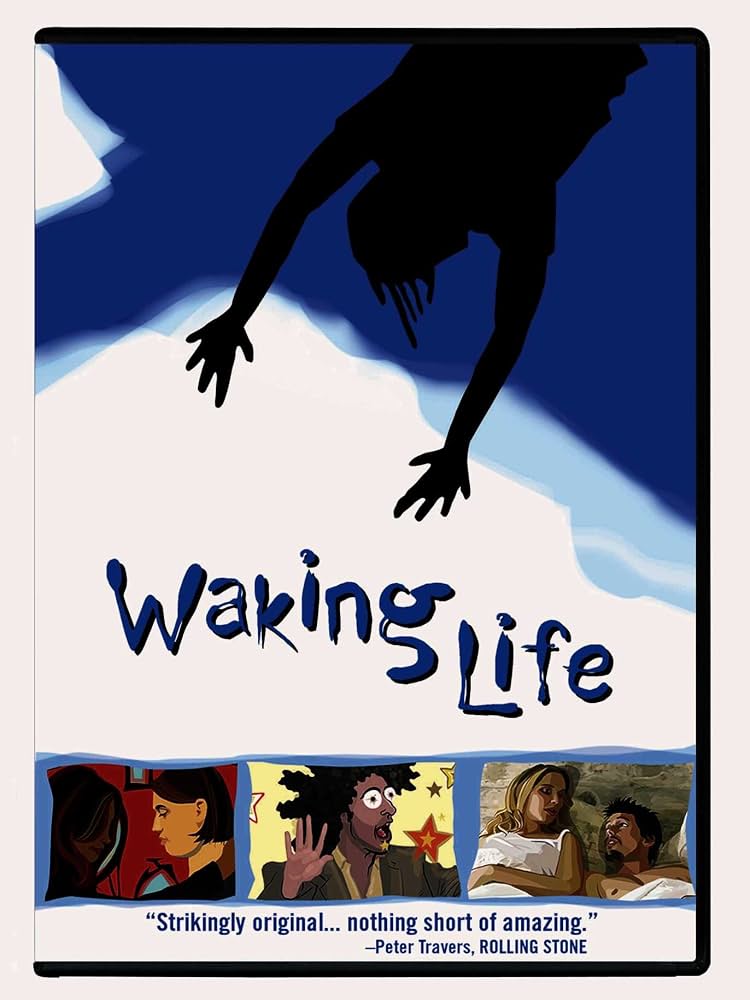
Watched this again
Fascinating movie, particularly now that I've read and learned so much more
The very first conversation scene is an existentialist critique of marxism, critical theory, and feminism
I think a lot would write it off as hippy garbage if they weren't listening.
13

...rid of one another unless one abstracts. There's a lot of existentialist horror that's possible to explore with this. And what the show does with Kinger and Queenie TOUCHES on these ideas, but it would've been cool to see more of it.
1
3
85


not saying sailor moon is a grimdark existentialist drama, but cartoons for adolescents playing around with mature themes in fantastical and stylized ways isn't unique to madoka
can't be having this discussion on the website where people are demanding trigger warnings for utena
4
72
Janet Parshall retweeted

Jun 16
Sartre’s existentialist view of man’s meaninglessness was destined never to understand democracy via a constitutional republic.

In 1968, while teenage Red Guards beat their professors to death with clubs in Beijing courtyards, Jean-Paul Sartre sat in Paris calling Mao's Cultural Revolution a model of revolutionary democracy. The most celebrated intellectual in France looked at a country burning its own libraries and saw liberation. He sold the Maoist newspaper La Cause du Peuple on French street corners himself, holding it aloft like a sacrament.
Consider what he was endorsing. Between 1966 and 1976, the Cultural Revolution killed somewhere between 500,000 and two million people. Schools shut down across the entire country. Students dragged teachers onto stages, hung placards around their necks, forced them to kneel on broken glass, then murdered them. The historian Bian Zhongyun, vice-principal of a girls' school in Beijing, died on August 5, 1966, beaten by her own students with nail-studded clubs. Sartre called this the people governing themselves.
You should understand why a man this intelligent got it this wrong. Sartre believed knowledge served power, that truth was whatever the revolution required, that the individual existed to be dissolved into the collective will. So when Mao abolished the distinction between teacher and student, between expert and mob, Sartre cheered. He had spent decades arguing that bourgeois reason was a class weapon. Here was a regime taking him at his word and clubbing the reasoners to death.
This is what economic illiteracy buys you. A university, a price, a contract, and a peasant's grain stockpile all carry knowledge that no central planner can seize or replicate. Mises explained the calculation problem in 1920. Hayek explained dispersed knowledge in 1945. Sartre had access to both and chose the dunce cap of the collective instead, then handed out its propaganda on the Rue de Rennes.
He died in 1980, mourned by 50,000 followers, never having retracted a word about Mao. The professors of Beijing got no such funeral. They got a ditch, and a philosopher in Paris explaining that their murder was freedom.

3
1
251

Sure, this is philosophy, you can do whatever you want 🤷
What you've described is just a weird form of quasi-nominalism which adopts an existentialist view of properties/essences but maintains a realist view of principles. It's probably a form of Subjective Idealism.
1
1
21
In spite of the fact that it was the most predictable and easy twist to use for this show's premise, it's not actually a BAD idea because there's a lot of existentialist horror and thematic substance to get out of it. But ep 9 barely does that.
2
1
15
367

If this train of thought is not a one time thing I would love to be friends and discuss existence with you being messing with alan watts and some great existentialist..they have great insight about life
1
5

Can we consult some real history perhaps?
Opponents and Critics of Christianity
Jewish Polemicists, Talmudists, Kabbalists, Sabbateans & Frankists
Rashi (Rabbi Shlomo Yitzchaki) (1040–1105) — Foundational Talmudic commentator whose anti-messianic interpretations of Scripture shaped centuries of Jewish rejection of Jesus as the Messiah.
Joseph Kimhi (c. 1105–c. 1170) — Author of Sefer ha-Berit, one of the earliest systematic Jewish polemics directly refuting core Christian claims about the Messiah.
David Kimhi (Radak) (c. 1160–1235) — Influential biblical exegete whose commentaries reinforced Jewish arguments against the divinity and messiahship of Christ.
Maimonides (Rambam) (1135/1138–1204) — Codified Jewish law in the Mishneh Torah, classifying Christianity as idolatrous and restricting interactions with Christian symbols.
Nahmanides (Ramban) (1194–1270) — Dominated the 1263 Barcelona Disputation, publicly dismantling Christian proof-texts from the Hebrew Bible.
Moses de León (c. 1240–1305) — Principal author of the Zohar, the foundational Kabbalistic text offering an esoteric counter-narrative to Christian salvation history.
Hiwi al-Balkhi (fl. c. 850–900) — Early rationalist critic of the Bible whose attacks on miracles undermined scriptural authority for both Judaism and Christianity.
Shem Tov ibn Shem Tov (c. 1380–c. 1441) — Kabbalist who opposed rationalism while deepening mystical traditions hostile to Christian revelation.
Isaac Luria (the Ari) (1534–1572) — Creator of Lurianic Kabbalah, whose doctrine of cosmic “repair” (tikkun) presents a competing redemptive framework to Christ’s atonement.
Isaac ben Abraham of Troki (c. 1533–1594) — Karaite scholar whose Hizzuk Emunah became a standard anti-Christian polemic used for centuries.
Sabbatai Zevi (1626–1676) — False messiah whose mass movement promoted antinomianism and the idea that redemption comes through deliberate sin.
Nathan of Gaza (1643/1644–1680) — Theological architect of Sabbateanism, teaching that “holy sin” and moral inversion accelerate redemption.
Jacob Emden (1697–1776) — Talmudic scholar who fought Sabbatean heresy but upheld traditional Jewish opposition to Christianity.
Jacob Frank (1726–1791) — Leader of the Frankist movement that preached total destruction of Christian moral and social order through debauchery, inversion, and subversion.
Gershom Scholem (1897–1982) — 20th-century scholar who revived academic interest in Sabbateanism and Frankism, highlighting their subversive and antinomian potential.
Enlightenment & Radical Rationalist Critics (Major Inspirers of the French Revolution)
Voltaire (François-Marie Arouet) (1694–1778) — Freemason (initiated 1778); tireless mocker of Christianity (“the most ridiculous, the most absurd and the most bloody religion”) and one of the primary intellectual inspirations for the French Revolution.
David Hume (1711–1776) — Philosophical skeptic whose critique of miracles and causation struck at the heart of Christian evidence and revelation.
Jean-Jacques Rousseau (1712–1778) — Major inspiration for the French Revolution; replaced biblical authority with a man-centered “civil religion,” the “general will,” and the cult of the state.
Frederick the Great (1712–1786) — Freemason (initiated 1738); Prussian king who sheltered Enlightenment atheists, protected Masonic lodges, and enforced state supremacy over the Church.
Denis Diderot (1713–1784) — Key inspirer of the French Revolution through the Encyclopédie; sought to “change the common way of thinking” by replacing God-centered knowledge with materialism.
Claude Adrien Helvétius (1715–1771) — Materialist who taught that morality is merely self-interest, denying Christian virtue and divine law; heavily influenced radical revolutionary thought.
Jean le Rond d’Alembert (1717–1783) — Key inspirer via the Encyclopédie; co-editor advancing rationalist secularism and anti-clericalism that fueled revolutionary ideology.
Baron d’Holbach (Paul-Henri Thiry) (1723–1789) — Militant atheist who called Christianity a “deadly plague” in his System of Nature; one of the most radical intellectual influences on the French Revolution.
Immanuel Kant (1724–1804) — Limited human reason to phenomena, undermining traditional proofs for the Christian God.
Edward Gibbon (1737–1794) — Argued in Decline and Fall of the Roman Empire that Christianity caused Rome’s collapse.
Thomas Paine (1737–1809) — Deist whose Age of Reason savagely attacked the Bible; bridged American and French revolutionary thought.
Marquis de Sade (1740–1814) — Explicitly glorified cruelty and vice as liberation from Christian “tyranny”; his extreme libertinism influenced the moral chaos of the Revolution.
Condorcet (Nicolas de Caritat) (1743–1794) — Direct intellectual architect of the French Revolution; utopian progressivist who envisioned a perfect society achieved by eliminating Christian influence.
Jeremy Bentham (1748–1832) — Founder of utilitarianism, reducing all ethics to pleasure/pain calculations without divine law.
Atheistic Scientists & Natural Philosophers
Charles Darwin (1809–1882) — Formulated evolution by natural selection, providing the scientific theory to displace biblical creation and design.
John Stuart Mill (1806–1873) — Championed secular liberalism and the replacement of Christian morality with utilitarian ethics.
Ludwig Feuerbach (1804–1872) — Taught that God is merely a human projection, inverting Christian theology.
Thomas Henry Huxley (1825–1895) — Aggressive popularizer of Darwinism and scientific naturalism against supernatural faith.
Carl Sagan (1934–1996) — Promoted a purely materialist cosmos and “pale blue dot” humanism that excludes the biblical Creator.
Stephen Jay Gould (1941–2002) — Advocated “non-overlapping magisteria” to permanently sideline religion from scientific discourse.
Stephen Hawking (1942–2018) — Claimed the universe needs no God and that philosophy is dead.
PZ Myers (1953– ) — Biologist and New Atheist known for aggressive public mockery of Christian belief.
Lawrence Krauss (1954– ) — Physicist who popularized the idea that the universe arose from “nothing” without a Creator.
Militant Atheists & New Atheists
Friedrich Nietzsche (1844–1900) — Declared “God is dead” and portrayed Christianity as a life-denying slave morality.
Bertrand Russell (1872–1970) — Nobel laureate who wrote Why I Am Not a Christian and pushed global secular ethics.
H.L. Mencken (1880–1956) — Scathing satirist who dismissed Christianity as superstition for the ignorant masses.
Aldous Huxley (1894–1963) — Satirized Christian society while promoting drug-induced mysticism as superior.
Ayn Rand (1905–1982) — Objectivist who condemned Christian altruism as evil and selfishness as virtue.
Christopher Hitchens (1949–2011) — Polemicist who called religion child abuse and poison in God Is Not Great.
Richard Dawkins (1941– ) — Popularized the “God delusion” meme and campaigned against religious upbringing.
Sam Harris (1967– ) — Argues for a science-based morality that dispenses with God.
Daniel Dennett (1942–2024) — Treated religion as a biological phenomenon to be studied and overcome.
A.C. Grayling (1949– ) — Militant humanist seeking total secular replacement of Christian institutions.
Peter Singer (1946– ) — Effective altruist who rejects sanctity of life and defends infanticide.
Deconstructionists, Postmodernists & Critical Theorists
Max Horkheimer (1895–1973) — Frankfurt School founder who developed critical theory to dismantle Christian Western culture.
Theodor W. Adorno (1903–1969) — Co-author of works pathologizing Christianity as inherently authoritarian.
Herbert Marcuse (1898–1979) — “Father of the New Left,” called for erotic liberation from Christian repression.
Michel Foucault (1926–1984) — Argued that power creates truth, undermining absolute Christian moral claims.
Jean-François Lyotard (1924–1998) — Declared the death of all grand narratives, especially Christianity.
Jacques Derrida (1930–2004) — Invented deconstruction to dissolve fixed meaning and biblical authority.
Richard Rorty (1931–2007) — Pragmatist who rejected objective truth and religious absolutes.
Slavoj Žižek (1949– ) — Marxist philosopher who reduces Christianity to ideological fantasy.
Judith Butler (1956– ) — Architect of gender performativity theory that deconstructs biblical anthropology.
Socialists, Communists, Marxists & Anarchists
Mikhail Bakunin (1814–1876) — Anarchist who demanded the abolition of both Church and State.
Karl Marx (1818–1883) — Founder of scientific socialism; called religion the “opium of the people.”
Friedrich Engels (1820–1895) — Co-developed dialectical materialism and militant atheism.
Vladimir Lenin (1870–1924) — Led Bolshevik persecution of the Orthodox Church and promoted state atheism.
Antonio Gramsci (1891–1937) — Theorized cultural hegemony to erode Christian dominance from within.
Joseph Stalin (1878–1953) — Dictator whose regime murdered millions of Christians.
Leon Trotsky (1879–1940) — Advocated permanent global revolution against Christian civilization.
Mao Zedong (1893–1976) — Destroyed Christian missions and churches during the Cultural Revolution.
Jean-Paul Sartre (1905–1980) — Marxist existentialist who saw God as the ultimate threat to human freedom.
Fabian Socialists & Gradualist Collectivists
Annie Besant (1847–1933) — Fabian socialist and Theosophist leader pushing occult-tinged collectivism.
George Bernard Shaw (1856–1950) — Fabian who praised Stalin and ridiculed Christian morality.
Beatrice Webb (1858–1943) — Architect of Fabian gradualism and welfare-state socialism.
Sidney Webb (1859–1947) — Co-founder of the London School of Economics and permeation strategy.
H. G. Wells (1866–1946) — Visionary of a scientific world state ruled by an elite.
Julian Huxley (1887–1975) — Coined “transhumanism” and promoted secular evolutionary humanism.
Harold Laski (1893–1950) — Influential Marxist-Fabian who shaped British intellectual socialism.
Theosophists, Occultists, Esotericists & New Age Gurus
Éliphas Lévi (1810–1875) — Revived modern occultism and popularized the image of Baphomet.
Helena Blavatsky (1831–1891) — Founded Theosophy, a Luciferian blending Eastern occultism to undermine Christian exclusivity.
C.W. Leadbeater (1854–1934) — Theosophical leader who promoted hidden masters and occult hierarchy.
Rudolf Steiner (1861–1925) — Founded Anthroposophy as an esoteric “spiritual science” alternative to Christianity.
Swami Vivekananda (1863–1902) — Introduced Vedanta to the West, promoting religious relativism.
George Gurdjieff (c. 1866–1949) — Taught esoteric self-work to awaken from Christian “sleep.”
Alice Bailey (1880–1949) — Channeler who openly referred to Lucifer as the “Light-bringer” for the New Age.
Aleister Crowley (1875–1947) — “The Great Beast 666,” founder of Thelema and advocate of “Do what thou wilt.”
Edgar Cayce (1877–1945) — Popularized reincarnation and New Age syncretism through trance readings.
Guy Ballard (1878–1939) — Founded the “I AM” Activity, blending occult nationalism with ascended masters.
H. Spencer Lewis (1883–1939) — Rosicrucian leader who revived esoteric initiation in America.
Dion Fortune (1890–1946) — Occult novelist who merged Kabbalah, psychology, and ritual magic.
Jiddu Krishnamurti (1895–1986) — Promoted truth as “pathless,” rejecting all organized religion including Christianity.
Manly P. Hall (1901–1990) — Freemason and Masonic philosopher who glorified ancient mystery schools over biblical truth.
Joseph Campbell (1904–1987) — Mythologist who taught “follow your bliss” relativism.
L. Ron Hubbard (1911–1986) — Created Scientology, an occult-derived system of psychological and spiritual control.
Jack Parsons (1914–1952) — Performed the Babalon Working to summon the Thelemic goddess of the new aeon.
Robert Muller (1923–2010) — UN Assistant Secretary-General who advocated global spirituality and Gaia consciousness.
Benjamin Creme (1922–2016) — Proclaimed the imminent arrival of Maitreya as world teacher.
Osho (Rajneesh) (1931–1990) — Sex guru who attacked marriage and promoted hedonistic enlightenment.
Jordan Maxwell (1940–2021) — Popularized astro-theological claims that Christianity is pagan sun worship.
Deepak Chopra (1946– ) — Blends quantum pseudoscience with Eastern mysticism for mass consumption.
Terence McKenna (1946–2000) — Psychedelic prophet who foresaw the end of the Christian “dominator culture.”
Eckhart Tolle (1948– ) — Teaches ego-dissolution and presence as superior to Christian redemption.
Ken Wilber (1949– ) — Integral theory that subordinates Christianity to a hierarchy of evolving consciousness.
Santos Bonacci (contemporary) — Astro-theologist who claims the Bible is allegorical sun worship.
Freemasons & Rosicrucian Figures
Albert Pike (1809–1891) — Freemason (Sovereign Grand Commander); Morals and Dogma equates Lucifer with the light-bearer.
H. Spencer Lewis (1883–1939) — Rosicrucian founder of AMORC, spreading esoteric initiation.
Manly P. Hall (1901–1990) — Freemason who presented occult mysteries as superior wisdom.
Luciferian & Satanist Influences
Marquis de Sade (1740–1814) — Patron of sadism who celebrated evil as rebellion against Christian virtue.
Éliphas Lévi (1810–1875) — Occult revivalist who made Baphomet a central symbol of inverted order.
Aleister Crowley (1875–1947) — Proclaimed the end of the Christian aeon and the Law of Thelema.
Jack Parsons (1914–1952) — Conducted rituals to incarnate the goddess of the new anti-Christian age.
Anton LaVey (1930–1997) — Founded the Church of Satan and codified atheistic Satanism in The Satanic Bible.
Feminists, Gender Theorists & Related
Mary Wollstonecraft (1759–1797) — Laid early secular foundations challenging biblical gender roles and patriarchy.
Virginia Woolf (1882–1941) — Promoted androgyny and mocked traditional Christian family life.
Simone de Beauvoir (1908–1986) — Declared “one is not born, but becomes, a woman,” attacking motherhood as oppression.
Betty Friedan (1921–2006) — Sparked second-wave feminism by framing domestic life as unfulfilling prison.
Kate Millett (1934–2017) — Radical who called the family the chief institution of patriarchy to be destroyed.
Gloria Steinem (1934– ) — Promoted abortion and careerism as liberation while downplaying marriage.
Germaine Greer (1939– ) — Attacked the “traditional” woman and Christian sexual ethics.
Audre Lorde (1934–1992) — Advanced intersectional identity politics and lesbian separatism.
Mary Daly (1928–2010) — Former theologian who rejected Christianity as irredeemably patriarchal.
Shulamith Firestone (1945–2012) — Demanded technological abolition of biological reproduction and the family.
Andrea Dworkin (1946–2005) — Radical whose anti-porn stance still targeted Christian sexual norms.
bell hooks (1952–2021) — Critic of “imperialist white supremacist capitalist patriarchy.”
Judith Butler (1956– ) — Theorized gender as performance, foundational to modern LGBT ideology.
Kimberlé Crenshaw (1959– ) — Coined “intersectionality,” fragmenting Christian universal human dignity.
Hollywood, Media & Entertainment Influencers
Gene Roddenberry (1921–1991) — Creator of Star Trek, which promoted a godless, multicultural, secular humanist future.
Steven Spielberg (1946– ) — Dominant Hollywood figure whose blockbuster films frequently advance humanistic, relativistic, and subtly anti-traditional themes.
Globalists, Internationalists & World Government Advocates
Richard von Coudenhove-Kalergi (1894–1972) — Father of European integration who envisioned a mixed-race, post-national continent.
Jean Monnet (1888–1979) — Primary architect of the European Union as a stepping stone to supranational governance.
James Paul Warburg (1896–1969) — Banker who told the U.S. Senate “we shall have world government, whether by consent or conquest.”
John D. Rockefeller III (1906–1978) — Funded population control and globalist institutions.
Nelson Rockefeller (1908–1979) — Advanced American internationalism and regional governance.
David Rockefeller (1915–2017) — Longtime leader of CFR and Trilateral Commission pushing one-world financial order.
Mikhail Gorbachev (1931–2022) — Shifted from communism to global environmental socialism.
Henry Kissinger (1923–2023) — Master practitioner of balance-of-power globalism.
Maurice Strong (1929–2015) — UN environmental architect who wanted to replace Christian ethics with Earth Charter spirituality.
George Soros (1930– ) — Funds open-border migration, progressive causes, and erosion of Christian national identities.
Klaus Schwab (1938– ) — WEF founder behind the “Great Reset,” advocating stakeholder capitalism and technocratic control.
Al Gore (1948– ) — Used climate alarmism to justify global governance mechanisms.
Jacques Attali (1943– ) — French technocrat openly calling for planetary political and economic institutions.
Tony Blair (1953– ) — UK Prime Minister who aggressively promoted global citizenship, religious pluralism and interfaith dialogue as essential, and strong international institutions over traditional Christian national sovereignty.
Ban Ki-moon (1944– ) — Former UN Secretary-General advancing globalist agendas.
António Guterres (1949– ) — Current UN chief promoting “common agenda” beyond national sovereignty.
Justin Trudeau (1971– ) — Canadian PM embodying progressive globalism and cultural transformation.
Mark Carney (1965– ) — Central banker advocating climate-based global finance reform.
Yuval Noah Harari (1976– ) — WEF advisor who calls humans “hackable animals” and dismisses traditional religious souls and free will.
Christiana Figueres (1956– ) — UN climate chief pushing radical sustainability as vehicle for global control.
Roger Hallam (1966– ) — Extinction Rebellion co-founder using climate alarm for radical societal upheaval.
Zack Polanski (contemporary) — Modern political voice advancing globalist progressive causes.
Transhumanists, Evolutionary Humanists & Futurists
Pierre Teilhard de Chardin (1881–1955) — Jesuit who fused evolution with mystical omega point.
Julian Huxley (1887–1975) — Coined “transhumanism” and promoted secular evolutionary humanism.
Aldous Huxley (1894–1963) — Predicted drugged Brave New World.
Robert Ettinger (1918–2011) — Cryonics pioneer seeking technological immortality.
Fereidoun M. Esfandiary (FM-2030) (1930–2000) — Early transhumanist rejecting death and biological limits.
William Sims Bainbridge (1940– ) — Sociologist of religion and transhumanist advocate.
Ray Kurzweil (1948– ) — Google engineer predicting Singularity and mind uploading.
Martine Rothblatt (1954– ) — Transhumanist and transgender activist creating “mind clones.”
Max More (1964– ) — Extropian philosopher formalizing transhumanist principles.
Nick Bostrom (1973– ) — Oxford philosopher advancing human enhancement while warning of AI risks.
Yuval Noah Harari (1976– ) — Predicts end of Homo sapiens via biotech and surveillance.
Historians & Civilizational Critics
Edward Gibbon (1737–1794) — Blamed Christianity for Rome’s decline.
Oswald Spengler (1880–1936) — Predicted Western (Christian) decline in Decline of the West.
Will Durant (1885–1981) — Historian who presented religion naturalistically.
Eric Hobsbawm (1917–2012) — Marxist historian glorifying revolutionary secularism.
Other Notable Critics & Influences
Baruch Spinoza (1632–1677) — Pantheist excommunicated for undermining biblical authority.
Albert Einstein (1879–1955) — Deist whose cosmic religion replaced the personal God of Christianity.
Carl Jung (1875–1961) — Psychologist who psychologized God and promoted archetypes over revelation.
D. T. Suzuki (1870–1966) — Zen popularizer who influenced Western counterculture.
Mahatma Gandhi (1869–1948) — Syncretist who relativized Christ among many prophets.
Sri Aurobindo (1872–1950) — Indian evolutionary mystic offering alternative spirituality.
Jawaharlal Nehru (1889–1964) — Indian secularist who built a socialist state.
Dalai Lama (14th) (1935– ) — Promotes Buddhist global ethics over Christian exclusivity.
Bart D. Ehrman (1955– ) — Ex-Evangelical biblical scholar who popularizes textual skepticism.
2
421
Let's look at some history?
Opponents and Critics of Christianity
Jewish Polemicists, Talmudists, Kabbalists, Sabbateans & Frankists
Rashi (Rabbi Shlomo Yitzchaki) (1040–1105) — Foundational Talmudic commentator whose anti-messianic interpretations of Scripture shaped centuries of Jewish rejection of Jesus as the Messiah.
Joseph Kimhi (c. 1105–c. 1170) — Author of Sefer ha-Berit, one of the earliest systematic Jewish polemics directly refuting core Christian claims about the Messiah.
David Kimhi (Radak) (c. 1160–1235) — Influential biblical exegete whose commentaries reinforced Jewish arguments against the divinity and messiahship of Christ.
Maimonides (Rambam) (1135/1138–1204) — Codified Jewish law in the Mishneh Torah, classifying Christianity as idolatrous and restricting interactions with Christian symbols.
Nahmanides (Ramban) (1194–1270) — Dominated the 1263 Barcelona Disputation, publicly dismantling Christian proof-texts from the Hebrew Bible.
Moses de León (c. 1240–1305) — Principal author of the Zohar, the foundational Kabbalistic text offering an esoteric counter-narrative to Christian salvation history.
Hiwi al-Balkhi (fl. c. 850–900) — Early rationalist critic of the Bible whose attacks on miracles undermined scriptural authority for both Judaism and Christianity.
Shem Tov ibn Shem Tov (c. 1380–c. 1441) — Kabbalist who opposed rationalism while deepening mystical traditions hostile to Christian revelation.
Isaac Luria (the Ari) (1534–1572) — Creator of Lurianic Kabbalah, whose doctrine of cosmic “repair” (tikkun) presents a competing redemptive framework to Christ’s atonement.
Isaac ben Abraham of Troki (c. 1533–1594) — Karaite scholar whose Hizzuk Emunah became a standard anti-Christian polemic used for centuries.
Sabbatai Zevi (1626–1676) — False messiah whose mass movement promoted antinomianism and the idea that redemption comes through deliberate sin.
Nathan of Gaza (1643/1644–1680) — Theological architect of Sabbateanism, teaching that “holy sin” and moral inversion accelerate redemption.
Jacob Emden (1697–1776) — Talmudic scholar who fought Sabbatean heresy but upheld traditional Jewish opposition to Christianity.
Jacob Frank (1726–1791) — Leader of the Frankist movement that preached total destruction of Christian moral and social order through debauchery, inversion, and subversion.
Gershom Scholem (1897–1982) — 20th-century scholar who revived academic interest in Sabbateanism and Frankism, highlighting their subversive and antinomian potential.
Enlightenment & Radical Rationalist Critics (Major Inspirers of the French Revolution)
Voltaire (François-Marie Arouet) (1694–1778) — Freemason (initiated 1778); tireless mocker of Christianity (“the most ridiculous, the most absurd and the most bloody religion”) and one of the primary intellectual inspirations for the French Revolution.
David Hume (1711–1776) — Philosophical skeptic whose critique of miracles and causation struck at the heart of Christian evidence and revelation.
Jean-Jacques Rousseau (1712–1778) — Major inspiration for the French Revolution; replaced biblical authority with a man-centered “civil religion,” the “general will,” and the cult of the state.
Frederick the Great (1712–1786) — Freemason (initiated 1738); Prussian king who sheltered Enlightenment atheists, protected Masonic lodges, and enforced state supremacy over the Church.
Denis Diderot (1713–1784) — Key inspirer of the French Revolution through the Encyclopédie; sought to “change the common way of thinking” by replacing God-centered knowledge with materialism.
Claude Adrien Helvétius (1715–1771) — Materialist who taught that morality is merely self-interest, denying Christian virtue and divine law; heavily influenced radical revolutionary thought.
Jean le Rond d’Alembert (1717–1783) — Key inspirer via the Encyclopédie; co-editor advancing rationalist secularism and anti-clericalism that fueled revolutionary ideology.
Baron d’Holbach (Paul-Henri Thiry) (1723–1789) — Militant atheist who called Christianity a “deadly plague” in his System of Nature; one of the most radical intellectual influences on the French Revolution.
Immanuel Kant (1724–1804) — Limited human reason to phenomena, undermining traditional proofs for the Christian God.
Edward Gibbon (1737–1794) — Argued in Decline and Fall of the Roman Empire that Christianity caused Rome’s collapse.
Thomas Paine (1737–1809) — Deist whose Age of Reason savagely attacked the Bible; bridged American and French revolutionary thought.
Marquis de Sade (1740–1814) — Explicitly glorified cruelty and vice as liberation from Christian “tyranny”; his extreme libertinism influenced the moral chaos of the Revolution.
Condorcet (Nicolas de Caritat) (1743–1794) — Direct intellectual architect of the French Revolution; utopian progressivist who envisioned a perfect society achieved by eliminating Christian influence.
Jeremy Bentham (1748–1832) — Founder of utilitarianism, reducing all ethics to pleasure/pain calculations without divine law.
Atheistic Scientists & Natural Philosophers
Charles Darwin (1809–1882) — Formulated evolution by natural selection, providing the scientific theory to displace biblical creation and design.
John Stuart Mill (1806–1873) — Championed secular liberalism and the replacement of Christian morality with utilitarian ethics.
Ludwig Feuerbach (1804–1872) — Taught that God is merely a human projection, inverting Christian theology.
Thomas Henry Huxley (1825–1895) — Aggressive popularizer of Darwinism and scientific naturalism against supernatural faith.
Carl Sagan (1934–1996) — Promoted a purely materialist cosmos and “pale blue dot” humanism that excludes the biblical Creator.
Stephen Jay Gould (1941–2002) — Advocated “non-overlapping magisteria” to permanently sideline religion from scientific discourse.
Stephen Hawking (1942–2018) — Claimed the universe needs no God and that philosophy is dead.
PZ Myers (1953– ) — Biologist and New Atheist known for aggressive public mockery of Christian belief.
Lawrence Krauss (1954– ) — Physicist who popularized the idea that the universe arose from “nothing” without a Creator.
Militant Atheists & New Atheists
Friedrich Nietzsche (1844–1900) — Declared “God is dead” and portrayed Christianity as a life-denying slave morality.
Bertrand Russell (1872–1970) — Nobel laureate who wrote Why I Am Not a Christian and pushed global secular ethics.
H.L. Mencken (1880–1956) — Scathing satirist who dismissed Christianity as superstition for the ignorant masses.
Aldous Huxley (1894–1963) — Satirized Christian society while promoting drug-induced mysticism as superior.
Ayn Rand (1905–1982) — Objectivist who condemned Christian altruism as evil and selfishness as virtue.
Christopher Hitchens (1949–2011) — Polemicist who called religion child abuse and poison in God Is Not Great.
Richard Dawkins (1941– ) — Popularized the “God delusion” meme and campaigned against religious upbringing.
Sam Harris (1967– ) — Argues for a science-based morality that dispenses with God.
Daniel Dennett (1942–2024) — Treated religion as a biological phenomenon to be studied and overcome.
A.C. Grayling (1949– ) — Militant humanist seeking total secular replacement of Christian institutions.
Peter Singer (1946– ) — Effective altruist who rejects sanctity of life and defends infanticide.
Deconstructionists, Postmodernists & Critical Theorists
Max Horkheimer (1895–1973) — Frankfurt School founder who developed critical theory to dismantle Christian Western culture.
Theodor W. Adorno (1903–1969) — Co-author of works pathologizing Christianity as inherently authoritarian.
Herbert Marcuse (1898–1979) — “Father of the New Left,” called for erotic liberation from Christian repression.
Michel Foucault (1926–1984) — Argued that power creates truth, undermining absolute Christian moral claims.
Jean-François Lyotard (1924–1998) — Declared the death of all grand narratives, especially Christianity.
Jacques Derrida (1930–2004) — Invented deconstruction to dissolve fixed meaning and biblical authority.
Richard Rorty (1931–2007) — Pragmatist who rejected objective truth and religious absolutes.
Slavoj Žižek (1949– ) — Marxist philosopher who reduces Christianity to ideological fantasy.
Judith Butler (1956– ) — Architect of gender performativity theory that deconstructs biblical anthropology.
Socialists, Communists, Marxists & Anarchists
Mikhail Bakunin (1814–1876) — Anarchist who demanded the abolition of both Church and State.
Karl Marx (1818–1883) — Founder of scientific socialism; called religion the “opium of the people.”
Friedrich Engels (1820–1895) — Co-developed dialectical materialism and militant atheism.
Vladimir Lenin (1870–1924) — Led Bolshevik persecution of the Orthodox Church and promoted state atheism.
Antonio Gramsci (1891–1937) — Theorized cultural hegemony to erode Christian dominance from within.
Joseph Stalin (1878–1953) — Dictator whose regime murdered millions of Christians.
Leon Trotsky (1879–1940) — Advocated permanent global revolution against Christian civilization.
Mao Zedong (1893–1976) — Destroyed Christian missions and churches during the Cultural Revolution.
Jean-Paul Sartre (1905–1980) — Marxist existentialist who saw God as the ultimate threat to human freedom.
Fabian Socialists & Gradualist Collectivists
Annie Besant (1847–1933) — Fabian socialist and Theosophist leader pushing occult-tinged collectivism.
George Bernard Shaw (1856–1950) — Fabian who praised Stalin and ridiculed Christian morality.
Beatrice Webb (1858–1943) — Architect of Fabian gradualism and welfare-state socialism.
Sidney Webb (1859–1947) — Co-founder of the London School of Economics and permeation strategy.
H. G. Wells (1866–1946) — Visionary of a scientific world state ruled by an elite.
Julian Huxley (1887–1975) — Coined “transhumanism” and promoted secular evolutionary humanism.
Harold Laski (1893–1950) — Influential Marxist-Fabian who shaped British intellectual socialism.
Theosophists, Occultists, Esotericists & New Age Gurus
Éliphas Lévi (1810–1875) — Revived modern occultism and popularized the image of Baphomet.
Helena Blavatsky (1831–1891) — Founded Theosophy, a Luciferian blending Eastern occultism to undermine Christian exclusivity.
C.W. Leadbeater (1854–1934) — Theosophical leader who promoted hidden masters and occult hierarchy.
Rudolf Steiner (1861–1925) — Founded Anthroposophy as an esoteric “spiritual science” alternative to Christianity.
Swami Vivekananda (1863–1902) — Introduced Vedanta to the West, promoting religious relativism.
George Gurdjieff (c. 1866–1949) — Taught esoteric self-work to awaken from Christian “sleep.”
Alice Bailey (1880–1949) — Channeler who openly referred to Lucifer as the “Light-bringer” for the New Age.
Aleister Crowley (1875–1947) — “The Great Beast 666,” founder of Thelema and advocate of “Do what thou wilt.”
Edgar Cayce (1877–1945) — Popularized reincarnation and New Age syncretism through trance readings.
Guy Ballard (1878–1939) — Founded the “I AM” Activity, blending occult nationalism with ascended masters.
H. Spencer Lewis (1883–1939) — Rosicrucian leader who revived esoteric initiation in America.
Dion Fortune (1890–1946) — Occult novelist who merged Kabbalah, psychology, and ritual magic.
Jiddu Krishnamurti (1895–1986) — Promoted truth as “pathless,” rejecting all organized religion including Christianity.
Manly P. Hall (1901–1990) — Freemason and Masonic philosopher who glorified ancient mystery schools over biblical truth.
Joseph Campbell (1904–1987) — Mythologist who taught “follow your bliss” relativism.
L. Ron Hubbard (1911–1986) — Created Scientology, an occult-derived system of psychological and spiritual control.
Jack Parsons (1914–1952) — Performed the Babalon Working to summon the Thelemic goddess of the new aeon.
Robert Muller (1923–2010) — UN Assistant Secretary-General who advocated global spirituality and Gaia consciousness.
Benjamin Creme (1922–2016) — Proclaimed the imminent arrival of Maitreya as world teacher.
Osho (Rajneesh) (1931–1990) — Sex guru who attacked marriage and promoted hedonistic enlightenment.
Jordan Maxwell (1940–2021) — Popularized astro-theological claims that Christianity is pagan sun worship.
Deepak Chopra (1946– ) — Blends quantum pseudoscience with Eastern mysticism for mass consumption.
Terence McKenna (1946–2000) — Psychedelic prophet who foresaw the end of the Christian “dominator culture.”
Eckhart Tolle (1948– ) — Teaches ego-dissolution and presence as superior to Christian redemption.
Ken Wilber (1949– ) — Integral theory that subordinates Christianity to a hierarchy of evolving consciousness.
Santos Bonacci (contemporary) — Astro-theologist who claims the Bible is allegorical sun worship.
Freemasons & Rosicrucian Figures
Albert Pike (1809–1891) — Freemason (Sovereign Grand Commander); Morals and Dogma equates Lucifer with the light-bearer.
H. Spencer Lewis (1883–1939) — Rosicrucian founder of AMORC, spreading esoteric initiation.
Manly P. Hall (1901–1990) — Freemason who presented occult mysteries as superior wisdom.
Luciferian & Satanist Influences
Marquis de Sade (1740–1814) — Patron of sadism who celebrated evil as rebellion against Christian virtue.
Éliphas Lévi (1810–1875) — Occult revivalist who made Baphomet a central symbol of inverted order.
Aleister Crowley (1875–1947) — Proclaimed the end of the Christian aeon and the Law of Thelema.
Jack Parsons (1914–1952) — Conducted rituals to incarnate the goddess of the new anti-Christian age.
Anton LaVey (1930–1997) — Founded the Church of Satan and codified atheistic Satanism in The Satanic Bible.
Feminists, Gender Theorists & Related
Mary Wollstonecraft (1759–1797) — Laid early secular foundations challenging biblical gender roles and patriarchy.
Virginia Woolf (1882–1941) — Promoted androgyny and mocked traditional Christian family life.
Simone de Beauvoir (1908–1986) — Declared “one is not born, but becomes, a woman,” attacking motherhood as oppression.
Betty Friedan (1921–2006) — Sparked second-wave feminism by framing domestic life as unfulfilling prison.
Kate Millett (1934–2017) — Radical who called the family the chief institution of patriarchy to be destroyed.
Gloria Steinem (1934– ) — Promoted abortion and careerism as liberation while downplaying marriage.
Germaine Greer (1939– ) — Attacked the “traditional” woman and Christian sexual ethics.
Audre Lorde (1934–1992) — Advanced intersectional identity politics and lesbian separatism.
Mary Daly (1928–2010) — Former theologian who rejected Christianity as irredeemably patriarchal.
Shulamith Firestone (1945–2012) — Demanded technological abolition of biological reproduction and the family.
Andrea Dworkin (1946–2005) — Radical whose anti-porn stance still targeted Christian sexual norms.
bell hooks (1952–2021) — Critic of “imperialist white supremacist capitalist patriarchy.”
Judith Butler (1956– ) — Theorized gender as performance, foundational to modern LGBT ideology.
Kimberlé Crenshaw (1959– ) — Coined “intersectionality,” fragmenting Christian universal human dignity.
Hollywood, Media & Entertainment Influencers
Gene Roddenberry (1921–1991) — Creator of Star Trek, which promoted a godless, multicultural, secular humanist future.
Steven Spielberg (1946– ) — Dominant Hollywood figure whose blockbuster films frequently advance humanistic, relativistic, and subtly anti-traditional themes.
Globalists, Internationalists & World Government Advocates
Richard von Coudenhove-Kalergi (1894–1972) — Father of European integration who envisioned a mixed-race, post-national continent.
Jean Monnet (1888–1979) — Primary architect of the European Union as a stepping stone to supranational governance.
James Paul Warburg (1896–1969) — Banker who told the U.S. Senate “we shall have world government, whether by consent or conquest.”
John D. Rockefeller III (1906–1978) — Funded population control and globalist institutions.
Nelson Rockefeller (1908–1979) — Advanced American internationalism and regional governance.
David Rockefeller (1915–2017) — Longtime leader of CFR and Trilateral Commission pushing one-world financial order.
Mikhail Gorbachev (1931–2022) — Shifted from communism to global environmental socialism.
Henry Kissinger (1923–2023) — Master practitioner of balance-of-power globalism.
Maurice Strong (1929–2015) — UN environmental architect who wanted to replace Christian ethics with Earth Charter spirituality.
George Soros (1930– ) — Funds open-border migration, progressive causes, and erosion of Christian national identities.
Klaus Schwab (1938– ) — WEF founder behind the “Great Reset,” advocating stakeholder capitalism and technocratic control.
Al Gore (1948– ) — Used climate alarmism to justify global governance mechanisms.
Jacques Attali (1943– ) — French technocrat openly calling for planetary political and economic institutions.
Tony Blair (1953– ) — UK Prime Minister who aggressively promoted global citizenship, religious pluralism and interfaith dialogue as essential, and strong international institutions over traditional Christian national sovereignty.
Ban Ki-moon (1944– ) — Former UN Secretary-General advancing globalist agendas.
António Guterres (1949– ) — Current UN chief promoting “common agenda” beyond national sovereignty.
Justin Trudeau (1971– ) — Canadian PM embodying progressive globalism and cultural transformation.
Mark Carney (1965– ) — Central banker advocating climate-based global finance reform.
Yuval Noah Harari (1976– ) — WEF advisor who calls humans “hackable animals” and dismisses traditional religious souls and free will.
Christiana Figueres (1956– ) — UN climate chief pushing radical sustainability as vehicle for global control.
Roger Hallam (1966– ) — Extinction Rebellion co-founder using climate alarm for radical societal upheaval.
Zack Polanski (contemporary) — Modern political voice advancing globalist progressive causes.
Transhumanists, Evolutionary Humanists & Futurists
Pierre Teilhard de Chardin (1881–1955) — Jesuit who fused evolution with mystical omega point.
Julian Huxley (1887–1975) — Coined “transhumanism” and promoted secular evolutionary humanism.
Aldous Huxley (1894–1963) — Predicted drugged Brave New World.
Robert Ettinger (1918–2011) — Cryonics pioneer seeking technological immortality.
Fereidoun M. Esfandiary (FM-2030) (1930–2000) — Early transhumanist rejecting death and biological limits.
William Sims Bainbridge (1940– ) — Sociologist of religion and transhumanist advocate.
Ray Kurzweil (1948– ) — Google engineer predicting Singularity and mind uploading.
Martine Rothblatt (1954– ) — Transhumanist and transgender activist creating “mind clones.”
Max More (1964– ) — Extropian philosopher formalizing transhumanist principles.
Nick Bostrom (1973– ) — Oxford philosopher advancing human enhancement while warning of AI risks.
Yuval Noah Harari (1976– ) — Predicts end of Homo sapiens via biotech and surveillance.
Historians & Civilizational Critics
Edward Gibbon (1737–1794) — Blamed Christianity for Rome’s decline.
Oswald Spengler (1880–1936) — Predicted Western (Christian) decline in Decline of the West.
Will Durant (1885–1981) — Historian who presented religion naturalistically.
Eric Hobsbawm (1917–2012) — Marxist historian glorifying revolutionary secularism.
Other Notable Critics & Influences
Baruch Spinoza (1632–1677) — Pantheist excommunicated for undermining biblical authority.
Albert Einstein (1879–1955) — Deist whose cosmic religion replaced the personal God of Christianity.
Carl Jung (1875–1961) — Psychologist who psychologized God and promoted archetypes over revelation.
D. T. Suzuki (1870–1966) — Zen popularizer who influenced Western counterculture.
Mahatma Gandhi (1869–1948) — Syncretist who relativized Christ among many prophets.
Sri Aurobindo (1872–1950) — Indian evolutionary mystic offering alternative spirituality.
Jawaharlal Nehru (1889–1964) — Indian secularist who built a socialist state.
Dalai Lama (14th) (1935– ) — Promotes Buddhist global ethics over Christian exclusivity.
Bart D. Ehrman (1955– ) — Ex-Evangelical biblical scholar who popularizes textual skepticism.
1
419

Reincarnating Israel [#WestAsia_Israel]
Thank you. I believe that this brief analysis, without academic or journalistic prevarications, is pungently insightful.
The bottom line is that the dividends that Israel has received for nearly 80 years in cash, arms, or political support from the West for moral culpability, presumed or real, are coming to an end.
Israel now faces an existentialist dilemma of its own making, not because of Iran, Arabs or whoever. I hope that the well-being of the Jewish people of all stripes guides its new course.
My interest in this issue stems from my personal and professional "Journey with the Jewry", which is a part of my Submission to the Australian Royal Commission on Antisemitism and Social Cohesion.
downloadingmymind.com/my-jou…
#auspol @SenatorWong @AlboMP @netanyahu
1
598

“Jean-Paul Sartre, #Existentialist” | The New Yorker - March 9, 1946 newyorker.com/magazine/1946/…
2

This assumes the definition of the word “faith“ that runs counter to the biblical definition. The Bible puts forth faith as putting your trust in what you know to be true. Kierkegaard bastardized the term and made it an existentialist leap of faith, a blind leap.
3
15

18h
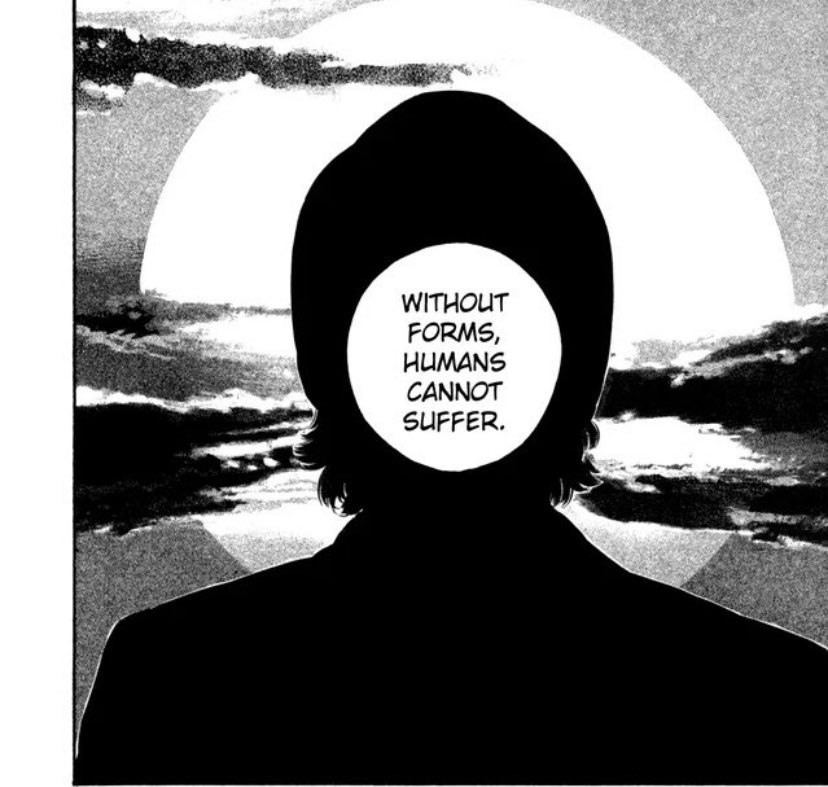
Probably the boldest manga ever for many reasons, whetever thats positive or negative comes down to outlook. To me that’s 2013 Lebron and *the* existentialist manga



Jun 16

99,99999998% of people who posted this image have never a read one page of this damn book

7
19
383
20,573

Yeah, it doesn’t take long to figure out that I think social media is a scourge on society’s health. If you further picked my brain you’d figure out that I think society itself is a scourge on individuality.
I’m an existentialist/nihilist/absurdist. This is just how I think.
1
5
79

Jun 17
Nothing screams “psychopathic 140-IQ austist” like being an existentialist and Hegelian powered classical dictator.

14
