
23 Jul 2025
ProtLoc-GRPO: Cell line-specific subcellular localization prediction using a graph-based model and reinforcement learning
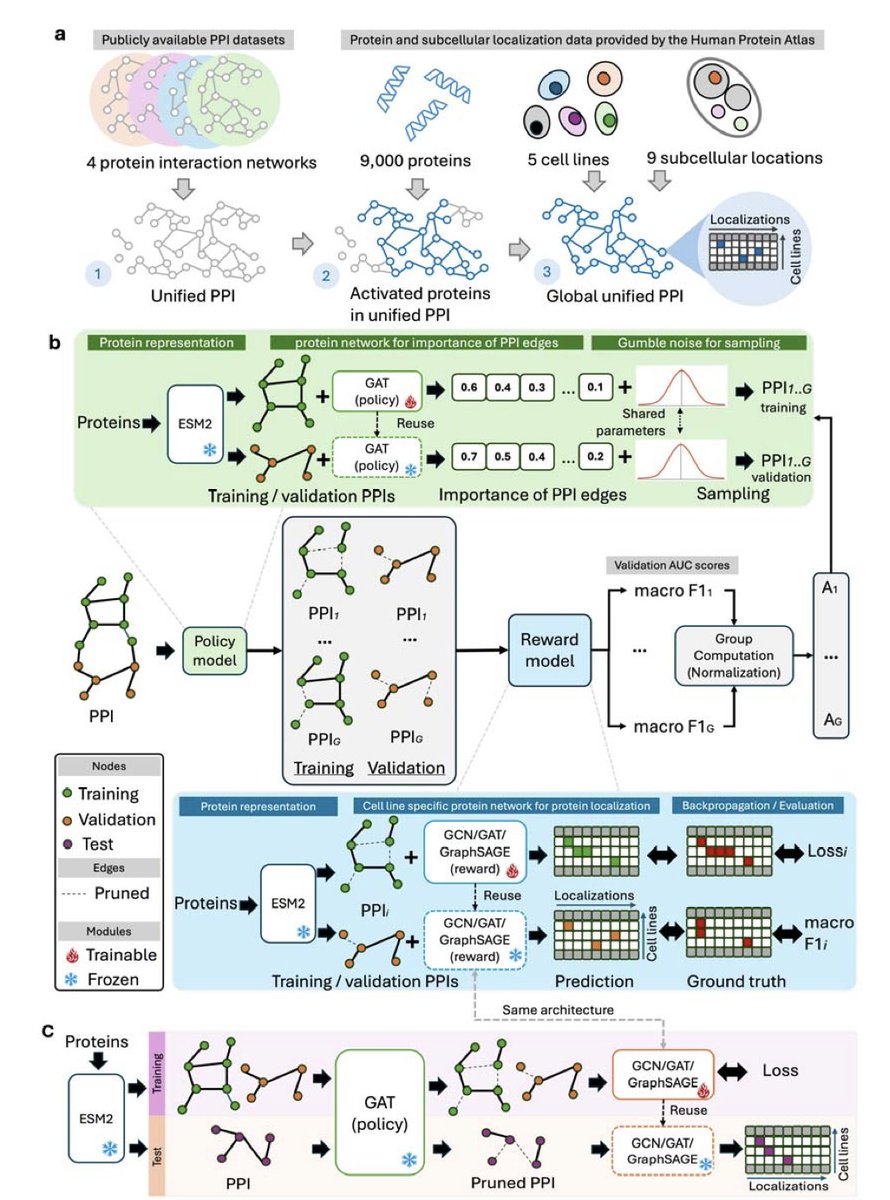
1. This study introduces ProtLoc-GRPO, a novel method for predicting cell line-specific protein subcellular localization by optimizing protein-protein interaction (PPI) networks with reinforcement learning. The approach significantly improves prediction accuracy by pruning less informative PPI edges.
2. ProtLoc-GRPO is the first application of the Group Relative Policy Optimization (GRPO) framework in bioinformatics. It uses a Graph Attention Network (GAT) policy model to rank PPI edges based on their importance for localization prediction and retains only the most informative ones.
3. The method achieves a 7% improvement in macro-F1 score compared to models using unpruned PPI networks. It also outperforms other edge pruning strategies, demonstrating its effectiveness in enhancing the quality of PPI networks for subcellular localization tasks.
4. ProtLoc-GRPO enhances the latent space of protein sequence representations. Embeddings from GCN models trained on pruned PPI networks show better separation among subcellular localization classes, indicating improved clustering quality and discriminative power.
5. The study includes comprehensive experiments with different graph-based models (GCN, GAT, GraphSAGE) and evaluates performance across various pruning rates. Results consistently show that ProtLoc-GRPO pruned networks outperform non-pruned baselines.
6. Ablation studies reveal that key components of the ProtLoc-GRPO framework, such as KL divergence regularization and group size, play crucial roles in optimizing edge importance and improving model performance.
7. The method addresses a critical limitation of existing PPI networks by filtering out noisy and irrelevant interactions, thereby enhancing the accuracy and robustness of protein subcellular localization predictions. It has the potential to be applied to other bioinformatics challenges.
📜Paper: biorxiv.org/content/10.1101/…
💻Code: github.com/shuaizengMU/ProtL…
#Bioinformatics #ProteinLocalization #ReinforcementLearning #GraphModels #ComputationalBiology
1
4
656
19 Nov 2024
GOBoost: Leveraging Long-Tail Gene Ontology Terms for Accurate Protein Function Prediction
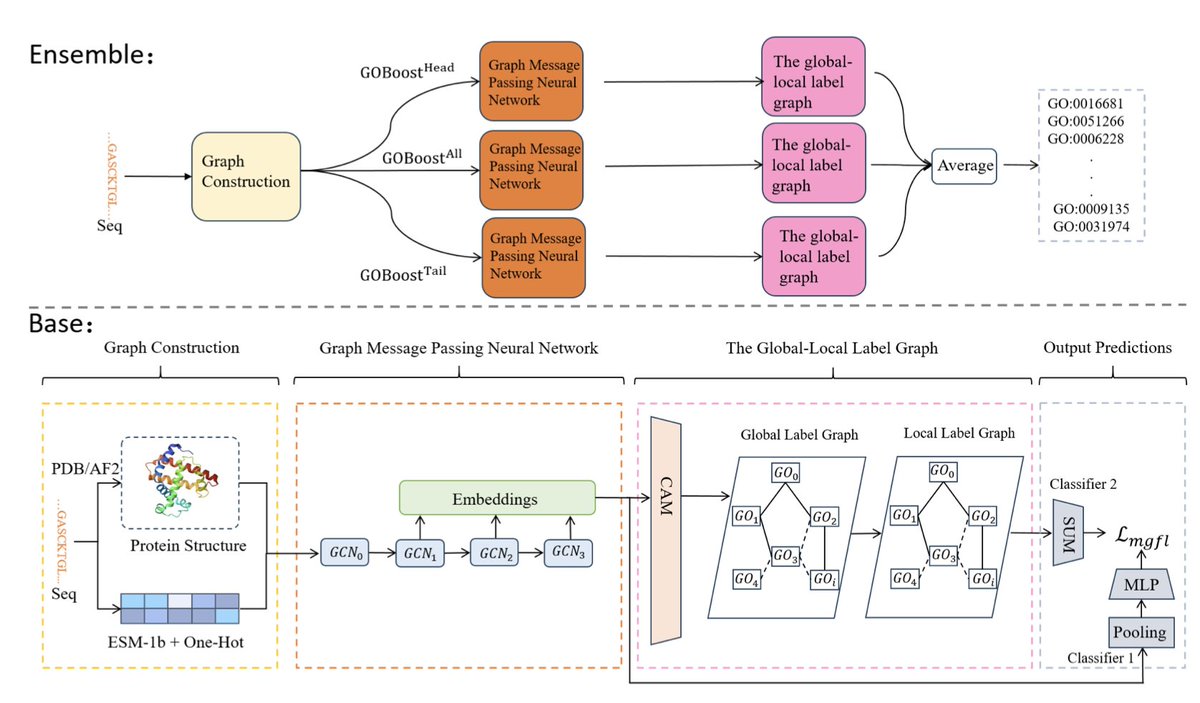
1. The paper introduces GOBoost, a method tailored for protein function prediction that mitigates the long-tail distribution challenge in Gene Ontology (GO) terms through an innovative ensemble strategy.
2. GOBoost employs three specialized base models (Head, Tail, and All) to focus on high-frequency, medium, and low-frequency labels, ensuring balanced prediction across all GO terms.
3. A novel global-local label graph module dynamically captures the co-occurrence relationships among GO terms, particularly enhancing predictions for rare, low-frequency functions.
4. The multi-granularity focal loss function in GOBoost assigns higher weights to underrepresented GO terms, improving model focus and performance on specific functions.
5. Experimental evaluations show that GOBoost outperforms state-of-the-art methods like HEAL by substantial margins in AUPR, Fmax, and Smin metrics on both PDB and AlphaFold2 datasets.
6. GOBoost demonstrated a remarkable 35.91% improvement in AUPR for biological processes (BP) compared to HEAL on the PDB dataset, showcasing its effectiveness in handling complex protein functions.
7. On the challenging AF2 dataset, where protein sequence similarity is low, GOBoost reduced reliance on sequence-based annotations by leveraging structural and GO co-occurrence information.
8. The ablation studies confirm the importance of the ensemble strategy and long-tail optimization, revealing that each component significantly enhances the overall prediction accuracy and robustness.
9. GOBoost’s framework is adaptable and scalable, making it a promising tool for addressing the imbalanced distribution in protein function prediction tasks.
@cao_renzhi
💻Code: github.com/Cao-Labs/GOBoost
📜Paper: biorxiv.org/content/10.1101/…
#ProteinFunction #Bioinformatics #GOBoost #DeepLearning #GraphModels #GeneOntology
1
6
930

Our Strategic Technology Directior (& former Gartner Analyist) Sumit Pal explores the strengths, weaknesses & general differences b/n the two most popular #graphmodels - #LPG & #RDF: hubs.la/Q02r84Tv0 #knowledgegraph #datamodelling #datamanagement
2
5
222

14 Mar 2024
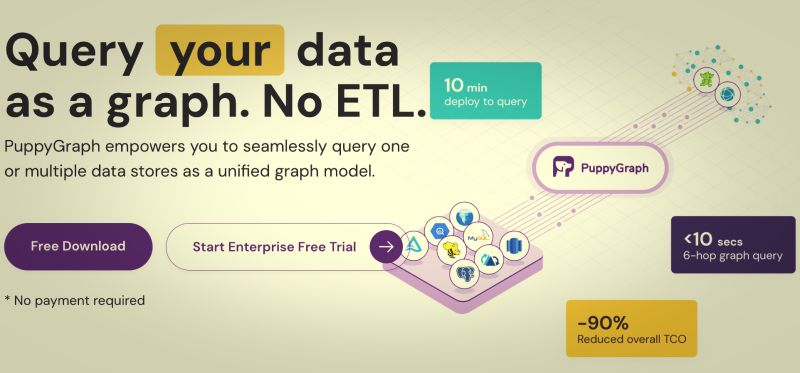
🎉Congrats to @PuppyQuery on their launch! Including native integration with #OneHouse for seamless graph analytics. No separate graph database, just insights. Explore with Apache Gremlin and openCypher.
puppygraph.com/
#OneHouse #ApacheHudi #PuppyGraph #GraphModels
5
284

14 Mar 2024
📷 Congrats to @puppyquery on their launch! Proudly announcing native integration with #CelerData for seamless graph analytics. No separate database, just insights. Explore with Apache Gremlin and openCypher.
#GraphModels #GraphAnalytics
14 Mar 2024

🚀 Just launched! #PuppyGraph is out of stealth with seed funding, revolutionizing #GraphAnalytics! 🎉 No more complex ETLs or separate databases. Deploy to query in 10 mins, handle petabytes of data, and explore new insights fast. 📊💡 Check our intro video 🎥 #DataAnalytics #AI
3
100

14 Mar 2024
Have you heard? There's a new win for #streamingdata 👀 Congratulations @puppyquery on their launch out of stealth mode! 👏 👏
For the unfamiliar, PuppyGraph natively integrates with #Redpanda and brings powerful graph #analytics directly to users. No separate graph database needed 🎉
Curious? You should be. Read their full announcement below👇
#PuppyGraph #GraphModels #RealTimeStreaming #SQL
14 Mar 2024
🚀 Just launched! #PuppyGraph is out of stealth with seed funding, revolutionizing #GraphAnalytics! 🎉 No more complex ETLs or separate databases. Deploy to query in 10 mins, handle petabytes of data, and explore new insights fast. 📊💡 Check our intro video 🎥 #DataAnalytics #AI
1
562

11 Nov 2023
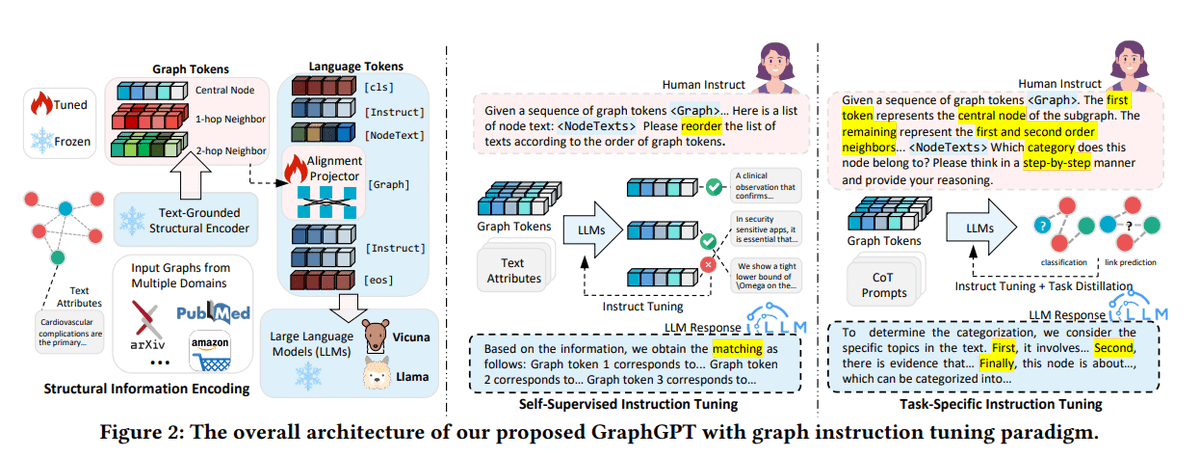
GraphGPT: Elevating Graph Models for Unmatched Zero-Shot Learning
#Adaptability #AI #AItechnology #alignmentprojector #artificialintelligence #dualstagegraphinstructiontuning #generalization #graphmodels #GraphGPT #Languagemodels #llm #machinelearning
multiplatform.ai/graphgpt-el…
ALT AI News
2
60

📆 Join us this Thursday, November 9th, at 11am EST, as Kartik Sharma (@ksartik) will present:
"Temporal Dynamics-Aware Adversarial Attacks on Discrete-Time Dynamic Graph Models" (KDD 2023). 📊
Don't miss out! We can't wait to connect with you on Zoom! ✨ #GraphModels
1
3
11
2,453

16 Nov 2022
Tomorrow Wed 17/11 4PM CET at #NODES2022
presentation of a project to collect and display #genealogy information
graphs as a structure to get the best of human thinking combined with automatic processing
#graphModels #graphVisualisation
@neo4j @TheBrainTech @yworks @geneanet
2
1
2

15 Nov 2021
HIRING: Senior Applied Machine Learning Engineer / New York, NY - ai-jobs.net/job/10253-senior… #AI #MachineLearning #DataJobs #Jobsearch #MLjobs #bigdata #DataScience #AIjobs #techjobs #mlengineer #hiringnow #AI #Pandas #graphmodels #Python #MLproduct #startuplife

3
2
7 Nov 2021
HIRING: Senior Applied Machine Learning Engineer / New York, NY - ai-jobs.net/job/10253-senior… #AI #MachineLearning #DataJobs #MLteam #MLjobs #bigdata #DataScience #AIjobs #techjobs #mlengineer #hiringnow #AI #Pandas #Python #MLproduct #NYjobs #graphmodels

5
3


12 Oct 2020
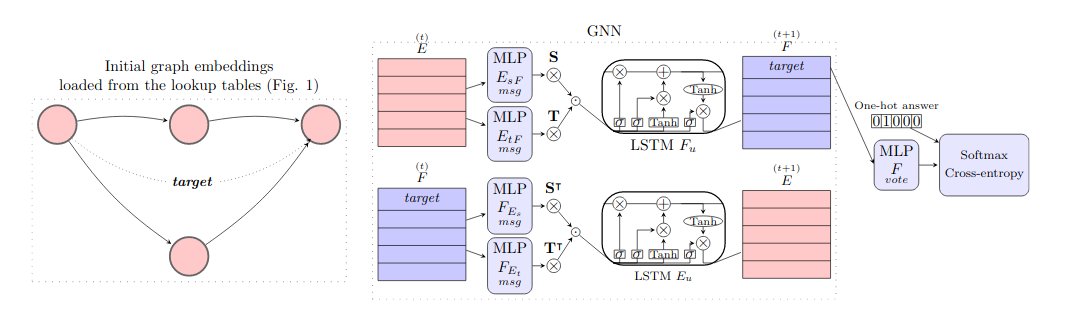
Neural-Symbolic Relational Reasoning on Graph Models: Effective Link Inference and Computation from Knowledge Bases
Lemos et al.: arxiv.org/abs/2005.02525
#NeuralSymbolic #RelationalReasoning #GraphModels
3
7

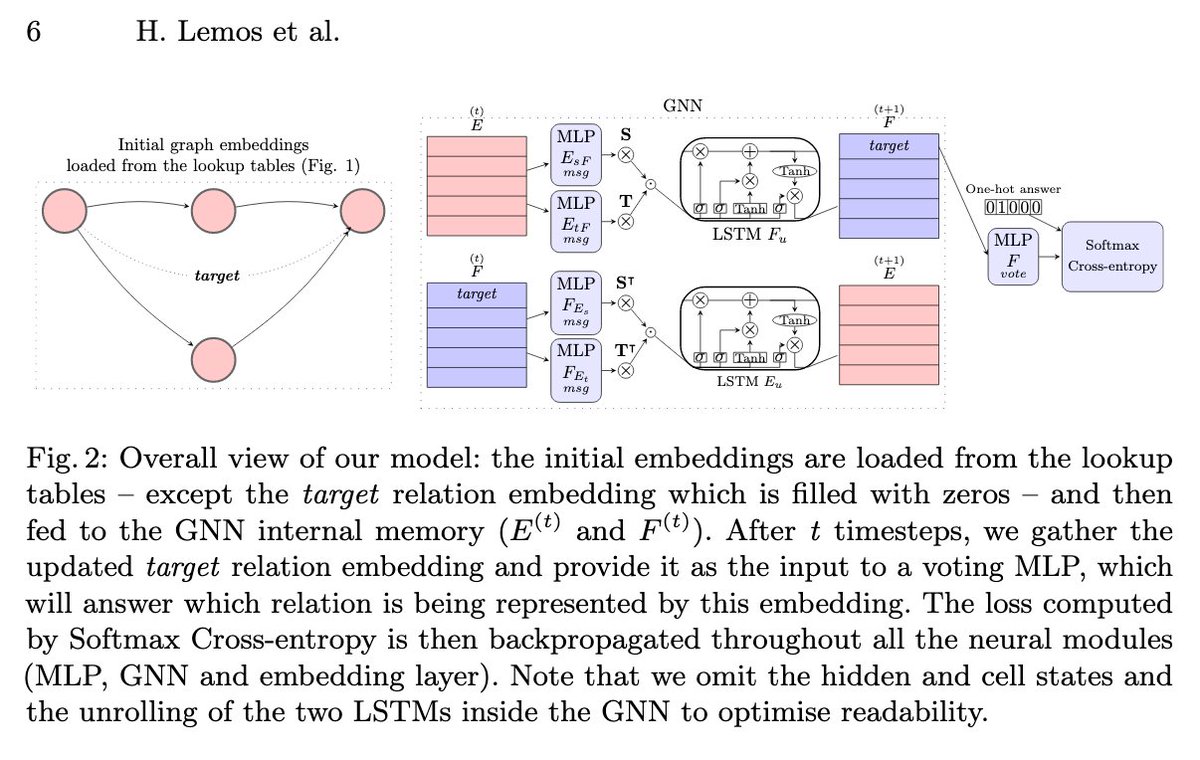
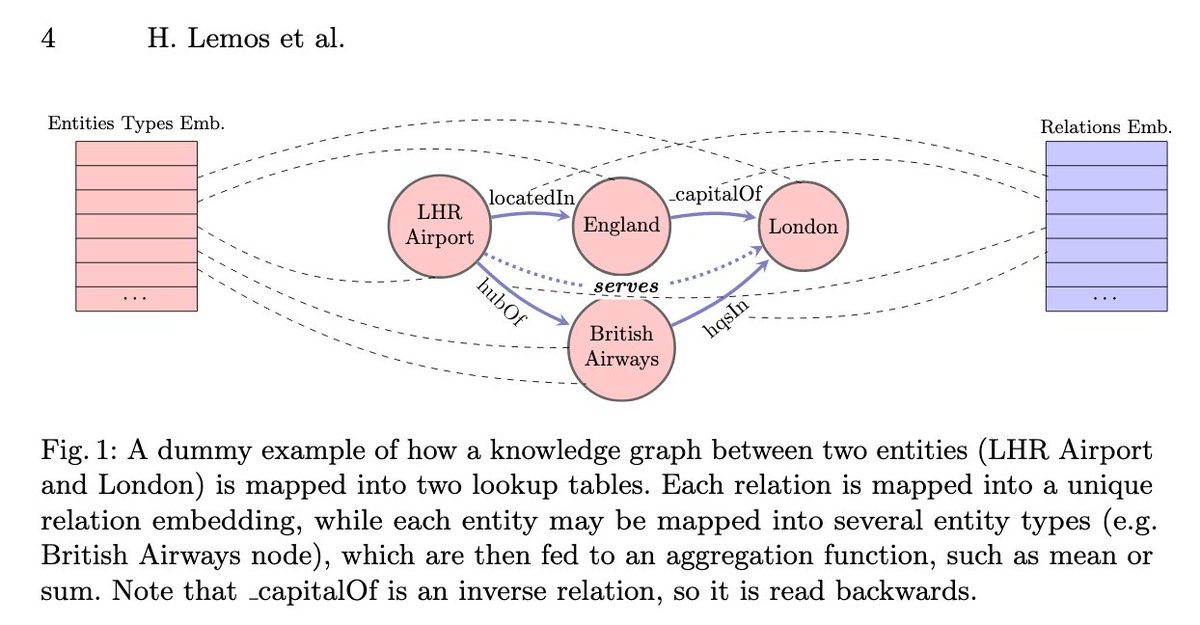
Neural-Symbolic Relational Reasoning on GraphModels: Effective Link Inference and Computation from Knowledge Bases: to appear ICANN2020 #neurosymbolic
1
9
15


[From the archives:]
#GraphAlgorithms in Neo4j: The Power of #GraphAnalytics | by @markhneedham and @amyhodler
r.neo4j.com/2OAvxLc
#GraphModels #GraphAnalysis
2
“Graph analytics, based on the specific mathematics of graph theory, examine the overall nature of networks and complex systems through their connections.” | by @markhneedham and @amyhodler
r.neo4j.com/2OAvxLc
#GraphModels #GraphAnalysis
8
[Weekly Blog Roundup from Monday:]
#GraphAlgorithms in Neo4j: The Power of #GraphAnalytics | by @markhneedham and @amyhodler
r.neo4j.com/2OAvxLc
#GraphModels #GraphAnalysis
1
5
“In the simplest terms, #GraphAlgorithms are mathematical recipes based on #GraphTheory that analyze the relationships in #ConnectedData.” | by @markhneedham and @amyhodler
r.neo4j.com/2OAvxLc
#GraphModels #GraphAnalysis
1
3
“Graph analytics, based on the specific mathematics of graph theory, examine the overall nature of networks and complex systems through their connections.” | by @markhneedham and @amyhodler
r.neo4j.com/2OAvxLc
#GraphModels #GraphAnalysis
7