
Building AI-Empowered Talent for the Intelligent Economy: Why the 10th @Huawei ICT Competition Matters
Every economy now faces the same uncomfortable truth: digital ambition is easily declared but hard to realise.
In Europe, this challenge is especially urgent. Across the region, governments, universities and enterprises are seeking to accelerate digital transformation while addressing persistent shortages of advanced ICT skills, especially AI capability, and practical digital talent. The issue is not simply whether Europe can adopt new technologies, but whether it can cultivate enough people with the applied skills to design, build, secure, operate and adapt them.
Governments publish AI strategies. Enterprises invest in cloud, data, cybersecurity, automation and intelligent platforms. Universities update their curricula. Yet none of this translates into national capability without people who can design, build, secure, operate and adapt the technologies on which the next economy depends.
That is why the 10th edition of the Huawei ICT Competition matters. It is not simply another global student contest, nor merely a showcase for technical excellence. At its most strategic level, it represents a sustained effort to address one of the bottlenecks of the intelligent era: the shortage of practical, future-ready ICT talent.
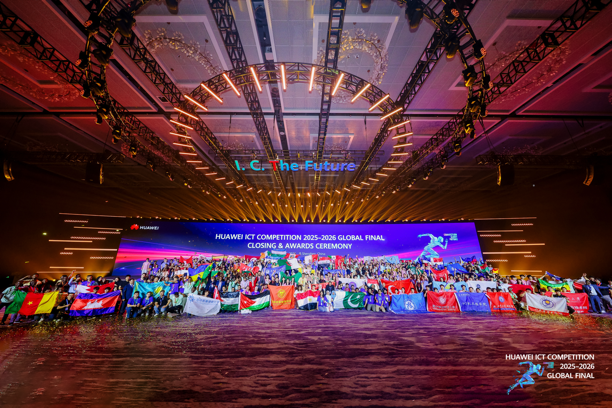
The Huawei ICT Competition 2025–2026 Global Final, held in Shenzhen from June 2–5, marks the tenth edition of a programme that began in 2015. This year’s competition has attracted more than 220,000 teachers and students from over 2,000 colleges and universities in more than 100 countries and regions, with more than 177 teams from over 49 countries and regions reaching the Global Final. Across ten editions, the competition has attracted more than 1.18 million student participants worldwide.
Those numbers are impressive, but scale is not the real story. The deeper significance lies in what the competition is becoming: a global talent platform at the intersection of education, industry, employment, innovation and national digital development.
In that sense, the 10th edition is not simply proof of scale. It is evidence of a global bridge connecting education and industry. The AI era will be defined not only by who has access to the most advanced technologies, but by who can build the deepest, most adaptive pools of talent around them. Models, platforms and infrastructure matter. But without practical human capability, they remain underused assets.
This is also why the competition is increasingly relevant to the AI era. As AI becomes embedded in cloud, networks, computing, education and industrial innovation, the skills challenge is no longer only about producing ICT specialists. It is about developing AI-empowered talent who can understand intelligent technologies, apply them responsibly, and turn them into practical solutions to real-world problems.
From Competition to Capability
The language of digital transformation often centres on technology adoption. Cloud migration, AI deployment, data platforms and cybersecurity architectures dominate boardroom and policy discussions.
Yet the decisive issue is increasingly human capability. Who understands the systems? Who can integrate them? Who can apply them to real-world problems? Who can translate abstract technology into practical value?
The Huawei ICT Competition is designed to address this practical gap. Its model is not based solely on theoretical knowledge but on applied problem-solving. The Practice Competition covers areas such as networking, cloud and computing, while the Innovation Competition increasingly reflects the realities of an AI-empowered economy, challenging students to apply AI and other ICT technologies to solve real-world problems with commercial potential and to develop a complete technical architecture.
This matters because the intelligent economy will not be built on digital literacy alone. It will require people who can work under constraints, collaborate in teams, test solutions, troubleshoot systems, and understand how technologies perform in real-world settings. The competition’s value lies in turning education into practice and practice into confidence.
That confidence is not incidental. For many students, participation creates a bridge between classroom learning and career identity. It offers exposure to advanced technologies, practical labs, international peers and industry expectations.
In an era when AI, cloud, networks, cybersecurity and data capabilities are becoming foundational to economic competitiveness, such exposure can shape not only individual careers but also national talent pipelines.
Significant Macro Value
In my work with boards, executive teams and education leaders, I have seen the same pattern: organisations rarely fail because they lack digital ambition. They fail because ambition is not matched by capability. The gap is not only technological; it is institutional.
Digital transformation requires a pipeline of people who can understand emerging technologies, apply them in context and translate them into operational value. That is why competitions of this kind matter. They do not merely reward talent; they help reveal, stretch and connect it.
The macro value of the competition can be seen through five connected lenses: talent supply, industry-education collaboration, employability, national digital capacity and inclusion. Taken together, they show why the competition should be understood not only as an event, but as part of a wider talent infrastructure.
1. Talent Supply: The world is not short of digital strategies; it is short of people who can execute them. Huawei’s briefing highlights a widening global ICT talent gap and cites projections that demand for ICT roles will continue to rise significantly by 2030. Whether viewed through the lens of AI, cybersecurity, cloud, networks or software development, the direction is clear: digital infrastructure requires human infrastructure.
2. Industry-education Integration: One of the enduring weaknesses of many education systems is the lag between what is taught and what industry needs. The Huawei ICT Competition seeks to narrow that gap by connecting universities, teachers, students and technology platforms through practical challenges. Huawei’s ICT Academy ecosystem now spans more than 3,500 universities and colleges across over 110 countries and regions, with more than 500,000 students benefiting each year.
3. Employability: Competitions of this kind create more than awards; they send signals. Students who demonstrate applied competence in cloud, networking, computing or AI are not simply accumulating credentials. They are building evidence of capability. Huawei’s briefing highlights examples of former contestants who have progressed into employment, further study and national recognition, reinforcing the competition’s role as a pathway from learning to opportunity.
4. National Digital Capacity: Countries are increasingly aware that digital sovereignty, industrial productivity and public-sector modernisation depend on the availability of skilled professionals. Huawei frames the competition as a means to support countries’ digital talent strategies, promote mutual recognition of digital skills standards, and extend the benefits of the digital economy to more people. The publication of the Insight Reports on ICT Skills Development in nine Central Asian and Caucasus countries, alongside new digital courses and an AI course solution, signals policy support beyond the competition itself.
5. Inclusion: A global competition provides a platform for students who might otherwise remain outside international innovation networks. It enables talent to surface from diverse regions, institutions and backgrounds. That is strategically important. The intelligent economy cannot be built solely by elite institutions in established technology hubs. It requires distributed capability, wider participation and more inclusive pathways into technical careers.
In my experience, this is where many digital talent initiatives succeed or fail. The challenge, of course, is that competitions alone cannot close the global talent gap. They must be linked to curricula, certifications, internships, research pathways, employer demand and national skills strategies. Their value depends on the context in which they operate. But when embedded within a connected ecosystem of academies, teaching resources, industry collaboration and practical exposure, they can become powerful accelerators of capability.
AI Changes the Stakes
The tenth edition arrives at a moment when AI is reshaping the meaning of ICT skills. Previous waves of digitalisation rewarded technical specialisation. The AI era still needs specialists, but it also requires interdisciplinary thinkers who can integrate data, models, infrastructure, domain knowledge, ethics, user experience and operational context.
This is evident in the competition’s growing emphasis on AI and innovation. The 2025–2026 edition doubles down on AI and innovative technology solutions, with the AI Innovation Track covering areas such as MindSpore, ModelEngine, general-purpose AI and foundation models. The official Global Final agenda also features an AI Accelerating Education Transformation Summit, with sessions on AI-powered collaboration, digital courses, practical case sharing, and the publication of the Insight Reports on ICT Skills Development in nine Central Asian and Caucasus countries.
The emphasis is clear: AI is not being treated as a specialist add-on, but as a capability layer that increasingly shapes how ICT talent is taught, tested and applied.
That combination is important. AI is not just another subject to add to the curriculum. It is reshaping the curriculum itself. It is changing how students learn, how teachers teach, how institutions collaborate with industry, and how governments approach workforce readiness.
If cloud and networking are the backbone of the digital economy, AI is becoming its nervous system. But a nervous system without skilled operators, designers and stewards can quickly become fragile. The competition’s practical orientation helps address this by moving AI education beyond awareness and into applied capability.
From Digital Skills to Real-World Innovation
The regional European examples underscore why this matters beyond the competition stage.
In this year’s competition, four teams from four universities in Türkiye, including Istanbul Technical University, advanced to the Global Final in the Innovation Competition and in the Cloud, Computing and Network tracks of the Practice Competition.
Türkiye also demonstrates the interdisciplinary potential of ICT talent: a project that uses Huawei Cloud services and Huawei LLM Models applies retrieval-augmented generation to connect large language models to academic databases, aiming to reduce the risk of hallucinations and make cultural heritage more accessible through context-aware virtual guides.
The lesson is clear: the future of ICT talent will be interdisciplinary, or it will be incomplete.
Spain offers a distinct yet equally important perspective: the value of building local digital talent ecosystems that connect universities, certification pathways, practical training and industry-facing innovation. Huawei’s work with the University of Alicante illustrates its digital talent footprint in Spain. Together, they established a Huawei ICT Academy, with Huawei Certified ICT Associate courses added to the university’s compulsory curriculum. The University of Alicante also launched the first Huawei ICT Academy Support Centre in Western Europe, creating a support pillar for Huawei ICT Academies across Spain.
That institutional layer matters. It shows that digital talent development is not only about inspiring students at competition finals; it is about embedding capability within the education system itself. Training, certification, curriculum integration and academy support create the conditions for students to move from awareness to competence, and from competence to applied innovation.
Spain’s student innovation story is equally practical. The deeper value lies in students engaging with an industrial problem: port logistics, congestion, traffic coordination and modular deployment. That is where the intelligent economy will be won: not in abstract demonstrations of AI, but in applied systems that improve real-world operations.
Bringing students together from around the world also matters for another reason: digital capability is no longer a purely local asset. The most pressing problems in AI, cybersecurity, infrastructure, sustainability and industrial transformation are increasingly shared. When students compete, collaborate and exchange ideas across borders, they are not only developing technical skills; they are learning to operate within the distributed innovation systems that will define the next decade.
A Platform for the Next Phase
The tenth edition of the Huawei ICT Competition should therefore be seen as a transition point. It has proved that a global competition could mobilise students, universities and teachers at scale. The next phase will test whether such platforms can help countries build the adaptive talent systems needed for the AI era.
This is where the competition’s macro value is most evident. It connects individual ambition with institutional capability. It connects university learning with industry practice. It connects local talent with global standards. It connects digital inclusion with economic competitiveness. And increasingly, it connects AI education with practical, real-world deployment.
For policymakers, the message is that digital talent development cannot be left to fragmented initiatives. It requires platforms, standards, pathways and international collaboration. For universities, the message is that curricula must become more experiential, interdisciplinary and industry-connected.
For enterprises, the message is that the future workforce will not emerge fully formed; it must be cultivated through sustained engagement with education systems. For students, the message is perhaps the most powerful of all: the intelligent economy is not something distant that happens to them. It is something they can help build.
The competition slogan is “I. C. The Future.” It is a clever play on words and an accurate description of the challenge ahead. The future will not be shaped by technology alone. It will be shaped by those who can see it, code it, connect it, secure it and apply it.
After 10 editions, the Huawei ICT Competition is no longer merely a stage for technical excellence or a celebration of student achievement. It reinforces a central point: in the age of AI, talent is the source of innovation. The next phase of digital competitiveness will not be won by access to technology alone, but by the ability to cultivate people who can apply, adapt, and govern that technology in the real world. The countries, universities and companies that understand this will be better placed to turn digital ambition into durable capability.
Having worked for many years at the intersection of digital disruption, strategy and executive education, I would argue that the next phase of AI will be constrained less by model capability than by institutional capability. The winners will be the organisations, universities and countries that cultivate the deepest pools of adaptive talent.
That is why the Huawei ICT Competition matters: it reinforces a central point that the intelligent economy will be built by people before it is scaled by machines.
ALT Building AI-Empowered Talent for the Intelligent Economy: Why the 10th Huawei ICT Competition Matters
9
171,519


SoloCraft: Cerberus!!! [Mythicmobs x Modelengine] #mythicmobs #modelengine youtu.be/WqkXLN86_fs?si=8G-u… @YouTubeより
なんかMODじゃなくて鯖にプラグイン入れるだけでこんなんできるのやば
1
1
61

May 9
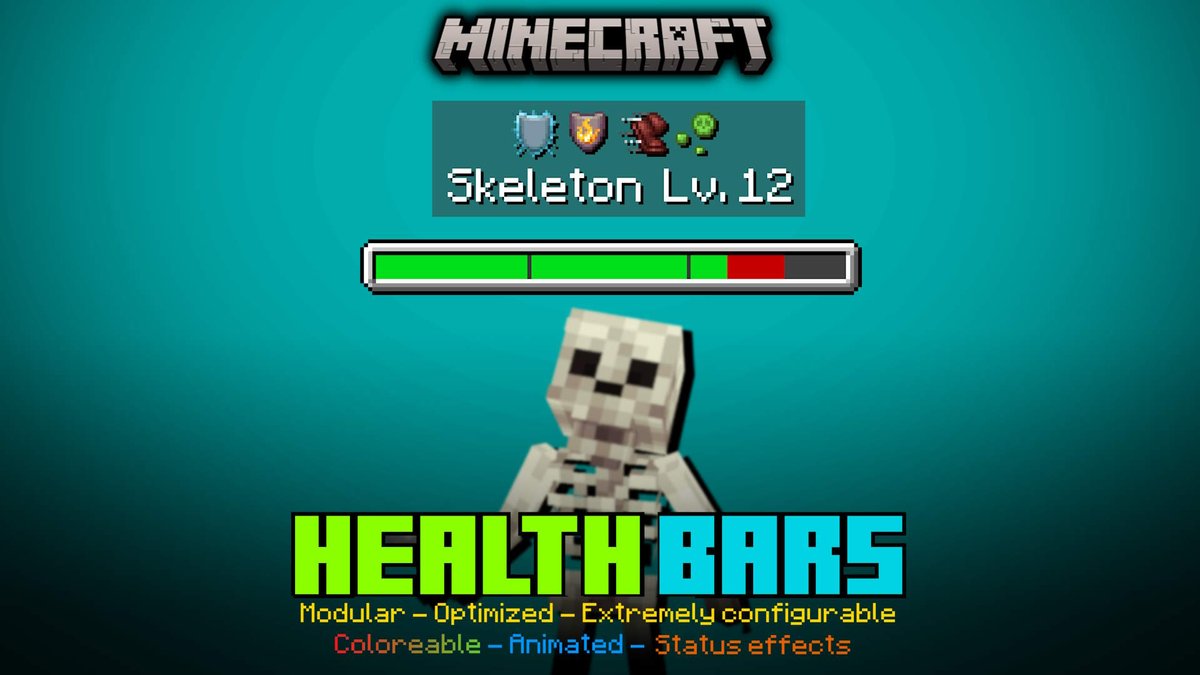
New product on @MCModelsNet ! A new utility that brings fully functional and feature-powerful healthbars using only MythicMobs and ModelEngine!
:3 If i knew how to use this app i'd show a video right away! xd
2
37

90 days ago Cinder Security didn't exist.
Here's what we found while building it:
→ Critical SSRF via prompt injection in ModelEngine fit-framework
IAM credential exfiltration via cloud metadata endpoint.
Vendor patched it. Acknowledged us publicly in their release notes.
GHSA-m4rw-22q2-87j8
→ RAG poisoning in LangGraph
One poisoned document forces arbitrary tool execution.
CVSS 7.6. Public advisory.
GHSA-4fpw-hjmg-x4qr
→ Two P2 findings confirmed by Google VRP
Unauthenticated attack surfaces in production Google AI sample repos.
Issues #492510724 and #491682094.
→ Three reports against NVIDIA NeMo Guardrails
Coordinated disclosure via Intigriti.
The safety framework had a fail-open condition.
The guardrail wasn't guarding anything.
→ Two bounties on Huntr
MLflow and LlamaIndex. Both duplicates. Both paid.
Every single one of these was found in frameworks
that thousands of AI companies are running in production right now.
Not theoretical vulnerabilities.
Not CTF challenges.
Real systems. Real impact. Real fixes.
We built Fracture to automate what we were doing manually.
We built Cinder to make this accessible to companies that can't afford to find out the hard way.
90 days. 10 confirmed findings. 2 public advisories.
We're just getting started.
cindersecurity.io · @CinderSecurity
github.com/cinder-security/f…
2
41


Jan 28
昔にMyhicMobsとModelEngine 4で作ったモブでございます。尻尾がアピールポイントですけど、一応攻撃モーション時に胸が揺れますね、こういうこともできるけど、作りたいものはプラグイン開発人間がいなければなしえない。くれ
#minecraft #マイクラ #マインクラフト #MythicMobs
#MM #ModelEngine4
6
176

Jan 20
Closest Substitute block or someone gave me idea of ModelEngine Integration although that'd be REALLY complex. Let's hold onto that till things get Stable Enough
23
3,107

30 Nov 2025
🎄 NEW DROP: Christmas Model Pack for Minecraft! 🎁
Bring the holiday spirit to your server with 14 high-quality 3D models 2 entities: gifts, sleighs, snowman NPCs, elves, candy canes & more!
Drag & drop ready ─ works instantly with Model Engine & ItemsAdder.
Black Friday Deal: only $7.50 (reg. $10) – ends Dec 3rd! ⏰
Grab it now → builtbybit.com/resources/chr…
#Minecraft #ChristmasUpdate #ModelEngine #ItemsAdder #BlackFriday
2
2
70


5 Nov 2025
AI 추론 성능 대폭 향상 : Huawei, UCM 기술 오픈 소스화로 시스템 처리량 22배 향상
* AI 하시는분들 필독..
Huawei는 오늘 AI 추론을 가속화하는 핵심 기술인 UCM(Unified Cache Manager) 추론 메모리 데이터 관리를 공식적으로 오픈 소스화했다고 발표했습니다 .
UCM은 KV Cache 다단계 캐싱 및 추론 메모리 관리에 중점을 둡니다. 추론 프레임워크, 컴퓨팅 성능, 스토리지의 3중 협업을 통해 장순서 추론의 낮은 효율성과 높은 비용 문제를 해결하고 기업에 더 나은 AI 추론 경험을 제공합니다.
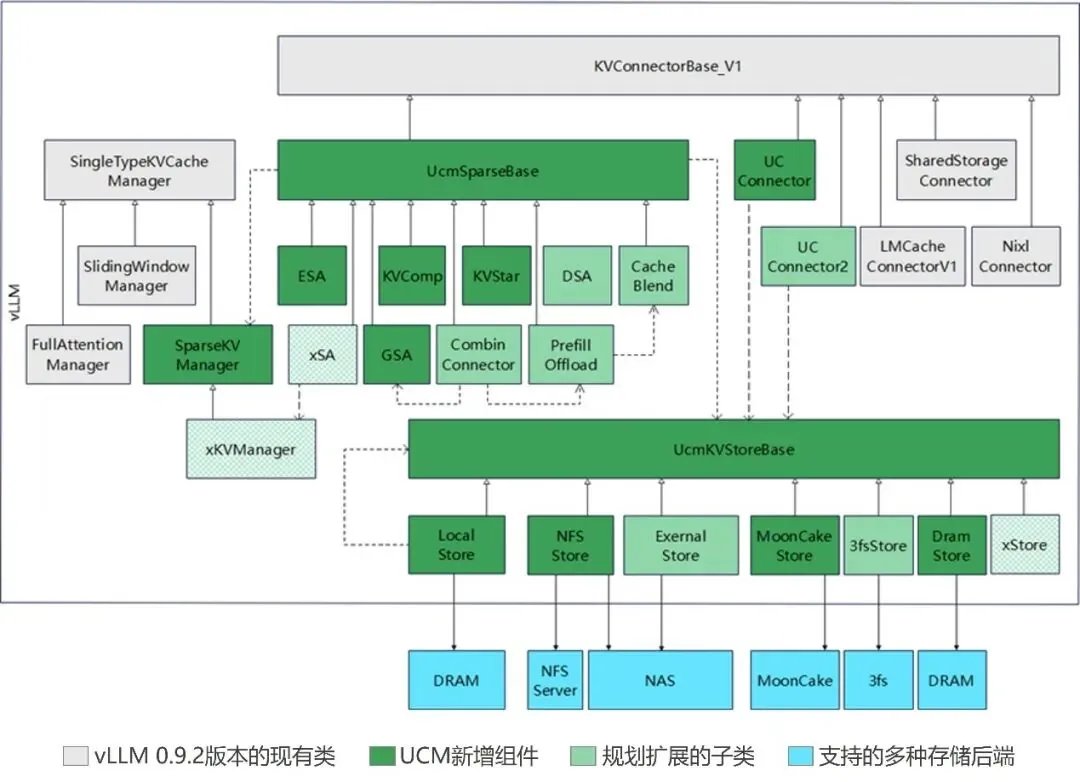
UCM은 여러 유형의 캐싱 가속 알고리즘과 도구를 통합하여 추론 과정에서 생성되는 키-값 캐시 메모리 데이터의 계층적 관리를 지원합니다. UCM 아키텍처는 다음과 같이 함께 작동하는 여러 핵심 기능 모듈로 구성됩니다.
UCM 희소성 모듈(UcmSparseBase) 은 다양한 희소 알고리즘과 호환되는 통합 기반 클래스입니다. 희소 KV 캐시 블록의 언로딩, 로딩 및 계산을 담당하여 "무인식" 플러그 앤 플레이 희소성을 구현합니다. 전체 추론 프로세스에 영향을 주지 않고 다양한 희소 알고리즘에 유연하게 적응하여 추론 효율성을 향상시킬 수 있습니다.
1. SparseKVManager : 알고리즘 수준에서 맞춤 설정된 KV 캐시 블록 할당을 위한 마스터 컨트롤러입니다. 각 희소 알고리즘은 다형성 하위 클래스 형태로 자체 할당 로직을 프레임워크에 삽입하여, 다양한 희소 알고리즘 전략을 추론 엔진에서 분리하고 차별화된 추론 시나리오의 요구를 충족합니다.
2. KV Cache 스토리지 컴포넌트(UcmKVStoreBase)는 외부 스토리지와의 통신을 위한 범용 인터페이스를 제공합니다. 이 컴포넌트는 희소 알고리즘과 스토리지 백엔드와의 분리를 지원하여 모든 스토리지 시스템과의 원활한 통합을 가능하게 합니다. 또한 접두사 캐싱을 지원하여 유연하고 다양한 데이터 저장 옵션을 제공합니다.
3. UCM 커넥터 : KV 캐시 스토리지 구성 요소와 추론 엔진을 연결하여 서로 다른 구성 요소 간의 효율적인 데이터 전송을 보장하고 매우 안정적인 접두사 캐싱 기능을 구현합니다.
▲ UCM 제품 아키텍처
위의 아키텍처를 기반으로 UCM은 현재 스파스 어텐션, 프리픽스 캐싱, 프리필링 오프로딩, 이기종 PD 디커플링이라는 4가지 핵심 역량을 보유하고 있으며, 이를 통해 첫 번째 토큰 지연 시간을 최대 90% 단축하고, 시스템 처리량을 최대 22배 증가시키고, 컨텍스트 창 확장을 10배 증가시켜 AI 추론 성능을 크게 향상시켰습니다 .
UCM은 ModelEngine 커뮤니티에 기본 프레임워크와 툴체인을 공개했습니다. 개발자는 커뮤니티를 통해 UCM 소스 코드와 기술 문서를 얻을 수 있습니다.
GitCode: gitcode.com/ModelEngine/unif…
Github: github.com/ModelEngine-Group…
12 Aug 2025

화웨이, AI 추론 '벽 허무는' 기술 출시…HBM 장벽 돌파, 국내 컴퓨팅 파워 생태계 전환점 열다.(공개용, 구독용은 별도 리뷰 예정)
1. 기술 개요
UCM(Inference Memory Data Manager)은 KV Cache 중심의 AI 추론 가속 소프트웨어/하드웨어 통합 모듈입니다.
목표는 높은 처리량(High Throughput), 낮은 지연(Low Latency), 낮은 토큰당 비용을 동시에 달성하는 것에 있습니다.
2. 핵심 기술 특징
① KV Cache 중심 가속
다단계 KV Cache 관리: 추론 시 생성되는 Key-Value 캐시를 계층적으로 저장·관리하여 효율 극대화
다중 캐시 가속 알고리즘 통합: 압축, 슬라이딩 윈도우, ring buffer 등 기존 기법과 화웨이 자체 알고리즘 결합
문맥 처리 범위 확장: 금융 보고서·법률 문서 등 장문 데이터도 속도 저하 없이 처리 가능
② HBM 의존도 감소
/ 하드웨어 혁신
슈퍼노드 연결 기술: 서버 간 나노초급 초고속 네트워크로 연산 병렬화.
DRAM 풀링: HBM 부하를 줄이고 DDR/저속 메모리 활용 극대화.
/소프트웨어 혁신
MoE(혼합 전문가) 추론 엔진: 처리량 3.2배 증가, 응답 지연 50% 감소
EMS(Elastic Memory Service): “메모리 대신 계산” 방식으로 NPU 활용 효율 50% 향상
③ 성능 지표
첫 토큰 지연시간: 0.2초 미만(기존 대비 80% 개선)
처리량: CloudMatrix384 클러스터 기준 단일 카드 2,300 Tokens/s
3. 산업 적용 시나리오
금융 산업 : 실시간 투자 분석, 고빈도 거래 리포트 요약, 위험 관리 모델 등 저지연·장문맥 처리 필수 영역에 최적, 중국은행(UnionPay) 등과 협력해 금융 AI 추론 솔루션 상용화 추진
클라우드·대규모 서비스 : HBM 의존도를 낮춰 국산 GPU·화웨이 Ascend 칩 클러스터 운영 비용 절감, 다중 사용자 동시 요청 처리량 향상 → SaaS·BaaS 플랫폼 효율성 강화
4. 산업적 의미
국산 AI 생태계 강화: 삼성·SK 하이닉스가 90% 이상 점유하는 HBM 의존을 완화해, 미국 수출 규제 리스크 대응
추론 경험 최적화 중심 전환: AI 산업이 모델 성능 경쟁에서 사용자 경험 경쟁으로 이동하는 흐름 반영
글로벌 추론 프레임워크 대체 가능성: NVIDIA PagedAttention·vLLM과 견줄 수 있는 중국 독자 추론 가속 스택 확보
1
3
18
10,619


1 Jul 2025
Shanghai Jiao Tong University-affiliated Ruijin Hospital teamed up with Huawei to open-source RuiPath, the city's first pathology AI model from a medical institution. Trained and based on over one million of the hospital's datasets covering seven common cancers and Huawei's full-stack AI toolchain ModelEngine, the visual foundation model is expected to lower deployment barriers for AI-assisted pathological diagnosis in hospitals. @Huawei #pathologicalmodel #ModelEngine #RuiPath #AIModels
2
505

28 Mar 2025
⭐ Today’s China AI Native Industry Insights include:
1. Alibaba Open-Sources Qwen2.5-Omni: A World-Leading 7B Full-Modal AI Model
2. ByteDance Unveils New DeepThink in Doubao: Search While Thinking
3. Huawei Open-Sources ModelEngine: A Full-Process AI Development Toolchain for Industry
🔍 Dive into the in-depth insights in the thread below. Here’s what’s shaping the future of AI—and why it matters: 👇
Video Credit: Qwen
4
2
128

HW open sources its ModelEngine AI full process tool chain on github, gitee & gitcode.
Can process different data types & perform data cleaning, data eval, knowledge gen, corpus creation for model training & RAG.
Can do model training, deployment, fine tuning & reasoning.
7
43
2,623

21 Jan 2025
Just some of the model trains we have here in @astraantiques
Open until 5pm
See stories for more. #astraantiquescentre #lincolnshire #hemswell #antiquescentre #newstock #modeltrains #modelrailways #modelengine #trains #railways #hornby #dublo #trix #shell #traincollector
1
5
99

2 Nov 2024
Most experienced users would probably just suggest to use an existing plugin like ModelEngine, but since our game servers will be running a MC server implementation written from scratch there's no way for us to just load a Spigot/Paper plugin. (4/5)
1
1
437

16 Oct 2024
This is amazing! Thank you Raffi, I can already think about ways this could become handy for us, as we expand ModelEngine…
1
5
81