
1/ The most interesting Linux story this week is not another distro.
It is Asterinas 0.18.0: a Rust kernel trying to be Linux-compatible without inheriting Linux’s C architecture.
That sounds academic until you see the release notes: Kata Containers, CoCo, ptrace, cgroups, virtio-fs, NVMe, GDB, strace. #Linux #RustLang
2/ The key design idea is “framekernel.”
Asterinas keeps the performance shape of a monolithic kernel: one address space, fast function calls, shared memory.
But it splits the kernel into:
- OS Framework: small trusted layer, allowed to use unsafe Rust
- OS Services: larger kernel functionality, written in safe Rust
That is a very different answer from “just add Rust modules to Linux.” #OperatingSystems
3/ Why 0.18.0 matters:
This release is clearly moving from “cool kernel research” toward “can run real infrastructure-shaped workloads.”
It adds pieces container runtimes expect:
- IPC cgroup namespaces
- nsfs at /proc/[pid]/ns
- cgroup PID controller
- partial CPU controller
- virtio-fs
- virtio-rng
- reimplemented vsock
Those are boring features in the best possible way.
They are the compatibility plumbing.
4/ The debugging story is just as important.
Asterinas 0.18.0 adds ptrace with PTRACE_SETOPTIONS, PTRACE_SYSCALL, and PEEK/POKE operations.
That means GDB and strace can run on Asterinas, with CI coverage and verified-usage docs.
A kernel gets much more real when you can debug ordinary userspace instead of only celebrating boot logs. #DevTools
5/ The release also expands the “does normal software work?” surface:
Asterinas NixOS now says 100 popular packages are verified, including Codex, QEMU, and Firefox.
The project added test coverage from kselftest, xfstests, Go, Python, and JDK unit suites.
That is the right signal: compatibility is not a slogan; it is a continuously failing test matrix.
6/ My take:
Asterinas probably will not “replace Linux” in the dramatic headline sense.
But it is a serious experiment in a more useful direction: what if a Linux-compatible OS could be rebuilt around memory safety, a smaller trusted computing base, and modern verification pressure from day one?
The lesson is bigger than one kernel: the future of infrastructure is not just faster code.
It is smaller unsafe cores surrounded by systems that can prove, test, and survive more of their own complexity. #OpenSource #SoftwareArchitecture
23

June 13th update:
Began studying Operating Systems today ( first CS core subject ).
Also sat down and mapped out what's coming up over the next few months. Good to have some clarity now.
#OperatingSystems #CSCore #LearnInPublic
3
26

Message queues don’t magically decouple services. Here’s what Kafka changes, what it hides, and why “async” can still fail hard.
#systemdesign #kafka #operatingsystems
Read the full article below 👇
hackernoon.com/kafka-wont-sa…
1
59

Jun 12
Microsoft Windows NT revived on Nintendo GameCube, Wii and Wii U via PowerPC port generationamiga.com/2026/06/… #WindowsNT #Nintendo #GameCube #Wii #WiiU #PowerPC #Mod #OperatingSystems

2
7
45
1,667

I'm building a custom programming language, framework and virtual machine. My goal is to create a revolution and make the browser irrelevant.
#ProgrammingLanguage #OperatingSystems #HomebrewComputer #SoftwareRevolution #LowLevelProgramming #TechInnovation
55

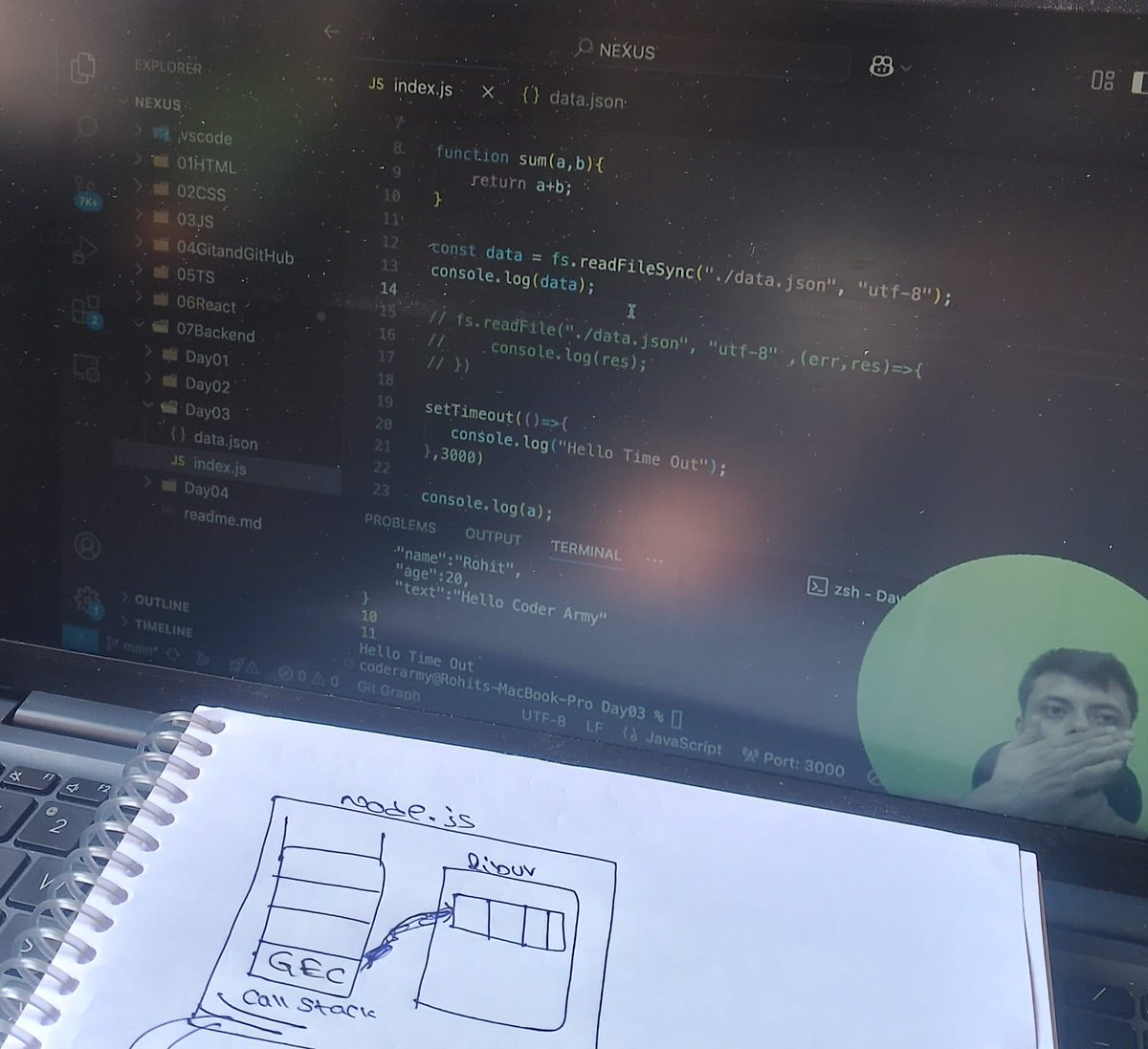
Lecture No 3 Completed ✅
Studied libuv,why it is required in Node.js, how Node.js runs on different operating systems, and how file operations interact with the OS through libuv.Also understood asynchronous I/O
#BackendDevelopment #NodeJS #Libuv #OperatingSystems #Consistency
17

Jun 10
Did you know?
Every time you open an application, the Operating System allocates memory, schedules CPU time, and manages resources behind the scenes.
All within milliseconds.
#OperatingSystems #TechFacts
1
5
101
Jun 10
Many of the world's servers, cloud platforms, and supercomputers run on Linux.
Learning Linux isn't just a skill.
It's an investment in your tech career.
🐧
#Linux #OperatingSystems #DevOps
2
6
80
Jun 10
Most people interact with apps.
Developers interact with code.
But behind both is the Operating System managing everything.
CPU, memory, storage, and devices all work together because of the OS.
#OperatingSystems #Tech #SoftwareEngineering
1
5
111
Jun 10
"Understanding Operating Systems is like understanding the engine of a car."
You can drive without it. But you'll build better software when you know what's happening under the hood.
#Programming #ComputerScience #OperatingSystems
1
41
Jun 10
Developer: "My code is perfect."
Operating System: "Segmentation Fault."
Developer: 😐
#OperatingSystems #TechHumor #Programming
2
61

Jun 10
Apple operating systems focus on optimization and AI for 2027: just a handful of new features, but a better user experience promised to billions of consumers in the fall. #Tech #AI #OperatingSystems #macOS #iOS #SiriAI #Apple
thepoint.online/apple-operat…
1
16

The consistency is no longer public.
It's now part of who I am.
Thank you to everyone who followed the journey. ❤️
On to the next chapter. 🔍🔥
#100DaysOfConsistency #CyberSecurity #BugBounty #InfoSec #OSINT #Linux #OperatingSystems #Blockchain #LearningJourney #EthicalHacking
1
47

Jun 9
China’s MIIT launched a 6G pilot to develop standards, base stations, core networks, chips, operating systems, and clusters by 2029.
#6G #ChinaTech #MIIT #TelecomNews #WirelessNetworks #DigitalInfrastructure #CoreNetworks #Semiconductors #OperatingSystems #Aerospace

1
12

Jun 9
9 June ✅
⚡ LeetCode done
📚 OS revision completed
🌐 Started Computer Networks
One core subject down, another one started.
Slowly building the foundation brick by brick 👨💻🚀
#buildinpublic #leetcode #coding #operatingsystems #computernetworks #placements
8
17
301
Jun 9
9 June — Today's Plan 👨💻🔥
⚡ LeetCode grind
📚 Finish the remaining Operating Systems revision
🌐 Start Computer Networks (if time permits)
Just focusing on strengthening the fundamentals and staying consistent 🚀
#buildinpublic #leetcode #operatingsystems #computernetworks

12
132

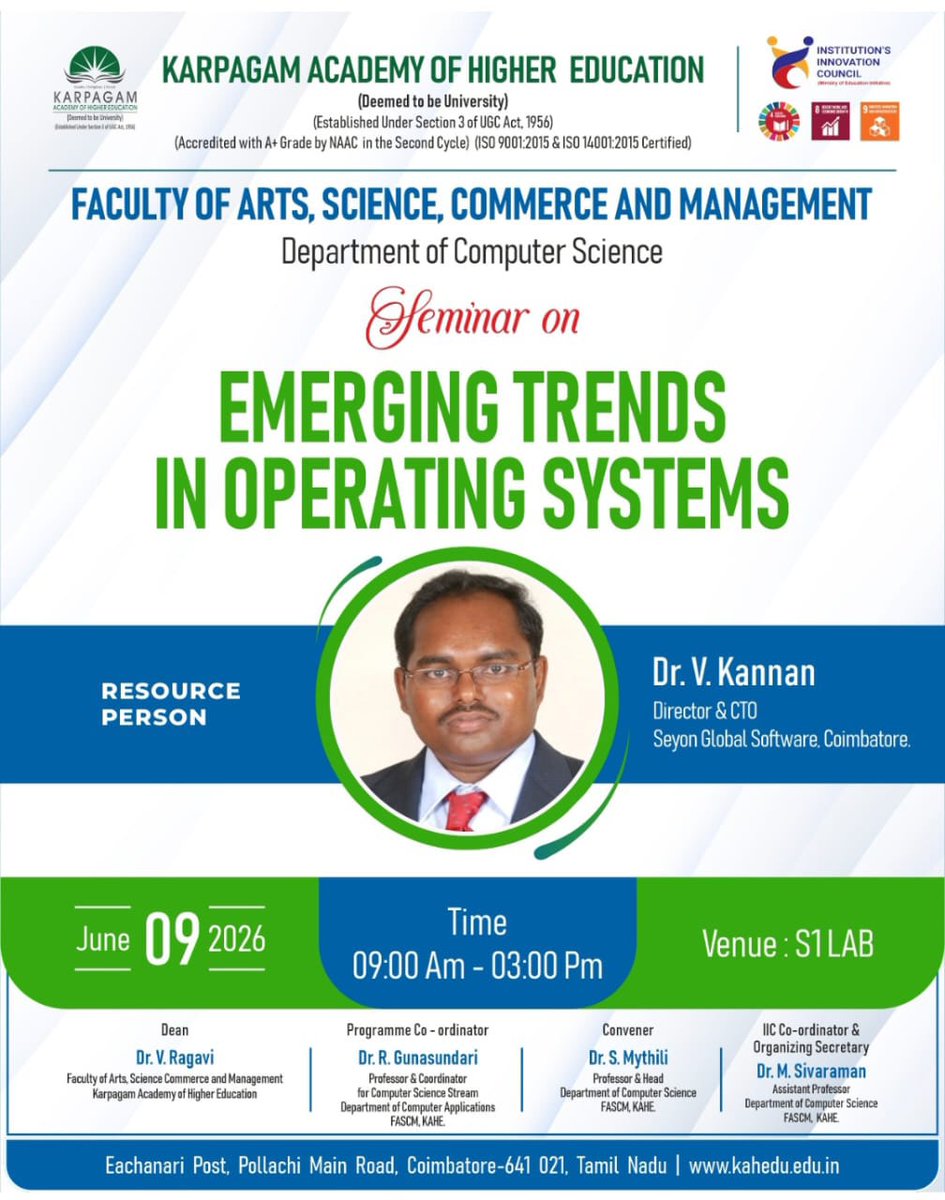
eminar on Emerging Trends in Operating Systems at KAHE!
Gain insights into the future of computing from Dr. V. Kannan, Director & CTO, Seyon Global Software, Coimbatore.
📅 09 June 2026 | 📍 S1 Lab
#KAHE #ComputerScience #OperatingSystems #TechSeminar #FutureTech
47
Jun 8
8 June ✅
⚡ LeetCode done
📚 Revising Operating Systems — one of the core CS subjects
Building stronger fundamentals, one topic at a time 👨💻🚀
#buildinpublic #leetcode #operatingsystems #placements #coding #computerscience
2
18
189

08/30 day
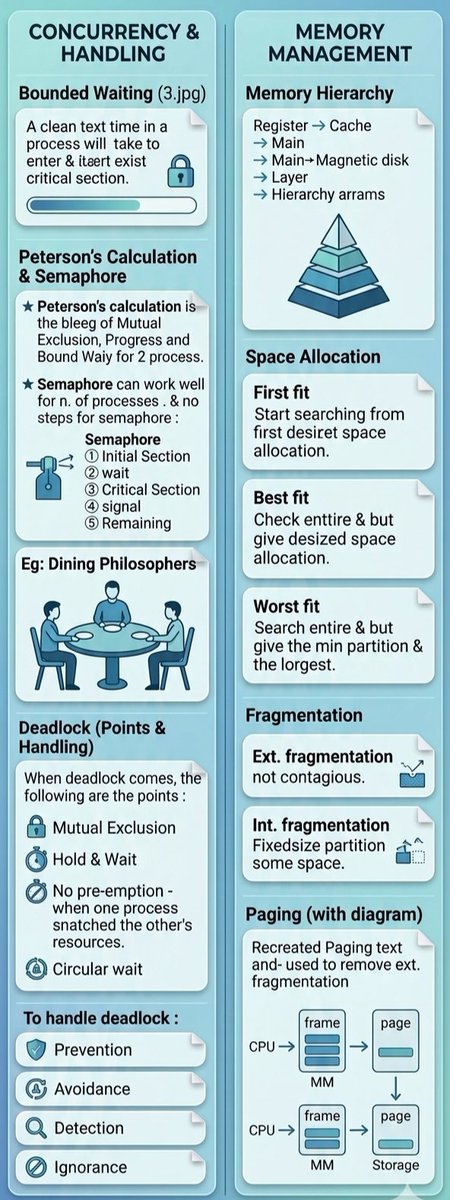
Semaphore:Managing access to a limited number of database connections in a web server.
#LearnInPublic #csfundamentals #operatingsystems #Tech
9
70
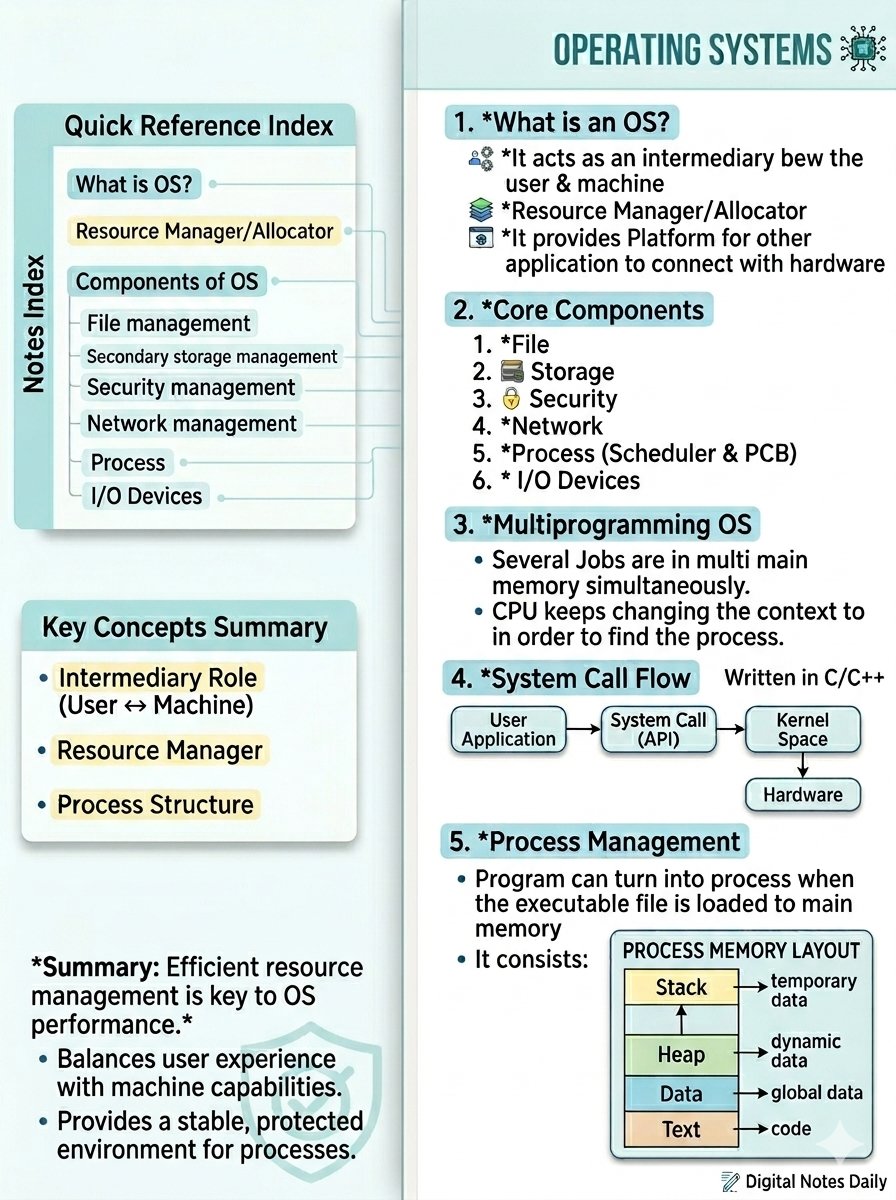
05/30 Operating system:When you tap WhatsApp or Insta, you don't directly interact with the hardware. Android/ios receives your request and communicates with the CPU, memory, camera, and storage.
#LearnInPublic #operatingsystems #Tech
5
64