Química y Biología retweeted

New Research: Enhancer of zeste 2 polycomb repressive complex 2 subunit overexpression suppresses apoptosis in canine T-cell lymphoma: an in vitro functional analysis frontiersin.org/articles/10.… #FrontiersIn #VeterinaryScience
1
1
21


Jun 10
Cell-to-cell variability and gain of methylation at polycomb CpG islands as a hallmark of aging - nature.com/articles/s41467-0…
15

Jun 10
Accessory subunits of PRC2 mimic H3K27me3 to restrict the spread of Polycomb domains doi.org/10.1016/j.molcel.202…
44
Y.Kozaki retweeted

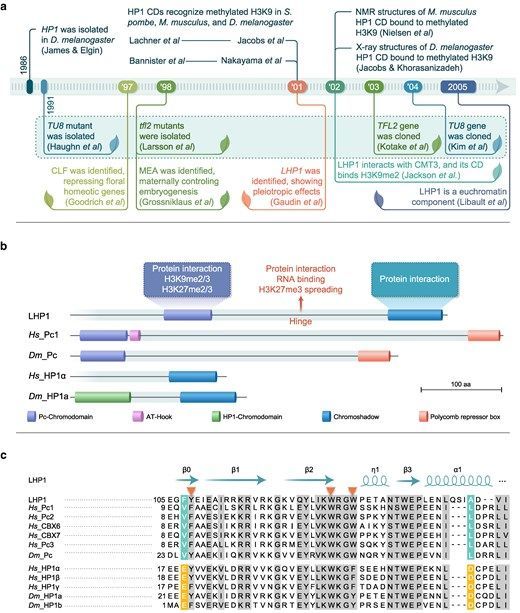
LIKE HETEROCHROMATIN PROTEIN 1: a Polycomb-beyond composite regulator of chromatin in development, stress, and defense doi.org/10.1093/plcell/koag1… @ASPB #PlantSci
6
8
945

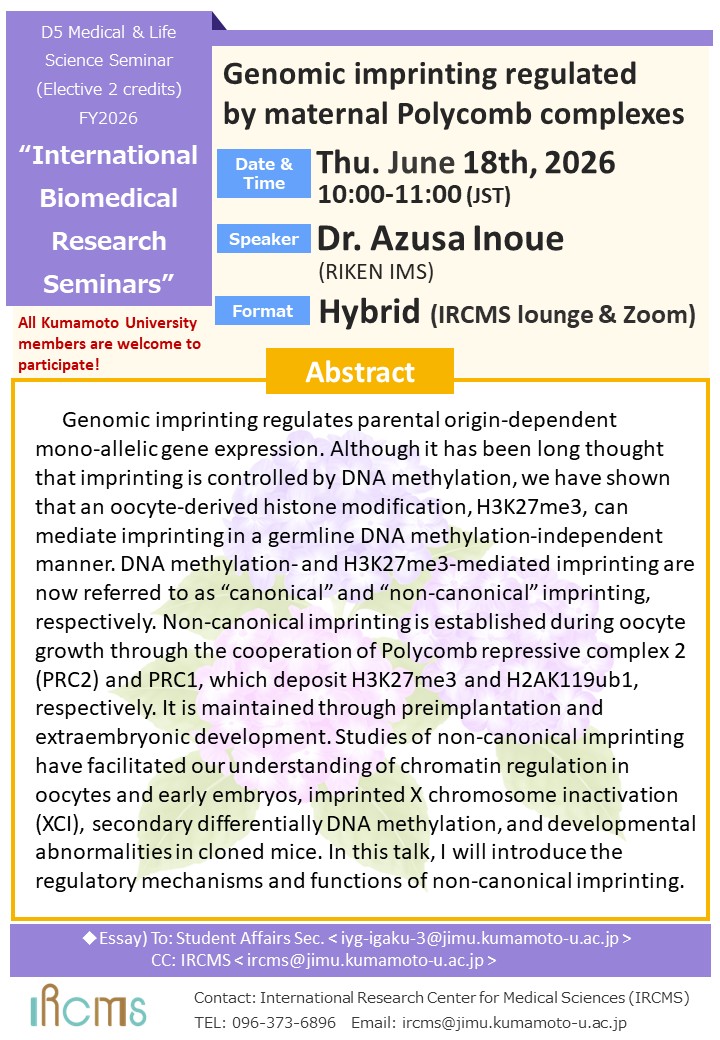
📢 D5 Medical & Life Science Seminar
Dr. Azusa Inoue (RIKEN IMS)
Title :Genomic imprinting regulated by maternal Polycomb complexes
📅 June 18, 2026 (Thu) 10:00–11:00 (JST)
📍 Hybrid (IRCMS Lounge & Zoom)
👥 Open to all Kumamoto University members.
1
1
160

May 25
Here is another Breakdown.
Sure — here's the step-by-step breakdown of the molecular mechanism types INFERNO actually probes, using the data sources you listed.
🧬 The Central Mechanistic Question
A GWAS says SNP rs12345 is associated with Crohn's disease (
p
=
1
×
10
−
12
p=1×10⁻¹²). But:
•rs12345 is noncoding — it doesn't change an amino acid
•It's in LD with 47 other SNPs — which one is causal?
•Even if you identify the causal SNP, what does it actually do?
INFERNO answers this by testing each candidate SNP against specific molecular mechanism categories:
🔍 Mechanism 1: Transcription Factor Binding Disruption
What it is: A SNP falls inside a TF binding motif, altering the binding affinity of a transcription factor.
How INFERNO detects it:
•FANTOM5 provides CAGE-defined enhancer and promoter boundaries
•ENCODE/Roadmap TF ChIP-seq peaks show where specific TFs actually bind
•INFERNO overlaps the candidate SNP coordinates with these TF binding regions
•If the SNP alters a nucleotide within a known position weight matrix (PWM) for a TF, that's a mechanistic hit
Molecular consequence: TF X binds less (or more) tightly → nearby gene transcription goes up or down.
🧬 Mechanism 2: Enhancer/Promoter Activity Alteration
What it is: The SNP falls in an enhancer or promoter region and alters its regulatory activity.
How INFERNO detects it:
•FANTOM5 CAGE data defines active enhancers and promoters across hundreds of cell types and tissues — since CAGE captures the 5' end of transcribed RNAs, it marks both mRNA transcription start sites (promoters) and bidirectional enhancer RNAs (active enhancers)
•ChromHMM 15-state chromatin models (trained on histone marks like H3K27ac, H3K4me1, H3K4me3, H3K36me3, etc.) classify every genomic region into states like "Active Enhancer," "Poised Promoter," "Transcribed," "Repressed Polycomb," etc.
•INFERNO checks whether the SNP falls in a ChromHMM state that differs between relevant cell types
Molecular consequence: The enhancer becomes stronger/weaker → target gene expression changes in a tissue-specific manner.
🧫 Mechanism 3: Tissue/Cell-Type-Specific Regulatory Effects
What it is: The causal variant only exerts its effect in specific tissues or cell types.
How INFERNO detects it:
•GTEx eQTL data across ~49 tissues lets INFERNO check whether a GWAS SNP is an eQTL only in disease-relevant tissues
•FANTOM5 enhancer annotations are tissue-specific — an enhancer active in pancreatic islets but silent in brain
•ChromHMM state calls are also cell-type-specific — the same genomic coordinate can be "Active Enhancer" in CD4 T cells but "Quiescent" in hepatocytes
Molecular consequence: Explains why a variant causes type 2 diabetes but not neurological disease — the regulatory element it disrupts is only active in pancreatic beta cells…
3
2
3
96

H3K27me3拡散がcanonical PRC1(cPRC1)のクロマチン構造形成と三次元ゲノム相互作用を制御し、その破綻がH3K27M変異グリオーマにおけるPolycomb標的遺伝子脱抑制、分化誘導、腫瘍退縮を引き起こすことを示した論文がNat Genet誌に発表されました。
nature.com/articles/s41588-0…
1
24
1,428

May 15
Not long left to submit your abstract for 'Transcription and chromatin'! #EMBLTranscript remains a must-attend event for anyone engaged in the forefront of transcription research, and we hope to see you this year for its 17th edition! 🧬
📥 Submit your abstract by 25 May: s.embl.org/trm26-01-x
Leading researchers will share breakthroughs across the full spectrum of transcription – from cis-regulatory function and long-range regulation to 3D looping, basal transcriptional machinery, chromatin modifications, epigenetic inheritance, and more. Talk to experts, get feedback on your work, and connect with peers ✅
📍 EMBL Heidelberg and Virtual
📅 25 – 28 August 2026
#Transcription #Chromatin #Epigenetics #Enhancers #Polycomb
3
22
1,452
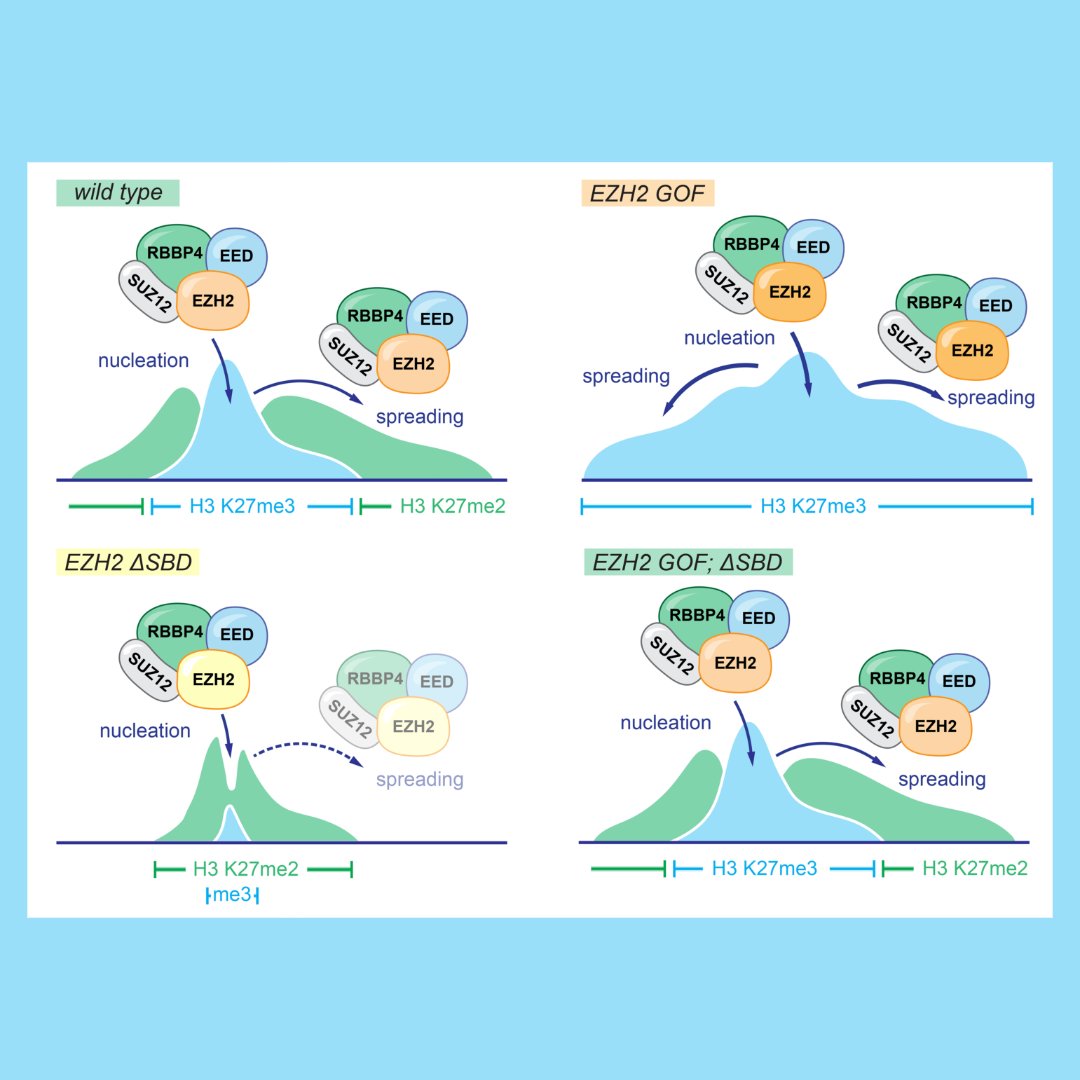
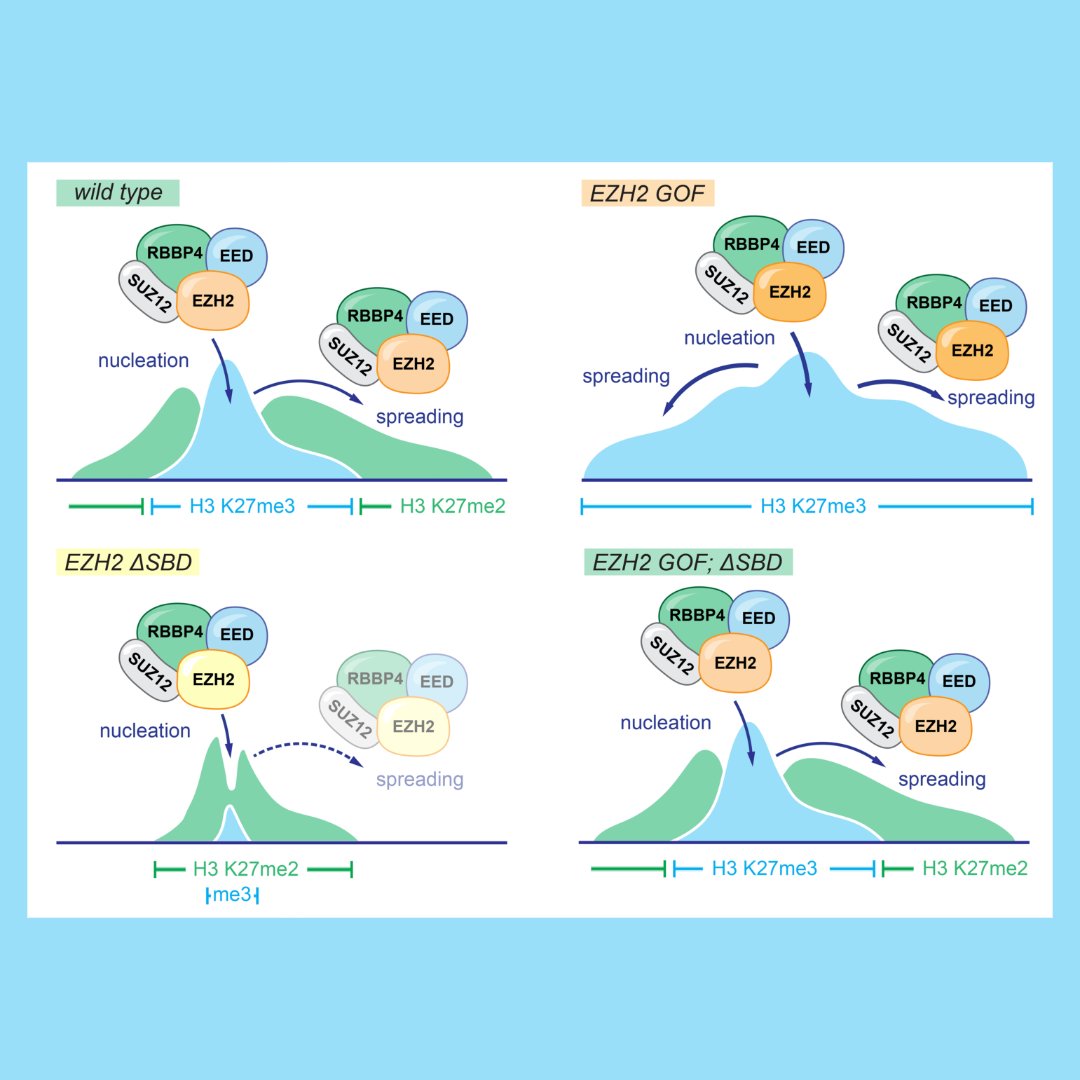
RESEARCH PAPER: The conserved N-terminal SANT1-binding domain (SBD) of EZH2 regulates PRC2 activity
By Patriotis et al., and the late David Allis
➡️ genesdev.cshlp.org/content/4…
@ael2b @RockefellerUniv @epicypher
#epigenetic #histone #polycomb #lymphoma
2
7
382

Apr 28
🆕 ADVANCE ONLINE 🆕
RESEARCH PAPER: The conserved N-terminal SANT1-binding domain (SBD) of EZH2 regulates PRC2 activity
By Patriotis et al., and the late David Allis
➡️ ow.ly/YqbP50YNGZu
@ael2b @RockefellerUniv @epicypher
#epigenetic #histone #polycomb #lymphoma
2
5
2,283