
This has an excellent P.C. Mahalanobis connection.
What remains far less known is that more than 2300 yrs earlier, Jain philosophers in ancient India developed a sophisticated multi-valued logic to handle precisely this kind of complexity & indeterminacy. They called it Syādvāda (the doctrine of conditioned assertion) & Saptabhaṅgī Naya (the 7 fold predication), built on the principle of Anekāntavāda (the many-sidedness of reality).
Instead of forcing every statement into true/false, they insisted every assertion must be qualified by Syāt: “in a certain sense,” “from a particular standpoint,” or “under specific conditions.”
This framework allowed them to express 7 modes of predication, recognizing that reality often involves aspects that are simultaneously existent/non-existent/inexpressible in binary terms. The 4th mode, Avaktavya (inexpressible), captures situations where mutually opposing characteristics coexist in a way that defies simultaneous, precise verbal description.
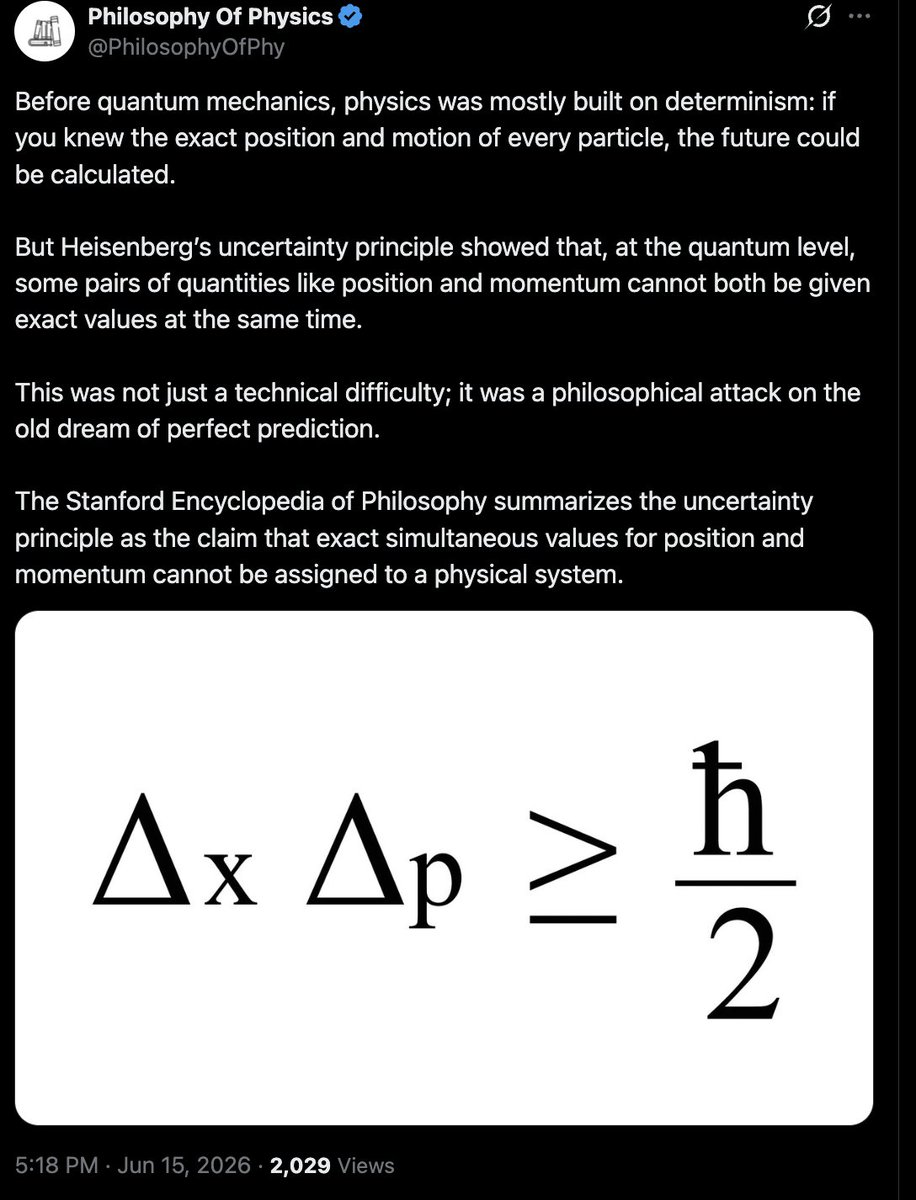
In the 1950s, the pioneering Indian statistician P.C. Mahalanobis (founder of the Indian Statistical Institute) analyzed Saptabhaṅgī mathematically. He saw it as a profound precursor to probabilistic & multi-valued reasoning, interpreting Avaktavya not as vagueness but as a formal acknowledgment of indeterminacy... remarkably resonant with quantum realities.


.@FPWellman , leave the Constitutional and legal posits to those of us with actual knowledge, skills, and experience in the matters.
Not illegal. If you think it is, step onto the Constitutional Debate Stage and cite what laws apply and predication why it was violated.
1
2
78

_politicians, including 50 from NCP (SP), 9 from Congress, 2 from Shiv Sena & one from BJP. The Cooperative Bank Scam came in limelight when in NCP founder Sh. Sharad Pawar was questioned by ED. Special Court said in case of no predication their is no offence of Money Laundering.
42


As it came out in Europe 1988…. It was a predication (even if subconsciously) that came true!
1
1
6

How could u tell? Predicating swarms of insects is a new feature I see. That predication was as bad as their weather forecasting has been.
1
91


Fno is a risky segment if you strt your work in this don't work on predication based work with proper reserch in market
1
11
KIWI retweeted

very thoughtful piece working through what Spielberg is going for with Disclosure Day, but I’m caught on the predication that the optimistic plea Spielberg is making for empathy and idealism is a noble and worthwhile one, since the movie only affirmed for me that it is not

wrote about ‘disclosure day,’ spielberg’s brilliant parable for the seismic loss of compassion and faith brought about by the pandemic—a spiritual sibling to ‘war of the worlds’—that finds cinema’s great dreamer closing the loop. salon.com/2026/06/13/disclos…
4
3
126
8,863

393/396
((1s of 3 Posts))
📖
The Language of the Kingdom and Jesus:
Parable Aphorism and Metaphor in the Sayings Material Common to the Synoptic Tradition and the Gospel of Thomas
📖
—by Jacobus Liebenberg
—560 Pages
📖
Table of Contents:
Eschatology, Kingdom and the Teaching of Jesus (or: Parable, Aphorism and the Historical Jesus) pg 1
Introduction: Setting the Scene pg 1
From the Life of Jesus to the Kingdom of God in the Teaching of Jesus pg 5
J Weiss: Jesus’ Preaching of the Kingdom pg 5
Albert Schweitzer: Thoroughgoing Eschatology as Framework for the Deeds and Words of Jesus pg 11
The Domination of the Parables pg 17
C H Dodd: Finding the Original Setting of the Parables pg 17
J Jeremias: Finding the Original Form of the Parables pg 21
The Resumption of the Quest for the Historical Jesus pg 24
G Bornkamm: The Parables as Jesus’ “Verkündigung selbst” pg 26
J Becker pg 27
N Perrin: Jesus and the Language of the Kingdom pg 29
Redefining the Context of Jesus’ Teaching: Understanding Jesus as a First-Century Jewish Peasant pg 34
G Vermes: Returning to Jesus the Jew pg 37
E P Sanders: the Kingdom of God in the (F)Acts of Jesus pg 39
J D Crossan: Meticulously Creating the Historical Jesus pg 41
Conclusion pg 46
Parable and Metaphor pg 48
Parable and Metaphor pg 48
From Refuting Allegory to Embracing Metaphor pg 50
A Jülicher: Either Allegory (Metaphor) or Parable (Simile) pg 50
C H Dodd: Parable as Metaphor and Simile pg 53
R W Funk: Parable as Irreducible Metaphor pg 55
H-J Klauck: Parable and Context pg 57
H Weder: Metaphor (Parable) as Predication pg 59
W Harnisch: Metaphor and Parable as Semantic and Narrative Tension pg 63
J D Crossan: the Parables as Key to the Historical Jesus pg 66
C Hedrick: Parable as Non-Metaphoric Poetic Fiction pg 69
E Jüngel: Language is Metaphoric pg 72
Understanding Metaphor pg 75
Interpretation as a Function of Contemporary Epistemology pg 75
Interpretation and the Exceptional pg 80
Defining Metaphor: Clarifying Terminology pg 84
Literal and Figurative (Metaphoric) Speech (or on Metaphoric Meaning and the Word) pg 84
The Legacy of the Aristotelian Understanding of Metaphor pg 88
From Black to Lakoff, Johnson and Turner: from Metaphor as Interaction to Metaphor as Conceptual Mapping pg 92
Grasping Metaphor pg 94
Metaphorically Defining a Process: Metaphor as Cross-Conceptual “Mapping” pg 99
Excursus: The Parable of the Barren Fig Tree, Lk 13:6b-9 as Metaphor pg 104
Introduction pg 104
Examining the Parable Story in Lk 13:6-9 pg 106
The Background to the Parable, Lk 13:1-5 pg 106
The Parable Story, Lk 13:6-9 pg 107
Relating a Barren Fig Tree with Unrepentant People pg 108
The Parable of the Barren Fig Tree as Metaphor pg 110
Metaphoric Mapping Schematised pg 112
Concepts, Structure and the Constraints on Metaphoric Mapping pg 113
Generic-Level Metaphors pg 122
The Generic-Level Metaphor: GENERIC IS SPECIFIC pg 126
The Great Chain of Being, the Commonsense Theory about the Nature of Things and the Interpretation of Proverbs and Aphorisms pg 129
The Great Chain of Being Metaphor pg 132
Explaining the GREAT CHAIN OF BEING METAPHOR, GTh 56, 80, 110 pg 136
Explaining GTh 56 and 80 by Using “Conventional Metaphors” pg 143
Explaining GTh 56 and 80 by Using “The GREAT CHAIN METAPHOR” pg 145
The Meaning of GTh 110 pg 147
Excursus: Kittay on the Conditions that Facilitate Metaphoric Understanding pg 150
Parable as Metaphor pg 154
Excursus: Parable and Reception pg 163
Conclusion pg 165
The Kingdom Parables Shared by the Gospel of Matthew and the Gospel of Thomas pg 167
Introduction pg 167
Mt 13 as Context for the Parables of the Planted Weeds, Treasure, Pearl and Fishnet pg 168
Mt 13:1-35: Teaching the Crowds at the Lakeside pg 169
Mt 13:36-52: Teaching the Disciples (only) at Home pg 171
Continuing In Next Post——>

1
51

Quite the predication which turned out to be right in the long run.
3
60

Jewish and christians i trepretation is anologicla predication since God is outside of time space and matter and doesnt posess bioligcal parts
4

Hiya, Bill.
I know your brand of macho-ism is of the cyber-dominance egghead-on-remote variety, but lets be clear:
That domain is much more given to conscripted slavery & brutality than our physical domain.
The difference is, YOUR masters were able to hide their cage-match machinations via physics & predication.
So how ‘bout ya gfy
douche

17

14h
Predication market accounts that start majority of posts
“JUST IN” and “BREAKING”
and then the content is anywhere from 6 hours to 2 days old
2
40


ORIS HUB ™ - Polso Predication World Cup 2026
Try it for free and win super prizes
orishub.com/polso
22

now regarding 10:16, you could have opened up any tafsir on this, here is al-jalalayn taking a shit on you, you think we aren't aware of these?😂
stop taking from jay smith
regarding Q 37:12
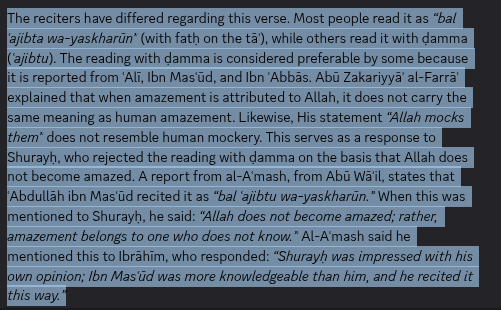
Imam Qurtubi already adresses this in his tafsir, ever heard of analogical predication

11