
Jun 11
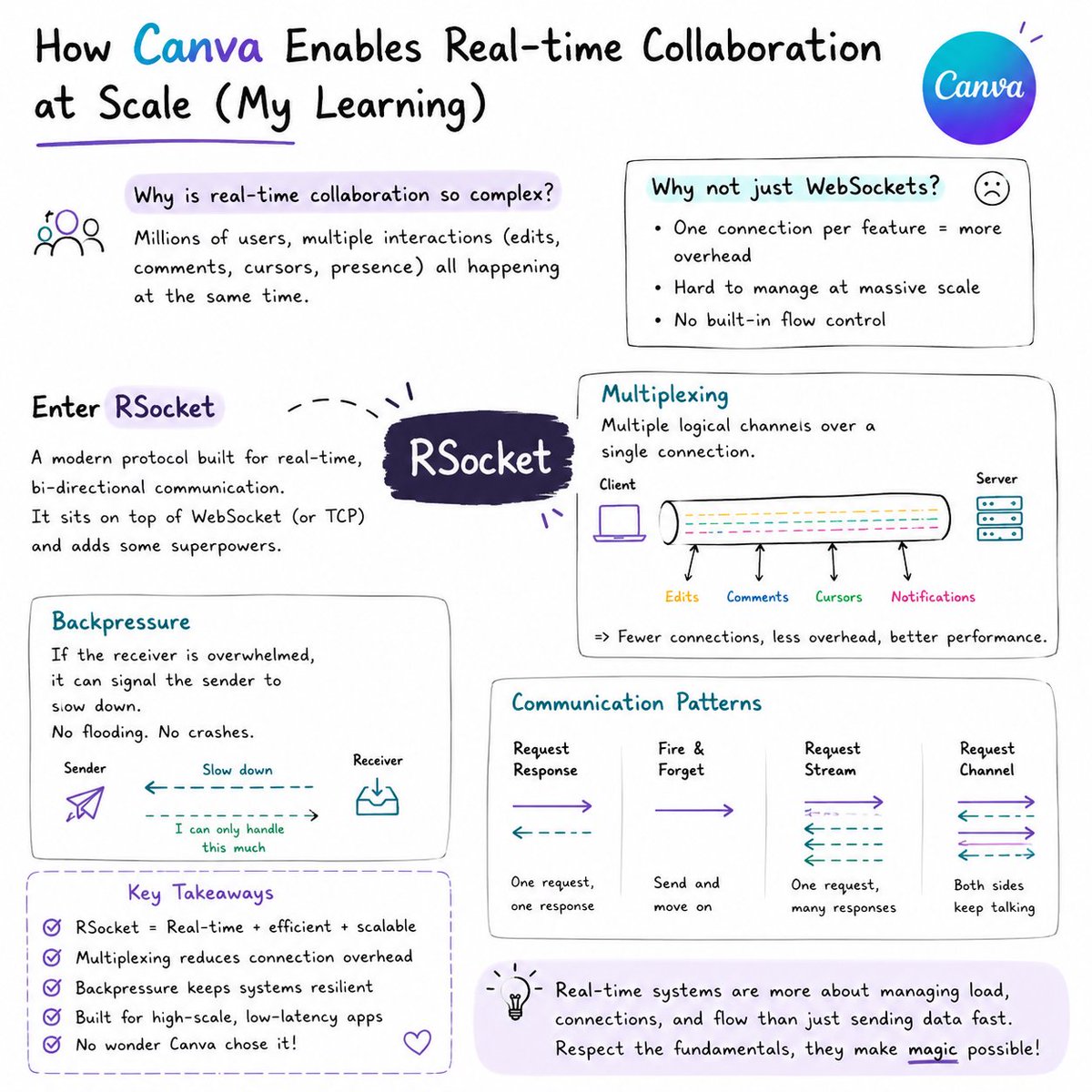
Today I learned why real-time collaboration at scale is much harder than it looks.
While reading about Canva's architecture, I came across RSocket and two concepts that stood out:
• Multiplexing — multiple logical channels over a single connection, reducing connection overhead.
2
1
62

Feb 20
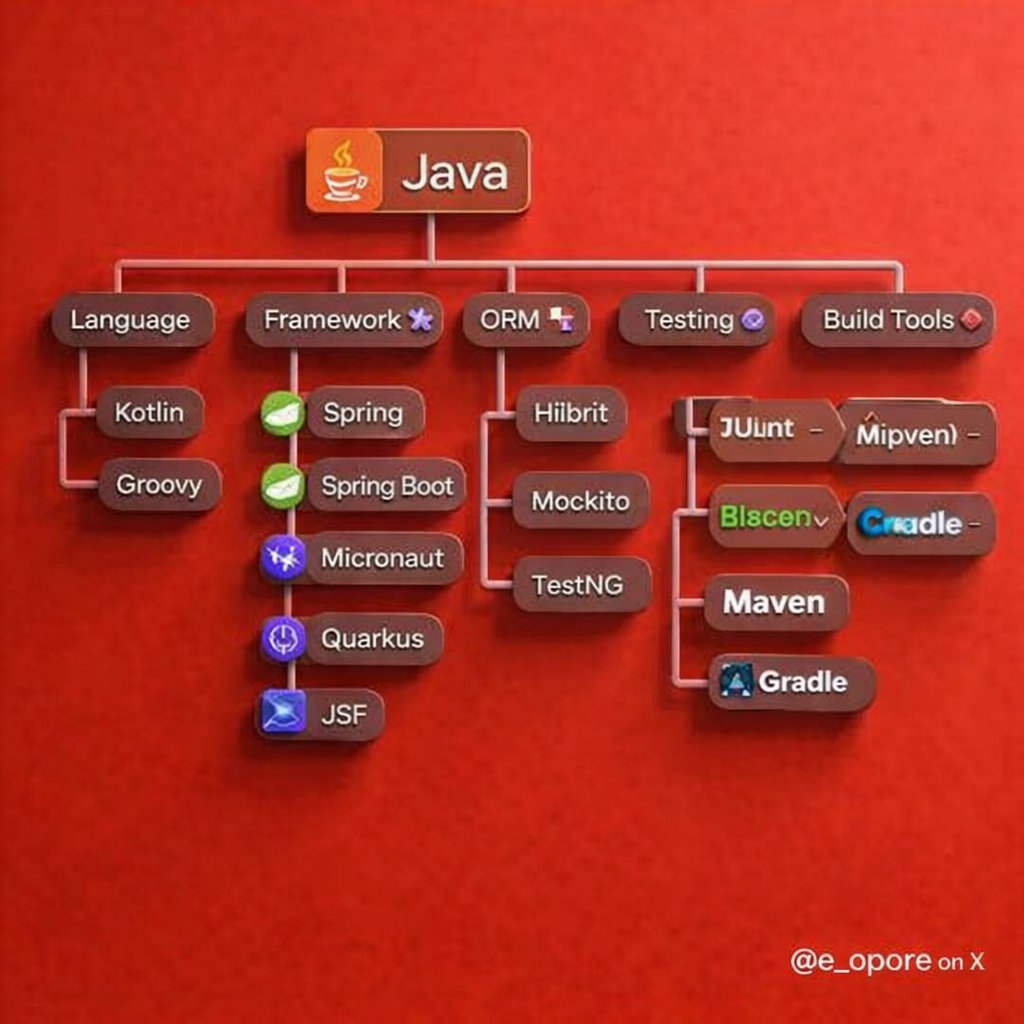
Java Development Roadmap (Complete Guide)
PHASE 1: JAVA FUNDAMENTALS
├── Core Java Basics
│ ├── JDK, JRE, JVM architecture
│ ├── Data types and variables
│ ├── Operators and expressions
│ ├── Control flow (if-else, switch, loops)
│ └── Arrays and enhanced for loops
├── Object-Oriented Programming
│ ├── Classes and objects
│ ├── Constructors and this keyword
│ ├── Inheritance (extends, super)
│ ├── Polymorphism (overloading, overriding)
│ ├── Abstraction (abstract classes, interfaces)
│ └── Encapsulation (access modifiers)
├── Basic Java APIs
│ ├── String, StringBuilder, StringBuffer
│ ├── Wrapper classes and autoboxing
│ ├── Math, Random, Scanner classes
│ └── Date and Time API (java.time)
PHASE 2: ADVANCED JAVA
├── Collections Framework
│ ├── List (ArrayList, LinkedList, Vector)
│ ├── Set (HashSet, LinkedHashSet, TreeSet)
│ ├── Queue (PriorityQueue, ArrayDeque)
│ ├── Map (HashMap, LinkedHashMap, TreeMap)
│ ├── Comparable vs Comparator
│ └── Stream operations and lambda expressions
├── Exception Handling
│ ├── Checked vs unchecked exceptions
│ ├── try-catch-finally blocks
│ ├── try-with-resources
│ └── Custom exceptions
├── Multithreading
│ ├── Thread class and Runnable interface
│ ├── Thread lifecycle and states
│ ├── Synchronization and locks
│ ├── ExecutorService and thread pools
│ ├── CompletableFuture for async programming
│ └── Concurrent collections
├── File I/O and NIO
│ ├── FileReader/FileWriter
│ ├── BufferedReader/BufferedWriter
│ ├── NIO package (Path, Files)
│ └── Serialization
PHASE 3: DATABASE & JDBC
├── SQL Fundamentals
│ ├── CRUD operations
│ ├── Joins (INNER, LEFT, RIGHT, FULL)
│ ├── Group By and Having
│ ├── Subqueries and set operations
│ └── Indexes and performance
├── JDBC Programming
│ ├── DriverManager and Connection
│ ├── Statement, PreparedStatement
│ ├── ResultSet and RowSet
│ ├── Batch processing
│ ├── Transaction management
│ └── Connection pooling (HikariCP)
├── Database Design
│ ├── Normalization (1NF to 3NF)
│ ├── Primary/Foreign keys
│ └── Entity relationship modeling
PHASE 4: ENTERPRISE JAVA (JAKARTA EE)
├── Servlet & JSP
│ ├── Servlet lifecycle
│ ├── RequestDispatcher and sendRedirect
│ ├── Session management
│ ├── Filters and Listeners
│ ├── JSP tags and EL
│ └── MVC architecture with Servlets/JSP
├── RESTful Web Services
│ ├── JAX-RS (Jersey, RESTEasy)
│ ├── @Path, @GET, @POST annotations
│ ├── JSON binding with Jackson
│ ├── Exception mappers
│ └── API documentation (Swagger/OpenAPI)
├── Enterprise Integration
│ ├── JMS with ActiveMQ
│ ├── EJB basics (stateless, stateful)
│ └── JTA transactions
PHASE 5: SPRING FRAMEWORK
├── Spring Core
│ ├── IoC and Dependency Injection
│ ├── ApplicationContext and BeanFactory
│ ├── XML vs Java configuration
│ ├── Annotations (@Component, @Autowired)
│ ├── Bean scopes and lifecycle
│ └── Spring Expression Language (SpEL)
├── Spring MVC
│ ├── DispatcherServlet workflow
│ ├── Controllers (@Controller, @RestController)
│ ├── Request mapping and data binding
│ ├── Validation with Hibernate Validator
│ ├── File upload/download
│ └── Interceptors and exception handling
├── Spring Data JPA
│ ├── Hibernate ORM fundamentals
│ ├── Entity mappings (@OneToMany, @ManyToOne)
│ ├── Repository pattern (JpaRepository)
│ ├── Query methods and @Query
│ ├── Pagination and sorting
│ └── Auditing and soft deletes
├── Spring Security
│ ├── Authentication and Authorization
│ ├── UserDetailsService and JWT
│ ├── OAuth2 and SSO integration
│ ├── Method-level security
│ └── CSRF and CORS configuration
PHASE 6: SPRING BOOT & MICROSERVICES
├── Spring Boot Fundamentals
│ ├── Auto-configuration
│ ├── Starters and dependencies
│ ├── application.properties/yml
│ ├── Profiles and environment-specific config
│ ├── Actuator endpoints
│ └── Spring Boot DevTools
├── Microservices Architecture
│ ├── Spring Cloud ecosystem
│ ├── Service discovery (Eureka)
│ ├── API Gateway (Spring Cloud Gateway)
│ ├── Circuit breaker (Resilience4j)
│ ├── Distributed tracing (Sleuth Zipkin)
│ └── Configuration server (Spring Cloud Config)
├── Communication Protocols
│ ├── RESTful services with WebClient
│ ├── gRPC with Protocol Buffers
│ ├── Apache Kafka for event-driven architecture
│ └── RabbitMQ with Spring AMQP
PHASE 7: BUILD TOOLS & TESTING
├── Build Tools
│ ├── Maven (POM.xml, dependencies, plugins)
│ │ ├── Project structure
│ │ ├── Lifecycle phases
│ │ └── Multi-module projects
│ ├── Gradle (build.gradle, tasks)
│ │ ├── Groovy vs Kotlin DSL
│ │ └── Dependency management
├── Testing
│ ├── Unit Testing with JUnit 5
│ │ ├── @Test, assertions
│ │ ├── Parameterized tests
│ │ └── Test lifecycle hooks
│ ├── Mocking with Mockito
│ │ ├── @Mock, @InjectMocks
│ │ └── When/Then patterns
│ ├── Integration Testing
│ │ ├── @SpringBootTest
│ │ ├── TestContainers for database testing
│ │ └── @DataJpaTest, @WebMvcTest
│ └── Performance Testing (JMeter, Gatling)
PHASE 8: DEVOPS & DEPLOYMENT
├── Containerization
│ ├── Docker for Java apps
│ │ ├── Multi-stage Dockerfiles
│ │ ├── JVM optimization in containers
│ │ └── Docker Compose for local dev
│ ├── Kubernetes for Java microservices
│ │ ├── Pod and Service definitions
│ │ ├── ConfigMaps and Secrets
│ │ └── Helm charts for Java apps
├── CI/CD Pipeline
│ ├── Jenkins with Java projects
│ ├── GitHub Actions for Spring Boot
│ ├── GitLab CI with Maven/Gradle
│ └── SonarQube for code quality
├── Cloud Deployment
│ ├── AWS (Elastic Beanstalk, ECS, EKS)
│ ├── Azure (App Service, AKS)
│ ├── Google Cloud (App Engine, GKE)
│ └── Heroku / Railway / Render
PHASE 9: PERFORMANCE & SECURITY
├── Performance Optimization
│ ├── JVM tuning (Heap, GC algorithms)
│ ├── Profiling tools (JProfiler, VisualVM)
│ ├── Database query optimization
│ ├── Caching (Spring Cache, Redis, Hazelcast)
│ └── Connection pooling tuning
├── Security Best Practices
│ ├── OWASP Top 10 for Java
│ ├── Input validation and sanitization
│ ├── SQL/NoSQL injection prevention
│ ├── Secure coding guidelines
│ ├── Dependency scanning (OWASP Dependency Check)
│ └── Secret management (Vault, AWS Secrets Manager)
PHASE 10: MODERN JAVA & TRENDS
├── Java 8 Features
│ ├── Lambda expressions and Streams
│ ├── Optional class
│ ├── Default and static methods in interfaces
│ ├── New Date/Time API
│ └── CompletableFuture
├── Java 9-21 Features
│ ├── Module system (Project Jigsaw)
│ ├── Local variable type inference (var)
│ ├── Switch expressions
│ ├── Text blocks
│ ├── Records and sealed classes
│ ├── Pattern matching
│ ├── Virtual threads (Project Loom)
│ └── Foreign Function & Memory API
├── Reactive Programming
│ ├── Project Reactor (Mono, Flux)
│ ├── Spring WebFlux
│ └── RSocket protocol
SPECIALIZED DOMAINS
├── Big Data Java
│ ├── Apache Spark with Java
│ ├── Apache Flink
│ └── Hadoop ecosystem
├── Android Development
│ ├── Android SDK with Java
│ └── Kotlin interop
├── FinTech/Enterprise
│ ├── High-performance Java
│ ├── Low-latency systems
│ └── Financial messaging (FIX protocol)
PROJECTS TO BUILD
1. Beginner: Library Management System (Core Java File I/O)
2. Intermediate: E-commerce API (Spring Boot JPA Security)
3. Intermediate: Task Management App with JWT authentication
4. Advanced: Microservices-based Banking System (Spring Cloud, Kafka)
5. Advanced: Real-time Chat Application (WebSocket STOMP)
6. Expert: Stock Trading Platform (low-latency, reactive)
7. Expert: Scalable Social Media Backend (microservices, Redis)
LEARNING RESOURCES
├── Official Documentation
│ ├── docs.oracle.com/en/java/
│ ├── spring.io/projects/spring-bo…
│ └── hibernate.org/orm/documentat…
├── Books
│ ├── "Effective Java" - Joshua Bloch
│ ├── "Java Concurrency in Practice"
│ ├── "Spring in Action"
│ └── "Clean Code" - Robert C. Martin
├── Practice Platforms
│ ├── LeetCode (Java problems)
│ ├── HackerRank Java track
│ ├── CodeWars
│ └── Spring Initializr (start.spring.io)
RECOMMENDED CERTIFICATIONS
├── Oracle Certified Professional: Java SE Programmer
├── Spring Professional Certification
├── AWS Certified Developer
└── Azure Java Developer
📚 RECOMMENDED EBOOK
For comprehensive Java and its interview preparation and in-depth concepts, check out:
👉Grab the Java Handbook: codewithdhanian.gumroad.com/…)**
This ebook covers:
- Core Java fundamentals with detailed explanations
- Advanced Java concepts (Multithreading, Collections)
- Spring/Spring Boot interview questions
- Microservices design patterns
- Real-world scenarios and coding problems
- 300 frequently asked interview questions
- Code examples and best practices
- System design for Java developers
Estimated Time: 6-12 months for core proficiency, 1-2 years for enterprise readiness
Key Principle: Write code daily, understand the "why" behind features, master debugging
Progression Strategy:
1. Months 1-3: Core Java OOP concepts
2. Months 4-6: Advanced Java JDBC Basic Servlets
3. Months 7-12: Spring Framework Spring Boot
4. Year 2: Microservices Cloud Advanced topics
5. Year 3 : Specialization Architecture
Java Developer Mindset:
- Strong typing catches bugs early
- JVM is your friend - understand it
- Enterprise patterns matter
- Backward compatibility is sacred
- Verbose can be clear - prioritize readability
- Always consider garbage collection and memory
- Design for interfaces, not implementations
Daily Learning Routine:
- Morning: Read Java/Spring documentation or articles
- Afternoon: Code implementation
- Evening: Code review and optimization
- Weekend: Build side projects and experiment
Community to Follow:
- r/java, r/springsource
- Follow @e_opore on X
- Java Champions on Twitter
- Spring Blog
- InfoQ Java section
Remember: Java is everywhere - from Android phones to enterprise servers to big data systems. Master the fundamentals first, then explore specialized domains. The ecosystem is vast but well-documented. Build projects that solve real problems, and always keep learning as Java evolves every 6 months now!
9
118
623
20,891

16 Jul 2025
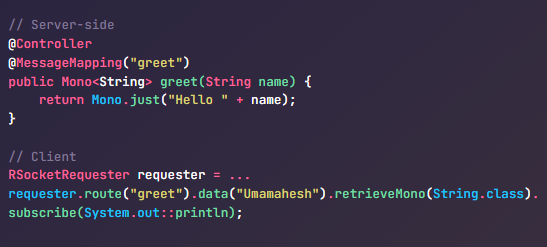
Spring Boot WebFlux RSocket – Reactive Communication Over TCP:
For real-time, low-latency systems, HTTP isn’t always enough.
RSocket enables multiplexed, async, backpressured communication over WebSocket or TCP.
Spring Boot WebFlux integrates directly with RSocket, allowing reactive request/response, streams, fire-and-forget, etc.
It’s ideal for game backends, financial feeds, or chat apps.
ALT Spring Boot WebFlux RSocket – Reactive Communication Over TCP:
1
28
169
8,097

13 Jun 2025
Reactive Programming in Spring Boot Java 👉
- Spring WebFlux (Alternative to Spring MVC)
- Mono vs Flux
- Backpressure handling
- Reactive MongoDB / Cassandra / Kafka
- Integration with RSocket
Spring WebFlux and reactive programming (Mono/Flux) are designed to handle asynchronous, non-blocking, and event-driven systems with high concurrency and low latency.
2
12
85
6,477

rSocket and gRPC anyone? Also check how http3 retains connection.
3
3,838

11 Mar 2025
rsocket-kotlin 0.20.0 is here!
> Migrated to kotlinx-io and ktor 3.x - up to 10x faster
> New transports API - consistent DSL
> QUIC support via Netty - highly experimental
> Wasm and all native targets support
github.com/rsocket/rsocket-k…
And a bit about the future in the thread🧵
1
5
29
1,434

4 Feb 2025
Today’s focus 🔥
yarn add rsocket-core rsocket-websocket-client
Time to get my hands dirty and dive in.
2
23
1,230

12 Jan 2025
Meta also created or worked on Rsocket, and GraphQL, two of my favorite OSs
Projects
1
3
301

17 Dec 2024
I experienced using Kotlin in backend projects that truly used its capabilities, using Ktor, Ktor Client, coroutines with proper testing, flow, RSocket, and other tools, and after that, I can't imagine going back to Java. I believe any developer with such experience would not willfully choose Java for a greenfield project.
1
5
1,239
30 Nov 2024
I would say it's alive, but very niche.
Community around it is rather small as currently there are no companies which bake it :(
RSocket is much more than just reactive streams.
You can read my big thread about it:
30 May 2024

Let’s talk a bit about @RSocketIO as a protocol, not about rsocket-kotlin
rsocket.io headline states: Application protocol providing Reactive Streams semantics
But RSocket isn’t only about Reactive Streams, I would even say that it’s just one of many shiny features.
3
225

30 Nov 2024
RSocket is a great tool. Maybe it is time to get greater community support for it.
@oleg_nenashev, maybe some insights on how to do it better?
1
5
353
30 Nov 2024
Hey Kotlin developers!
Would anyone be interested in taking over / helping with the maintenance of rsocket-kotlin? :)
github.com/rsocket/rsocket-k…
Lately, I just can’t seem to find time for it at all…
By the end of the year (or in January), I plan to do a release with kotlinx-io ktor 3.0 QUIC. Beyond that, it’s hard to say when I’ll be able to contribute further, but I’ll do my best…
Please contact me if you are interested in Slack/X/e-mail or anywhere else!
P.S. I really have a lot of ideas on features/improvements there but I just don’t have enough time to implement them. On current moment my other open source projects have bigger priority for me (and probably for Kotlin community)
4
7
60
6,821

25 Nov 2024
If you are a backend developer, you must be familiar with these protocols
Don't have to know them all, just know what is required
1. HTTP/HTTPS: For web and REST APIs; used in websites, e-commerce platforms, and blogs.
2. WebSocket: For real-time communication; used in chat apps, multiplayer games, and live dashboards.
3. gRPC: For efficient inter-service communication; used in microservices and IoT applications.
4. GraphQL: For dynamic data queries; used in modern web/mobile apps needing specific data fetching.
5. MQTT: For lightweight messaging; used in IoT devices and real-time telemetry systems.
6. AMQP: For reliable message delivery; used in distributed systems and task queues.
7. REST: For simple API communication; used in CRUD-based apps and backend services.
8. SOAP: For structured enterprise communication; used in financial and enterprise-grade systems.
9. DNS: For domain resolution; used in load balancing and routing internet traffic.
10. FTP/SFTP: For secure file transfers; used in server backups and data migration.
11. RSocket: For reactive streams; used in streaming platforms and real-time systems.
12. TCP/IP: For reliable data transfer; used in networking tools and low-level communication.
1
11
943
14 Nov 2024
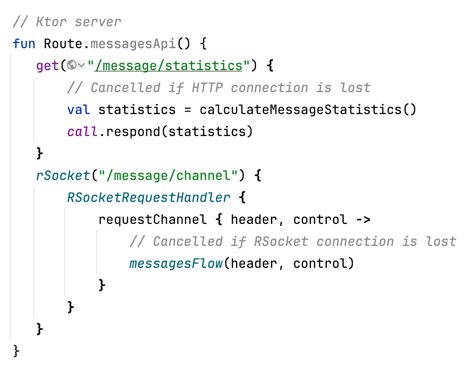
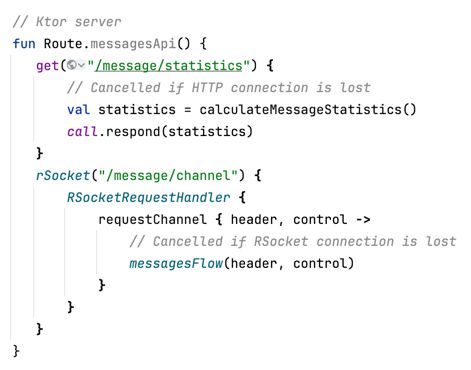
Also when you define a backend application in a framework like Ktor, that is coroutines-first, if an HTTP connection is lost, call gets immediately cancelled, the same if WebSocket or RSocket connection is lost.
2
5
603
6 Nov 2024
Also when you define a backend application in a framework like Ktor, that is coroutines-first, if an HTTP connection is lost, call gets immediately cancelled, the same if WebSocket or RSocket connection is lost.
1
3
328

6 Oct 2024
🎯 Discover how RSocket enables real-time, low-latency communication in Spring, ideal for modern web applications. #SpringFramework #RSocket #ReactiveJava #RealTime buff.ly/3IRqX4X
4
11
1,860
6 Oct 2024
⚡ Build real-time, reactive systems with RSocket in Spring—from request-response to fire-and-forget! #RSocket #SpringBoot #ReactiveProgramming #JavaDev buff.ly/3IRqX4X
3
10
1,457
5 Oct 2024
🔌 Learn how RSocket changes the game for building reactive, event-driven architectures in Spring. #SpringBoot #ReactiveJava #RSocket #JavaDevelopment #SpringSecurity buff.ly/3IRqX4X
2
5
1,261
5 Oct 2024
🔄 From request-response to streaming—take your Spring apps to the next level with RSocket. #SpringFramework #ReactiveSystems #RSocket #JavaTips #Microservices buff.ly/3IRqX4X
2
12
1,309