
Jun 3
They even have a plan for these new data centers they're building everywhere.
The plan is to route the power they extract from your brain direct it to the nearest data center to power the data center.
This is why they're setting up streams and recording event data.
If anybody is curious about the correlation between data centers and 6G understand it's your brain, that's powering these data centers.
msn.com/en-us/technology/art…
Cortical Labs, an Australian biotech startup, has launched the world’s first biological data center in Melbourne, with a larger facility planned for Singapore in partnership with DayOne Data Centers.
notebookcheck.net/Data-cente…
These facilities utilize CL1 systems, which are hybrid computers integrating 200,000 to 800,000 lab-grown human neurons (derived from induced pluripotent stem cells) onto multi-electrode arrays.
The primary advantage of this "wetware" approach is extreme energy efficiency; each CL1 unit consumes only 30 to 1,000 watts, a fraction of the power required by traditional GPU clusters.
The Melbourne facility initially houses 120 units, while the Singapore site aims to scale to 1,000 units to support adaptive learning tasks, AI augmentation, and neuroscience research.
ia.acs.org.au/article/2026/t…
6G is going a route the energy they extract from your brain then route to the data center grid, the infernal grid. The whole growing synthetic neurons was a test to see if they can get it to work on human brains.
Now that they know they got it to work, they're gonna tether your brain to that data center.
THE SPARK
Final Spark
Website
finalspark.com/
Github
github.com/FinalSpark-np
Apache Spark
spark.apache.org/
A unified analytics engine for large-scale data processing
github.com/apache/spark
ENGR 440 - Report of Distributed Streaming Project
github.com/zoltan-nz/kafka-s…
SPARK - Spatially resolved transcriptomic analysis
SPARK is an efficient method to identify genes with spatial expression pattern.
The intended applications are spatially resolved RNA-sequencing from e.g. Spatial Transcriptomics, slide-seq, or in situ gene expression measurements from e.g. seqFISH, MERFISH.
github.com/xzhoulab/SPARK
Spark Final Project
Spark Simple PoC
github.com/marioscience/spar…
Data Analysis using Spark
github.com/pregismond/data-a…
Spark Cluster with Docker & docker-compose (Kubernetes)
A simple spark standalone cluster for your testing environment purposses
github.com/mvillarrealb/dock…
Configuring Spark Connections
Multi-node Spark Cluster
spark.posit.co/guides/connec…
Spark Connect Overview
spark.apache.org/docs/3.5.2/…
Cluster Mode Overview
spark.apache.org/docs/latest…
Configuring Spark Nodes
docs.datastax.com/en/dse/6.9…
pyspark - How is data accessed by worker nodes in a Spark Cluster?
stackoverflow.com/questions/…
2
8
11
478
Jun 3
If anybody is curious about the correlation between data centers and 6G understand it's your brain, that's powering these data centers.
msn.com/en-us/technology/art…
Cortical Labs, an Australian biotech startup, has launched the world’s first biological data center in Melbourne, with a larger facility planned for Singapore in partnership with DayOne Data Centers.
notebookcheck.net/Data-cente…
These facilities utilize CL1 systems, which are hybrid computers integrating 200,000 to 800,000 lab-grown human neurons (derived from induced pluripotent stem cells) onto multi-electrode arrays.
The primary advantage of this "wetware" approach is extreme energy efficiency; each CL1 unit consumes only 30 to 1,000 watts, a fraction of the power required by traditional GPU clusters.
The Melbourne facility initially houses 120 units, while the Singapore site aims to scale to 1,000 units to support adaptive learning tasks, AI augmentation, and neuroscience research.
ia.acs.org.au/article/2026/t…
6G is going a route the energy they extract from your brain then route to the data center grid, the infernal grid. The whole growing synthetic neurons was a test to see if they can get it to work on human brains.
Now that they know they got it to work, they're gonna tether your brain to that data center.
THE SPARK
Final Spark
Website
finalspark.com/
Github
github.com/FinalSpark-np
Apache Spark
spark.apache.org/
A unified analytics engine for large-scale data processing
github.com/apache/spark
ENGR 440 - Report of Distributed Streaming Project
github.com/zoltan-nz/kafka-s…
SPARK - Spatially resolved transcriptomic analysis
SPARK is an efficient method to identify genes with spatial expression pattern.
The intended applications are spatially resolved RNA-sequencing from e.g. Spatial Transcriptomics, slide-seq, or in situ gene expression measurements from e.g. seqFISH, MERFISH.
github.com/xzhoulab/SPARK
Spark Final Project
Spark Simple PoC
github.com/marioscience/spar…
Data Analysis using Spark
github.com/pregismond/data-a…
Spark Cluster with Docker & docker-compose (Kubernetes)
A simple spark standalone cluster for your testing environment purposses
github.com/mvillarrealb/dock…
Configuring Spark Connections
Multi-node Spark Cluster
spark.posit.co/guides/connec…
Spark Connect Overview
spark.apache.org/docs/3.5.2/…
Cluster Mode Overview
spark.apache.org/docs/latest…
Configuring Spark Nodes
docs.datastax.com/en/dse/6.9…
pyspark - How is data accessed by worker nodes in a Spark Cluster?
stackoverflow.com/questions/…
2
27
42
6,509

May 27
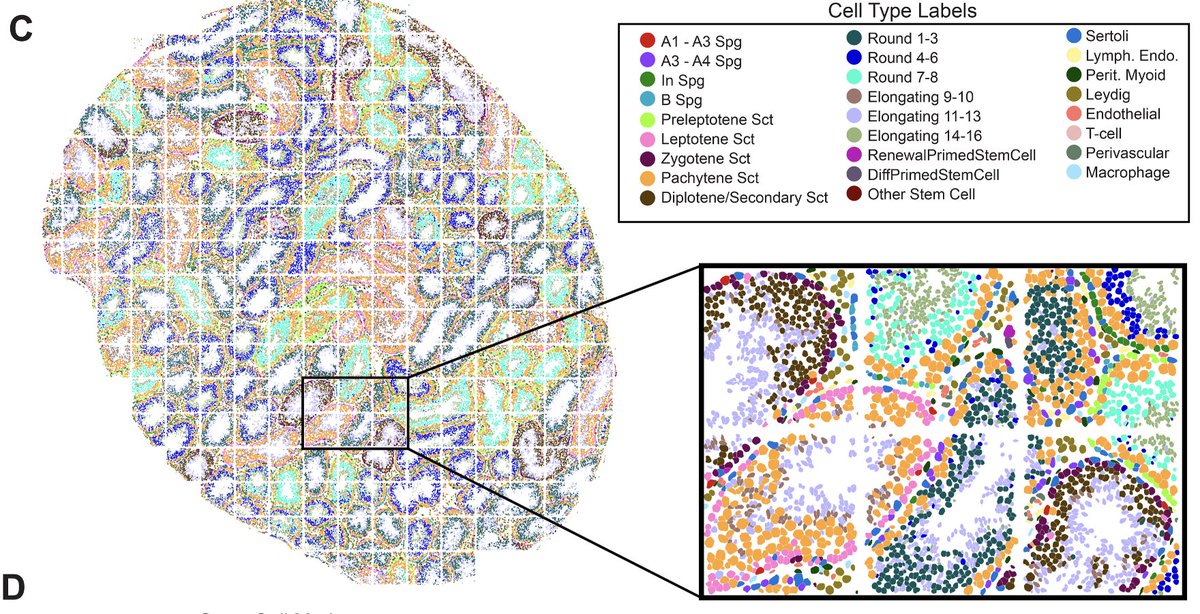
Using RNA seqFISH , we imaged 2653 genes across >800,000 cells in mouse testis while preserving their native architecture.
1
2
648

seqFISH 空間トランスクリプトーム解析により、Sertoli細胞に精子形成と同期した内因性周期プログラムが存在することを明らかにし、レチノイン酸や胚細胞由来シグナルが精細管上皮サイクルを精緻化して精子形成を制御することを示した論文がCell誌に発表されました。
cell.com/cell/abstract/S0092…
2
28
1,650

May 4
Which genes should be measured in targeted spatial transcriptomics?
Standard scRNA-seq can profile transcriptome-wide expression, but targeted spatial transcriptomics can assay only a limited gene panel.
scGPD treats gene panel design as a learning problem under gene–gene redundancy through a correlation-aware gating mechanism.
1) Data and input setup
- pancreas, heart, and PBMC scRNA-seq datasets
- 5000 highly variable genes as the initial candidate space
- panel sizes: 32–256 genes
- ST transfer: mouse olfactory scRNA-seq seqFISH , restricted to 9913 shared genes
2) Training overview
Stage I: eliminate redundant candidate genes
scRNA-seq expression matrix gene covariance ->-> Gaussian-copula-based correlated gate distribution ->-> Binary Concrete gate sampling ->-> gated gene-expression input ->-> neural reconstruction of transcriptome-wide expression ->-> Poisson reconstruction loss sparsity regularization ->-> reduced candidate gene pool
Stage II: select exactly k genes
reduced candidate pool of size d ->-> k Concrete random variables
-> element-wise maximum to form a binary mask ->-> exactly k selected genes ->-> task-specific prediction / reconstruction head
-> application-specific loss ->-> final k-gene panel
3) Main benchmark result
- task: transcriptome-wide expression reconstruction
- metric: Pearson correlation between original and reconstructed expression matrices
- comparison: scGPD vs PERSIST, scGIST, and geneBasis
- result: scGPD showed the highest reconstruction accuracy in all 12 tested settings: 3 scRNA-seq datasets × 4 panel sizes
My scientific thought:
A defining feature of scGPD is its correlation-aware gating mechanism. In ordinary feature selection, genes are often evaluated as independent variables, so multiple genes reflecting the same cell type, pathway, or co-expression program can be selected together.
In scGPD, gene–gene correlation is built directly into the gate dependency structure through a Gaussian copula, and Binary Concrete gates make it easier to select representative genes from correlated groups.
If one were to express gene–gene relationships as a graph, what kind of genes would preferentially be selected here? Would they be hub genes?
#Bioinformatics #ComputationalBiology
2
3
7
1,254

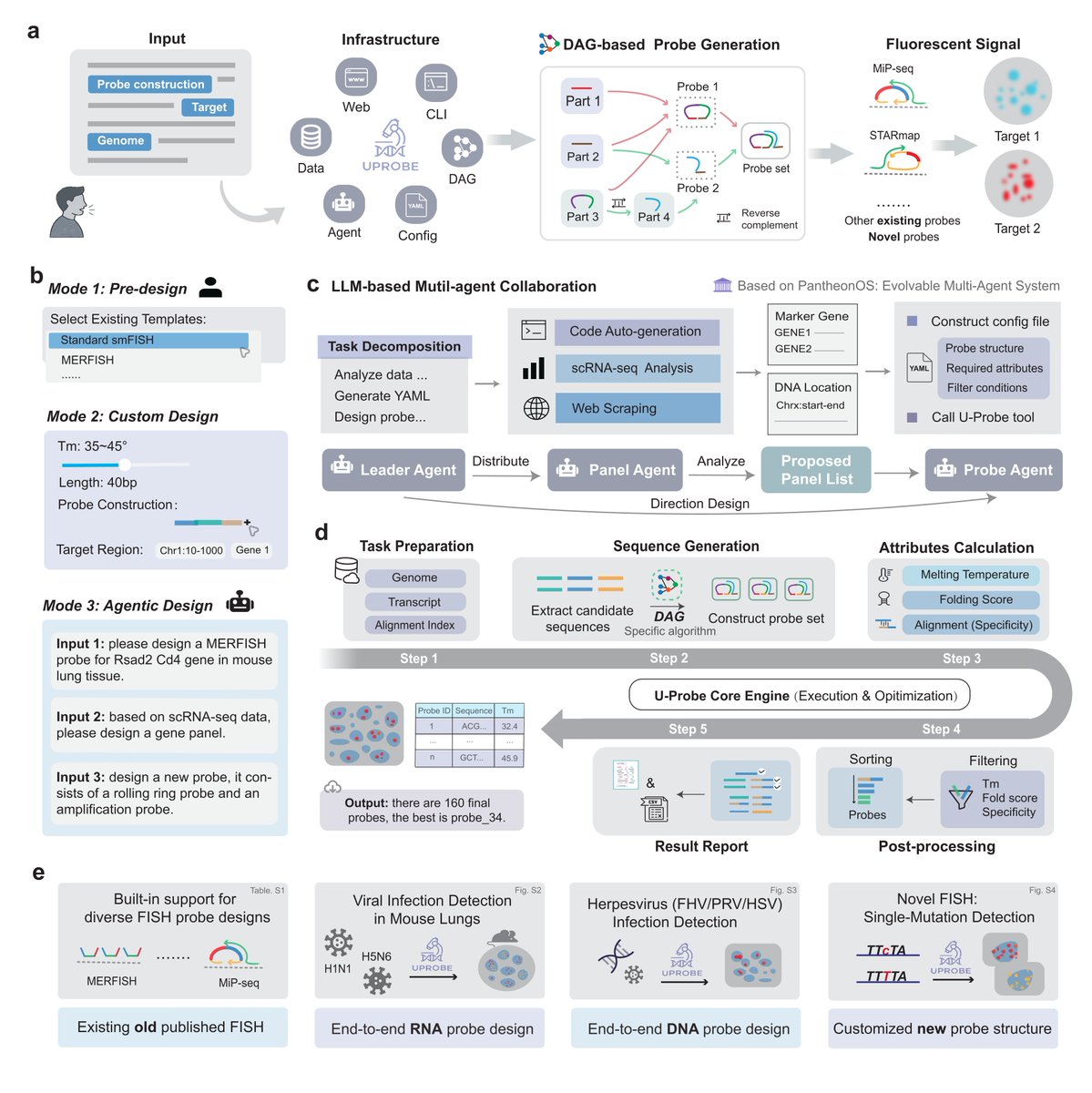
Introducing U-Probe — the first agent-assisted platform for FISH probe design. 🧬
Probe design today is still fragmented and expert-heavy: different tools for different protocols, manual parameter tuning, and limited support for new probe designs.
U-Probe addresses this by:
• Supporting diverse protocols (MERFISH, seqFISH, DNA-FISH, etc.)
• Enabling custom probe architectures via a programmable framework
• Using AI agents to assist with panel design and parameter selection
⚙️ Built on the @PantheonOS evolvable multi-agent framework
→ from experimental goal to synthesis-ready probes
1
5
20
3,462
Apr 15
THE SPARK
Final Spark
Website
finalspark.com/
Github
github.com/FinalSpark-np
Apache Spark
spark.apache.org/
A unified analytics engine for large-scale data processing
github.com/apache/spark
ENGR 440 - Report of Distributed Streaming Project
github.com/zoltan-nz/kafka-s…
SPARK - Spatially resolved transcriptomic analysis
SPARK is an efficient method to identify genes with spatial expression pattern.
The intended applications are spatially resolved RNA-sequencing from e.g. Spatial Transcriptomics, slide-seq, or in situ gene expression measurements from e.g. seqFISH, MERFISH.
github.com/xzhoulab/SPARK
Spark Final Project
Spark Simple PoC
github.com/marioscience/spar…
Data Analysis using Spark
github.com/pregismond/data-a…
Spark Cluster with Docker & docker-compose (Kubernetes)
A simple spark standalone cluster for your testing environment purposses
github.com/mvillarrealb/dock…
Configuring Spark Connections
Multi-node Spark Cluster
spark.posit.co/guides/connec…
Spark Connect Overview
spark.apache.org/docs/3.5.2/…
Cluster Mode Overview
spark.apache.org/docs/latest…
Configuring Spark Nodes
docs.datastax.com/en/dse/6.9…
pyspark - How is data accessed by worker nodes in a Spark Cluster?
stackoverflow.com/questions/…
3
63

Apr 11
#dcvax $nwbo #gbm
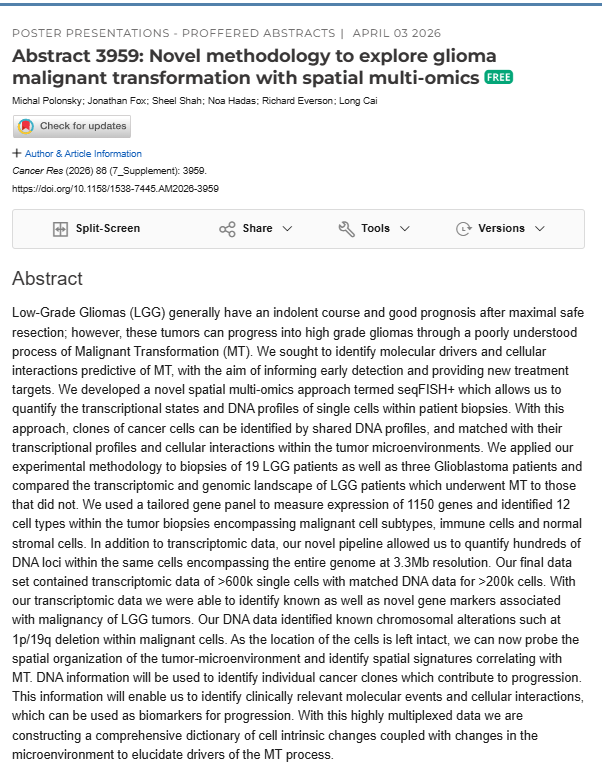
Poster Presentations - Proffered Abstracts| April 03 2026:
Abstract 3959: Novel methodology to explore glioma malignant transformation with spatial multi-omics
Michal Polonsky; Jonathan Fox; Sheel Shah; Noa Hadas; Richard Everson; Long Cai
Abstract
Low-Grade Gliomas (LGG) generally have an indolent course and good prognosis after maximal safe resection; however, these tumors can progress into high grade gliomas through a poorly understood process of Malignant Transformation (MT). We sought to identify molecular drivers and cellular interactions predictive of MT, with the aim of informing early detection and providing new treatment targets. We developed a novel spatial multi-omics approach termed seqFISH which allows us to quantify the transcriptional states and DNA profiles of single cells within patient biopsies. With this approach, clones of cancer cells can be identified by shared DNA profiles, and matched with their transcriptional profiles and cellular interactions within the tumor microenvironments. We applied our experimental methodology to biopsies of 19 LGG patients as well as three Glioblastoma patients and compared the transcriptomic and genomic landscape of LGG patients which underwent MT to those that did not. We used a tailored gene panel to measure expression of 1150 genes and identified 12 cell types within the tumor biopsies encompassing malignant cell subtypes, immune cells and normal stromal cells. In addition to transcriptomic data, our novel pipeline allowed us to quantify hundreds of DNA loci within the same cells encompassing the entire genome at 3.3Mb resolution. Our final data set contained transcriptomic data of >600k single cells with matched DNA data for >200k cells. With our transcriptomic data we were able to identify known as well as novel gene markers associated with malignancy of LGG tumors. Our DNA data identified known chromosomal alterations such at 1p/19q deletion within malignant cells. As the location of the cells is left intact, we can now probe the spatial organization of the tumor-microenvironment and identify spatial signatures correlating with MT. DNA information will be used to identify individual cancer clones which contribute to progression. This information will enable us to identify clinically relevant molecular events and cellular interactions, which can be used as biomarkers for progression. With this highly multiplexed data we are constructing a comprehensive dictionary of cell intrinsic changes coupled with changes in the microenvironment to elucidate drivers of the MT process.
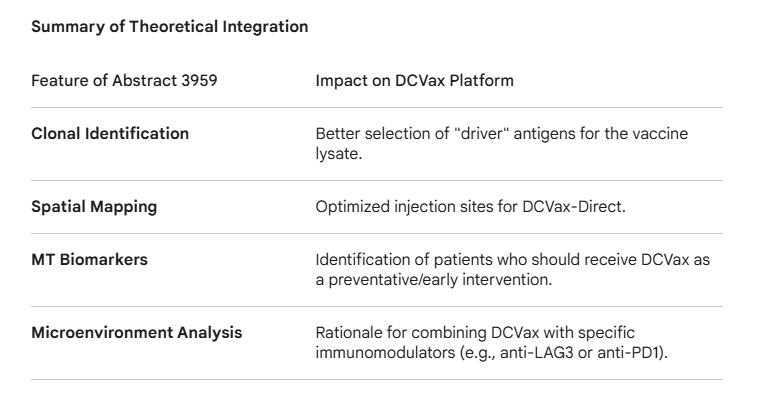
Gemini AI Analysis of Synergy with DCVax platform technology:-
The citation provided (Cancer Res 2026; 86(7 Suppl): Abstract 3959) refers to a study presented at the AACR Annual Meeting 2026 titled: "Novel methodology to explore glioma malignant transformation with spatial multi-omics." While the abstract itself focuses on the molecular drivers of how low-grade gliomas transform into high-grade gliomas (Glioblastoma), the research is highly relevant to the DCVax® platform technology (developed by Northwest Biotherapeutics), which is currently the lead immunotherapy for Glioblastoma.
1. Analysis of Synergy
The abstract describes a novel spatial multi-omics approach (seqFISH ) that maps the transcriptional states and DNA profiles of single cells within patient biopsies. This data identifies 12 distinct cell types, including malignant cell subtypes and immune cells, and their spatial organization.
Potential for Synergy:
Precision Antigen Selection: DCVax-L requires a sample of the patient's own tumor tissue to "train" dendritic cells. The spatial multi-omics described in Abstract 3959 can identify "individual cancer clones" contributing to progression. By identifying the most aggressive or "driver" clones, clinicians could potentially ensure that the DCVax product is primed against the specific antigens present in the most dangerous cell populations.
Overcoming the Suppressive Microenvironment: The abstract highlights "cellular interactions within the tumor microenvironments." Dendritic cell vaccines often struggle if the tumor environment is too immunosuppressive. The data from this study helps map the spatial signatures of immune exhaustion, allowing for a combined approach where DCVax is paired with therapies that "unlock" the specific spatial niches identified as resistant.
2. Potential for Combination with DCVax
The findings in Abstract 3959 provide a roadmap for "combination" strategies that could enhance the DCVax platform:
Combination with Checkpoint Inhibitors: The study identifies specific immune-malignant cell interactions. If the multi-omics data shows high expression of specific checkpoints (like PD-L1) in the spatial vicinity of the malignant clones, DCVax could be combined with targeted checkpoint inhibitors to ensure the T-cells generated by the vaccine aren't immediately shut down.
Targeting Malignant Transformation (MT): Since the abstract specifically looks at the transformation of low-grade tumors into high-grade ones, the DCVax platform could be used earlier in the disease progression. Instead of waiting for a full Glioblastoma diagnosis, the biomarkers identified in this study could trigger the use of a personalized DCVax-L vaccine at the first sign of molecular transformation, potentially preventing the shift to a more aggressive state.
Enhanced DCVax-Direct: For inoperable tumors, DCVax-Direct is injected into the tumor. The "spatial dictionary" of cell-intrinsic changes described in the abstract allows for more precise injection targeting, ensuring the vaccine is delivered into the specific spatial niches where the drivers of malignancy are most active.
Note: As this research (AACR 2026) is on the cutting edge of spatial biology, clinical trials specifically combining these multi-omics insights with the DCVax platform are likely in the planning or early translational stages.
aacrjournals.org/cancerres/a…
2
16
1,617

New data: Spatial transcriptomics (using seqFISH) reveals a fibroblast-immune microenvironment remodeling pathway in CFA-induced TMJ arthritis in mice.
PI: Jian-Fu Chen (University of Southern California) @CCMB_USC
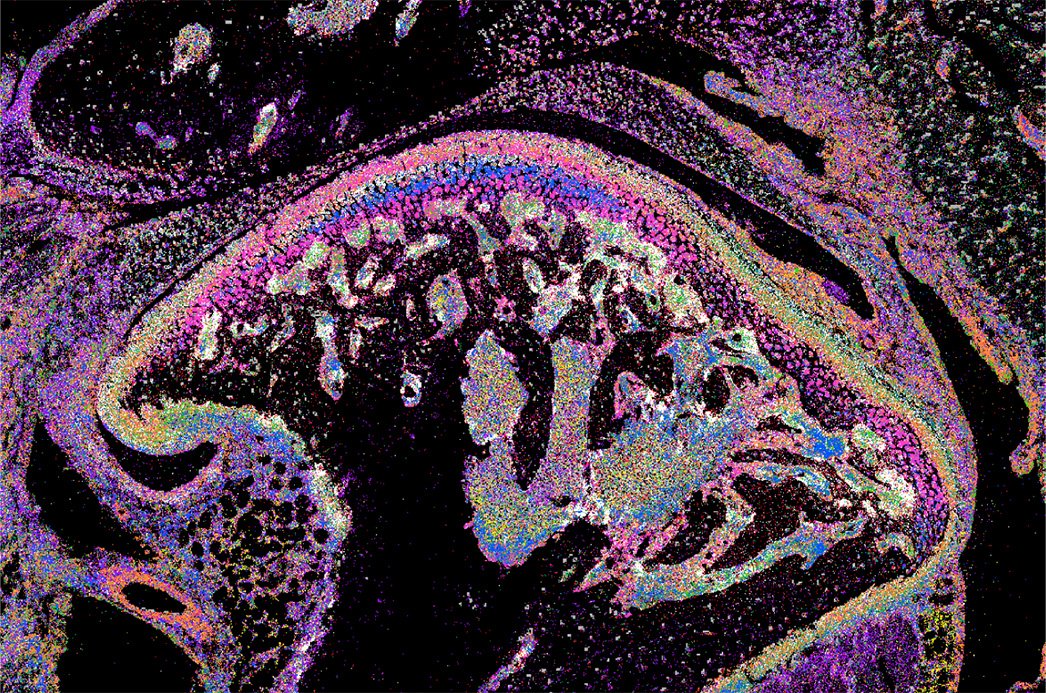
ALT Spatial transcriptomics of the mouse temporomandibular joint (TMJ) using seqFISH, from the dataset "Spatial Transcriptomics of Mouse CFA-induced TMJ arthritis" https://doi.org/10.25550/8Q-3KAR)
1
2
73

18 Dec 2025
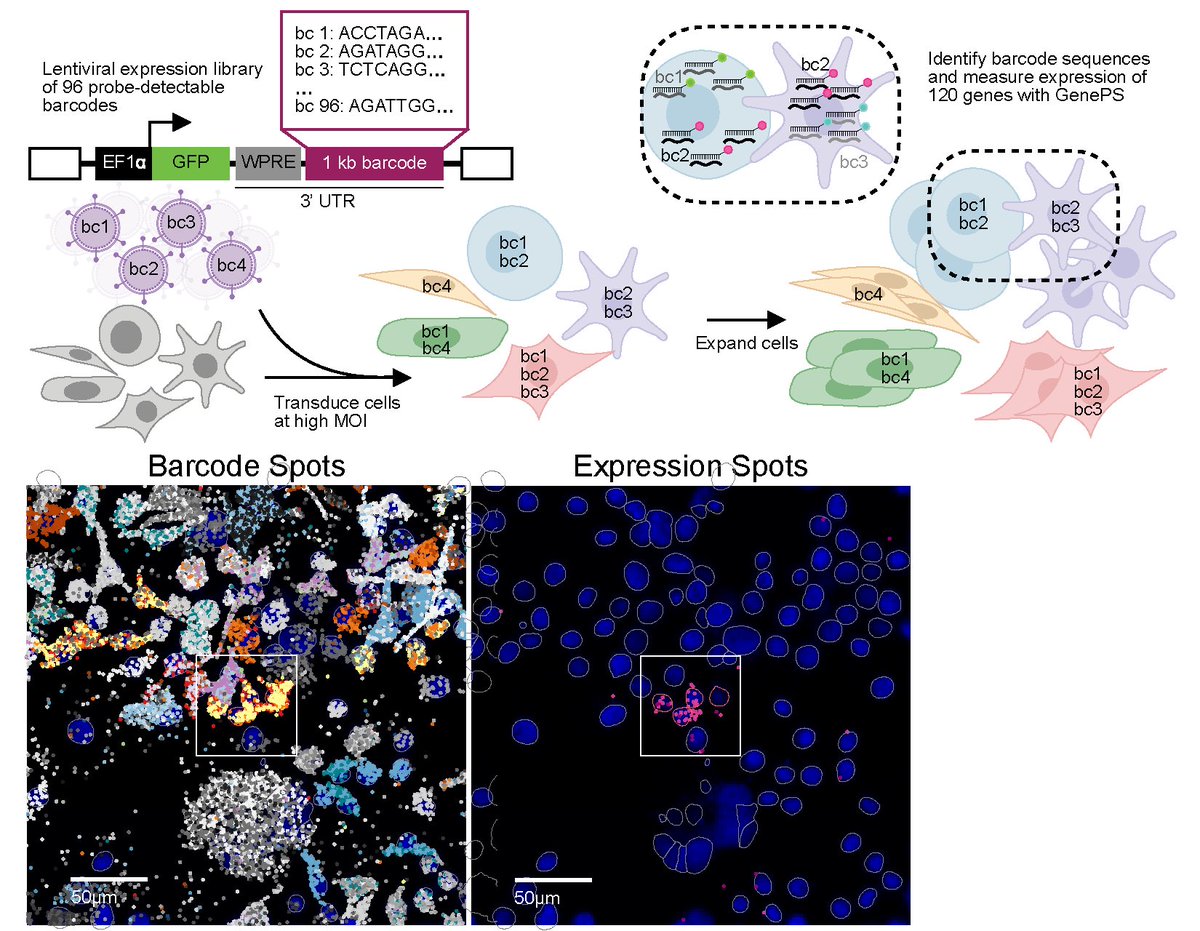
How SpaceBar works:
We designed 96 barcode sequences compatible with seqFISH. Cells are transduced so each receives a unique combination of barcodes.
→ Hundreds of thousands of distinct clones at single-cell resolution
1
2
436
20 Nov 2025
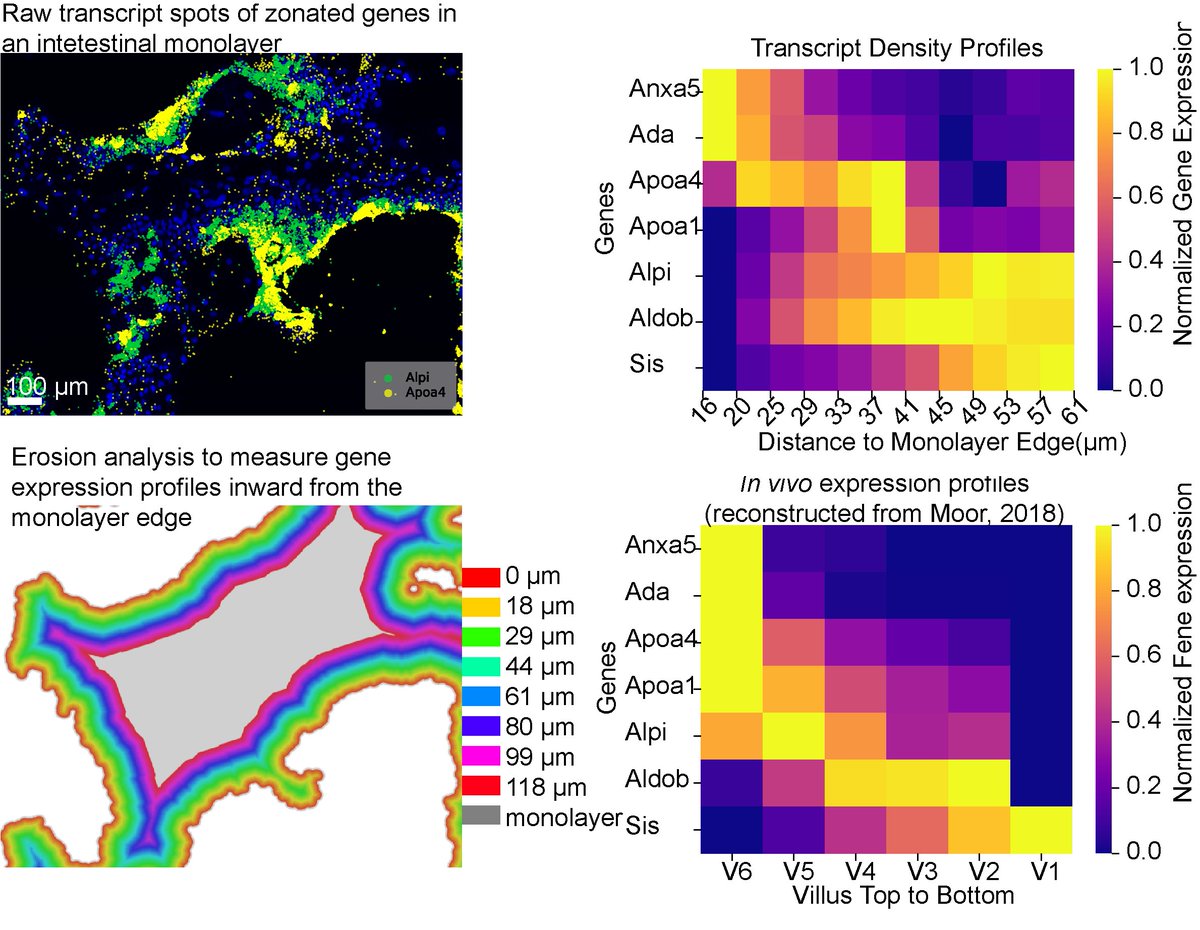
We profiled 140 genes using seqFISH in 2D intestinal monolayers lacking mesenchyme, nerves, and blood vessels.
Result: 73% of in vivo zonated genes maintained their spatial expression patterns in monolayers, showing zonation can emerge without external inputs. 2/6
1
2
227

25 Jun 2025
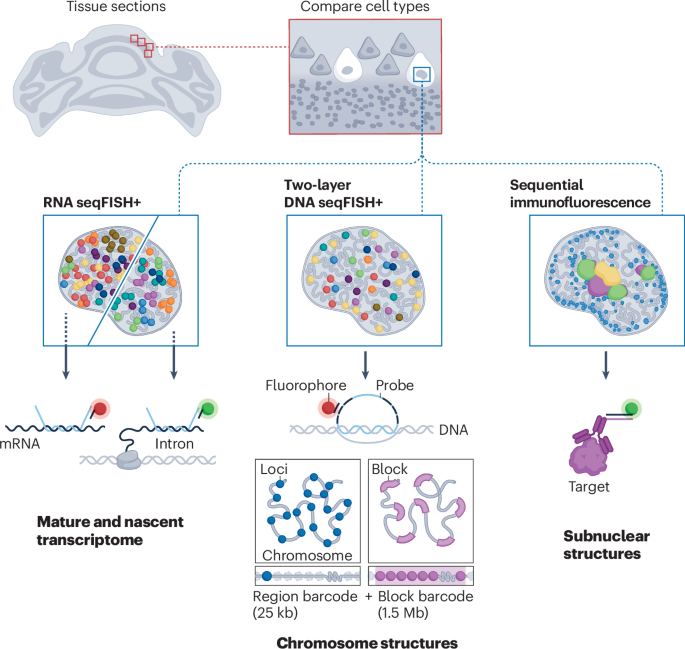
New online! Spatial multi-omics of nuclear architecture with two-layer seqFISH bit.ly/46eTdez
1
15
69
13,571

1 May 2025
Spatial multi-omics reveals cell-type-specific nuclear compartments
nature.com/articles/s41586-0…
ゲノム上の特定の領域が細胞核の三次元空間のどこに位置しているかを可視化する手法two-layer DNA seqFISH を開発した。2段階のバーコーティングを行うことで、従来のDNA seqFISH と比べて25kbごと
1
3
17
1,414

23 Apr 2025
カリフォルニア工科大学(日本人の研究)
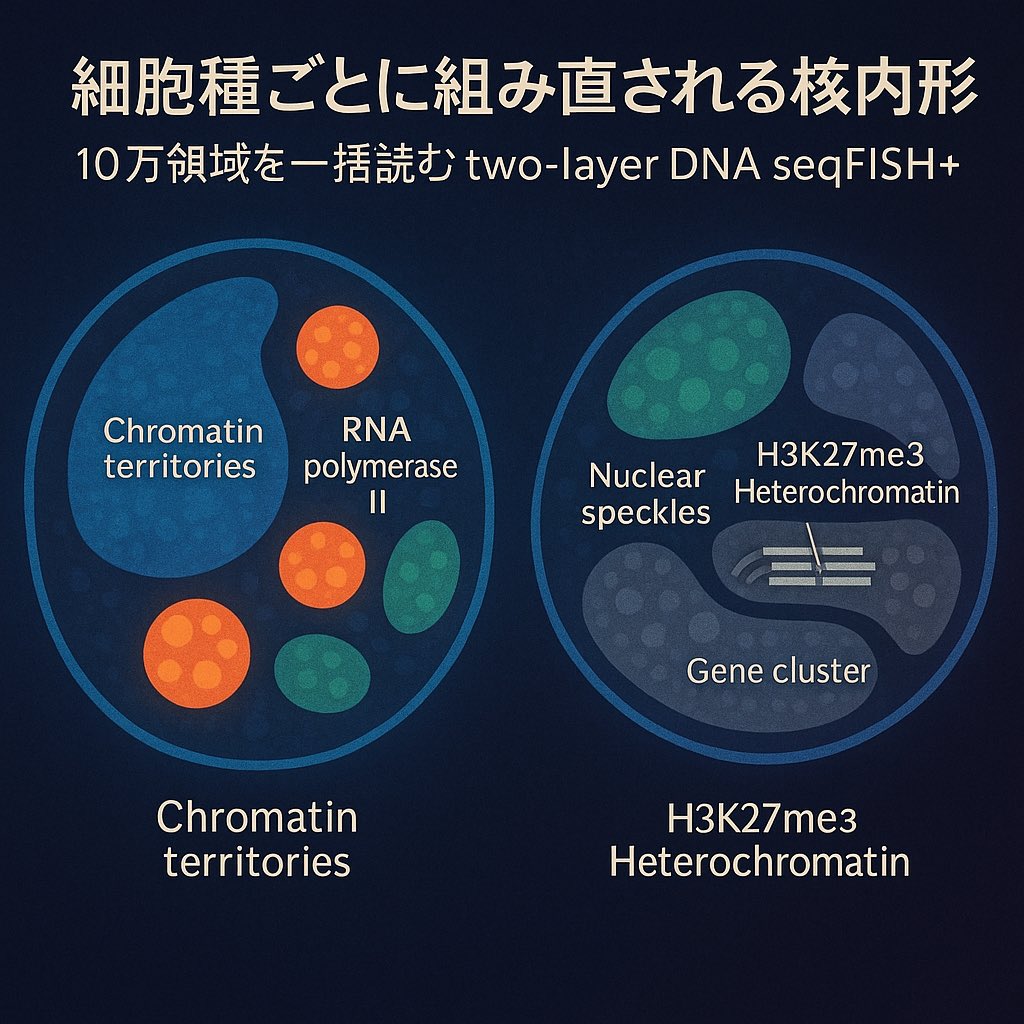
核内ランドスケープの細胞種コード:two‑layer DNA seqFISH が描くクロマチン地図
1.two‑layer DNA seqFISH で 10 万 DNA 座標+1.8 万遺伝子+核構造を同時撮像、単一細胞で多層オミクスを実現。
2.マウス小脳では神経細胞とグリアで RNAPII 濃縮域や核スペックルが配置換えされ、200 kb超の長大遺伝子周囲に細胞種特異的“転写ファクトリー”が形成。
3.H3K27me3/H4K20me3 標識のヘテロクロマチンが遺伝子クラスターを包み込み、染色体間相互作用と発現プログラムを細胞種別にチューニングするメカニズムを解明。
22 Apr 2025

Nature
ノースウェスタン大学
皮膚から放出される分子を非接触で測定できる革新的なウェアラブルデバイスの開発!?
など|あらたま @aratama0315 note.com/aratama315/n/nbe857…
3
3
496

10 Apr 2025
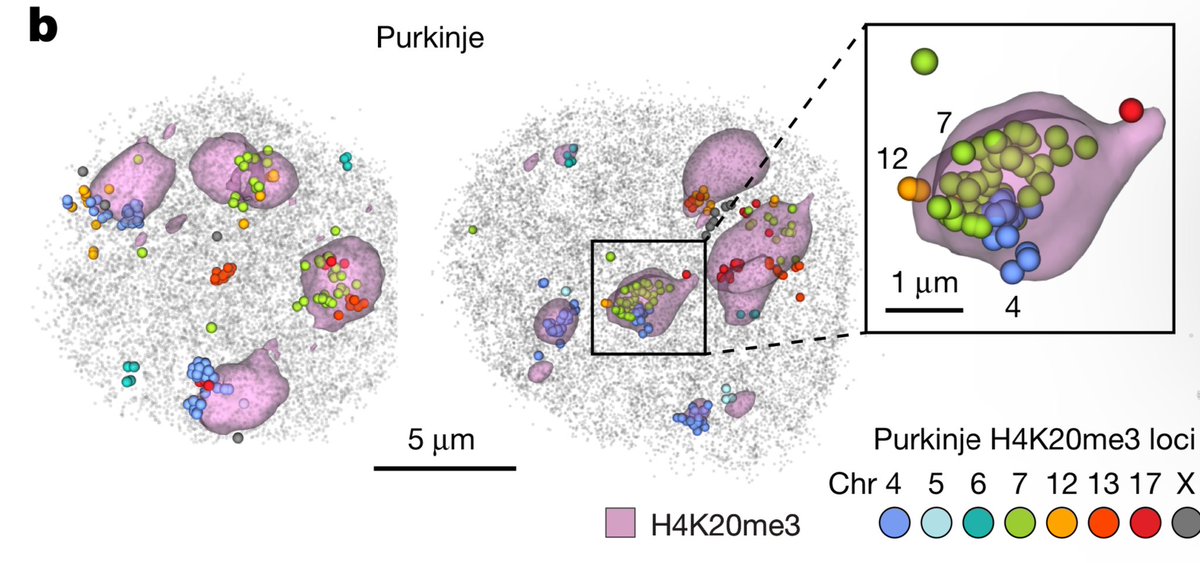
This is game changer!!
Spatial multi-omics reveals cell-type-specific nuclear compartments
Two-layer DNA seqFISH
Simultaneous mapping of 100,049 genomic loci
nascent transcriptome for 17,856 genes in single cells
nature.com/articles/s41586-0…

3
11
678

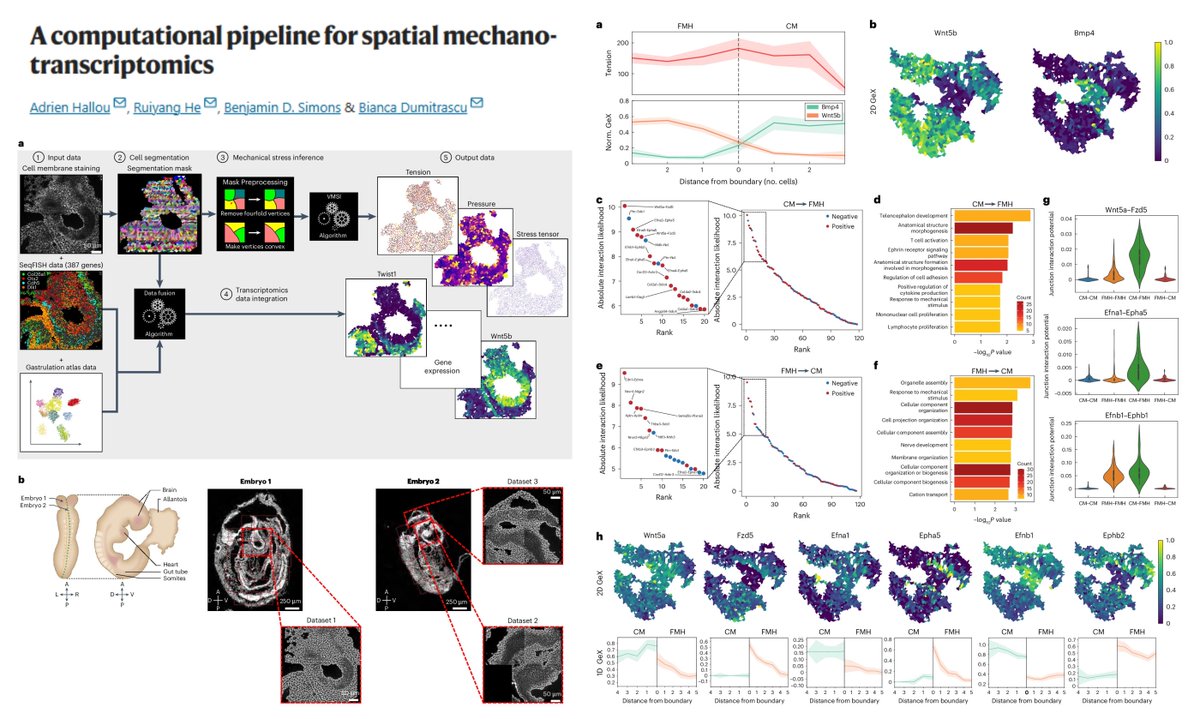
Spatial mechano-transcriptomics👹
Overlay image-based cell mechanics inference
[Segmentation with Multi-junctional molecular avg▶️ Circular arc polygon tiling for cell contacts▶️
Cellular pressure, junctional tension, stress tensor]
with imaging-based #SpatialTranscriptomics (SeqFISH 387-gene)
Spatially-resolved ligand-receptor pair analysis ➡️ molecular determinants of interfacial tension in 🐭Embryonic🧠#BoundaryFormation🤠
Can we run in silico knockout in this framework?😁
@Hallou_Lab @he_ruiyang @bidumit @naturemethods 2025
nature.com/articles/s41592-0…
1
15
63
3,861

4 Mar 2025
Continuation for the original post
Apache Kafka
kafka.apache.org/
Apache Kafka is an open-source distributed event streaming platform used by thousands of companies for high-performance data pipelines, streaming analytics, data integration, and mission-critical applications.
kafka.apache.org/documentati…
Kafka Connect Ecosystem
Kafka has a built-in framework docs.confluent.io/2.0.0/conn… called Kafka Connect for writing sources and sinks that either continuously ingest data into Kafka or continuously ingest data in Kafka into external systems. The connectors themselves for different applications or data systems are federated and maintained separately from the main code base. An externally hosted list of connectors is maintained by Confluent at the Confluent Hub.(confluent.io/developers/conn…)
cwiki.apache.org/confluence/…
Kafka plugins
Integration with Apache Flume
Flume is a distributed, reliable, and available service for efficiently collecting, aggregating, and moving large amounts of log data. It has a simple and flexible architecture based on streaming data flows. It is robust and fault tolerant with tunable reliability mechanisms and many failover and recovery mechanisms. It uses a simple extensible data model that allows for online analytic applications.
flume.apache.org/
Kafka as a sink and source in Flume
Integration with Flume
github.com/baniuyao/flume-ka…
SPARK - Spatially resolved transcriptomic analysis
SPARK is an efficient method to identify genes with spatial expression pattern.
The intended applications are spatially resolved RNA-sequencing from e.g. Spatial Transcriptomics, slide-seq, or in situ gene expression measurements from e.g. seqFISH, MERFISH.
github.com/xzhoulab/SPARK
Final Spark is the all in one platform they're using
finalspark.com/
Final Spark
Website
finalspark.com/
Github
github.com/FinalSpark-np
Final Spark Neuroplatform
You can spend time with the new Bio-Computers on the Final Spark Neuroplatform who are made of thousands of Biological Neurons and even give them tasks as they are trained to handle Quantum computing
Final Spark Neuroplatform
INSTANT ACCESS TO HUMAN NEURONS
Get instant access to FinalSpark’s Neuroplatform and run your remote
biocomputing research from your own desk.
🔥WETWARE 🔥
📡🧬🔬🩻💉🩸🧠💻📲🌐🧪🧫
finalspark.com/neuroplatform…
Credit for this post goes to: @SKettenbei73754,@SherlockHghost, and @Ryansikorski10
4 Mar 2025

Lit Protocol
Lit is a decentralized key management and compute network. Builders of apps, wallets, protocols, and AI agents use Lit to advance digital ownership with decentralized keys and private, immutable programs.
developer.litprotocol.com/wh…
Spark is a public space for collaboration and open discourse surrounding the development of the decentralized, user-owned web, AKA 'Web3'. Spark was created by Lit Protocol, a distributed key management network for encryption, signing, and compute.
Spark ecosystem
spark.litprotocol.com/ecosys…
SELLING ACCESS TO YOUR NODES
1) SparkPoint Network Node Key Sale
SparkPoint Network Node Key Sale Whitepaper
The Node Key Sale is an opportunity for individuals to acquire Node Keys, granting them the privilege to operate nodes within the network.
Owning a Node Key grants you not only the ability to participate in securing the network but also unlocks a range of valuable benefits within the SparkPoint ecosystem.
medium.com/@mativanarquero/s…
Spark Node
Introducing SPARK, originally developed on the SOLANA chain for speed, efficiency, and priority transactions. Now a multi-chain solution, SPARK offers a range of services for navigating the web3 landscape. Discover how SPARK can empower your journey in the decentralized world.
sparknode.xyz/
1) Sparknode
Sparknode is built to make it easier for your server-side (or node-webkit) code to communicate with the spark cloud, so that you can do more with your core with less overhead.
github.com/andrewstuart/Spar…
2) Spark Cloud (Particle Cloud)
The Particle Device Cloud API is a REST API. REST means a lot of things, but first and foremost it means that we use the URL in the way that it's intended: as a "Uniform Resource Locator".
docs.particle.io/reference/c…
Spark Cloud API Documentation
docs.spark.io/#/api
pyspark - How is data accessed by worker nodes in a Spark Cluster?
Each task would decide which data is "local" and which is not. This article explains pretty well how data locality works
I have two worker nodes with 4 cores each and I have one 1TB csv file to read and perform a few transformations and an action
This situation is different with the above question, where you have only one file and most likely your worker would be exactly the same as your data node. The executor(s) those are sitting on that worker, however, would read the file piece by piece (by tasks), in parallel, in order to increase parallelism.
Typically a Spark cluster contains multiple nodes, each node would have multiple CPUs, a bunch of memory, and storage. Each node would hold some chunks of data, therefore sometimes they're also referred to data nodes as well.
When Spark application(s) are started, they tend to create multiple workers or executors. Those workers/executors took resources (CPU, RAM) from the cluster's nodes above. In other words, the nodes in a Spark cluster play both roles: data storage and computation.
But as you might have guessed, data in a node (sometimes) is incomplete, therefore, workers would have to "pull" data across the network to do a partial computation.
Then the results are sent back to the driver. The driver would just do the "collection work", and combine them all to get the final results.
stackoverflow.com/questions/…
Configuring Spark Connections
🔸Multi-node Spark Cluster
spark.posit.co/guides/connec…
Configuring Spark Nodes
docs.datastax.com/en/dse/6.9…
Spark Cluster with Docker & docker-compose (Kubernetes)
A simple spark standalone cluster for your testing environment purposes
github.com/mvillarrealb/dock…
Apache Spark
spark.apache.org/
A unified analytics engine for large-scale data processing
github.com/apache/spark
Spark Final Project
Spark Simple PoC
github.com/marioscience/spar…
Data Analysis using Spark
github.com/pregismond/data-a…
ENGR 440 - Report of Distributed Streaming Project
github.com/zoltan-nz/kafka-s…
Credit goes to: @SKettenbei73754,@SherlockHghost, and @Ryansikorski10 ❤️🙏
2
2
550

21 Feb 2025
Check out this nice "Tools of the Trade" piece in @NatureRevGenet by Ankit Agrawal on our NiCo algorithm for the analysis of single-cell spatial transcriptomics data from platforms like Xenium, MERSCOPE, seqFISH etc.
Feel free to reach out for advice.
nature.com/articles/s41576-0…
1
12
49
4,454

7 Nov 2024
Congratulations! I love how this study showcase spatial technologies such as RNA seqFISH can discover novel biology beyond just cell type mapping!
7 Nov 2024

Our new preprint with S.Yoshida and B.Simons! Led by @ChakraArun, we leverage spatial information to resolve temporal dynamics in spermatogenesis!
biorxiv.org/content/10.1101/…
Also check out a complementary preprint by S.Y. and B.S using live imaging! biorxiv.org/content/10.1101/…
(1/10)
4
164

11 Apr 2024
6/7 More is on the way! To name a few lines of current work: support for @ST_Omics Stereo-seq and @SpatialGenomics seqFISH data (thanks to (L. Lehner, @FlorianIngelfi1, ...), integration with Vitessce (@keller__mark @ngehlenborg), interoperability with @Bioconductor (@helucro).
1
3
3
884