
21 Nov 2025
20 Nov 2025

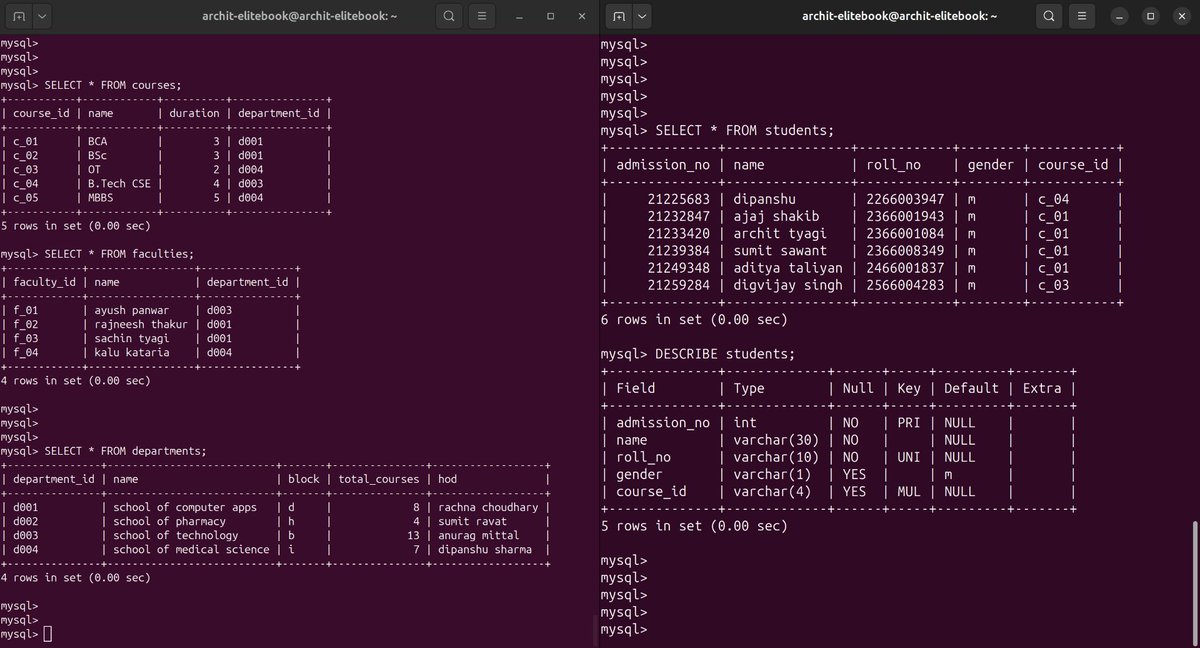
Today I build a Database:
- which have 4 tables
- using #linux terminal
- spend only 3 hours for practice
- many operation will perform on tomorrow
It looks attractive ❤️
1
7
57

19 Nov 2025
2
2
3
142

18 Nov 2025
DAY 3: DOCUMENTING MY SQL PROGRESS
Just another day in the Studio, Chads.
Two queries today. Spent more time wrapping up joins. Subqueries begin tomorrow.
--FRAME 1--
Query 1: As stated in the comments above, this query returns a report showing order details with all item in each order. The mix of columns from different 3 tables necessitates the use of 2 INNER JOINS.
The 'STRING_AGG' function is an interesting addition to this query. This function takes product names, and adds their quantity and price. This collapses items that should be in two separate columns into one single cell. This presents the data in a more readable format. Certain dashes were necessary within the function parameters to provide space for better result readability.
--FRAME 2--
Query 2: This query was particularly confusing. I am not very efficient with 'SELF-JOINs', yet. This type of JOINS connect records in the same table and sets them up for filtering and/or comparisons with other records in the table. In this instance, the query picks each order_item and checks if the order_id for that particular item is the same as the order_id for another order_item that has 101 as its product_id.
The result therefore is that all products that have been ordered in the same order_id as product_id 101 is returned, and the number of times they were ordered together is also returned.
This was particularly difficult and I would like feedback on simpler ways of doing this, or better still more efficient ways. I personally need more practice with the SELF JOINS.
Feedback, corrections and suggestions would all be appreciated, My Idolos🤲🏾🤲🏾
See you tomorrow with Subqueries, Lads!!
#DataScience #Analytics #SQL #sqlknowledge #sqlbeginner #code
16 Nov 2025

Day 2: DOCUMENTING MY SQL PROGRESS
Just another day in the trenches, Chads.
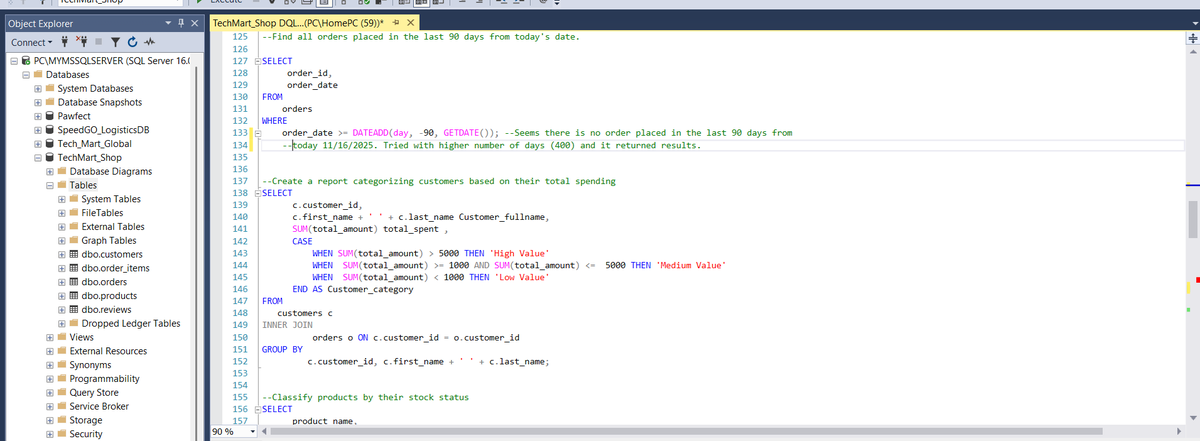
Couple of queries today. Each query is separated by comments.
Query 1: All orders placed in the last 90 days from today's date. The idea here is to use the DATEADD function to add 90 days to the current date (GETDATE() function). The WHERE clause is then checks if a particular order date falls between today and 90 days ago (90th day inclusive due to the >= operand), it's record is returned.
Query 2: Customer details are returned based on their spending level. Poor people like @Dolypizo can be found in the 'Low Value' category. While rich men like @uptown_analyst0 are in the High value category. All figures in dollars of dollars. The INNER JOIN is used here to connect the customers and orders table and of course the CASE statement is used to define conditions
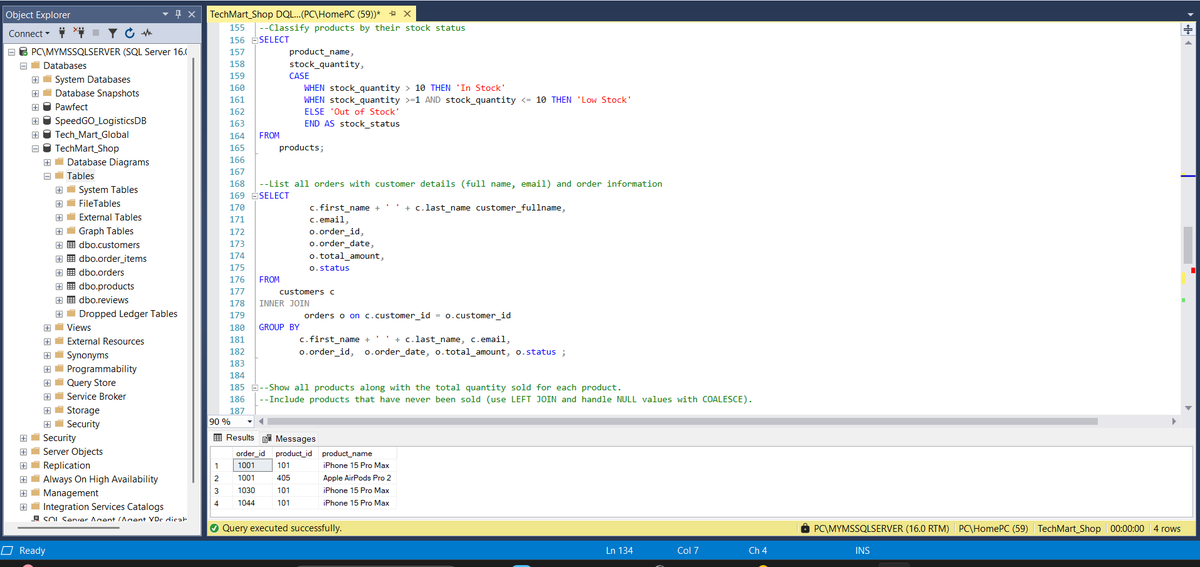
-- FRAME TWO --
Query 3: This query classifies products by the number/amount left in stock. The CASE statement is used for categorization.
Query 4: This query returns all orders alongside the details of the customer that placed these orders. Classic use of the INNER JOIN. TBH, I instinctively want to use the INNER JOIN before I use any other JOIN type. Is this way of thinking flawed? Please let me know, so I stop fooling.
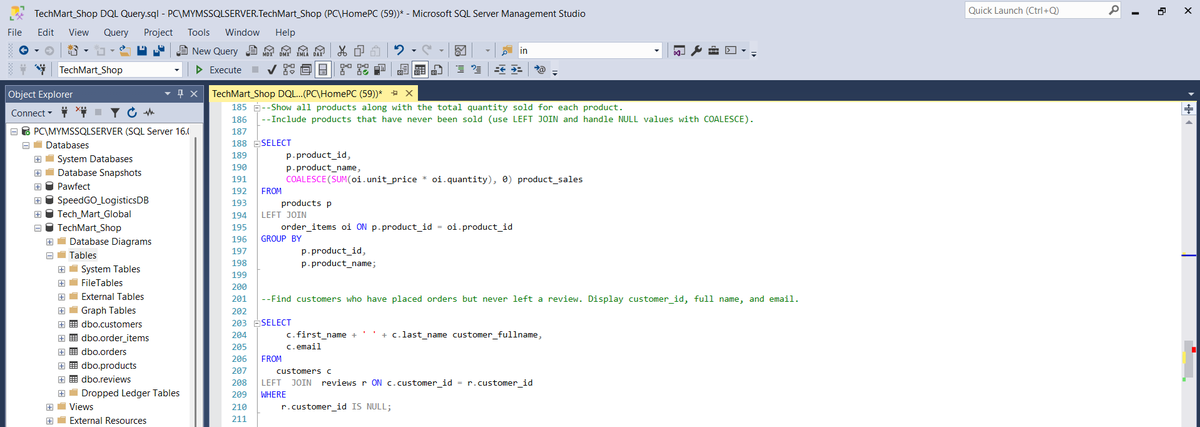
--FRAME 3--
Query 5: This query provides a clear report of each product along with the the quantity sold. From the result observed, Iphone 15 is the top product sold. I used the COALESCE function to add up for products that have not been sold yet. I reckon these products will be left out without the COALESCE function?? Need to confirm that!!
Query 6: This query returns results for all the customers who have placed orders but have not left any review. Based on results, such customers are not really many in this dataset. These kind of customers could prove problematic for a business, if it cannot determine customer satisfaction for business improvement. I guess such businesses have to focus on received reviews.
I actually need feedback. Let me know If I am caping with these queries or they are not optimized for efficiency. I will engage your posts too, Abeg. 😂
So that's it for DAY 2. See you tomorrow!
#DataScience #dataengineering #datanalysis #SQL #sqlknowledge #sqlbeginner
1
1
5
224
16 Nov 2025
Day 2: DOCUMENTING MY SQL PROGRESS
Just another day in the trenches, Chads.
Couple of queries today. Each query is separated by comments.
Query 1: All orders placed in the last 90 days from today's date. The idea here is to use the DATEADD function to add 90 days to the current date (GETDATE() function). The WHERE clause is then checks if a particular order date falls between today and 90 days ago (90th day inclusive due to the >= operand), it's record is returned.
Query 2: Customer details are returned based on their spending level. Poor people like @Dolypizo can be found in the 'Low Value' category. While rich men like @uptown_analyst0 are in the High value category. All figures in dollars of dollars. The INNER JOIN is used here to connect the customers and orders table and of course the CASE statement is used to define conditions
-- FRAME TWO --
Query 3: This query classifies products by the number/amount left in stock. The CASE statement is used for categorization.
Query 4: This query returns all orders alongside the details of the customer that placed these orders. Classic use of the INNER JOIN. TBH, I instinctively want to use the INNER JOIN before I use any other JOIN type. Is this way of thinking flawed? Please let me know, so I stop fooling.
--FRAME 3--
Query 5: This query provides a clear report of each product along with the the quantity sold. From the result observed, Iphone 15 is the top product sold. I used the COALESCE function to add up for products that have not been sold yet. I reckon these products will be left out without the COALESCE function?? Need to confirm that!!
Query 6: This query returns results for all the customers who have placed orders but have not left any review. Based on results, such customers are not really many in this dataset. These kind of customers could prove problematic for a business, if it cannot determine customer satisfaction for business improvement. I guess such businesses have to focus on received reviews.
I actually need feedback. Let me know If I am caping with these queries or they are not optimized for efficiency. I will engage your posts too, Abeg. 😂
So that's it for DAY 2. See you tomorrow!
#DataScience #dataengineering #datanalysis #SQL #sqlknowledge #sqlbeginner
16 Nov 2025
𝗗𝗮𝘆 1: DOCUMENTING MY SQL PROGRESS.
Today, I continued my second SQL assignment from @iam_daniiell's training. Balancing work and upskilling has been so difficult, but we keep showing up and putting in the reps.
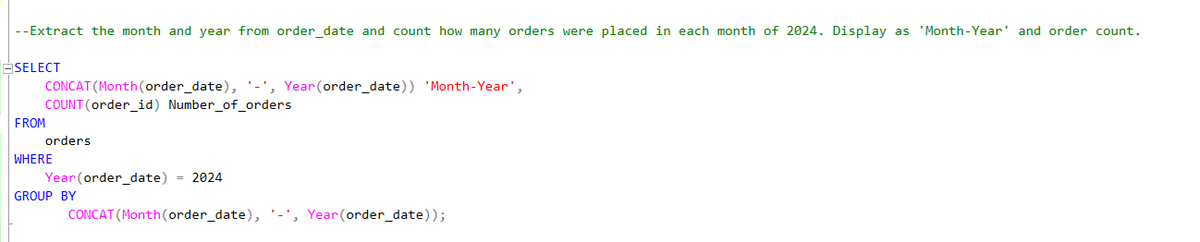
I wrote a query that extracts the month and year from the order_date column and count how many orders were placed in each month of 2024. The query returned the 'order_date' as 'Month-Year' and the number of orders per month.
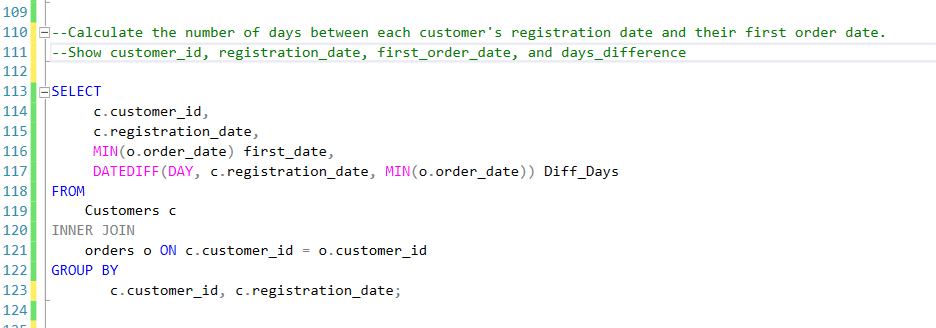
I also wrote a query that calculates the number of days between each customer's registration date and their first order date. This query returns the customer_id, registration_date, first_order_date, and days_difference.
Open to feedback, corrections and suggestions from my Idolos. 🤲🏾🤲🏾
#DataAnalysis #DataEngineering #SQL #Datafam #BuildingInPublic
2
3
7
406

13 Nov 2025
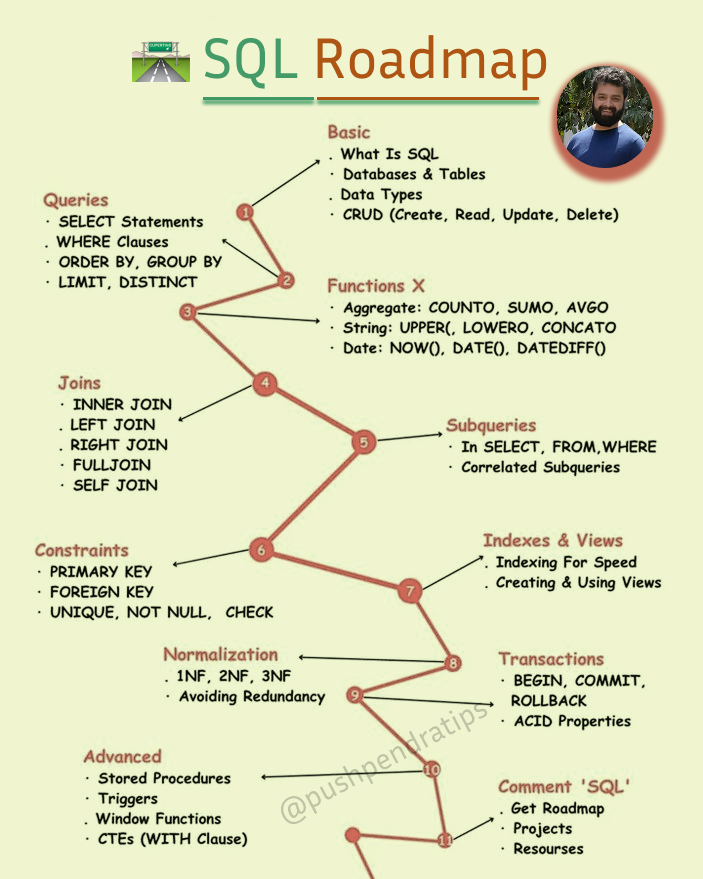
Complete SQL Learning Roadmap (Beginner to Advanced)
🔥 𝐆𝐞𝐭 𝐚𝐥𝐥 𝐭𝐡𝐞 𝐩𝐫𝐨𝐠𝐫𝐚𝐦𝐦𝐢𝐧𝐠 𝐟𝐫𝐞𝐞 𝐧𝐨𝐭𝐞𝐬 𝐡𝐞𝐫𝐞 :
t.me/ujjwalCoding
➡️ Follow
@pushpendratips
for more Valuable Stuff
♻️ Repost to your Job seekers' friends, it is useful for others
#SQL #sqlknowledge #SQLServer
1
3
35
514

10 Nov 2025
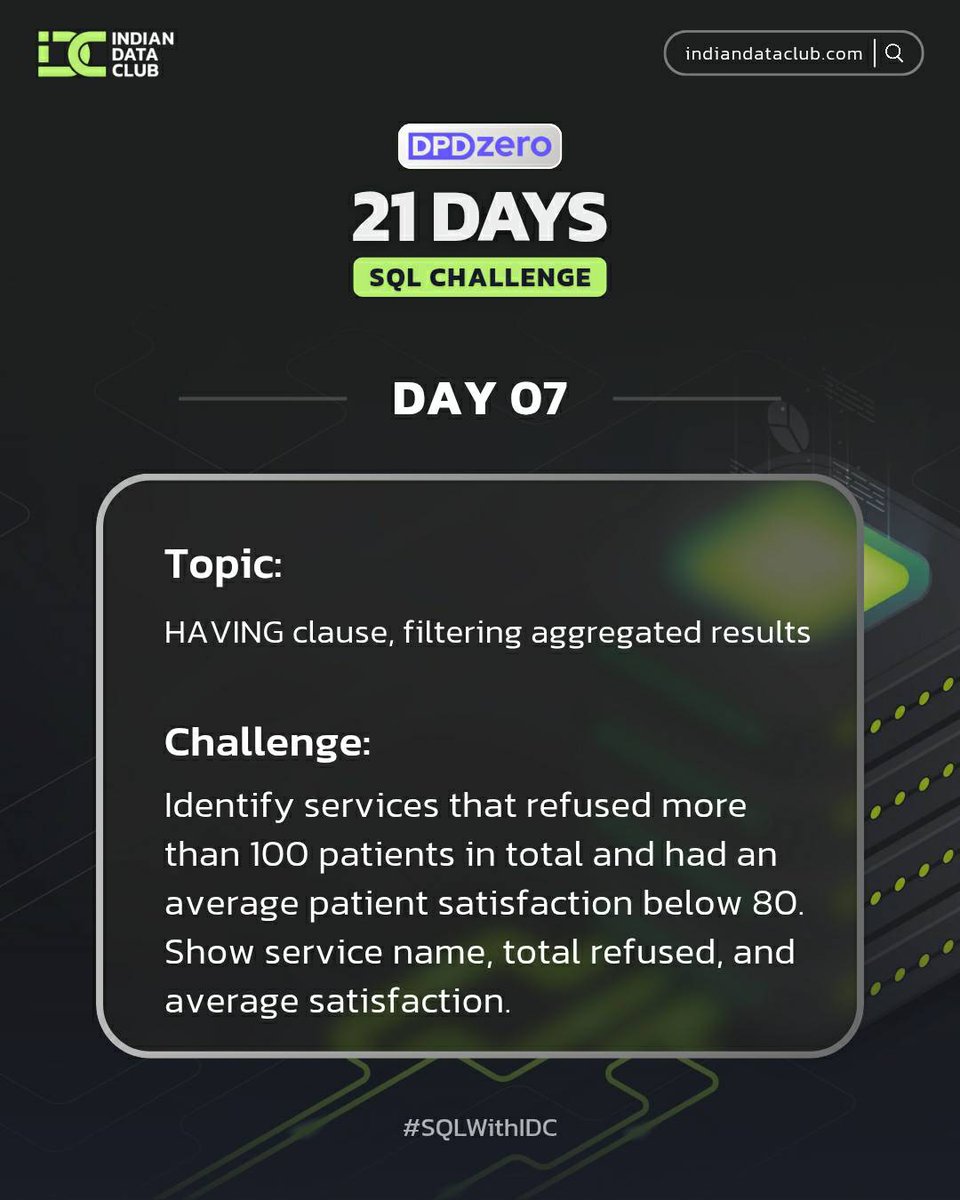
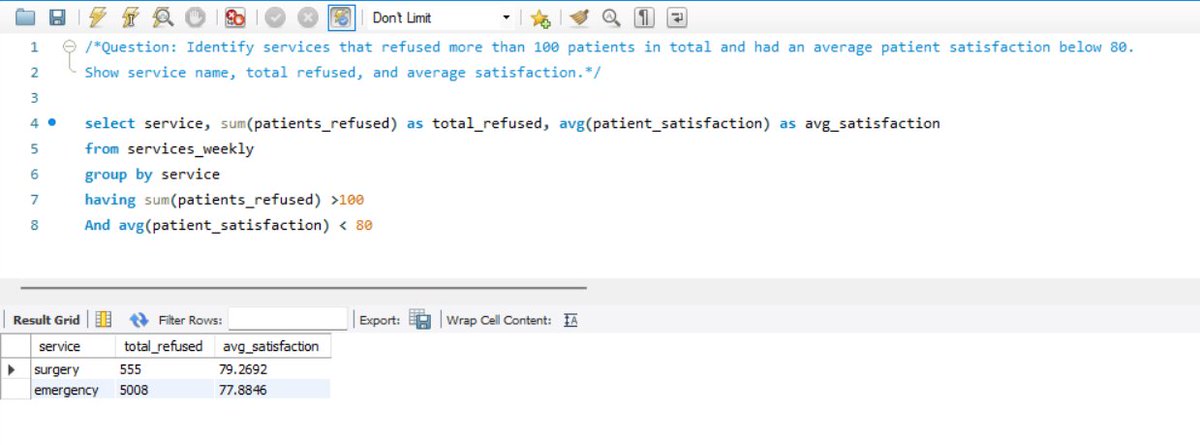
Day 7 of my 21 Days SQL Challenge ⚡
Topics: HAVING clause, filtering aggregated results
Challenge by @indiandataclub & @dpdzero @DpdzeroHQ
#21DaysSQLChallenge #sqldevelopers #LearnSQL #DataAnalytics #SQLwithIDC #DataScience #sqlknowledge
3
20

9 Nov 2025
I made simple SQL Notes (Basic → Advance) 📘✨
To receive them:
1)Follow me (So I’ll DM you!)
2)Repost this
3)Comment "SQL"
#sqlknowledge
2
4
50
9 Nov 2025
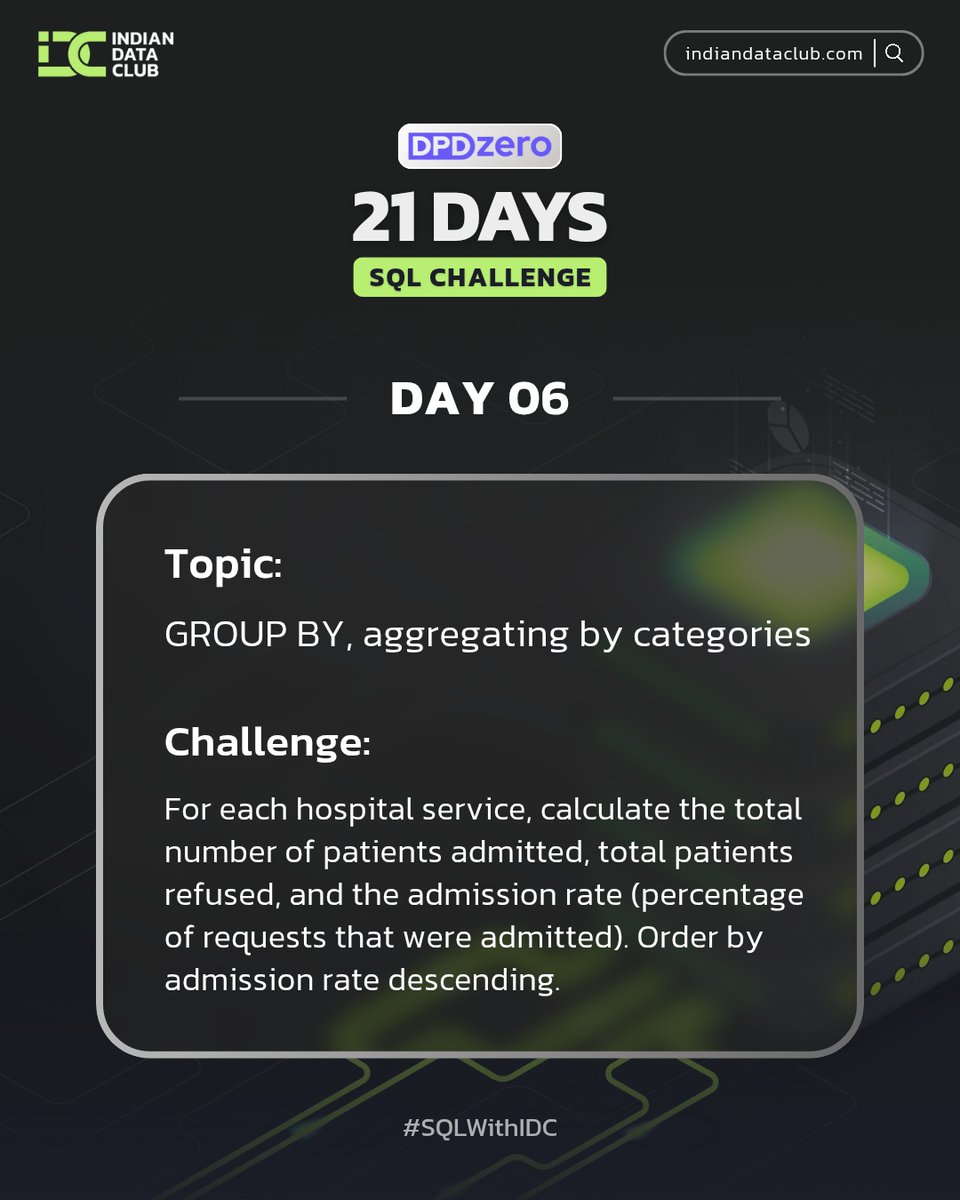
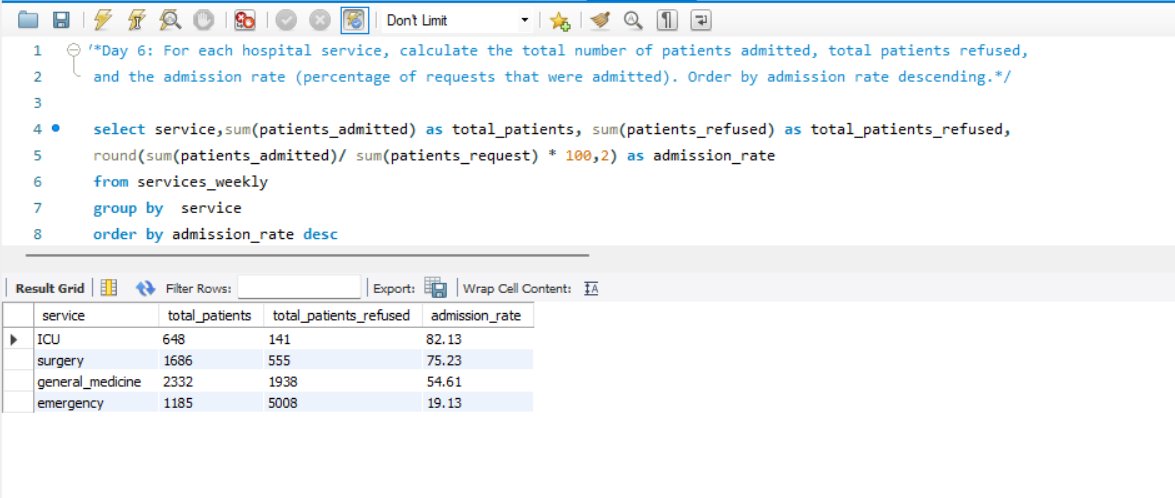
Day 6 of my 21 Days SQL Challenge ⚡
GROUP BY Clause
Topics: GROUP BY, aggregating by categories
Challenge by @indiandataclub & @dpdzero @DpdzeroHQ
#21DaysSQLChallenge #sqldevelopers #LearnSQL #DataAnalytics #SQLwithIDC #DataScience #sqlknowledge
2
12

4 Nov 2025
One of the Best Pieces of Content on 'SQL Window Function' for Noobs !!
W @_Produde_ 🌟 !
It doesn’t dive deep into the window frame clause, but it’ll help you see how window functions work for each row...
#SQL #sqlknowledge #sqlbasics #sqlbeginner
medium.com/learning-sql/sql-…
3
86

31 Oct 2025
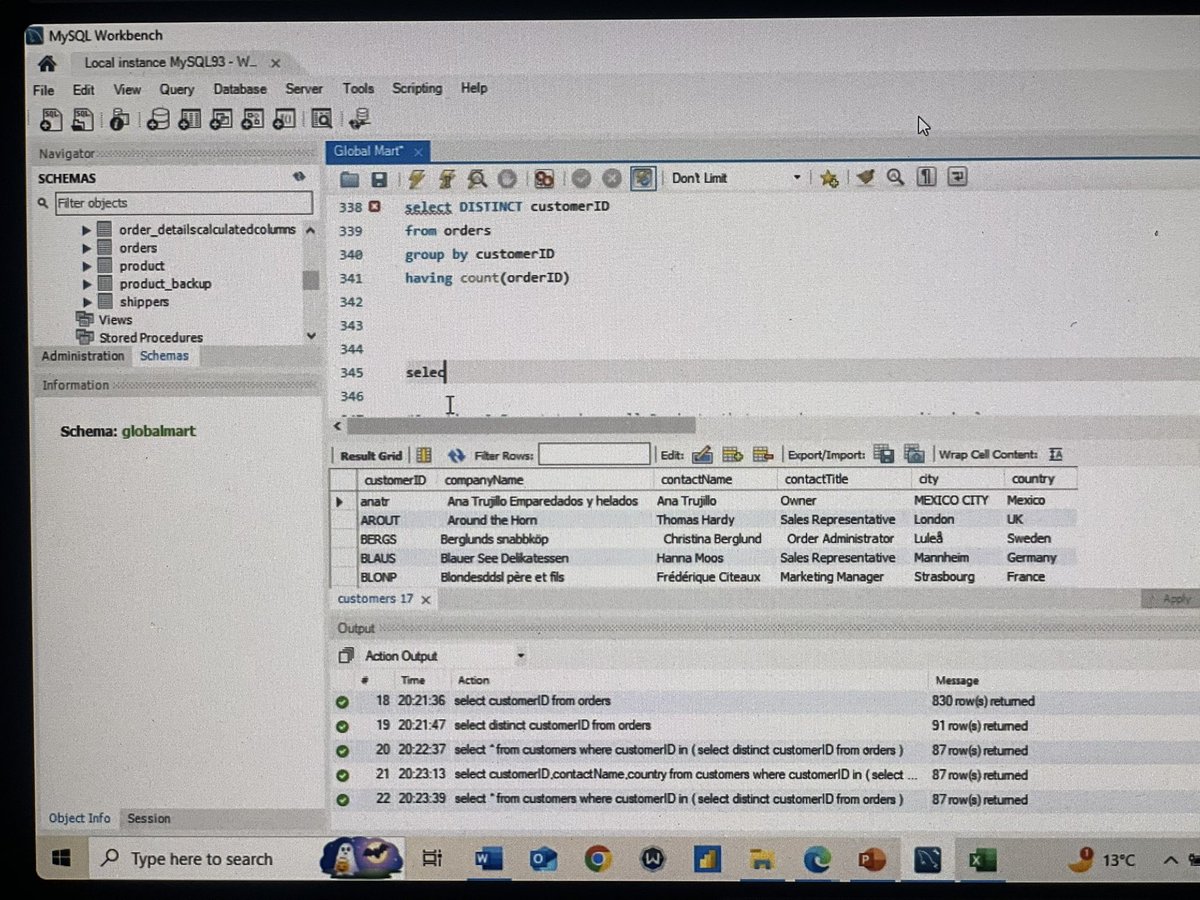
Time check 12:41am
The world sleeps.
I debug queries and whisper to my dataset, “just one more run.”
peace in running a query and seeing the exact output you expected.
That’s not just SQL that’s serenity.
#sqlknowledge
#SQL
1
4
224

20 Oct 2025
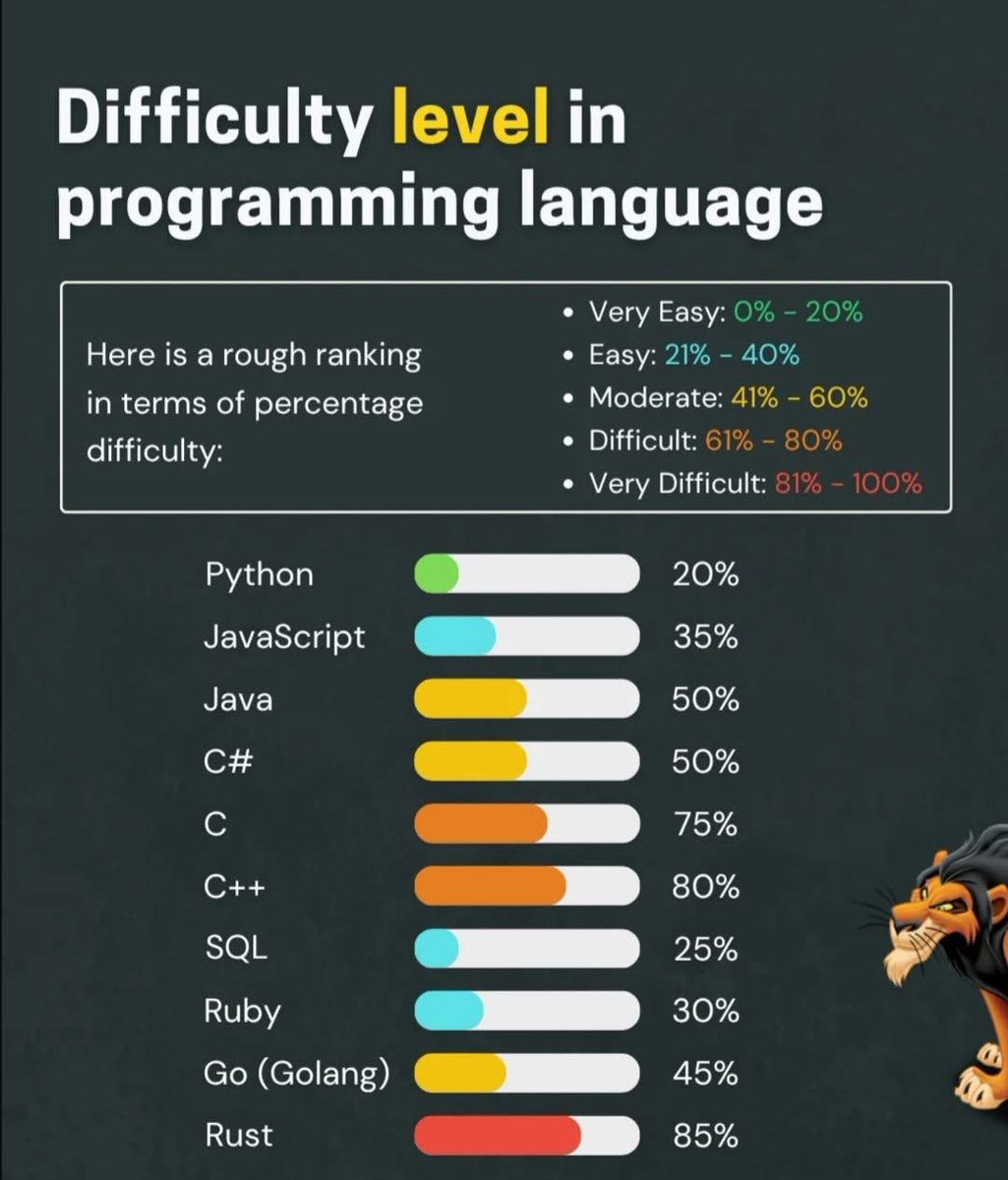
How difficult is your programming language?
#programmingjoy #programmermode #code #programmingmodel #cpp #cppprogramming #rprogramminglanguage #SQL #sqlknowledge
1
3
36

18 Oct 2025
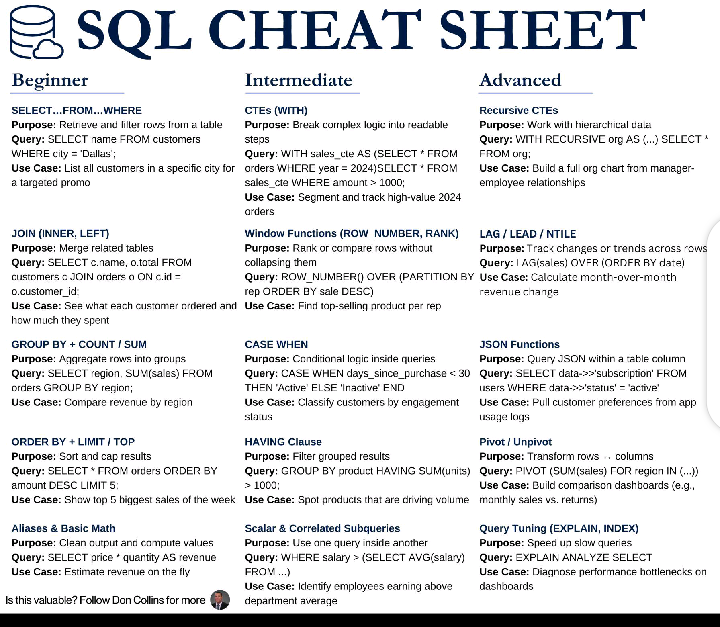
At first I always wondered what was the point of SQL, but I saw the uses of Joins, GROUP BY, ALIASES, WHERE and other important syntaxes in the organization of dataset.
Now I know how the usefulness of SQL
#DataScience #sqlknowledge
2
55

16 Oct 2025
MEMORY_ALLOCATION_EXT is one such wait type that frequently confounds database managers. Check all the details to avoid MEMORY_ALLOCATION_EXT:
madesimplemssql.com/memory-a…
#sql #sqlserver #sqlknowledge #sqlbasics #patlama #data #database #madesimplemssql @MadeSimpleMSSQL @QuerySurge
3
3
59


19 Oct 2015
@CannonFodderJnr @REALRocketman @Atomstrawberry SELECT Friends FROM tbl_Twitter WHERE sqlknowledge = TRUE