Genome editing, functional genomics, and cells figuring out how to eat themselves without dying. Professor of Genome Biology at ETH Zürich.
Joined February 2014
- Tweets 2,700
- Following 479
- Followers 5,736
- Likes 1,756
194 Photos and videos





Jun 3
I'm very excited to be part of the new #NCCR Children & Cancer. This amazing group spans all of #Switzerland to unite researchers & clinical practitioners to tackle deadly childhood cancers. Website is live today - stay tuned for #hiring & research updates childrenandcancer.ch/
1
8
988
May 28
The preliminary program and registration is open for SwissPR 2026, happening in Basel at the Biozentrum on 30th June. Hear from @jpkbravo, @schmidburgk, @grunewaju, @MartinPacesa more. Register now at swisspr-symposium.uzh.ch/en.…
5
11
2,261
Apr 28
Can't wait to read this!
Apr 27

Saying it because @kenjmloi didn't:
This is really close to a RNA system that targets protein sequences because of wobble bases in codons.
Truly amazing discovery!
3
1,145
Apr 5
Cells need to repair genome editing induced damage, no matter how it’s made! This was a wonderful collaboration with @AllogeneTx.
Mar 24

Our paper is out in Molecular Therapy – Nucleic Acids.
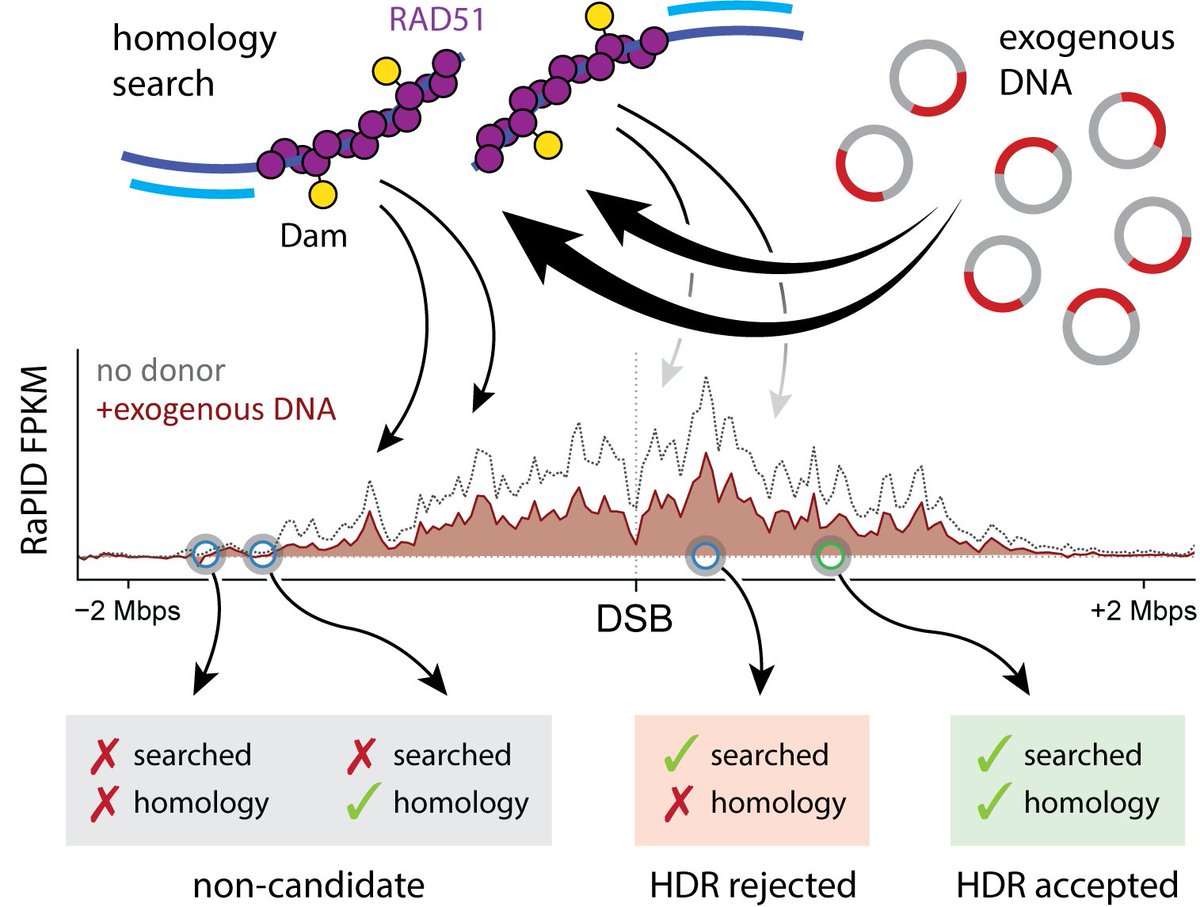
We present #DisTALseq, a genome-wide method to profile TALEN #offtargets by tracking DNA repair factor recruitment at DSBs.
Thank you all for this great collaboration #AllogeneTx #CornLab #GEML
doi.org/10.1016/j.omtn.2026.…
2
11
1,953
Mar 18
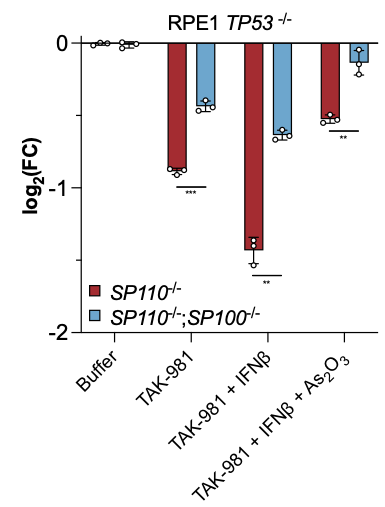
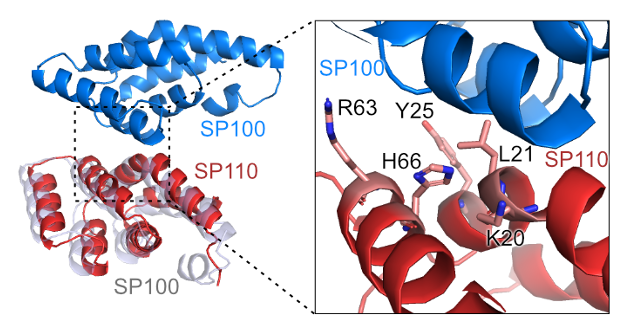
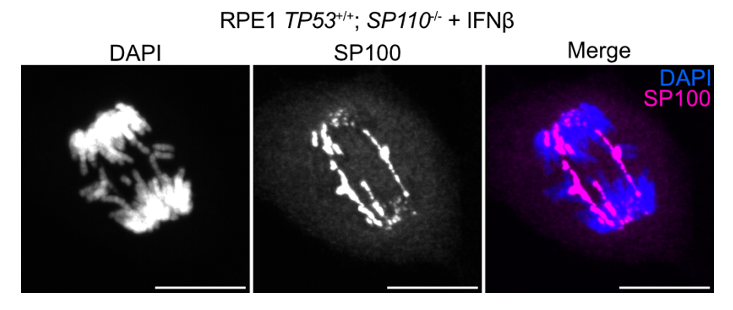
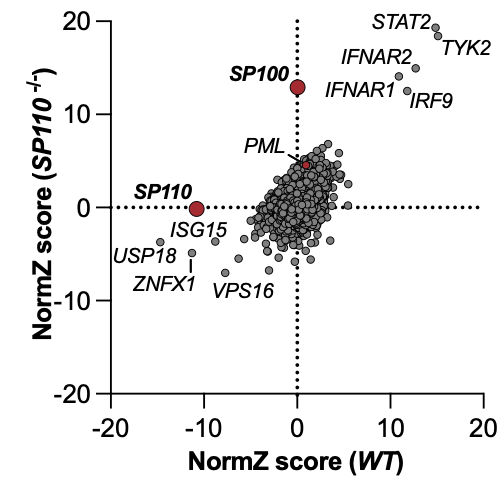
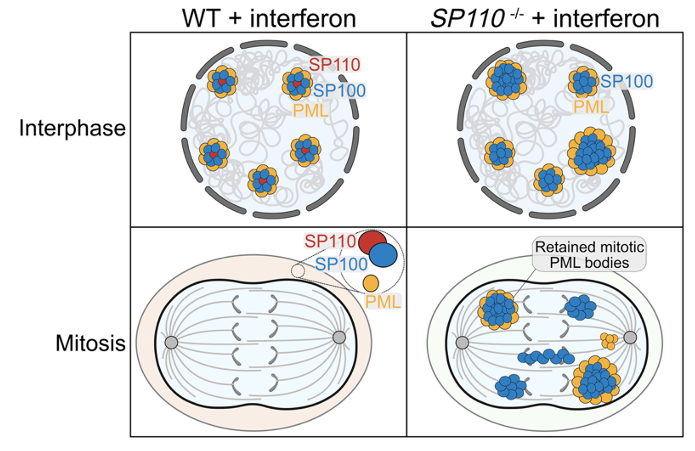
Proper organelle regulation during mitosis is a must, but how do membrane-less condensates like PML bodies behave during cell division? In work led by @eric_aird, we found the balance of speckled proteins SP110 & SP100 to be the key. doi.org/10.1038/s41556-026-0…
1
8
29
2,634
Mar 18
This phenomenon is relevant to any situation where the balance of SP110 versus SP100 expression is perturbed. Not just via interferon upregulation. SUMOylation is also a key regulator of toxicity.
1
154
Mar 18
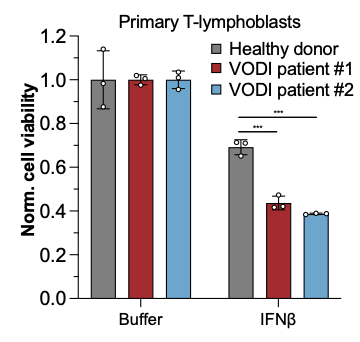
We saw the same SP100-dependent toxicity in cells from VODI patients who lack SP110. Regulated condensate disassembly may be a general requirement for maintaining cellular health!
141
Mar 12
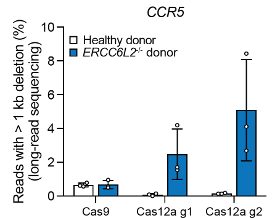
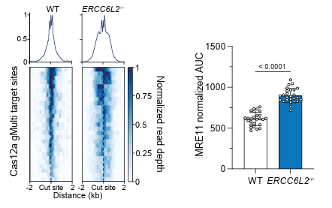
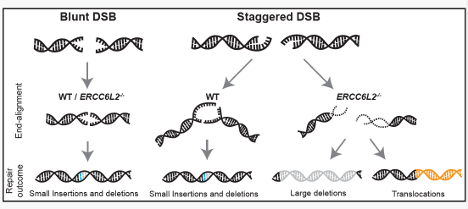
Many genome-editing tools work by cutting DNA - but the shape of the cut matters. Using #CRISPR screening, we show ERCC6L2 is specifically required to maintain #DNArepair fidelity at staggered DNA breaks, but not at blunt ends.
nature.com/articles/s41467-0…
3
19
61
7,154
Mar 12
What does ERCC6L2 actually do? It counteracts the activity of the MRN complex (MRE11–RAD50–NBS1), limiting excessive DNA end resection and promoting accurate end joining.
1
489
Mar 12
ERCC6L2 acts as a guardian during repair of staggered DSBs. This sheds light on ERCC6L2 mutations linked with BMF and leukemia and highlights caution for genome-editing approaches that generate DNA overhangs.
1
376
Feb 12
It’s been a fun first few week of my sabbatical. Many exciting meetings w/ @PeterFineran lab, learning new stuff and brainstorming ideas. And my own lab has been off to a crazy great start to the year. The early/late zoom meetings have me burning the candle at both ends…
1
12
1,216
Jacob Corn retweeted

Feb 6
Happy to share that my postdoctoral work is now out in @ScienceMagazine. We show that the RNA-programmable bridge recombinase ISCro4 can insert, delete, or invert multi-kilobase DNA fragments at defined genomic sites in human cells.
Study link: science.org/doi/10.1126/scie…
CRISPR-Cas has transformed genome editing, but many diseases involve diverse patient-specific mutations within the same gene. A mutation-agnostic alternative is to insert a healthy gene copy at a defined genomic locus, but gene-sized, site-specific insertions remain a major challenge.
Main findings of our work:
(1) ISCro4 is highly active in human cells and can be delivered by plasmid or all-RNA formats
(2) Proof-of-concept programmable multi-kb insertions, deletions, and inversions
(3) Structural insights into the basis of enhanced ISCro4 activity
(4) Specificity and off-target characterisation
(5) A framework to support future development and adoption of bridge recombinases
The work was made possible through a close collaboration between the Jinek Lab, @schwanklab, and @jcornlab. I am deeply grateful to all of my co-authors for the team spirit, hard work, and dedication that went into this publication: @talasandris, Javier Fernández Carrera, @nicopmat, Lilly van de Venn, Charles Yeh, @p_kulcsar, @marquark, @YanikWeber, @SaskiaGerecke, Isabelle Harvey-Seutcheu, Dominic Mailänder, @MorPfl, and @ChrisChanez89. Special thanks to my supervisor, Prof. Martin Jinek, for his outstanding mentorship, and to Prof. Gerald Schwank and Prof. Jacob Corn for their generous support throughout. Finally, I would like to thank everyone in the Jinek lab for creating a supportive work environment, and @EMBO for funding my postdoctoral work.
In parallel, independent work led by @ntperry13, @SKonermann and @pdhsu also reported ISCro4 activity in human cells, reinforcing the robustness and momentum of this direction.
Please reach out if you would like to test the system or discuss potential applications. Relevant plasmids are now available via @Addgene.
5
53
236
61,533
Jan 20
This looks incredible! Cell systems can still be a bottleneck, but are cloning woes now a thing of the past?
Jan 20

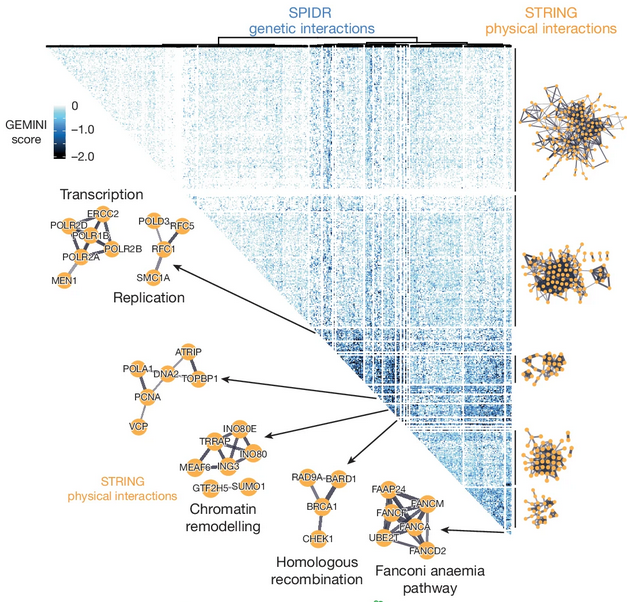
New preprint on technologies to scale up CRISPR screens.
We use them to map 665,856 pairwise genetic perturbations and outline a path to comprehensive interaction mapping in human cells.
We also introduce an approach for cloning lentiviral libraries with billions of elements.

2
2
45
7,460
2 Dec 2025
Sometimes I'm excited to read a paper and every paragraph blows me away. And sometimes I'm just as excited and every paragraph leaves me wondering if the referees were sleeping on the job. Today it was one of the latter.
1
5
1,192