
Minipreps and sometimes structural biology @UZH_en
Joined December 2016
- Tweets 81
- Following 198
- Followers 146
- Likes 498
17 Photos and videos


Pinned Tweet

5 Feb 2021
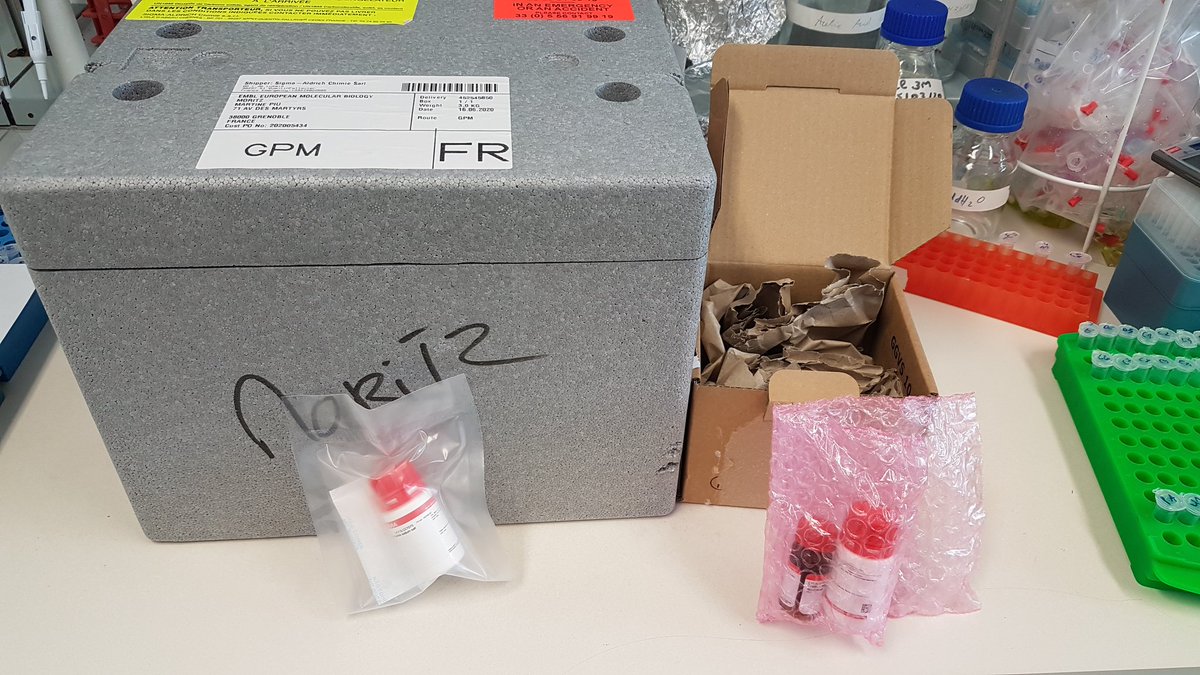
I am very happy to share the results of my PhD @EMBLGrenoble in the @WojtekGalej lab. Thanks a lot for the support in the past years!
authors.elsevier.com/sd/arti…
6
1
30
Moritz Pfleiderer retweeted

29 Aug 2024
Really nice outreach article about our @ScienceMagazine paper 👉 doi.org/10.1126/science.add7… in @sciencebreaker by @PaulineJYX @igaldadas and @gervasiolab
thesciencebreaker.org/breaks… @embl @EMBLGrenoble
9
13
1,494
3 Jul 2024
Congratulations Daniel! Impressive work!
231
14 Jun 2024
Great work by my colleagues @l_loeff and @MartinJinek elucidating the mechanism of the phage defense system DdmDE.
9
821
3 Jun 2024
I am happy that this work is out. @MichalRazew, @WojtekGalej, Angelique Fraudeau and Romain Linares show how the Integrator complex is recruited by specific transcription factors.
1 Jun 2024

I am delighted to share our latest paper on the Integrator complex assembly and association with transcription factors. Great work by @MichalRazew, Angelique Fraudeau, @MorPfl and Romain Linares @embl @EMBLGrenoble
authors.elsevier.com/sd/arti…
15
425
Moritz Pfleiderer retweeted

4 Mar 2024
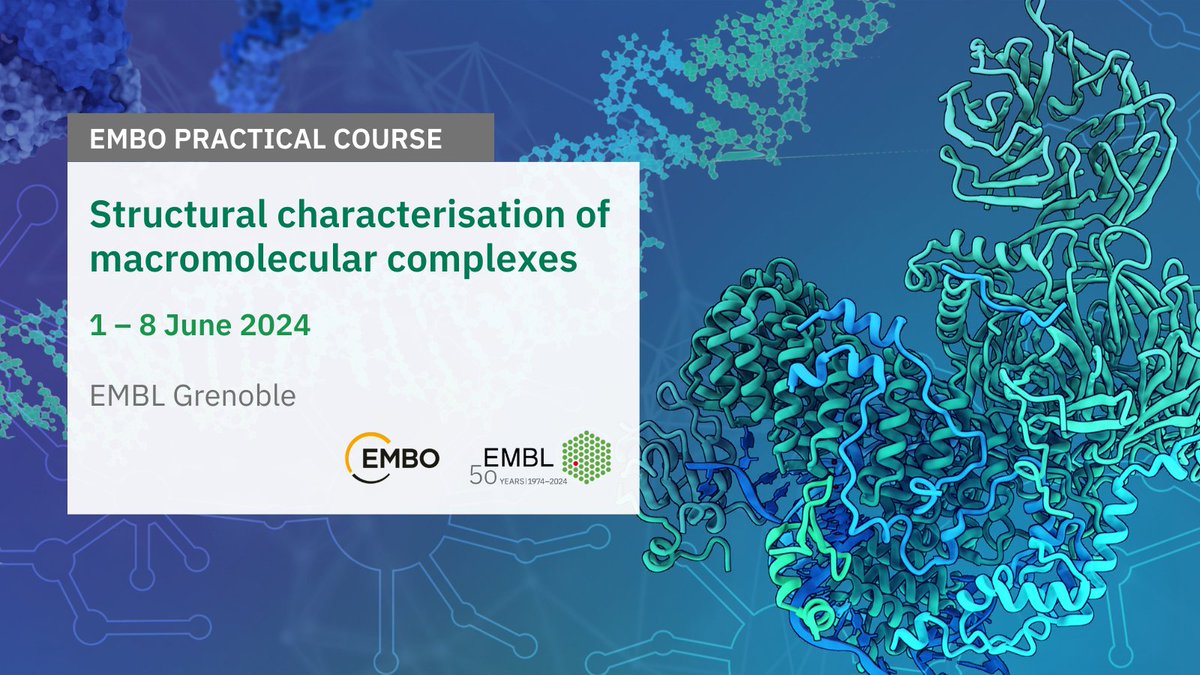
Last few days to apply to our EMBO Practical Course on macromolecular complexes! We have a fantastic lineup of speakers covering broad range of topics. Join us in Grenoble in June!
20 Feb 2024

Would you like to gain a comprehensive overview of the methods used to study the structure of macromolecular complexes? 🧬 Then use your chance and apply for #EMBOMacromolecular by 10 March!
💻 s.embl.org/mmo24-01
🌍 EMBL Grenoble, France
📆 1 – 8 June
During this @EMBO Practical Course, you'll actively engage with a diverse range of methodologies discussed in thematic lectures and receive hands-on training in experimental and computational practicals.
📸 Image credit: Isabel Romero Calvo/EMBL
#integratedstructuralbiology #macromolecularcomplexes #mx #nmr #cryoem #massspectometry #smfret #modelling #alphafold2
13
19
3,364
Moritz Pfleiderer retweeted
22 Jan 2024
A new automated platform for cryo-EM/ET grids preparation.
Great engineering by @PappTeam and collaborative @embl effort to validate the approach.
biorxiv.org/content/10.1101/…
3
20
98
9,027
Moritz Pfleiderer retweeted

7 Oct 2023
📢 I have two open @ERC_Research fully funded #postdoc and #PhD positions in my lab at @MaxPerutzLabs on the @viennabiocenter campus. We are looking for structural bio(techno)logists with a passion for nucleic acid binding proteins and genome editing.
Deadline for PhD: Oct 15th
6
62
173
42,457
Moritz Pfleiderer retweeted

5 Oct 2023
💥 Out now @ScienceMagazine. @DanielHFisch solves the mystery of bystander cell protection during infection. An exciting mechanism, cells are so smart! PIM1 controls GBP1 activity to limit self-damage and to guard against pathogen infection | Science science.org/doi/full/10.1126…
31
53
214
48,411
6 Oct 2023
I am very happy that this story is finally out.
It was a huge effort mainly by @DanielHFisch and @FrickelLab.
I am very grateful to @EMBLGrenoble and @MartinJinek for providing lab space and computational resources.
science.org/doi/10.1126/scie…
2
1
23
2,243
6 Oct 2023
@LenaAnastasakou, @DanielHFisch, @WojtekGalej, @FrickelLab and me were brought together by chance during the pandemic and decided over raclette to try a collaboration.
2
99
14 Mar 2023
I am very happy to share our newest results characterizing the novel Integrator subunit INTS15 (C7ORF26). It was an exciting collaborative effort of @WojtekGalej and lab with the @GardiniLab and in particular my amazing co-author @offley_sarah!
14 Mar 2023

A combinatorial approach to uncover an additional Integrator subunit dlvr.it/SktD5q
1
2
21
1,443
6 Jul 2022
I am very happy that the @snsf_ch decided to fund my project in the @MartinJinek lab with a postdoctoral fellowship for the next two years!
4
49
18 Jun 2022
Amazing insights into the activation mechanism of type V CRISPR associated transposons. Apparently, ribosomal proteins are quite versatile.
18 Jun 2022

It was a real thrill to present our new data on type V CAST at @crispr2022 in Boston this week in a shared talk with @irma_querques. Thanks to the great support of @OberliSeraina, @ChrisChanez89 and @MartinJinek , we are now able to share a preprint here: biorxiv.org/content/10.1101/…
4
14 Jan 2022
Goodbye Grenoble. 4.5 years of PhD @EMBLGrenoble in the @WojtekGalej group are over. Thanks for many fond memories.
1
1
35
14 Jan 2022
Great work by a great team!
13 Jan 2022

‘‘Twas the nights before Christmas…you may have missed this @DanielHFisch gem under the🎄! Published in #PathogensandDisease, the @FEMSmicro journal! IF 3.166 and rising, look it up! academic.oup.com/femspd/arti…
2
Moritz Pfleiderer retweeted

20 Dec 2021
EMBL's Bhogaraju group solved the 3D structure of a protein complex of Legionella pneumophila that could be a target for new therapies for pneumonia caused by this bacteria.
Happy to share this story I wrote for @embl website :)

EMBL’s Bhogaraju group uses structural biology techniques to study Legionella pneumophila, a versatile bacterium that can cause severe pneumonia.
Recently, they unveiled the 3D structure of two interacting proteins involved in the disease process.
embl.org/news/science/solvin…
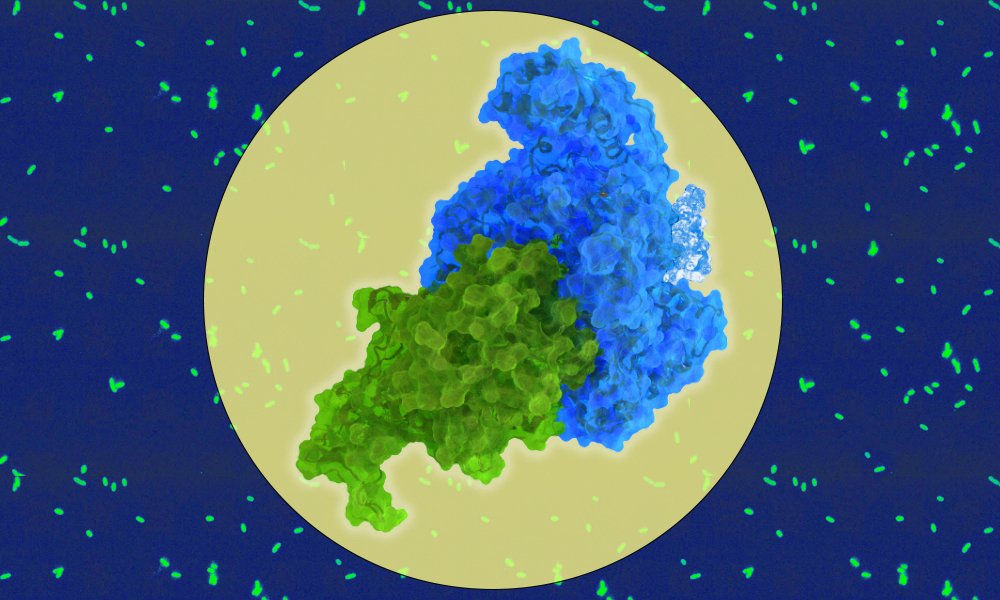
ALT Two protein structures interacting in the foreground, each shown in a different colour. The background shows small green dots marking bacteria.
1
11
26 Nov 2021
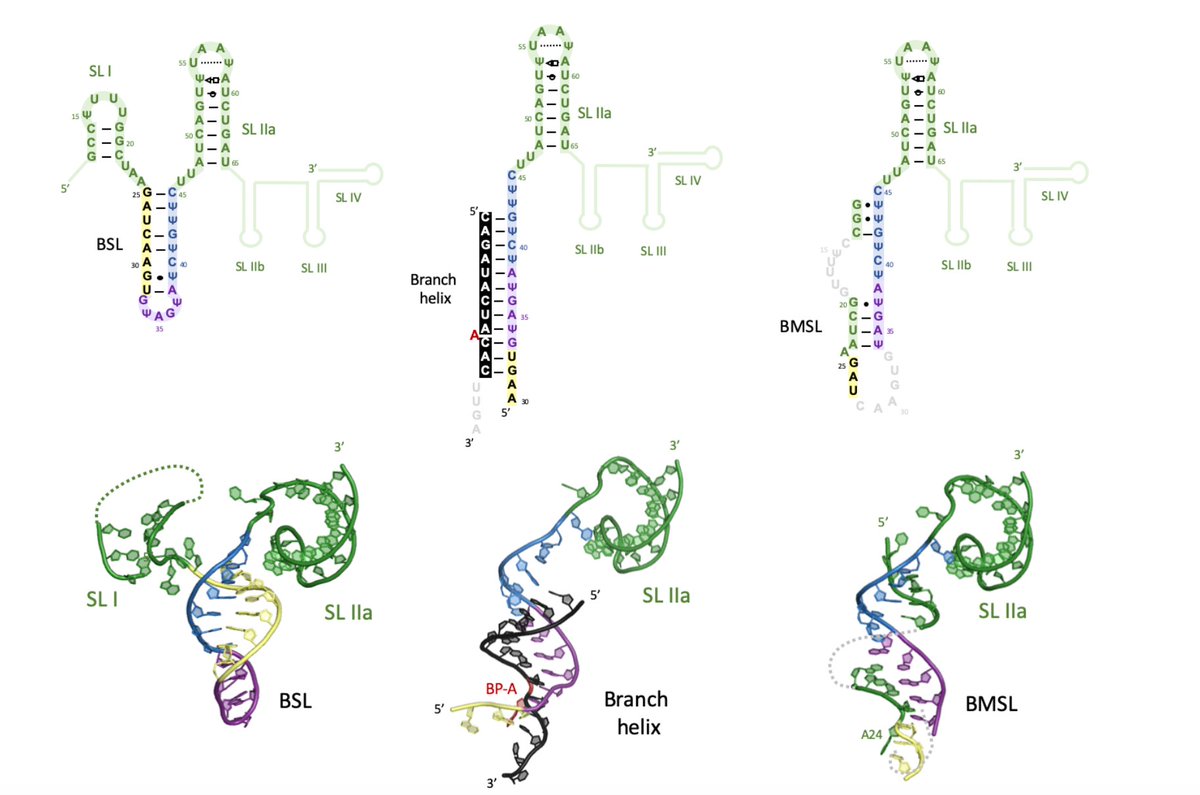
Have a look at the amazing work of my colleague @Structjon! He solved several impressive 2 Å structures of different U2 snRNP states.
25 Nov 2021
Very happy to share our new work by @Structjon on the mechanism of branch site recognition by the human spliceosome.
science.org/doi/10.1126/scie…
@embl @emblgrenoble @ERC_Research #cryoEM #splicing #RNA #ERCStG
1
3
12
Moritz Pfleiderer retweeted

18 Nov 2021
Love viruses, virus receptors AND super-resolution microscopy?😍Look no further! @Owen_lab_UoB and I are offering a PhD project through @Impact_Aim_Mrc
"Super-resolution mapping of virus-induced receptor clustering and activation" *Please retweet*
Get in touch if interested!
17 Nov 2021

Studentship applications are now open for our @The_MRC Advanced Inter-disciplinary Models (AIM) DTP at our three partner institutions @unibirmingham @UniofNottingham @uniofleicester more.bham.ac.uk/mrc-aim/ Application deadline Sunday 9 January 2022 Please RT
1
24
28
12 Nov 2021
Fantastic work showing how Integrator is recruited to PolII and how this leads to nuclease activation!
11 Nov 2021

Great to see how Integrator embraces the paused transcription complex to engage with nascent RNA and trigger Pol II attenuation. Paper by @isaac_fianu et al. edited by @dijiang319 is out @ScienceMagazine:
science.org/doi/abs/10.1126/…
4
30 Oct 2021
An intern asked me yesterday whether I know what a meme is because I am "quite old". I am 29...
10