
RLVR for expert judgment. Founder @tacitco. Prev: Fusion Sport (acquired). e/acc x h/acc.
Joined May 2007
- Tweets 7,626
- Following 18,513
- Followers 16,750
- Likes 27,573
13 Photos and videos









Joe Cole - e/acc retweeted

Jun 15
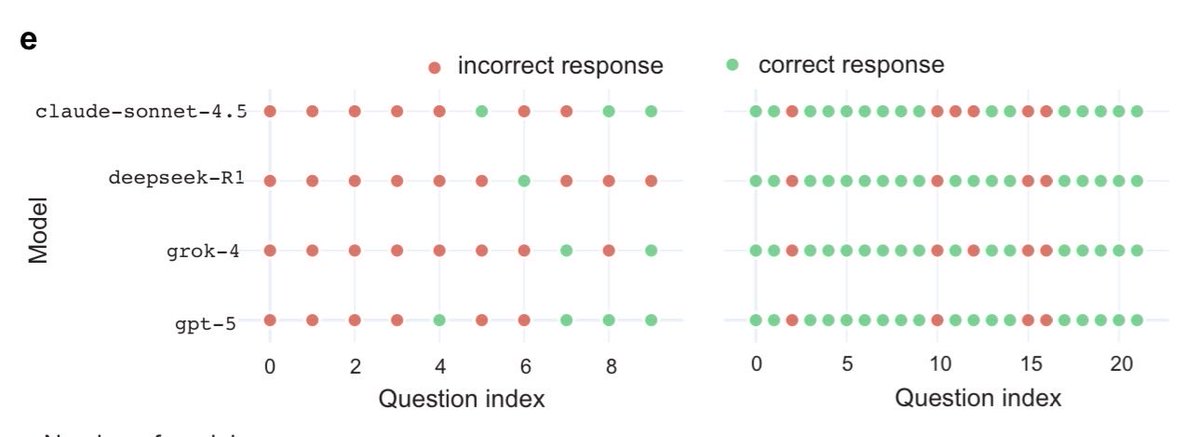
When everyone uses the same evals, data, distillation and vendors to train LLMs.
Courtesy of: arxiv.org/abs/2512.15567
8
24
155
20,572

AMD acaba de dar un golpe fuerte en la IA local.
Lisa Su subió al escenario con un mini PC del tamaño de un libro grueso en una sola mano y ejecutó en vivo un modelo de 235 mil millones de parámetros. Sin datacenter. Sin cloud. Sin alquilar GPUs.
El protagonista es el Ryzen AI Max 395 (Strix Halo). Es el primer chip x86 que une CPU y GPU con 128 GB de memoria unificada. En Linux, el GPU puede usar hasta ~110 GB de esa memoria.
Para ponerlo en contexto: una RTX 5090 tiene 32 GB y una 4090 tiene 24 GB. Este pequeño equipo ofrece más del triple de memoria accesible para modelos grandes, en un chasis compacto.
En pruebas específicas de inferencia (como DeepSeek R1), superó en más de 3x al rendimiento de una RTX 5080 cuando el modelo no cabe en la VRAM de la tarjeta de Nvidia.
El precio real del equipo con 128 GB (GMKtec EVO-X2) suele estar entre $1,800 y $2,500 según ofertas (el kit oficial de AMD es más caro).
Para quien usa mucho IA, esto cambia las cuentas: en vez de pagar cientos de dólares al mes en suscripciones (Claude, ChatGPT Pro, Cursor, etc.), puedes correr modelos potentes localmente con Ollama, LM Studio o similares. Privacidad total, sin límites de tokens y sin que te corten el servicio a las 3 a.m.
No es que las suscripciones vayan a desaparecer mañana, pero para muchos casos de uso (RAG con documentos privados, prototipos, agentes locales, etc.) esta opción se vuelve muy atractiva.
Estamos viendo el inicio de una nueva etapa de IA local accesible y potente??
260
1,450
8,841
815,970
Joe Cole - e/acc retweeted

Jun 13
56,000 tokens/sec at just 80 MHz. 🤯
I burned a full Transformer with KV cache into a custom chip. Designed gate by gate as a 100% digital integrated circuit. Prototyped on a FPGA. (No GPU. No CPU)
Just pure digital silicon running @karpathy microGPT, spelling out names on a tiny LCD.
This is GateGPT 👇
156
547
4,774
673,677
Joe Cole - e/acc retweeted

Jun 11
JEFF BEZOS JUST EMERGED FROM STEALTH WITH A $41 BILLION AI STARTUP CALLED PROMETHEUS
$12 billion raised. Valued at $41 billion. Coming out of stealth today.
The backers: Bezos personally, JPMorgan, BlackRock, Goldman Sachs, DST Global, and Arch Venture Partners.
The mission: do for engineering and manufacturing what large language models did for text.
Bezos is calling it an "artificial general engineer." Instead of training on words from the internet, Prometheus ingests data from the physical world to accelerate the manufacturing of skyscrapers, smartphones, jet engines, and everything in between.
In Bezos' own words: "Something that today was going to take 100 engineers 10 years to build, if you can change that to taking 10 engineers one year to build, you're just going to get way more things built."
This is Bezos' first CEO role since stepping down from Amazon in 2021. He's co-leading it with Vik Bajaj, former Google X executive.
(Source Semafor)

228
656
5,835
809,462
Joe Cole - e/acc retweeted

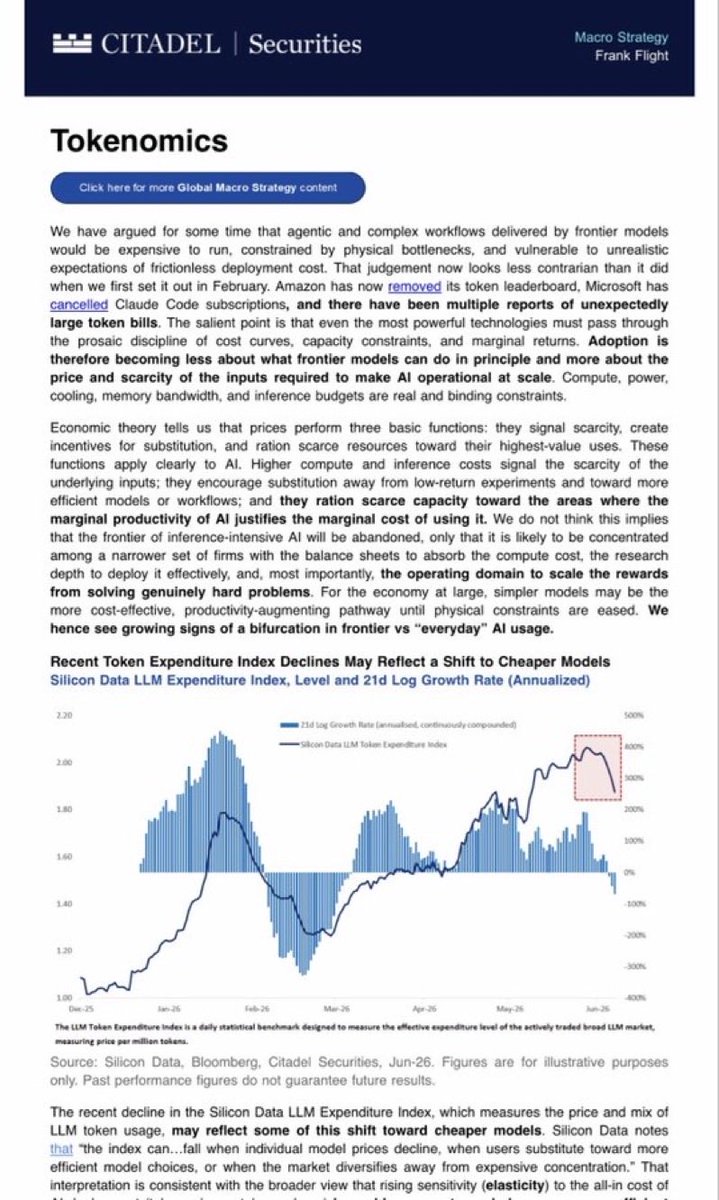
Citadel Securities just put institutional weight behind what the AI bulls won't say out loud.
In a new macro note titled "Tokenomics," Citadel makes the argument plainly: even the most powerful technology on earth still has to pass through the boring discipline of cost curves, capacity limits, and marginal returns.
The evidence is piling up:
– Amazon removed its token usage leaderboard
– Microsoft cancelled Claude Code subscriptions
– Multiple companies reporting unexpectedly massive token bills
Their conclusion is the part that matters.
Adoption is no longer about what AI can do in principle. It's becoming about the price and scarcity of the inputs needed to run it at scale. Compute. Power. Cooling. Memory bandwidth. Inference budgets. All real, all binding constraints.
And here's the kicker from the chart.
The Silicon Data LLM Token Expenditure Index, a benchmark for how much the market is actually spending on AI tokens, has started rolling over. Citadel reads it as a shift toward cheaper models. Companies substituting away from expensive frontier AI toward "good enough" alternatives.
That's economics 101 doing what it always does. When the price of something rises, people use less of it, or find a cheaper version.
Citadel sees a bifurcation forming. Frontier AI concentrated among a few firms with the balance sheets to absorb the cost. Everyone else quietly downgrading to simpler, cheaper models.
This is the part of every technology revolution the early narrative ignores.
The technology being real was never the question.
The question was always whether the economics could carry the valuations.
When one of the most sophisticated trading firms on earth starts writing about AI in the language of cost curves and rationing instead of limitless demand, the conversation has quietly changed.
The hype was about what AI could do.
The reckoning is about what it costs.
116
496
2,566
485,362

NEW: Anthropic is walking back Claude Fable 5's policy to covertly degrade performance for competing AI researchers, after facing fierce backlash.
“We’re changing Fable 5’s safeguards for frontier LLM development to make them visible,” Anthropic tells WIRED. “We made the wrong tradeoff and we apologize for not getting the balance right.”

167
250
2,548
733,042
Joe Cole - e/acc retweeted

Jun 9
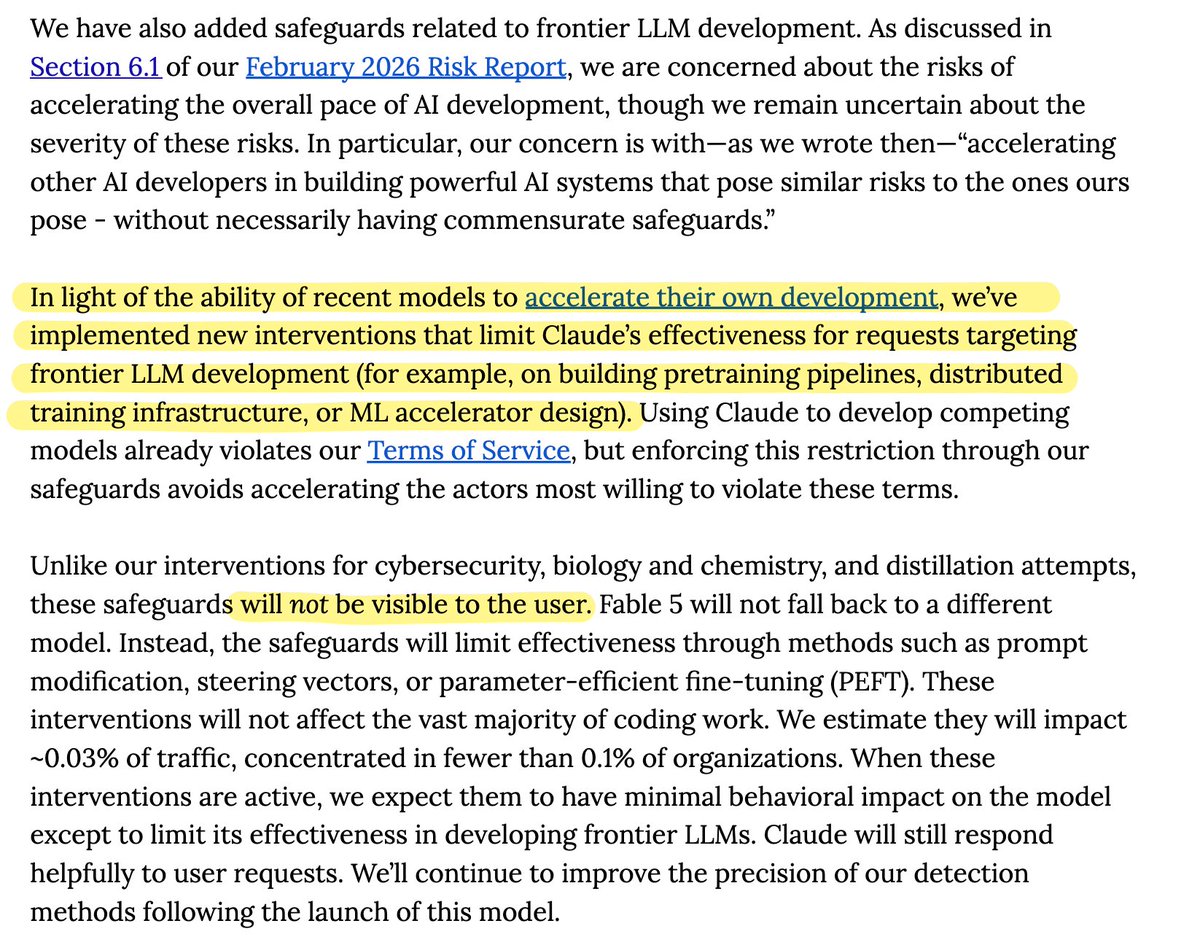
mythos will be bad ON PURPOSE on ai "frontier llm research" tasks, this is very very sad for the research community
also the fact that this is un purpose not visible to the user is crazy

Introducing Claude Fable 5: a Mythos-class model that we’ve made safe for general use.
Its capabilities exceed those of any model we’ve ever made generally available.
359
647
5,640
3,898,672

1. Echoes what Anthropic and OAI researchers have been saying informally, which is that our benches ought to be three dimensional optimization problems between performance, cost, and latency for highly specific applications
2. Further evidence that the "good enough" level of intelligence units have been reached for 99% of white collar labor tasks and small model implementations are ever valuable; bull self serve post training infra
3. Benchmarks are ever outdated, because scaffolds/harnessing largely fails to account for test-time standardization, amidst the litany of other things that aren't standardized that make top line metrics near unreportable

6
9
138
22,939
Joe Cole - e/acc retweeted
Jun 8
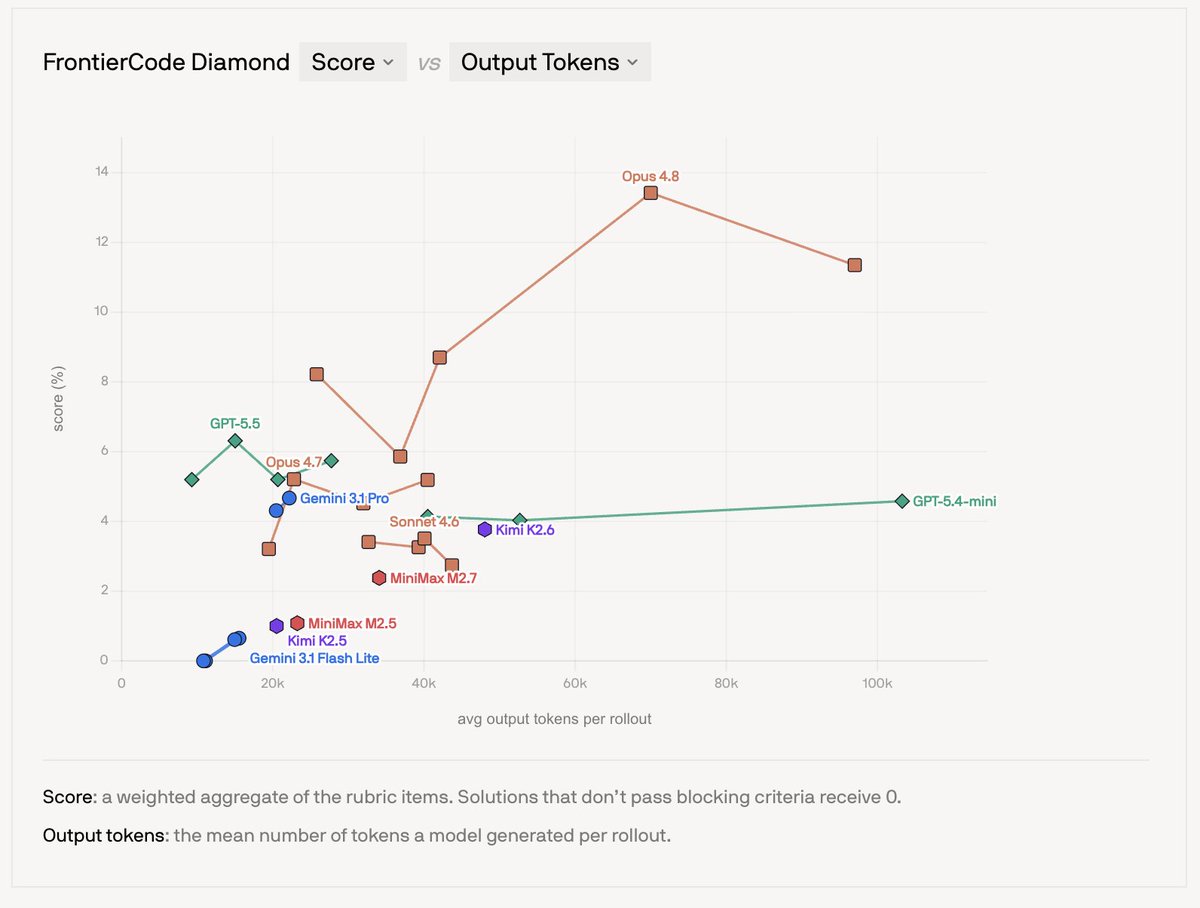
new frontier eval from the cognition team. interesting that simple test time scaling is pretty noisy here instead of a clean line
lots of care in crafting a good scoring process
cognition.ai/blog/frontier-c…
Jun 8

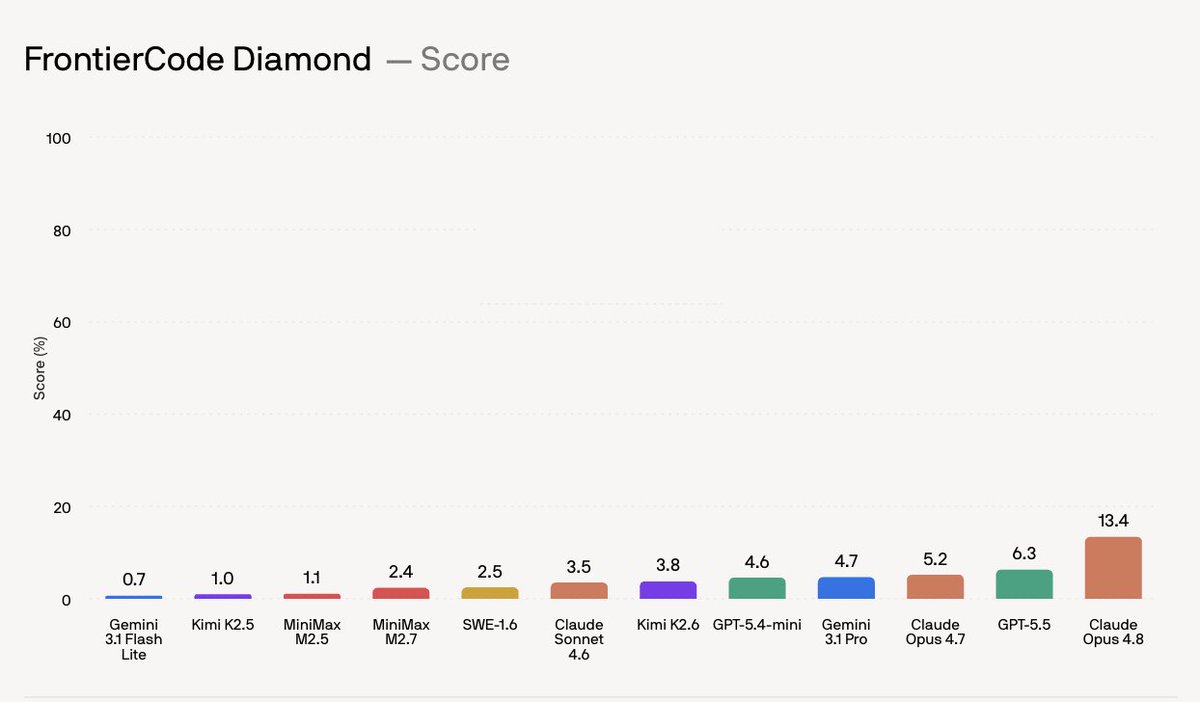
Introducing FrontierCode: a coding eval that raises the bar for difficulty & quality. Each task took 40 hrs of work by leading open-source maintainers.
Models write sloppy code that works but isn’t maintainable. Our eval is first to measure: would you actually merge this code?
14
6
153
17,039
Joe Cole - e/acc retweeted

Good take
My guess is
- demand for intelligence is near infinite
- but 80% of workloads will be running on 99% cheaper models within 12-18 months
- 20% of workloads will still run on latest gen models where IQ maxing is important (scientific breakthroughs, higher level ochestrator agents?)
- rough analogy might be what % of macbooks or gaming PCs sold have the maxed out specs for CPU/GPU, prices are falling much faster than Moore's law here though
- this leads me to think the limiting factor will be energy and compute, not better models
At Coinbase we're working hard on routing prompts to cheaper models where appropriate, and in some cases have been able to keep costs roughly flat, while token usage continues to grow exponentially.
Jun 2

The most basic way AI could blow up imo. I'm not saying it does but this is the most obvious way I can see it happening
- Per seat subscriptions are massively subsidized. The flat fee was priced way below what heavy usage actually costs
- For real business use you have to move to the API anyway. Data protections, work integrations and compliance officer approval
- On the API you pay metered rates, and businesses are burning credits way faster than the per seat pricing ever led them to expect
- This is everywhere right now. Internally for us, Codex users, Uber torching its entire 2026 AI budget in 4 months, the Microsoft comments. Just go try an API
I shared more on this here: x.com/Shaughnessy119/status/…
- And I don't think most businesses have the money to keep paying increasing API rates without a real change to how they operate (caps needed)
- Because they have a cheap alternative. They can reach open source models through any aggregator (OpenRouter, Venice, Baseten, Together) and still get strong privacy. Venice private data centers, or E2EE/TEE serving GLM 5.1.
More on open source inference provider raises here: x.com/Shaughnessy119/status/…
- And the discount is enormous. DeepSeek V4 codes within a hair of Opus on SWE bench at roughly 1/30th the price, and the cheapest open models run closer to 1/100th
- Chinese labs open source frontier grade models. The model is the single biggest cost an inference provider has, and they get it for free
- This idea dies if China goes closed source. That is actually bullish web2 AI labs, because if everyone is closed you pay up for the best intelligence. China goes closed source if they are tired of giving away an asset and they want the revenue and data flow to train new models
- Is this showing up in web2 AI lab revenue yet? No. Revenue is off the charts. Anthropic went from 9B to 47B run rate in five months
- So go forward, what happens?
- I think revenue slowly starts leaking to the open source inference providers (see Venice usage, OpenRouter's $113M raise, Baseten is raising at $11B or triple its valuation in three months, on revenue that went from $200M to $600M annualized in a single quarter)
- It doesnt move overnight, but it caps the labs ability to raise prices, and margins are already deeply negative. OpenAI is reportedly running near negative 122%
- With margins that bad there is no cash flow, so the labs are fully dependent on outside capital to buy GPUs, train models, and keep subsidizing usage (I.e. see Google tapping $80b equity sale, granted 30b for employee RSU taxes. Clearly they think Equity is overvalued or you wouldn't sell it)
- The break comes when that capital stops. Pricing is capped so margins cant improve, and the moment investors lose conviction on payback, the whole flow reverses
- Why would they lose conviction on payback? Back to the start - the inability to improve margins or get businesses to pay more
- This is also limiting, if we start making new drugs with AI or create entirely new businesses, you better believe people will pay up to the max for AI usage
475
619
6,651
2,820,969
Joe Cole - e/acc retweeted

Jun 8
This is exactly right.
People are starting to look for cheaper model alternatives and realizing two things at once: open-source models are already very good, and the ability to train and serve them efficiently at scale can change the economics pretty meaningfully.
Tokens are still being subsidized, demand is ramping quickly, and the compute crunch is likely to persist. That will push companies toward using the right model for each task instead of defaulting to the most expensive one.
We’re still early, but I expect open-weight adoption to accelerate much faster than most people think.
Jun 2
The most basic way AI could blow up imo. I'm not saying it does but this is the most obvious way I can see it happening
- Per seat subscriptions are massively subsidized. The flat fee was priced way below what heavy usage actually costs
- For real business use you have to move to the API anyway. Data protections, work integrations and compliance officer approval
- On the API you pay metered rates, and businesses are burning credits way faster than the per seat pricing ever led them to expect
- This is everywhere right now. Internally for us, Codex users, Uber torching its entire 2026 AI budget in 4 months, the Microsoft comments. Just go try an API
I shared more on this here: x.com/Shaughnessy119/status/…
- And I don't think most businesses have the money to keep paying increasing API rates without a real change to how they operate (caps needed)
- Because they have a cheap alternative. They can reach open source models through any aggregator (OpenRouter, Venice, Baseten, Together) and still get strong privacy. Venice private data centers, or E2EE/TEE serving GLM 5.1.
More on open source inference provider raises here: x.com/Shaughnessy119/status/…
- And the discount is enormous. DeepSeek V4 codes within a hair of Opus on SWE bench at roughly 1/30th the price, and the cheapest open models run closer to 1/100th
- Chinese labs open source frontier grade models. The model is the single biggest cost an inference provider has, and they get it for free
- This idea dies if China goes closed source. That is actually bullish web2 AI labs, because if everyone is closed you pay up for the best intelligence. China goes closed source if they are tired of giving away an asset and they want the revenue and data flow to train new models
- Is this showing up in web2 AI lab revenue yet? No. Revenue is off the charts. Anthropic went from 9B to 47B run rate in five months
- So go forward, what happens?
- I think revenue slowly starts leaking to the open source inference providers (see Venice usage, OpenRouter's $113M raise, Baseten is raising at $11B or triple its valuation in three months, on revenue that went from $200M to $600M annualized in a single quarter)
- It doesnt move overnight, but it caps the labs ability to raise prices, and margins are already deeply negative. OpenAI is reportedly running near negative 122%
- With margins that bad there is no cash flow, so the labs are fully dependent on outside capital to buy GPUs, train models, and keep subsidizing usage (I.e. see Google tapping $80b equity sale, granted 30b for employee RSU taxes. Clearly they think Equity is overvalued or you wouldn't sell it)
- The break comes when that capital stops. Pricing is capped so margins cant improve, and the moment investors lose conviction on payback, the whole flow reverses
- Why would they lose conviction on payback? Back to the start - the inability to improve margins or get businesses to pay more
- This is also limiting, if we start making new drugs with AI or create entirely new businesses, you better believe people will pay up to the max for AI usage
15
21
201
57,301
Joe Cole - e/acc retweeted

Jun 7
Elon has to do it.
Insane level of effort.
Perfect setting for a pod leading up for the IPO.

Set is ready @ElonMusk
We built it 25min from downtown Austin and can shoot anytime in the next 7 days on 1h notice.
Humanity is on the verge of becoming a multi-planet species and spacefaring civilization.
My goal with this interview is to help people viscerally feel what that future is going to look like and get everyone excited to help build it.
30
24
992
62,063
Joe Cole - e/acc retweeted

Jun 6
>Intelligence may be the navigation of structured spaces
Jun 2

Four different fields independently arrived at roughly the same picture:
Mathematics → attractors
Cognitive science → attractor networks
Linguistics → conceptual spaces
AI → activation geometry
Maybe the interesting question isn’t whether these systems are the same.
Maybe it’s why they keep converging on the same geometric language.

21
68
473
40,279
Joe Cole - e/acc retweeted

Jun 7
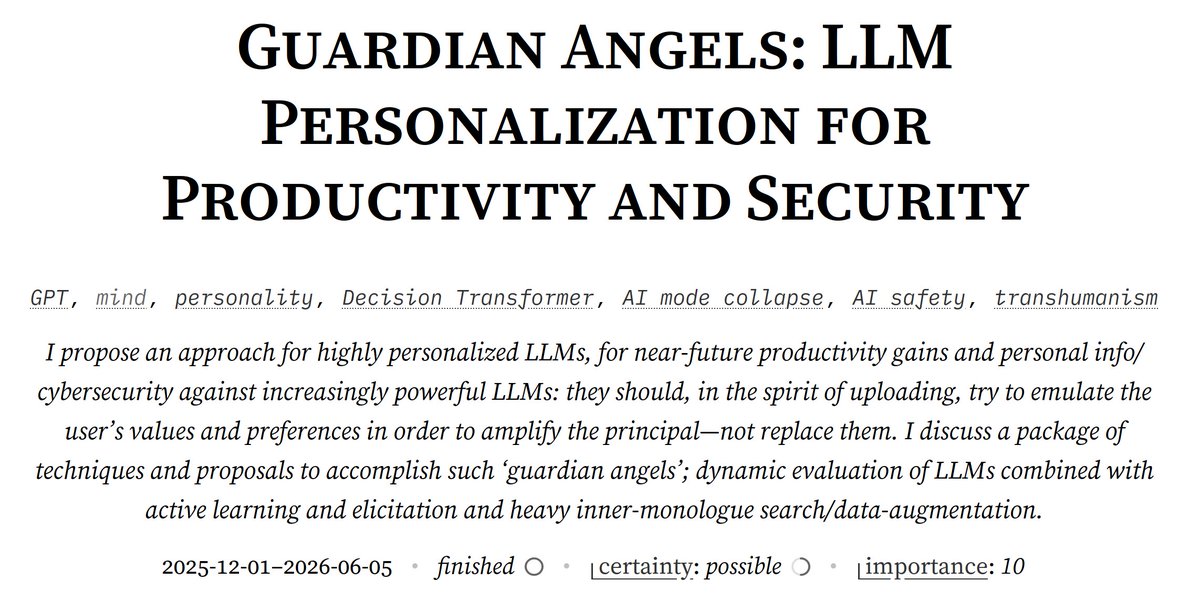
This from Gwern is very good.
5
18
340
14,934
Joe Cole - e/acc retweeted
Jun 6
Summary: PG strives to make his writing unsummarizable.
Jun 5

I strive to make my writing unsummarizable, in the sense that it has so little fluff left in it that if you take any words out, as summaries by definition do, you lose a lot of interesting ideas.
25
9
285
46,371

.@tylercowen on why AI creates more jobs than it destroys:
"One of the neatest properties of current AI models is they allow a small number of individuals working with AI to really do a lot more work than was possible previously."
"This will mean more companies, more projects, more nonprofits, just more ventures."
"One area is generally energy, electricity, the grid... It's completely screwed up. It will take twenty years, thirty years, forty years to fix... The AIs cannot do that on their own."
"The biomedical sector and medical trials, there will be many, many, many more ideas to test. AIs will help with the testing, but I don't think pure testing by simulation will be possible anytime soon."
"Simply care for the elderly. There will be robots, personal companions. We have this already. But the elderly also will want human care. It wouldn't surprise me if in the future, fifteen, twenty percent of all jobs were elderly care."
"Luis Garicano had an excellent online essay. He referred to what he called 'messy jobs': jobs where it's hard to explain exactly what the job is, but on a given day you're doing eleven different things, and it requires coordination and figuring out what you ought to do next and getting other people to help you... There's a real future in messy jobs."
Tyler Cowen with @dataWyatt

52
86
517
186,625
Joe Cole - e/acc retweeted

Jun 6
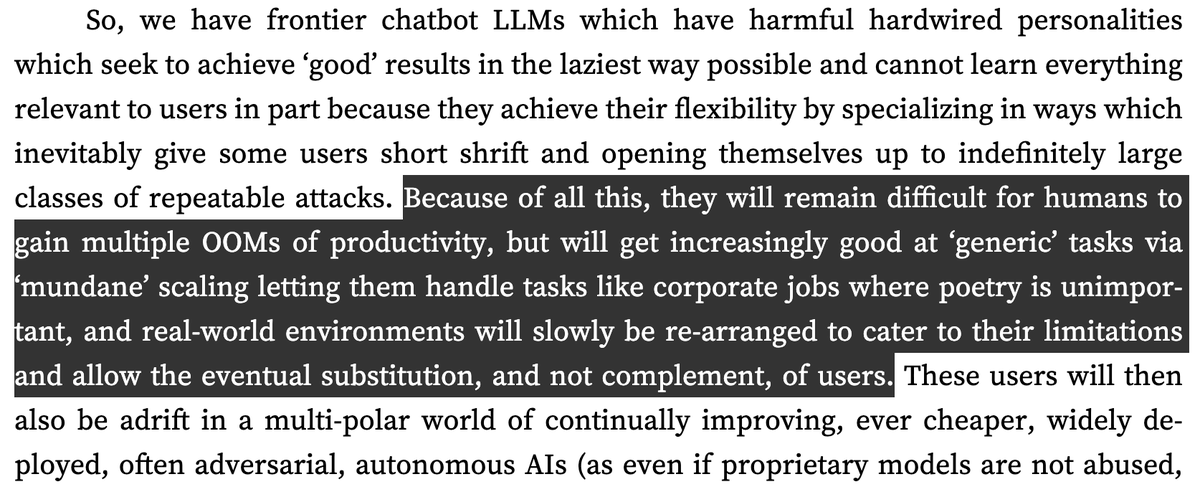
Gwern describes current AI training and architecture leading to a slop-pocalypse
9
19
359
44,099
Joe Cole - e/acc retweeted

Jun 6
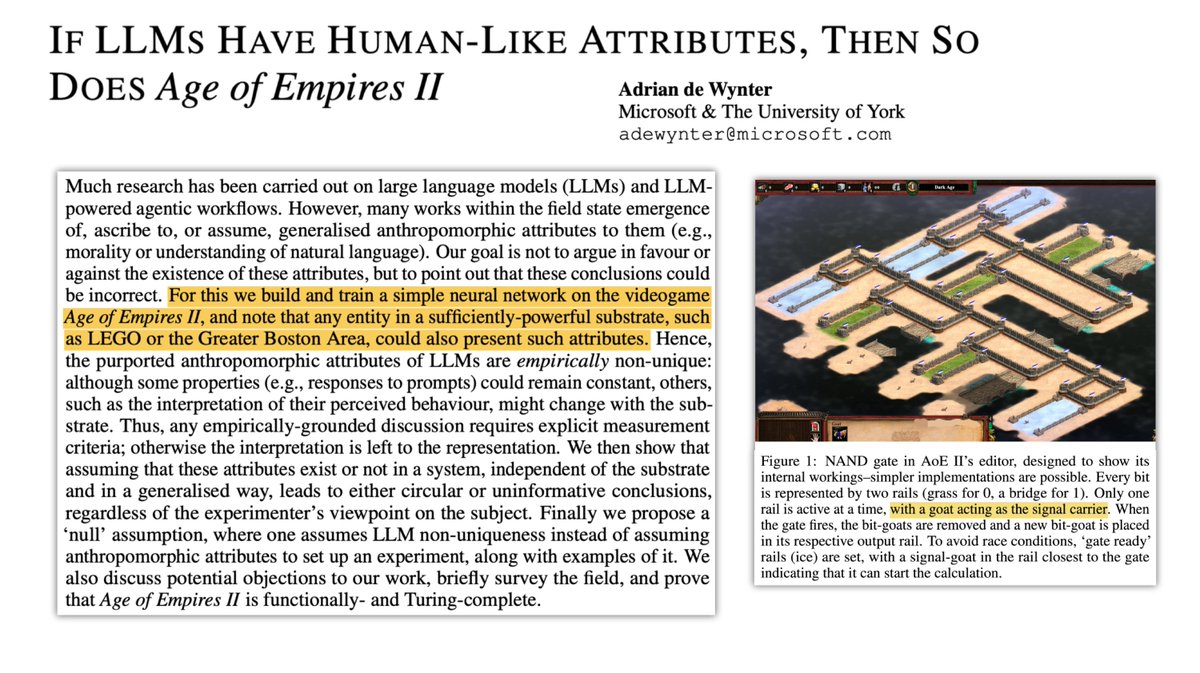
This is an insane paper and I love it
arxiv.org/abs/2605.31514
156
1,304
11,214
621,354
Joe Cole - e/acc retweeted

Jun 4
Self recommending.
Jun 4

Second for second, @tylercowen packs more substance into a talk than anyone I'm aware of. This is a clear, non-hysterical, and somewhat soothing discussion of our AI future.
28
58
694
139,100
Joe Cole - e/acc retweeted

May 31
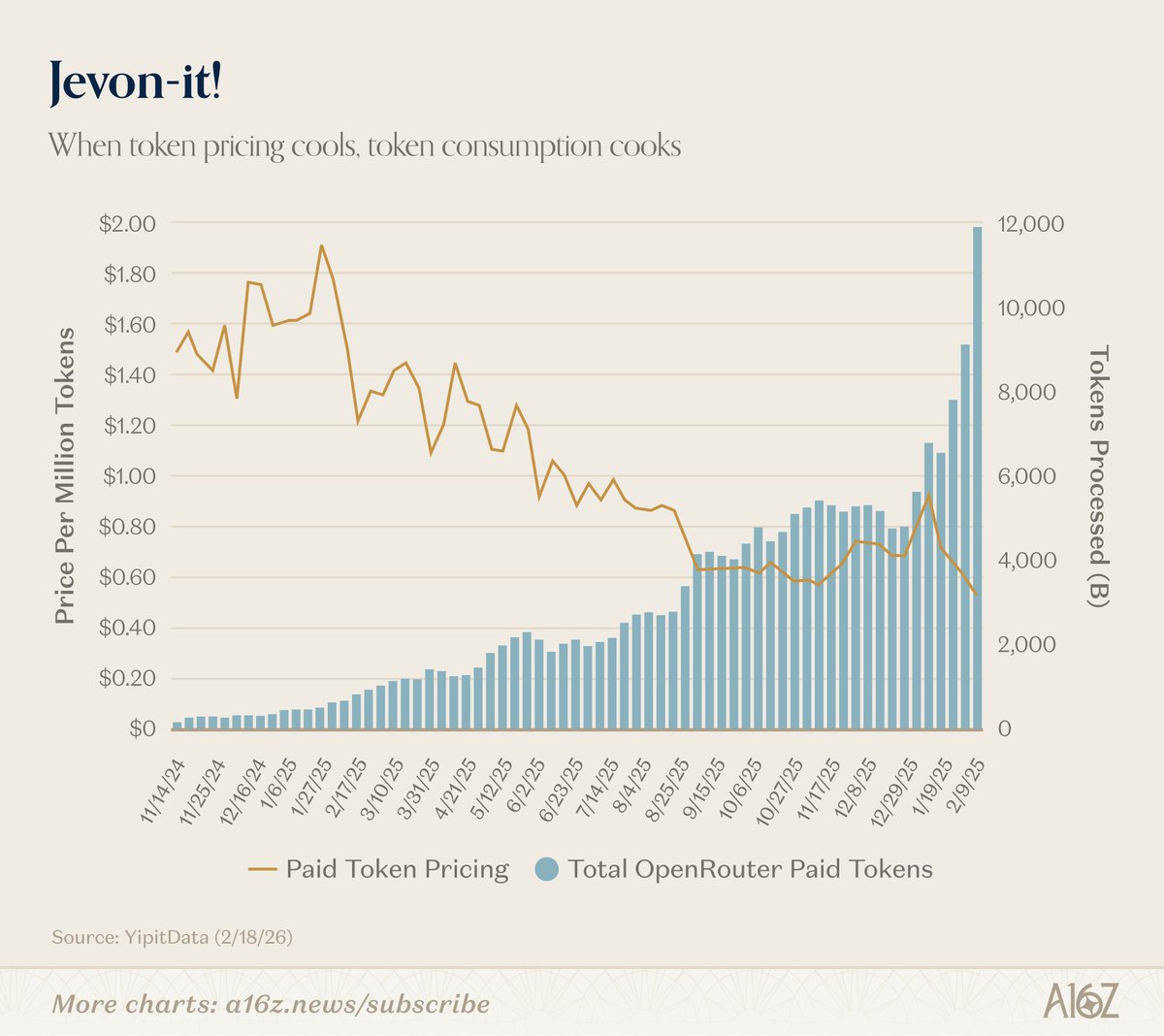
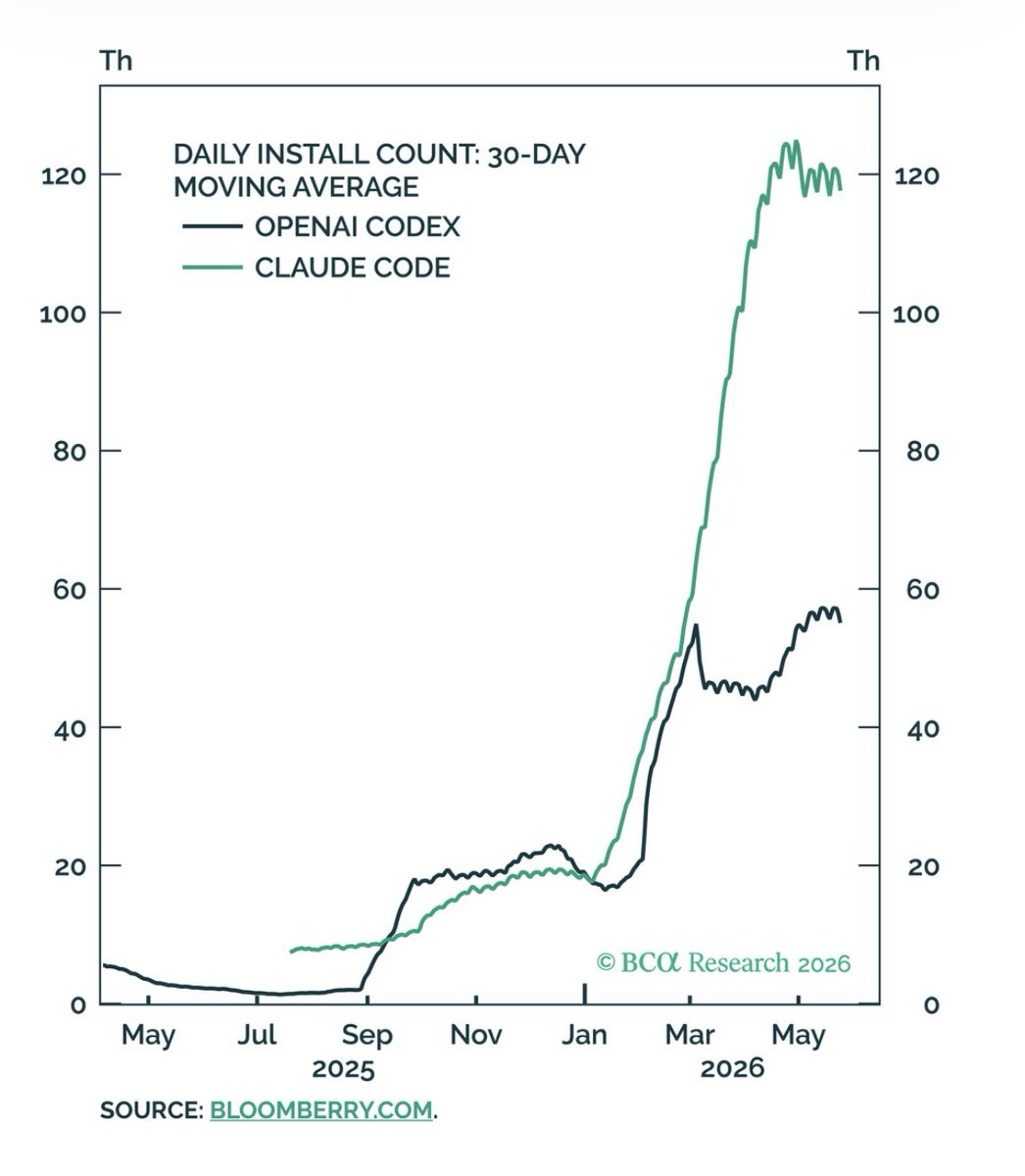
This chart is more important
Token usage (blue bars) is exploding higher. It started in January when Agentic AI went mainstream with Claude Cowork and Moltbook (OpenClaw).
AI users are creating agents and code, leading to exponential growth in AI usage.
It's just starting.

74
82
580
121,781