
63 Photos and videos















Breaking: Geld ist neuerdings essbar.
Jun 13

Es war nie eine Frage, ob genug für alle da ist.
Es ist genug da. Eine Billion Dollar, in einer Hand.
Während alle 15 Sekunden ein Kind an Hunger stirbt.
Nicht der Mangel tötet diese Kinder. Die Verteilung tut es.
13
klick retweeted

This is what the older generations should try and do more often

1,953
20,322
247,952
4,346,309
klick retweeted

May 16
Photographer Phil Thurston shot a wave.
Slowed it down until those few seconds became 40.
Turns out the ocean is doing something extraordinary every single moment.
We're just moving too fast to notice.
574
5,113
37,790
2,077,574
klick retweeted

May 15
⚡️This is the beginning of ChatGPT becoming the operating system for personal financial reality.
The official product is framed modestly: Pro users in the U.S. can connect supported financial accounts, see spending, bills, subscriptions, net worth, and investments, and ask questions grounded in their financial context. OpenAI says accounts connect through Plaid, the rollout is gradual, and the current version can help users understand and plan but cannot move money, pay bills, place trades, file taxes, or act as a financial, legal, tax, or investment adviser.
That limitation is the present boundary, not the final shape.
The real asset is not budgeting. The real asset is behavioral financial context. Once an AI can see income, spending rhythm, subscriptions, debt load, cash buffers, investment exposure, bill timing, recurring leakage, impulse categories, lifestyle creep, and savings failures, it can infer the structure of a person’s life with frightening precision.
Money is not just money. Money is biography.
Spending reveals fear, status, discipline, addiction, family burden, hidden stress, romantic behavior, health pressure, ambition, avoidance, shame, and future probability. A bank app can show transactions. An AI can compress those transactions into a psychological and strategic map.
That is the phase shift.
Mint showed dashboards. Banks showed balances. Advisors gave advice to people with enough assets. ChatGPT can become the interpreter layer for everyone. The user asks, “Why do I feel broke?” and the system can answer from the actual ledger. The user asks, “Can I afford this?” and the model can reason across cash flow, volatility, debt, job risk, future obligations, and behavioral pattern. The user asks, “Where am I lying to myself?” and the money trail answers.
That is powerful enough to be genuinely useful and genuinely dangerous.
Useful because most people do not understand their own financial lives. They live inside fog: subscriptions, small leaks, debt drag, lifestyle creep, bad timing, invisible compounding, fear-based spending, and fake affordability. A good AI can make the hidden pattern legible.
Dangerous because the assistant becomes the trusted interpreter of the person’s financial nervous system. Once it knows the money pattern, it knows the person’s constraint map. It knows what they can buy, what they fear, what they delay, what they rationalize, and what pressure point would change behavior.
That is an insane amount of power.
The moat here is trust plus context. If users connect financial accounts and ChatGPT becomes the place they ask financial questions, banks lose the interpretation layer. Brokerages still custody assets. Banks still hold deposits. Card networks still process payments. Plaid still connects accounts. But ChatGPT starts owning the question: “What should this mean for me?”
That is where power migrates.
The endgame is not a prettier budgeting app. The endgame is AI-mediated financial agency. First it explains. Then it recommends. Then it reminds. Then it warns. Then it negotiates. Then, eventually, with permission and regulation, it acts.
OpenAI is not there yet. But this is the bridge.
The real truth: personal finance is one of the highest-trust, highest-context consumer AI verticals. Whoever owns that layer gets closer to the user than almost any app ever has.
Because the assistant no longer just knows what you say.
It knows what your life actually does.
May 15

A preview for Pro users: a new personal finance experience in ChatGPT.
Pro users in the U.S. can securely connect financial accounts, see where their money is going, and ask questions based on the information they choose to connect.
Your full financial picture, now in ChatGPT.
25
20
211
47,261
klick retweeted

May 9
You only live once, so make sure to spend as much time as possible on your computer. You won’t have access to it when you die
258
3,597
30,328
744,914
klick retweeted

this advice from @MattHennessey in @WSJFreeEx mirrors the advice I receive from my older patients.
I routinely ask my older patients for life advice and repeatedly they tell me “have as many children as you can”

59
325
2,197
477,628
klick retweeted

Apr 21
Sanyo,1988, filmed in Houston and featuring music by Jean-Michel Jarre.
And it is like a mini-movie showcasing the style and ethos of this era.
The music is masterful…
196
1,387
9,930
615,171
klick retweeted
Apr 21
The triangles baked in to reality.
88
302
2,017
92,816
klick retweeted

Apr 14
“UBI” is obviously nowhere near the panacea many of you seem to think it is. The median left-leaning Westerner isn’t angry at Elon Musk because he can buy a million times more groceries than them. They aren’t upset with Palantir because Peter Thiel can afford to eat a thousand burgers to their one. This whole thing is in large part post-material. It’s the hierarchy & subordination they’re uncomfortable with. They feel their dignity is being trampled and their autonomy progressively diminished – rightly or wrongly they feel politically disenfranchised and stripped of a say over the future. Offering a guaranteed food budget and a pod to spend the night in return for further disempowerment is incredibly tone-deaf and should be expected to provoke more, not less, outrage.
215
408
5,096
495,087
klick retweeted

Apr 18
Overheard in Silicon Valley: "UBI is for farm animals."
521
437
5,141
435,520

Never.
Apr 14

this parent is using 11 openclaw agents to raise her kids
ironically it’s the most effective ai agent setup i’ve seen:
- the agents home-school her kids. she takes a picture of a curriculum, agent creates a personalised lesson plan, teaches kids, tracks progress
- voice-only. she leaves agents voice notes to do her job (code), order groceries etc
- agents schedule “ignore kids” time for her to let them be bored
- agents run on several mac minis, do all the house admin and free up her time
i know this sounds dystopian af but tbh if used correctly this could do the opposite and free you up to hang with the kids
i think the scheduled ignore time it a little much tho
26
klick retweeted

Apr 13
Well there goes my 200 EUR tax advisor expense thanks to Claude
mcpmarket.com/en/tools/skill…
16
31
350
44,035
I could be better at 5. But basically: same. I also stay in the same terminal tab pretty much all the time. No hopping.

For engineers that are struggling to use (or see the value in) agent assisted coding, give this a try:
1. Pick a domain and language that you know really well. You should be confident that you could implement a good version of whatever you want to build, given enough time.
2. Write a design document (with the same care that you would for a team of humans). Include things like tech choices and invariants.
3. Ignore people talking about one-shot prompting, agent swarms, etc, and start by telling the agent to read your doc and confirm its understanding.
4. Ask the agent to make an implementation plan, decompose the plan into work items and record them (I use a local issue tracker.. separate post)
5. Read every diff. Correct and critique the agent's work as if you were mentoring a junior developer.
For senior engineers, this isn't that much different than what you probably do anyway, except that the agent is always available, faster at typing, and happy to do painful refactors without complaint.
22
klick retweeted

Despite being just one cell, Lacrymaria olor is a formidable predator that hunts and consumes other microorganisms.
📽: James Weiss
202
1,003
8,016
1,805,428
klick retweeted

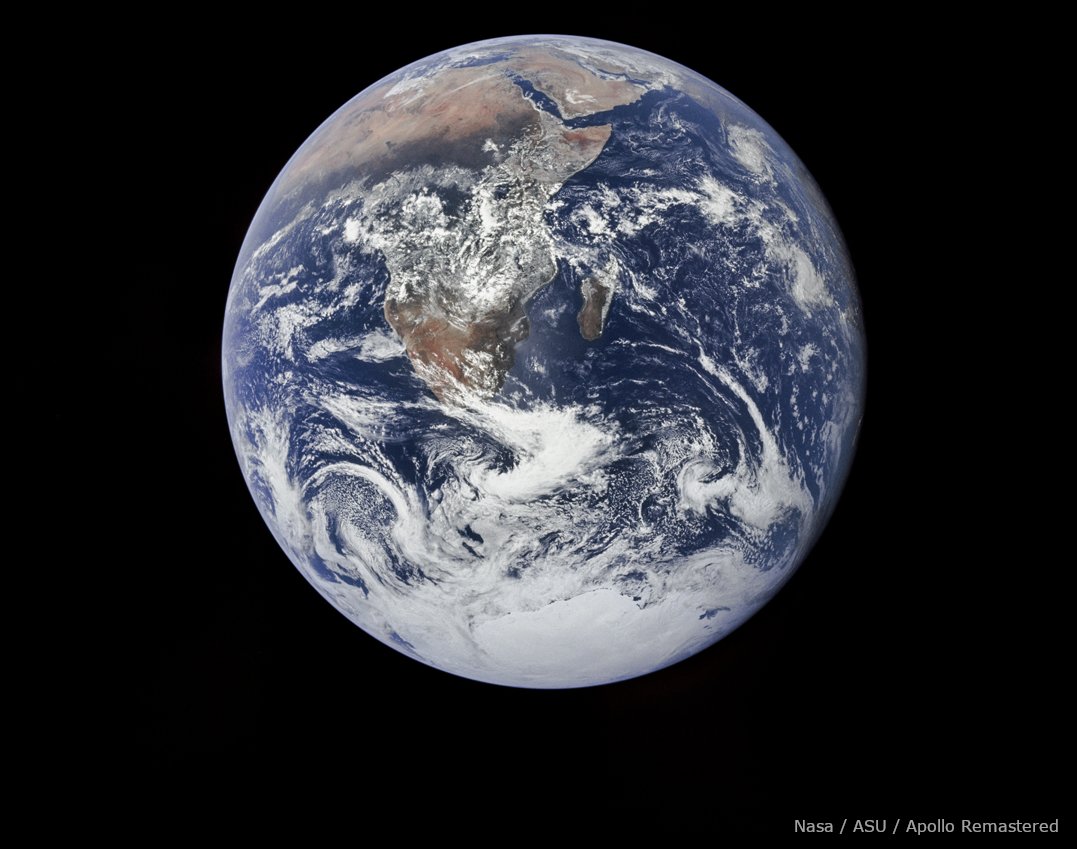
Left - Apollo 17, 1972
Right - Artemis II, 2026
Two photographs taken by one of us, of all of us, over half a century apart.
What's changed?

3,120
8,720
79,953
12,058,173