
@NorthumbriaUni 📖 Physiology of Exercise | UKSCA & BASES accredited 🏋🏻♀️🚴🏼♂️🏃♂️| Football coach @NUFCWomen Academy ⚽️
Joined May 2011
- Tweets 4,947
- Following 676
- Followers 1,104
- Likes 4,082
139 Photos and videos



Kev Thomas retweeted

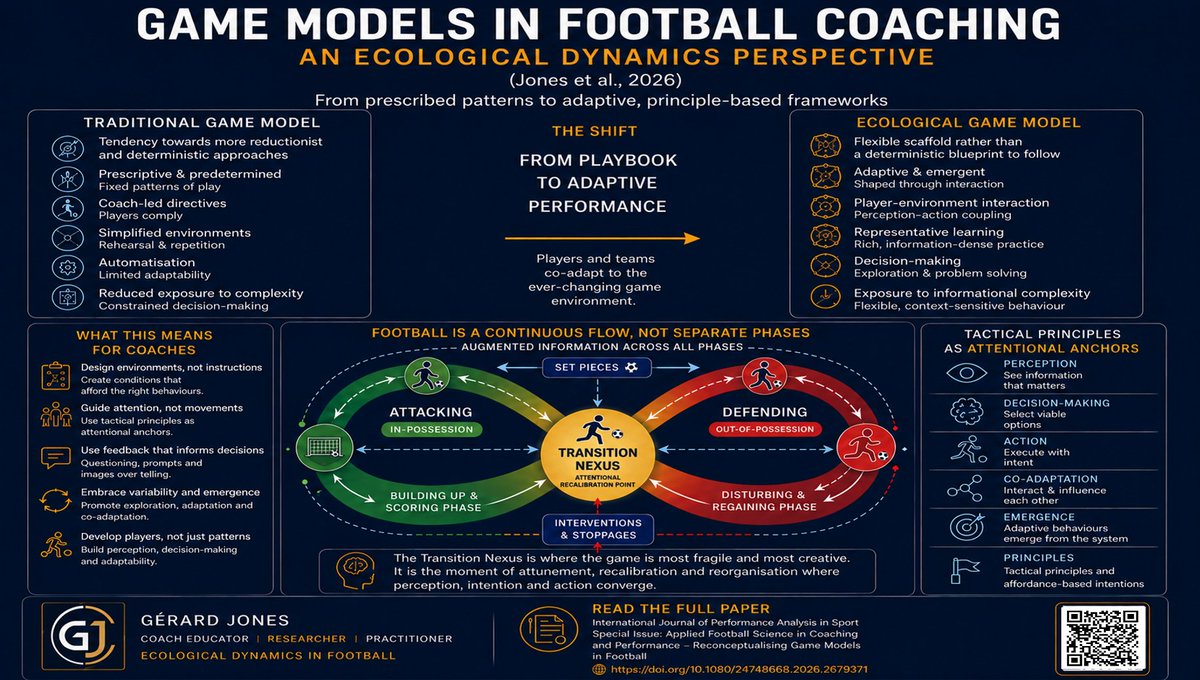
🚨 𝑹𝒆𝒄𝒐𝒏𝒄𝒆𝒑𝒕𝒖𝒂𝒍𝒊𝒔𝒊𝒏𝒈 𝑮𝒂𝒎𝒆 𝑴𝒐𝒅𝒆𝒍𝒔 𝒊𝒏 𝑭𝒐𝒐𝒕𝒃𝒂𝒍𝒍 - new publication
⚽️ 𝑮𝒂𝒎𝒆 𝑴𝒐𝒅𝒆𝒍𝒔 𝒊𝒏 𝑭𝒐𝒐𝒕𝒃𝒂𝒍𝒍 𝑪𝒐𝒂𝒄𝒉𝒊𝒏𝒈: 𝑨𝒏 𝑬𝒄𝒐𝒍𝒐𝒈𝒊𝒄𝒂𝒍 𝑫𝒚𝒏𝒂𝒎𝒊𝒄𝒔 𝑷𝒆𝒓𝒔𝒑𝒆𝒄𝒕𝒊𝒗𝒆
From rigid playbooks and prescribed patterns ➡️ to adaptive, principle-based frameworks shaped through player-environment interactions.
Excited to share our latest paper has now been published in the 𝐈𝐧𝐭𝐞𝐫𝐧𝐚𝐭𝐢𝐨𝐧𝐚𝐥 𝐉𝐨𝐮𝐫𝐧𝐚𝐥 𝐨𝐟 𝐏𝐞𝐫𝐟𝐨𝐫𝐦𝐚𝐧𝐜𝐞 𝐀𝐧𝐚𝐥𝐲𝐬𝐢𝐬 𝐢𝐧 𝐒𝐩𝐨𝐫𝐭 as part of the special issue: Applied Football Science in Coaching and Performance.
The paper explores how Game Models in football can be reconceptualised through an ecological dynamics perspective, moving beyond rigid systems and prescriptive structures toward adaptable frameworks that support perception, decision-making, problem-solving, and player-environment interaction.
A huge thank you to everyone who has contributed to the discussions, challenges, and ideas that have shaped this work, and what this could mean for future research in:
• Coach Education
• Practice Design
• Methodology Departments
• Feedback & Coach Behaviour
• Talent Development
• Performance Analysis
• Game Models
This paper positions its contribution as a conceptual framework intended to guide future research and applied practice.
What may be most original within this paper is the attempt to reconceptualise Game Models in football, not as a deterministic blueprint of pre-planned patterns and prescribed solutions, but as a flexible scaffold that supports adaptive player and team behaviours within the evolving constraints of competition.
The paper also introduces the idea of:
• 𝑻𝒂𝒄𝒕𝒊𝒄𝒂𝒍 𝒑𝒓𝒊𝒏𝒄𝒊𝒑𝒍𝒆𝒔 𝒂𝒔 𝒂𝒕𝒕𝒆𝒏𝒕𝒊𝒐𝒏𝒂𝒍 𝒂𝒏𝒄𝒉𝒐𝒓𝒔 that guide perception and action within game-specific situations.
• The Transition Nexus, where moments of transition become attentional recalibration points requiring adaptation, reorganisation, and co-ordination.
• Coach feedback as player challenges, where questions, prompts, and informational guidance are used to shape players’ visual search and affordance perception without prescribing ready-made answers.
From this perspective, Game Models become tools for designing representative learning environments that support perception-action coupling, player autonomy, adaptability, and co-adaptive team behaviours.
Read here:
tandfonline.com/doi/full/10.…
Jones, G., Kubayi, A., Stone, J. A., & Davids, K. (2026). Game models in football coaching: an ecological dynamics perspective. International Journal of Performance Analysis in Sport, 1–18. doi.org/10.1080/24748668.202…
#FootballCoaching #CoachEducation #SkillAcquisition #EcologicalDynamics #GameModel #FootballResearch #PerformanceAnalysis #TalentDevelopment #CoachingScience #Football #PrincipledGameModels #Affordances #PracticeDesigns #CoachingFeedback
2
27
109
9,479

Kev Thomas retweeted

Apr 11
If I had my way, every grassroots session would be a selection of games - from 1v1 to the largest game format of that age group
Then add some out-numbered games too
Coaching ☑️
Apr 11

This has got to be the question that gets asked the most during grassroots sessions!
Players love to play the game, so we should give them game time!
There are lots of ways to get your topic outcomes out while playing SSG'S, and players love it, so it's a win win situation!
6
17
159
39,038
Kev Thomas retweeted

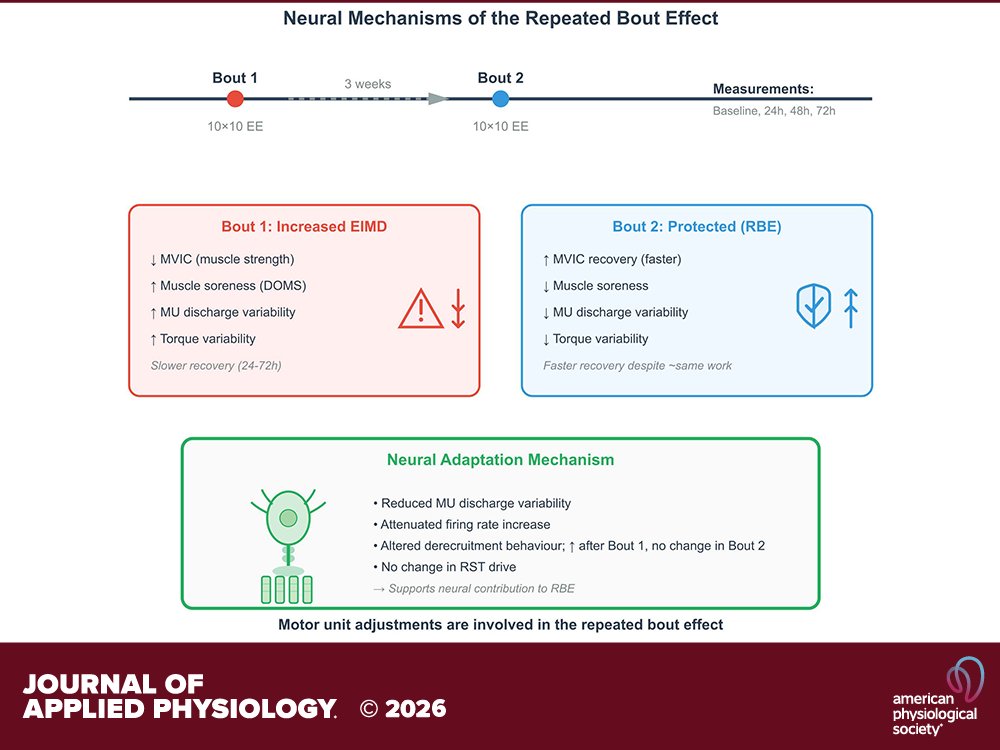
Research Article by O Hayman et al. (@kthms @GlynHowatson @goodall_stuart @mredumartinez @paulansdell @JSkarabot) #Motorunit #adaptations contribute to the repeated bout effect following damaging #resistanceexercise
ow.ly/auIL50YewRj
7
10
1,214
Kev Thomas retweeted

Jan 19
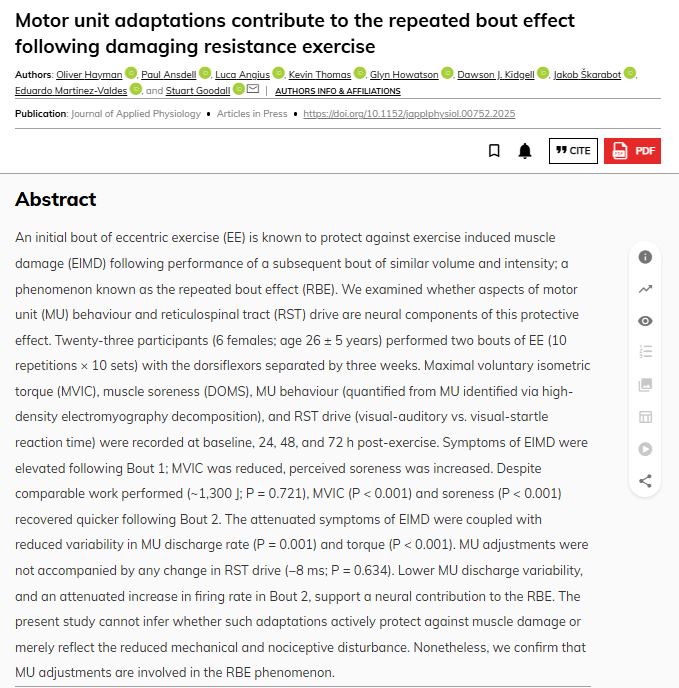
🚨 New paper alert! 🚨
The final study from my PhD 🎓
Using high-density EMG, we show that motor unit behaviour changes during recovery from damaging eccentric exercise and contributes to the repeated bout effect, without accompanying changes in reticulospinal drive in the TA.
1
4
12
462
Kev Thomas retweeted

16 Dec 2025
Thanks to all the people who are supporting me by condemning the hacking of my previous account @Paulmcg8 and following my new account @PaulMcG8 - please pass on details to others who may previously followed my account - let’s get that 40,000 connections back! 🔥⚽️


15 Dec 2025

Below is an example if one of my previous posts on my Paulmcg8 account but now shows up as a post on another person’s account - I am having difficulty getting through to X to get this sorted out - does anyone know the best way to contact a human person to speak to at X
4
40
106
36,587

12 Dec 2025
Only a few days remain to apply for this fully funded PhD with @NorthumbriaUni in partnership with @NUFCWomen . This is a rare opportunity to work with two leading organisations and contribute meaningful research to elite performance environments!
findaphd.com/phds/project/op…
172
Kev Thomas retweeted

25 Nov 2025
The Depth of an Exercise.
I want to introduce you to Cone Nick.
This is not a real person.
It’s a persona.
This type of coach builds the most professional-looking training sessions.
Thousands of cones.
Hurdles.
Small goals.
Big goals.
It looks like Premier League training.
/
Cone Nick is always hunting for new drills.
He always has the best training equipment.
He needs at least half the pitch for his training.
He’s on the pitch an hour before training, already setting everything up.
He loves creating the most special training for his players.
Which is a good thing.
But he overlooks what actually matters:
Developing players.
/
Player Development is not about how many cones you use.
Or how fancy your exercises are.
Player development is adapting to football overload.
That’s it.
When you play games, players will have problems.
That’s called a football problem.
And then you help them adapt.
Once they do, they’re better players.
And we coaches can design games.
To focus on a specific problem.
/
Cone Nick isn't lazy.
But he focuses his energy and attention on the wrong things.
He focuses on more.
We focus on less.
Everything we need exists inside simple games.
But to extract what is inside the game, we need to go deep.
We don’t get there by adding cones.
To get there, we need two steps:
/ Step 1:
The first step is to cut 90% of our exercises.
So we can focus on a few core games.
And no, the power isn’t the core game itself.
The power of the core games is your ability to extract what players need.
A good coach can extract the football problem the players need inside 4 cones.
And help them adapt to this problem in a short time.
/ Step 2:
To learn this ability, you need step 2:
Years and years of iterations.
With each iteration, you learn what works and what doesn’t.
Over time, you create clear input-output equations:
“Coaching Action A → Creates this football problem”
“Coaching Action B → Helps players solve this football problem.”
And these are endless small coaching actions you can learn.
They allow you to extract EVERYTHING you want inside 4 cones.
1
5
26
4,784
Kev Thomas retweeted

20 Nov 2025
Another awesome opportunity coming out of @NorthumbriaUni and @NUFCWomen for an applied sport science PhD!
If anyone is keen or interested in hearing more about the opportunity or my own experiences of the embedded PhD, please reach out!! 💪🏻⚫️⚪️
20 Nov 2025

A unique opportunity for an outstanding candidate to complete a collaborative PhD with @NUFCWomen & @NorthumbriaUni with world-class academics & practitioners ⚽️🎓 applications welcome, deadline mid-December!
@KirstyHicks88 @thomaskeeney26
findaphd.com/phds/project/op…
1
270
20 Nov 2025
A unique opportunity for an outstanding candidate to complete a collaborative PhD with @NUFCWomen & @NorthumbriaUni with world-class academics & practitioners ⚽️🎓 applications welcome, deadline mid-December!
@KirstyHicks88 @thomaskeeney26
findaphd.com/phds/project/op…
2
1
492
Kev Thomas retweeted

21 Oct 2025
🚨✍️NEW ARTICLE
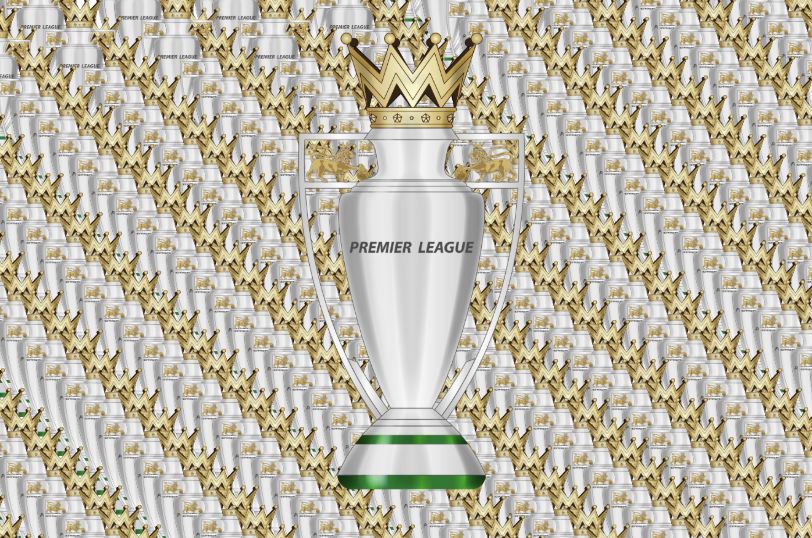
CHILDREN OF PREM
Cultural Replication and the Tactical Industrial Complex
Link to the article below 👇
12
28
148
96,833
Kev Thomas retweeted

21 Sep 2025
Football is simple.
You don’t need endless new drills. You need to demand higher standards in the ones that actually matter.
9
72
5,348
Kev Thomas retweeted
5 Sep 2025
Anyone keen to learn more about the position and hear about my own experiences of balancing a PhD within the environment at Newcastle, please reach out!!
A great opportunity to join a forward thinking department and football club!
5 Sep 2025
More amazing opportunities to work with @NUFCWomen and @NorthumbriaUni on a collaborative PhD! ⚽️🎓 Details on the advert. Retweets welcome 😊
findaphd.com/phds/project/op…
3
4
3,344
5 Sep 2025
More amazing opportunities to work with @NUFCWomen and @NorthumbriaUni on a collaborative PhD! ⚽️🎓 Details on the advert. Retweets welcome 😊
findaphd.com/phds/project/op…
3
3
3,810
Kev Thomas retweeted

25 Mar 2025
I’ll shout about this all day night because it deserves to be shouted about. Wonderful example of a great coach in action.
25 Mar 2025

Saw this earlier and just thought it was a brilliant video, a great example of proper coaching.
“You’ve gotta miss with it now to score with it when you’re older.”
1
4
63
11,462
Kev Thomas retweeted

21 Feb 2025
We’re introducing new steps to improve grassroots youth football from the 2026/27 season.
Find out more ⬇️
37
59
177
184,199
Kev Thomas retweeted

22 Oct 2024
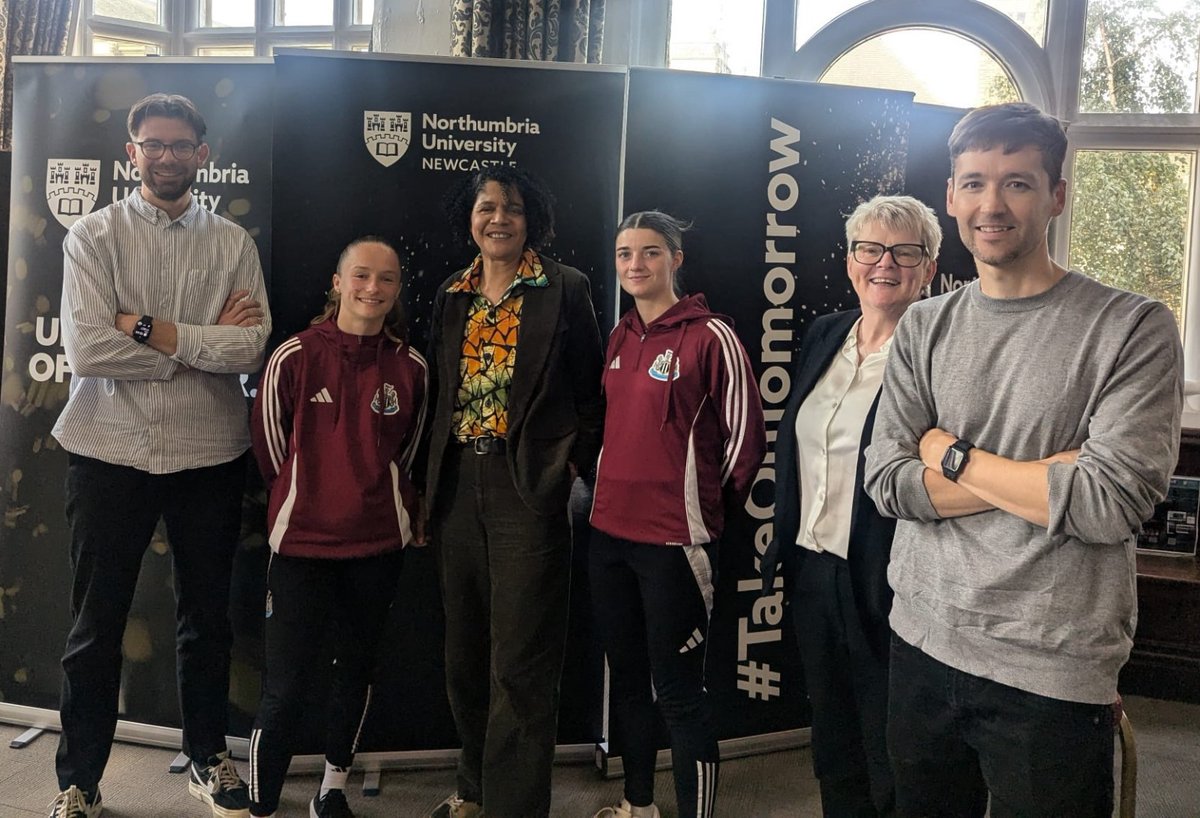
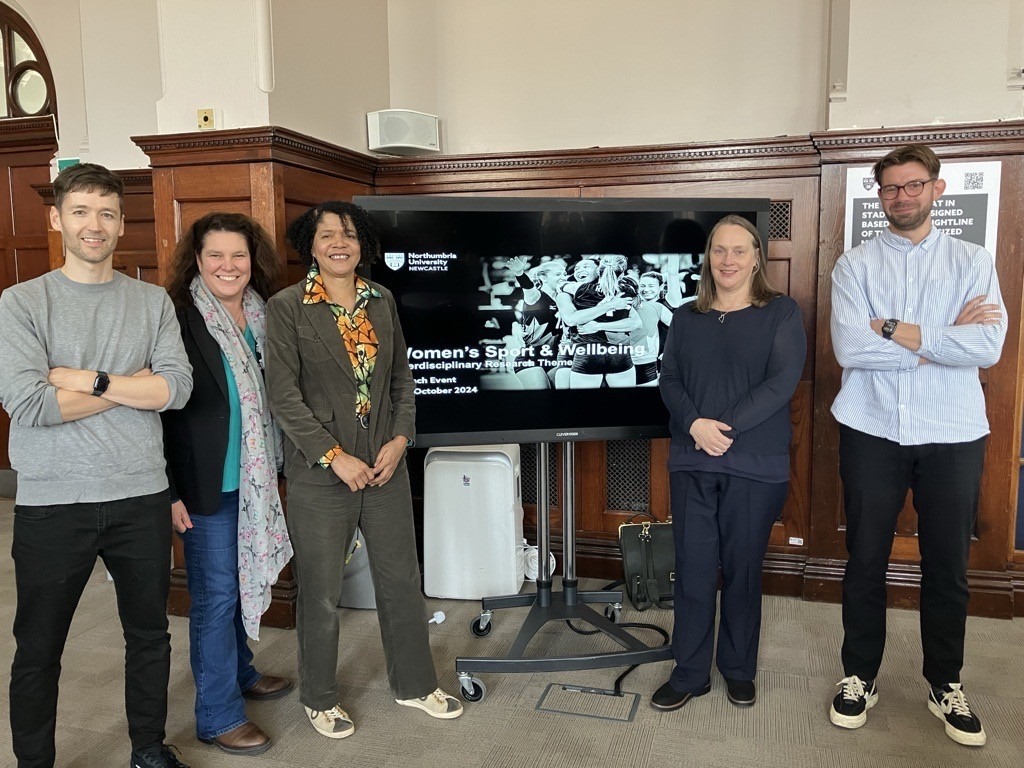
Great to celebrate the launch of @NorthumbriaUni’s Interdisciplinary Research Theme “Women’s Sport and Wellbeing” in Newcastle.
Women in the Northeast spend more time in poor-health than in the rest of Britain. Redressing this gap is key to economic transformation of our region.
3
18
1,879
Kev Thomas retweeted
2 Oct 2024
Absolutely thrilled to have defended my PhD thesis
Huge thanks to my supervisor @goodall_stuart and all the team at @NeuroFuncNU for such an enjoyable three and half years🎉
Thank you to my examiners @mredumartinez and @gdtempest for such an enjoyable viva experience!
9
2
42
2,776
Kev Thomas retweeted

25 Aug 2024
6,622
32,751
195,315
20,813,208
Kev Thomas retweeted

15 Jul 2024
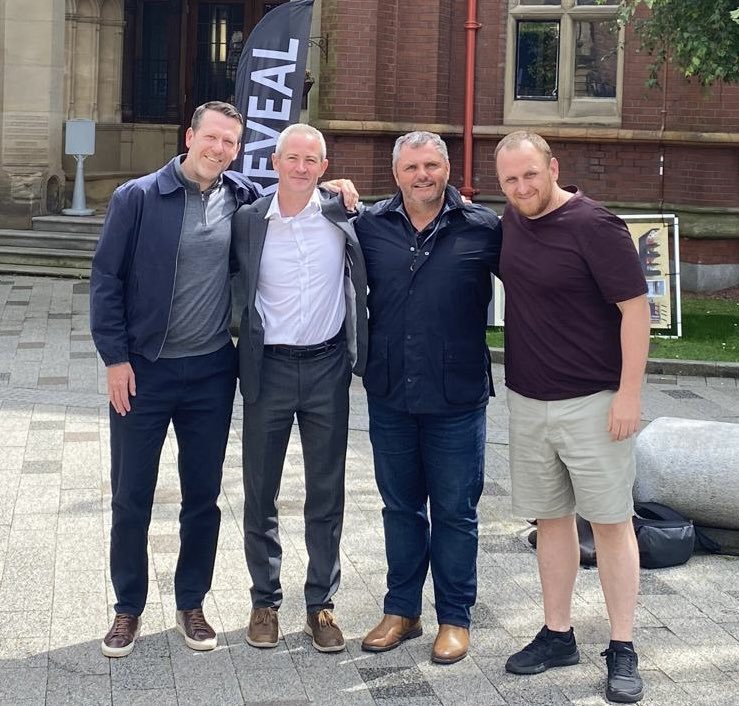
Delighted to have passed my PhD viva earlier today😊 (with minor corrections)
It’s been a long 4.5 year journey
Thank you to Prof Warren Gregson from Manchester United & Manchester Met Uni and Dr Phil Hayes for a challenging but thoroughly enjoyable viva voce. And to Dr Penny Rumbold for chairing
Thanks as always to my brilliant supervisory team Professor Glyn Howatson, Dr Kevin Thomas, Dr Jamie Tallent, & Ross Bennett MSc, along with Dr Stuart Goodall for assisting.
And thanks to QPR FC & Northumbria University for facilitating the PhD journey ⚽️ 👨🏫
And of course, @BrinRajathurai for keeping me sane at home!
I think it’s my turn to look after the children now for a while 😉 🍾 🥂
@GlynHowatson @jamietallent @kthms @Ross201189 @goodall_stuart @spswgreg @phil_hayes_13 @Penny_L_S_Evans @NUSportEx @QPR

38
6
271
20,767