
Joined November 2024
- Tweets 388
- Following 37
- Followers 16
- Likes 6,992
3 Photos and videos


Jun 14
India will not change until Congress realizes that the common thread between Muslim voters and Hindu UC is that they are general category and that they can stitch a common narrative of India first without economic leftism that appeals to the general category.
1
2
13
Jun 14
Now I wonder if they will join foreign forces. I shudder to think - maybe that was the intention all along? Another remittance income scheme..
22 Jan 2023

Agniveer recruitment system likely to help India raise it's own private military corporations like Wagner, Blackwater in the future.
13
Free Range retweeted

Father of Sanjeev Sanyal was an IAS.
Father of Shamika Ravi was an IAS.
Both of them are member of Economic Advisory Council to the PM.
Both of them NEVER suffered poverty.
According to them - "rupee touching 100 is just a number and nothing to worry about".
103
1,375
6,851
156,805
Free Range retweeted

Jun 2
India is entering that extremely dangerous zone where sons and daughters of several top policymakers, industrialists, civil servants, defence officials and politicians are settled in America, or are citizens of America.
How can they ever take on America when push comes to shove? They'll never ever push back, given direct family interests.
China sidelines all such officials as a principle. No compromise.
But here? They're leading the show.
204
2,193
9,388
297,318
May 30
What utter nonsense…
May 23

Alliances are key to Delhi's deep tech ambitions rammadhav.in/articles/allian…
9
May 22
All Indians know the politician directly responsible for this. His legacy will forever be tarnished and the reputation of the surname destroyed forever.
May 21

🇮🇳🩸👩🏽🌾Les travailleuses de la canne à sucre en Inde SE FONT RETIRER l’utérus pour ne plus manquer une journée de travail.
Dans le district de Beed (Maharashtra), des ouvrières de la canne à sucre subissent des hystérectomies pour ÉVITER LES ABSENCES liées aux règles, aux grossesses ou aux fausses couches. Dans le système de travail « jodi », les couples sont surendettés et TRAVAILLENT jusqu’à 14 HEURES PAR JOUR, sans congés ni protections, poussant certaines femmes à voir cette opération comme une solution pour continuer à travailler.
Malgré des enquêtes menées en 2019 révélant plus de 13 000 HYSTÉRECTOMIES dans le district de Beed et des promesses de réformes, les militants dénoncent un manque de changements concrets. Les conditions de travail extrêmes, le MANQUE D’HYGIÈNE et la pression de certains médecins FAVORISENT ces opérations.
Les autorités locales, sous pression médiatique, ont lancé de nouvelles enquêtes et PROMETTENT DES MESURES, mais les activistes estiment que le système reste inchangé.
(The Guardian)


16
May 10
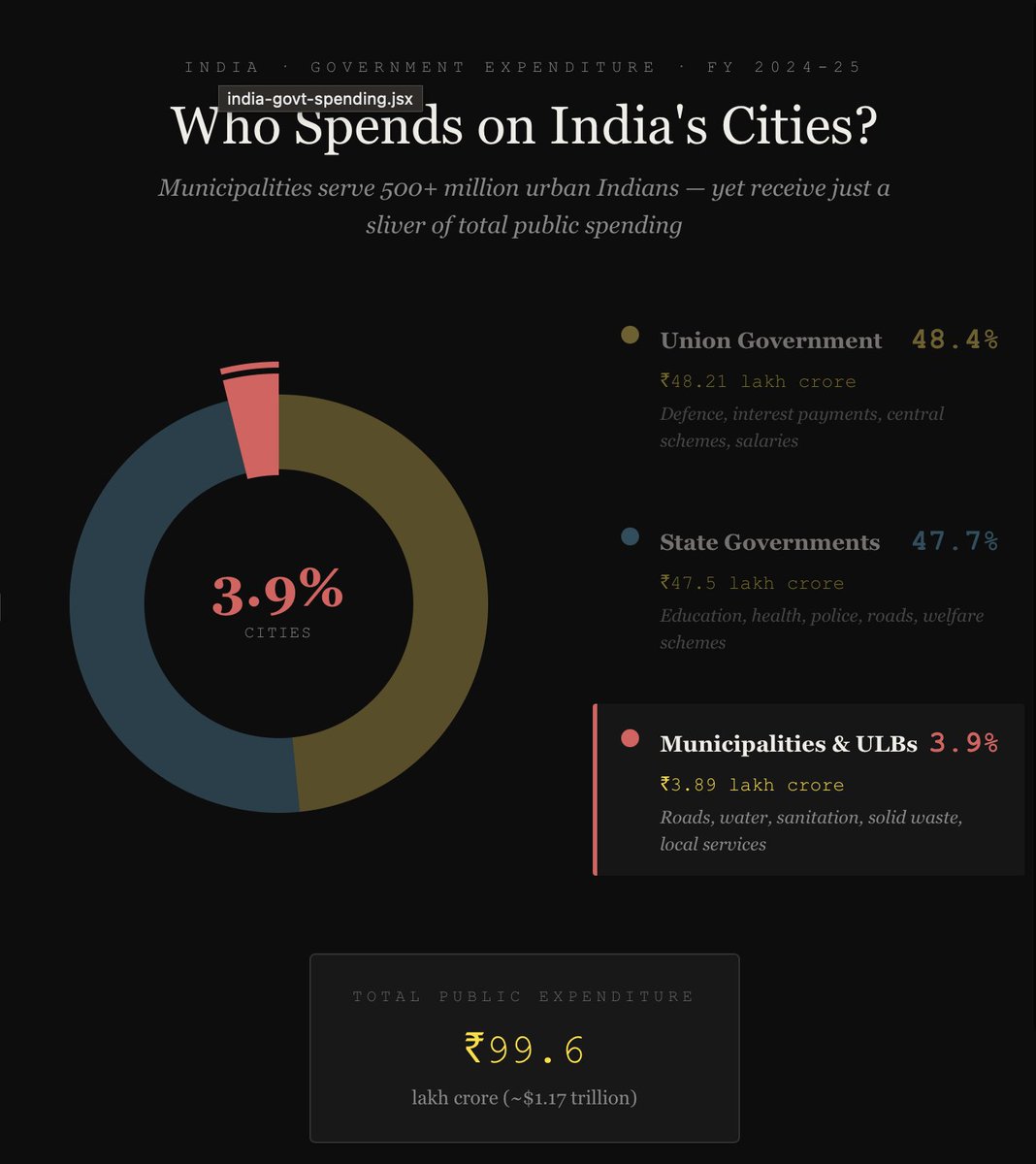
Bet on all urban stocks. Available at reasonable valuations today. This will get fixed in the next 10-15 years..

This is why India does not even have one functional Metropolis
Mayors in India are toothless
We must decentralise spending and decision making back to the cities
1
19
May 10
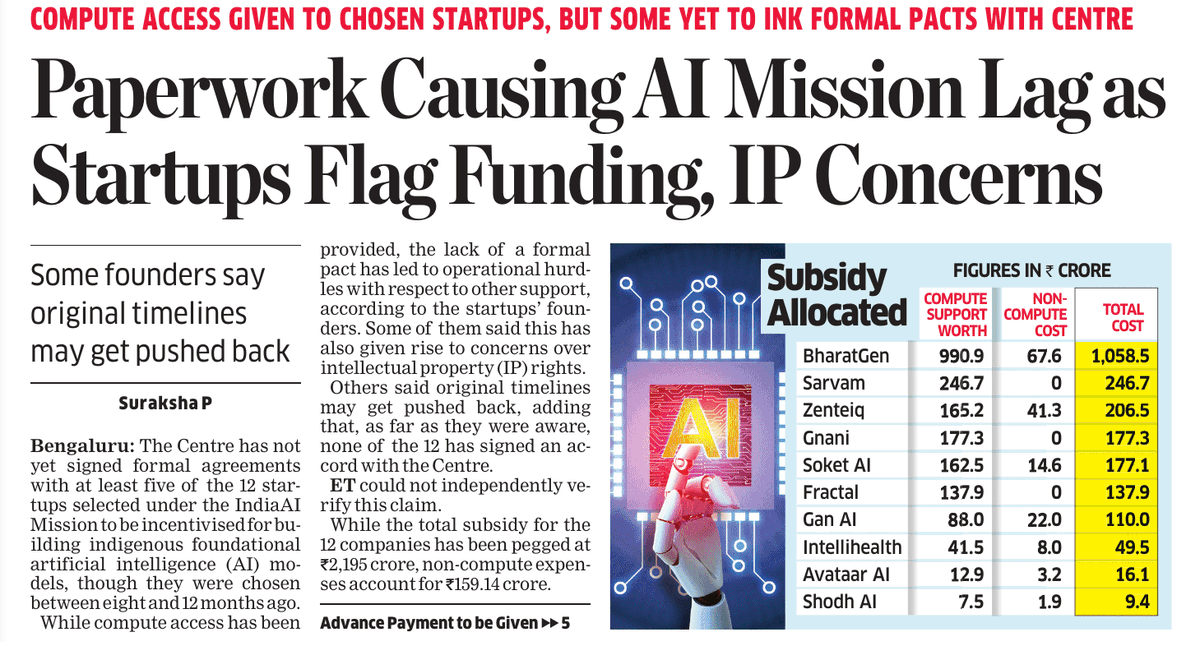
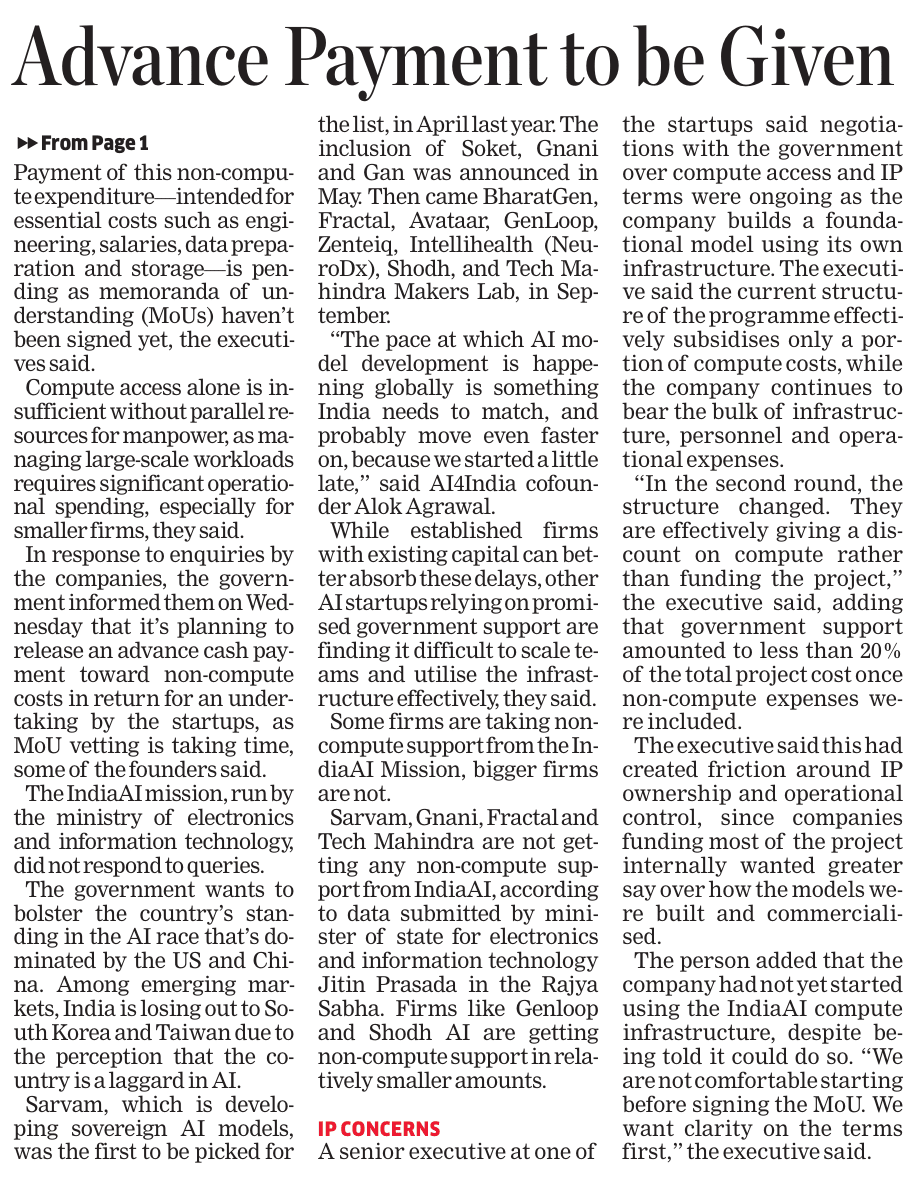
Maybe it's just me but I think selection based ways to incentivize R&D (PLI or this AI startups) is prone to cronyism (maybe that's the goal). I know a startup in this list whose father is in the central govt at a senior position. Maybe they were selected fairly, but I don't know
May 10

The Centre hasn’t yet signed formal agreements with at least five of the 12 startups selected under the @OfficialINDIAai mission to be incentivised for building indigenous foundational AI models, though they were chosen 8-12 months ago.
m.economictimes.com/tech/art… @ETtech @EconomicTimes
1
4
1,126
May 9
When men choose not to believe in God, they do not thereafter believe in nothing, they then become capable of believing in anything - G.K. Chesterton. What an irony that the land of Periyar has given rise to these false gods.

My wife tells me that the maid working at our home was crying uncontrollably in the afternoon as Vijay is 'not being allowed' to become Chief Minister. My wife had a very difficult time in consoling her.
My driver's wife who is also pregnant has been crying for the same reason for the last few days.
I don't even know what to say.
May be I'm living in a different world.
2
85
May 8
True…

When Indian moids are with white foids, they're rarely matched in class.The royal ones end up with ones from middle class average families n not fellow royals, and normie UMC ones end up with one from redneck/hillbilly/white trash background never with coastal UMC or elite
106
May 1
I’ve now read more positive comments on the US economy from Indians rather than Americans

In the sea of mediocre investment/ economic thought I see around ( but overhyped on Indian SM), @rab9604 Amit Bhartia ( and his ex GMO colleague Alvaro) stand out. ABSOLUTELY BRILLIANT Stuff you haven't heard before.
Read Reflect Rotate.
linkedin.com/pulse/war-build…
16
Apr 28
Communal hatred! This has always existed and will continue to exist. Soon it will arrive in UK where you live…
22
Apr 6
This is a lesson to your community. You should have left behind caste and worked towards uniting every caste under 1 Hindu umbrella the moment you saw the British enter the country. क्षमा शोभती उस भुजंग को, जिसके पास गरल हो,
उसको क्या जो दंतहीन, विषरहित, विनीत, सरल हो।
Apr 6

Tamil Brahmins are religious and traditional yet materialistic and progressive people.
We aren't made for politics, because we lack roughness, toughness, street-smartness and goondaism, includes me too.
This is the sad reality of goodness. Intellectualism is of no use in real life. The only thing you do is contribute to society. And this society doesn't give a flying f*ck about you. It gives back to those who breed, do politics, and are violent.
38
Apr 6
Locating all major installations within South India is a mistake. South loves outsiders - BLR tech scene, Chennai auto, Kerala Gulf. Hence, should keep a few installations in the west for checks and balances. I guess we learnt the lesson in semiconductors..

This is serious.
AD 1 isn’t Brahmos but our phase 2 BMD missile and that is very very serious
42
Apr 5
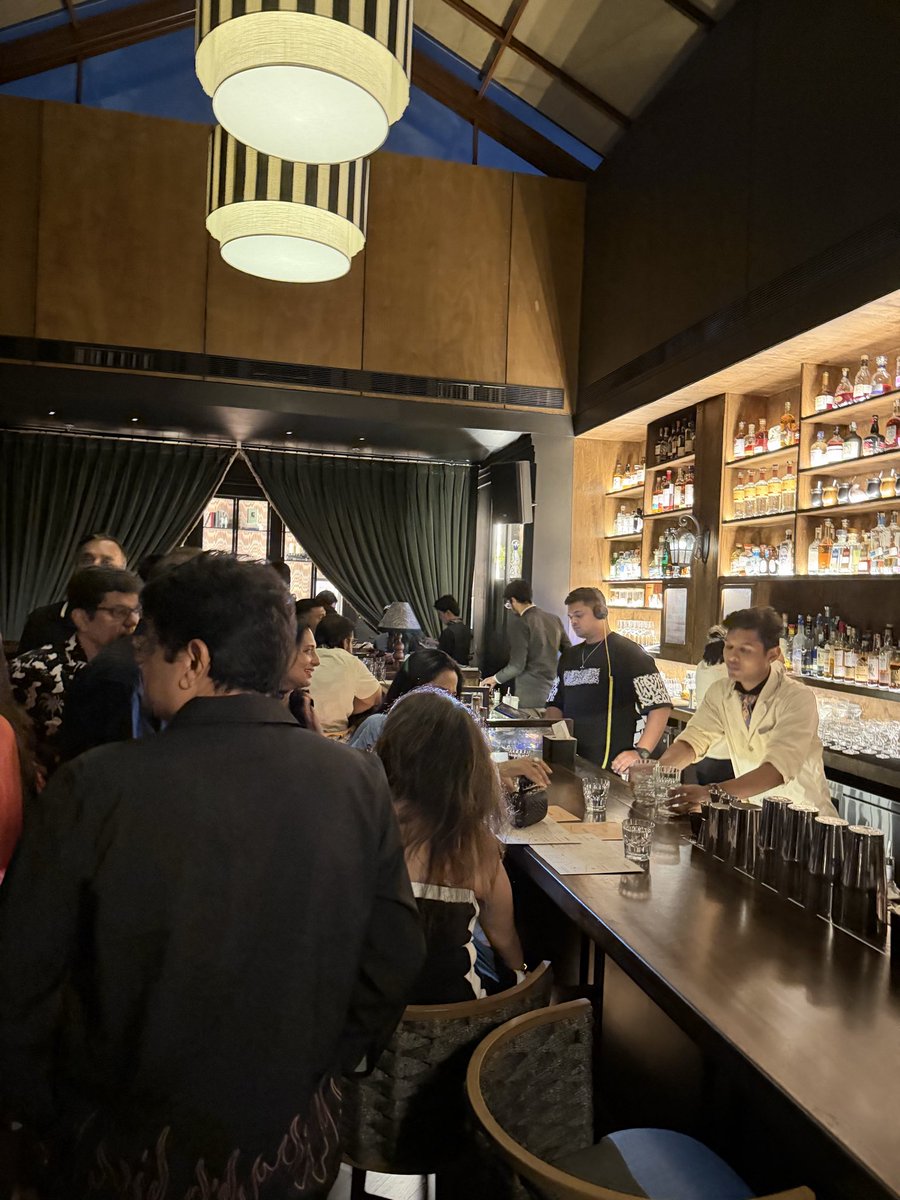
BLR is full of pretentious shit like this. WTF is “speakeasy” - A US term that doesn’t apply here just like his startup. Stay away from startups here….
Apr 5

Bangalore’s speakeasy scene is quietly world-class if you know where to go.
My current favourites :
Una Hacienda
My top pick. The La Bamba Cocktail has become my favourite, and the food actually keeps up (rare for speakeasies).
403 Forbidden Bar
The Picante is a standout. Menu has a twist on everything - Chicken Ghee Roast is insane. Also, decor feels completely different from the usual speakeasy template.
Soka Bar
Probably the most famous right now. Great energy, great service, and you almost always meet interesting people.
ZLB23
My OG. Expensive (Leela effect), but super exclusive - top-tier crowd and consistently great cocktails.
Bar Spirit Forward
Hardest reservation in the city. But when you get in, everything hits: cocktails, food, service.
2
35
Free Range retweeted

Le Grand Fromage 's piece
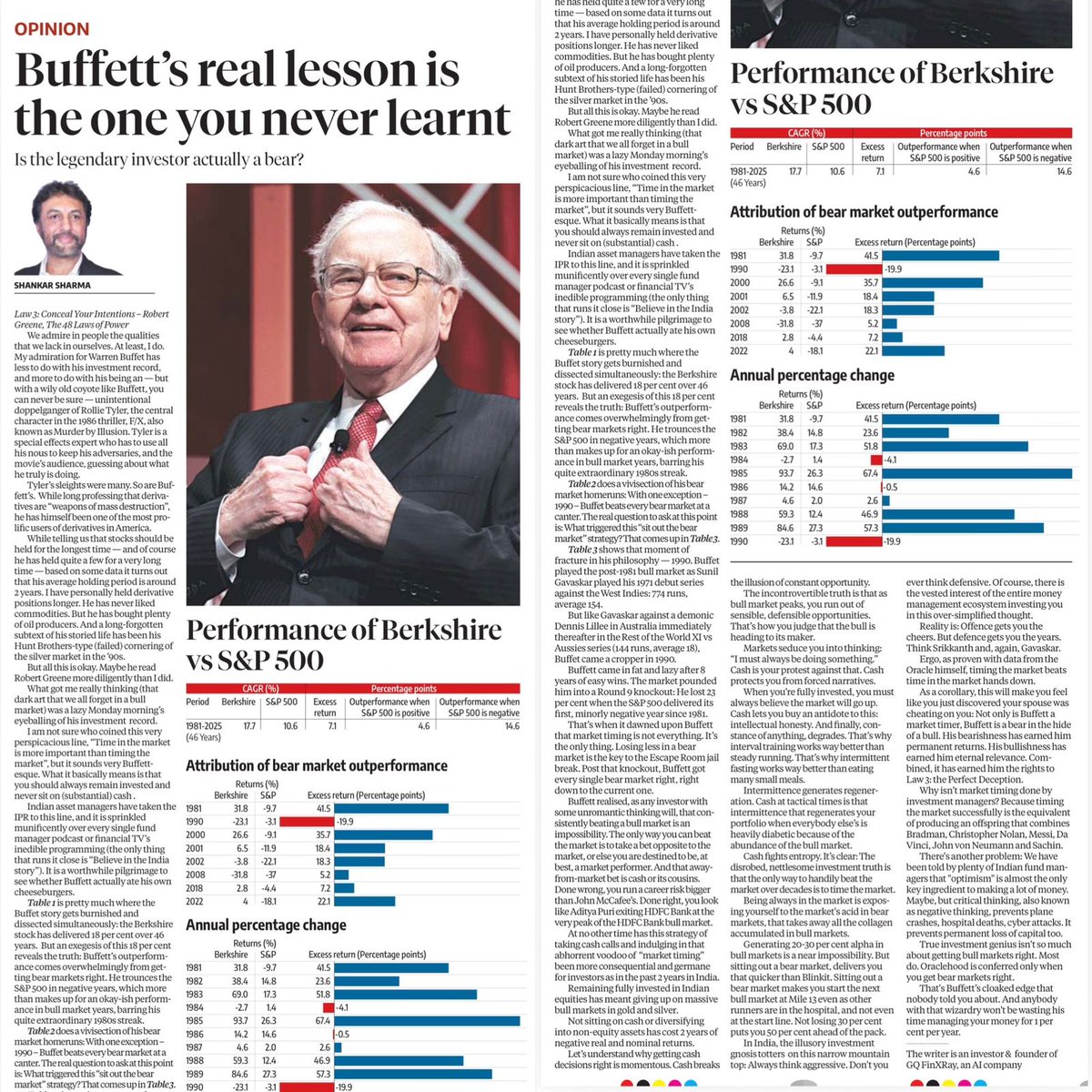
" BUFFETT'S REAL LESSON IS THE ONE YOU NEVER LEARNT" in Business Standard.
Without timing the market, you can't make significant excess returns. Remaining always fully invested/ always equities, simply doesnt work.
Markets can be timed. Not doing so, reverts Indian equity returns to just ~8-10% in INR.
Adjust for tax (~15%), then volatility (~10%), and you don't even make FD Returns.
That too, after so much jhanjhat.
But folks who know the Inner Game of timing cycles and asset classes, won't do it for aam janata, that too for a measly 1-2%.
They 'd rather do it for themselves for 50%.
62
108
612
50,769
Apr 1
Reputation means white man’s approval..
Mar 31

I'm from North India
These Tamil guys are single handedly saving our country's reputation worldwide
2
146
Free Range retweeted

Mar 31
Banned on X
Banned on Insta
Banned on Facebook
Banned on YouTube
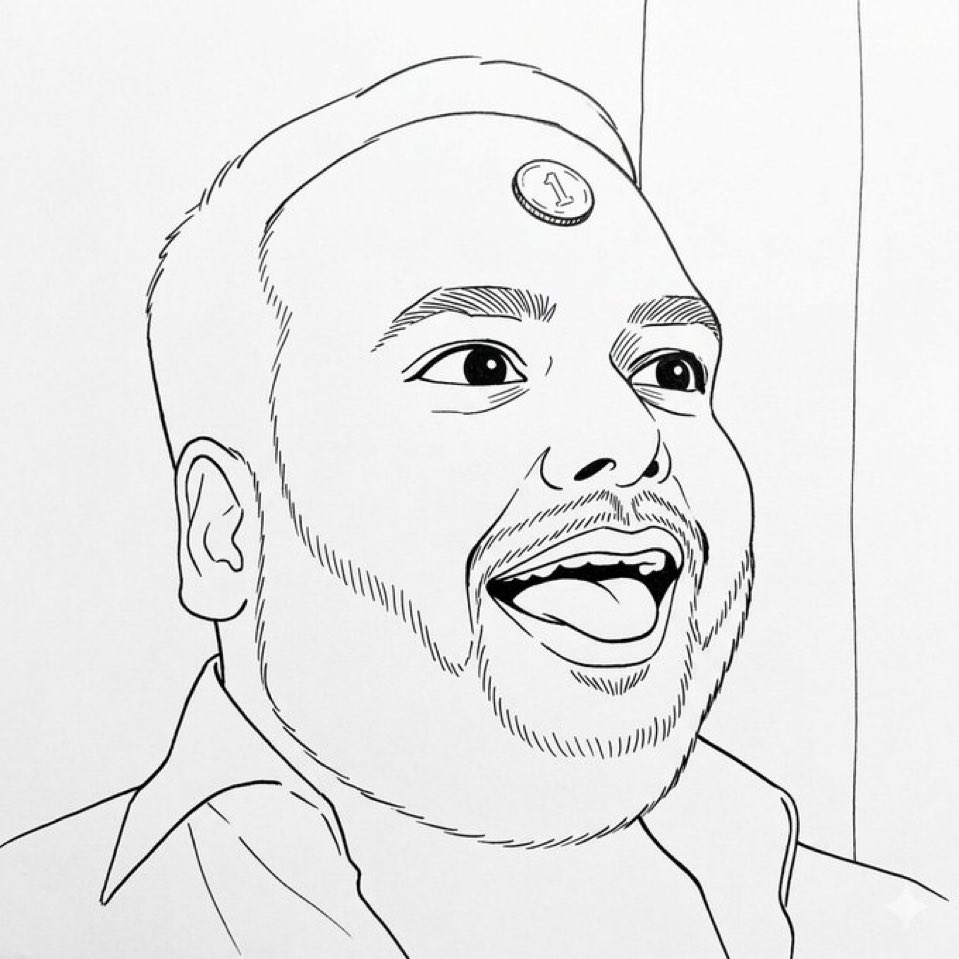
The most GOATED video in India, Shook the entire Govt.
323
8,539
47,238
771,660
Free Range retweeted

28 Aug 2025
The Betrayal That Sealed Spain’s Fate: The Role of Treachery in the Muslim Conquest of 711
In the spring of 711 CE, the Iberian Peninsula, then under the rule of the Visigothic Kingdom, underwent a seismic shift that reshaped its history for centuries. The Muslim invasion, led by Tariq ibn Ziyad under the command of Musa ibn Nusayr, governor of North Africa for the Umayyad Caliphate, swiftly toppled the Visigothic regime and established Al-Andalus, a Muslim-ruled territory that endured for nearly 700 years. While military strategy and the weakness of the Visigothic state played significant roles, the conquest’s astonishing speed and success hinged on a critical factor: betrayal. Local figures, most notably Julian, the governor of Ceuta, alongside disaffected Visigothic nobles, opened the door to the invaders. This article delves into the multifaceted dimensions of this treachery, its motives, logistical contributions, intelligence, and psychological impact, and explores how it ensured the fall of Visigothic Spain.
A Kingdom Divided
By the early 8th century, the Visigothic Kingdom was teetering on the edge of collapse. Internal strife, economic decline, and a fragmented military left it vulnerable. The ascension of King Roderic (Rodrigo) in 710, following the death of King Wittiza, sparked fierce opposition from nobles loyal to Wittiza or his sons. These divisions created a power vacuum that the Umayyad Caliphate, fresh from its conquest of North Africa, was poised to exploit. The Muslim forces, led by Tariq, saw an opportunity to cross the Strait of Gibraltar and strike a kingdom in disarray. Yet, their success depended not just on military might but on the cooperation of those within the Visigothic ranks who turned against their own.
Julian of Ceuta: The Central Betrayer
At the heart of the betrayal narrative stands Julian, the governor of Ceuta, a Visigothic-controlled port city in North Africa. Ceuta was a strategic linchpin, serving as a gateway across the Strait of Gibraltar to the Iberian Peninsula. Historical sources, including later Muslim chronicles like those of Ibn Abd al-Hakam and Christian accounts such as the Chronicle of 754 (*), paint Julian as a pivotal figure who facilitated the Muslim invasion.
Motives for Betrayal
Julian’s reasons for turning against Roderic remain a mix of fact and legend. One enduring story, found in later Muslim sources like Al-Maqqari, claims that Roderic dishonored Julian’s daughter, sometimes called Florinda or La Cava, who had been sent to the royal court in Cordoba. This personal affront allegedly drove Julian to seek revenge. While this tale may reflect propaganda to justify the conquest, it underscores the personal animosities that fueled betrayal. More plausibly, historians suggest Julian was aligned with Wittiza’s faction and opposed Roderic’s contested rise to power. As governor of Ceuta, Julian wielded significant influence and likely saw collaboration with the Muslims as a means to undermine his rival and secure his own position.
Julian’s Contributions
Julian’s betrayal was multifaceted, providing the Muslims with critical support that ensured their success:
Logistical Aid: Julian supplied Tariq with ships from Ceuta’s fleet, enabling the Muslim forces to cross the Strait of Gibraltar. While the Muslims, particularly the Berbers of North Africa, had some naval capabilities, Julian’s ships allowed for a swift and discreet crossing, minimizing the risk of Visigothic naval resistance. Ceuta’s strategic position as a launchpad eliminated the need for the Muslims to rely solely on their own limited fleet.
Intelligence: Julian provided invaluable information about the Visigothic Kingdom’s vulnerabilities. He shared details about the disposition of Roderic’s forces, the internal divisions among the nobility, and the kingdom’s weakened state. This intelligence allowed Tariq to plan his campaign with precision, targeting a moment when the Visigoths were least prepared.
Strategic Advantage: By controlling Ceuta, Julian ensured the Muslims could land on the southern coast of Spain, near what is now Gibraltar, without immediate opposition. His cooperation removed potential barriers, such as coastal defenses, that could have delayed or disrupted the invasion.
Visigothic Nobles: Betrayal from Within
Julian was not alone in his treachery. The Visigothic Kingdom’s internal divisions provided fertile ground for further betrayals, particularly among nobles opposed to Roderic. The faction loyal to Wittiza or his sons, including figures like Akhila and Ardabast, saw the Muslim invasion as an opportunity to weaken their rivals.
Treachery at Guadalete
The decisive moment came at the Battle of Guadalete (or Rio Barbate) in July 711. Roderic’s army, though larger than Tariq’s force of approximately 7,000 men, was decisively defeated. According to the Chronicle of 754 and later sources, a critical factor was the desertion of Visigothic troops during the battle. Nobles aligned with Wittiza’s faction, possibly including his brothers or their supporters, either abandoned Roderic or refused to engage, leaving the king’s forces fragmented. This betrayal turned the battle into a rout, with Roderic likely killed in the fighting or shortly after. The collapse of Visigothic resistance at Guadalete opened the door for the Muslim advance.
Collaboration After the Battle
The betrayal extended beyond the battlefield. Following Roderic’s defeat, many Visigothic nobles and local leaders chose to cooperate with the Muslims rather than resist. Cities like Toledo, the Visigothic capital, and Seville surrendered with little or no fighting. In some cases, local bishops or nobles negotiated terms with the Muslims, securing their status or property in exchange for submission. For instance, tradition holds that Seville’s bishop facilitated the city’s surrender, easing the Muslim takeover. This pattern of collaboration ensured that the conquest proceeded with remarkable speed, as resistance crumbled across the peninsula.
The Impact of Betrayal
The treachery of Julian and the Visigothic nobles was a linchpin of the Muslim conquest, shaping its outcome in profound ways:
Military Collapse: The desertion at Guadalete left Roderic’s army unable to mount an effective defense. A united Visigothic force might have prolonged the conflict, but the betrayal ensured a swift Muslim victory.
Logistical Ease: Julian’s ships and control of Ceuta provided a secure and efficient crossing, bypassing potential naval or coastal defenses. This logistical support was critical for a force that was relatively small and operating far from its North African base.
Strategic Intelligence: The information supplied by Julian and other collaborators allowed Tariq to exploit the Visigoths’ weaknesses, striking at a moment of maximum disarray.
Psychological Advantage: The knowledge of internal divisions, reinforced by the active support of betrayers, boosted Muslim confidence. Conversely, it demoralized Visigothic resistance, as nobles and cities saw little hope in opposing a seemingly unstoppable force.
Rapid Conquest: Post-Guadalete, the willingness of local leaders to negotiate or surrender accelerated the Muslim advance. Major cities fell without prolonged sieges, consolidating Al-Andalus within a few years.
Conclusion: Betrayal as the Key to Conquest
The Muslim conquest of Spain in 711 was not merely a triumph of arms but a masterclass in exploiting internal divisions. Julian of Ceuta, with his ships, intelligence, and strategic access, opened the gateway to the invasion, while disaffected Visigothic nobles undermined resistance from within. Their treachery, driven by personal vendettas, political ambitions, or hopes of surviving under new rulers, ensured the rapid collapse of the Visigothic Kingdom. The establishment of Al-Andalus, a cultural and intellectual beacon for centuries, was built on this foundation of betrayal. Its legacy endures as a testament to how internal discord can reshape the destiny of nations.
(*) Chronicle of 754. Translated by Kenneth Baxter Wolf. In Conquerors and Chroniclers of Early Medieval Spain, 111–160. Liverpool: Liverpool University Press, 1990.
5
57
138
56,716