
this is a walk in the park
Joined November 2008
- Tweets 5,117
- Following 838
- Followers 505
- Likes 943
62 Photos and videos










Len Mountain retweeted

22 Feb 2025
Fun fact of the day: @zoodotdev has generated 526,977 UNIQUE prompted cad models, of those 416,482 have completed (meaning we generated something, might have been a turd but it was something)
can only get better from here 😅 bear with us
3
1
43
6,098
Len Mountain retweeted

20 Feb 2025
It is odd, or inevitable, that at the historical moment human population on this planet begins to collapse, we are creating billions of artificial minds to hand off and take over our economy? The great Handoff has begun. kk.org/thetechnium/the-hando…
6
19
86
14,293
Len Mountain retweeted

14 Feb 2025
Last Friday, I had one of the most intellectually amazing experiences of my career:
I got to do the following Idealcast interview (yes, they're coming back!) of Dr. Carliss Baldwin, the William L. White Professor of Business Administration, Emerita at the Harvard Business School.
Among many things, she is the researcher who pioneered the study of modularity and how it increases option value — and that there are cases such as IBM and Amazon that it creates so much surplus value it can "blow entire industries apart."
Her mentor was Dr. Robert C. Merton. He worked with Drs. Myron Scholes and Fischer Black, who the Nobel Prize in Economics in 1997. Their insights showed how to precisely value options, which are the right but not the obligation to take an action in the future.
Dr. Baldwin used the same principles of option theory to explain value creation in modular systems and organizational design.
In my quest to understand how to see what it looks like when option value is created (especially for GenAI!), and how one would measure it, I was able to ask her, as well as Dr. Steven Spear (who had Dr. Baldwin as his advisor when he worked on his doctoral dissertation at HBS), and Steve Yegge, famous for his 20 years of work at Amazon and Google.
My goal for this amazing 2 hour interview was to explore the following:
- Option Value in Manufacturing: How the Toyota Production System creates and measures value through modularity — what does creation of option value look, how does one measure it? How does that relate to things like doing 4,000 daily andon cord pulls through localized line stops and rapid experimentatio?.
- Option Value in Hardware Development: How did the IBM System/360 project generate 25x value creation through 25 modules and 25 parallel experiments, revolutionizing computer architecture. How do we replicate the calculations she did to get 25x higher value accreditation?
- Option Value in Software Architecture: How did Amazon's transformation from monolith to microservices in the early 2000s create massive option value through team independence and rapid deployment capabilities?
- Option Value in Modern Development: How GenAI is creating new forms of option value by giving developers "more swings at bat" and enabling rapid exploration of alternatives.
- Option Value Theory: How Merton's work on temporal options and Baldwin's work on spatial modularity combine to explain value creation across domains.
It was such an amazing conversation, to hear how their collective experiences give life to theory and vice versa. The dialogue between manufacturing floors, software architectures, and financial models was unflippingly amazing.
But the coolest part was that the simple formula that concretized everything! I think this is something that every technology leader needs to know!
** Understanding Option Value Through NK/T and σ
Incredibly, there’s a simple formula that ties all of these concepts together. It’s NK/T and σ
N = number of modules that can be worked on independently
K = number of parallel experiments that can be run on each module
T = time required for each experiment cycle
NK/T represents how many independent experiments you can run in parallel divided by how long each takes. For example, in the IBM System/360 case, they had ~25 modules (N) and could run ~25 experiments per module (K), massively accelerating their ability to innovate compared to a monolithic design.
(Note that K is within one module. So at IBM, the total number of experiments possible was actually much larger - potentially 25 × 25 = 625 experiments across the whole system. Note how number of modules multiplied by the total number of parallel experiments rises exponentially!!)
Similarly at Amazon, they went from one module (the monolith) to tens of modules, to hundreds and eventually thousands. The deployments per year went from hundreds in 1999 and almost ground to a halt, doing only tens of deployments per year in the early 2000s. This led to the "Thou shalt use APIs" Jeff Bezos memo which Steve Yegge told the world about. This:
- Increased N: The number of independent modules grew exponentially
- Increased K: The number of parallel experiments that could be performed per module
- Massively reduced T: Going from quarters to do an experiment to maybe days or maybe even hours
Given the hyper-competitive e-commerce marketplace in the early 2000s, σ was high. We did a back of the napkin calculation and guess that the option value created was much higher than even the System/360 project in 1960s. (Some argue that AWS was a byproduct of the modularization effort.)
** The Role of Uncertainty (σ)
σ (sigma) represents volatility or uncertainty, ranging from 0 to potentially infinite, where:
σ = 0 means perfect knowledge/certainty
In this case, option value is zero because you know exactly what to do
You don't need the "right but not obligation" to decide later. You can just make the optimal choice now
Example: If you knew tomorrow's stock price with certainty, you wouldn't need options - you'd just buy or sell the stock directly
As σ increases, so does option value
σ = 0.2 represents low volatility
σ = 0.4 represents medium volatility
σ = 0.8 represents high volatility
The higher the uncertainty, the more valuable it is to have options
This explains why options are more valuable in uncertain domains:
- In manufacturing with established processes: traditionally assumed to have low σ (but see the next section for Toyota’s big insight!)
- In new product development: higher σ
- In software/technology innovation: very high σ
- In completely new domains (like early GenAI): extremely high σ
The combination of these metrics helps explain why modular systems can create such enormous value - they let you run many parallel experiments (high NK/T) to capture value in uncertain environments (high σ).
## Toyota's Big Insight
Toyota made a revolutionary discovery that challenged conventional wisdom: even in seemingly "repetitive" manufacturing, σ (uncertainty/volatility) is actually quite high. While traditional mass production assumed standardization and rigidity, Toyota recognized that there is so much variance in high volume manufacturing. Quality issues, supplier issues, customer demand, fluctuations in cost, etc.
Instead of trying to eliminate this uncertainty, they built a resilient system that can create value from it.
Their response was three-fold: they expected and embraced uncertainty, created cheap options to respond (like the andon cord system pulled 4,000 times daily), and made exercising these options inexpensive through modular line segments that could stop independently. This created extraordinary capabilities: they could run multiple model years simultaneously, perform 60 line-side store changes per day, and implement rapid die changes (SMED) - all while maintaining high quality and efficiency.
This success can be understood through option value metrics: they achieved high NK/T through multiple independent modules (N), many parallel experiments (K), and quick cycle times (T), while recognizing and exploiting high σ (uncertainty). While other manufacturers focused on copying visible tools like kanban and andon cords, they missed this fundamental insight about uncertainty and option value creation, making Toyota's system difficult to replicate and leading to their sustained competitive advantage in global manufacturing.
** Bonus: Visualizing Option Value Creation
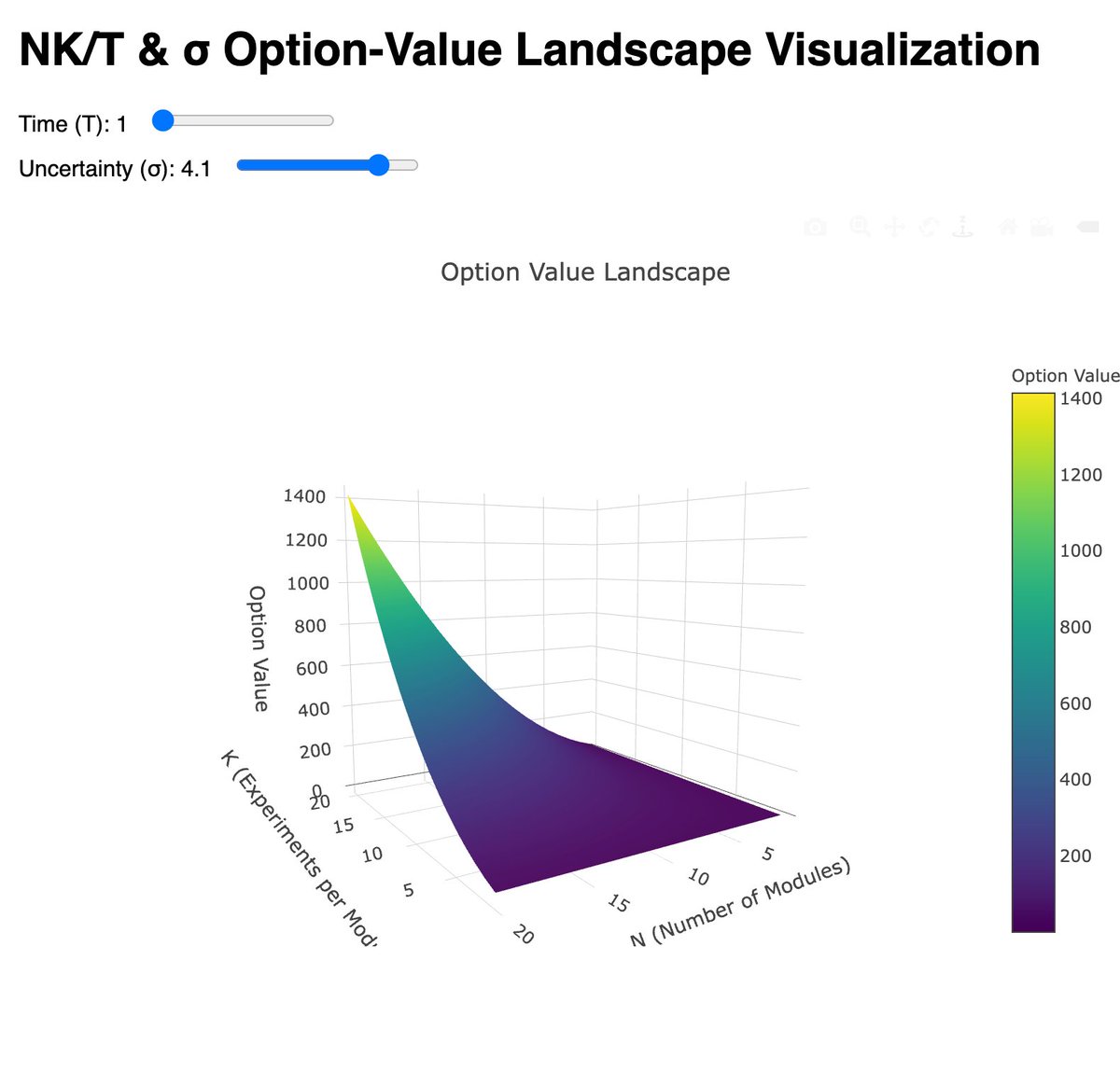
As a bonus, I asked ChatGPT-4 to make me a visualization of how N*K/T and σ interact with each other. This was to try to understand and replicate Dr. Baldwin's calculation of how 25 modules * 25 experiments created 25x value creation at IBM. Amazingly, it gave me this incredible JavaScript visualization which you can rotate in 3D. We live in an age of miracles.

4
12
31
10,435
Len Mountain retweeted

11 Feb 2025
I'll be keynoting reClojure in London on May 26th reclojure.org/
2
20
1,207
Len Mountain retweeted

12 Jan 2020
The only real performance management to be done is for engineering leaders to ask themselves what they themselves are doing to give their team autonomy, encourage their team's mastery, inspire their team's purpose. 18/
5
29
157

Sharing SQLite databases across containers is surprisingly brilliant.
medium.com/@rbranson/sharing…
6
60
298
Len Mountain retweeted

8 Jan 2020
We're looking for a new Infrastructure tech team member here at @cognician:
cognician.com/careers/infras…
It's based in Cape Town, South Africa.
Come join us as we begin our second decade! We'll teach you #Clojure :-)
(Please RT for reach! Thank you 🙏)
1
22
11
Len Mountain retweeted

6 Jan 2020
📷 “Clojure programmer at work” Henri Lebasque (1865-1937) oil on canvas [as previously tweeted by @miner] tmblr.co/ZmFORj2gkGFNi
1
18
58
Len Mountain retweeted

2 Jan 2020
God, grant me the serenity to accept the cookies I need to enhance my user experience,
Courage to reject third party cookies,
And wisdom to know the difference.
1
9
43

The Builder’s High: randsinrepose.com/archives/t…
1
6
12

Len Mountain retweeted

30 Dec 2019
A few examples of how software ladder of abstraction became too tall and started to fall
tonsky.me/blog/good-times-we…
Good times create weak men
Software abstraction ladder becomes too tall and starts to fall
tonsky.me 6
22
65
Len Mountain retweeted

30 Dec 2019
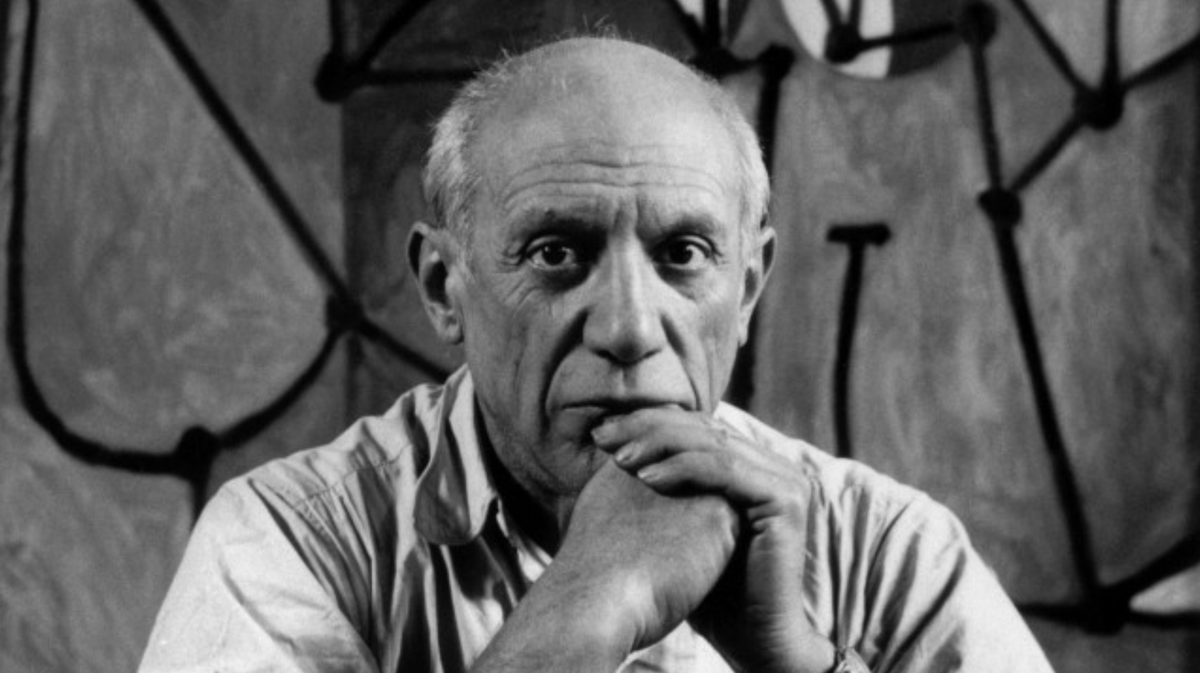
"Computers are useless.They can only give you answers" - Pablo Picasso (1964)
73
825
4,299
Len Mountain retweeted

26 Dec 2019
'Sometimes, the elegant implementation is a function. Not a method. Not a class. Not a framework. Just a function.' -- John Carmack
5
52
226
Len Mountain retweeted
23 Dec 2019
Thoroughly enjoyed #theunicornproject - thank you for writing it, @RealGeneKim !
1
1
Len Mountain retweeted

21 Dec 2019
Truly excellent incident communication that treats customers like mature adults
19 Dec 2019

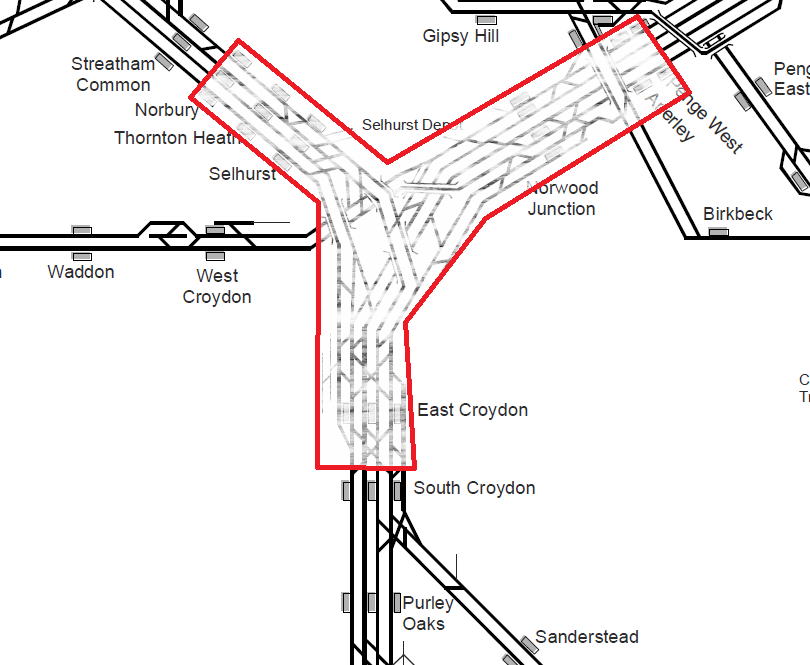
Yesterday, passengers travelling with @SouthernRailUK , @TLRailUK @GatwickExpress endured an awful evening after we lost the ability to run trains on the busiest part of our network, shown in the picture, for over an hour.
Here is what happened... 1/
11
37
Len Mountain retweeted

21 Dec 2019
Your talking about the guy that would fix RTM build numbers to be primes. Of course I wait for one I like. I’m actually shocked how many peoole do the logical thing and just take the first one generated.
2
1
3