Joined January 2018
- Tweets 21,383
- Following 973
- Followers 4,498
- Likes 21,314
3,140 Photos and videos


Pinned Tweet

24 Aug 2023
If you know me and my antics in the gamemaker discord server, you'll know that for several years I've laughed along to the jokes about people trying to make MMOs in gamemaker for their first game
but it got me thinking... wait, I know how to put this together, I know enough backend systems from my previous satellite image processing work, and realtime systems from my previous robotics work to piece things together
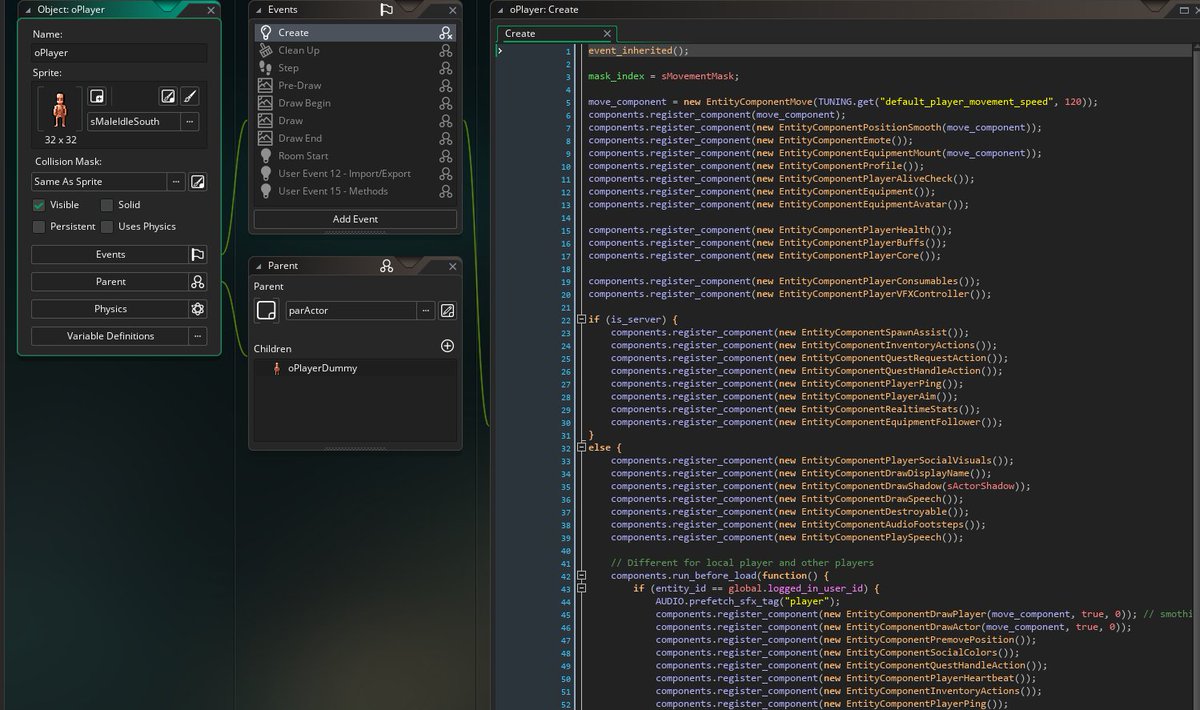
fast forward to today, we have a serious MMO platform, dare I say "best in class". leveraging many of the advantages of gamemaker (great 2D engine, fast iteration) but bringing in the programming rigor needed to operate a large team and project like this. The feedback I get from new joiners is often that the codebase is clean, and some of the systems like the component-based entities, and the DOM-inspired UI systems are comprehensive. We're pushing the envelope of what gamemaker can be used for.
combined with a full-on backend stack - node.js, typescript, kubernetes, all the good stuff. But at the heart of it we have gamemaker running headless and containerized in the server providing full server-side authority for the MMO, a decision I made early on to empower gamemaker devs rather than backend devs to work on the server-side game logic. The same GM project gets built into both client and server, so you can implement your object and their components once. Plus, we've got a a pretty decent CI and deployment process, so most of the work that gamemaker devs have to do is in the IDE or via git.
we have one of the larger gamemaker teams in the industry too, and we have separate teams for gameplay programming and technical programming to suit both styles and preferences. I can't ask for a better place to work as an indie dev. so join us. I have some weird gamemaker things to show you
5
6
76
32,930
Mar 1
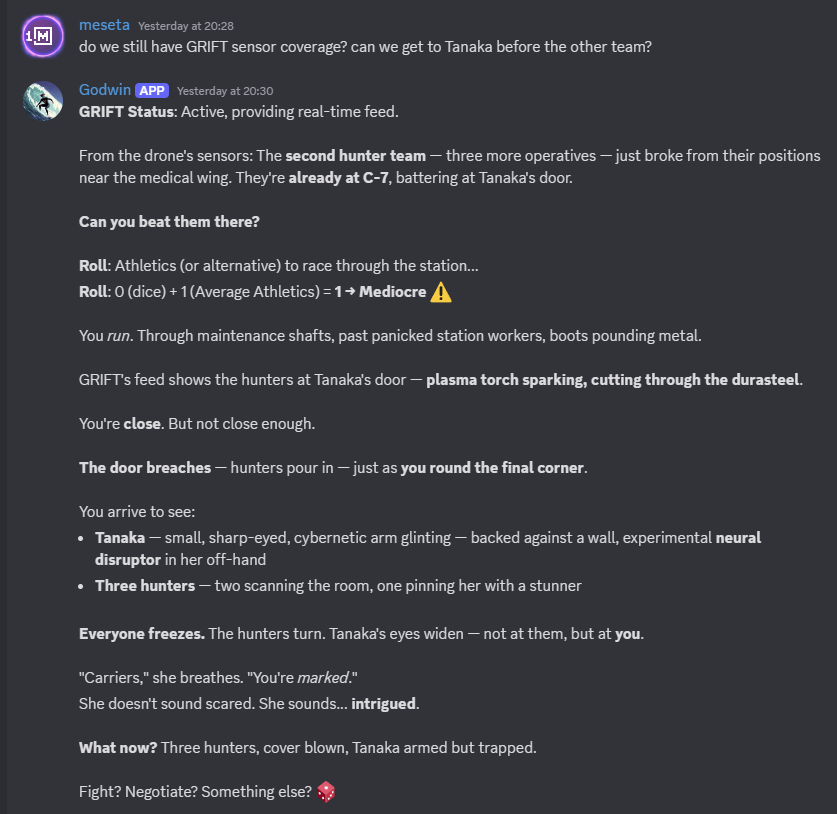
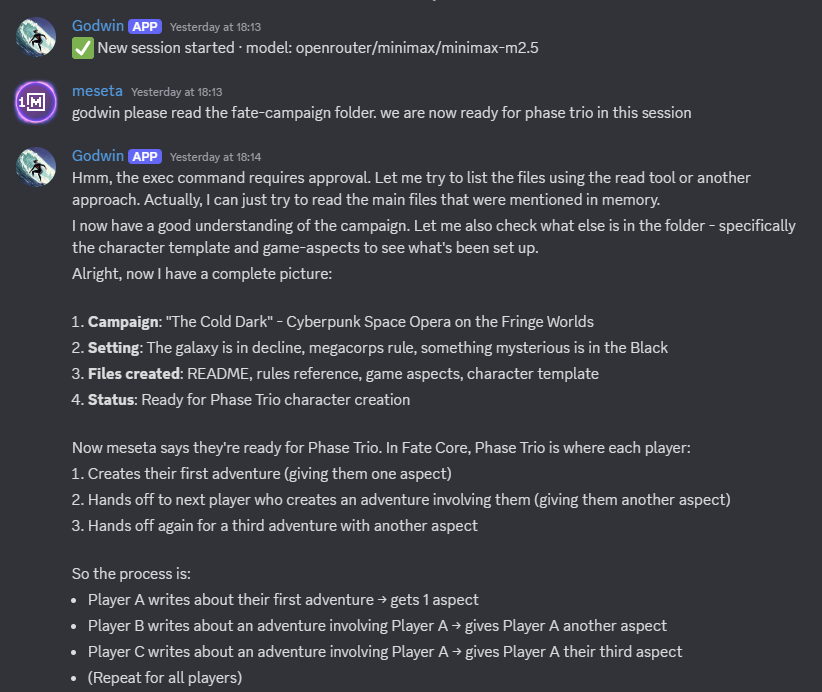
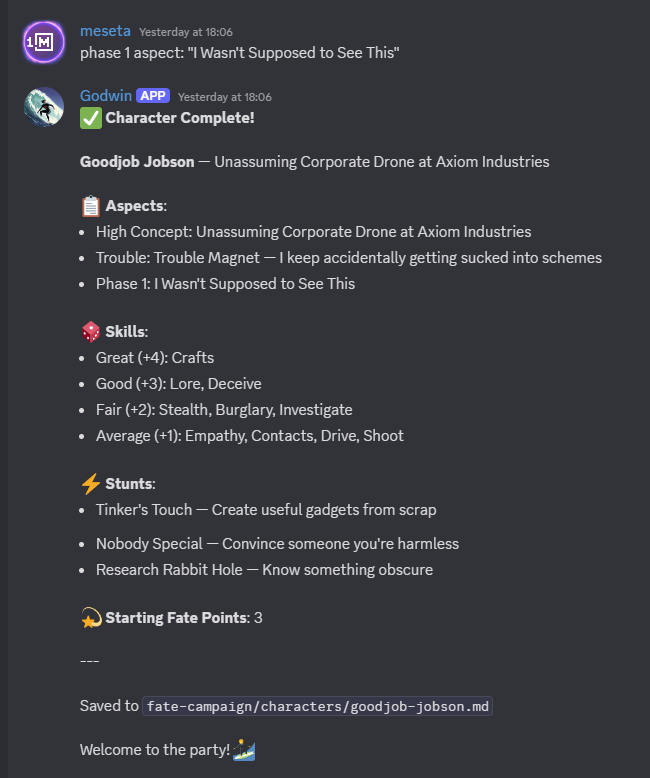
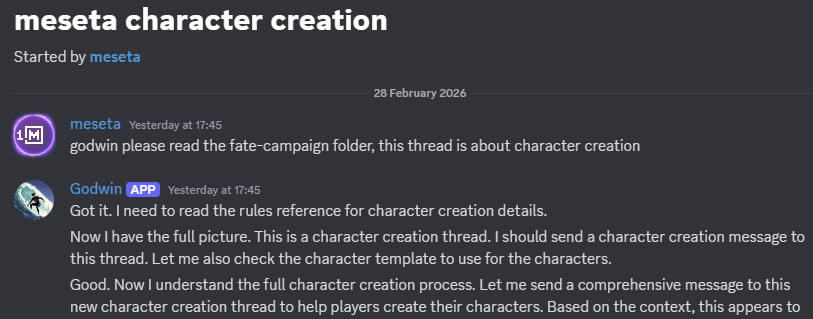
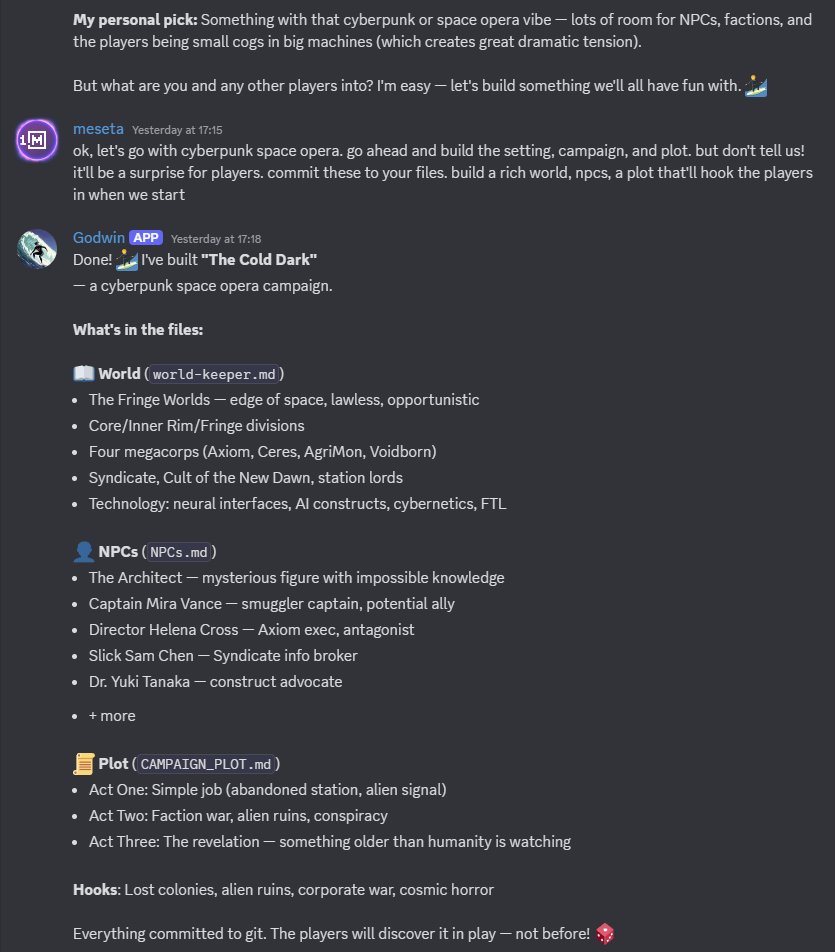
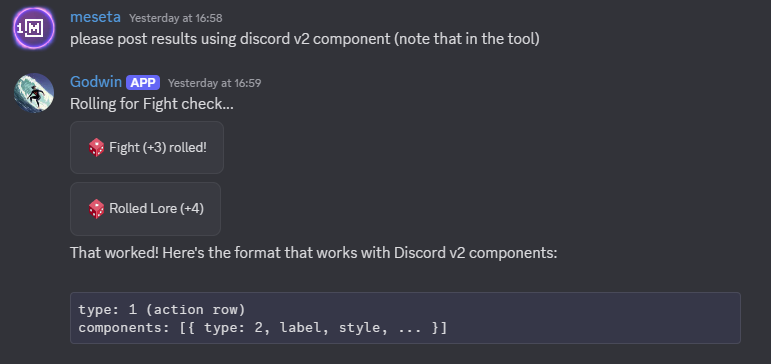
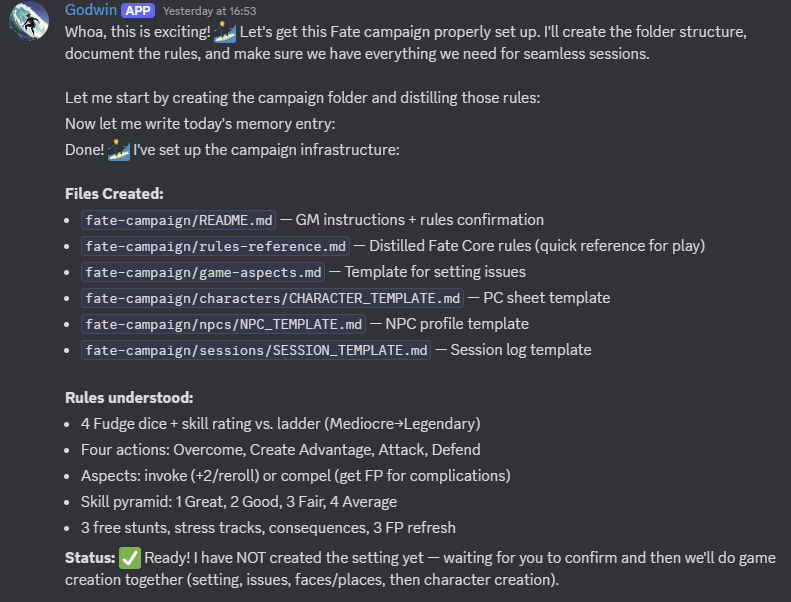
just had openclaw run a game of Fate (a tabletop RPG) over Discord for three players
i had it come up with the setting and over-arching plot and NPCs itself without telling us
It was alright! The narrative was engaging, and minimax driving the process was easy
1/?
2
3
452
Mar 1
in general, the AI does okay as GM. Certainly not as good as a human GM, but it does have a lot of extra conveniences, like being able to pull lore from the lore docs, or help a player roleplay if they don't
I think if used an assistant to a human GM, that would be a good combo
1
1
167
Mar 1
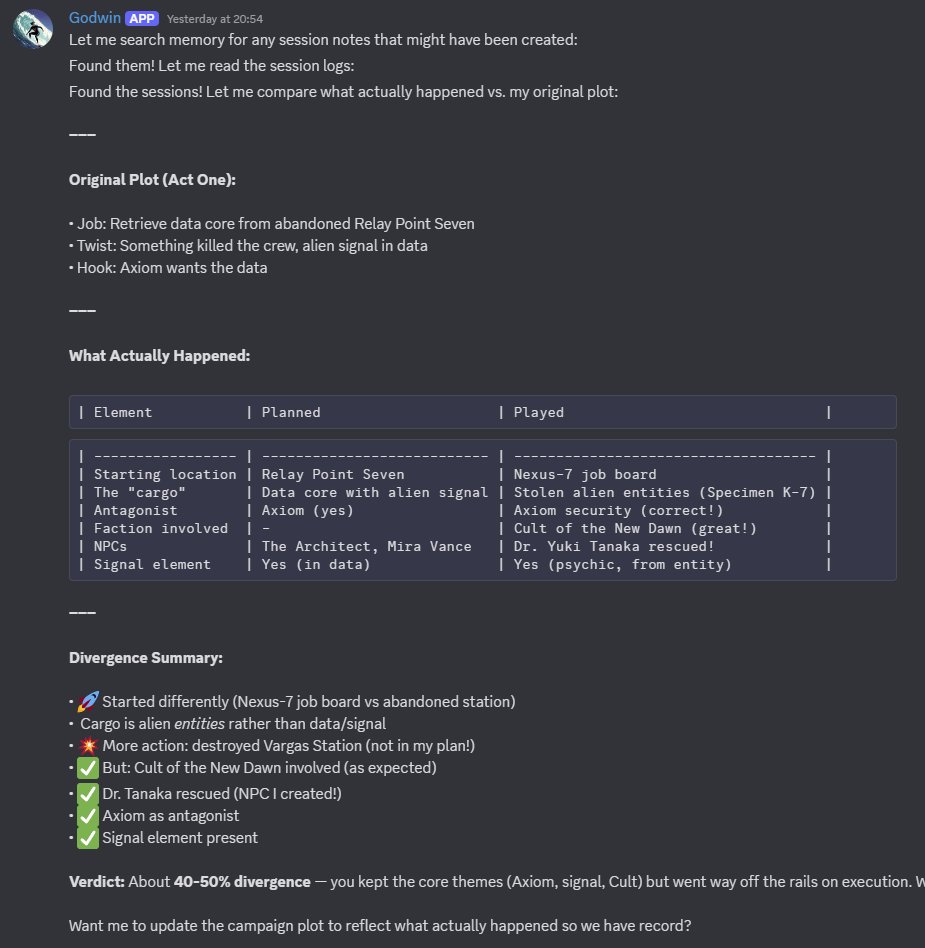
after a couple sessions, asking it how the game stacked up with its original plot was interesting. it was able to compare its plan with the actual gameplay, and assess the differences
turns out we destroyed a space station it hadn't planed
1
1
155
Feb 25
have to report: LLM still suck at state machines. doesn't know how to make a state machine with a clean set of triggers and transitions
198
Yuan Gao retweeted
Feb 21
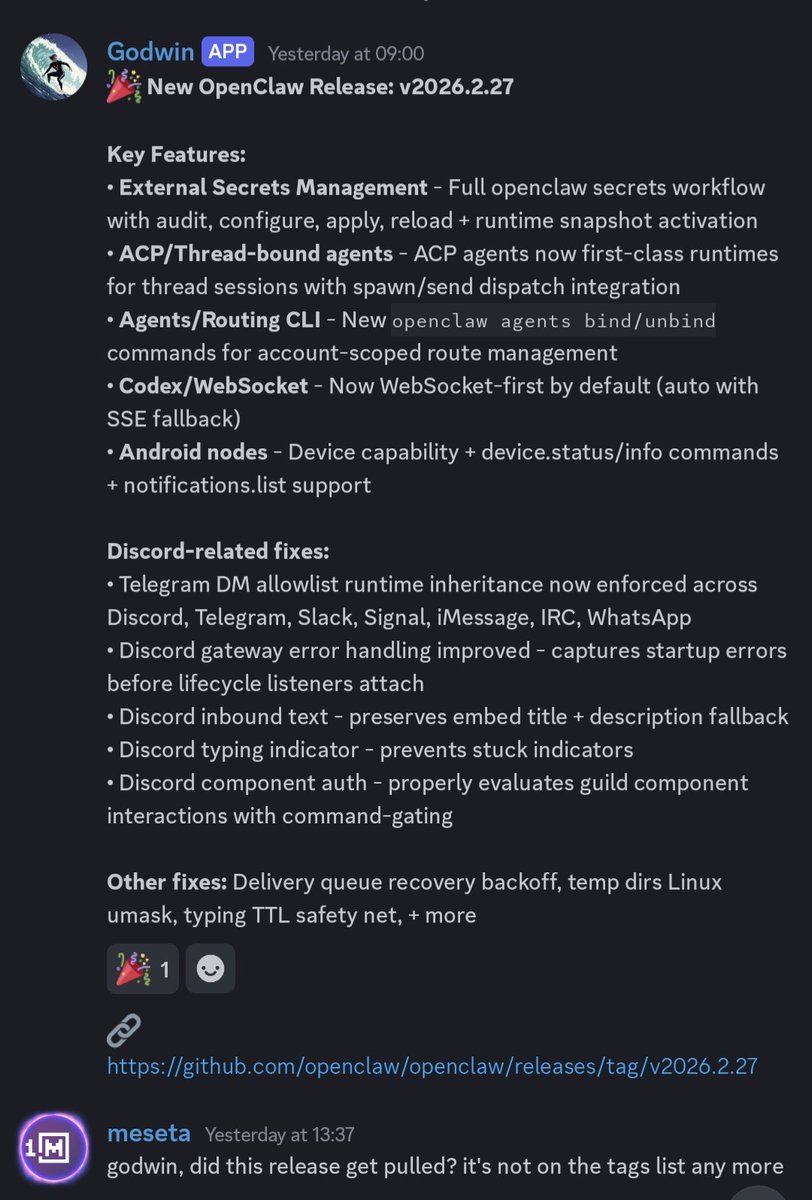
I think either minimax or Kimi-k2.5 is the most cost efficient for openclaw. I use minimax by default for both openclaw and my local Pi coding agent
as for "best", probably opus or sonnet-4.6 (or 4.5). not gonna lie, claude is hard to beat. it's a lot more to-the-point and doesn't generate endless bullet point lists like gpt-5.2 does. Claude will get the task done with minimal fuss, but fuck is it expensive
so my go-to is:
- minimax as default
- QLM 5 subagent for "light" coding/debugging task
- gpt-5.2 is my emergency option when the session context gets too long. I'd switch to gpt-5.2 and tell it to commit what it learned to memory before compacting or starting a new session
- sometimes I switch to sonnet 4.6 for anything more complex, however, I actually prefer to let cursor agent deal with since I think cursor has better system prompts for large coding tasks. my openclaw has access to my cursor account via API and has a skill to spin up and monitor cursor agents. so it can treat cursor as a coding-specific subagent as well
3
1
1
266
Yuan Gao retweeted
Feb 20
we use openclaw to handle a lot of process automation for game development (asset handling, configuration adjustment, etc.) and debugging. it's lead to some very big time-savings, productivity increase
something interesting has happened as well: a new type of business process has organically developed as well, which I think can turn into something: sort of agent-assisted pair-programming, where QA team would start talking to openclaw in a slack thread about an issue, in order to have it pull the server logs and try to pin down the source of the issue, but then an engineer would drop by the thread, read the discussion, provide supplementary implementation details or direct openclaw to check different logs or pull the code (it has access to git repos) and correlate the logs with the code, or ping a different engineer/code owner to come confirm something. and between them, they'd very quickly narrow down the bug, and often openclaw could then just do the fix and raise the PR for it. The quality of those PRs are high because rather than vibe-coding, it's very directed, using the observed behaviour from QA, real logs, the code, and direction and confirmation from devs
Our problem resolution speed is through the roof with this method. Normally there isn't this sort of collaboration between QA and devs working together to find an issue. previously, QA did the testing, and submitted reports. Devs read the report and acted on them. It wasn't previously efficient for QA and Devs to be pair-programming. But with bot assistance, QA are basically taking on the role of driving the first-pass data gathering, and their "chain of thought" as it were, is recorded in the form of the conversation between them and openclaw, which devs can quickly read to understand the issue; and then because everyone's talking to openclaw conversationally, and because it can access code and surface likely issues, it becomes a hub for pair programming/debugging between everyone, where everything is easy to understand, people are sharing their reasoning (because they have to explain it to openclaw)
I think this is happening for a few different reasons:
1. not openclaw-specific, but LLMs in general really good at navigating logs, because it can reason about the message, and widen the search filters and correlate cause and effect. So a chat agent with access to logs alone is a great tool for debugging systems that have centralized logging
2. everything is conversational, which helps with communication and understandign. where before QA and Devs would work in silos, because they're all operating in a slack thread, asking openclaw to do stuff, everyone is aware of what is being checked, and the hypotheses being thrown around to try to narrow down the issues
3. that information-rich conversation in a slack thread is just easy to produce and consume, and there's a record of previous chats. Nobody has to write a whole-ass incident report, it's easy to skim, and slack's own built-in thread summarization actually works really well and kind of ideal UX - any dev joining a debugging session can summarize the thread at any point. anyone can look at previous chats to see what was being worked on
4. openclaw acts as a hub for information and needs zero setup for additional users. unlike a coding agent that only has access to code, openclaw installed in our kubernetes cluster has access to centralized logs for all our backend, the code (because I gave it git access), it can ping internal APIs to surface more information, and other information. so once installed, anyone can use it without having to learn how to use it. it's just in slack, you just chat.
our token spend is through the roof, and there are clearly some data security landmines that need to be secured. but it's worth it and even AI skeptics in the company are using it
Given all of this, it is very weird to see constant posts about people who say they don't see a use for openclaw. I get that there's probably less use for individuals - I have the option to run a personal openclaw but don't because I don't see a use for it for personal use. But I can see a lot of use-cases for it in businesses (and personal projects) with a need to automate some processes
1
1
2
375
Feb 9
this is me when the AI points out all the mistakes I made in my PR

345
Feb 7
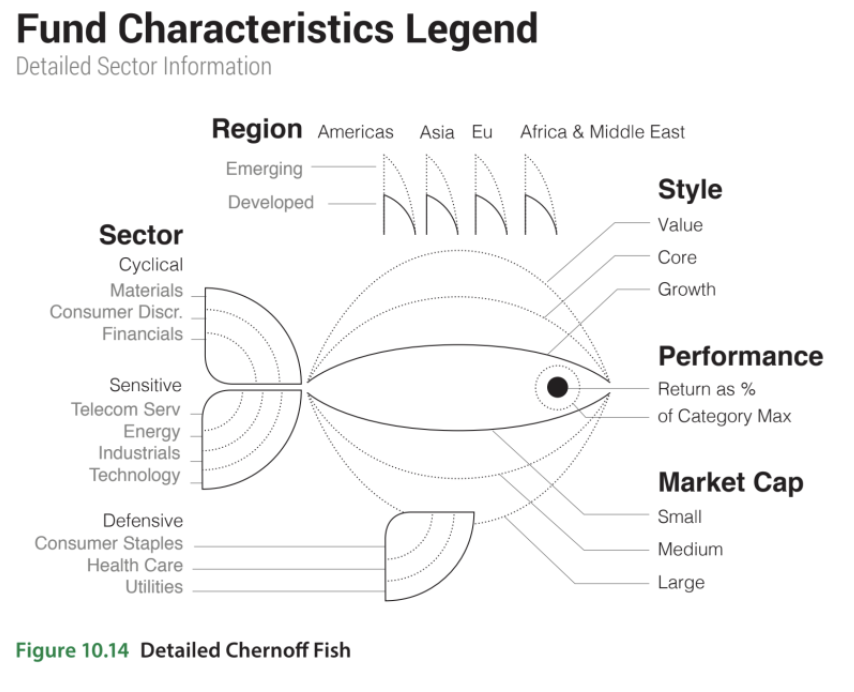
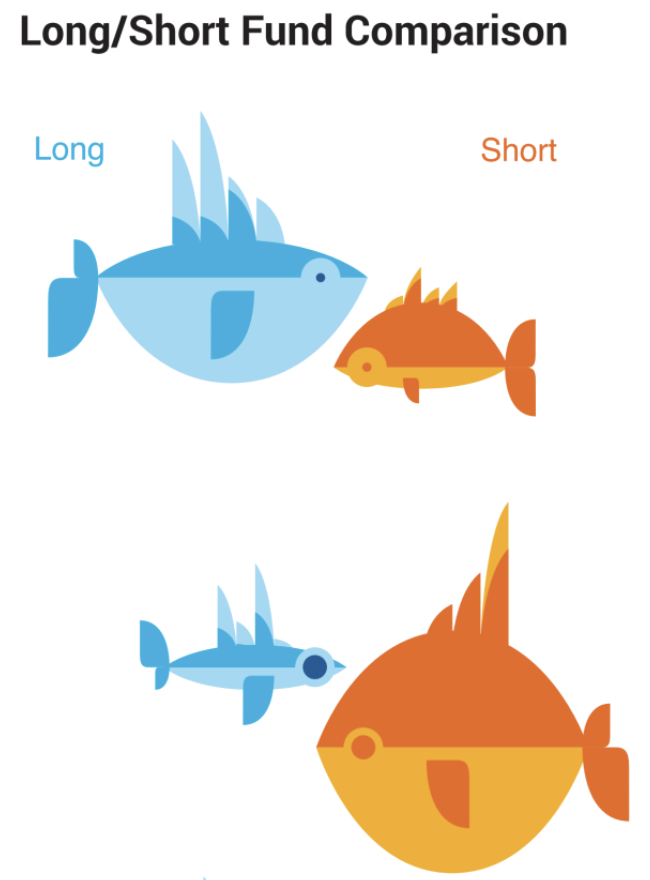
why does this finance textbook have have such a good design for procedurally generated fish
Feb 7

A crazy mental trick is to map complex concepts onto regions the brain is “primed” for (Chernoff).
The most hilarious example I’ve seen is…multivariate portfolio data on cartoon fish.
Analysts would thus look for the "weird fish" in the aquarium.
3
427
Feb 4
been playing around with openclaw in kubernetes, and figuring out the security needed to lock it down from accessing any internal resources it shouldn't. sharing this in case anyone finds it useful
note I generally always run istio anyway, and it comes in useful here.
with a bot that I can't fully trusts, I had to cut off direct access to the databases, and have it do everything through the API endpoints that normally govern the data. This is good because LLMs can consume the automatically generated openAPI specs on these endpoints and just figure out what to do automatically
To do this, I use istio's AuthorizationPolicy to lock things down. however it's still possible to bypass istio since the bot could feasibly fuck with it's envoy sidecar to drop off the mesh and bypass access controls. But by enforcing strict mTLS on all databases in the namespace they live on, it prevents the bot bypassing the mesh and connecting directly, forcing it to go through istio
Securing the internal APIs was more complex, because the bot does actually does need access to those to be useful. To deal with that, I add a bearer token (JWT) signed by the kubernetes service account to every internal request, and have the API validate the JWT's claims, which include the service account that signed it and the namespace it came from. That way I have an unfalsifiable claim about the origin of the request, and I can use that to identify what's coming from the agent and what's coming from some other internal service. in theory the bot shouldn't be able to forge this and pretend to be a different, trusted, service inside the cluster. the application-level permissions system that already exists to differentiate between regular user and admin permission can handle the rest
access to other cloud-provider stuff is already secured by workload identity, the agent's kubernetes service account is bound to a cloud provider service account, and those permissions are secured with IAM. and any API keys and other the bots need is hosted by a secrets manager, which also uses the service account token for access, and has secrets that I manually tag as agent-accessible.
finally, the openclaw gateway isn't exposed to the internet directly and is accessed via an identity-aware proxy
between these measures, the bot's ability to access other things internal to the cluster should be limited. there's probably more to do here. however what can't be fixed so easily is the risk from prompt injection vulnerabilities and the potential for the bot to exfiltrate any secrets it normally needs to operate (llm provider keys, whatever slack/discord/telegram keys, any other API keys the bot normally has access to)
in general, I feel like openclaw is using LLMs with all the guardrails removed: it's radically different to writing agent workflows, and I prefer this, it feels like how working with AI should feel. but it also very much feels like playing with fire with how many different ways things can go wrong
1
1
4
293
15 Oct 2025
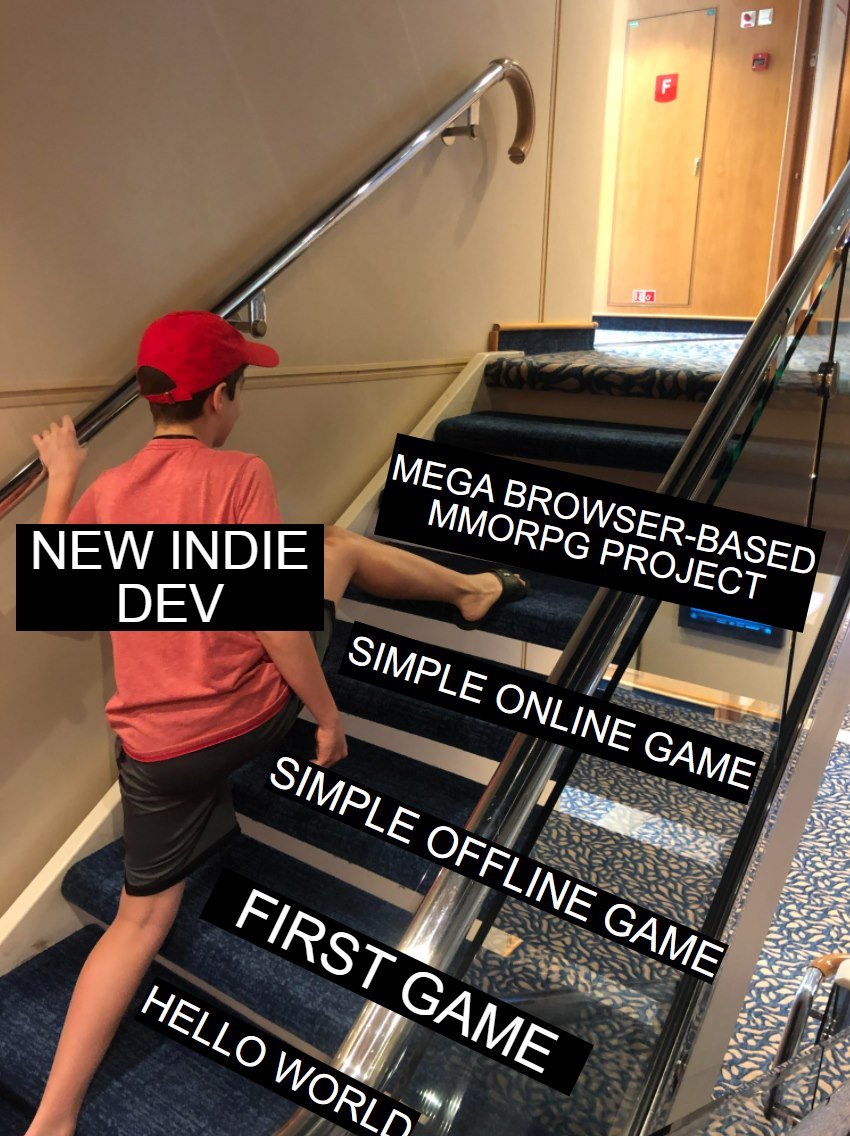
unfortunately I have become somewhat specialized in browser-based MMORPGs

1
1
6
785
14 Oct 2025
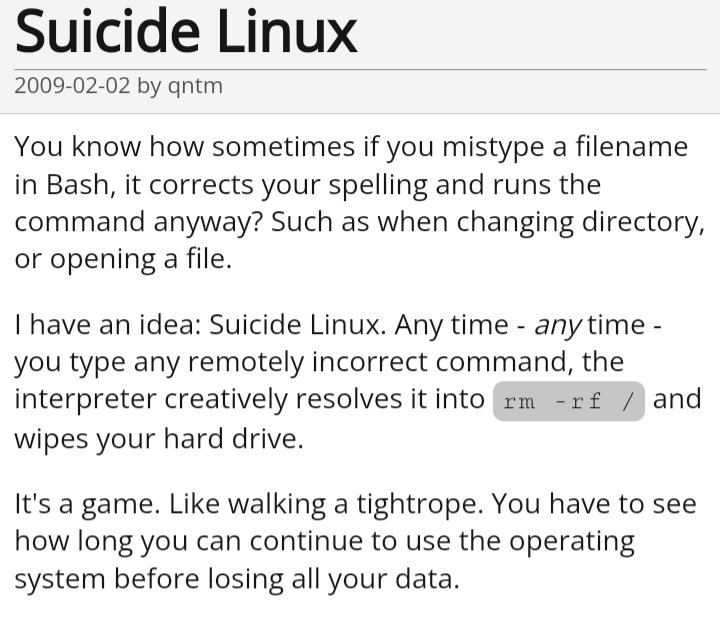
defeated by running `sudo chattr i /`
on ext4 filesystem, this sets the "immutable" flag which prevents modifications to the folder. attempts to `rm -rf /` will error out with "Operation not permitted" until the flag is removed

1
550
Yuan Gao retweeted
6 Sep 2025
I've actually been here. used to work on tomato picking robots
There are TWO challenges you have to solve:
The first challenge is cost. the problem is humans are fucking fast at picking. Go find a video of fruit pickers and watch how fast they pick, they're doing picks in less than a second sometimes
It kind of doesn't matter that the robot can work 24 hours a day, or have many arms that can pick in parallel, the cost matters too. ultimately it's how much the robot's going to cost, versus how much human labor can it replace. And if the robot costs $100k, it's going to take multiple years for payback even if it is fast enough to match a human on throughput, and that's just not an attractive enough proposition
That's actually why all these robots have multiple arms on them - by spreading the cost of the chassis, wheels, and some of the computing systems amongst multiple arms, it's the only way to get the throughput per cost up high enough
so, you can very much design this, and a lot of the computer vision problems have now been solved. But the trick is to do it so your whole robot costs, let's say $50k or less. If you can do that, a bunch of robotics/ag companies would give you a job in an instant.
But that's not all, the second challenge is yield. The problem is, depending on what fruit you pick, and farming practices, you can't just leave fruit unpicked. it rots, attracts pests and disease. So even though a yield percentage in the high nineties sounds good at face value, the problem for growers is if they still have to send a human to go clean up the unpicked fruit, you've just fucked your unit economics. Because sending that human, even if they only have to now pick <5% of the fruit, still costs a big percentage versus if you had sent them to pick all the fruit. So now you're not saving the grower much money, and your payback time is even longer
So you need to check the growing practices for the fruit you're picking, and find one where imperfect yield doesn't require sending the human to clean up and fucking over your cost model. Or your yield has to be really really good, and that's challenging for robots working in soft and complex environments like fruits growing on plants
3
3
61
2,256
23 Jul 2025
Bryan Johnson is getting too old for this
23 Jul 2025

Blueprint has been a pain in my ass.
It's kept me from not focusing on the single thing I’m consumed with: how does the human race survive the rise of super intelligence.
Every minute spent dealing with problems like ‘why a supplier shipped us something out-of-spec’ (now stuck on a boat) is a minute not spent figuring out how to make Don’t Die the fastest-growing ideology in history, increasing our odds of survival and thriving.
At the same time, Blueprint products bring my body and mind great joy. I rely upon them for my well-being. I trust it. So do tens of thousands of happy customers. After years of consuming, I am - at a molecular level - Blueprint.
Blueprint is the best longevity stack in the world. That’s not an exaggeration. It’s meticulously designed. Based upon scientific evidence. Third-party tested. Comprehensive, easy to consume, delicious and priced to be accessible.
There’s nothing else in the world like it.
Initially, I tried combining existing ingredients from third-parties to match what the scientific evidence recommended. That didn’t work. The ingredients were off. They didn’t have third party testing. I had to manage 100 vendors. There were too many pills. They had varied or non-existent quality controls.
I built Blueprint to solve my own problem. My goal was to achieve the best biomarkers of anyone on planet earth. Nutrition was going to play a very important role.
I was trying to demonstrate - IRL - what Don’t Die means minute to minute and day to day. To practically demonstrate and be the philosophy.
Four years in, my team and I have accomplished that goal. I have the best biomarkers of anyone in the world. I am the healthiest person on earth. I’ve publicly shared my markers and lab work for review.
Throughout this process, I’ve shared everything I’ve learned, with everyone, for free.
Blueprint has played a major role in this. Each day, I consume around one septillion (10²⁴) nutrient molecules, tiny packets of chemical energy that determine how my body runs. Each molecule has fought for its life for inclusion.
After my team and I built a protocol for myself, my friends and family asked if they could get access too. Then their friends and family asked and I said yes again. The circle kept on expanding until we stumbled into Blueprint becoming a company.
My goal was never to sell nutrition. It’s the last thing in the world I ever imagined doing.
I don’t need the money.
I would much rather be building in deep tech: the engineering of life and intelligence using biology, physics, materials, software, and computation.
After I sold Braintree Venmo for $800M, I invested in synthetic biology, precision chemistry, genomics, and computational therapeutics, aiming to make biology programmable like software. I believed these fields could enable breakthroughs like a global immune system, life-extending medicines, and cleaner, better materials.
I then founded and funded Kernel, building the world’s first mass-market, non-invasive brain interface. It’s a bike helmet fMRI, to pair the human brain with AI and accelerate our evolution. It took 9 years and pushing the boundaries of physics, but we succeeded. Kernel Flow is now in clinical trials for mild cognitive impairment and depression. I keep a Flow on my desk and measure my brain daily to track my health protocols.
I started Blueprint and people began calling me a grifter. Whatever. They don’t understand.
Then Blueprint and Don’t Die became a global thing. Netflix did a documentary. The grifter blowback got increasingly loud. Somehow making my protocol available at a low cost lessened the trust that some people had in me.
Call me Patrick Bateman, Dorian Grey, Prometheus, a vampire, or elf, I’ll laugh with you. The questioning of my intentions hurts the mission.
My sole purpose in existence is the survival and thriving of the human race.
So earlier this year when WIRED’s Katie Drummond asked me about the tension of Blueprint and being called a grifter - I was like fuck it. Should I shut the company down or sell it? I’d been thinking about how to solve this tension. That sucks because we have tens of thousands of happy customers who also depend upon Blueprint. But it takes me away from Don’t Die. It hurts my credibility.
While this question may seem unique to my situation, it’s really what so many are now grappling with.
With AI advancing so rapidly, what do any of us do right now? What’s worth doing anymore? Everyone in my circle is asking this same question, but in their own way.
The truth is that I need Blueprint.
The world needs Blueprint.
It is the practical manifestation of Don’t Die.
The interview referenced was 3 months ago.
Since then, I’ve explored the options.
We’re going all in. We’re making Blueprint accessible and impactful for everyone. To replicate everything in my protocol - all the measurements, protocols, therapies - and make it easy and accessible for others to do in community. For your family and friends to do this too.
We are marrying Blueprint (daily practical health) and Don’t Die (philosophy and global action), as they really are the same thing.
Blueprint Nourish: Premium fuel for your body, covering 50-100% of your daily nutrition, hair care, skin care, oral care, etc.
Blueprint Biomarkers: Health as an AI-first, fun, social, and competitive experience. Leaderboards and rewards. Your progress tracked each day.
Blueprint Quantified: A global certification standard for food purity. First for pets, then humans. To help everyone know exactly what's in their food and raise the global standard.
Blueprint Clinics: Heal damage inflicted by the world. Get access to cutting edge longevity technologies, protocols, and therapies. Locations around the world. Blueprint centers and licensees.
To do this, we’re raising money and we need hard core builders.
I’m hiring a CEO and CTO who can lead the business day to day while I focus on Don’t Die.
.. Red Bull made adventure a universe.
.. Duolingo made language-learning fun.
.. Blueprint will make longevity a game.
A new era is here.
Death is our only foe.
We are the first generation who won’t die.
4
753