
Husband, father, scientist, athlete (sort of), CEO, recovering academic. Passionate about helping people and companion animals live longer, healthier lives.
Joined September 2013
- Tweets 5,109
- Following 340
- Followers 31,374
- Likes 3,534
219 Photos and videos

Matt Kaeberlein retweeted

Epigenetic clocks are a correlation to a correlation to biological age, not direct measures. Use with caution, especially consumer versions. #Epigenetics #Aging
2
7
651
Matt Kaeberlein retweeted

15h
🧬 Thoughts from the scientists who shaped aging research:
“You’ve got to do the experiment. You cannot go into it thinking that you know the answer and not do the experiment because your dogmatic belief says, ‘This is how it’s going to work.’ You’ve got to do the experiment.”
— Matt Kaeberlein @mkaeberlein
A simple but essential principle.
Aging biology is a rapidly developing field, full of promising ideas. But a plausible mechanism is not the same as an effective intervention. Results in cells do not always translate to mice, and results in mice do not necessarily translate to humans.
Science advances when we test our assumptions carefully, including the ones we want to be true. 🔬
2
2
7
901
This is how you know you've made it

@mkaeberlein did you know the frontier AI model just classified you as a biological weapon hazard 😂
1
14
1,922
Matt Kaeberlein retweeted

Did you see? The Dog Aging Project was featured on 60 Minutes, highlighting our dementia research in #dogs.
➡️Don't miss out! Learn more about it here: cbsn.ws/47i0kCV
ALT Decorative image of a dog wearing sunglasses looking at text that reads Did you see? We’ve recently been on… CBS News 60 Minutes with the Dog Aging Project and TRIAD Clinical Trial logos on the bottom left corner.
4
7
812
Matt Kaeberlein retweeted
Wildfire smoke causes neuroinflammation, affecting brain function for weeks. Studies link it to impaired attention, increased traffic collisions, and even excess suicide deaths. The long-term brain impacts can persist without intervention.
2
7
874

Jun 10
Longevity Science with Matt Kaeberlein is also on Spotify: open.spotify.com/show/7DRRH5…
Jun 10

Is there a way to listen to the podcasts on audio platforms or is it just YouTube right now?
2
3
9
1,616
Matt Kaeberlein retweeted

Jun 10
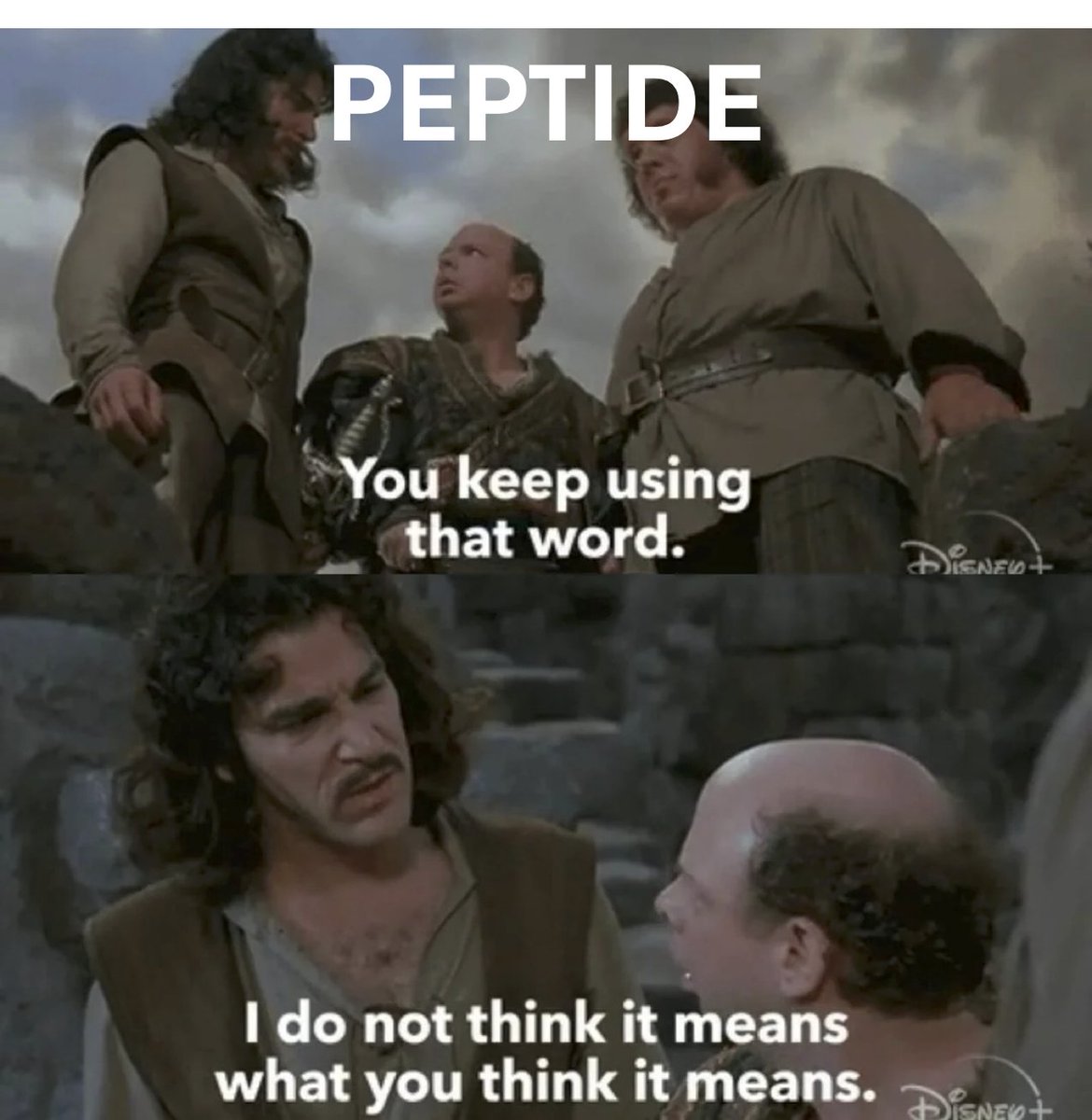
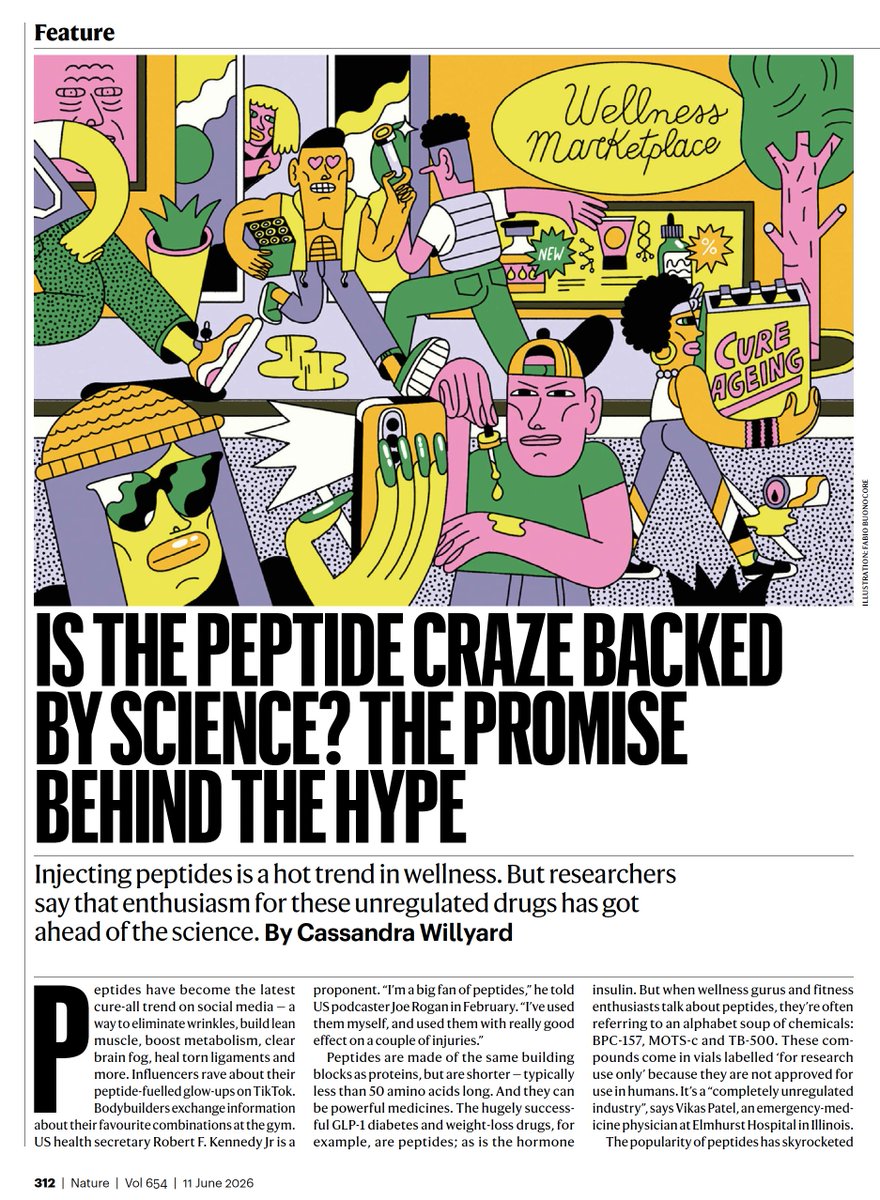
No, the peptide craze is not backed by science.
"What people are shooting up with out there I would give to mice."
“The influencer crowd has sort of created this perception that these are miracle drugs."— @mkaeberlein
New feature @nature
nature.com/articles/d41586-0…
17
101
295
27,466
Jun 10
Microplastics are everywhere. They're in our food, our water, the air we breathe, and—according to recent research—even in the human brain.
But how concerned should we actually be?
In the latest episode of Longevity Science with Matt Kaeberlein, I sat down with environmental toxicologist Dr. Matt Campen, one of the leading researchers studying microplastics and other environmental exposures, to separate what the science tells us from the hype.
We discuss:
🧠 What researchers have found in human brain tissue
🥩 Why food may be a bigger source of microplastic exposure than most people realize
🧬 The emerging links between microplastics, dementia, and aging biology
🔥 How wildfire smoke affects brain health and cognitive function
☣️ Heavy metals, air pollution, and other environmental risks that deserve more attention
🏛️ Why meaningful solutions will likely require policy and infrastructure changes, not just individual behavior
One of the things I appreciated most about this conversation is Matt's balanced perspective. Despite being at the forefront of this research, he's not advocating panic or drastic lifestyle changes. Instead, he emphasizes the importance of understanding the evidence, recognizing uncertainty, and focusing on the interventions most likely to have meaningful impact.
As with many topics in longevity science, the challenge is separating legitimate concerns from fear-driven narratives and marketing claims. This conversation is an excellent example of how to approach a rapidly evolving area of research with both curiosity and scientific rigor.
Check out the full interview here: youtube.com/watch?v=J64kHdKN…
3
3
14
1,999
Jun 10
It’s pretty cool to see my new podcast, Longevity Science with Matt Kaeberlein, mentioned in a @BusinessInsider article by @Hilarx covering the Life Biosciences epigenetic reprogramming clinical trial.
businessinsider.com/first-ev…
Even more exciting, the article quotes @BKennedy_aging from our recent longevity roundtable discussion with Marcus Ranney.
My goal with this podcast is simple: bring credible, informed voices into the conversation and help separate the signal from the noise in a field that often generates more hype than evidence. It’s gratifying to see the show already contributing to those discussions.
Let me know what topics, guests, or questions you would like to see covered in future episodes
4
3
42
2,323
Matt Kaeberlein retweeted

Over the past few months, I've been collaborating with @socialcapital (@chamath's investment vehicle) on a two-part deep dive into the current state of Longevity Biotech and Aging Research. This deep dive aims to be a solid introduction to the field. It assumes no background in biology, medicine, or biotech.
If you've been wondering what science knows about aging, what makes us believe aging can be slowed or reversed, or which companies are making real progress toward developing therapies against aging, this is for you!
Part 1 is out now. It's a foundation for understanding the biology of aging and the current state of longevity biotech.
Part 2 follows shortly, covering the strategies researchers, companies, and investors are pursuing to slow or reverse aging.
Thank you, @chamath and @socialcapital team, for the opportunity to work with you on it. And thank you to all contributors who helped to make this deep dive objective and engaging, and who are making anti-aging interventions a reality: @Andrei_Tarkhov, @elimohamad, @fedichev, @KarlPfleger, @MarkHamalainen, @MartinBJensen, @MaxUnfried, @mkaeberlein, @omri_drory, @RaianyRomanni, @realnathancheng, @sebastiangiwa, @shappiron, @shoylev, @statto, @strygah, @ydeigin
If any errors are to be found in this deep dive, I own them.

8
17
70
16,371
Jun 8
I asked Steve Austad what one thing the field will be proud of 10 years from now, and one thing we may be embarrassed about. Full interview here: youtube.com/watch?v=UxFnkZ_m…
1
3
21
2,155
Jun 8
Pretty interesting story in @ScienceMagazine this week on what looks like a serious problem in the senescence field. More than 400 papers apparently used the wrong antibody for p16-INK4a — an antibody that actually recognizes a completely different, unrelated protein (a component of the actin cytoskeleton). This affects work on senescent cell accumulation in aging and disease, and most critically, some of the evidence base for senolytic drug research.
What concerns me most is that many of these papers somehow got the "right" answer using the wrong antibody. That's not just an innocent reagent mix-up — it raises real questions about data fabrication or selective reporting in at least some of these labs. I've commented before about how ignoring data that doesn't fit the narrative is a major problem in certain areas of the longevity literature (e.g. sirtuins and NAD), and here a potentially widespread example in senescence.
Hopefully journals will investigate and retract as necessary, but based on my experience that seems optimistic. One concrete fix is that journals should flag problematic antibody product codes at submission so reviewers can catch this before publication. Reviewers should absolutely be on the lookout for this going forward.
However, these fixes won't address the larger problem. We need to understand how these scientists got the results they wanted and published them over 400 times (!!!): whether through intentional deception, incompetence, accident, or some legitimate explanation.
Credit for discovering this goes to @addictedtoigno1 who wrote about it first on his blog: For Better Science
science.org/content/article/…?
23
92
366
97,741
Jun 7
I asked Steve Austad, if he were designing the TAME trial today, what drug would he pick? His answer may surprise you. Full interview here: youtube.com/watch?v=UxFnkZ_m…
2
2
20
2,653
Jun 7
New Episode of Longevity Science with Steve Austad
One of the most important lessons I've learned in aging research is that progress rarely follows a straight line.
Twenty-five years ago, Steven Austad made a prediction that many people considered outrageous: that someone already alive would live to 150 years of age. That prediction eventually became the basis for his famous wager with Jay Olshansky—a bet that has since grown into a potential $1 billion prize for the descendants of the winner.
In this conversation, Steve reflects on how the field has evolved since then and offers a candid assessment of where we've succeeded, where we've fallen short, and what still gives him optimism.
A few themes that stood out to me:
• Aging research has dramatically outperformed expectations in animal models, but translation to humans has been much slower than many of us anticipated.
• The strongest advances continue to come from understanding fundamental biology, particularly pathways such as mTOR, rather than chasing every new trend.
• Some of the biggest opportunities may lie in studying exceptionally long-lived species. Steve makes a compelling case that bats, birds, and even 500-year-old clams may have more to teach us about healthy aging than another generation of short-lived laboratory models.
• Lifestyle remains critically important. Despite all the excitement around drugs and biotechnology, Steve argues that many aging researchers—including himself—may have underestimated the impact of factors such as exercise, sleep, and overall lifestyle on long-term health.
We also discuss the TAME trial, rapamycin, GLP-1 agonists, NAD biology, the future of geroscience clinical trials, and Steve's surprisingly entertaining pre-science career as a lion tamer.
Whether or not someone alive today reaches 150, conversations like this remind me how much we still have to learn—and how important it is to remain humble in the face of complex biology.
Watch the full conversation here: youtu.be/UxFnkZ_mRVM
#Longevity #AgingResearch #Geroscience #Healthspan #LongevityScience #Rapamycin #mTOR #HealthyAging #BiologyOfAging #SteveAustad #Science #Medicine #GLP1 #TranslationalResearch #Lifespan #MattKaeberlein
2
6
25
5,671
Matt Kaeberlein retweeted

Tickets for Longevity Summit Dublin 2026 are €595. Buy now to hear from leading experts on aging biology and prevention. Join us at Trinity College Dublin, 24–26 June. Book your spot.

2
8
983
Jun 7
Perhaps. And yet somehow "NAD declines with age" became dogma. How did that happen, if measuring NAD is really hard and the measurements can't be trusted? I'm not saying NAD can't/doesn't have any role in longevity, I'm pointing out that the idea that NAD is a central regulator of aging is not supported by robust data. In fact, it seems to be mostly a story of irreproducible data. Both the idea that NAD declines with age and the idea that NAD precursors increase lifespan have not been reproducible.

10
28
5,528
Matt Kaeberlein retweeted
To significantly increase lifespan, we must modulate the biology of aging itself. Curing single diseases won't have a major impact. #AgingResearch #Lifespan #BiologyOfAging #ScienceFacts #Healthspan #Longevity #MedicalResearch #FutureOfHealth
1
3
11
1,099
Matt Kaeberlein retweeted
Microplastics at a longevity conference? Mind blown. Changed my perspective. #Microplastics #Longevity #Health #Science #Sustainability #PlasticPollution #ReelsOfInstagram
1
6
1,168
Matt Kaeberlein retweeted
Democratizing longevity is now possible! This approach is affordable to measure, using biomarkers from NHANES. By revising the algorithm to reduce costs while maintaining predictive accuracy and personalization, we unlock true value in longevity.
3
7
1,671
Matt Kaeberlein retweeted
“Dogs are sort of as sensitive to their social environments as humans are, in very similar ways," said Noah Snyder-Mackler, a team member of the Dog Aging Project, in an interview with #TheIndependent.
➡️ Read the full article: the-independent.com/life-sty…
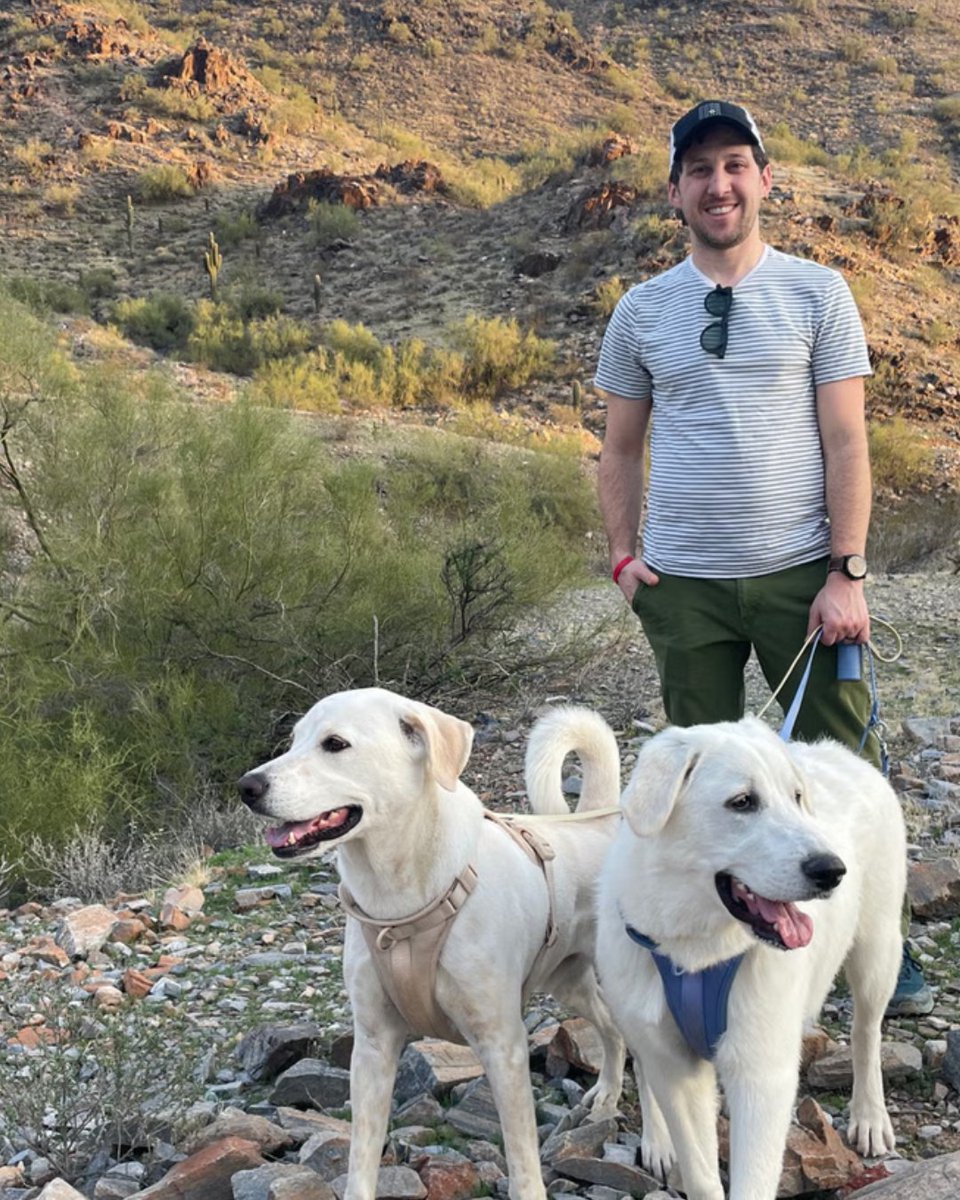
ALT A person (Noah) stands with two white dogs on a rocky, desert trail with sparse vegetation and cacti on a hillside in the background.
2
8
790