
Joined October 2011
- Tweets 19,322
- Following 39
- Followers 3,952
- Likes 25,672
566 Photos and videos









After @TheBCHPodcast episode last night I decided to rewatch youtube.com/watch?v=TIt96gFh… and now I wonder if anyone is able/willing to re-validate and update the statistics for the current network realities (better latency, peformance optimizations, more processing power, dsps, etc)
2
9
369
@PeterRizun is the old code and setups still available and usable? Would you have any interest in re-running and/or digging deeper given the last 7 years worth of changes?
I assume that the real cost won't be tools or hardware, but time and talent, so... what would it take?
1
42
Jonathan Silverblood retweeted

A website should be an interface to your assets. Not a requirement. With XO, the same template runs anywhere XO exists. One template. Any interface. youtube.com/shorts/nEVTq2Svi…
4
6
142
Jonathan Silverblood retweeted

Jun 11
I used to believe that code was law.
But now I believe that the code I run is my law.
And that those running the same code are under the same law.
It resolves a lot of confusion re
thinking about bitcoin.
Nothing is set in stone. The question is the value of your law.
8
3
47
1,184
Jonathan Silverblood retweeted

Next episode of The Bitcoin Cash Podcast will be live tomorrow (Sat) 13th June 15:00 UTC.
#184: BTC Catch Up Drinks feat. @Vladcostea, @SuperTestnet & @robin_linus
Response to Vlad's 8h stream, finding out about BTC projects, drama & view of BCH from the source. Plus alcohol.
4
11
29
938
Jonathan Silverblood retweeted
Most ideas not implemented in practice are just bad ideas. A few are undiscovered insights which become successful innovations, but most aren't used because they simply don't work. This includes direct coinholder voting. The reason is because the world is not numerical. Allow me to explain.
All kinds of things in the world can be bought & sold, but many cannot. For instance - loyalty. If you can buy loyalty, it's not loyalty - it's mercenary support. If you can buy love, it's not love - it's prostitution. For our discussion here, the relevant good is contribution. You can hire someone for a job, but you cannot buy their wholehearted passion & dedication. That has to be spontaneous & non-numerical.
Consider myself as an example. I have some BCH, but I'm no whale. If I were to dump all my BCH & leave the project today - what is the greater loss to the community? My coins, or my contribution? The coins would make no more than a momentary blip on the markets. But the loss of contribution would ripple throughout the ecosystem. The combined output drop of The BCH Podcast, @bchbliss, @bchblaze, @SeleneWallet & @TheBCHBullet all shutting down or reorganising without me would be titanic. Likewise, the secondary impact (e.g loss of morale) on other devoted BCH contributors I work with, and the tertiary impact on listeners to the show (also loss of morale or connection), and the quaternary impact on outside observers (loss of confidence) noticing my departure from BCH would be very significant. As things are, my influence in BCH governance (via the CHIP process) reflects my contribution more than my coins (which is appropriate and pragmatic). If changed to coinholder voting, my influence would drop dramatically, and likely also my interest in contributing. Why dedicate myself to a system which rewards only my numerically accountable net worth & not my intangible passion or output?
The truth is, dedication & coins are not distributed equally across the community. Many whales hold fat stacks of coins they never even check in on. And many dedicated contributors are barely solvent. If the whales could show up once a year for ten minutes to sign a coin vote crushing the preferred direction of the less-wealthy daily contributors, the essential core of daily community would quit the project in droves and the project would collapse from the inside out.
Let's consider another case. No community of humans - no country, company, organisation, tribe, family (or cryptocurrency) - allocates influence directly proportional to net worth. I'm not aware of a single country which votes proportional to net worth (or tax contribution), now or in the entirety of history. At most, very rough approximations are made (like only landholders vote). The leader of a country is rarely to never its richest member. Are the most successful countries the ones where a plutocracy of the rich has effective control? Generally, no. And they certainly don't have an explicit net worth based voting system enforcing it anyway, as that would create a populace revolution. Likewise in a family, if allocated by net worth the successful husband should be a justified and selfish tyrant. But in reality, he will weight his wife and children's feedback & needs far higher than their net worth indicates. This accounts for their non-numerical contributions (whether that be child-bearing, legacy importance, ability to cause emotional drama, future potential etc.) to the group as a whole.
Even in the case of a company, that you used as an example, shareholder voting is NOT the main decision mechanism. Daily decisions & influence are allocated to the CEO, C-suite, perhaps board of directors &/or singular major shareholders or key employees - and not as related to their share holdings but more to their perceived overall contribution or wisdom. While shareholder votes can & do happen (in the same way that a country can have a referendum, or an extended family might have a vote on a major group decision), they are reserved for singular moments (usually of controversial crisis). When things are working well, usually such explicit votes are not needed. Even when the shareholders DO vote, the outcome is not decided in reality by economic value alone (for instance a key employee threatening to quit may sway many other shareholders and affect the results outside of that employee's individual share holdings). The shareholder power to influence the company is primarily in *their ability to buy or sell the stock*, not in the shareholder votes.
This is also how it works in cryptocurrency. Holders can express their opinion on the market by buying & selling at any time. Doubly so in a (political crisis) chain-split, where they can buy/sell each side as they desire, and the market aggregates. This is already the direct coinholder voting you're looking for. But it's only appropriate for those moments of great crisis, not as a primary mechanism of decision making.
A direct coinholder vote mechanism (for example on a yearly upgrade) SOUNDS appealing in practice. It SOUNDS simple & "free market". But reality is more nuanced & is certainly not wholly numerical.
I'll give one last example. Satoshi proposed Bitcoin as a 1-cpu-1-vote miner governance concept. In reality, as we've seen several times, miners care little for governance disputes & usually defer to some combination of prominent developers, community figures, crowd demands or price action on the market. Bitcoin didn't work out as Satoshi envisioned, but it still works. It just needs to work in accordance with reality, rather than overly-simplified "free market" ideals.
Not coincidentally, the BCH CHIP process takes all of this into account - which is why it is delivering such great results. Apparently its overwhelming success (6 straight years of flawless upgrades & community cohesion, turned on a dime from a coin/community which had 3 disastrous chain splits in the previous 4 years) has not been enough for critics like @Justin_Bons to recognise its wisdom & effectiveness. I hope that will change as the success continues, but it doesn't really matter because ignorance only penalizes the ignorant. BCH will continue shipping great upgrades, and Justin will continue to advocate for coin-voter fantasies which are not in use in any major cryptocurrency & almost certainly never will be to any degree of sustained success. This includes communities where Justin is active, despite his loud preference for this coin-voting system, he continues to hold & participate in all kinds of coins which DON'T do that, so his revealed preference speaks louder than this theories. He could also start a fresh blockchain with coin voting and make it an overwhelming success if it's such an obvious unexploited advantage, but we all know he hasn't, can't and won't.
Markets are numerical, but reality (and human communities) are not.
5
5
30
1,253
Jonathan Silverblood retweeted

BCH takes upgrades seriously. By setting clear expectations that node operators must stay current, the ecosystem creates a predictable path for consensus changes. @im_uname explains that expectation is one of the reasons Bitcoin Cash can keep improving without endless upgrade drama. youtube.com/shorts/AC_H9cfDc…
1
10
24
1,161
Want more freedom in your life and not yet running linux?
Watch this: youtube.com/watch?v=8KQFgWdi…
2
5
488
Jonathan Silverblood retweeted
Most people think access and ownership are the same thing. They're not. If someone else can decide whether you can use your money, who really owns it?
youtube.com/shorts/G5l6PwHhe…
1
5
12
1,178
Jonathan Silverblood retweeted

We have changed our funding and donation multisig address. There is also an update about our lead maintainer freetrader. Read at: bitcoincashnode.org/en/newsr…
3
13
36
2,971
Jonathan Silverblood retweeted

Jun 11
Fighting over which crypto is the best is a pointless endeavor. It just makes enemies out of others that are looking for an alternative to fiat.
6
2
25
1,002
Jonathan Silverblood retweeted

The Banks Won!
@cculianu

Our latest episode is here. Forks and Reunions.
As always, there is no time limit and this is another epic installment. Grab some snacks and get stuck in.
The guests are none other than
@cculianu is the creator of Fulcrum, an efficient privacy-preserving SPV client and a pro science carnivore.
@stevethurmond is the most ardent advocate for Cash Stamps and believes Bitcoin was designed as a peer-to-peer electronic cash system and actively promotes Bitcoin Cash as fulfilling that vision
There are also a host of other guests that drop in during this marathon.
They discuss
👑The Evolution of Bitcoin Cash bitcoin-cash:native
👑The Problem with IOU Systems like Lightning
👑The Changing Culture of Bitcoin Cash
👑The Difficulty of Recreating bitcoin:native's Genesis
👑The End of Crypto-Friendly Spaces in Europe
youtube.com/live/SJkwCaQLRuc…

1
7
27
654
Jonathan Silverblood retweeted

Jun 10
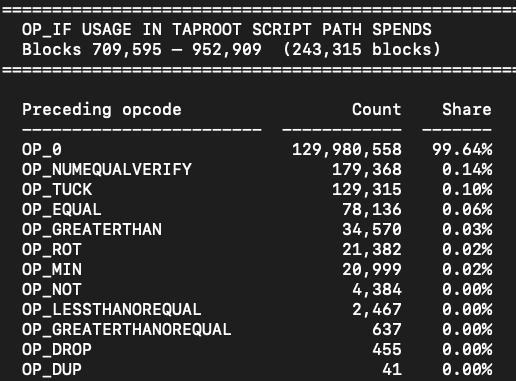
Of the 130M taproot OP_IFs on-chain, 99.6% of them are hardcoded never to run. They are of the form:
If 0 = 1, execute X
Zero never equals one, so X is never intended to be executed
If taproot is designed to execute code, OP_IF is 99.6% a system hack
GitHub and plain text 👇
21
54
185
54,236

🚀 We're building a new tool!
Tradia is a live crypto market viewer focused on simplicity and speed.
It's still under development, but you can already try it here:
tradia.munia.cash/
Feedback is welcome! 🙌
#BitcoinCash #BCH #Crypto #BuildInPublic

8
16
234
Jonathan Silverblood retweeted

Jun 10

This all just vindicates my point. You ARE living in the past.
> The 4th & 5th generation can do things that BCH cannot
What things? Not any that I'm aware of. Your mental model is 6 upgrades behind where we are.
> BCH also did not incorporate the governance lessons we learned over the years
How did it not? Again, there's been 6 years (with a 7th incoming, so about 100 years in crypto time) with no split, no contention, no dictator - nothing. Powerful upgrades are rolling out with consensus annually as perfectly as you could possibly ask for. What lessons were not learnt that could produce a better result than that?
> demands greater speed, programability & capacity
Literally the latest upgrades (that you don't know about) have added massive programmability & capacity - with work underway on 2 further upgrades around speed.
> You can disagree with my thesis, but to say I am living in the past is unfair.
It's not unfair when I still haven't seen a single shred of evidence you've looked at any of the BCH upgrades (et alone the REST of the ecosystem) since 2020. All the things you are asking for, BCH either has already done or is actively delivering on, and you haven't made a single specific point about any of it except to dismiss it. If you'd looked into any of it, you'd at least be able to provide a specific criticism, but it seems you haven't even done that.
> Usage numbers also support my thesis that this is, in fact, the case
This is the only good point you've made. I agree the BCH on-chain volume isn't there yet (or at all). So I won't argue with that. For more results here, I'd say we do still need a little time, but secondary indicators around the community like rising dev activity and growth in conferences is clearly underway which will (hopefully) lead to user growth.
> Using crypto in this specific way is a peculiar purity test. Despite my firm generating more fees & volume than low-value commerce ever could
This is imagining that I have a mutual exclusion fallacy with these things that I don't. You yourself said on the Space you don't use crypto much, backtracking to say your firm does but not buy coffees is not what you said initially, and in any case I'm sure it's true and I think it's great that you use crypto for other stuff.
3
6
35
4,168
Jonathan Silverblood retweeted

Jun 9
I’m in favor of reducing the block time on Bitcoin Cash.
If today’s technology makes 1- or 2-minute blocks safe, I’m for it.
If in 10 years the technology makes 10-second blocks safe, I’m for it.
And if in 25 years the technology allows safe 0.5-second blocks, I’m for that too
19
8
48
2,781
I've read up on this weeks discussion on the faster block proposal (here: bitcoincashresearch.org/t/ch…) and it has further strengthened my conviction for it.
I will review the chip in full before end of august, and expect to provide a public endorsement at that time.
2
9
30
1,818
Not to diss on the person talked about here, but just wanted to say that it's very likely that most people outside of BCH has these old stale views on what we're capable of.
Longer it goes on, weirder it gets.
- Barely uses crypto any more
- Still concerned with old local adoption that died in the Blocksize War
- Says BCH needs DeFi, completely unaware that protocol is upgraded & CashTokens is thriving
Checked out & not in this decade.
3
3
26
851
Jonathan Silverblood retweeted
Freedom Of Ideas!
Calin Culianu's opinion on why BCH is technically stronger today because Amaury left, is that he had positioned himself as a dictator... his way or the highway.
He pushed out talented people who disagreed with him.
Innovation in the BCH VM happened after he was gone.
The loops, reusable functions, covenant capabilities, and Turing completeness that now exist in Bitcoin Cash script would have been unlikely under his leadership, not because the ideas were wrong, but because he did not allow room for anyone's ideas but his own.
Bitcoin Takeover S17E26 with @cculianu and
@stevethurmond
Our latest episode is here. Forks and Reunions.
As always, there is no time limit and this is another epic installment. Grab some snacks and get stuck in.
The guests are none other than
@cculianu is the creator of Fulcrum, an efficient privacy-preserving SPV client and a pro science carnivore.
@stevethurmond is the most ardent advocate for Cash Stamps and believes Bitcoin was designed as a peer-to-peer electronic cash system and actively promotes Bitcoin Cash as fulfilling that vision
There are also a host of other guests that drop in during this marathon.
They discuss
👑The Evolution of Bitcoin Cash bitcoin-cash:native
👑The Problem with IOU Systems like Lightning
👑The Changing Culture of Bitcoin Cash
👑The Difficulty of Recreating bitcoin:native's Genesis
👑The End of Crypto-Friendly Spaces in Europe
youtube.com/live/SJkwCaQLRuc…
1
10
23
1,009
Jonathan Silverblood retweeted
Goldsmiths stored gold and issued receipts. Then they realized most people never withdrew all their gold at once. So they issued more receipts than gold. Fractional reserve banking wasn't an accident. It was the business model. youtube.com/shorts/vHa5BPJcp…
1
2
10
1,645