
Actor ♥️ Proud Indian 🇮🇳.. Die hard Cricket fan and Cinema lover:)ARR/Vijay/Dravid/Dhoni (My Role Models) 😍😍😍😍SREAD LOVE ♥️
Joined July 2010
- Tweets 87,552
- Following 2,249
- Followers 1,768
- Likes 174,440
2,762 Photos and videos



Pinned Tweet

31 May 2024
youtu.be/L1WaAIeITHE?feature…
My interview 🙏❤️
Thanks to kumudham for the Interview ❤️🤗 Small steps...Do watch ❤️❤️
#Interview #Youtube #Kumdham #Acting #Cinema #Serial
3
6
18
34,981

Opposition leader to meme creator ...Wt an Upgrade ✅💯

Four-seater sofa upgraded to five-seater sofa 👏👏
#JustThooyaSakthiThings #SofaModel

60
😂😂😂😂

1
58
Prithvi krishna retweeted

13
706
2,645
35,179
Prithvi krishna retweeted

Now Kolathur Ex MLA to Thangam Thennarasu :
5
371
1,689
26,816
Prithvi krishna retweeted
RATHAM vs THAKKALI CHUTNEY
Funny how fiscal debt was not everyone’s favorite topic in 2021.
Now that the spotlight is back on the state’s finances, we’re suddenly being told to attend economics class.
11
446
1,016
28,856
Prithvi krishna retweeted

SHOCKING : சட்டமன்றத்திலேயே உண்மைக்கு மாறான பொய்களை கூறிவுள்ளது திமுக அரசு 😳😱
12
1,676
4,513
64,401
Prithvi krishna retweeted

In 2021, the financial situation of Tamil Nadu was BAD.
But in 2026, it turned WORSE and is worsening even more 🤬🤬🤬.
6
543
2,424
35,992
Prithvi krishna retweeted

Tamil Nadu Finance White Paper present by TN govt: In a nutshell.
• TN’s fiscal position worsened continuously in the post-Covid period (2021–26), while peer states such as Karnataka, Maharashtra and Gujarat improved/stabilised.
• Outstanding debt nearly doubled:
₹5.13 lakh crore (2021) → ~₹10 lakh crore (2026)
• Revenue deficit hit a record:
₹46,538 crore → ₹78,324 crore
(State borrowing increasingly used for day-to-day spending)
• Own tax collection weakened:
Tax effort fell from 5.93% → 5.45% of GSDP. Lowest level recorded for TN.
• Interest burden surged:
Interest payments rose 61%
₹41,564 crore → ₹67,050 crore
• TN now spends more on servicing debt than creating future assets:
Interest payments exceed capital expenditure (1.32:1).
• Capital expenditure declined:
1.79% → 1.44% of GSDP
• Salaries pensions interest now consume:
64% of revenue receipts
~87% revenue already committed before budgeting.
• Government guarantees almost tripled:
₹65,659 crore → ₹1.8 lakh crore
• Including PSU liabilities, total fiscal exposure estimated at:
~₹13.18 lakh crore
• Fiscal deficit stayed above FRBM limit (3%) every year;
2025–26 estimated at record ₹1.33 lakh crore.
• White Paper flags:
— Revenue leakages
— Systemic corruption in revenue departments
— Rising expenditure pressure
— Need for PSU reforms & debt correction
• 2026–27 outlook:
Revenue deficit could reach ~₹90,500 crore vs ₹48,696 crore projected in Interim Budget.
• Warning:
TN’s ageing population may shrink tax capacity while increasing welfare & healthcare spending.
Bottom line:
The paper argues TN’s fiscal stress is structural, not temporary and calls for tighter revenue mobilisation, expenditure discipline, PSU reform and cleaner governance.
20
107
393
23,676
I can 100% say - Minimum 50% of people who hate Vijay now are his haters from acting days ..Simple blind hate vera yedhuvum illa...Wtever he does thy hate cuz tat has been with them for so many years ..But but thy won't accept it .
#TVK #CMVijay
15h

4 types of oopies on X:
1. Real oopies: they were with the party for so long and show loyalty.
2. Vijay haters from Ajith/Rajini fans who hated him before politics. Now using politics to hate him.
3. Thinking social justice is about being oopie & its cool
4. Engagement farming
3
131
Prithvi krishna retweeted

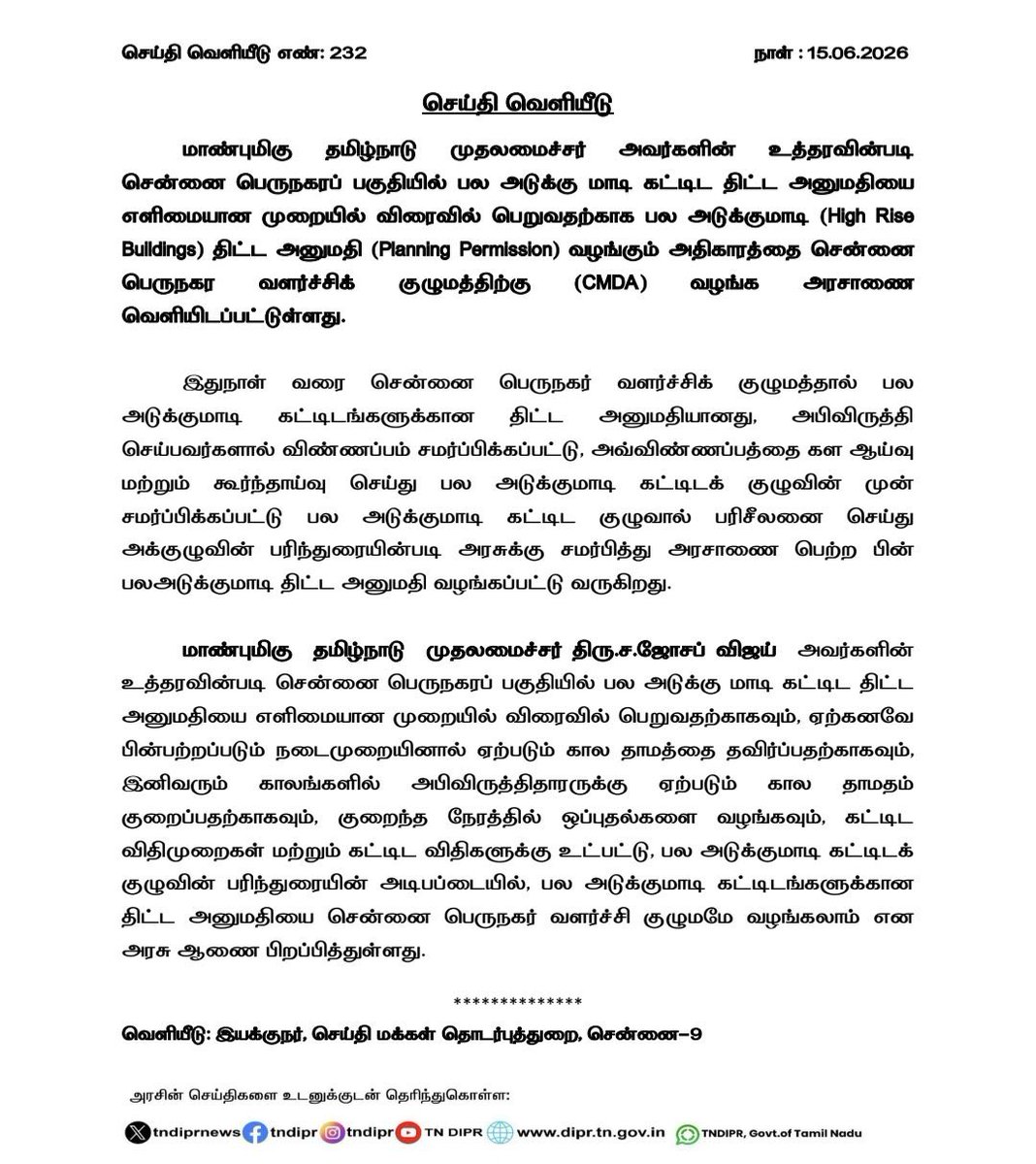
Within just 40 days of taking charge, our government has delivered a major reform. Planning approval for high rise buildings in Chennai is now simpler and faster. CMDA can now directly grant planning permission, cutting long delays. This is a big boost for GCCs, R&D centres and large investments in our State. A clear step towards making Tamil Nadu the best place to do businesss! My heartfelt thanks to our Hon'ble Chief Minister Thiru. C. Joseph Vijay for this visionary decision.
@CMOTamilnadu
#InvestInTN #MakeInTN #ThriveInTN #TamilNadu
83
766
2,841
58,910
Prithvi krishna retweeted

தமிழ்நாட்டின் நிதி நிலையை சீராக்குகிறேன் என்று சவால் விட்டு பதவியில் அமர்ந்தவர் எனது நண்பர் பிடிஆர் தியாகராஜன். அதற்காக கடுமையாக முயற்சி செய்தார். ஓரளவு செய்திருப்பார் என்றே நம்புகிறேன்.
மகன் 30 ஆயிரம் கோடி, மருமகன் 30 ஆயிரம் கோடி சம்பாதித்து விட்டார்கள் என்ற உண்மையை சொன்னார் என்ற ஒரே காரணத்துக்காக, அவரை நிதித்துறையிலிருந்து மாற்றி, விருப்பமே இல்லாத தங்கம் தென்னரசுவை அத்துறையில் நியமித்து, தலைக்கனம் பிடித்த ஒரு அதிகாரியை நிதி துறை செயலராக போட்டு, தமிழகத்தை மீளமுடியாத கடன் சுமையில் தள்ளி 8 கோடி மக்களுக்கு பேரும் துரோகத்தில் இழைத்திருக்கிறது திமுக மற்றும் அதன் தலைவர் முக ஸ்டாலின்.
வாங்கிய கடன்கள் மக்கள் நலத் திட்டங்களுக்கு அல்ல. தேவையற்ற பாலங்கள் மற்றும் கட்டுமானப் பணிகளை செய்து அதில் 25 முதல் 35 சதவிகிதம் வரை லஞ்சம் வாங்குவதற்காகவே கடன் வாங்கப்பட்டது.
இப்படி கடன் வாங்கியதில் பெரும் பொறுப்பு, எ.வ.வேலு, கே.என்.நேரு, ஐ. பெரியசாமி, சேகர் பாபு, ஆகியோரை சேரும். இப்படி ஊழல் செய்த பணத்தில்தான் சபரீசன் 150 கோடிக்கு வாட்ச் வாங்க முடிந்தது. முக ஸ்டாலின் 3 கோடி காரில் பயணிக்க முடிந்தது. செந்தாமரை பள்ளிக்கூடங்களை வாங்கி குவிக்க முடிந்தது. உதயநிதி திரைப்படங்களில் பணத்தை கொட்ட முடிந்தது.
இவர்களில் ஒருவர் விடாமல் அத்தனை பேர் மீதும் தமிழக அரசு ஊழல் வழக்குகளை தொடர வேண்டும். திமுகவோடு கள்ளக்கூட்டணியில் இருந்த எடப்பாடி பழனிச்சாமி இதை ஒருபோதும் செய்திருக்க மாட்டார். தவெக அரசு செய்யும் என்று நம்புகிறேன்.
தமிழகத்துக்கு திமுக மாபெரும் தீங்கு. கொடிய விஷக்கிருமி. தப்பித்தவறிக்கூட திமுக மீண்டும் ஆட்சியில் அமர்ந்து விடக் கூடாது.

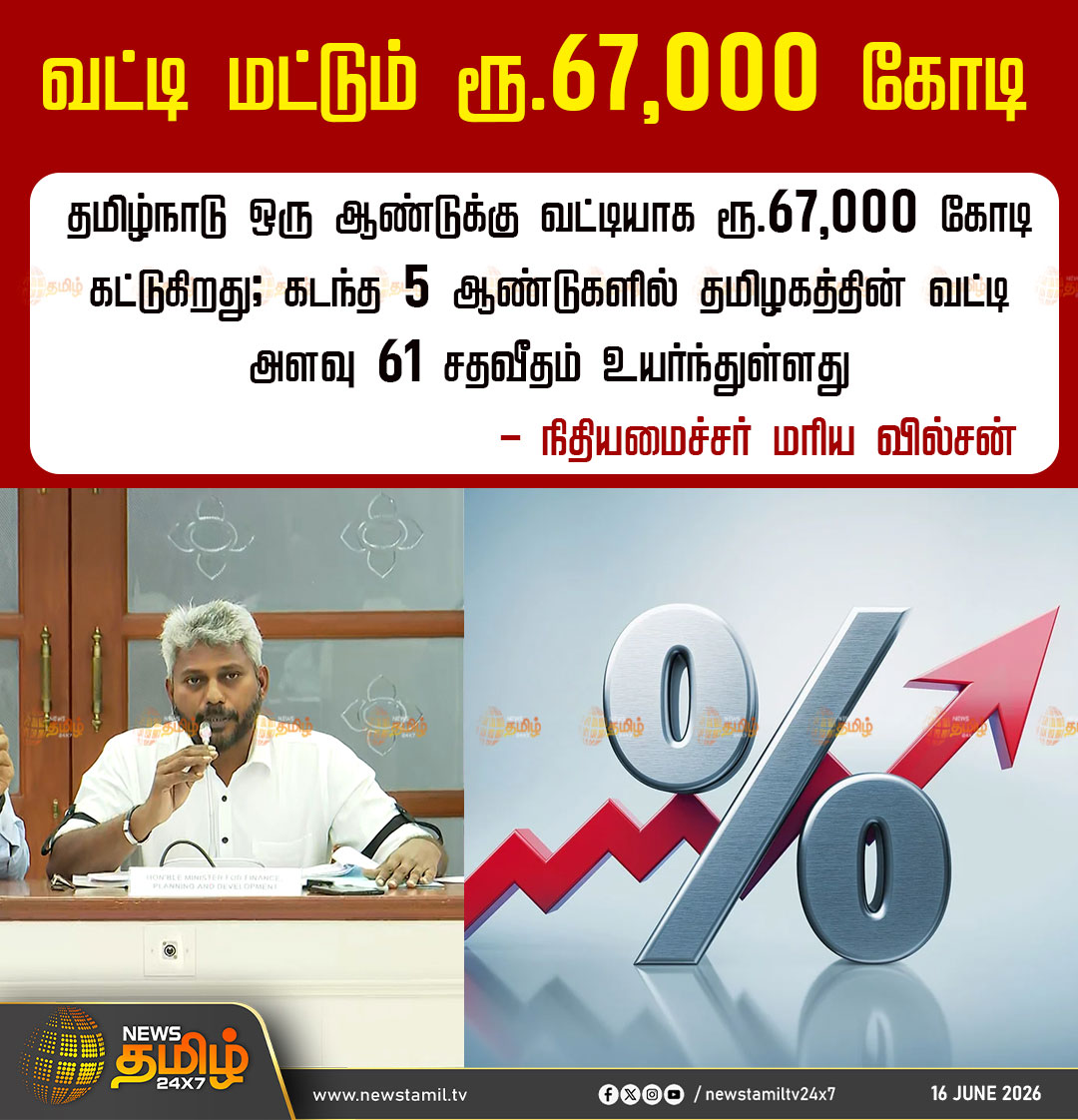
White Paper Report | வட்டி மட்டும் ரூ.67,000 கோடி
தமிழ்நாடு ஒரு ஆண்டுக்கு வட்டியாக ரூ.67,000 கோடி கட்டுகிறது
கடந்த 5 ஆண்டுகளில் தமிழகத்தின் வட்டி அளவு 61 சதவீதம் உயர்ந்துள்ளது
- நிதியமைச்சர் மரிய வில்சன்
#NewsTamil24x7 #WhitePaper #Tamilnadu #CMVijay #TVK #MariaWilson
132
1,258
4,797
284,565
Enaku #DMK stocks orey orey badhil sollunga...Yedhuku PTR ah finance minister la irundhu Stalin maathunaaru ??? Any valid answer !? Idhuku badhil sollitu DMK ku support pannunga ..
#TVK

தமிழ்நாட்டின் நிதி நிலையை சீராக்குகிறேன் என்று சவால் விட்டு பதவியில் அமர்ந்தவர் எனது நண்பர் பிடிஆர் தியாகராஜன். அதற்காக கடுமையாக முயற்சி செய்தார். ஓரளவு செய்திருப்பார் என்றே நம்புகிறேன்.
மகன் 30 ஆயிரம் கோடி, மருமகன் 30 ஆயிரம் கோடி சம்பாதித்து விட்டார்கள் என்ற உண்மையை சொன்னார் என்ற ஒரே காரணத்துக்காக, அவரை நிதித்துறையிலிருந்து மாற்றி, விருப்பமே இல்லாத தங்கம் தென்னரசுவை அத்துறையில் நியமித்து, தலைக்கனம் பிடித்த ஒரு அதிகாரியை நிதி துறை செயலராக போட்டு, தமிழகத்தை மீளமுடியாத கடன் சுமையில் தள்ளி 8 கோடி மக்களுக்கு பேரும் துரோகத்தில் இழைத்திருக்கிறது திமுக மற்றும் அதன் தலைவர் முக ஸ்டாலின்.
வாங்கிய கடன்கள் மக்கள் நலத் திட்டங்களுக்கு அல்ல. தேவையற்ற பாலங்கள் மற்றும் கட்டுமானப் பணிகளை செய்து அதில் 25 முதல் 35 சதவிகிதம் வரை லஞ்சம் வாங்குவதற்காகவே கடன் வாங்கப்பட்டது.
இப்படி கடன் வாங்கியதில் பெரும் பொறுப்பு, எ.வ.வேலு, கே.என்.நேரு, ஐ. பெரியசாமி, சேகர் பாபு, ஆகியோரை சேரும். இப்படி ஊழல் செய்த பணத்தில்தான் சபரீசன் 150 கோடிக்கு வாட்ச் வாங்க முடிந்தது. முக ஸ்டாலின் 3 கோடி காரில் பயணிக்க முடிந்தது. செந்தாமரை பள்ளிக்கூடங்களை வாங்கி குவிக்க முடிந்தது. உதயநிதி திரைப்படங்களில் பணத்தை கொட்ட முடிந்தது.
இவர்களில் ஒருவர் விடாமல் அத்தனை பேர் மீதும் தமிழக அரசு ஊழல் வழக்குகளை தொடர வேண்டும். திமுகவோடு கள்ளக்கூட்டணியில் இருந்த எடப்பாடி பழனிச்சாமி இதை ஒருபோதும் செய்திருக்க மாட்டார். தவெக அரசு செய்யும் என்று நம்புகிறேன்.
தமிழகத்துக்கு திமுக மாபெரும் தீங்கு. கொடிய விஷக்கிருமி. தப்பித்தவறிக்கூட திமுக மீண்டும் ஆட்சியில் அமர்ந்து விடக் கூடாது.
2
158
Prithvi krishna retweeted

This Tamil Nadu performance report i have prepared & posted way back.
I have arrived estimate number closer to today’s white paper.
@TVKVijayHQ
May 15

DMK government 5 year term Fiscal performance comparison with all major peer state.
GSDP is second compare to peer.
Lagging or doing worst than peers
1. Revenue Receipts/GSDP%
2. Fiscal Deficit/GSDP%
3. Debt/GSDP %
4. Committed Expenditure
Almost 27% of revenue receipts coming from TASMAC.
Debt is way higher and crosses red flag situation.
Committed expenditure mostly coming from Pension & Government employee salary.
In all parameter Maharastra doing too good.
@TVKVijayHQ #TVKVijay #DMK #ADMK #BJP #Congress #Maharastra #NDA

5
23
85
3,859
Prithvi krishna retweeted
Even this outstanding Debt my estimate is closer to white paper today.
Which I have posted way long back.
Per capita debt estimate way closer as well.
Here I have attached detailed debt values in all parameter.
@TVKVijayHQ
May 20
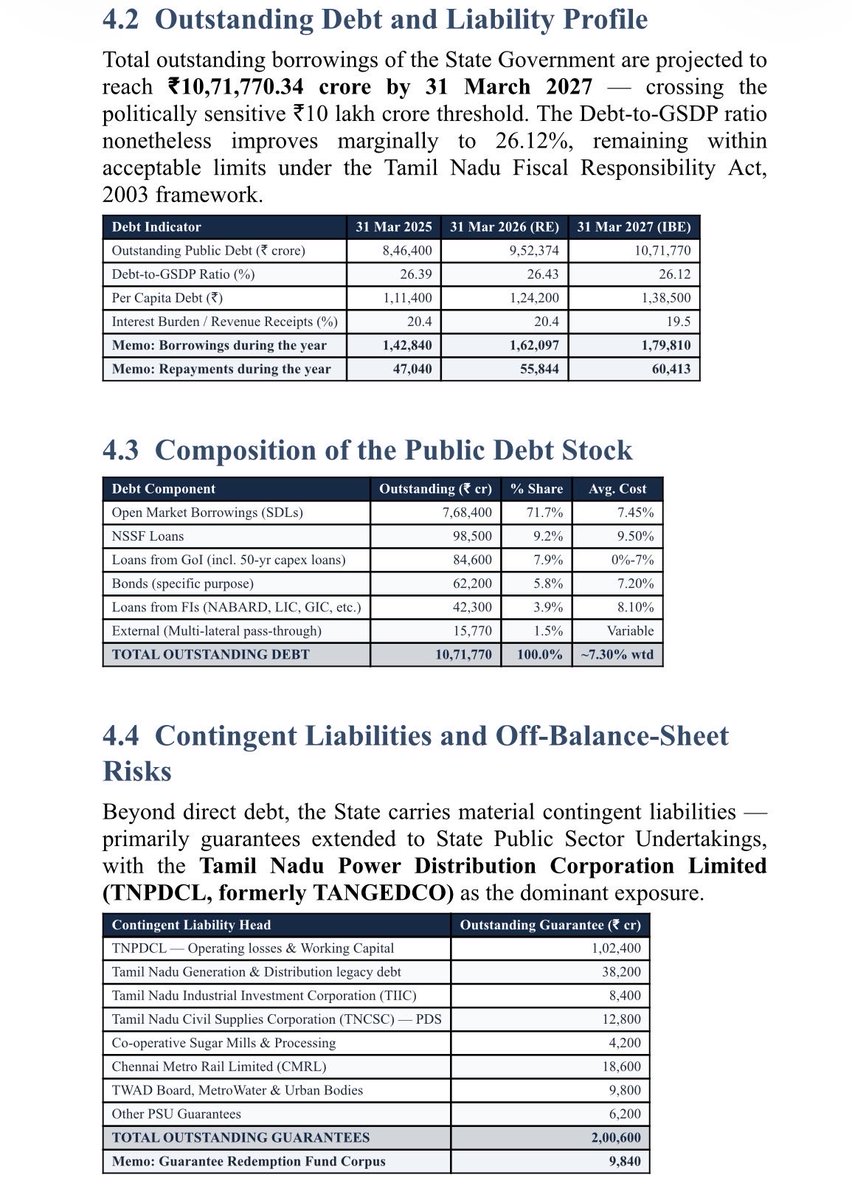
Tamil Nadu total Debt 10Lakh crore
Per capita Debt in TN is 1Lakh
Outstanding
PublicDebt - 8,46,400CR
Debt to GSDP ratio. - 26.39
Per capita Debt. - 1,11,400
Interest Burden. - 20.4
Composition of Public Debt
Open market borrowing. - 7,68,400
NSSF loan. - 98,500
Loan from Gol. - 84,600
Bond. - 62,200
Loan NABARD,LIC,GIC. - 42,300
External. - 15,770
Total Debt. - 10,71,770Cr
Contingent Liability- 2,00,006Cr
Tamil Nadu Electricity is worst affected
@TVKVijayHQ #TVKVijay #TVKVijayHQ #DMK #ADMK #BJP #Congress #tamilnaducm
2
15
61
2,974
Prithvi krishna retweeted

11h
As per TVK finance minister Maria Wilson presentation in Press meet.
1. Total Outstanding Debt: ₹10 Lakh Crore (10 லட்சம் கோடி ரூபாய்)
2. Record Revenue Deficit: ₹78,324 Crore (78,324 கோடி ரூபாய்)
3. State's Own Tax Revenue (SOTR): 5.45%
4. Interest Payment Burden: 22.8%
5. Committed/Committed-Equivalent Expenditures: 64.4%
6. Actual True Debt Liability: ₹13.18 Lakh Crore (13.18 லட்சம் கோடி ரூபாய்)
@TVKVijayHQ @CMOTamilnadu
The total debt accumulated in just the last 5 years exceeds the total outstanding debt accumulated during the first 60 years of the state's history combined. @MarieWilson_TVK
22
135
338
28,807

Prithvi krishna retweeted

I believe this is the most important point.
As corruption is targeted, money that was moving to private pockets would start flowing to the state exchequer. The increase in revenue from this can be substantial.
This additional money can be used for repaying debts, incurring fewer new debts, and funding social welfare schemes.
21
23
245
16,219
Prithvi krishna retweeted

Song that made the world groove! 🪇 800M views for #ArabicKuthu and it still hits the same. ❤️💥
▶️ youtu.be/KUN5Uf9mObQ?list=RD…
@actorvijay @Nelsondilpkumar @anirudhofficial @hegdepooja @AlwaysJani #Beast
85
1,939
11,519
166,078