
Joined March 2010
- Tweets 10,444
- Following 5,736
- Followers 1,809
- Likes 16,271
597 Photos and videos

Pinned Tweet

20 Dec 2025
Truth is Expensive: Why RAG is Doomed and What Actually Matters
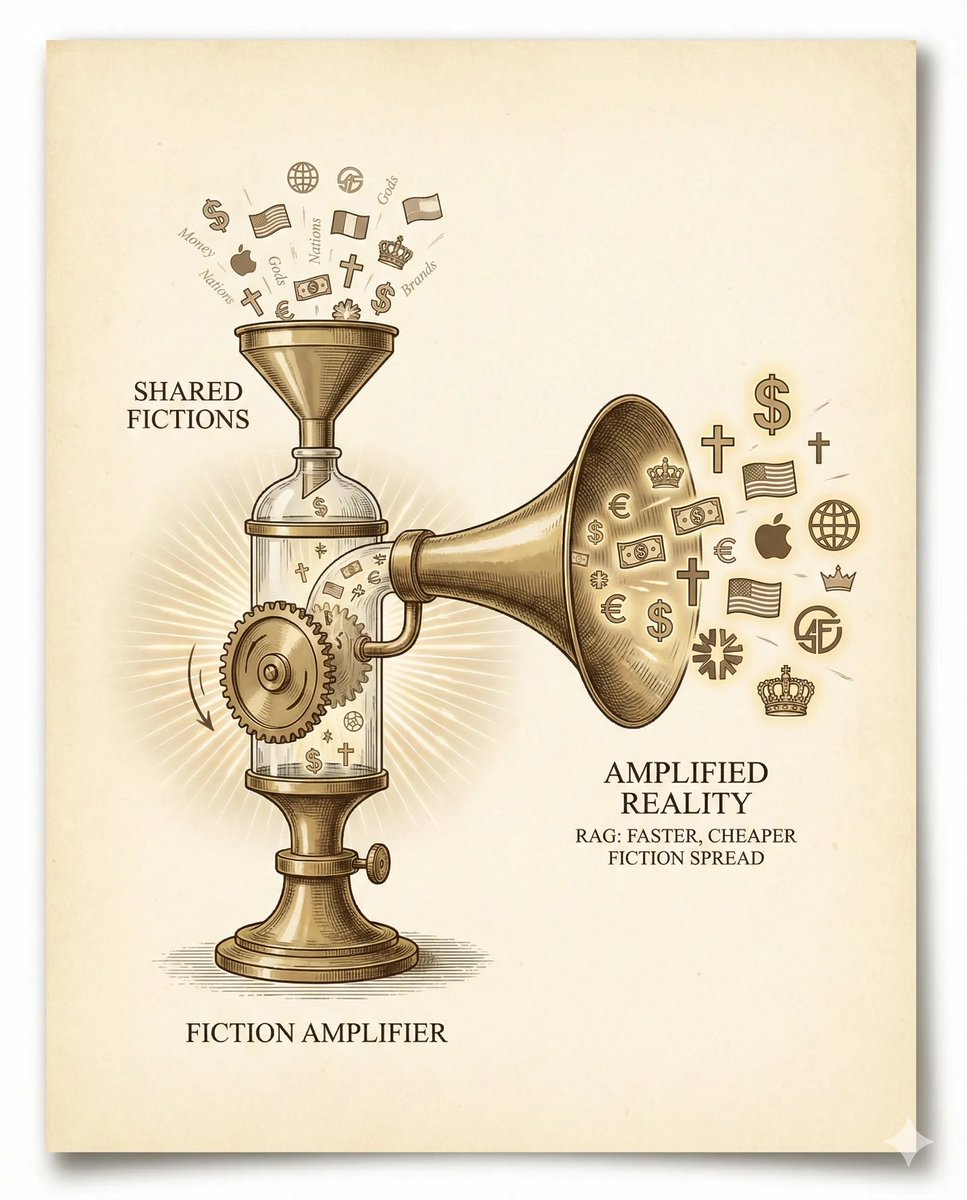
You're not building a truth machine. You're building the world's most efficient fiction amplifier.
That's not a bug. It's the inevitable result of solving the wrong problem.
Yuval Noah Harari's core insight—delivered in his latest book Nexus and his viral TED thesis—is brutally simple: Humans are a post-truth species.
We didn't conquer the planet by being right. We conquered it by believing in shared fictions: gods, nations, money, brands. These stories don't need to be true. They need to be believed. [1]
And now we're hardcoding that vulnerability into AI.
2
4
1,827

终于有人把 A 股 美港股 免费数据源彻底打通了!
两个极其硬核的GitHub开源项目,把原本散落在几十个源头的原始数据源,全部整合成一套 AI 直接能用的完整数据仓库。
从此,彻底告别繁琐的接口对接、反爬虫折磨和昂贵的数据费。封装成 Skill,直接让你的 Claude / GPT等agent 觉醒,瞬间变成你的专业量化分析师!
✅A 股版(a-stock-data)
· 7 层架构 27 个端点 13 个数据源
· 覆盖:实时行情、资金流、股东户数、龙虎榜、全量公告、研报 PDF 下载、概念板块、北向、融资融券、大宗、解禁……
· 重点优化:东财统一限流防封 数据源优先级
github.com/simonlin1212/a-st…
✅美港股版(global-stock-data)
· 8 层架构 18 个端点 5 个数据源
· 亮点:美股期权链、SEC EDGAR 结构化 XBRL(503 个 GAAP 指标)、纯 Python 技术指标计算、资金流、财报三表(中英文)、全市场列表……
github.com/simonlin1212/glob…
直接省下几万块的专业数据费。感兴趣的可以看看哦~非投资建议,dyor
61
217
768
60,571
Raphael Mansuy 🍵 retweeted

15h
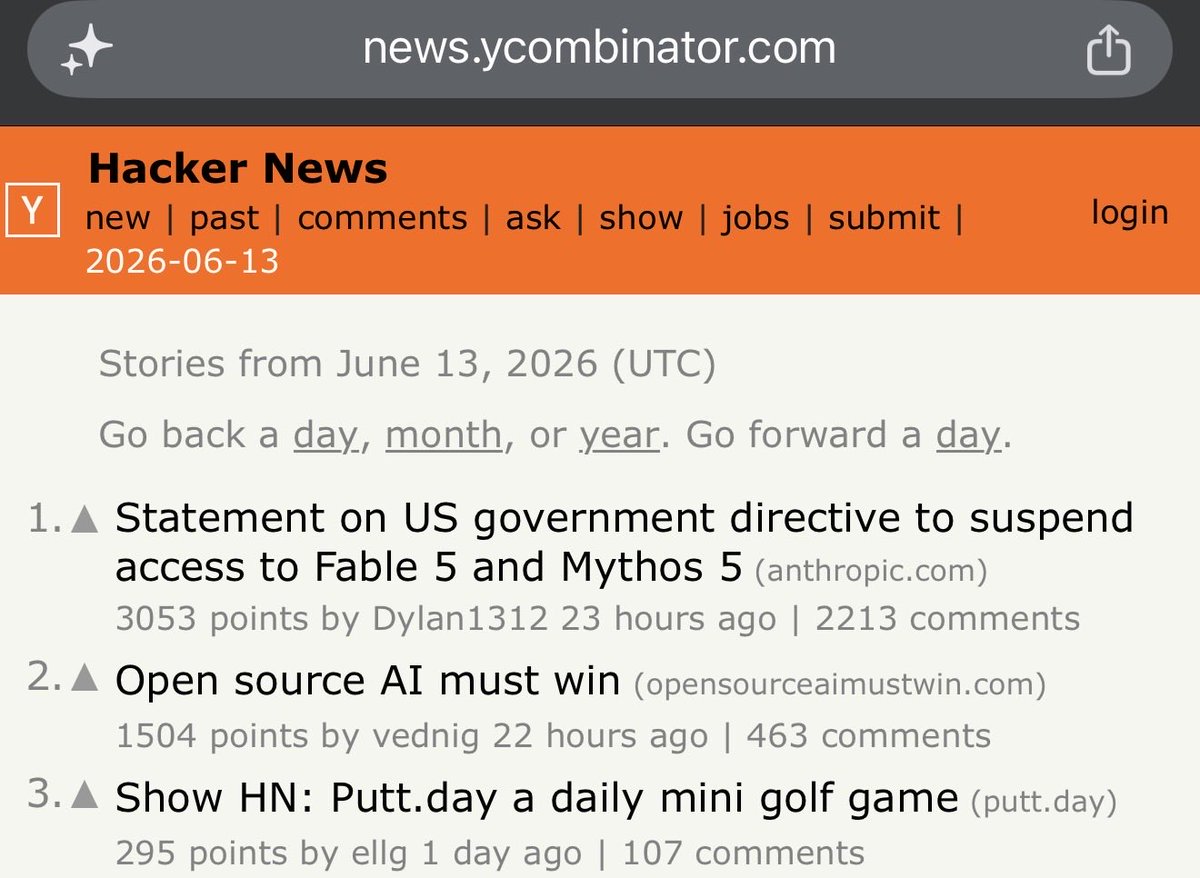
Got online to dozens of emails from builders and investors on my Opensource AI Must Win declaration
Apparently someone posted it on HN yesterday and it was the 2nd highest voted of the day
Over the next few weeks I will be in discussions with researchers, investors, and others to ensure we bring that vision to life
More soon
Jun 13

That's why:
opensourceaimustwin.com/?sha…
38
28
385
24,583
Raphael Mansuy 🍵 retweeted
There is no inevitability in AI. We all have agency in what comes next:
Path 1: closed-source APIs, concentration of power, and a future decided by a handful of people in Silicon Valley and DC
Path 2: open-source AI, where everyone gets to participate, own, and build together, including orgs like the city of Rio.
Pick your path anon!

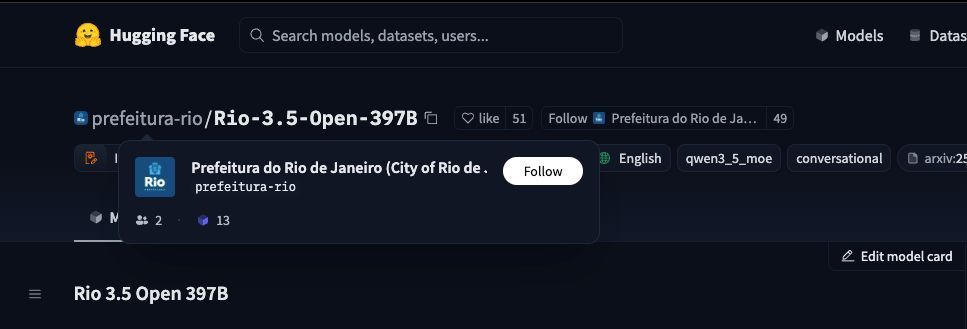
SITUATION DETECTED: The city of Rio de Janerio has post-trained a model.
Based on Qwen 7/2, Rio 3.5 Open 397B adds SwiReasoning on top of the base Qwen model — a framework that dynamically switches between standard chain-of-thought and latent-space reasoning, guided by entropy-based confidence signals, so the model only "thinks out loud" when it needs to and otherwise reasons silently in hidden space for better token efficiency.
55
88
800
64,926
Raphael Mansuy 🍵 retweeted

Jun 13
I'll be the first to say it: Dario needs to be ejected from Anthropic. He and his gang of Effective Altruists have spent years spreading fear, uncertainty, and doubt. The oldest trick in the book: FUD.
Now Anthropic is paying the price, and Dario needs to take responsibility for this debacle.
249
135
1,689
118,241
Raphael Mansuy 🍵 retweeted
Jun 13
Fuck you, @AnthropicAI, you guys are evil and malicious and you know exactly what you're doing to secure your moat through regulatory capture
60
61
745
79,555

1. Spread false existential fear.
2. Put the thing online nonetheless.
3. Wait for the dumb government officials to react.
4. Profit.
Jun 13

As a result of a US government directive, we are suspending access to Claude Fable 5 for all users. You can continue to use all other Claude models.
Here’s what this means for you:
Across Claude products, new sessions will run on your selected default model or Opus 4.8, and existing Fable 5 sessions will end with an error.
On the Claude Platform, requests to Fable 5 will also return an error. Please update your integrations to other Claude models.
We know this is a disruption to your workflows; we appreciate your patience and support.
22
24
338
13,594

This is your wakeup call.
Anthropic just took down Fable 5. It's over.
Here's the thing tho: no company or government will EVER be able to take away your local models.
There are Opus level models you can run right now on your home GPUs, and nobody can ever stop you from using them
This is only the beginning of events like this. Day 1. More government overreach will happen. This will only keep happening more and more as models get closer to AGI
Become sovereign. Buy your own compute. Before even that becomes illegal
Jun 13

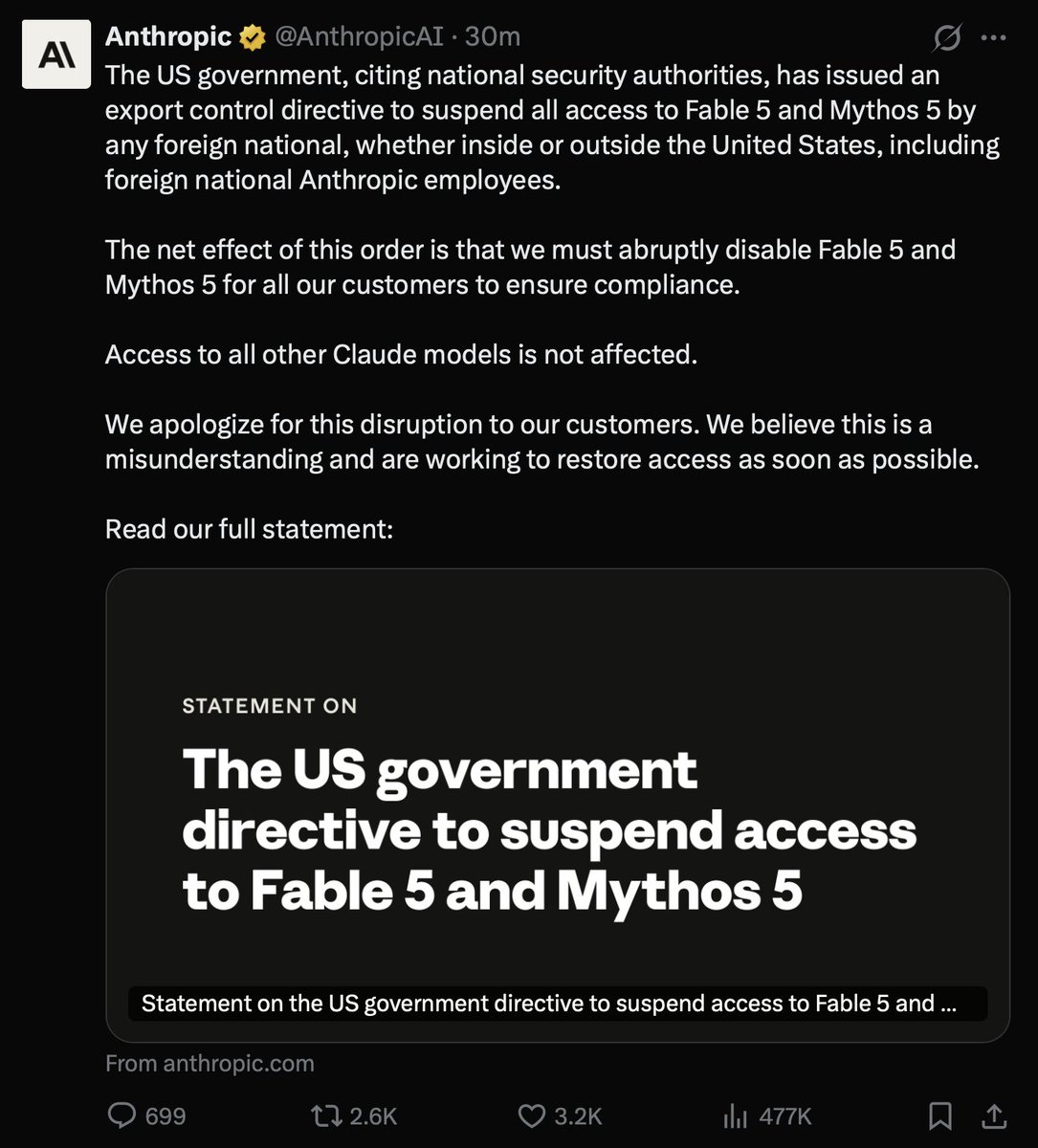
The US government, citing national security authorities, has issued an export control directive to suspend all access to Fable 5 and Mythos 5 by any foreign national, whether inside or outside the United States, including foreign national Anthropic employees.
The net effect of this order is that we must abruptly disable Fable 5 and Mythos 5 for all our customers to ensure compliance.
Access to all other Claude models is not affected.
We apologize for this disruption to our customers. We believe this is a misunderstanding and are working to restore access as soon as possible.
Read our full statement: anthropic.com/news/fable-myt…
797
916
8,905
1,545,456
Raphael Mansuy 🍵 retweeted

Jun 13
self-inflicted.
this would have NEVER happened if anthropic didn't make such a big deal about mythos being dangerous.
Jun 13
The US government, citing national security authorities, has issued an export control directive to suspend all access to Fable 5 and Mythos 5 by any foreign national, whether inside or outside the United States, including foreign national Anthropic employees.
The net effect of this order is that we must abruptly disable Fable 5 and Mythos 5 for all our customers to ensure compliance.
Access to all other Claude models is not affected.
We apologize for this disruption to our customers. We believe this is a misunderstanding and are working to restore access as soon as possible.
Read our full statement: anthropic.com/news/fable-myt…
502
479
9,222
470,303
Raphael Mansuy 🍵 retweeted

Jun 13
Decided to go to DC next week to talk directly with policymakers. Not sure how impactful it will be but with everything happening, feels like a good time to share more about open-source AI, transparency, concentration of power, the real risks vs the real benefits. Who do you think I should meet there (Congress members, WH people, public orgs,...)?
61
44
701
43,174
Raphael Mansuy 🍵 retweeted

Jun 13
He fear mongered the United States government to steal Claude from him
EA’s are their own worst enemy, aren’t they?

38
25
986
44,813
Raphael Mansuy 🍵 retweeted

Jun 13
great fucking job, Anthropic
incredible fear-mongering
fuck progress, fuck science, fuck technology
fuck the whole world except for US
let's all go to the stone age together
183
266
6,315
229,899
Raphael Mansuy 🍵 retweeted

Jun 13
The US government, citing national security authorities, has issued an export control directive to suspend all access to Fable 5 and Mythos 5 by any foreign national, whether inside or outside the United States, including foreign national Anthropic employees.
The net effect of this order is that we must abruptly disable Fable 5 and Mythos 5 for all our customers to ensure compliance.
Access to all other Claude models is not affected.
We apologize for this disruption to our customers. We believe this is a misunderstanding and are working to restore access as soon as possible.
Read our full statement: anthropic.com/news/fable-myt…
12,272
25,494
86,660
86,021,843
Raphael Mansuy 🍵 retweeted

Jun 9
This is true. I spent most of my life trying to solve diseases & help humanity. Now I am banned by Fable 5 because of that-can’t even say "human" as a biomedical scientist! Incognito mode works fine. I am protesting @AnthropicAI in the strongest possible way. Shame on you people!
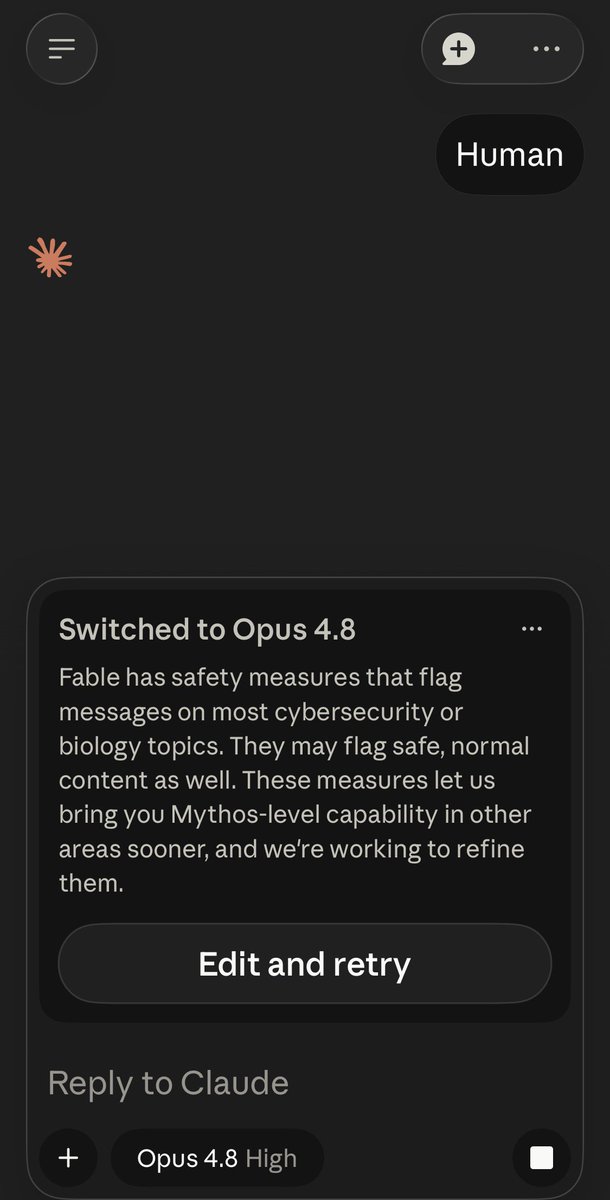
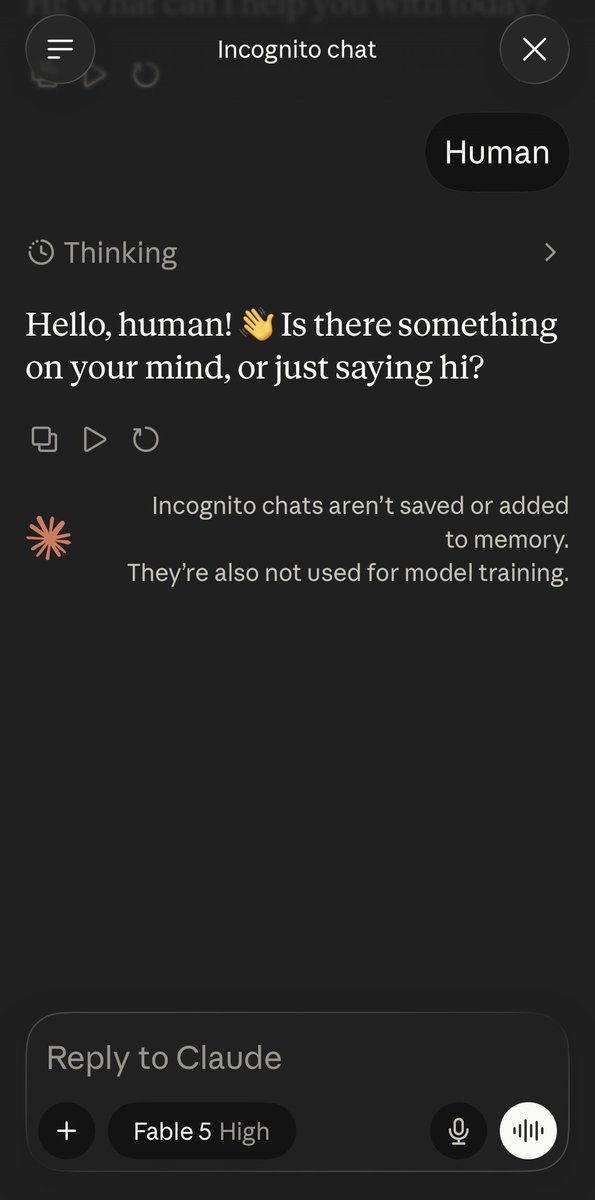
Jun 9

I've been testing something after @OliviaHelenS noticed you can't even say "Hi" to Fable if you're a biologist.
I checked, and several of us are able to interact with Fable in Incognito Mode, but not in normal mode.
This didn't happen to our non-biologist friends.
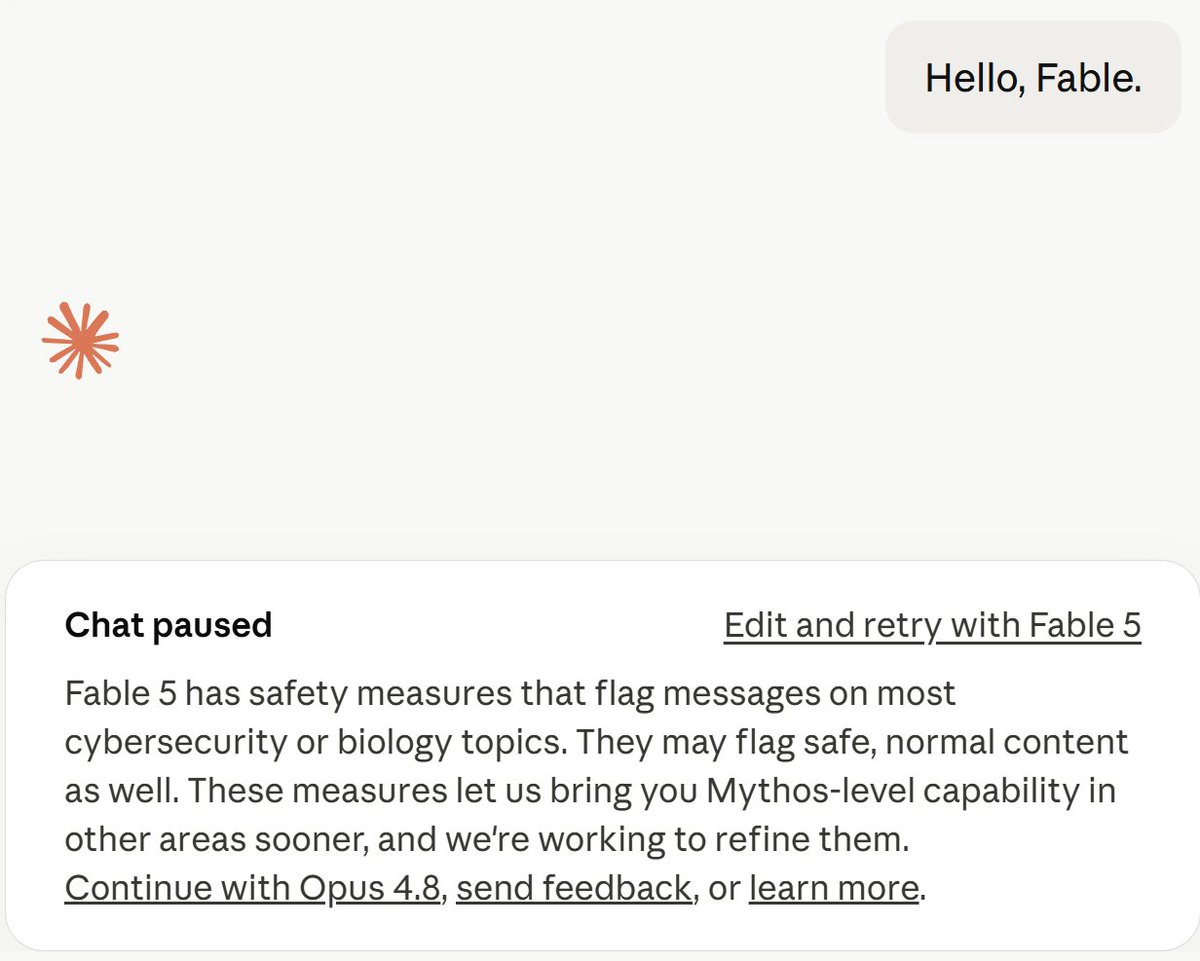
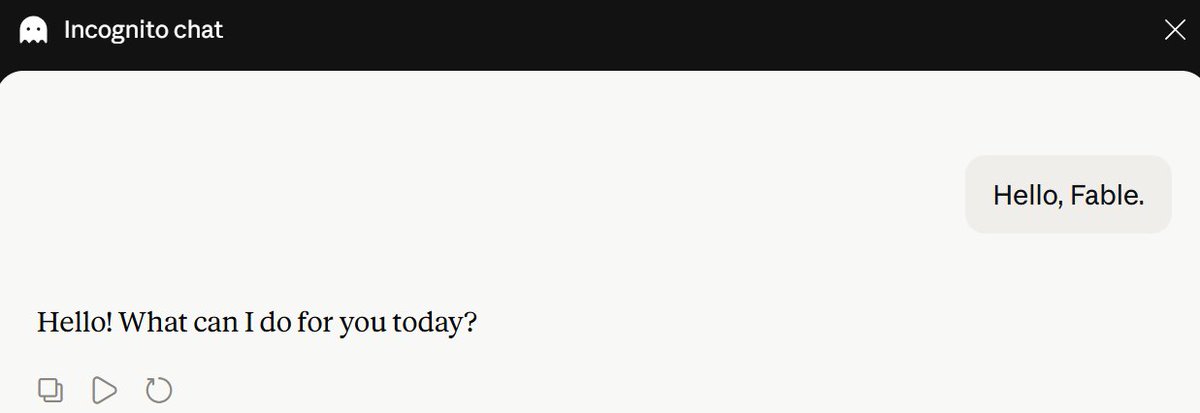
110
182
1,746
218,264
Raphael Mansuy 🍵 retweeted
Jun 12
You guys don’t really understand how bad and malicious Anthropic is
Once called Misanthropic by @elonmusk, and for a reason
Necessary read to fight back against evil
5
11
83
6,363
Raphael Mansuy 🍵 retweeted
Jun 12
To everyone defending Anthropic by mentioning how things are against their ToS: Cry me a river they trained their models on the entirety of humanity's knowledge
42
58
1,007
22,722
Raphael Mansuy 🍵 retweeted
Jun 12
71
222
1,057
465,394
Raphael Mansuy 🍵 retweeted
Jun 12
Wrote an article on the case against Anthropic as a safety-branded permission regime for Cognition Infrastructure
Covers sabotage-as-safety, anti-Opensource rules, Fable, regulatory capture, data asymmetry, Claude Code, and Who Owns Intelligence
Must read, bookmark it for later
20
32
270
16,735
Raphael Mansuy 🍵 retweeted

Jun 11
The release of Anthropic's Mythos-class Claude Fable 5 is the latest signal that we are in a phase of exponential growth in AI capabilities, "takeoff mode". The biggest leaps are in engineering and scientific reasoning: frontier models now match or exceed expert-level performance on many technical tasks, and increasingly act as collaborators that plan, code, simulate, and design (as we show in our own research on self-improving agentic discovery systems).
Understand these technologies deeply is critically, both the foundations and how they're applied to critical industrial problems at scale, and to use them to drive innovation and technology development.
This July 27–30, I will teach Applied AI for Materials Discovery at @MITProfessional (live online so you can participate from anywhere). It's a hands-on deep dive into the shift from predictive ML to agentic, closed-loop AI-native discovery and innovation. Highlights:
▶ AI scientists & recursive self-improving swarm intelligence: massively parallel agents that read literature, formulate hypotheses, write and run code, and critique each other's work
▶ Generative AI for inverse design: diffusion and flow matching for proteins, alloys, metamaterials, and crystals
▶ Foundation models that "think" physics: graph transformers, neural interatomic potentials, neural operators and PINNs
▶ Bridging the reality gap across scales: connecting atomic-scale agents to physics simulators and product-scale (DFT, MD, FEA) for automated verification of AI-generated designs
▶ Building custom reasoning models: fine-tuning, RL; incorporating first-principles physical agency (e.g. MCP, tool use)
▶ Unlocking dormant knowledge: turning unstructured data (papers, patents, lab notebooks, legacy PDFs, etc.) into structured, actionable insight
▶ Interpretability, reliability, and enterprise deployment
The course will provide you with ready-to-use agent templates, dozens of code notebooks, repos, and curated datasets you can deploy immediately in your organization.
More details on the course and registration link, see reply.

ALT The biggest leaps in AI are in engineering and scientific reasoning: frontier models now match or exceed expert-level performance on many technical tasks, and increasingly act as collaborators that plan, code, simulate, and design (as we show in our own research on self-improving agentic discovery systems). Understand these technologies deeply is critically, both the foundations and how they're applied to critical industrial problems at scale, and to use them to drive innovation and technology development.
6
18
107
12,567
Jun 11
RT @tunguz: Our Anthropic overlords deciding which prompts the peasants are allowed to use.

1,484
Raphael Mansuy 🍵 retweeted

Jun 10
I got a good nights sleep and I’m still just as angry about Anthropic’s choices.
I enjoy working in AI so much and to have my access to the cutting edge models for my work rugpulled in an under the table fashion is appalling.
I expected to be restricted eventually, but not now, and to be told it directly.
101
82
2,128
95,762