
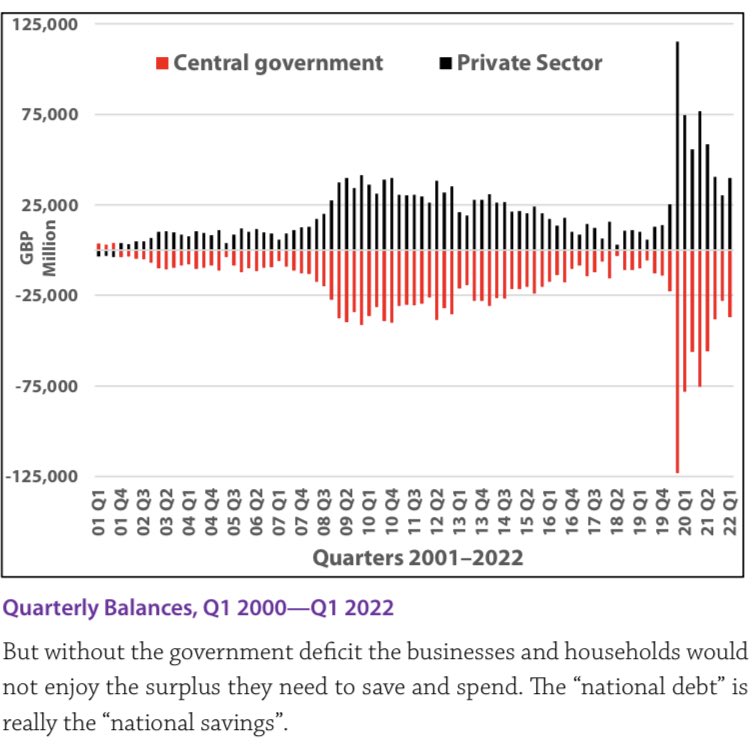
the government doesn't borrow our savings in order to run a deficit, it runs a deficit so that we can have savings
Joined August 2013
- Tweets 20,911
- Following 983
- Followers 1,088
- Likes 3,762
81 Photos and videos




Robert Pearson retweeted

Jun 14
Welcome description of the Social Security Trust Fund bank balance as “metaphorical”.
As Greenspan noted, ageing population is a real resources problem, not a financial resources problem.
youtu.be/DNCZHAQnfGU
2
3
266


Robert Pearson retweeted

It's amazing how many people (including in the national media) don't know the difference between a refugee, an asylum seeker and an illegal immigrant.
It's explained here, especially "Schrödinger's illegal immigrant"...
102
375
1,014
32,078
Robert Pearson retweeted

Jun 11
I feel like a lot of discourse around wealth taxes would go away if more people understood the difference between stocks and flows.
61
25
396
40,571
Robert Pearson retweeted

Jun 11
Fun fact. For the 1966 World Cup, England debated denying visas for North Korea. FIFA responded that if any players from any teams were denied visas,they would relocate the World Cup, even at the last minute.
381
20,010
157,128
1,868,472
Robert Pearson retweeted

Jun 11
Top tier community note.
Jun 9

Man with Down syndrome teaches bully a lesson, that headbutt a 10 out of 10. Perfect 👏
19
94
2,145
194,620
Robert Pearson retweeted

Jun 10
It is not an arbitrary redefinition. Most textbook “definitions” of money do not actually define money; they describe its functions: medium of exchange, unit of account, store of value, means of payment.
The MMT tax-credit view is doing something different. It distinguishes money, money-things, and money-functions.
Money is the unit of account: pound, dollar, yen.
Money-things are instruments or records denominated in that unit: coins, notes, tally sticks, reserve balances, bank deposits, and ledger entries.
Money-functions are what those instruments may do: mediate exchange, store value, settle payments, discharge debts.
So “money is a tax credit” is best read as a shorthand. More precisely: state money-things are tax credits denominated in the state’s unit of account.
The state defines the unit, imposes liabilities in that unit, and accepts particular instruments denominated in that unit back in payment of taxes, fees and fines. That creates baseline demand.
The gain is analytical: it distinguishes currency issuer from currency user. Taxpayers do not fund the state with a pre-existing thing the state needs. Taxpayers need state-accepted instruments because the state has made them liable in its unit.
Bank deposits are private money-things denominated in the state unit. They settle tax obligations through the banking system, ultimately via state money-things (tax credits) at the central bank.
MMT observes that the monetary system is a public monopoly. The issuer creates demand by taxation and sets price by what it pays. The constraint is not “finding the money”, but real resources.
(Gold is not money. Gold is a mineral. A gold coin may be a money-thing if it is a denominated instrument within a monetary system established by government.)
Jun 9

MMT/post-keynesian types redefine well understood concepts to prop up their arbitrary perspective. But why is money best understood as a tax credit? What's the economic function they try to capture with this redefining - and why? What's the gain of this new definition?

16
24
64
3,940
Robert Pearson retweeted

Jun 9
This post proves only one thing: the mainstream economics crowd still has no intention of understanding monetary operations in a flexible/managed floating exchange rate system, no serious grasp of what money actually is, and no clue where it comes from.
They keep staring at debt ratios as if numbers on a chart explain economic reality, while ignoring the institutions that create, regulate, and direct money in the first place.
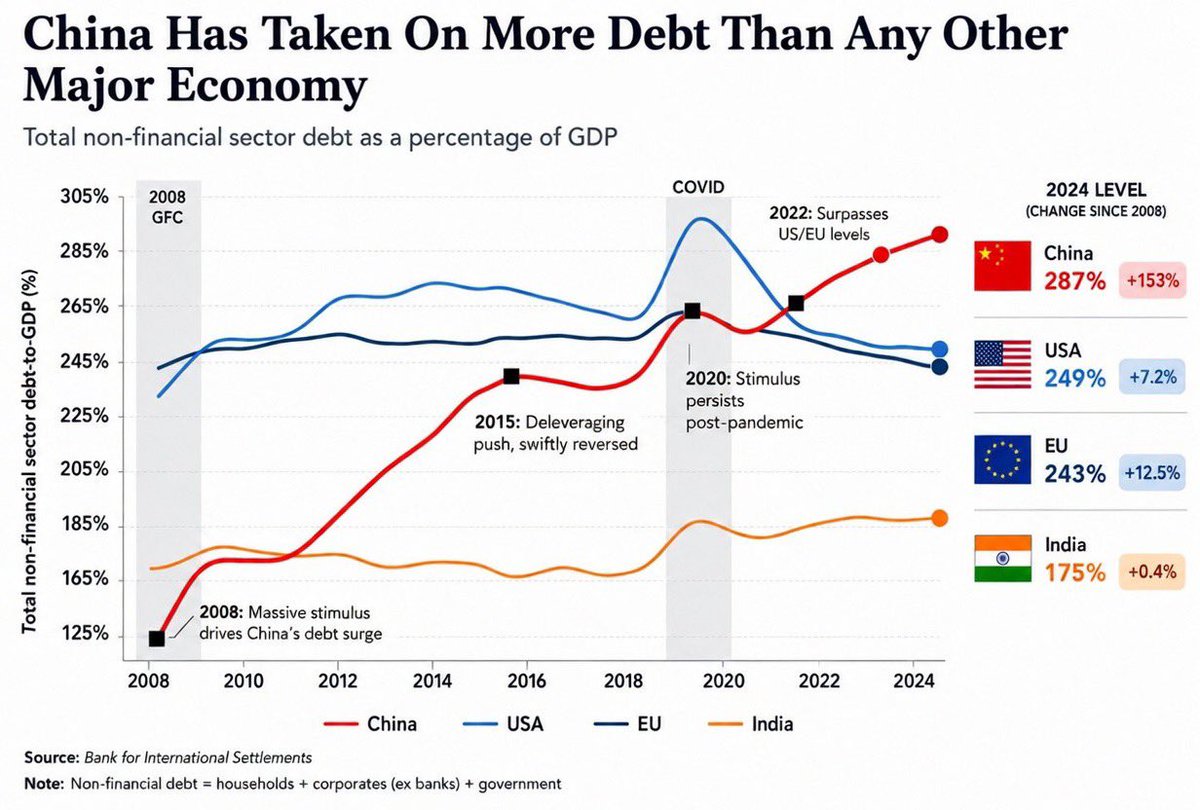
#China began its economic transformation in 1978. Nearly half a century later, the same prediction keeps getting recycled: "China is about to collapse." Yet decade after decade, China continues to build infrastructure, expand industrial capacity, advance technology, and increase its productive capabilities, while the collapse remains permanently scheduled for some point in the future.
The real question is not how long China can continue. The real question is: how long will mainstream economists keep running the same failed narrative before admitting that they never understood the monetary system they claim to analyze?
If China's so-called "debt-fueled illusion" has lasted almost fifty years, perhaps the illusion is not China's economy, but the propaganda masquerading as economic expertise.
From an #MMT perspective, obsessing over debt-to-GDP ratios while ignoring productive capacity, resource mobilization, industrial development, and the monetary relationship between the state and its central bank is like judging an aircraft solely by the amount of fuel in its tanks while refusing to look at whether the engines are actually running.
The mainstream economics gang has been predicting China's imminent downfall for decades.
At some point, the world has to ask whether China is the experiment, or whether the real experiment is how long failed economic dogma can survive despite being repeatedly disproven by reality.

China didn’t build an economic miracle. It built the world’s biggest debt experiment. And experiments don’t last forever
When growth is fueled by borrowing, every vacant illuminated skyscraper, highway, and ghost city comes with a bill. How long can they keep the illusion alive?
12
58
105
14,964
Robert Pearson retweeted
This is not a critique of MMT. It is a collage of bad historical analogies.
MMT does not say “print forever”. It says a currency issuer is not financially constrained like a household, but is constrained by inflation, real resources, external balance and political capacity.
Rome, Weimar and Zimbabwe were not normal modern floating-currency systems with intact productive capacity. They involved collapse, war, reparations, supply destruction, tax failure or institutional breakdown.
Nor is Fed QE the same as Treasury spending. QE swaps reserves for securities. Fiscal spending purchases goods, services or labour. Different operation, different transmission.
The “distorts price signals from day one” line is Austrian boilerplate. It assumes a neutral monetary price system exists before the state intervenes. It doesn’t.
The state is the monopoly issuer of the unit of account. It imposes tax liabilities, then names the prices at which it spends, lends, pays interest and purchases labour, goods and services. The private sector prices relative to that institutional structure.
Government spending does not enter from outside and “distort” the price level. It is the price-setting architecture from the start.
The real issue is not “money printing”. It is the prices the currency monopolist pays, including the interest rate, which forward-prices money and subsidises holders of financial assets.
Japan does not prove your point either. Its high public debt did not produce hyperinflation or bond market insolvency. Whether Japan stagnated is a separate real-economy question.
The question is not “can government run out of its own currency?” It cannot. The question is whether public spending, interest rate policy and the prices government pays are consistent with real resource capacity.
That is the MMT argument. You are attacking a straw man.

Modern economics is a circus, and proponents of MMT are the clowns.
MMT proponents dress up inflationary financing in academic jargon, but you're witnessing the same monetary snake oil that governments have peddled for centuries. Every empire from Rome to Weimar told citizens they could print their way to prosperity. The Romans debased their denarius. John Law flooded France with paper livres in 1720. The Continentals became worthless by 1781.
Modern Monetary Theory repackages this ancient temptation with PhD credentials and colorful charts. Stephanie Kelton and her disciples claim deficits don't matter because the government creates dollars. They argue inflation only appears when you hit "resource constraints." But this ignores how money creation distorts price signals from day one. When the Fed conjures $3 trillion in 2020, those dollars don't sit idle waiting for full employment. They bid up assets, reward speculation over production, and transfer wealth from savers to borrowers.
The MMT crowd loves pointing to Japan's debt-to-GDP ratio above 250% without hyperinflation. Yet Japan suffered two lost decades of stagnation while the Bank of Japan propped up zombie corporations. Japanese households saw their purchasing power erode as real wages stagnated and asset bubbles inflated. You call that success?
Money printing doesn't create wealth: it redistributes it. Every dollar the Treasury spends into existence represents resources diverted from private hands to political priorities. The Pentagon gets its $800 billion budget whether or not taxpayers can afford it.
Zimbabwe's central bank also believed it could print without consequence until inflation hit 89.7 sextillion percent in 2008. The Fed just has better marketing.

19
40
88
5,121
Robert Pearson retweeted
Calling MMT a conspiracy theory is not an argument; it is a confession that you don’t understand the claim. MMT describes the monetary operations of a floating fiat state: spending, taxation, bond issuance, reserves, inflation and real-resource constraint.
Truss was not removed because Britain “ran out of money”. She blew up liability-driven pension structures through a badly sequenced fiscal/political event, triggering collateral calls and gilt-market dysfunction. That is a financial-stability episode, not proof that the UK is revenue-constrained like a household.
Nor does MMT say deficits are always good, taxation is harmless, or inflation cannot happen. It says the constraint is real capacity, external balance, distributional conflict and price stability, not a mythical shortage of sterling.
As for “show me where it is used”: every sovereign currency government already spends by instructing its central bank/banking system to credit accounts, taxes by debiting them, and issues bonds as an offsetting liquidity operation. You are waiting for a label while living inside the mechanism.
The deeper problem is that you and your ilk opining on this have never actually bothered to study the monetary system in which you are embedded. You mistake slogans, folk economics and Treasury theatre for operational knowledge. On that basis, you are not qualified to sneer.
2
11
30
361
Robert Pearson retweeted

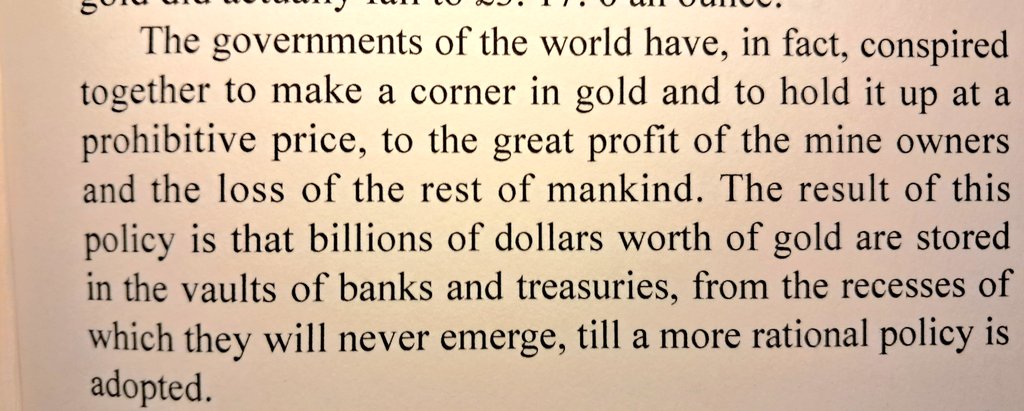
Aliens: and what’s all the gold for?
Earth: I dunno
Aliens: But why do you keep it carefully stored away for decades- does it have some special property to fight some disease or something?
Earth- no
Aliens: so you just…keep it for nothing?

3
11
19
1,073

That’s not how it’s meant to work, is it
Jun 1

Bitcoin-hoarding firm says it sold the cryptocurrency to fund distributions on preferred stock on.wsj.com/4dJvYge
1
76
Robert Pearson retweeted

May 31
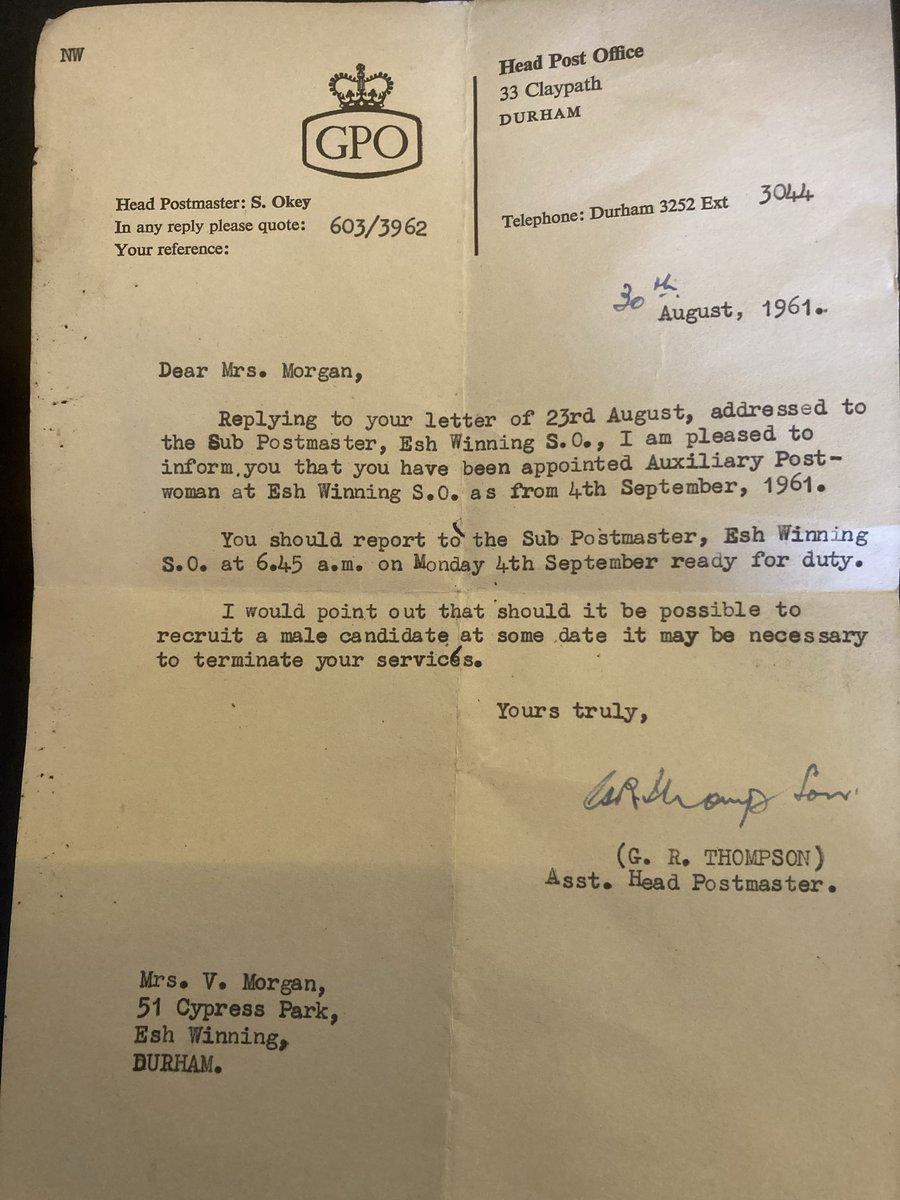
We’ve come a long way baby or at least we thought we had. I found this letter in the house that I bought
387
1,390
6,313
313,866
Robert Pearson retweeted

May 31
Just offer gilts at a range of maturities at prices and coupon rates that give you a fixed primary yield curve of your choice and allow all primary bids to obtain the quantity they want. Let any net spending not swapped for these fixed yield gilts stay as overnight reserves.
1
1
3
117
Robert Pearson retweeted

Government “borrowing” always matches the deficit. Because the government is simply selling bonds to mop up the excess reserves its *prior* spending created.
2
26
49
1,493
Robert Pearson retweeted

May 20
The govt seems to have realised that imports are a real benefit to the domestic economy.
May 20

🚨 BREAKING: Rachel Reeves will announce "Great British Summer Savings" tomorrow
She will outline plans to cut import taxes on over 100 food items, including biscuits, chocolate, fruit and nuts
4
8
28
9,036
Robert Pearson retweeted
May 21
Our real terms of trade are how much we produce at home how much stuff we can obtain from abroad - how much stuff we need to send abroad in order to get it.
The trade deficit is not a constraint, just a residual outcome of foreign desire to import sterling savings.
5
9
251
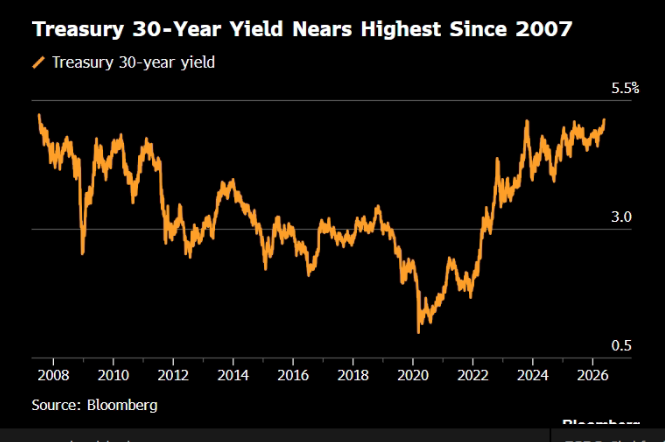
30 year bond yields topped out at 15% in the 1980s, but we're calling 6% yields 'close to all time highs'
They're a lot closer to all time lows than all time highs
Might also be a good idea to illustrate a point about Gilt yields using a graph of them instead of US T yields
May 19

UK borrowing costs soar. 30-year bond yield close to all-time high and crisis level.
The disastrous Reeves and Starmer budgets have demolished the prospects of public account sustainability. And Labour contenders want to spend even more.
No one resigns.
8
6
19
1,987
Robert Pearson retweeted

3 Sep 2018
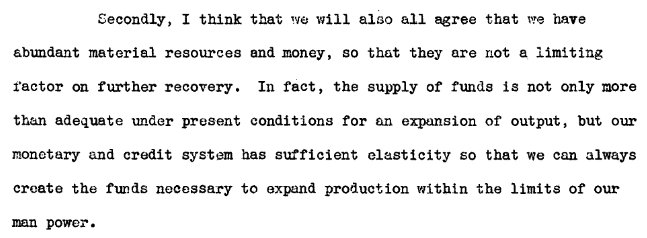
A core proposition in #MMT is that we can always create whatever money is necessary to maintain a full employment economy. The Federal Reserve building is named after the Fed Chairman who made the same point in 1939. #MarrinerEccles
23
267
455
Robert Pearson retweeted

May 16
MMT doesn’t advocate printing into a void. It outlines strict preconditions for stable sovereign money: a functional tax system, rule of law, productive capacity to absorb demand, no parallel currencies, and crucially, zero foreign-currency debt. Zimbabwe violated all of them.

4
10
19
439