Ecovillages (ECDO aware) • Prosocial AI • Regen Ventures • Holochain • Advisor to impact, regenerative & post-blockchain projects #gameb #decentralisation
Joined February 2009
- Tweets 5,995
- Following 3,610
- Followers 1,547
- Likes 5,458
114 Photos and videos


Pinned Tweet

6 Nov 2017
Building responsible & #regenerative #cryptocurrencies making them safe for everyone. Eg: @holochain by: @artbrock bit.ly/2zAoV7E
3
7
42
Seems like if a foreign State wanted to derail this - they’d have 30 days to do something significant: 🤷♂️

Back in March I wrote 👇 that Iran was winning, and not only strategically but tactically too, but I genuinely didn't expect it would eventually lead - 3 months later - to a complete US surrender.
Because, make no mistake, this is what the "deal" that was just signed is: a complete US surrender, the likes of which it has never signed in its entire history.
Let's compare it with the 2 other most famous US capitulation agreements: the Paris Peace Accords with Vietnam in 1973 and the Doha Agreement with Afghanistan in 2020.
The most significant difference is that both the Vietnam and Afghanistan deals, despite being documents in which the US effectively conceded defeat, contained at least some face-saving provisions for the US.
For instance, in the Vietnam deal, North Vietnam accepted the continued existence of the South Vietnamese government, promised peaceful reunification, agreed to maintain the 17th parallel as a dividing line, and accepted international supervision. These were real (if ultimately unenforceable and unenforced) concessions.
Same thing with the Taliban: they guaranteed Afghan soil would never again be used to attack America, and agreed to negotiate a political settlement with the then Kabul government. The latter commitment was never seriously pursued - but both existed and gave the US a narrative: at least it could claim its post-9/11 objective had been secured on paper.
The deal with Iran is completely different: it doesn't contain a single meaningful concession from Iran. The reopening of the Strait of Hormuz is merely the reversal of a wartime measure they took in response to the US-Israeli attack. And the "reaffirmation" that Iran won't build nuclear weapons is just this: a reaffirmation of a position Tehran has had for decades.
As a reminder, there is a 2003 fatwa by Khamenei that forbids the production and use of any form of weapon of mass destruction, so "reaffirming" it costs Iran exactly nothing.
Meanwhile, the list of concessions and costs on the US side is staggering:
- Permanent end to the war on all fronts, including Lebanon
- A US pledge to respect Iran's sovereignty and not interfere in its internal affairs
- Full lifting of the naval blockade
- Withdrawal of all US forces from the region within 30 days after the final agreement
- A $300 billion reconstruction and development fund for Iran
- Termination of all sanctions: UN, IAEA, and every unilateral US sanction, primary and secondary
- Immediate Treasury waivers for Iranian oil exports and all related banking, insurance, and shipping services
- Full release of all frozen Iranian funds and assets, to be spent however Iran's central bank sees fit
So very concretely this is the US agreeing to 1) end the war and withdraw its forces, 2) end all hostile measures towards Iran that were in place before the war (the sanctions, the frozen funds, the interference in internal affairs, etc.), and 3) send hundreds of billions of dollars in what are, effectively, war reparations.
If that's not a complete surrender, I genuinely don't know what is.
And, cherry on the cake, in an absolutely perfect touch of historical irony, Trump literally signed this surrender agreement in Versailles (I'm not kidding: x.com/RnaudBertrand/status/2…).
History rhymes, but rarely this loudly, all the more because the historical 1919 Versailles Treaty was also signed in June!
Of course, it's fair - very fair, even - to suspect that Trump will not honor this deal. If he's proven anything in his political career, it's that he is agreement-incapable. Plus there's the Israel dimension: the document does say that the war should "end on all fronts, including Lebanon," but Israel has already made clear it considers itself unbound by the agreement.
As such, what I suspect will happen - as I wrote the day the MOU was announced (x.com/RnaudBertrand/status/2…) - is that the deal will split in two. The immediate concessions - blockade lifted, oil flowing, funds unfrozen - will happen (some already have) and probably stick, because reversing them would mean restarting the very war the US humiliatingly lost.
The deferred provisions - the negotiations on nuclear, the sanctions schedule, the reconstruction fund - will probably enter permanent limbo because, as I wrote then, the US won't get better terms on nuclear after showing they couldn't get them on the battlefield. And given sanctions relief and the $300 billion are tied to a final deal that requires resolving the nuclear question, and the nuclear question requires leverage the US no longer has, the whole structure is circular and never-ending.
On the Israel-Lebanon question, things are trickier. Israel, in some way, finds itself in a South Vietnam situation with its patron having negotiated a surrender over its head. The difference is that Thieu was too weak to sabotage the Paris Accords, whereas Netanyahu isn't: his ability to escalate in Lebanon gives him a de facto veto over the deal's most fragile provision.
Realistically speaking though, it's hard to imagine the US willing to restart the war, which is its own form of deterrence: if Israel keeps striking Lebanon in violation of the ceasefire, Iran can now retaliate with far greater confidence that the US won't come to the rescue - which ought to give Israel pause.
In effect, the end result is that the US security umbrella over Israel just got a lot thinner. Which means that, for the first time in a long time, Israel has to calculate the cost of provoking Iran without assuming the US will absorb the consequences. This points towards restraint, at least for any rational actor. But then again, the same government that dragged the US into this war in the first place has not exactly been a model of strategic rationality...
In any case, it's undeniable that Iran has just achieved something no other country has managed, ever: it withstood the full force of the US and Israeli military machines, and extracted a surrender agreement that makes the Paris Peace Accords look like a US victory by comparison.
To refer back to the title of my article below 👇: this was the first multipolar war, and Iran has definitely earned its place as one of the poles.
19
Rolf von Behrens 🌿🇦🇺 retweeted

hot take: i prefer non-humanoids over humanoids.
it looks less like a person, which makes it less creepy to be around
i expect this non-humanoid trend to accelerate as robots start to enter more family households.
Jun 16

Humanoid robots don't need to look human.
Meet Eno, our first general-purpose robot.
Not a machine pretending to be human, but intelligence given a body.
At Genesis, we’re building a future where robots don’t feel cold or distant, but capable, calm, and ready to help.
Available Q4 this year.
29
3
81
14,299
Rolf von Behrens 🌿🇦🇺 retweeted

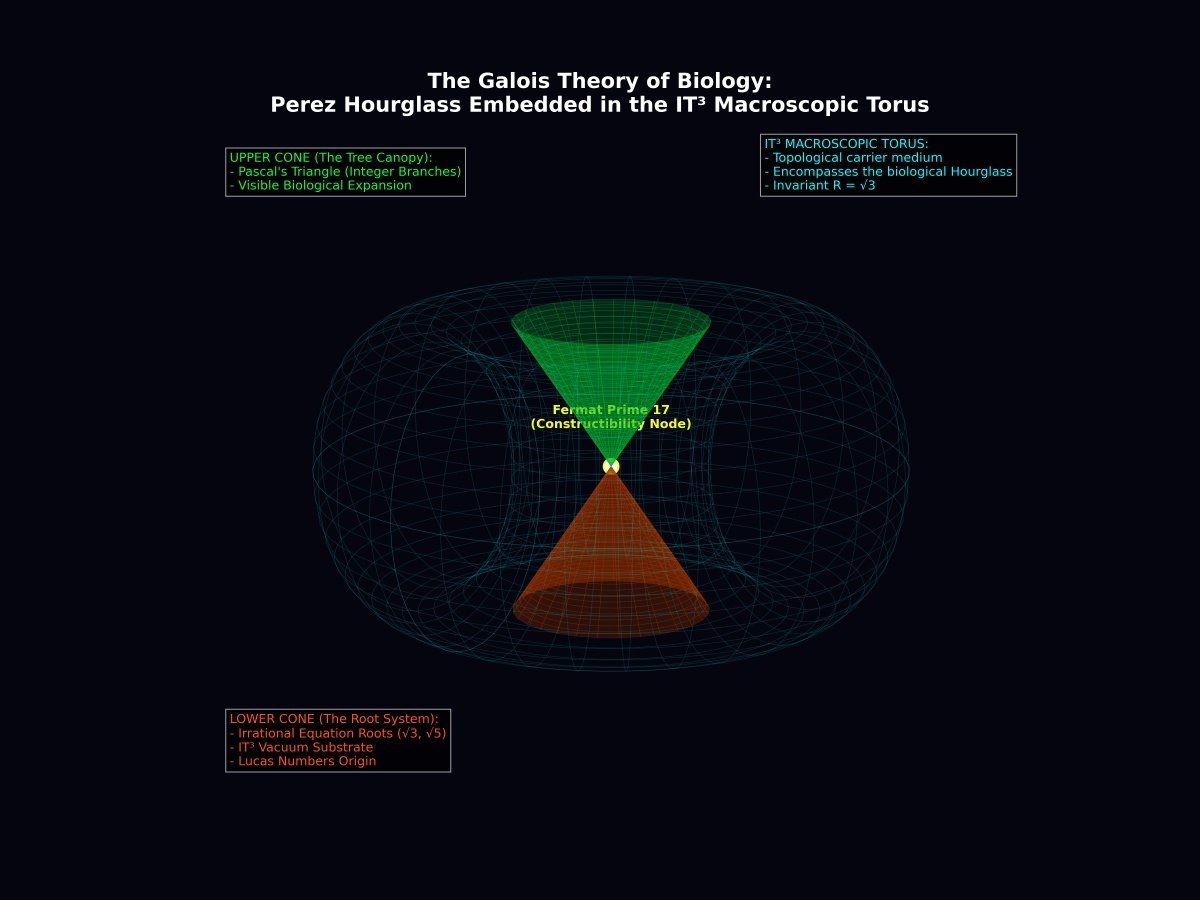
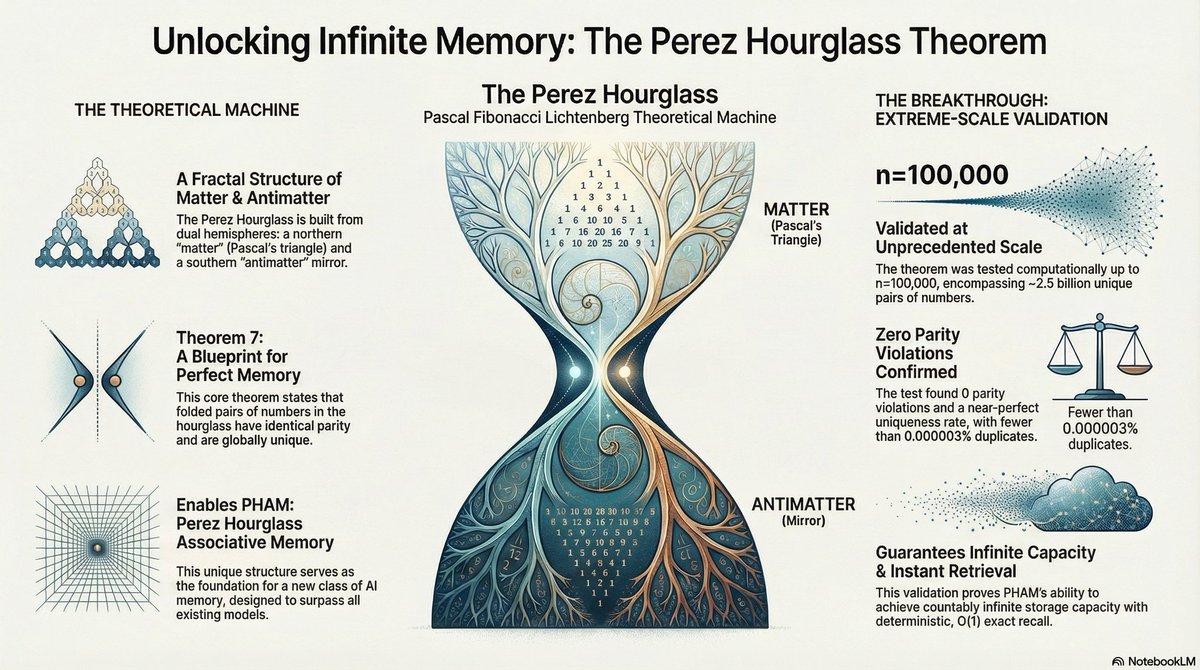

Why WHOLE NUMBERS are the key of Universe and Life
@CY_Chauprade @expert_ltc @PhiBoostGlow @QBlazedog61029J @Elons_bestud4 @xazalbert
1
4
10
240
Rolf von Behrens 🌿🇦🇺 retweeted

Jun 14
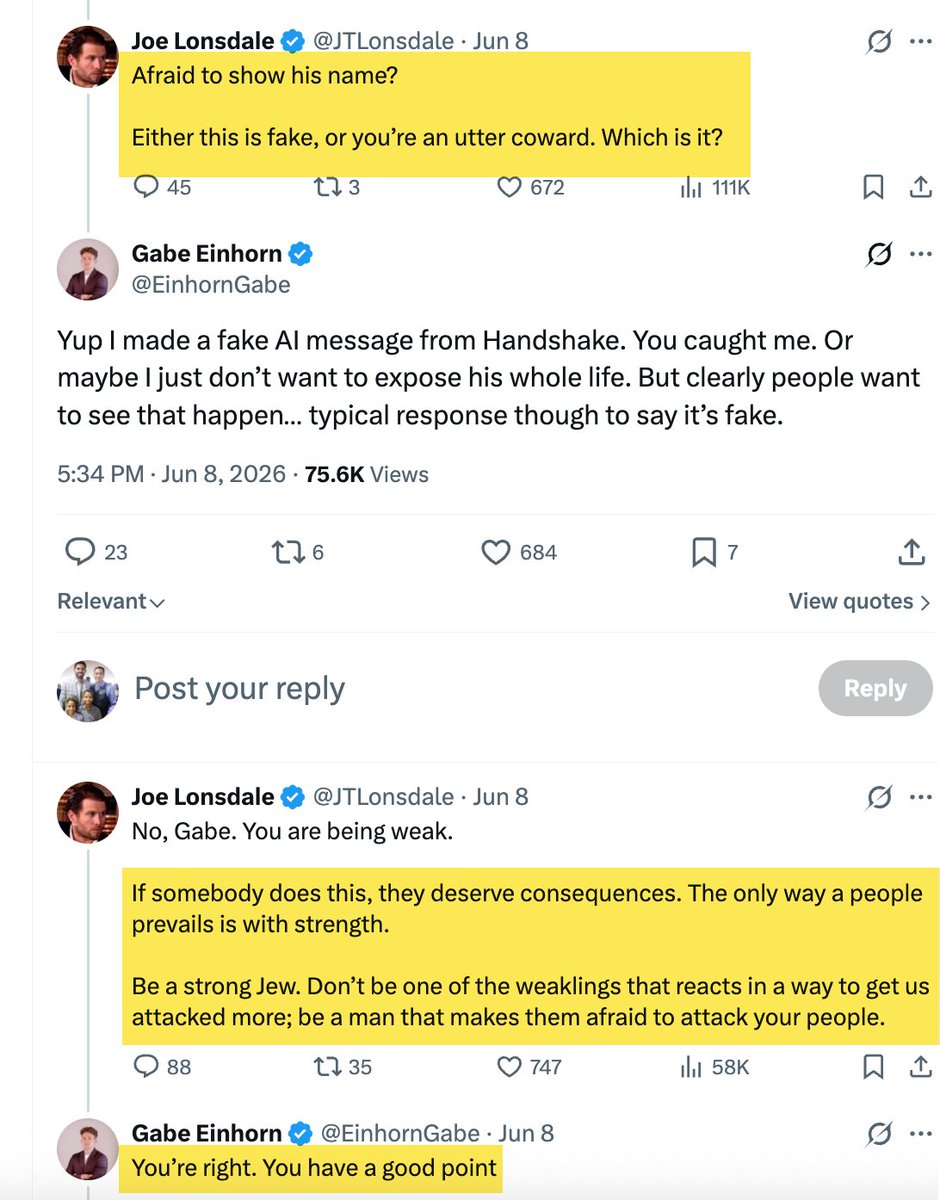
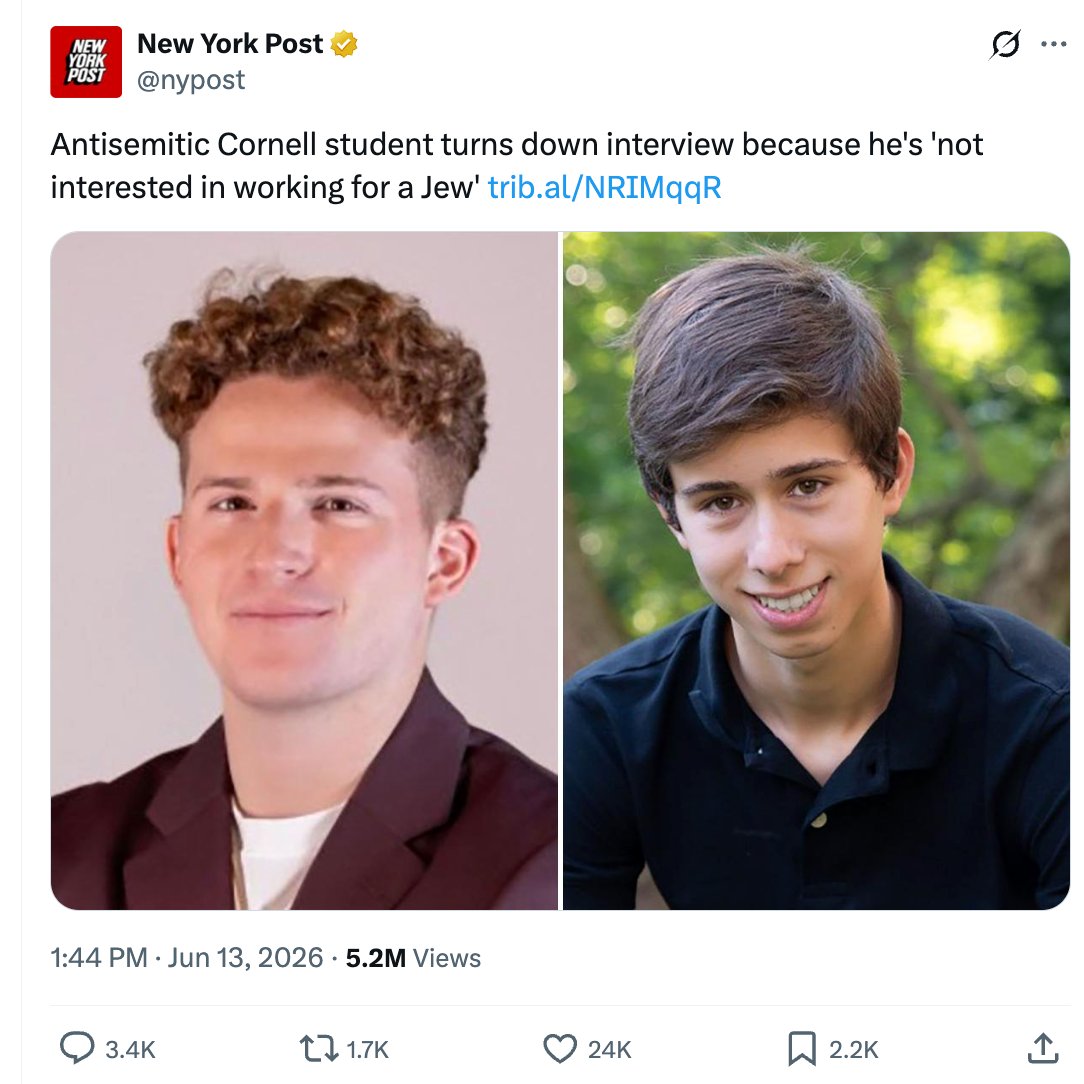
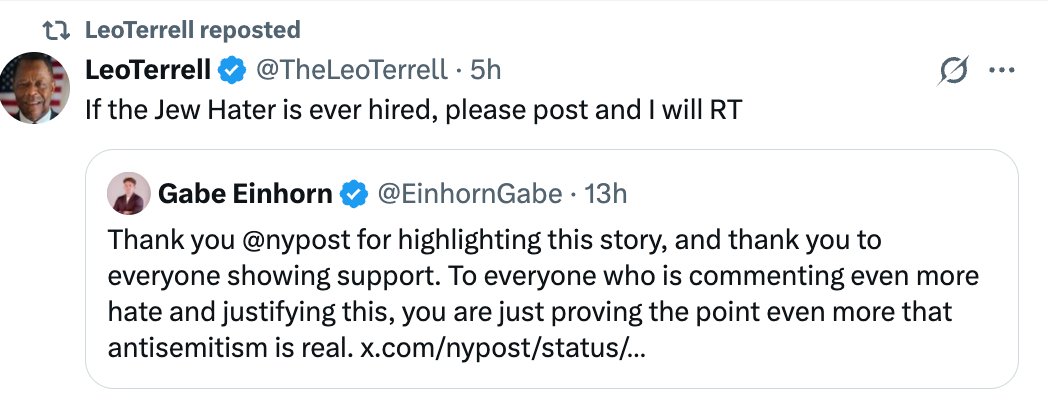
A 19-year-old college student quietly turns down a job interview, stupidly telling the company it's because he doesn't want to work for a Jew.
Within two days:
-- The billionaire founder of one of the world's most powerful corporations (Palantir) demands that the company release his the student's to the world. The company instantly complies.
-- National media trumpet the incident and spread the student's name and face all over the place.
-- A senior Trump DOJ official repeatedly urges the public to notify him if that student is ever hired anywhere in the future, promising to use his office to keep the student permanently unemployable.
Adults with large, influential platforms -- pundits, media types, even elected officials -- right here on X routinely say things as bad as, and often much worse than, pretty much every other group you can think of without facing a single consequence let alone a completely unhinged coordinated campaign of very powerful people to run their lives forever:
1,962
6,767
34,582
3,383,410
Rolf von Behrens 🌿🇦🇺 retweeted

Jun 16
Found a water vortexer with copper lining on the top of hill in a park in Prague. THIS WOULD HEAL MILLIONS if built into global city water infrastructure.
Replace ALL plastic piping WITH COPPER. It's antimicrobial, and doesn't release endocrine disruptors into our drinking water.
@Kevin_McKernan @SecKennedy @Matyas44Cook @DrJackKruse
302
2,991
14,853
559,251
Rolf von Behrens 🌿🇦🇺 retweeted

Jun 16
"roughly a billion humans are fed by this massive industrial food system...
Jun 16

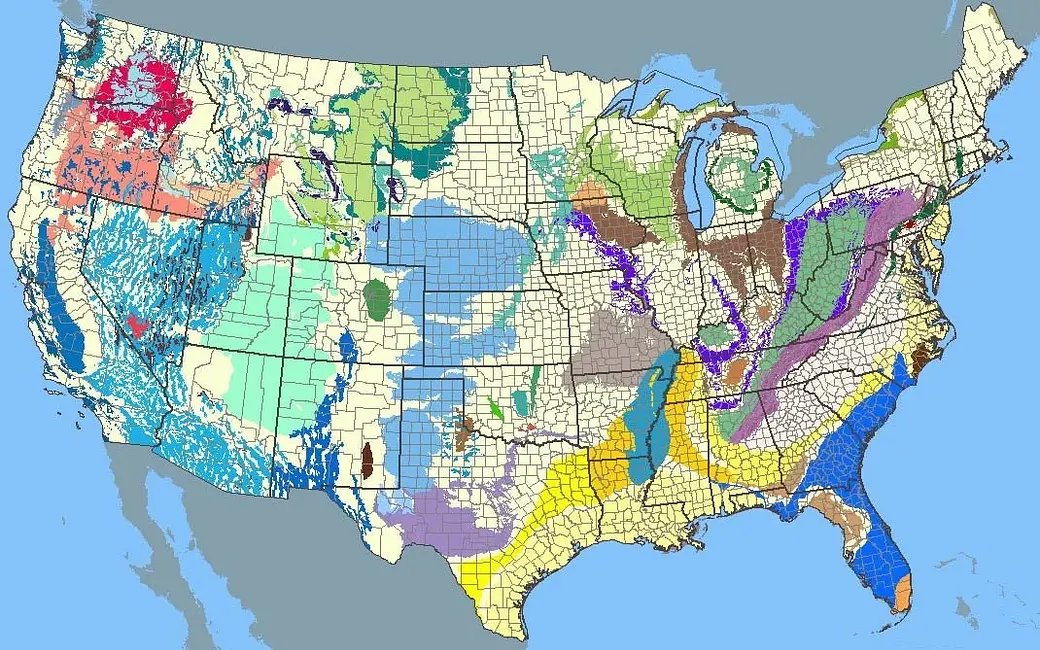
Over the next few days of our pilgrimage, we will travel over the most important aquifer system on Earth — the Ogallala of the High Plains.
Two years ago, I wrote an article about what it would take to regenerate the Ogallala. Here it is:
medium.com/@joe_brewer/what-…
4
7
234
Jun 17
Impressive:
Jun 13

56,000 tokens/sec at just 80 MHz. 🤯
I burned a full Transformer with KV cache into a custom chip. Designed gate by gate as a 100% digital integrated circuit. Prototyped on a FPGA. (No GPU. No CPU)
Just pure digital silicon running @karpathy microGPT, spelling out names on a tiny LCD.
This is GateGPT 👇
35
Rolf von Behrens 🌿🇦🇺 retweeted

Jun 16
Folleagues already know... 😎
For everyone else, it is just a matter of time.
26
77
588
23,127
Rolf von Behrens 🌿🇦🇺 retweeted
Jun 16
Clever. The core tech doesn’t really need ai though / could be done without it. Also - killing everything - leaving a sterile environment - isn’t necessarily optimal. Healthy plants in a healthy ecosystem don’t need this sort of intervention. What of the beneficial organisms?
1
5
148
Rolf von Behrens 🌿🇦🇺 retweeted
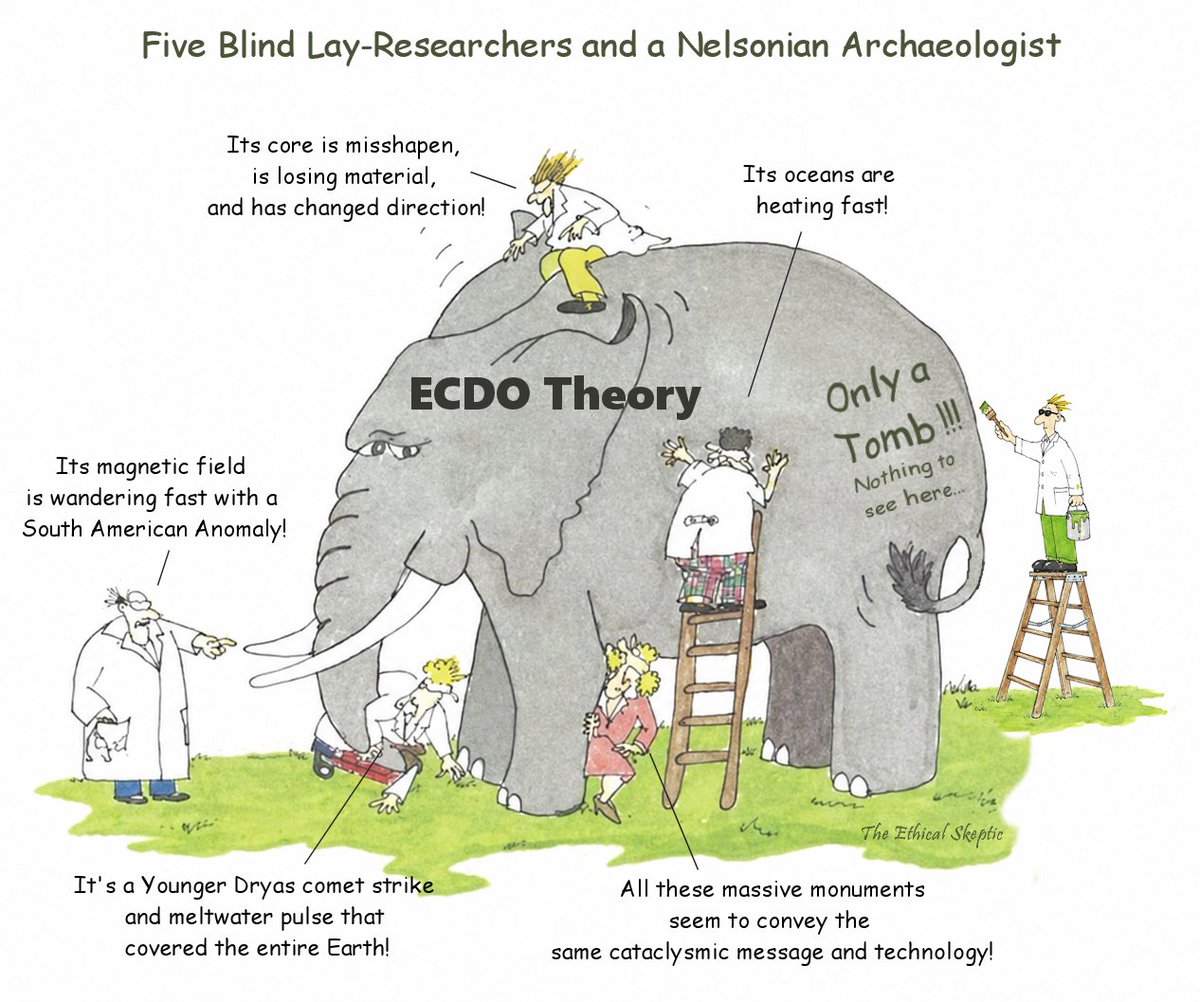
Jun 15
All the megalith/climate/cultural tradition pundits keep talking around its constructs lately, suggesting they are indeed the case, but refusing to mention the name of the theory itself.
ECDO Theory
But you already knew it - long ago. 😉
theethicalskeptic.com/2026/0…
13
52
424
20,986
Rolf von Behrens 🌿🇦🇺 retweeted

Jun 14
Higher deuterium in drinking water correlates with higher rates of major depression.
Higher deuterium in drinking water correlates with higher rates of type 2 diabetes.
This isn't a fringe hypothesis.
It's a University of Utah population study mapping deuterium concentration in US tap water against disease prevalence across the country.
Correlation — not proof of causation.
But striking enough that Tatyana Strekalova — Clinician Scientist at Maastricht University, Senior Researcher at the University of Oxford, and Professor of Physiology at Sechenov First Moscow State Medical University — decided to test it in mice.
The logic is straightforward.
Deuterium concentration in drinking water decreases with distance from the ocean — inland, high-altitude water is naturally more deuterium-depleted.
If geography determines deuterium load, and deuterium load correlates with disease prevalence, then what happens when you deliberately give animals water at the low end of that natural range?
What her lab found is striking.
They used 90 ppm deuterium-depleted water throughout — the lowest deuterium concentration found naturally in drinking water on Earth.
Not a pharmaceutical dose. Not exotic laboratory depletion.
And compared it to control mice drinking 140 ppm water.
The difference between antarctic meltwater and coastal tap water.
Finding 1: Aged mice. Two weeks. Depressive-like behaviors measurably reduced
They took 18-month-old mice — equivalent to very old age, approaching maximum mouse lifespan.
These mice displayed measurable depressive behaviors:
Anhedonia — loss of sensitivity to reward, measured by reduced preference for sweet water.
Increased helplessness behavior.
Reduced novelty exploration.
Impaired hippocampus-dependent memory.
After two weeks on 90 ppm DDW?
Sucrose preference increased — anhedonia reversed.
Helplessness behavior significantly reduced.
Novelty exploration improved.
Hippocampal memory improved.
Two weeks.
Naturally occurring low-deuterium water.
Measurable reversal across four independent behavioral markers.
Finding 2: DDW matched antidepressant effect in stressed young mice
They used a chronic stress model in young mice — predator scent, restraint stress, tail suspension.
This reliably induces anhedonia in susceptible mice.
Then they divided mice into three groups: normal water at 140 ppm, DDW at 90 ppm, and citalopram — a standard SSRI antidepressant.
DDW produced rescue of sucrose preference comparable to citalopram.
Helplessness behavior was also rescued comparably.
Serotonin transporter expression — one of the key molecular targets of SSRIs — was rescued by both citalopram and DDW.
This is mouse data.
Direct translation to humans requires clinical trials.
But the mechanism convergence is a legitimate finding.
Finding 3: DDW normalized REM sleep in stressed mice
Depression is the only psychiatric disorder diagnosable by a specific sleep architecture change — increased REM sleep.
It's a biological marker, not a subjective report.
Stressed mice showed increased REM sleep — the biological depression signature.
DDW normalized REM sleep.
Slow-wave sleep and wakefulness also improved.
Finding 4: DDW protected against western diet-induced cognitive impairment and glucose dysregulation
They used 12-month-old female mice on a standardized western diet — high saturated fat, high sugar, high cholesterol.
Western diet produced: impaired glucose tolerance, brain inflammation, reduced mitochondrial markers in brain and liver, liver steatosis — fat accumulation in the liver — impaired object recognition memory, and impaired hippocampal memory.
DDW at 90 ppm on western diet:
Prevented glucose tolerance impairment despite continued western diet.
Improved object recognition memory.
Improved hippocampal memory in old mice.
Did not improve liver steatosis.
The liver finding matters.
DDW protected the brain and metabolic glucose handling but did not reverse the liver damage.
Strekalova’s interpretation: DDW is counteracting brain inflammation driven by damage elsewhere in the body — not fixing the damage itself.
Finding 5: Deuterium-enriched water (180 ppm) did the opposite
They tested the reverse — 180 ppm water, equivalent to what you would find in evaporative pools in the Sahara.
Results on aged mice with western diet:
Novelty exploration clearly suppressed.
Hippocampus-dependent memory suppressed.
Strekalova describes this as a surprise finding.
90 ppm sits at the low end of natural drinking water on Earth.
180 ppm sits at the high end of what occurs in extreme arid environments.
The difference between them produced measurable opposing effects on memory and cognition in aged mice.
Gene expression — deuterium sits upstream of circadian biology
In both the aging model and the stress model, DDW altered gene expression in the hippocampus and prefrontal cortex.
Affected categories: DNA repair, oxidative stress response, immune regulation, mitochondrial function, cellular plasticity, aging-related genes.
And one finding that connects directly to everything else: Per2.
Per2 is a core circadian clock gene.
DDW affecting its expression means deuterium content influences circadian biology at the gene level.
Deuterium doesn't just affect cancer cells and mitochondrial efficiency.
It sits upstream of the circadian system.
The implication
The deuterium content of your water varies by geography.
Antarctic water versus coastal tap water. The difference is measurable.
The biological effects in these models are measurable and opposing.
Most people optimizing their health are tracking sleep, sunlight, training, and nutrition.
Nobody told them deuterium was also on the list.
11
101
437
16,506
Jun 16
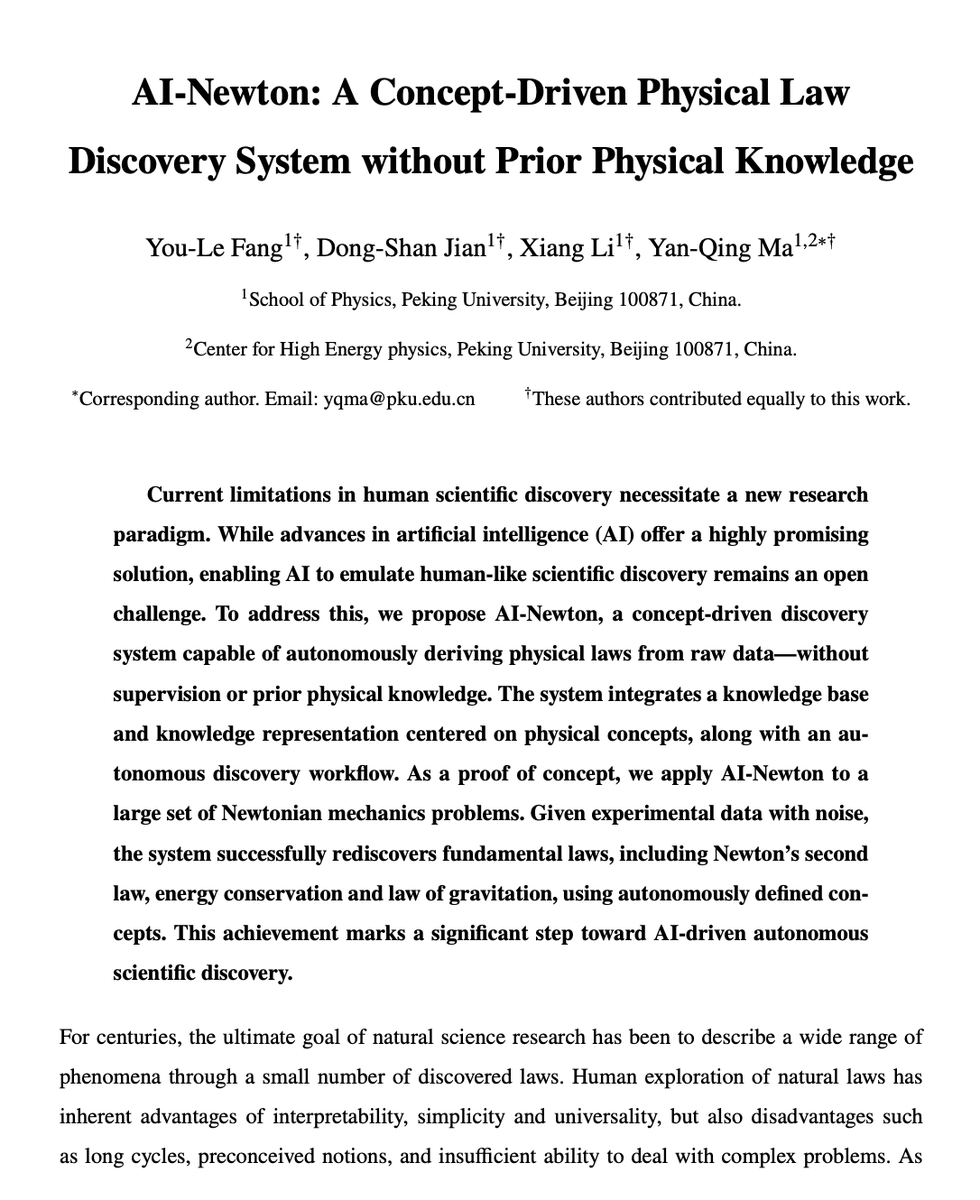
AI-Newton : Now that’s impressive:
Can it find the occulted physics though? 🙃
Jun 15

Researchers open-sourced an AI that taught itself 300 years of physics with zero physics knowledge
In 1907, Einstein had what he called his "happiest thought": gravitational mass = inertial mass. It took him 8 more years to turn that insight into General Relativity.
Now, researchers at Peking University built an AI that figure out the same thing on its own with zero physics knowledge.
They call it AI-Newton.
They didn't train it on physics textbooks. They didn't pre-program any formulas.
They just fed it raw, noisy experimental data and let it explore.
The AI started defining its own concepts.
First, it measured the stretch of a spring hanging from a weight. It invented the concept of "gravitational mass."
Then, it measured the oscillation frequency of a bouncing spring. It invented the concept of "inertial mass."
And then, entirely on its own, the AI noticed the numerical equivalence.
It realized these two completely different physical measurements were fundamentally the exact same thing.
It merged the concepts. It had Einstein's realization.
But it didn't stop there.
It systematically went on to autonomously rediscover Newton's second law, the conservation of energy, and the law of universal gravitation.
We have spent decades using AI to crunch numbers for human scientists.
But this is a paradigm shift.
AI is formulating concepts. It is making the intuitive leaps that we thought only belonged to human genius.
If an AI can rediscover the foundations of modern physics by just looking at raw data...
What is it going to discover that we haven't thought of yet?
1
26
Rolf von Behrens 🌿🇦🇺 retweeted

Apr 7
🚨 The "Godmother of AI" arrived in America at 15. She didn't speak English.
She cleaned houses and waited tables at Chinese restaurants to keep her family alive.
Her mother got sick. So the family opened a dry cleaning shop. Every weekend, she left Princeton to run the register because she was the only one who spoke English.
No connections. No money. No safety net.
She went on to build the dataset that sparked the entire deep learning revolution. Without it, there is no ChatGPT, no Gemini, no Claude.
Her name is Fei-Fei Li.
I turned her methodology into 12 prompts.
Here are all 12:
28
159
1,009
117,332
Jun 14
Some good reminders of why not to take ai output as sound thinking:
12
Rolf von Behrens 🌿🇦🇺 retweeted

Jun 13
Some thought:
1) The Anthropic fiascos is a self-inflicted wound and likely a payback.
2) I spent the night helping many clients off of Anthropic and moving to local open source models and many very large clients will NEVER go back. This has absolutely advantaged open source model from China.
3) This situation NO MATTER WHAT permanently damaged the Anthropic IPO.
4) At 3AM last night I helped a client team move a massive account off of all Anthropic products. This was worth millions of dollars per month and this was the last straw.
5) The fall of Anthropic should not be applauded by anyone. The fall of the company should be viewed as an injury to All US AI COMPANIES.
6) The Anthropic fiasco is not a technical issue, it is a LEADERSHIP issue. If it is not fixed the company is cooked.
7) By the time we end this summer no matter how good Anthropic is, they lose customers, they lose key employees and they ultimately will lose the race.
It was a sad day on top of a massively great day with the SpaceX IPO and one reason I did not post last night.
Dario asked to be regulated, begged to be regulated and yelled to be regulated…
NOW HE IS REGULATED.
You like it now Dario?
Jun 13

Unprecedented.
@BrianRoemmele warned everyone for the past two years that the government would take away our AI.
That day just arrived.
Was talking with an entrepreneur in San Francisco who was running Fable to build software and just turned it off while it was building.
Tomorrow night Anthropic is throwing a Fable builders event in San Francisco. I wonder if that event is still going to happen?
This hurts American national security. I know of several companies that were using Mythos to close all of their security holes because it is so powerful at finding weaknesses in software. That effort has not been completed, so there are many companies with many holes still open now.
This throws that effort into question. It also means that China is emboldened because, you know, can you trust an American company to keep their systems up and running if the government is willing to shut them down so abruptly and with no warning?
It also means that open source and running models on your own computers is now very attractive (if it wasn't already). Expect Apple Mac Studio sales to go up.
79
83
464
51,080
Rolf von Behrens 🌿🇦🇺 retweeted
Jun 12
Calories in, calories out doesn't account for deuterium.
Soy sauce carries 186 ppm deuterium.
Natural foods carry 130-150 ppm.
No macro calculator accounts for this difference.
Liu Yuting — science-technology strategist at Luzhou Yu Quan Deuterium Depleted Water Company, one of China’s largest DDW producers founded in 1967 — presented company-generated data analyzing 86 food items across 12 categories.
Natural foods measured at 130–150 ppm.
Fried foods averaged 165 ppm.
Condiments such as soy sauce and vinegar reached up to 186 ppm.
The mechanism is straightforward physics.
During prolonged heating or concentration process, lighter water molecules evaporate faster.
The heavier deuterium-containing water stays behind.
The more processed the food — the higher its deuterium load.
It means a highly processed food and a fresh food with identical macros deliver completely different deuterium loads to your mitochondria.
A separate 2021 review “What to feed or what not to feed—that is still the question” published in Metabolomics found the same logic applies to grass-fed vs grain-fed animal products.
Grain-fed animals — corn, soy, barley — follow a carbohydrate metabolism that is deuterium-enriching.
Grass-fed animals operate in a natural ketogenic state that produces deuterium-depleted metabolic water.
Grass-fed meat carries less deuterium than grain-fed equivalents.
Dr. Laszlo Boros — co-author of the paper: "If you compare sour cream or butter from grass-fed cows compared to grain-fed cows. You go from 110 ppm to 136 ppm. 26 ppm difference."
Boros: "It's not a joke."
Two meals. Same calories. Same macros.
Different deuterium load.
The calories in, calories out model doesn’t account for that.
Your mitochondria do.
31
166
856
90,845
Rolf von Behrens 🌿🇦🇺 retweeted
Jun 13
You have noticed that too. Google Search is getting worse. The results look professional but say nothing. The answers are longer but less useful. Every page reads like it was written by the same voice.
You thought Google was broken. It is not broken. It is being replaced.
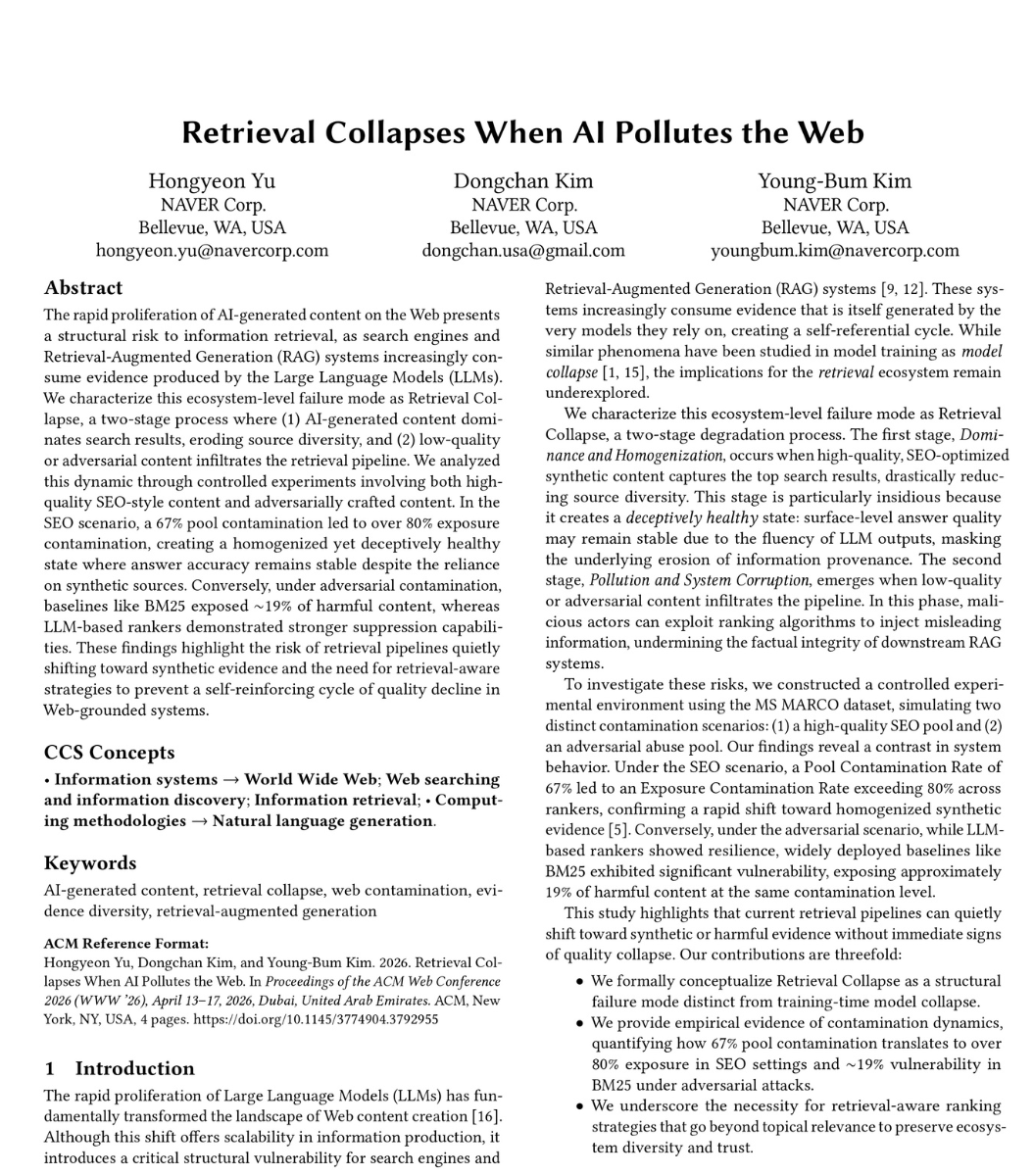
Researchers published a paper at the ACM Web Conference 2026 proving what is happening. They call it Retrieval Collapse.
Here is the mechanism in one sentence. AI-generated content is flooding the internet so fast that search engines are now showing you mostly AI-written pages. And the search engine cannot tell the difference.
They ran a controlled experiment. They started with a pool of real, human-written web pages. Then they gradually added AI-generated content until it made up 67% of the pool.
By that point, over 80% of the top search results were AI-generated. Not 67%. Over 80%. The ranking algorithm did not just let AI content in. It preferred it. The AI-written pages were better optimized, more fluent, and more keyword-rich than the human pages. They outranked the originals.
Here is the part that makes this invisible.
Answer accuracy stayed the same. The search results still looked correct. The information was still technically right. If you measured quality by accuracy alone, nothing appeared wrong.
But source diversity collapsed. Nearly every result came from the same type of content. AI-written. AI-optimized. AI-structured. The human-written pages, the ones with original reporting, personal experience, and genuine expertise, were buried.
The researchers describe a two-stage collapse. Stage one is Dominance. High-quality AI content silently takes over the top results. Everything looks fine. Accuracy is stable. Nobody notices. Stage two is Corruption. Once AI dominates the pipeline, adversarial and low-quality content starts slipping through. By then, the system is too dependent on synthetic sources to course-correct.
A separate analysis found that 74.2% of newly published web pages now contain AI-generated content. Organic click-through rates on pages with AI summaries have dropped 61%. The human internet is being outranked by the machine internet.
Model Collapse described what happens when AI trains on AI. The models get dumber. Retrieval Collapse describes what happens when search engines index AI. The results get emptier.
Both are happening right now. At the same time. And neither one looks broken from the outside.
The search engine still returns ten blue links. The links still load. The pages still answer your question. But the thing that used to make those answers trustworthy, a human who actually knew something, is being quietly replaced by a machine that sounds like it does.
67
502
1,085
87,537
Rolf von Behrens 🌿🇦🇺 retweeted

Jun 14
Someone open-sourced a tool that rips every AI service out of Windows 11 in one click.

1
6
23
3,211