Neuroscientist 🇪🇺 🔬🎼🧠🌊
Joined February 2014
- Tweets 8,232
- Following 467
- Followers 517
- Likes 17,065
29 Photos and videos
Magdalena Sastre🇪🇺 retweeted

Jun 11
فيديو رائع عن منتخبات مونديال 2026 و ما يقابلها من Avatar
130
837
7,861
330,429

Magdalena Sastre🇪🇺 retweeted

Jun 10
Absolutamente increíble. Lo que hoy ha hecho Barcelona se recordará mucho tiempo. La Sagrada Familia, Gaudí y los que durante 140 años han creído en ello, lo merecían.
595
8,604
58,570
2,095,998
Magdalena Sastre🇪🇺 retweeted

📹 𝗥𝗘𝗦𝗨𝗠𝗘𝗡 | ¡Revive la goleada con la que España ha conseguido su billete para el #FIFAWWC!
🇮🇸 1-6 🇪🇸
#JugarLucharYGanar
1
66
453
8,572
Magdalena Sastre🇪🇺 retweeted
📹 𝗥𝗘𝗦𝗨𝗠𝗘𝗡 | #FIFAWWC
¡𝗔𝘀𝗮𝗹𝘁𝗼 𝗮𝗹 𝗹𝗶𝗱𝗲𝗿𝗮𝘁𝗼!
🇪🇸 4-0 🏴
#JugarLucharYGanar
4
111
691
14,542

Presented at #ASCO26:
Among patients with previously treated metastatic pancreatic ductal adenocarcinoma, the RAS(ON) inhibitor daraxonrasib led to significantly longer overall survival and progression-free survival than chemotherapy. Full phase 3 RASolute 302 trial results: nej.md/4nWaxvM
@ASCO
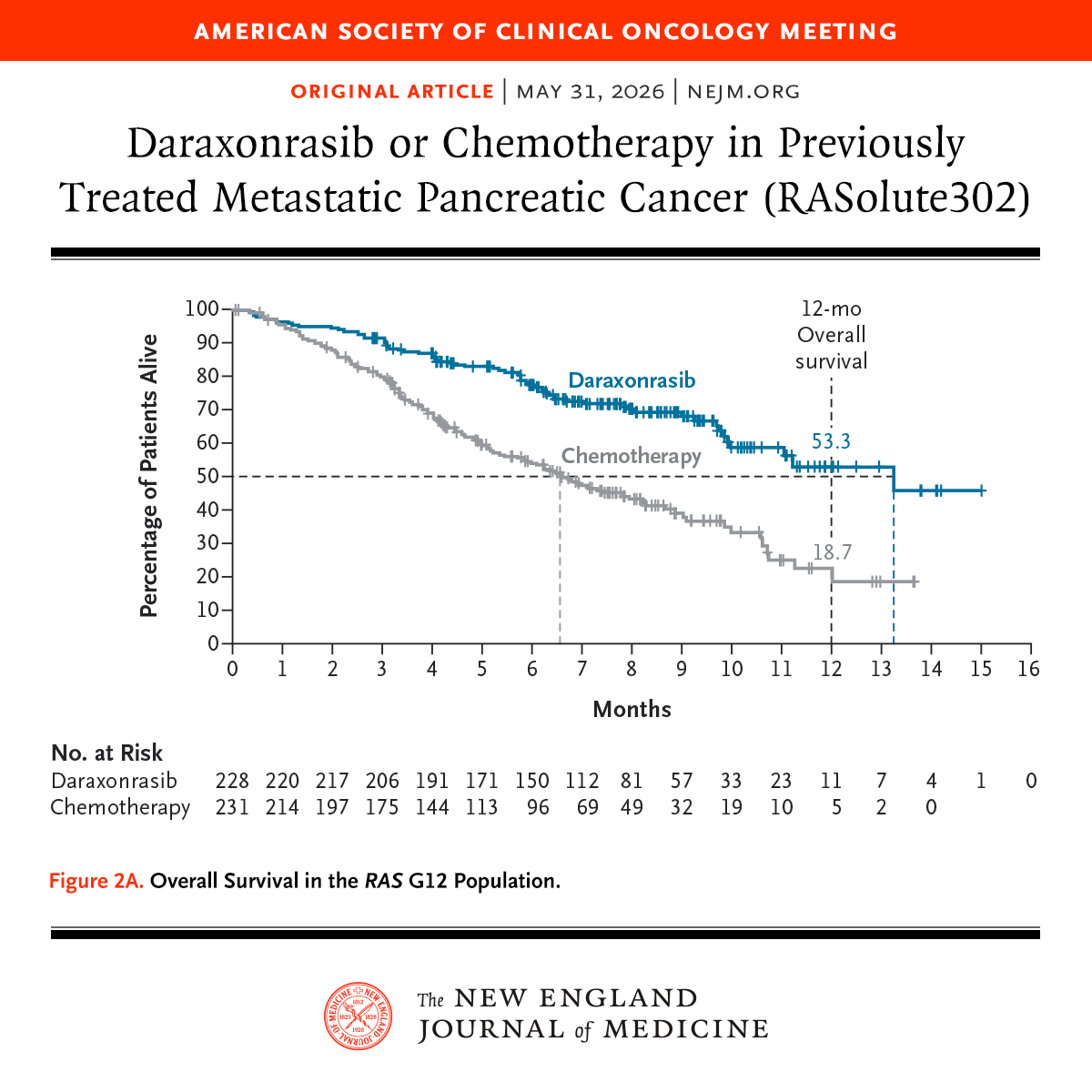
ALT Graph from a study published in the New England Journal of Medicine on daraxonrasib versus chemotherapy for metastatic pancreatic cancer. The x-axis represents months, and the y-axis shows the percentage of patients alive. Two lines indicate survival rates: daraxonrasib (blue) and chemotherapy (gray). The bottom section lists patients at risk over time. Title and journal logo are included.
52
2,054
5,574
2,467,960

May 23
Shared with you by a Times subscriber.
Enjoy this article for free.
thetimes.com/uk/education/ar…
44
Magdalena Sastre🇪🇺 retweeted

May 18
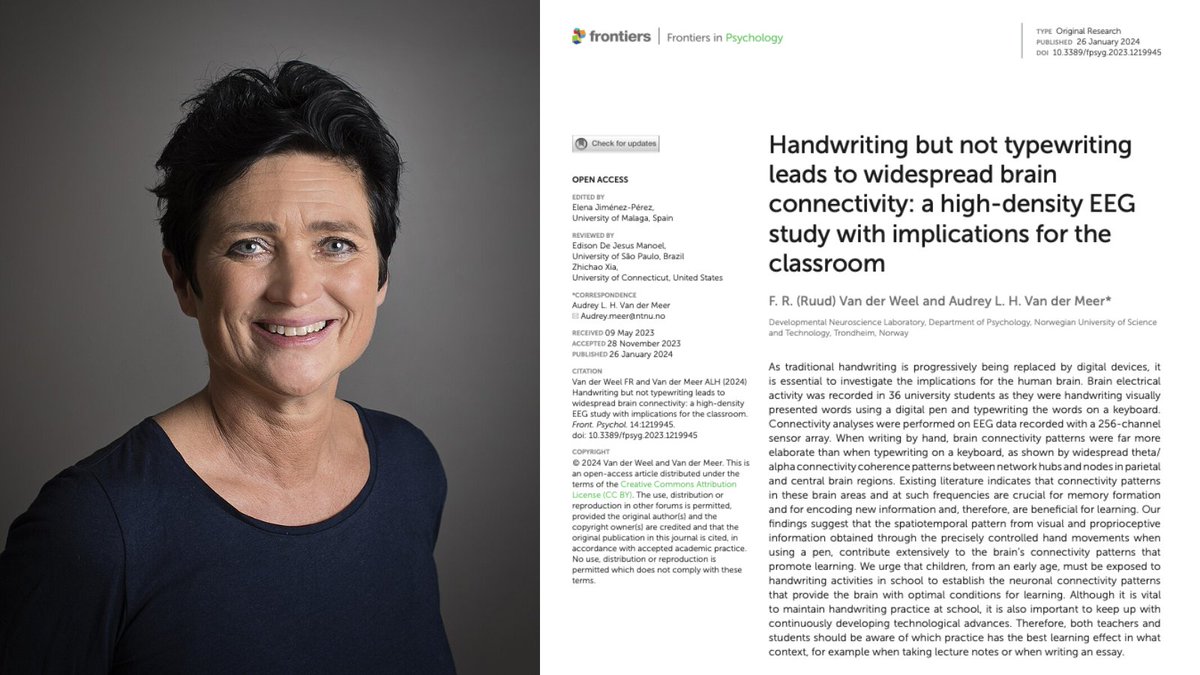
A Norwegian neuroscientist spent 20 years proving that the act of writing by hand changes the human brain in ways typing physically cannot, and almost nobody outside her field has read the paper.
Her name is Audrey van der Meer.
She runs a brain research lab in Trondheim, and the paper that closed the argument was published in 2024 in a journal called Frontiers in Psychology. The finding is brutal enough that it should have changed every classroom on Earth.
The experiment was simple. She recruited 36 university students and put each one in a cap with 256 sensors pressed against their scalp to record brain activity. Words flashed on a screen one at a time.
Sometimes the students wrote the word by hand on a touchscreen using a digital pen, and sometimes they typed the same word on a keyboard. Every neural response was recorded for the full five seconds the word stayed on screen.
Then her team looked at the part of the data most researchers had ignored for years, which is how different parts of the brain were communicating with each other during the task.
When the students wrote by hand, the brain lit up everywhere at once.
The regions responsible for memory, sensory integration, and the encoding of new information were all firing together in a coordinated pattern that spread across the entire cortex. The whole network was awake and connected.
When the same students typed the same word, that pattern collapsed almost completely.
Most of the brain went quiet, and the connections between regions that had been alive seconds earlier were nowhere to be found on the EEG.
Same word, same brain, same person, and two completely different neurological events.
The reason turned out to be something nobody had really paid attention to before her work. Writing by hand is not one motion but a sequence of thousands of tiny micro-movements coordinated with your eyes in real time, where each letter is a different shape that requires the brain to solve a slightly different spatial problem.
Your fingers, wrist, vision, and the parts of your brain that track position in space are all working together to produce one letter, then the next, then the next.
Typing throws all of that away. Every key on a keyboard requires the exact same finger motion regardless of which letter you are pressing, which means the brain has almost nothing to integrate and almost no problem to solve.
Van der Meer said it plainly in her interviews.
Pressing the same key with the same finger over and over does not stimulate the brain in any meaningful way, and she pointed out something that should scare every parent who handed their kid an iPad.
Children who learn to read and write on tablets often cannot tell letters like b and d apart, because they have never physically felt with their bodies what it takes to actually produce those letters on a page.
A decade before her, two researchers at Princeton ran the same fight using a completely different method and ended up at the same answer. Pam Mueller and Daniel Oppenheimer tested 327 students across three experiments, where half took notes on laptops with the internet disabled and half took notes by hand, before testing everyone on what they actually understood from the lectures they had watched.
The handwriting group won by a wide margin on every question that required real understanding rather than surface recall.
The reason was hiding in the transcripts of what the two groups had actually written down.
The laptop students typed almost word for word, capturing more total content but processing almost none of it as they went, while the handwriting students physically could not write fast enough to transcribe a lecture in real time, which forced them to listen carefully, decide what actually mattered, and put it in their own words on the page.
That single act of choosing what to keep was the learning itself, and the keyboard had quietly skipped the choosing and skipped the learning along with it.
Two studies. Two countries. Same answer.
Handwriting makes the brain work. Typing lets it coast.
Every note you have ever typed instead of written went into your brain through a thinner pipe. Every meeting, every book highlight, every idea you captured on your phone instead of on paper was processed at half depth.
You did not forget those things because your memory is bad. You forgot them because typing never woke the part of the brain that would have made them stick.
The fix is the thing your grandmother already knew.
Pick up a pen. Write the thing down. The slower road is the faster one.
2,472
44,648
120,845
10,365,275
May 19
Los nuevos fármacos contra el alzhéimer: entre la expectativa y la evidencia elpais.com/salud-y-bienestar… via @el_pais
1
11
Magdalena Sastre🇪🇺 retweeted

Espectacular vespre des de la costa de la Serra de Tramunta on hem pogut veure diversos caps de fibló. @AEMET_Baleares @MiquelSalamanca @DaniCapo_Meteo @MeteoredES @TomasMolinaB @Montparnase19 @TempsIB3 @mauri_francesc @ElTiempo_tve
10
54
302
11,228
May 14
Premio Princesa de Asturias para David Klenerman, Shankar Balasubramanian y Pascal Mayer por simplificar la secuenciación del ADN elpais.com/ciencia/2026-05-1… via @el_pais
1
23
Magdalena Sastre🇪🇺 retweeted

May 11
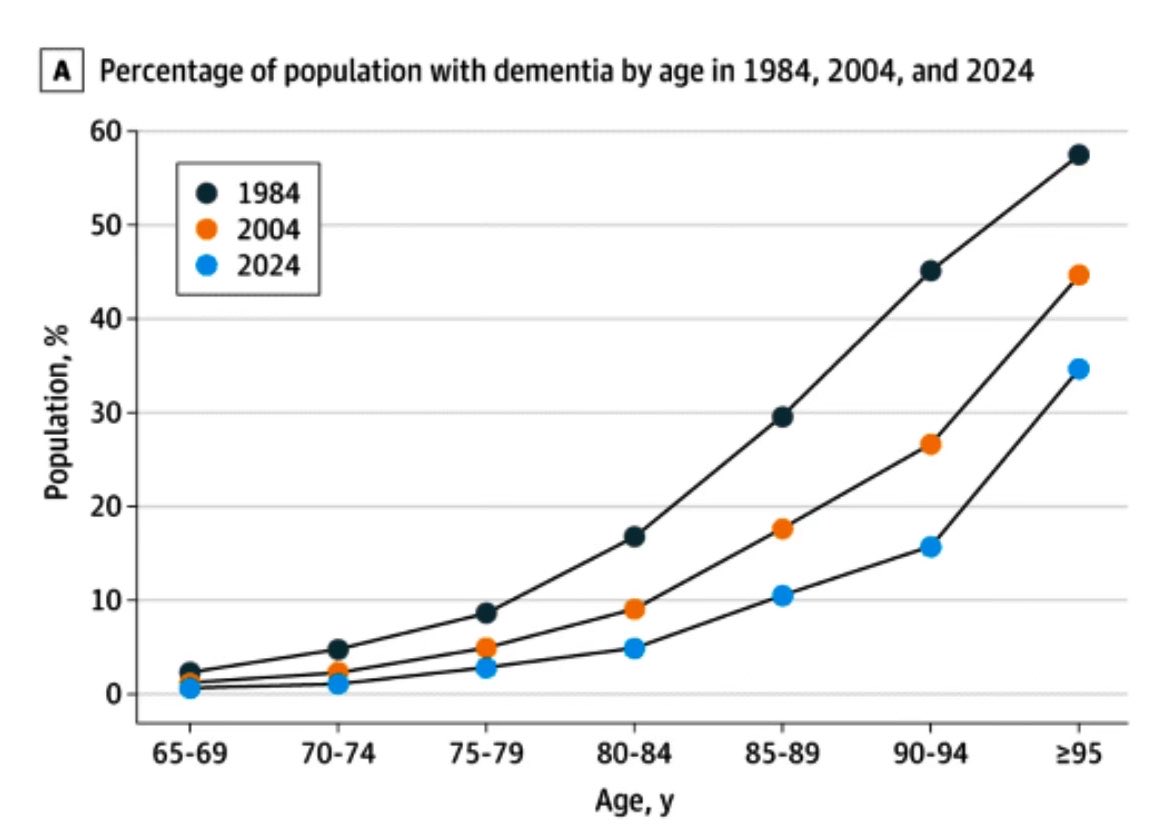
The odds of having dementia at age 85 were close to 1 in 3 in the 80s; now they are 1 in 10.
I don’t think we have a great explanation: better cardiovascular health, diet, and education are often mentioned. Good news nonetheless.
Carnall Farrar. (2025, March 27). Dementia trends.
205
1,009
4,919
681,441

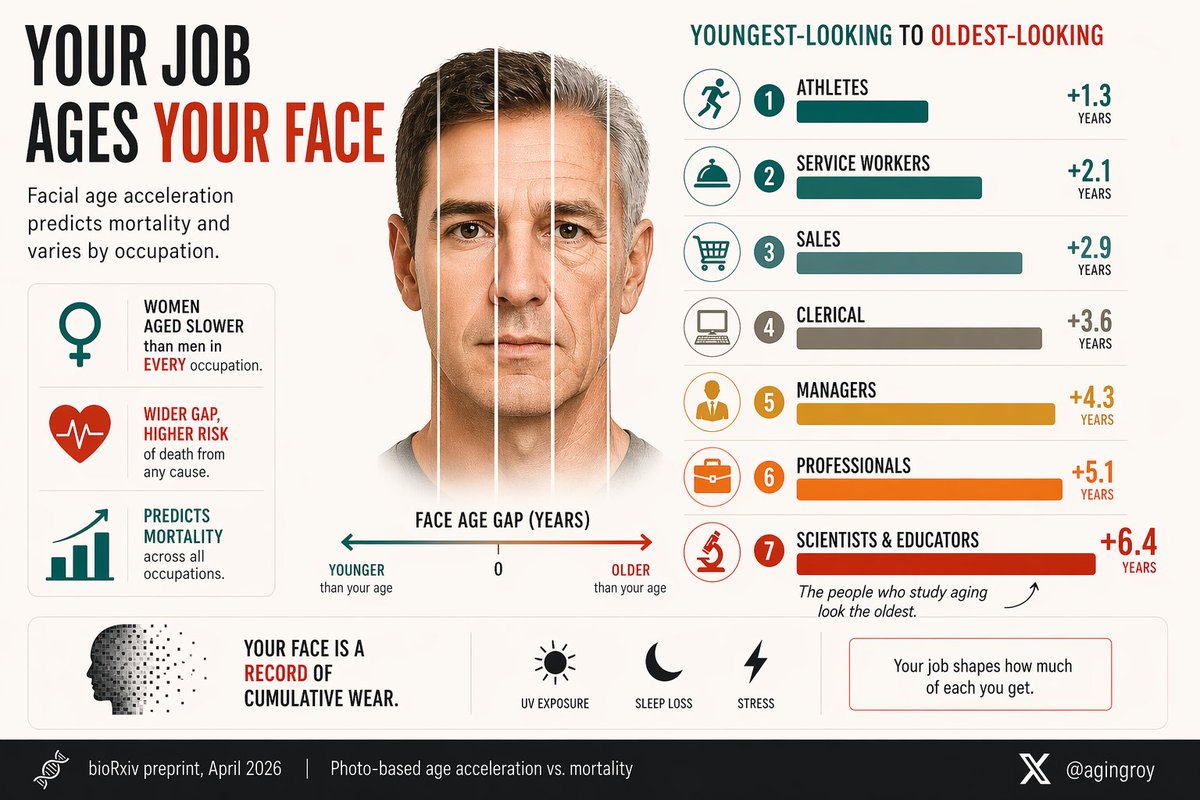
Scientists and educators age fastest. Athletes age slowest.
A facial aging clock trained on occupation-linked photos found that the gap between your biological face-age and your real age predicts all-cause mortality. The wider that gap, the higher your risk.
Women aged slower than men in every single occupation measured. No exceptions.
The ranking, from youngest-looking to oldest-looking relative to chronological age:
Athletes > service workers > sales > clerical > managers > professionals > scientists and educators.
The people who study aging for a living look the oldest. I wish I could say I'm surprised.
Your face is a record of cumulative stress, UV, sleep loss, and metabolic wear. Your job title determines how much of each you get.
73
236
1,413
989,838
Magdalena Sastre🇪🇺 retweeted

Apr 23
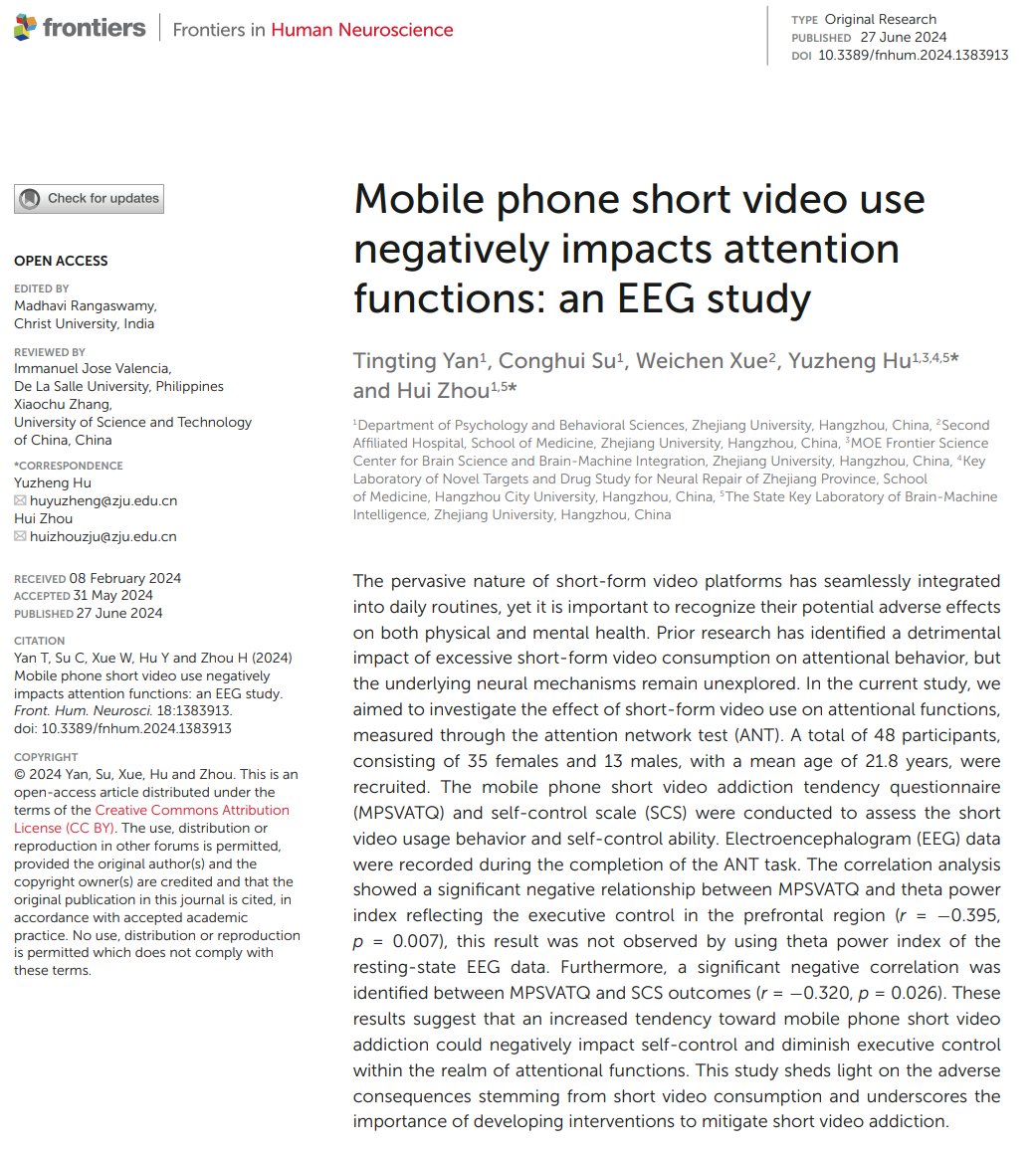
Addiction to short-form videos is associated with reduction of brain activity in the frontal lobe and weakened focus.
393
8,343
27,172
5,040,088
Magdalena Sastre🇪🇺 retweeted

Apr 15
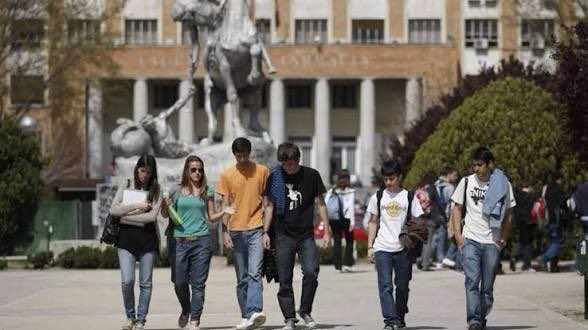
🇬🇧🇪🇺 Big step forward!! The UK will rejoin Erasmus in 2027.
Thousands of UK students will once again head to Spain 🇪🇸 and across Europe to study, work and connect—building skills, friendships and shared futures.
People-to-people ties are back at the heart of our partnership🤝
65
231
1,329
261,746
Magdalena Sastre🇪🇺 retweeted

Apr 13
Basically
79
1,391
6,913
1,355,014
Magdalena Sastre🇪🇺 retweeted

Apr 7
No one, presently, sees the Moon rotate like this.
That's because the Earth's moon is tidally locked to the Earth, showing us only one side.
However, the Lunar Reconnaissance Orbiter has this view: a full Moon rotation.
199
2,528
23,851
1,229,207