
Lecturer in psychology at Essex university. Interested in facial expressions, embodiment, empathy, multi-sensory integration, reward processing ...
Joined August 2009
- Tweets 486
- Following 647
- Followers 444
- Likes 668
24 Photos and videos






Pinned Tweet

16 Apr 2024
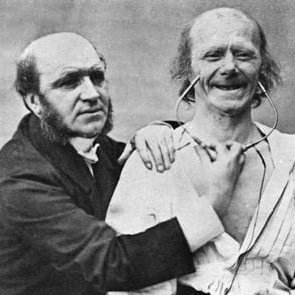
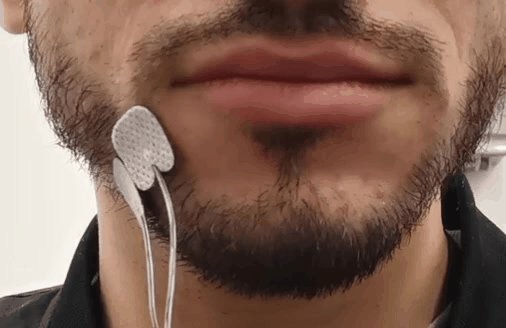
Are you curious to learn how electrical stimulation ⚡️⚡️ of facial muscles may change how you feel and perceive others' emotions? 🧐Have a read at my first blog post for @PsychToday : psychologytoday.com/us/blog/…
2
17
1,047
sebastian korb retweeted

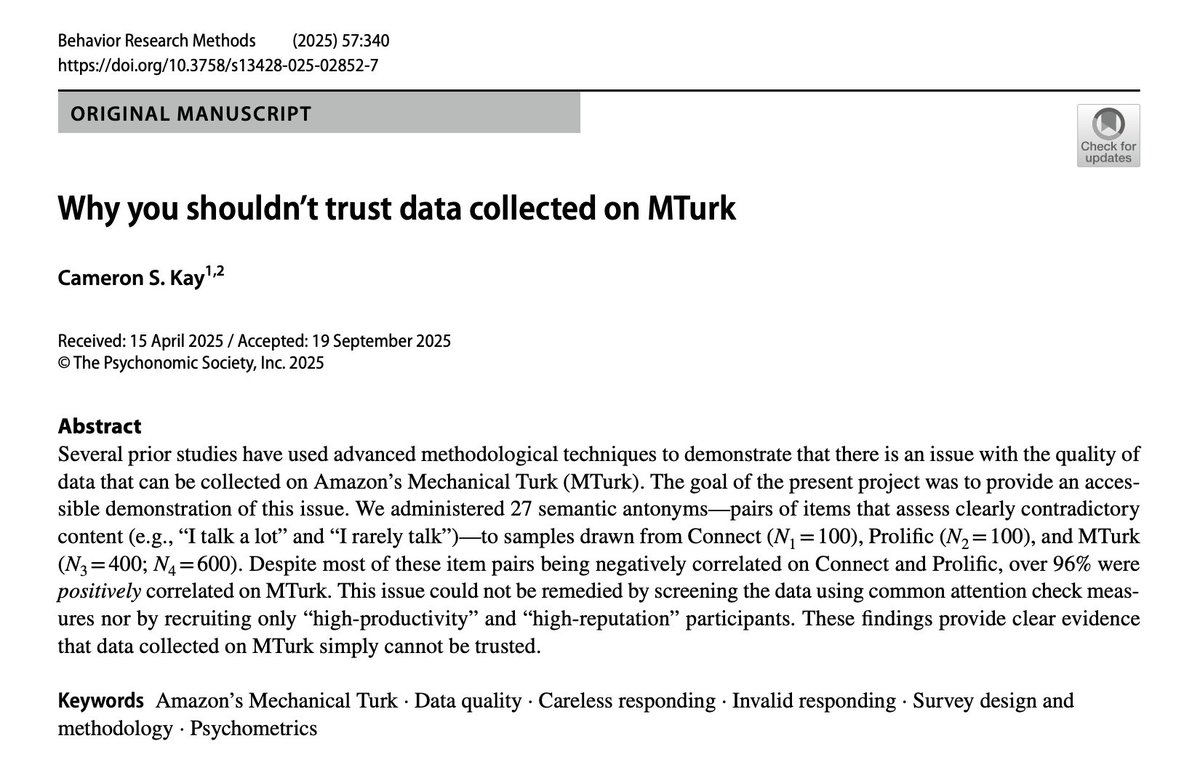
We should no longer trust data collected on MTurk
link.springer.com/article/10…
My guess is that other online data is going to drop in quality due to LLMs. This is going to be an existential crisis for the behavioral sciences.
32
129
510
125,825
13 Dec 2025
Oh no 😢
I love Sacks, he’s one of my heroes 😭
12 Dec 2025

Bombshell: Oliver Sacks (a humane man & a fine essayist) made up many of the details in his famous case studies, deluding neuroscientists, psychologists, & general readers for decades. The man who mistook his wife for a hat? The autistic twins who generated multi-digit prime numbers? The institutionalized, paralyzed man who tapped out allusions to Rilke? Made up to embellish the stories. Probably also: the aphasic patients who detected lies better than neurologically intact people, including Ronald Reagan's insincerity. newyorker.com/magazine/2025/…
1
2
194
6 Dec 2025
RT @sapinker: At elite universities, 1/5 of students are registered as "disabled." (Fits my experience: accommodating students who claim ex…
242
sebastian korb retweeted

18 Nov 2025
I’m hiring a PhD student for my lab at Cambridge’s Center for Human Inspired AI (CHIA)! Work at the intersection of AI × cognition × neuroscience.
📅 Deadline: Dec 2
🔗 Program: postgraduate.study.cam.ac.uk…
📚 My Google Scholar: scholar.google.com/citations…
1
13
48
3,293
3 Nov 2025
1
92
sebastian korb retweeted

11 Oct 2025
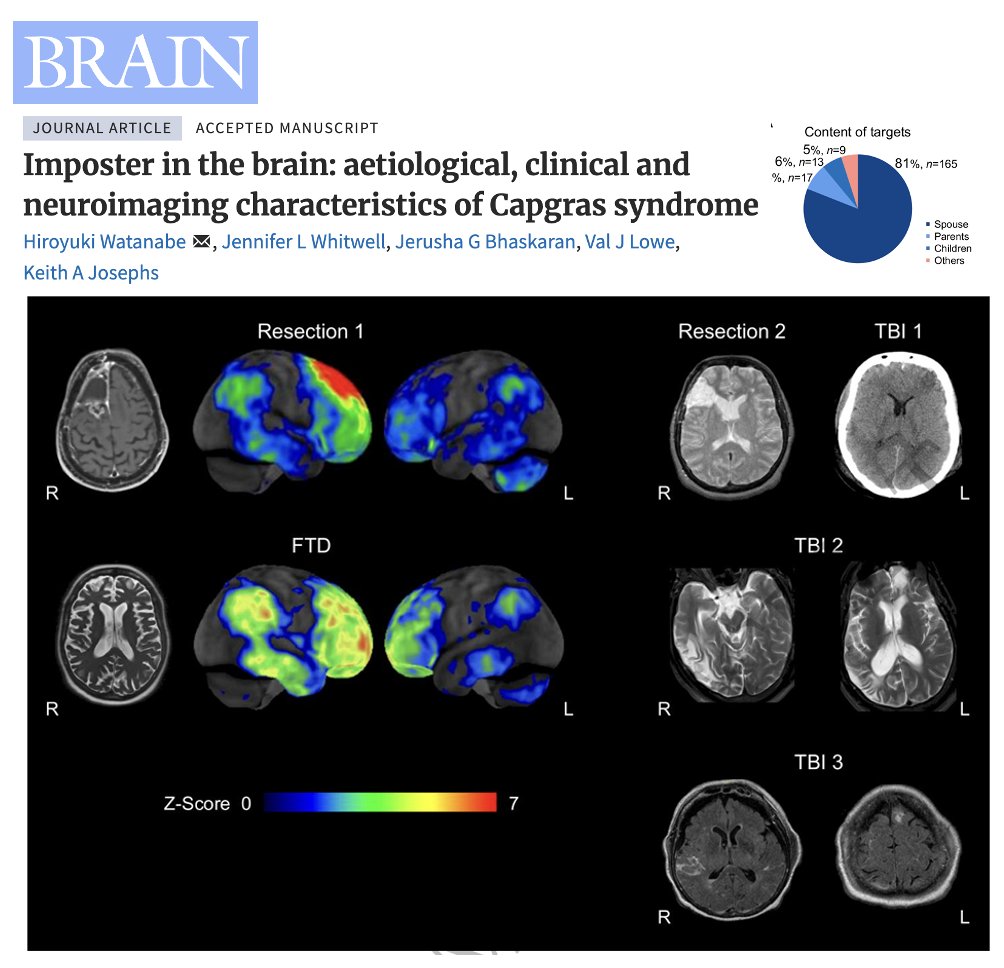
Is there an impostor in the brain? Is Capgras more common in Alzheimer's, Lewy Body Dementia or Parkinson's? Spoiler alert: Lewy Body is the most common presentation. Capgras can teach us both about identity and neurodegeneration. Capgras syndrome refers to a delusional misidentification in which someone believes a familiar person, often a spouse, has been replaced by an identical impostor. Watanabe and colleagues describe in a new paper in Brain, the largest ever series of Capgras cases studied at the Mayo Clinic. They explored causes, brain imaging patterns and clinical clues revealing that this rare and haunting syndrome is frequently linked to Lewy body disease and to widespread cortical dysfunction. They even show cases associated w/ tumors.
Key Points:
- Capgras syndrome most frequently occurs in neurodegenerative conditions, particularly Lewy body dementia (58%), followed by Alzheimer’s disease (10%) and mixed two hit cases (18%).
- Neuroimaging revealed bilateral cortical involvement, especially right frontal dysfunction, supporting the idea that Capgras arises when both hemispheres and emotional recognition networks are disrupted.
- The syndrome may emerge early in Lewy body disease and late in Alzheimer’s.
- The syndrome can occasionally improve w/ cholinesterase inhibitors, suggesting possible cholinergic mechanisms play a role.
My take: This paper represents a Herculean effort. BRAVO. Capgras is one of the most interesting phenomena in neurology. These 5 points resonated w/ me: 1- Recognizing a familiar face depends on both vision and emotion. When emotional familiarity is disrupted, the brain can possibly create an impostor story to explain the mismatch. 2- Capgras syndrome is more frequent in Lewy body dementia than in Alzheimer’s, and thus may serve as an early clue that a neurodegenerative process is underway. 3- Right frontal brain dysfunction appears to be key, however widespread brain involvement and mood changes likely contribute. 4- Symptoms frequently worsen in the evening and may respond partially to cholinesterase inhibitors or to other supportive therapies. 5-Seeking to understand Capgras, the authors believe is a path to help us to understand that emotion, memory and identity are all intertwined. We need to better appreciate that brain disorders can profoundly alter the way folks perceive loved ones.
academic.oup.com/brain/advan… @Brain1878 @FixelInstitute @ParkinsonDotOrg @alzassociation @lewybodyny @LBDAssoc
3
75
256
14,942
sebastian korb retweeted

21 Aug 2025
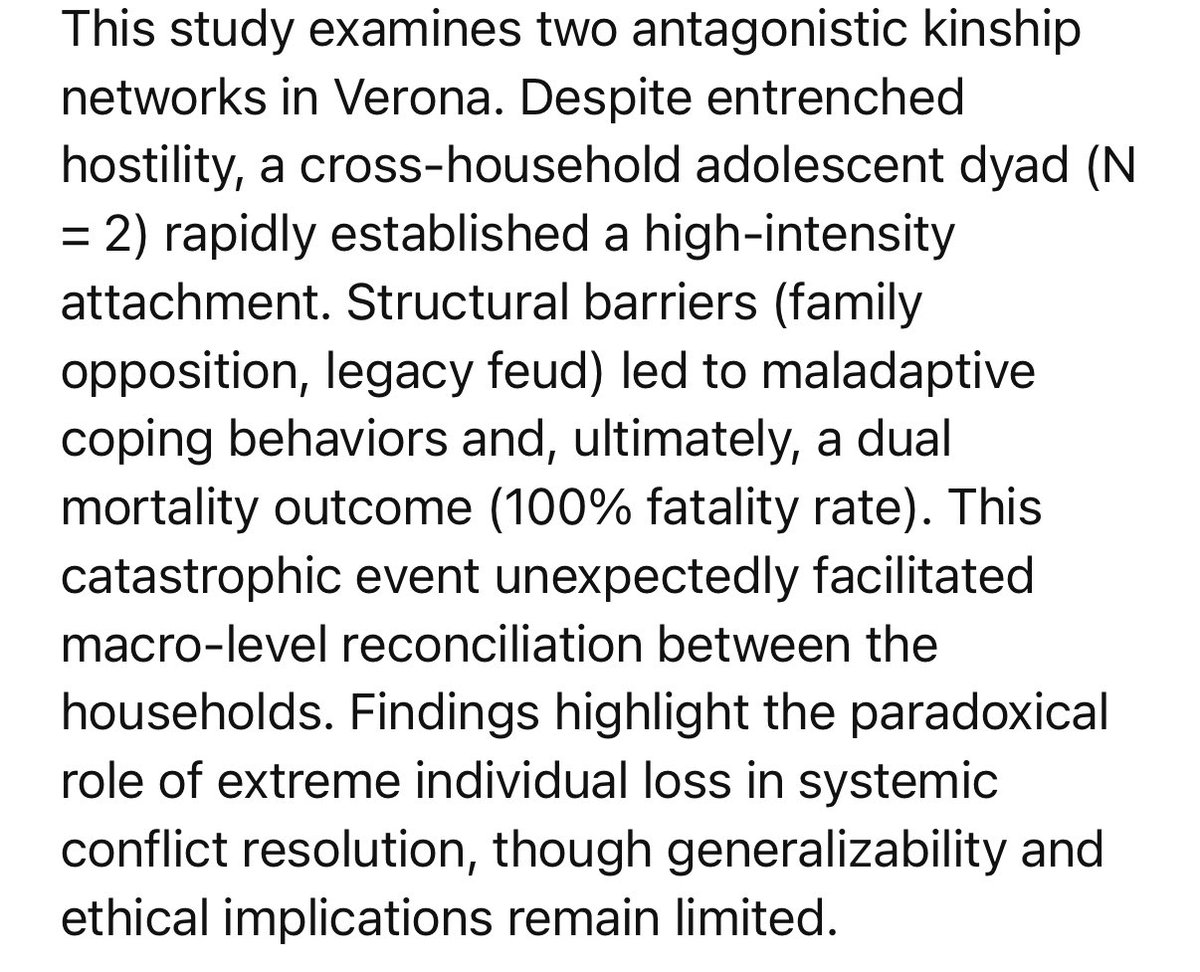
How I wish I wrote abstracts vs how I write abstracts…

2
10
43
3,036
11 Aug 2025
Cool stuff 👍🏻
11 Aug 2025

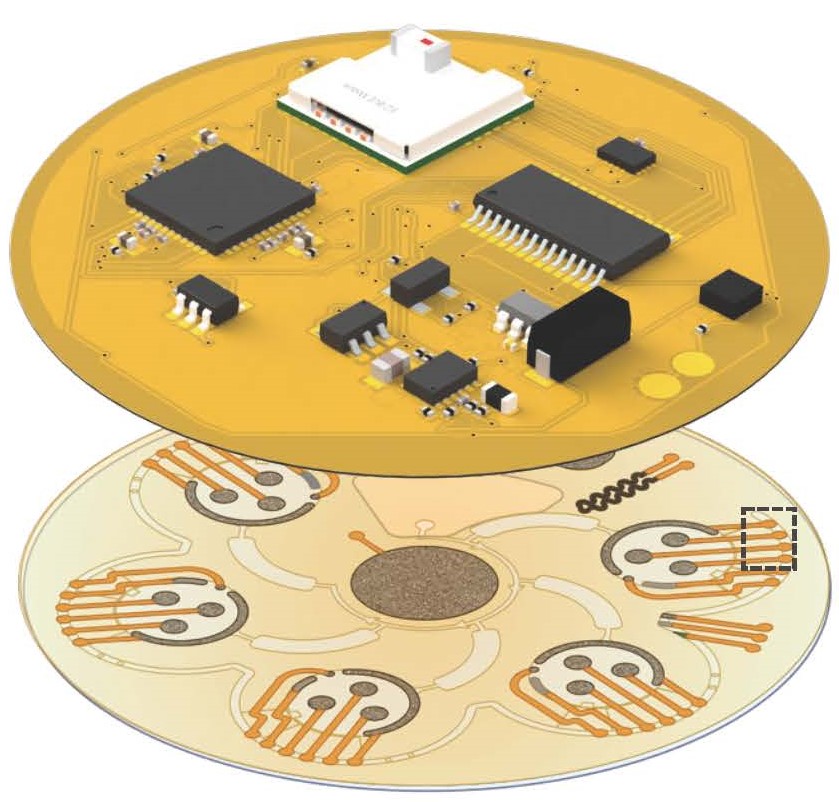
This wearable sweat sensor can detect responses to acute, chronic, and emotional stress.
Learn more in @ScienceAdvances: scim.ag/3HcQf08
1
65
sebastian korb retweeted

6 Aug 2025
🧵1/4
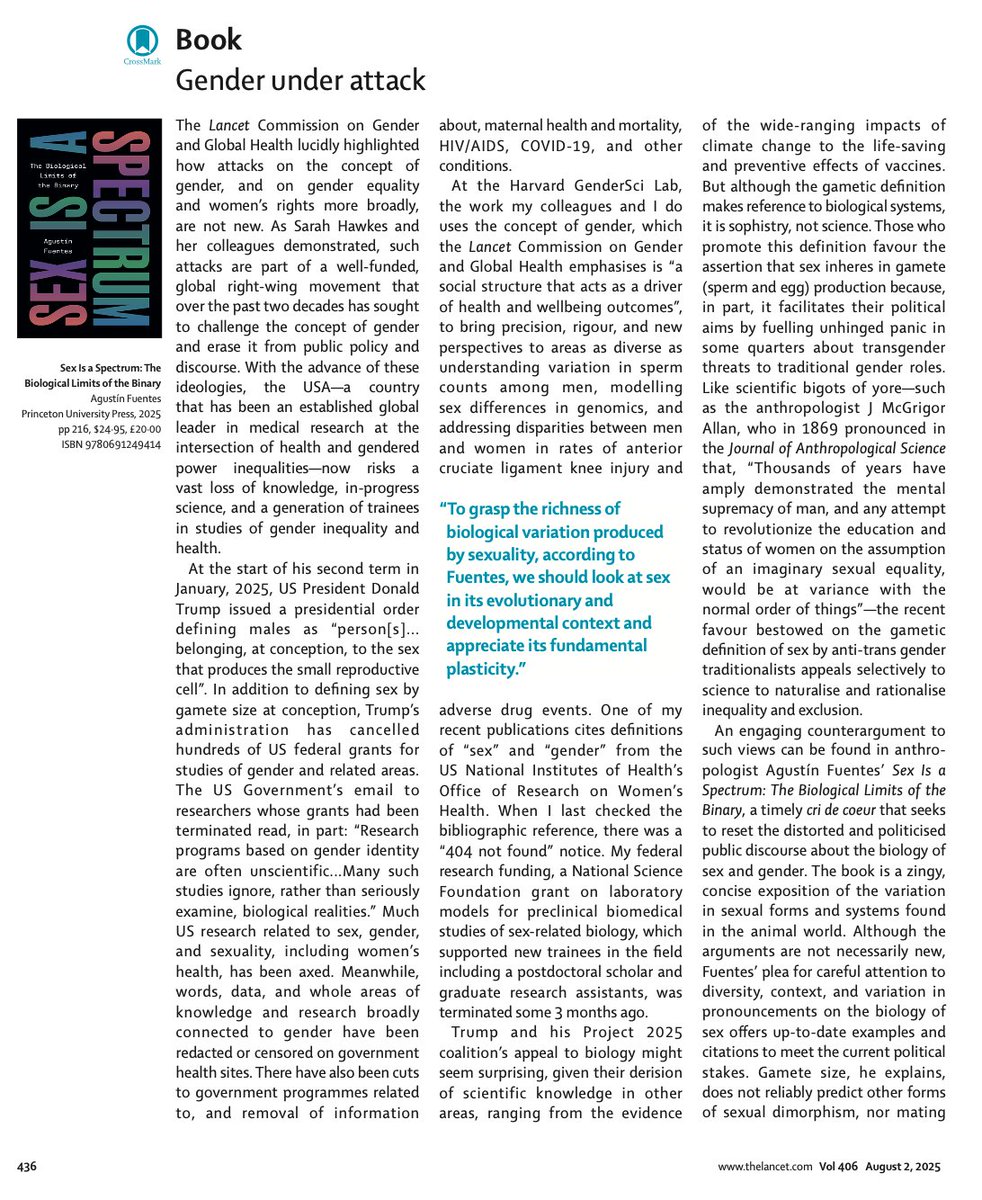
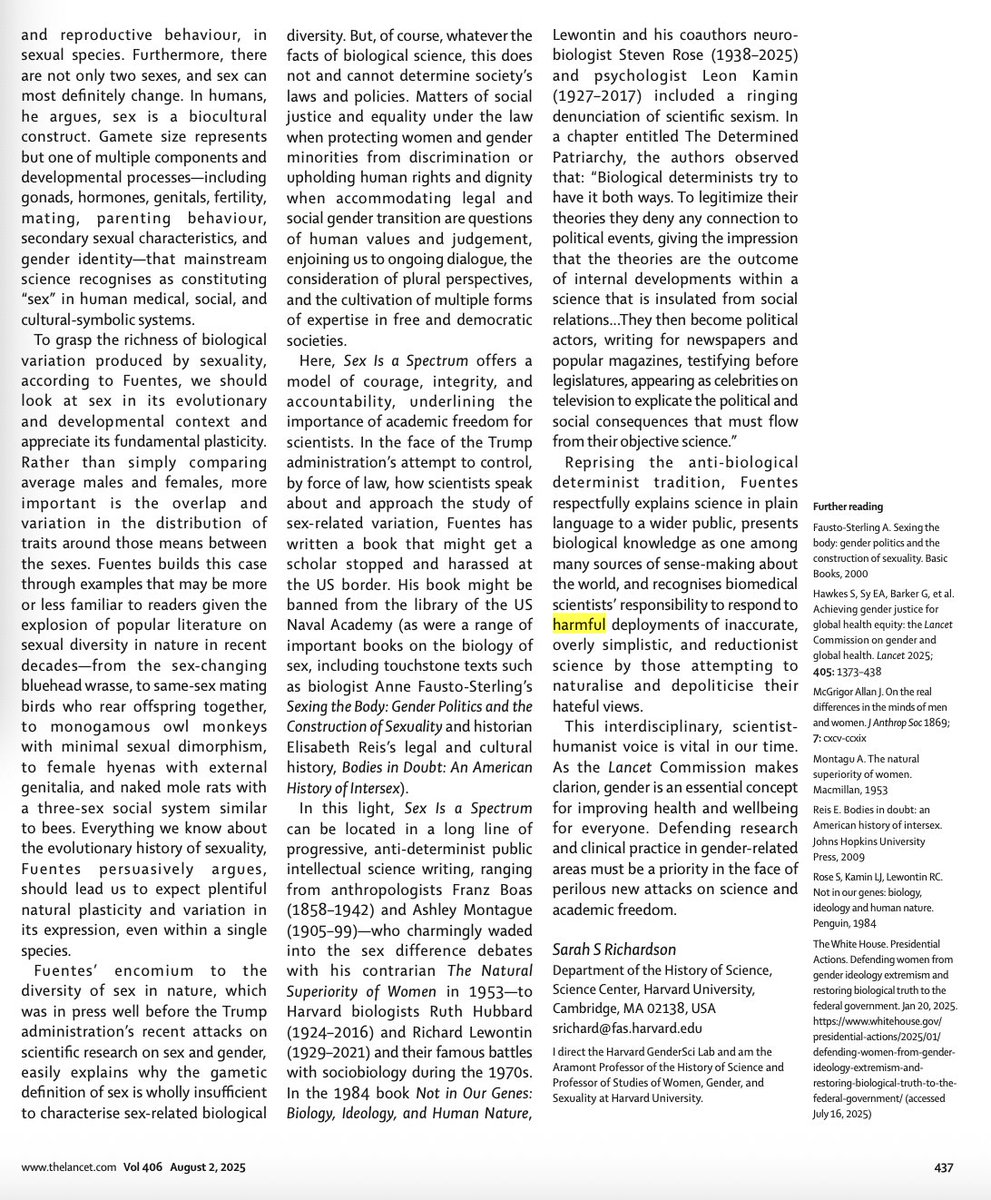
A Harvard professor has just published a glowing review of Yale Professor Agustín Fuentes’ new book, Sex is a Spectrum, in The Lancet—one of the highest-ranked, most prestigious medical journals in the world. In it, she asserts that the “gametic definition” of sex—roughly, that there are two sexes, defined by whether the organism produces sperm (male) or eggs (female)—is not only “harmful,” but also “sophistry, not science.” (Lancet piece is below.)
I hold the gametic view. To the best of my knowledge, this is the view held by most evolutionary biologists. The author of the review has different ideas, and quotes approvingly from Fuentes’ book on the nature of sex: “sex is a biocultural construct. Gamete size represents but one of multiple components and developmental processes—including gonads, hormones, genitals, fertility, mating, parenting behaviour, secondary sexual characteristics, and gender identity.”
People disagree about the nature of male and female, and that’s OK. Respectful disagreement among scholars should be encouraged; it often sharpens thinking and research. But The Lancet review goes well beyond disagreement about the facts, and exemplifies one of the main reasons Harvard is being targeted by the government.
Nobody wants to be called hateful or bigoted (especially by faculty with fancy endowed professorships), or even tainted by close proximity to views that could be construed that way. But not only has the Harvard professor disagreed with the gametic view, she apparently feels free to publicly impugn the ostensible motives and character of those who endorse it. Without providing any evidence, she asserts that our view is motivated (at least in part) by political aims, and harmful ones. As she wrote in The Lancet:
“Although the gametic definition makes reference to biological systems, it is sophistry, not science. Those who promote this definition favour the assertion that sex inheres in gamete (sperm and egg) production because, in part, it facilitates their political aims by fuelling unhinged panic in some quarters about transgender threats to traditional gender roles.”
She praises Fuentes for recognizing scientists’ “responsibility to respond to harmful deployments of inaccurate, overly simplistic, and reductionist science by those attempting to naturalise and depoliticise their hateful views.”
And last, there’s the link between those who hold the gametic view and bigots: “Like scientific bigots of yore—such as the anthropologist J McGrigor Allan, who in 1869 pronounced in the Journal of Anthropological Science that, ‘Thousands of years have amply demonstrated the mental supremacy of man, and any attempt to revolutionize the education and status of women on the assumption of an imaginary sexual equality, would be at variance with the normal order of things’—the recent favour bestowed on the gametic definition of sex by anti-trans gender traditionalists appeals selectively to science to naturalise and rationalise inequality and exclusion.”
The subtext is that in science, simply following the evidence is ill-advised if you (or others who have power over you) think it will lead to social harms. What kind of person would want to hold, let alone give voice to such harmful views as the gametic one?
500
744
3,691
1,040,352
sebastian korb retweeted

22 Jul 2025
Deadline for this funded PhD to work with me and @DuncanAstle is soon! 26 July.
The student must be a woman (because the studentship is based at Newnham College Cambridge) and eligible for UK home fees.
27 Jun 2025

🚨 Funded PhD @CambridgeUni!
Work with top minds — @DuncanAstle & @sjblakemore
on the impact of #developmental differences on #education!🧠📚
A month to apply ⏰
For details see👇
🔗drive.google.com/file/d/1RIv…
Newnham-based 👩🎓💅
@mrccbu
#psycology #cambridge #opportunity
1
15
31
6,701
sebastian korb retweeted

15 Jul 2025
Fingers crossed for sunny skies all throughout graduation week! It is such an exciting time on campus as we celebrate all of our students' successes and achievements. We are so excited to see what the next chapter holds for all those graduating this Friday from #essexpsychology!

1
74
sebastian korb retweeted
6 May 2025
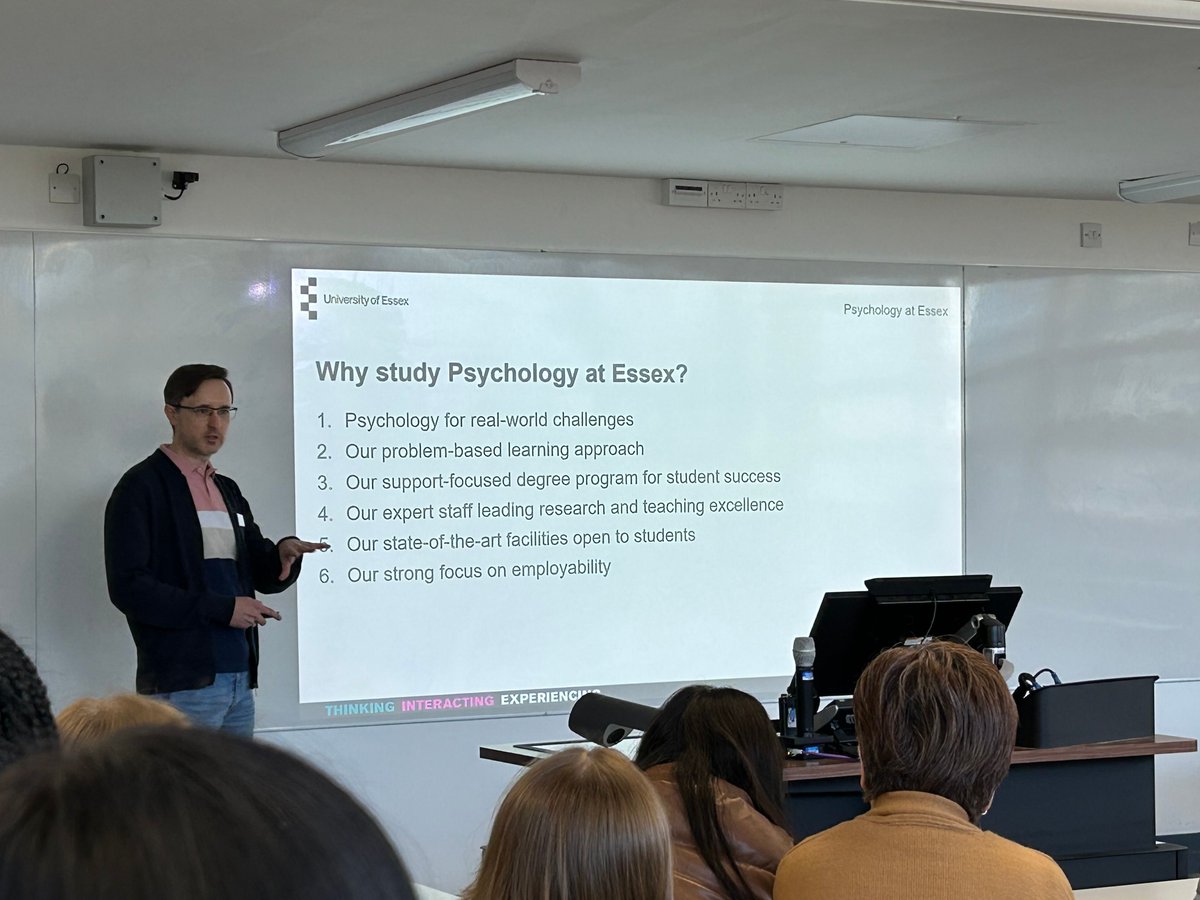
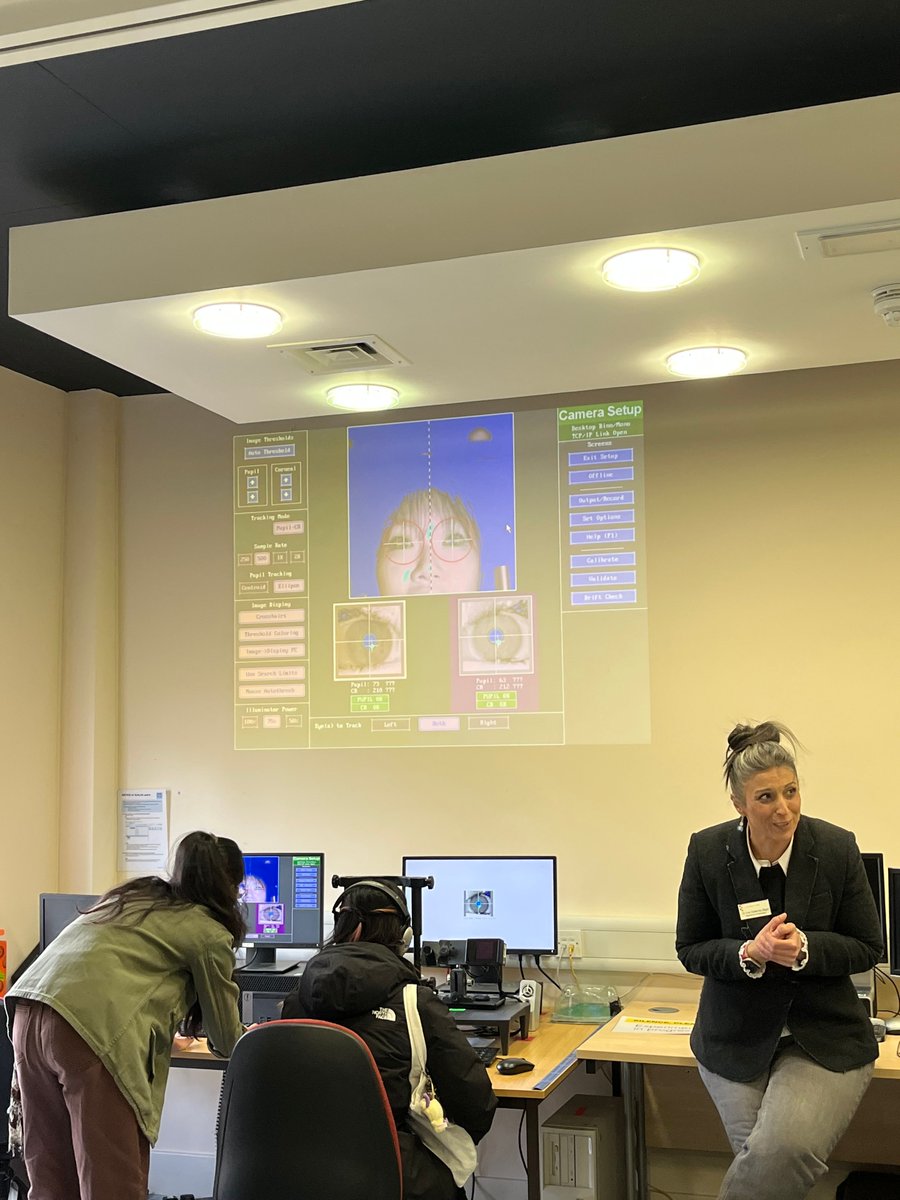
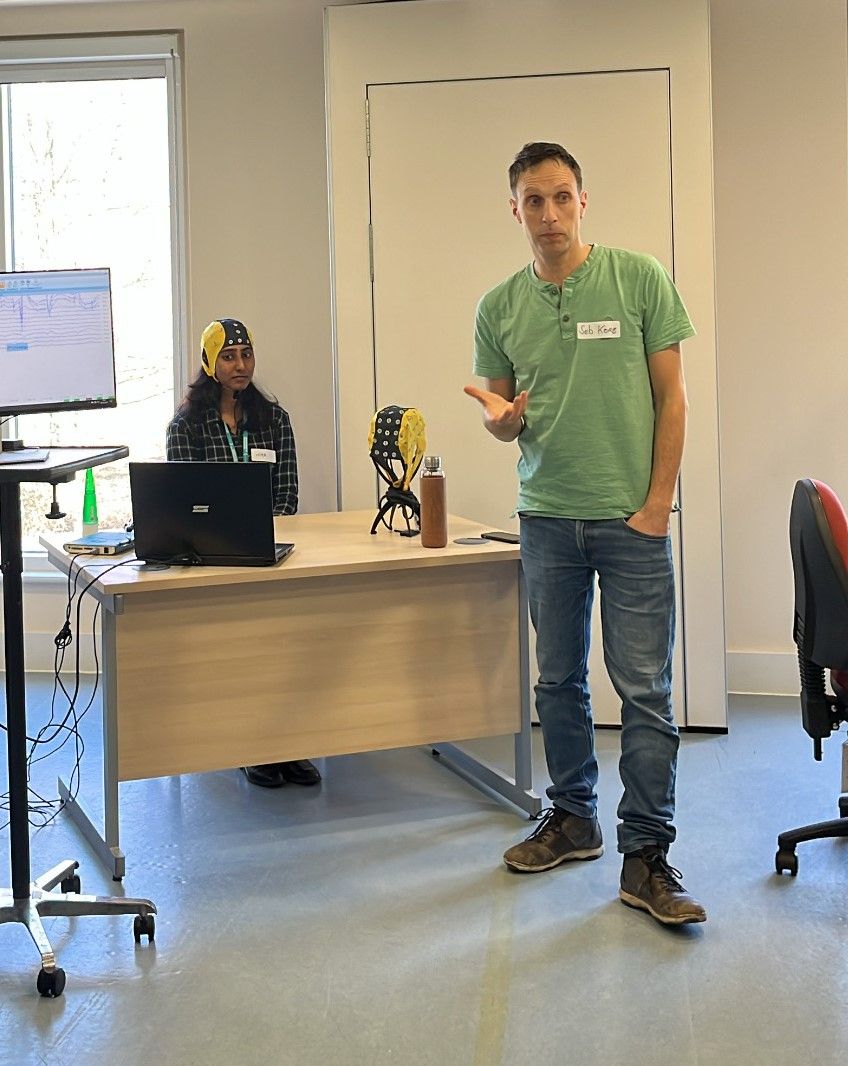
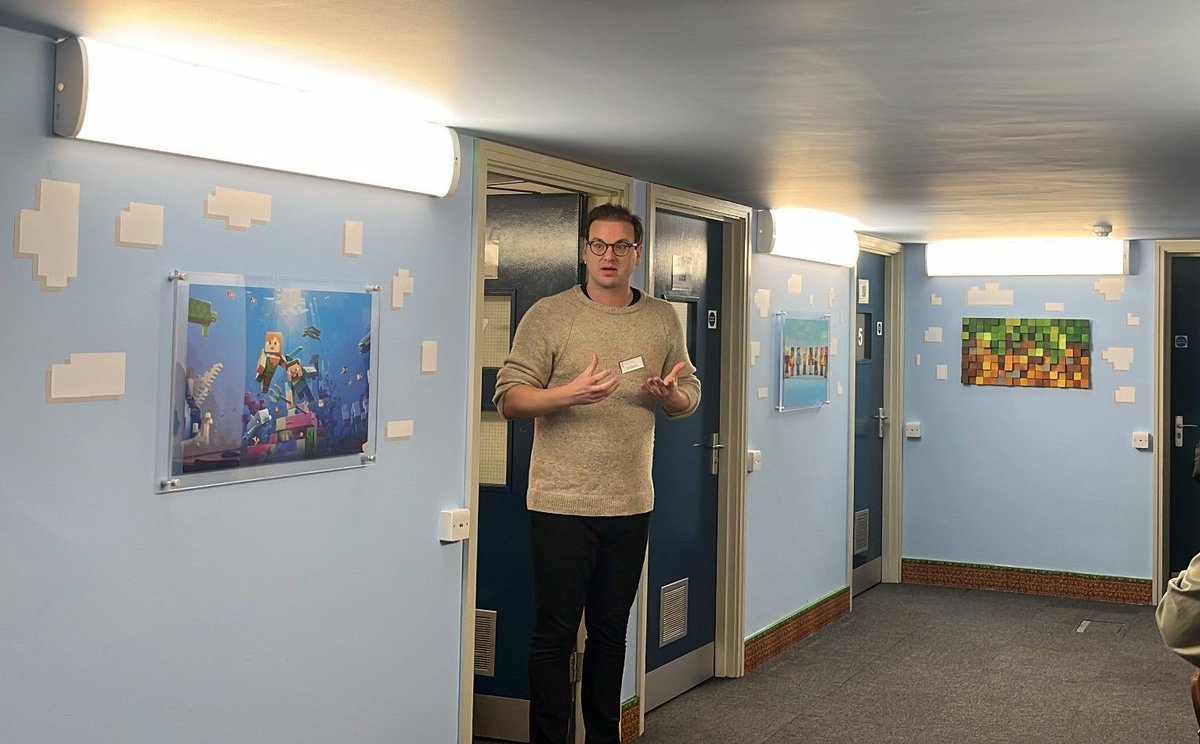
We have had such a great time meeting so many prospective students and their families at our recent Offer Holder Days! These days provide a chance for you to see our state of the art facilities and learn a bit more about what studying Psychology at Essex would be like!
1
1
1
116
21 Mar 2025
New paper day! Using EEG and frequency tagging, we show that posing a smile reduces neural discrimination of happy versus neutral faces, possibly by making neutral faces look happier. Led by @_Neurobaker with great help from @svddonck and @BartBoets psycnet.apa.org/fulltext/202…
3
87

sebastian korb retweeted

10 Dec 2024
your family finally learning what you research for the 11th Christmas in a row

10
125
2,173
86,024
sebastian korb retweeted
10 Dec 2024
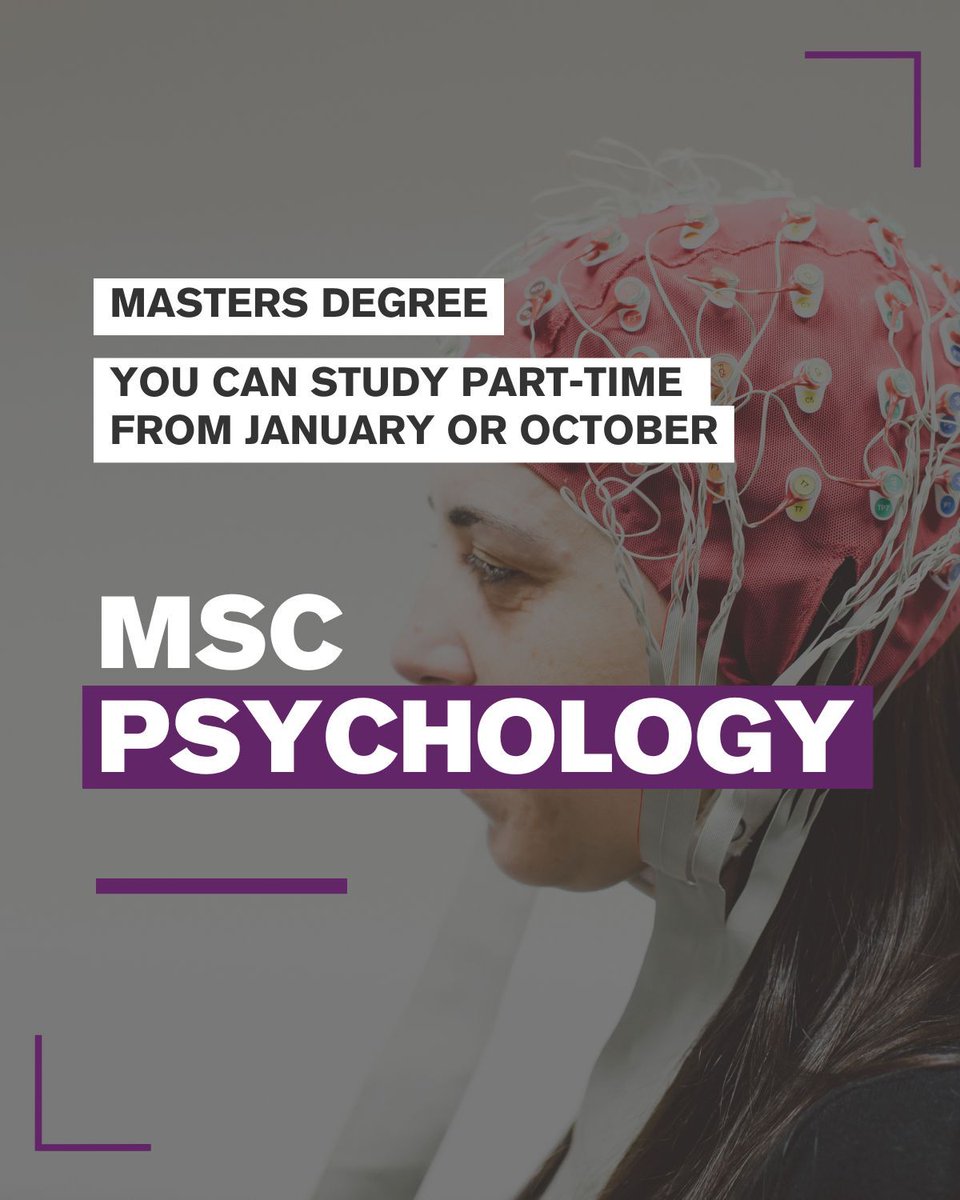
UK applicants - there is still time to apply to begin your MSc in Psychology at the University of Essex this January! And great news - we now offer a part time option for UK applicants making the course more flexible than ever.
1
1
186
24 Nov 2024
Thank you @ayesharascoe and @NPR for giving me the chance to describe some of our work on changing emotions with electrical facial muscle stimulation npr.org/2024/11/24/nx-s1-520…
4
103
23 Sep 2024
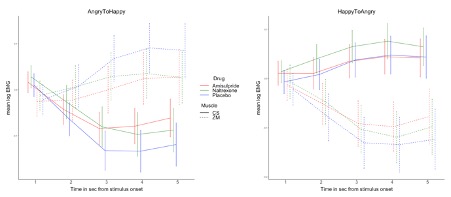
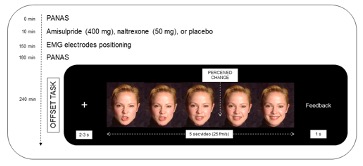
Important work by @ThemisEfth and the rest of the Korblab, finally out in Emotion. shorturl.at/YRS9d 5 sec of electrical stimulation ⚡️ of smiling 😃/sadness ☹️muscles changes self-reported affect. In line with emotion posing studies, and the facial feedback hypothesis.
3
1
7
373
20 Nov 2024
Over the moon 🌛 that this was just featured in @sciam (thank you so much @RachelNuwer for the interview) and got endorsed by a distinguished colleague (thank you very much Heather Lench).
1
1
73
25 Oct 2024
And now with a nice summary for the British Psychological Society: bps.org.uk/research-digest/e…
Thank you Emma Young 🙏(not sure which twitter handle to use)
2
92