
Portfolio Manager, CFA
Joined September 2017
- Tweets 9,062
- Following 739
- Followers 434
- Likes 16,482
43 Photos and videos




Peatmoss retweeted

Jun 10
Keynesian Brain Rot on Full Display in Canada.
Canada’s central banker, Tiff Macklem, is engaged in a familiar technocratic exercise, avoiding the only question that matters. Did the Bank of Canada help push the country into recession? Instead of answering, he hides behind definitional games and bureaucratic evasions.
The economics are straightforward. Under a Wicksellian framework, the neutral rate declines when productivity weakens and population growth deteriorates. Canada has both. Productivity is negative. The marginal growth impulse from immigration is fading. By definition, the economy’s capacity to sustain higher rates has fallen.
Wicksell is clear, hold policy rates above the neutral rate, and monetary policy becomes restrictive. In that sense, even standing still becomes tightening.
By refusing to adjust to a falling neutral rate, Macklem and the Bank of Canada have effectively tightened into a weakening economy.
To be clear, supply shocks and tariffs do not cause inflation, they change relative prices, that is basic economics. Yet policymakers treated a largely supply-driven price spike as justification for aggressive tightening, compounding structural weakness with cyclical error.
This is not caution. It is policy failure.
But the deeper problem is not just the central bank, it is the broader economic elite that presided over a slow-burning economic cancer. For years, Canada has suffered from negative productivity growth, weak capital investment, and a suffocating regulatory state that steadily eroded competitiveness. Instead of diagnosing and treating these structural failures, policymakers masked them. Real estate speculation and household leverage became the chemotherapy of choice, blunting symptoms while the underlying disease spread.
Now the façade is cracking, and the diagnosis can no longer be avoided.
And yet the response from the same leadership class is denial dressed up as sophistication. They debate whether this qualifies as a “technical recession” while per capita output falls, businesses retrench, and real incomes erode. The message to ordinary Canadians is as clear as it is dismissive, absorb the pain, trust the framework, and stop asking questions.
A recession is an economic heart attack, sudden, visible, impossible to ignore. But Canada’s problem runs deeper. This is what it looks like when an economy is overtaken by cancer, a long-term deterioration driven by weak productivity, chronic underinvestment, and policy complacency, left undiagnosed, or worse, deliberately ignored by the very elites tasked with managing it.
Canada avoided the shock of 2008. Instead of reform, it allowed the disease to metastasize. What is unfolding now is not an external crisis. It is the inevitable consequence of years of neglect.
Macklem can continue to argue about definitions. The country, meanwhile, is living with the diagnosis. Keynesian Brain Rot was on full display in Canada today.

The Bank of Canada held its key interest rate but reiterated that US trade uncertainty and the Iran war may mean it needs to either cut or deliver consecutive hikes to keep inflation stable. bloomberg.com/news/articles/…
20
64
215
15,755
Peatmoss retweeted

May 22
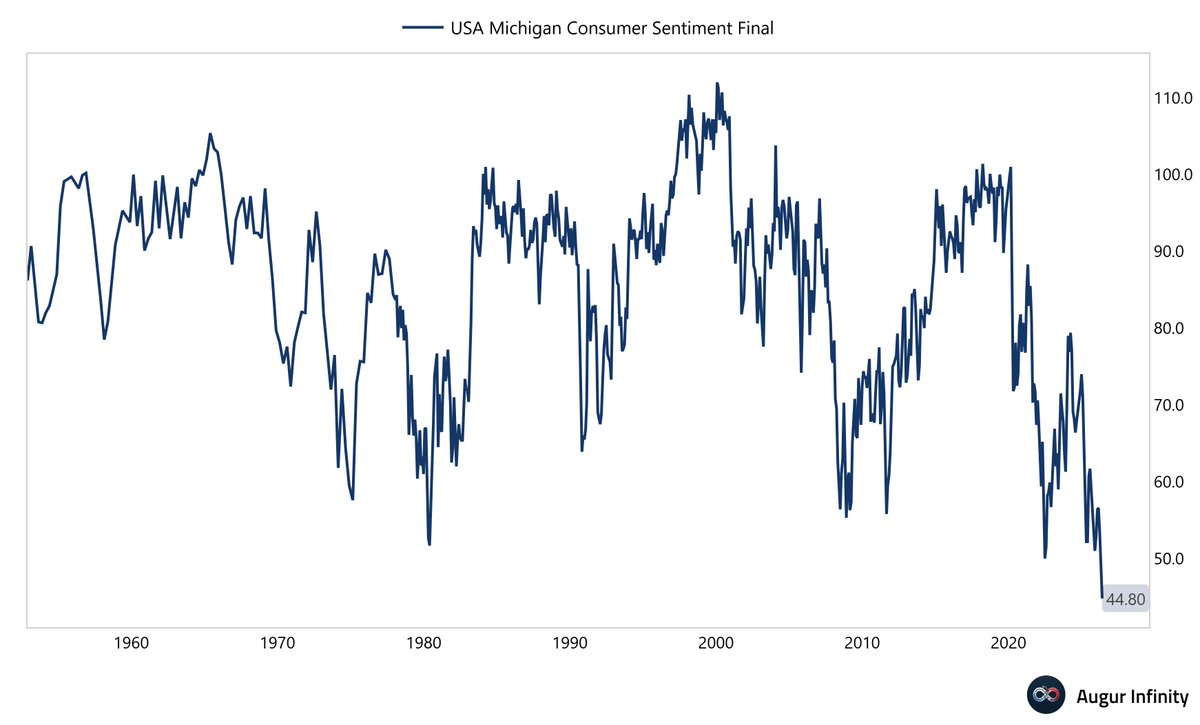
On its own this is awful.
Paired with the markets at all-time highs and a small number of individuals richer than ever and feeling invulnerable, this has the makings of a revolution.

Data back to 1946, and right now is the worst consumer sentiment @augurinfinity
5
15
50
9,036

Massive policy error in the making. A supply shock should cause a central bank to EASE, not tighten.
Canadian government bonds were hammered after the Bank of Canada’s top official raised the prospect of back-to-back rate hikes if energy prices cause broader inflation — just as oil was spiking bloomberg.com/news/articles/…
113
Carney’s National sovereign wealth fund right out of Russell Napier’s playbook. @EdinburghLoM National capitalism. Routing capital to specific industries to reduce the cost of capital. Financial repression. Suppressing bond yields.
77
Peatmoss retweeted

Apr 23
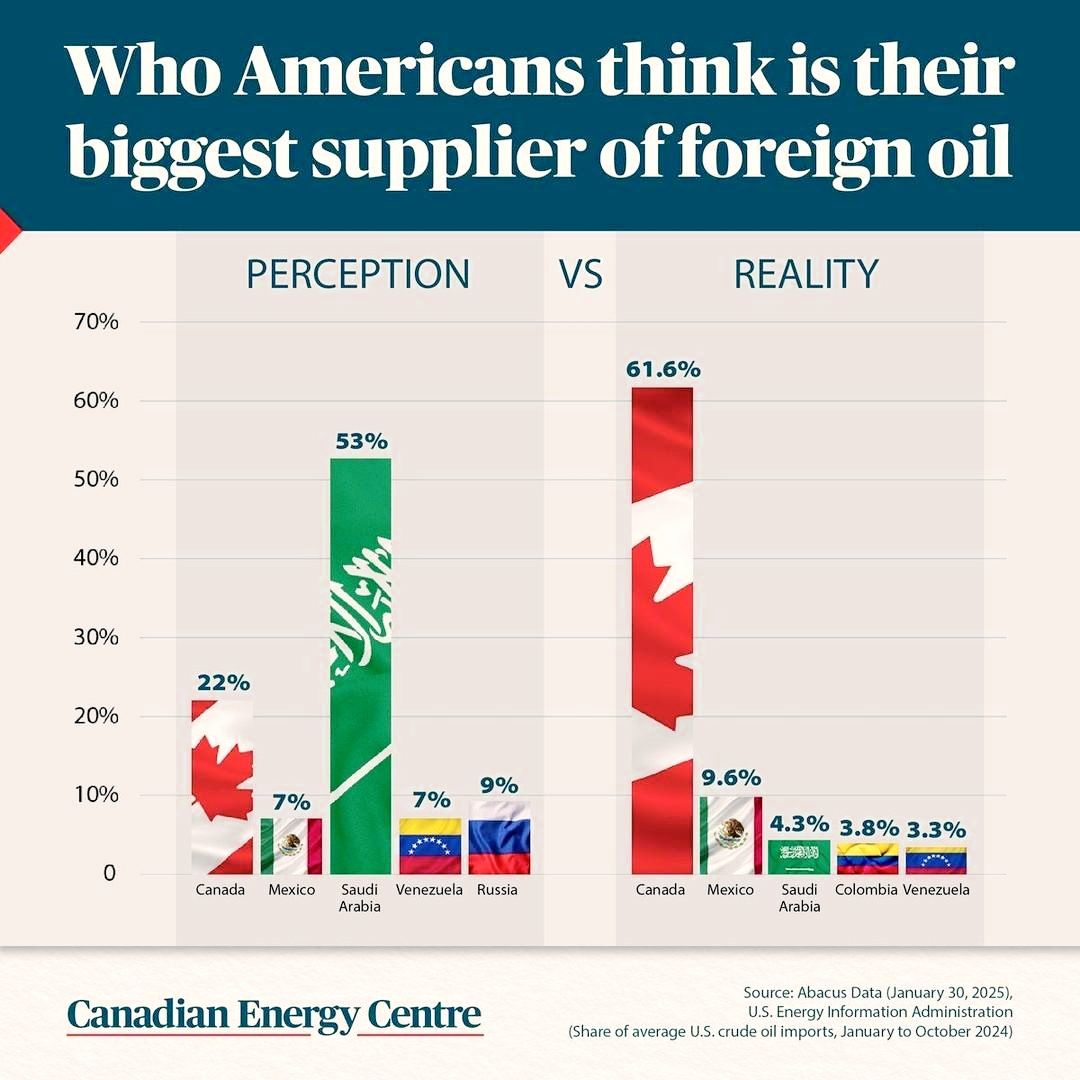
Most Americans dramatically underestimate Canada’s role as a supplier of foreign oil to the United States. The image below makes the contrast clear: perception and reality are far apart. Read more @ bit.ly/3njE8Qb🌎🛢️🍁
41
297
596
19,676
Peatmoss retweeted

Apr 18
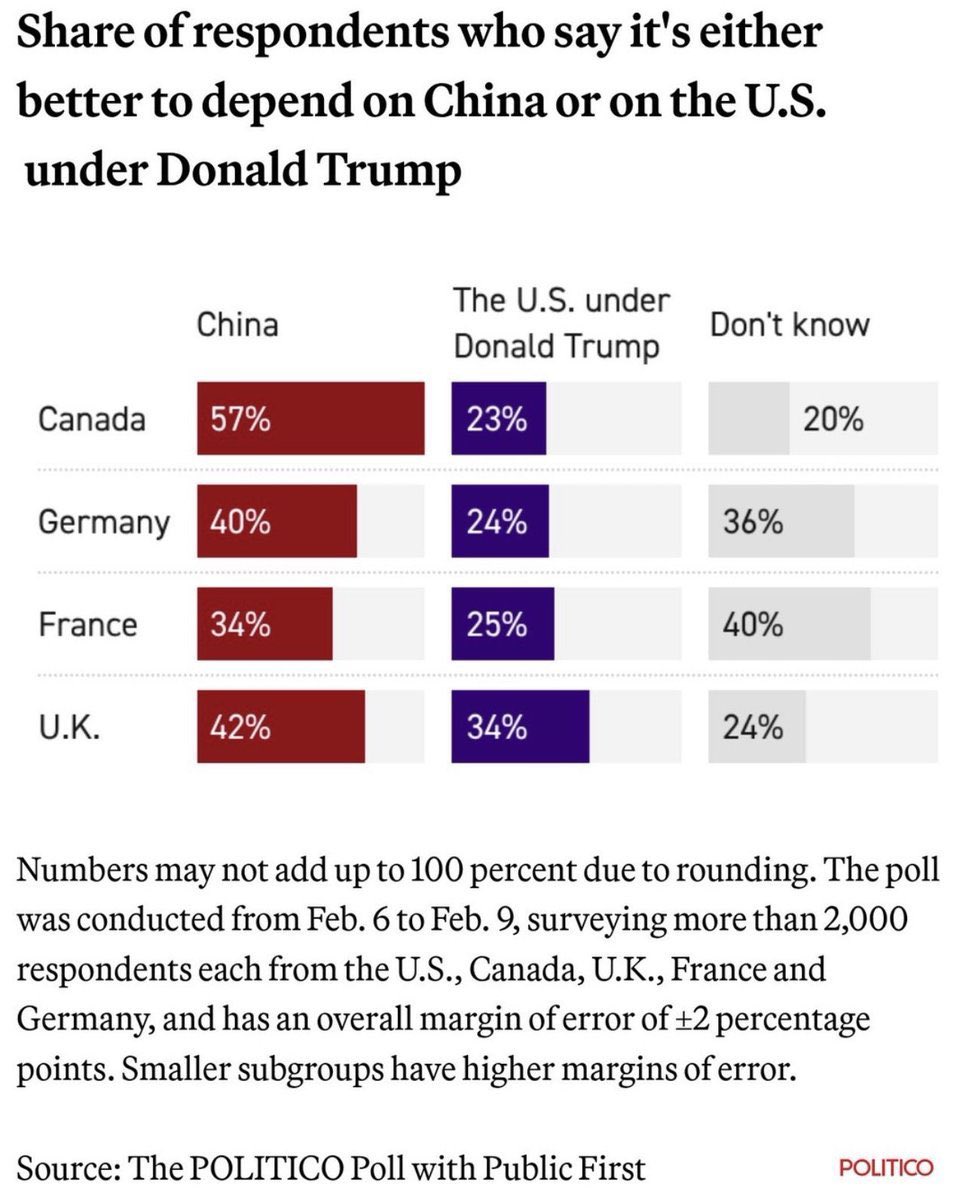
an extraordinary set of responses
147
296
842
108,762
Peatmoss retweeted
Mar 13
All decisions come with unintended consequences, and those at extremes in confidence even more so.
At peaks, we are blind to risks believing we are invulnerable.
At lows, we are too focused on the present. With the bear outside the tent, who cares about tomorrow.
1
4
20
2,110
Peatmoss retweeted

Milton Friedman: “It’s so hard for people to get out of the notion that life is a zero-sum game.”
“They think if one man benefits, another must lose. But in a free market, both people can benefit.”
18
256
1,183
28,984
Peatmoss retweeted

Feb 27
Our lying Ontario premier has just stolen $50 from every single person in Ontario. The estimated cost of repairing our beloved Science Center was 200 million dollars. The firm that made the estimate was told to multiply it by 1.85 to make it bigger. We were then told it would be better to build a new science center. Now we learn the new center will be smaller and will cost a billon dollars before the cost overruns. The only win is that the extensive parking lots of the old Science Center will be available for his developer friends.
126
600
3,056
261,227

Peatmoss retweeted

Feb 18
The Hollow Men
American capitalism is rotting from the head down. We have replaced the "Owner-Operator"—the risk-taker-with a new, parasitic class of corporate bureaucrat: The Risk-Free Insider.
By "Insider," I am not referring to a specific title. I am referring to the entire administrative state that has captured the modern corporation. This includes the Directors who exist solely to collect fees, the Executives who exist solely to collect bonuses, and the Managers who exist solely to hire consultants.
These are the hollow men of the boardroom. They are masters of PowerPoint. They wear the right suits. They say the right buzzwords about "governance" and "ESG." But they are mercenaries fighting a war with someone else’s ammunition.
In a functioning economy, authority is tied to liability. If you make a bad decision, you lose your own money. That fear of loss is the only thing that keeps a business honest. It forces you to cut waste, obsess over the customer, and stay late to fix what is broken.
Today, we have severed that link.
We have rigged the game so that heads, the Insider wins; tails, the shareholder loses.
If the stock goes up, the Insider collects a massive performance bonus. If the stock crashes due to their own incompetence, they are fired with a "Golden Parachute" worth tens of millions. They are gambling with the house’s money, and they never leave the table poorer than they arrived.
This looting starts in the boardroom.
We have normalized a "Country Club" culture where directors are selected based on social profiling rather than their ability to build a business. The modern board member is often a professional tourist—paid an average of $350,000 a year.
Let’s be brutally honest about what that number represents. The average director is paid nearly five times the GDP per capita of the United States. They earn more for attending four quarterly lunches than the vast majority of Americans earn in five years of hard labor.
And for what?
Most of these directors are "over-boarded," sitting on three or four boards simultaneously. They treat directorships as a gig economy for the elite. They fly in, rubber-stamp a compensation package they didn't read, and fly out. They collect checks from companies they do not understand, do not use, and certainly do not love.
They are not there to ask hard questions. They are there to be collegial. They are there to protect the other Insiders.
And what happens when these boards hire executives who also have no personal capital at risk?
We get the Delegation Economy.
When a Risk-Free Insider faces a crisis—bloated expenses, a broken supply chain, or a stale product—they do not roll up their sleeves. They hire a consultant. They pay a strategy firm millions of shareholder dollars to produce a 100-page deck telling them what they already know.
This is not management. It is intellectual money laundering.
They use shareholder capital to buy an insurance policy for their own careers. If the plan fails, they can blame the consultants. They delegate the work because they are terrified of the responsibility. They would rather preside over a slow, comfortable decline than risk a bold mistake.
While American Insiders are busy optimizing their severance packages, our global competitors are optimizing their products. They are not slowed down by bureaucracy. They are not waiting for a slide deck. They are outworking us.
If we continue to fill our C-suites with administrators instead of operators, we will lose our edge. We will see iconic American franchises hollowed out by fees, managed for the benefit of the Insiders, while the true owners—the shareholders—are left holding the bag.
The time for polite governance is over.
If we want to save the American economy from mediocrity, we must demand a return to the "Owner’s Mentality." We need leaders who treat shareholder capital with the same reverence they treat their own savings. The era of the Risk-Free Insider must end.
2,722
5,858
21,407
2,929,656
Peatmoss retweeted

Feb 5
One minor benefit of the Epstein scandal is that the repulsive habit of writing English without capital letters will finally be seen for what it is: a sign of gross moral turpitude.
259
336
4,606
257,265
Peatmoss retweeted

Jan 31
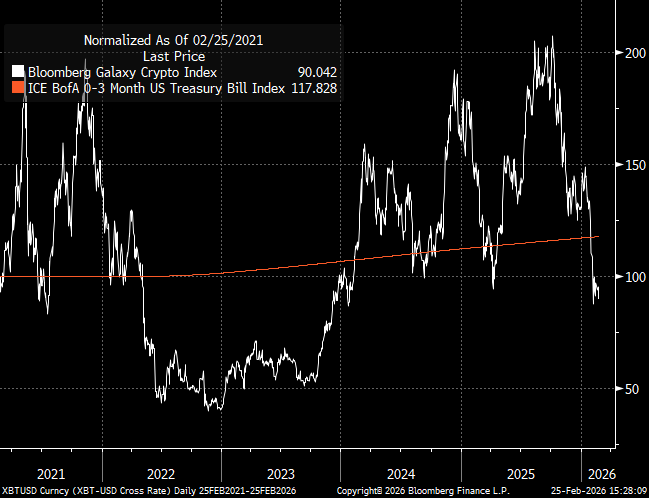
Crypto currencies are collapsing today.
For example, bitcoin is -$6,000. $BTC
In late November Tom Lee @fundstrat was interviewed on @cnbc about the October-November fall in cryptocurrencies - calling it a technical glitch.
Tom went on to say the decline was based on a "code error" and "bug" in part based on the weak hands of market makers.
In the interview (below) Brian Sullivan @SullyCNBC pressed Tom in the interview but all Tom Lee said was that "he won't name names." Which is the standard answer when you are bullshitting people.
@https://www.youtube.com/watch?v=oVHBSwNOb1Q
When I pushback on permabulls some say I am ad hominem - attacking them.
In reality I am trying to expose non rigor in analysis, the lack of timestamps, hubris, coverups (to improve the show panelists "brands" in order to attract assets or sell a service) etc. The lack of probing interviews has become standard fair.
Who will ever forget the interview with Sam Bankman- Fried four weeks before the fraud was uncovered?
In reality I am just tweeting what a lot of people are thinking. (Most in the game will not be critical when criticism is called for because they are on or have an interest in being on @cnbc).
For me, I couldn't care less as I have zero interest in appearing on @cnbc.
I call B.S. to what can be expected to be @fundstrat Tom Lee's explanation for the latest decline in crypto currencies... in advance of his appearance on Monday.
@tomkeene @business @ferrotv @lisaabramowicz1
@SquawkCNBC @andrewrsorkin @BeckyQuick @ScottWapnerCNBC @saraeisen @carlquintanilla @jimcramer @KeithMcCullough @hedgeye @Convertbond @CNBCFastMoney @HalftimeReport @BobPisani @pboockvar @guyadami
Jan 31

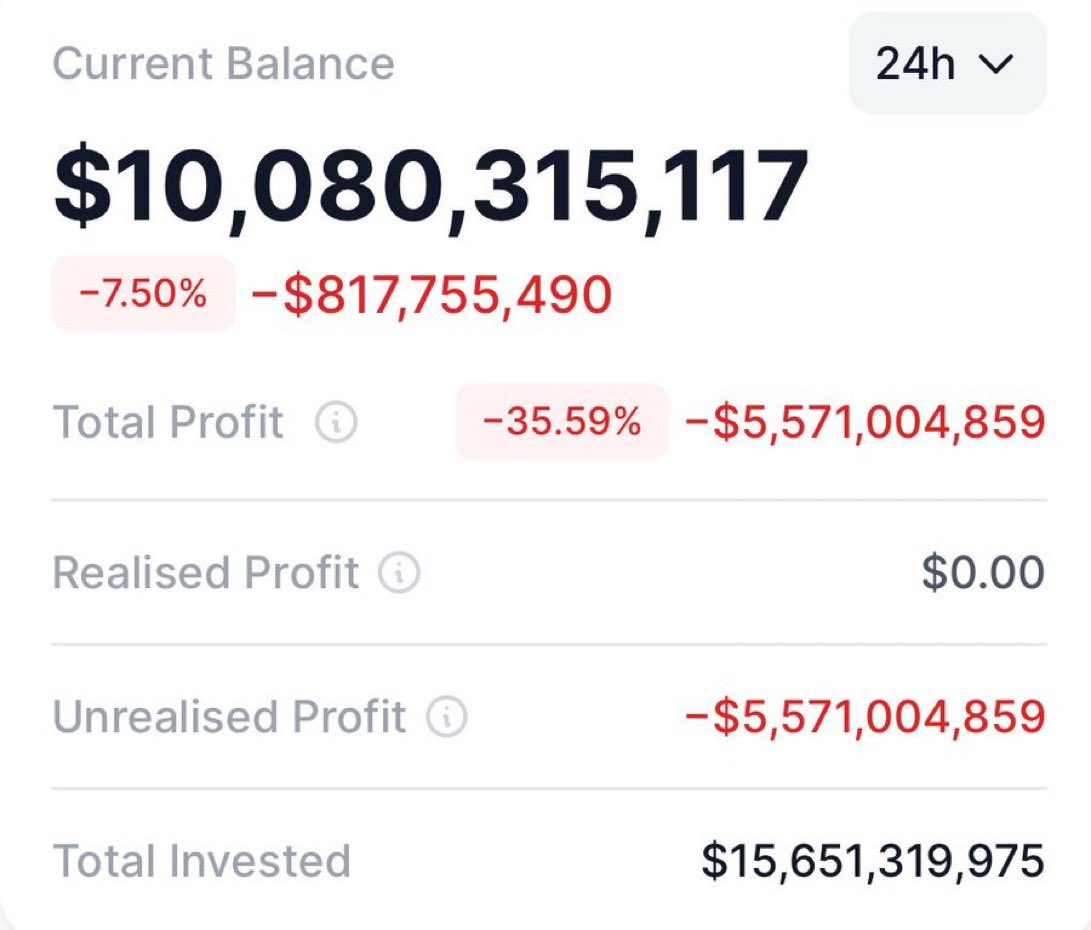
BREAKING: Tom Lee’s Bitmine $ETH portfolio is now down over $5.5 billion; bankruptcy now expected.
31
24
174
52,761
Peatmoss retweeted
22 Nov 2025
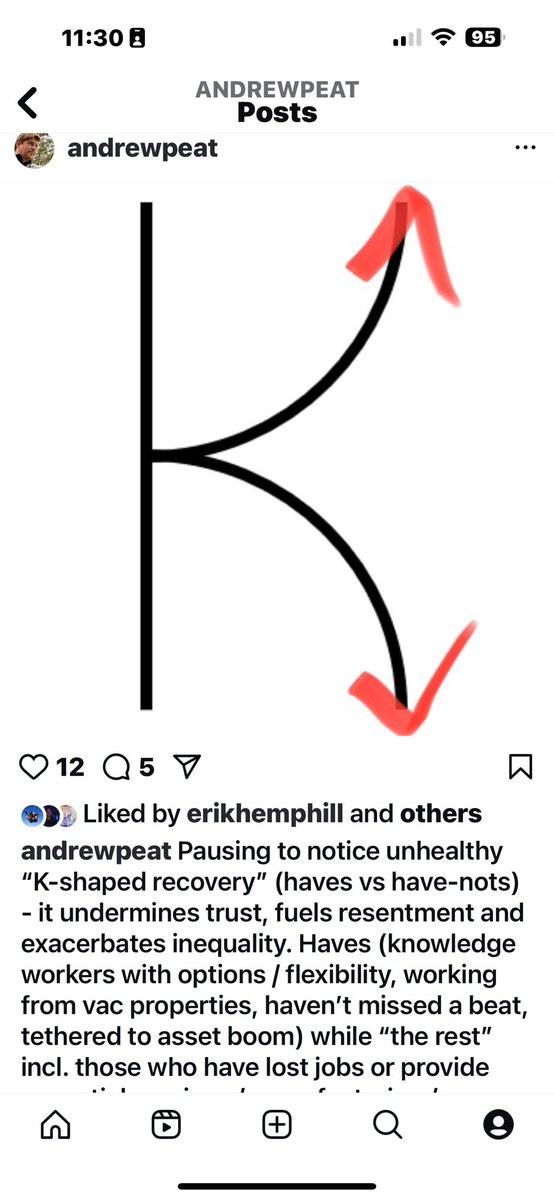
FWIW - the sudden popularity of the terms the "K-Shaped Economy" and "affordability," the election of Zohran Mandani, and the release of the Epstein files are all variations on the same societal mood-driven theme.
1
22
2,196
Peatmoss retweeted

23 Oct 2025
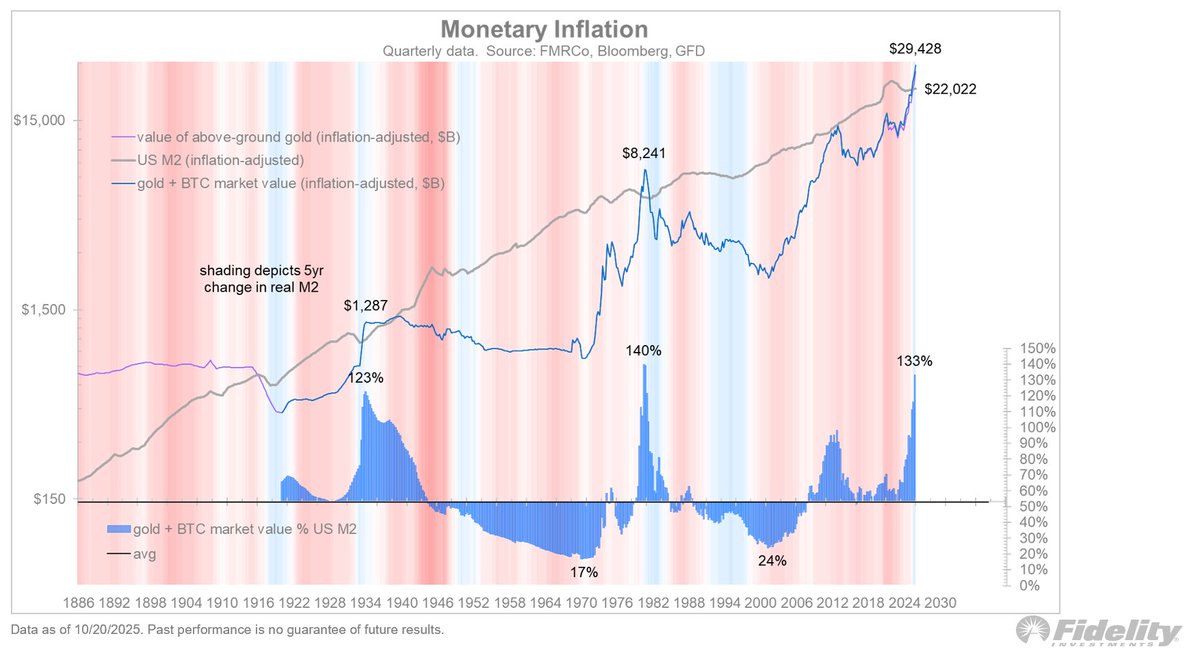
One reason to contemplate ringing the golden bell is that if gold is a play on US fiscal dominance, one could argue that the run is now complete. The chart below shows US M2 against the above-ground value of gold plus the market value of bitcoin. During times of monetary inflation, the market value tends to soar to at least the value of M2, if not more. At $29 trillion, gold and bitcoin are now 133% of M2, which is very close to the peak in 1980. It’s something to keep in mind after gold’s stratospheric run.
28
54
223
27,291

Congress has a duty to stop reckless tariffs that hurt American families and businesses. I’m fighting to take back congressional authority on trade. No more unilateral executive tariffs! We must put America first by restoring the Constitution.
washingtonpost.com/opinions/…
8,088
762
3,966
541,412
Peatmoss retweeted

29 Oct 2025
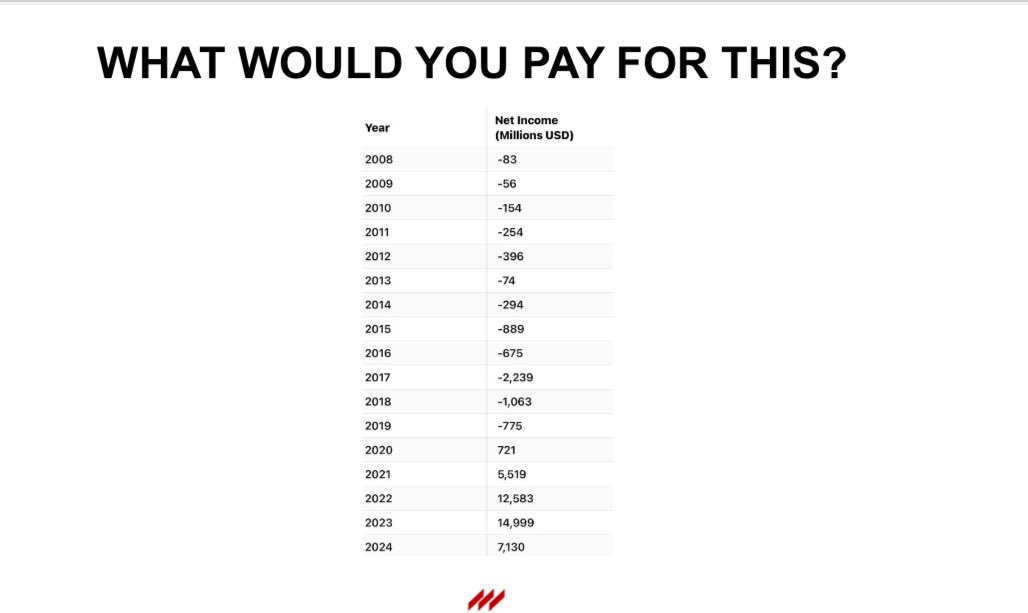
$TSLA has generated a mere $35B in CUMULATIVE profits since @elonmusk became CEO in 2008. That is $35B in TOTAL CUMULATIVE PROFITS OVER 17 YEARS!!! Yet, his sales proceeds and holdings of $TSLA shares exceed $250B (he only owns 13% of the company). And now he has the audacity to ask for a new pay package potentially worth $1T!!! Capitalism is truly broken.
Just say NO to the insatiable greed of @elonmusk

Please take a moment to vote your Tesla stock. It is super important.
Control of Tesla could affect the future of civilization.
7
5
17
10,340
Peatmoss retweeted

13 Sep 2025
Here’s a hard truth about modern society.
We don’t practice Capitalism anymore.
Rather, for the last 40 years we’ve been conducting a horrific experiment called “neoliberalism”. And we’re near the terminal point in that experiment, a stage I’ve been calling metastatic market fundamentalism.
Capitalism is agents organizing to seek profit by serving the needs and wants of customers. Metastatic market fundamentalism treats citizens as feedstock for corporate profits.
Social media is a canonical example. It’s established fact that Twitter, TikTok, Facebook, Instagram etc. algorithms, which are tuned to maximize advertising revenues via limbic activation, and produce political division and derangement, depression, and a host of other problems. But regulating against these algorithms might impair corporate profits, so America doesn’t regulate them. Because the system isn’t designed to protect the rights of Americans to not be exploited by corporations for profit. The system is to designed to protect corporations’ rights to extract maximum profit from citizens.
This is pathological sociopathy at societal scale.
I adore Capitalism. It’s a truly miraculous tool, but shouldn't be used to solve all problems.
Take science: it is unequivocally the optimal way to seek empirical truth and model reality. But science can't address which questions are worth asking, or what priorities are most important to citizens under resource constraints.
Similarly with Capitalism. It is an unparalleled engine for allocating resources and commercializing innovation, but it is a terrible arbiter of human values. When we ask the market to decide what constitutes a good life or a just society, it defaults to the only answer it knows: whatever is most profitable. That is the metastatic cancer.
A functional society knows when to invoke science, or capitalism, or democracy, or the judicial process, or the deliberative bodies that define its public good. The central challenge of governance is to protect the sovereignty of each institutional sphere, ensuring that the logic of the marketplace does not set the curriculum for our schools, write the laws for our courts, or determine the mission of our hospitals.
So here’s where we are: We built the most powerful resource allocation machine in history, then let it allocate us. We became the resource. The product. The feedstock. If you think I’m being dramatic, ask yourself - when did we last make a major policy decision that hurt corporate profits but helped actual humans? That silence you hear? That’s the cancer winning.
12 Sep 2025

Guys.
Nobody is trying to radicalize us. There is no conspiracy here.
Everything can be explained by the following observation:
🔥Radicalization is the most profitable business model on earth, practiced by the most profitable companies on earth.🔥
Look no further.
59
179
952
188,951
Is Air Canada @AirCanada aware that their website is not working? Can’t get a refund or transfer to wallet on-line.
1
3
360