Die unabhängige Stimme.
Joined August 2013
- Tweets 30,091
- Following 617
- Followers 69,669
- Likes 89,707
829 Photos and videos



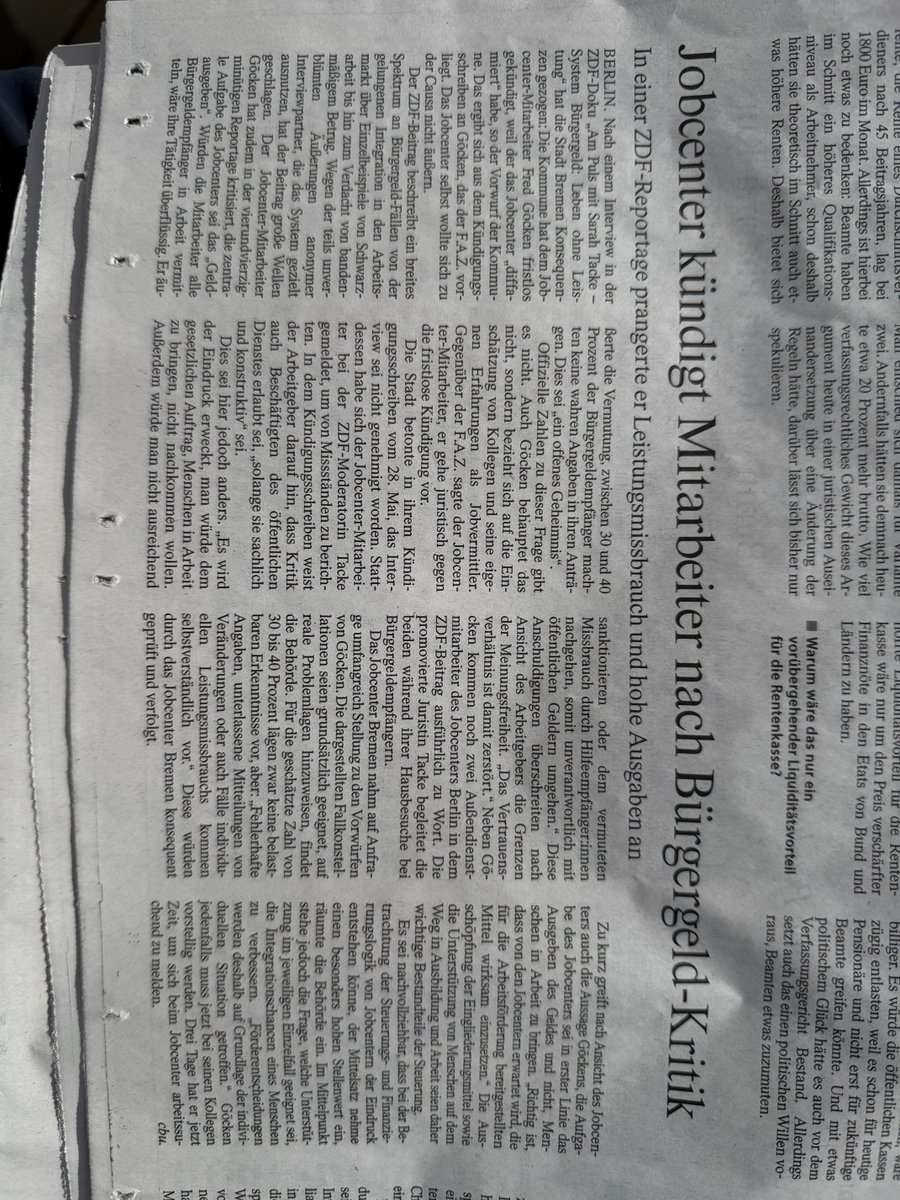







🙈🙈🙈👇

Es wird immer offensichtlicher: Neoliberalismus ist der Weg zur Knechtschaft – aber weil die Feudalherren heute private Oligarchen sind, finden Vulgärliberalos das ganz geil.
7
2
90
2,864
Heute bei BTO: warum wir die Gründungsdynamik in Deutschland stärken müssen!
6
13
83
2,578
Das Problem ist nicht Space X und der Billionär Musk. Nein. Das Problem ist, dass wir in Deutschland es nicht mal schaffen, Milliardäre in ausreichender Anzahl zu schaffen! Was zu tun ist, ist heute Thema bei BTO: think-beyondtheobvious.com/h…
27
48
353
7,169
Der Plan zur globalen Planwirtschaft - was zu halten ist von Pikettys Plan: welt.de/debatte/plus6a294677…
10
25
129
3,227
Dr. Daniel Stelter retweeted

Der Plan zur globalen Planwirtschaft
welt.de/debatte/plus6a294677…
"Es ist die alte sozialistische Tagesordnung, neu verpackt im grünen Mantel."
"Umverteilung ist das Ziel, das Klima das Vehikel."
Von Daniel Stelter @thinkBTO
4
25
1,622
„Nuclear power plants are a key pillar of the Government’s plan to reach net zero carbon emissions because, unlike wind and solar farms, they can provide stable supplies of electricity at any time of day.“ telegraph.co.uk/business/202…
3
16
76
2,426
Dr. Daniel Stelter retweeted
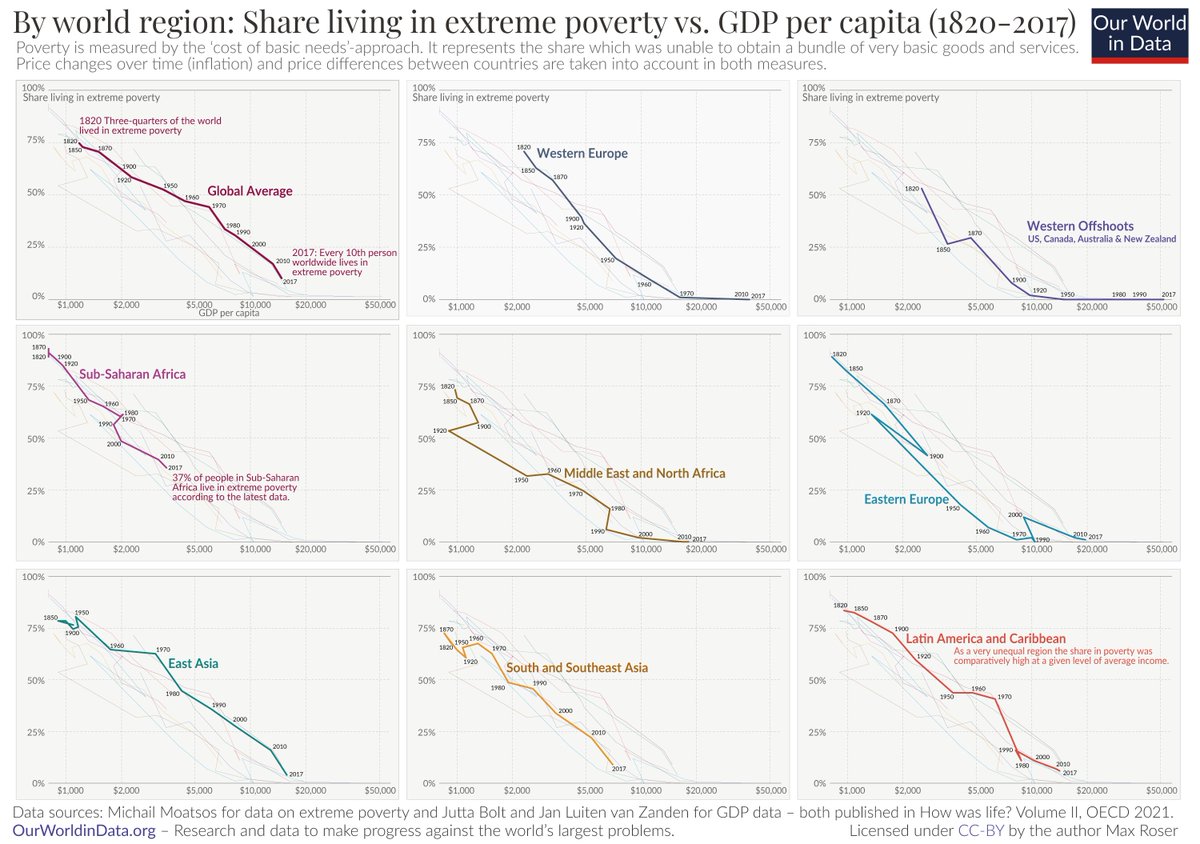
This is a great graph. The point is not time. The x axis is gdp per capita. The point is that growth does benefit all. The idea growth only benefits the rich is dramatically false. timely given Stieglitz, Pketty et al recent degrowth noise.
Jun 11

A way to see the amazing history of economic growth and declining poverty over the last two centuries.
11
118
480
61,903
Dr. Daniel Stelter retweeted

Jun 12
If SpaceX would have stayed in California, the state would have received tens of billions of dollars in additional tax revenue.
Politicians chasing Elon away with demagogic rhetoric about the "rich" have left Californians worse off.
Jun 12

Americans are struggling to pay for groceries and gas while Elon Musk becomes a TRILLIONAIRE.
When the federal government is for sale, the rich get richer and everyone else gets shafted.
The system is rigged.
4
20
102
11,640
Dr. Daniel Stelter retweeted

Jun 13
Piketty refait surface pour proposer de confisquer la fortune des milliardaires et la mettre dans un "fonds public".
Toute son œuvre repose sur une seule formule : r > g. Le rendement du capital dépasserait la croissance, donc les riches deviendraient mécaniquement toujours plus riches, donc il faut confisquer.
Laissez-moi vous expliquer pourquoi cette prémisse est fausse, au niveau d'un enfant de 8 ans, puisque c'est apparemment le niveau requis pour la croire.
Imagine que Kevin a un coffre magique. Piketty te dit : le coffre de Kevin grossit de 5% par an tout seul, la boulangerie de papa grandit de 2% par an, donc dans 100 ans Kevin possédera toute la ville. C'est ça, r > g. Tout son livre de 970 pages, c'est ça.
Le petit problème : le coffre magique n'existe pas.
Dans la vraie vie, le capital ne se reproduit pas tout seul. Il faut l'allouer. Chaque année, il faut redécider où va chaque euro, et la plupart des gens décident mal. Le "r" de Piketty est une moyenne qui cache un champ de ruines : pour un Bernard Arnault, des milliers d'héritiers qui dilapident, des fonds qui sous-performent, des empires qui s'évaporent.
Vérifions avec le test le plus simple du monde. Si r > g était une loi mécanique, les fortunes de 1900 domineraient toujours. Où sont les Vanderbilt ? Les Carnegie ? En 1987, le Top 10 mondial était dominé par des héritiers et des propriétaires fonciers japonais. Aujourd'hui : Musk, Bezos, Page, Huang. Des gars qui codaient dans leur chambre. La liste Forbes est une machine à laver, pas une dynastie.
L'homme qui est devenu trillionnaire ce matin n'a pas hérité d'un coffre. Il a failli faire faillite deux fois en 2008. Son "r" est passé par -100% avant de passer par l'hyperespace. Voilà ce que la formule de Piketty ne peut pas voir : le rendement du capital est la rémunération du risque et du génie d'allocation, pas un loyer automatique.
Et le plus drôle : quand le capital reste vraiment passif, comme dans le modèle de Piketty, il fond. Inflation, frais, impôts, érosion concurrentielle. Le capital qui dort meurt. La seule façon d'obtenir du "r", c'est de créer de la valeur pour quelqu'un. La formule décrit un monde qui n'existe nulle part, sauf dans les amphis de l'École d'économie de Paris.
D'ailleurs même ses données ont craqué. Le Financial Times a relevé des erreurs de calcul dans ses séries dès 2014. Et les travaux de Piketty-Saez-Zucman sur l'explosion des inégalités américaines ont été méthodiquement démontés par Auten et Splinter dans le Journal of Political Economy : une fois les transferts et impôts correctement comptés, l'inégalité après redistribution n'a presque pas bougé en 60 ans. Toute la panique repose sur des choix méthodologiques militants.
Ce qui m'amène à Zucman. L'ironie est délicieuse : l'homme qui a passé sa vie à dénoncer l'héritage a produit un héritier. Même méthode, même biais, mêmes données contestées, ambition fiscale en plus. Sa fameuse taxe sur le patrimoine des "ultra-riches" taxerait des plus-values qui n'existent que sur le papier.
Concrètement, la taxe Zucman forcerait chaque fondateur français à vendre des morceaux de sa boîte chaque année pour payer l'impôt sur une valorisation qu'il n'a jamais encaissée. Vendre à qui ? Des fonds étrangers. Résultat garanti : les dernières entreprises françaises passent sous pavillon américain ou qatari, au nom de la justice sociale. Du génie.
Et la proposition finale de Piketty est la meilleure partie : prendre l'argent investi dans des entreprises qui produisent, emploient et innovent, pour le confier à un "fonds public" géré par l'entité qui a accumulé 3 400 milliards de dette et qui perd de l'argent sur à peu près tout ce qu'elle touche depuis 50 ans. C'est demander au cancre de la classe de corriger les copies.
Récapitulons. La formule est fausse empiriquement, les données sont contestées dans les meilleures revues du monde, la prescription détruirait les seuls acteurs qui créent, et le gestionnaire proposé est en faillite technique. Dans n'importe quelle science, on appellerait ça une théorie réfutée. En économie française, on appelle ça un best-seller.
r > g n'a jamais été une loi économique. C'est un alibi mathématique pour le plus vieux programme politique du monde : prendre l'argent des autres.

Écoutez, avec l’accent c’est encore mieux😄
“You take a big part, if not all of the wealth of billionaires and centimillionaires and you put it in a public fund”
Cet argent au lieu de rester en valo dans des boîtes qui produisent et emploient, ils veulent le confier à ceux qui ont déjà des trillions de dette au compteur 🤡
83
432
1,210
74,225
Dr. Daniel Stelter retweeted

Jun 12
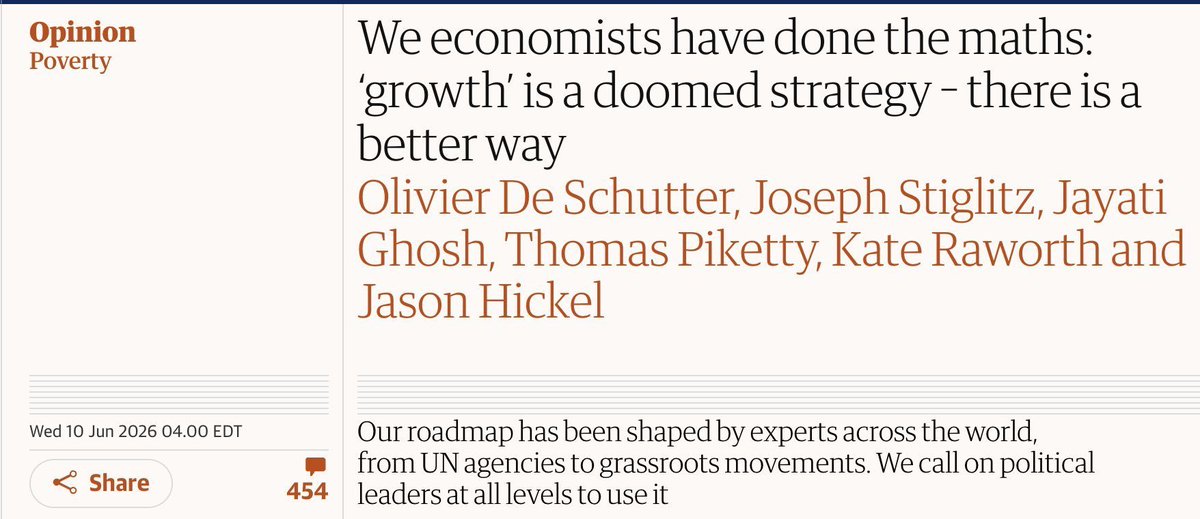
The totalitarian left used to view de-population and penury as slightly embarrassing faults on the way to moral purification. Now embraced as features. Clever.

11
35
308
20,425
Dr. Daniel Stelter retweeted
Jun 12
Growth is not a strategy. Growth is what happens when free people are left alone to pursue their desires, constrained by respect for others property and liberty. I don’t live to fulfill some dreamers coercive “strategy”
Jun 11

Six famous economists — @JosephEStiglitz , @PikettyWIL , @jasonhickel among them — published a manifesto in the @guardian last week: "growth is a doomed strategy." They say they've done the maths.
I checked the maths.
The claim that growth failed the poor is contradicted by the most uncontroversial dataset in economics: extreme poverty fell from 44% of humanity in 1981 to under 10% today — during the very decades they call a failure. China alone lifted 800 million people, not with a UN roadmap, but with growth.
The "92% of excess emissions" statistic? It's one of the authors citing his own paper, without saying so — and it's not a measurement, it's a moral allocation dressed up as data.
The policy toolkit — "public control of strategic assets," "credit guidance" — has a track record: Soviet collectivization, the Great Leap Forward, Venezuela, and Sri Lanka's 2021 fertilizer ban, which starved the poor it claimed to serve within eighteen months.
What worries me most: degrowth is being marketed to young people who feel locked out — telling them their stagnation is virtue. It's a swindle. The young aren't victims of too much growth. They are the first victims of its absence.
Growth is the only anti-poverty program that has ever worked.
21
167
866
56,764
Dr. Daniel Stelter retweeted

Jun 12
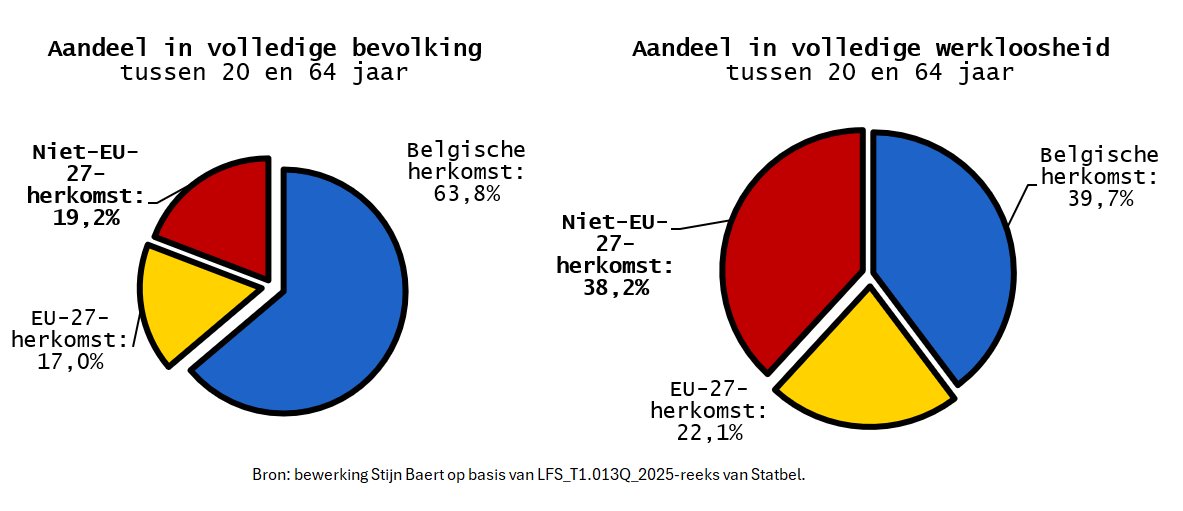
En zo is het overal: in Nederland, Duitsland, Zweden etc. En dat migratiepatroon moet zogenaamd de pensioenen zeker stellen en de verzorgingsstaat betaalbaar houden. Sociaal-democraten zouden daardoor galarmeerd moeten zijn, maar vooralsnog is dat alleen in Denemarken gebeurd.
Jun 11

Even nieuwe Statbelcijfers doorgerekend voor arbeidsmarkt: personen met niet-EU-herkomst maken 19% uit van 20- tot 64-jarigen in België, maar wel 38% van alle werklozen in die leeftijdsgroep. Vooral % bij Noord-Afrikaanse herkomst vallen op. Verklaring: shorturl.at/mG91m.
9
284
850
25,839
Dr. Daniel Stelter retweeted

Jun 12
Das wird jetzt hart für die Grüne Netzfeuerwehr, die sich neulich noch alle Mühe gegeben hatte, die CDU für den Atomausstieg verantwortlich zu machen. Jetzt beansprucht Grün doch wieder das Urheberrecht.
Jun 12

Vor 25 Jahren entschied Deutschland geordnet aus der #Atomenergie auszusteigen. Mit dem #EEG und dem #Emissionshandel legte #RotGruen so die Grundlage für die globale #Energiewende
11. Juni 2001: Atomkonsens unterschrieben - Bremen Eins share.google/KZDgTwuUjOkyNKp…
5
47
275
6,616

Jun 12
“Globale Energiewende” 😂😂😂😂
Jun 12
Vor 25 Jahren entschied Deutschland geordnet aus der #Atomenergie auszusteigen. Mit dem #EEG und dem #Emissionshandel legte #RotGruen so die Grundlage für die globale #Energiewende
11. Juni 2001: Atomkonsens unterschrieben - Bremen Eins share.google/KZDgTwuUjOkyNKp…
83
222
2,192
45,223
Dr. Daniel Stelter retweeted

Da sagt die ökonomische Fachliteratur was anderes (es sei denn, man bezieht die gesamte Fachliteratur auf eine nicht peer-reviewte Studie, die Herr Stelter überall promoted)
2
5
92
8,251
Dr. Daniel Stelter retweeted

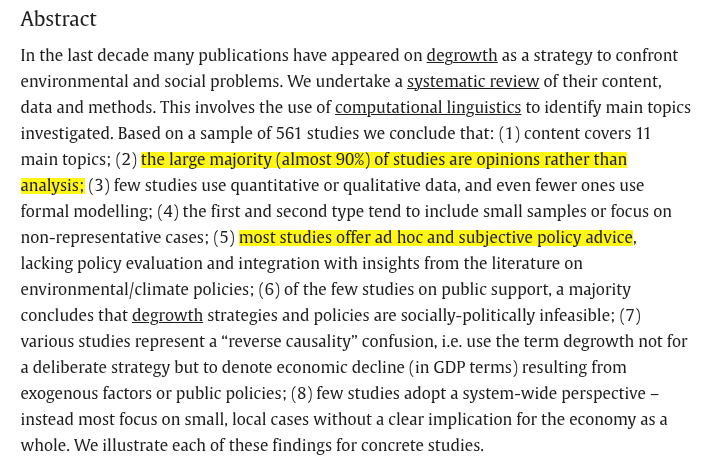
LOL! In other words… Preachy opinions.
1
18
2,142
Dr. Daniel Stelter retweeted

Jun 11
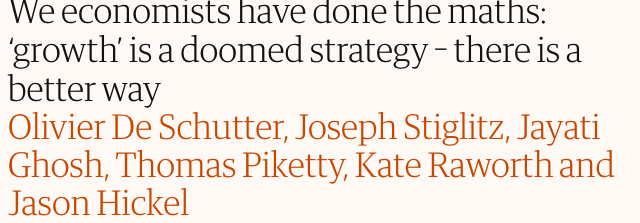
Painfully dishonest degrowth piece. Here's a teardown.
1. The headline promises maths that isn't there.
"We've done the maths" but the piece contains no calculation. Just two borrowed statistics and a policy wishlist.
2. The 92% figure isn't a measurement, it's a definition.
"Excess" emissions means anything above an equal per-person share of the carbon budget going back to 1850. Define the rules that way and the North is guilty by construction. Pick a different baseline year or allocation rule and the number changes completely. It's a moral framework dressed up as arithmetic.
3. "Growth has become decoupled from shared prosperity" is the opposite of the global record.
Extreme poverty fell from roughly 38% of humanity in 1990 to under 9% before the pandemic, almost entirely through growth in China, India and East Asia. Not redistribution. Not aid. Growth. The claim is only half-true for median wages in some rich countries, and they quietly universalise it.
4. The headline contradicts the article's own sixth paragraph.
Headline: growth is doomed. Paragraph six: low-income countries still need growth. So growth works precisely where the poor actually live. That's not a doomed strategy, that's the most successful anti-poverty mechanism in history with a footnote.
5. The decoupling double standard.
This school insists GDP can never decouple from emissions (so growth must end), while claiming GDP has fully decoupled from wellbeing (so growth is pointless). Decoupling is impossible in one direction and total in the other, depending on which suits the argument. In reality 30-plus countries have cut emissions, including imported ones, while growing.
6. "Poverty is manufactured" is backwards.
Poverty is the default condition of our species for all of history. Wealth is what had to be manufactured. Inequality is policy-shaped, fine, but treating destitution as something governments created implies it vanishes once they stop, which no historical evidence supports.
7. "Endless expansion on a finite planet" conflates money with stuff.
GDP measures value, not tonnes. A therapy session, a software licence and a barrel of oil all count. Physical limits constrain material throughput, not value-added, and the two have been diverging for decades.
The two claims that hold up: the top 10% producing nearly half of emissions (solid Chancel/Piketty data) and the debt-servicing figure. Everything structural around them is rhetoric wearing a lab coat.
theguardian.com/commentisfre…
25
137
549
69,060
Jun 12
561 Studies on Degrowth debunked. 90% not studies at all, the rest non representative samples. sciencedirect.com/science/ar…

6
60
380
16,029
Dr. Daniel Stelter retweeted

Jun 10
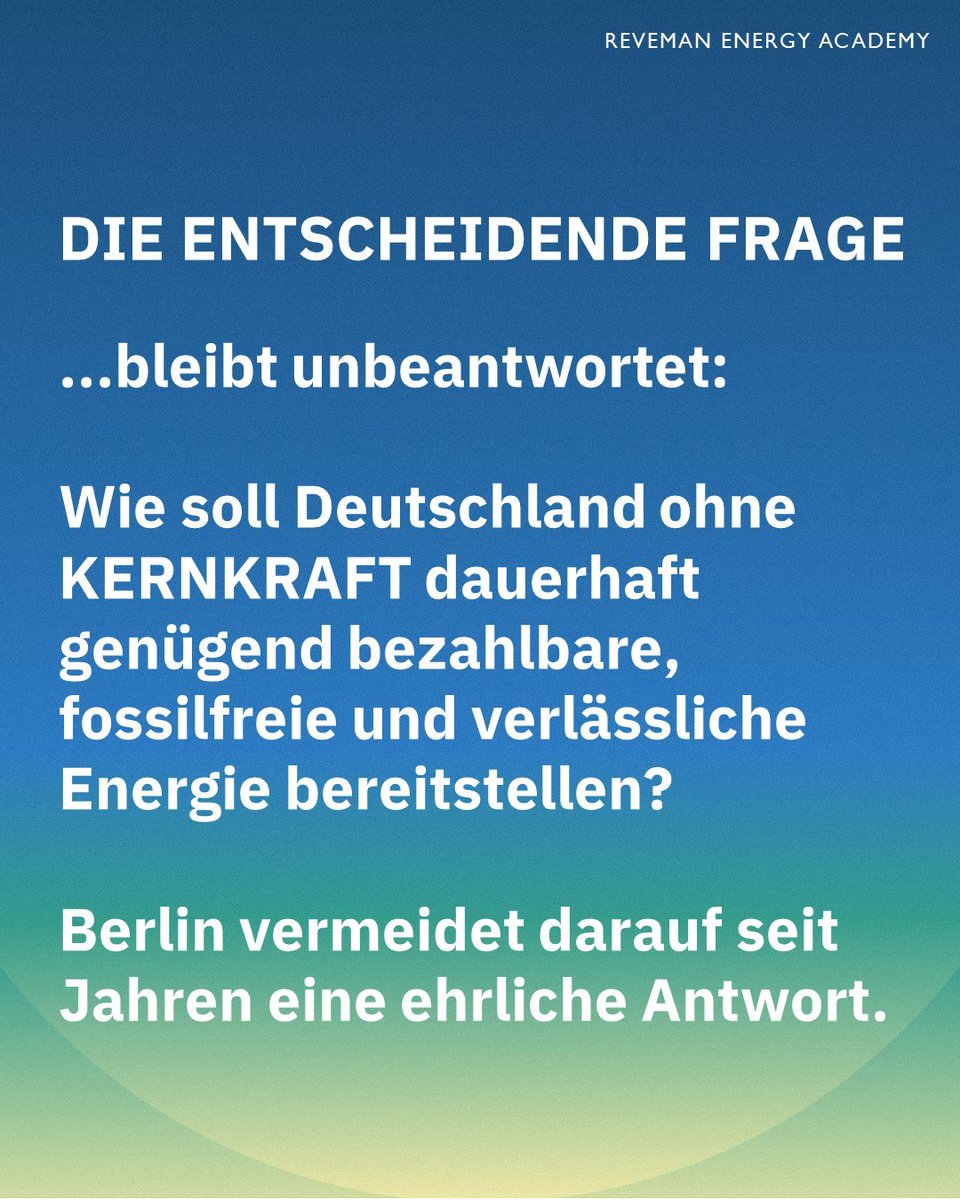
Die entscheidende Frage bleibt unbeantwortet: Wie soll Deutschland ohne #Kernkraft dauerhaft genügend bezahlbare und verlässliche Energie bereitstellen?
Keine der dringend notwendigen Reformen in den Bereichen Soziales, Rente, Steuern und Gesundheit wird auf Dauer erfolgreich sein, wenn die Energiefrage ungelöst bleibt. Subventionen ersetzen keine Lösung. Sie halten Wirtschaft und Industrie lediglich künstlich über Wasser, ohne die Ursachen der Krise zu beseitigen.
Nach 25 Jahren Energiewende zeigt sich, dass Sonne und Wind zwar wichtige Bausteine der Stromversorgung sind, allein jedoch keine hochindustrialisierte Volkswirtschaft rund um die Uhr zuverlässig versorgen können. Die Kosten für Netzausbau, Reservekapazitäten und staatliche Förderprogramme steigen kontinuierlich und belasten Bürger, Unternehmen und öffentliche Haushalte.
Wer Versorgungssicherheit, Wettbewerbsfähigkeit und Klimaschutz gleichzeitig erreichen will, muss die Kernenergie wieder in die energiepolitische Debatte einbeziehen.
Der Neubau moderner Kernkraftwerke ist mittelfristig erforderlich. Die Vorbereitungen dafür müssen jetzt beginnen. Ein erster Schritt wäre die Änderung des Atomgesetzes, die bereits in den kommenden Monaten auf den Weg gebracht werden könnte.
@bundeskanzler @larsklingbeil @Markus_Soeder @schneidercar @KubickiWo @_MartinHagen @Wirtschaftsrat @bnetza @FahimiYasmin
#kernkraft #atomkraft #wirtschaft #ChangeAtG #strom #reformen #soziales #rente #steuern #gesundheit #subventionen #smr
20
50
188
4,325
Jun 10
Heute bei BTO Refresh. Warum hapert es mit dem Austausch von Wirtschaft und Politik? Und was hat das für Folgen? Im Gespräch @th_sattelberger
17
21
207
7,921
Jun 10
@th_sattelberger, Spitzenmanager bei verschiedenen Großunternehmen, sagte einmal: „China hat eine Vision. Wir hingegen warten auf die Not oder den Gegner.” Es ist der Kern eines Befundes, den Sattelberger seit Jahren wiederholt – und den er in einem ausführlichen Expertengespräch bei bto begründet hat. think-beyondtheobvious.com/p…
1
8
49
2,518