
Moved to LinkedIn: linkedin.com/in/zhongpc/
Joined January 2023
- Tweets 221
- Following 301
- Followers 294
- Likes 623
10 Photos and videos
Peichen Zhong retweeted

22 Jul 2025
A universal augmentation framework for long-range electrostatics in machine learning interatomic potentials
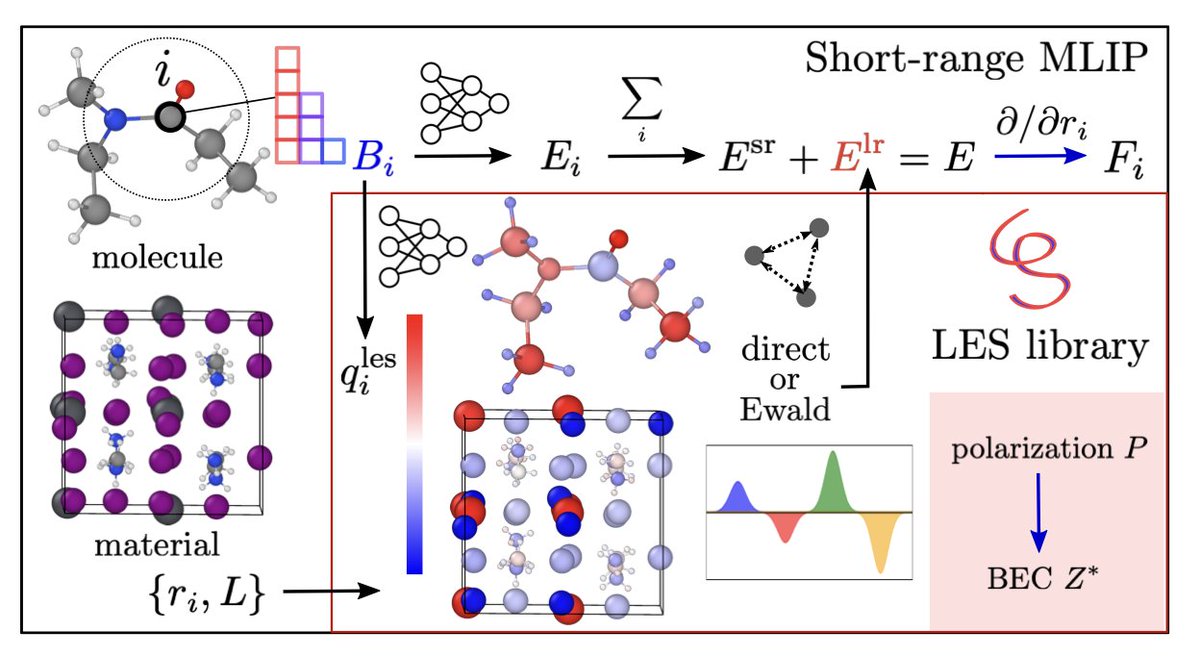
1. This novel study introduces the Latent Ewald Summation (LES) method, a universal framework to incorporate long-range electrostatics into machine learning interatomic potentials (MLIPs) without needing explicit charge labels. The LES method infers electrostatic interactions directly from energy and force data, significantly enhancing the accuracy of MLIPs for systems with significant electrostatics.
2. The LES framework is designed as a standalone library compatible with various short-range MLIPs, including MACE, NequIP, CACE, and CHGNet. It demonstrates remarkable improvements in predicting Born effective charges (BECs) and dipole moments, even when trained exclusively on energy and force data. This capability is crucial for accurately simulating systems with significant dielectric response, such as polar materials and charged molecules.
3. The study benchmarks LES-enhanced models on diverse systems, including bulk water, polar dipeptides, and gold dimer adsorption on defective substrates. Across all systems, LES not only reduces energy and force prediction errors but also accurately captures physical observables like BECs and adsorption energies. This highlights the robustness and versatility of the LES method.
4. The LES framework is scalable to large and chemically diverse datasets. The authors demonstrate this by training MACELES-OFF on the SPICE dataset, which includes organic molecules and biomolecules. MACELES-OFF outperforms its short-range counterpart in predicting bulk liquid properties and electrical response properties like IR spectra.
5. The LES method addresses a core limitation of current MLIPs by enabling efficient long-range electrostatics without additional training on electrical properties. This opens the door for developing universal MLIPs with full electrostatic physics, which can be applied across a wide range of chemical and biological systems.
💻Code: github.com/ChengUCB/les
📜Paper: arxiv.org/abs/2507.14302
#MachineLearning #Electrostatics #InteratomicPotentials #MaterialsScience #ComputationalChemistry #LongRangeInteractions
3
8
944
Peichen Zhong retweeted

8 Apr 2025
Guess what? By learning from energies and forces, machine learning interatomic potentials can now infer electrical responses like polarization and BECs! This means we can perform MLIP MD simulations under electric fields! arxiv.org/pdf/2504.05169
5
11
137
8,330
Peichen Zhong retweeted

7 Feb 2025
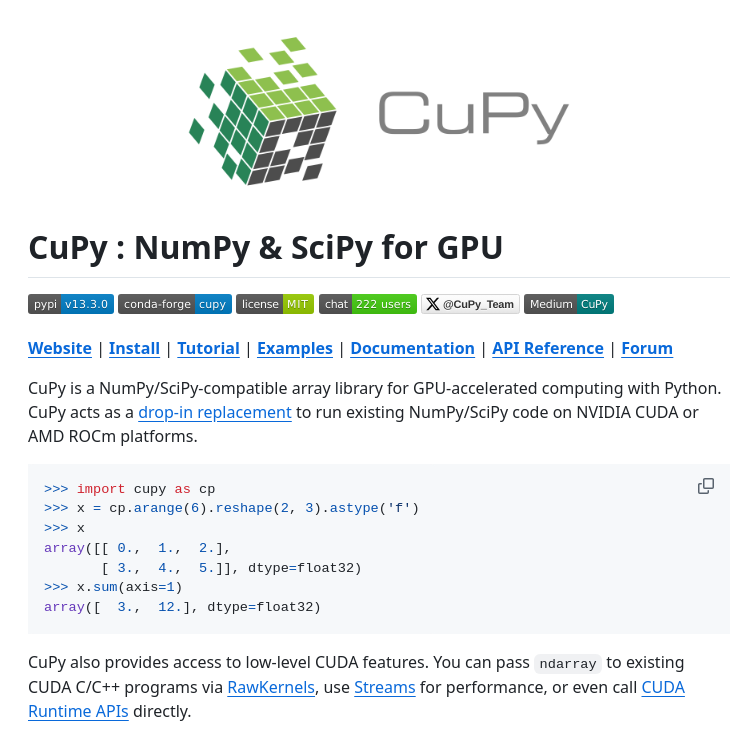
GPU-accelerated NumPy/SciPy library
33
474
4,194
264,998
Peichen Zhong retweeted

4 Feb 2025
1/9 🚨 New Paper Alert: Cross-Entropy Loss is NOT What You Need! 🚨
We introduce harmonic loss as alternative to the standard CE loss for training neural networks and LLMs! Harmonic loss achieves 🛠️significantly better interpretability, ⚡faster convergence, and ⏳less grokking!
73
519
3,934
1,205,000
Peichen Zhong retweeted

27 Nov 2024
Our recent work in @PNASNews
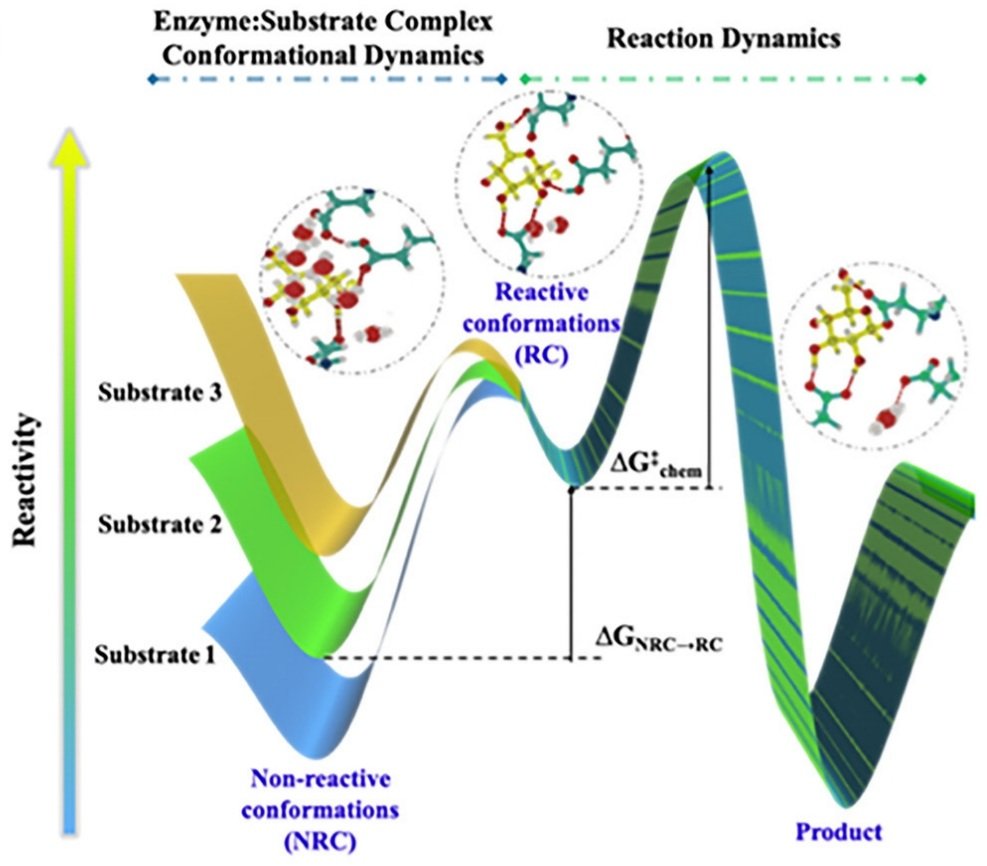
Transferable #ML CVs streamline the process & reproduce trend in experimental #k_cat for several #enzyme-substrate pairs. Promising to speed up #DrugDiscovery
@GroupParrinello
@uraucci87
#TransferLearning #Catalysis #compchem pnas.org/doi/10.1073/pnas.24…
1
11
64
7,633
Peichen Zhong retweeted

25 Sep 2024
Collective variables without descriptors? In the latest preprint by Jintu Zhang, @LuigiBonati and @TrizioEnrico we used graph neural networks to design CVs for enhanced sampling directly as a function of atomic positions 🧵⤵️
arxiv.org/abs/2409.07339
#compchem #mlcolvar #plumed

2
26
128
13,481

Excited to finally announce the publication of MatterGen on Nature. MatterGen represents a new paradigm of materials design with generative AI. We are releasing the training and inference code of MatterGen under MIT license. Look forward to seeing how the community will use the tool and build on top of it.
16 Jan 2025

Microsoft researchers introduce MatterGen, a model that can discover new materials tailored to specific needs—like efficient solar cells or CO2 recycling—advancing progress beyond trial-and-error experiments. msft.it/6012U8zX8
37
152
1,007
100,970
Peichen Zhong retweeted

10 Jan 2025
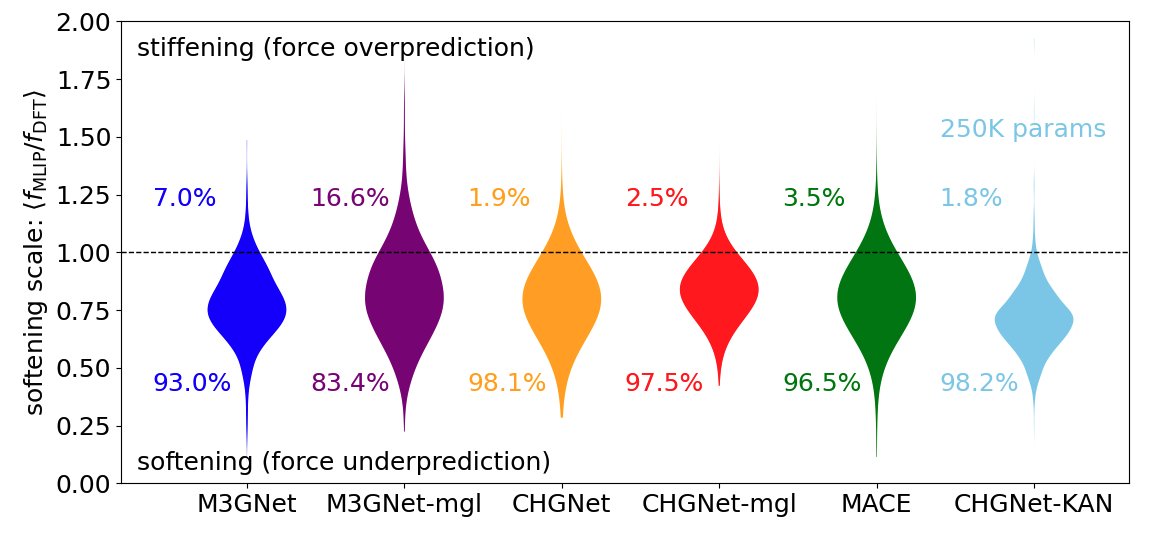
Can universal MLIPs handle complex atomic environments? 🤔 Our study uncovers systematic PES softening in M3GNet, CHGNet, & MACE-MP-0, linking it to biased pre-training datasets. 🌐 A path forward: better PES sampling! Read here 👇 nature.com/articles/s41524-0…
2
21
1,005
Peichen Zhong retweeted

26 Dec 2024
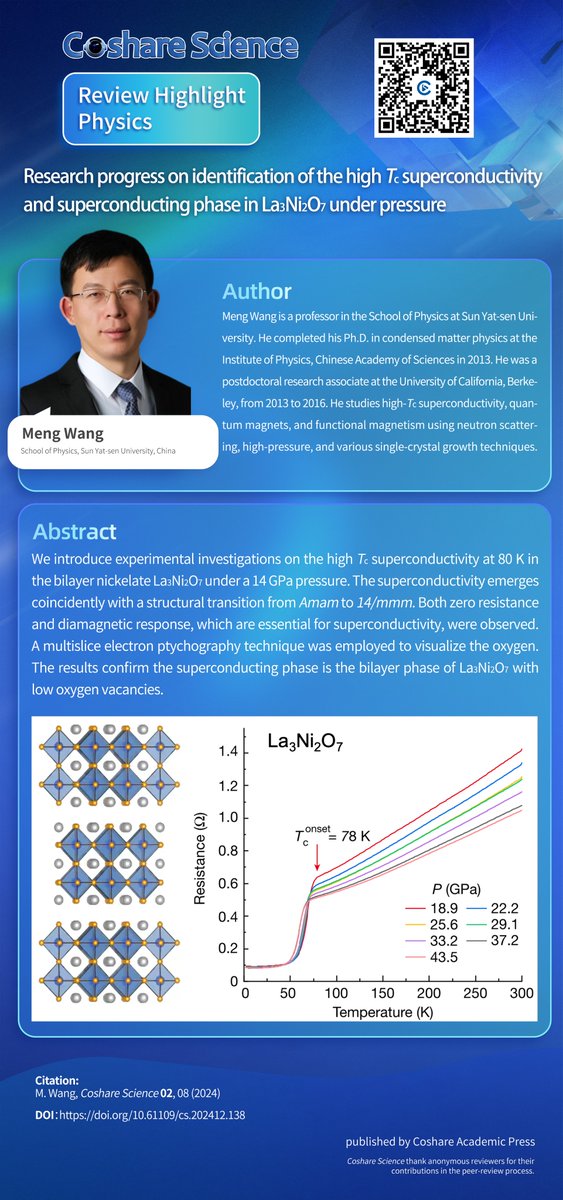
Coshare Science Review highlight: Research progress on identification of the high Tc superconductivity and superconducting phase in La₃Ni₂O₇ under pressure
cosharescience.com/articles/…
DOI: doi.org/10.61109/cs.202412.1…
#bilayernickelate #high_Tc_superconductivity
1
1
193

23 Dec 2024
Learning atomic charges from energy and forces! Check the superior performance in various material systems with latent Ewald summation
23 Dec 2024

Long-range ML potentials strike again! 🚀 We benchmarked LES on diverse systems—molecules, solutions, and interfaces. Learning just from energy & forces, LES gives the most accurate potential energy surfaces, and physical charges, dipoles, quadrupoles!
arxiv.org/abs/2412.15455
3
444
Peichen Zhong retweeted

18 Dec 2024
In this @ACSEnergyLett, we screened a large set of Halide Bilayer Separators for All-Solid-State Batteries with @ClementGroupSB . We showed that some halides are stable with Li3PO4 extending their stabilities at low potentials. pubs.acs.org/doi/10.1021/acs…
4
31
1,609
Peichen Zhong retweeted

6 Dec 2024
Super excited to preprint our work on developing a Biomolecular Emulator (BioEmu): Scalable emulation of protein equilibrium ensembles with generative deep learning from @MSFTResearch AI for Science.
#ML #AI #NeuralNetworks #Biology #AI4Science
biorxiv.org/content/10.1101/…
23
202
711
165,414
Peichen Zhong retweeted

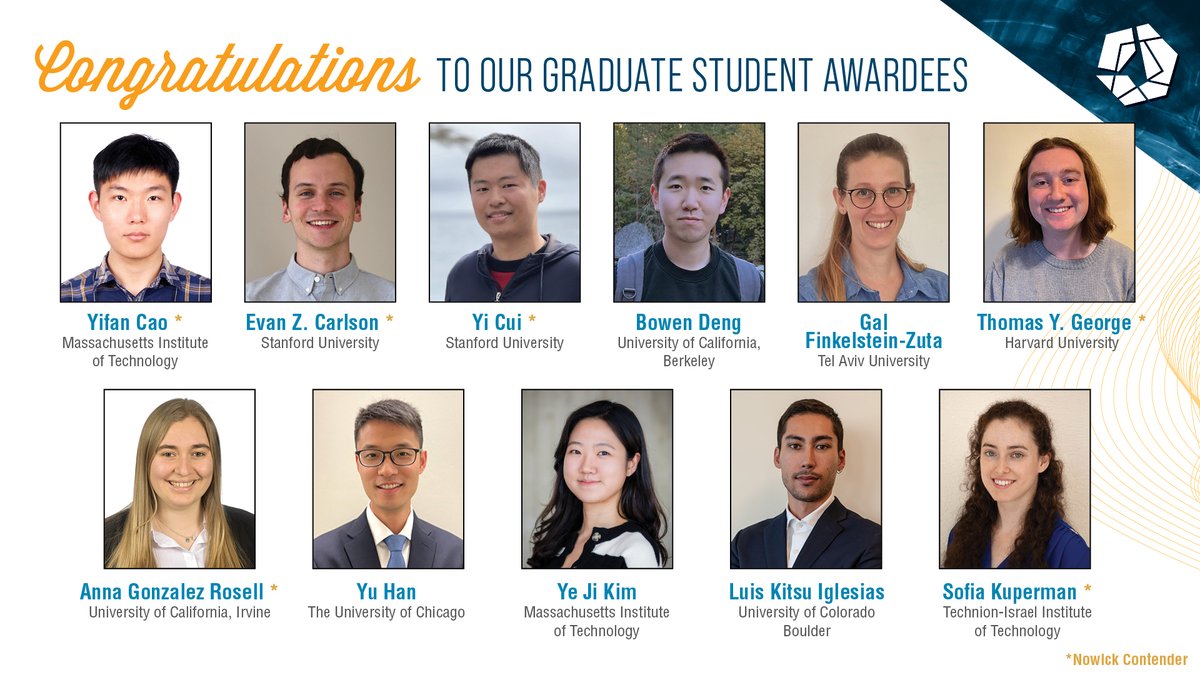
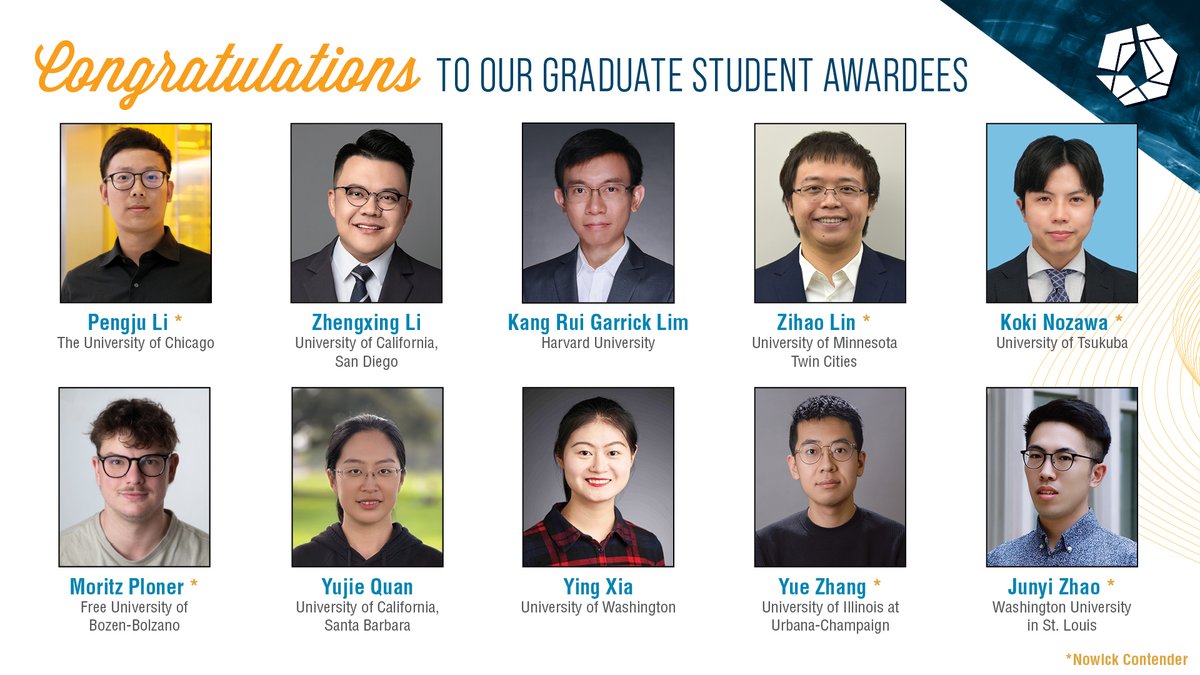
👏 Celebrate excellence in materials research at the #F24MRS Graduate Student Awards Special Talk Sessions! 🌟
Join us to support award finalists as they showcase their groundbreaking research! 🧪🎓
🗓️ Dec 3, 12:15–3:15 PM ET
📍 Marriott, 1st Floor
#MRSCommunity
3
14
2,902
Peichen Zhong retweeted

1 Nov 2024
Thrilled to preview NeuralPLexer3 Beta (NP3 Beta), the next generation of AI structure biology model our team at @iambic_ai has been building. 🧵 :
1 Nov 2024

Today we’re previewing NeuralPLexer3 Beta: demonstrating unprecedented accuracy and speed in predicting protein-drug complexes, with instant and accurate structural insights across the full range of protein classes and drug molecules.
Learn more:
iambic.ai/post/np3-preview
3
48
241
42,159
Peichen Zhong retweeted

21 Oct 2024
We’ve released an improved version of SynFlowNet!
SynFlowNet can now handle large action spaces (up to 220k building blocks) and we experiment with training different GFlowNet backward policies. (1/3)
arXiv: arxiv.org/abs/2405.01155
code: github.com/mirunacrt/synflow…
5
39
137
24,458
Peichen Zhong retweeted

18 Oct 2024
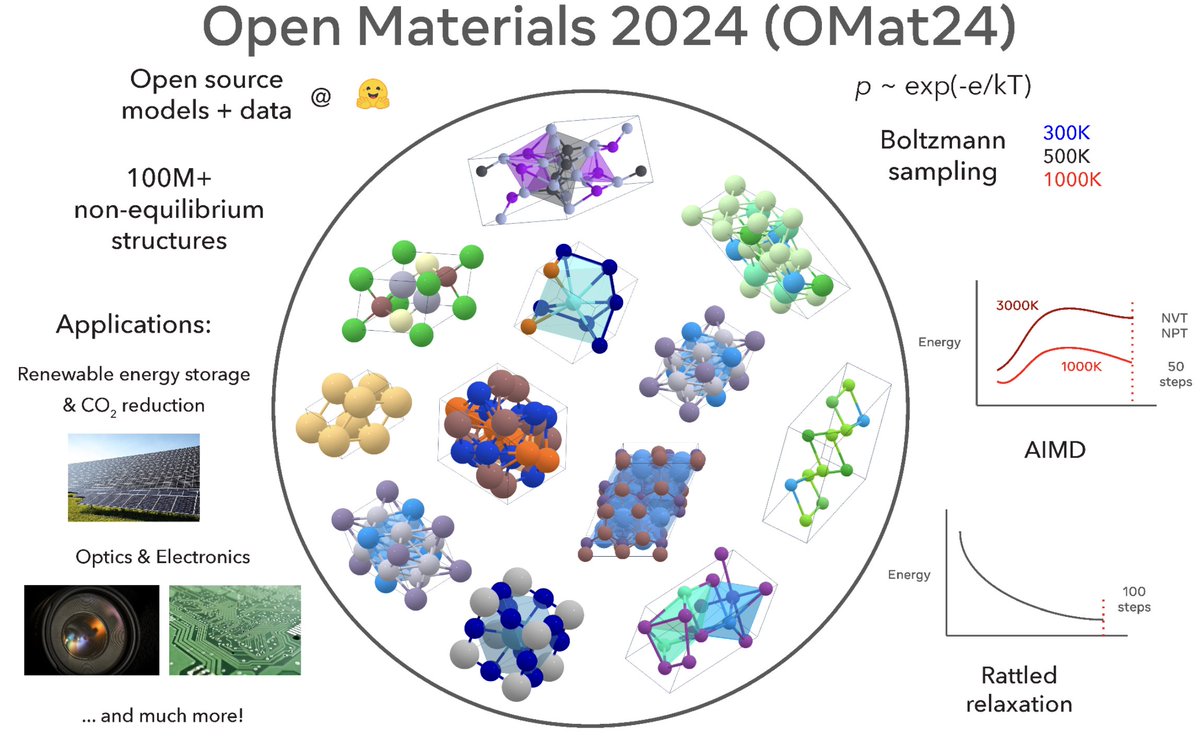
Introducing Meta’s Open Materials 2024 (OMat24) Dataset and Models! All under permissive open licenses for commercial and non-commercial use!
Paper: arxiv.org/abs/2410.12771
Dataset: huggingface.co/datasets/fair…
Models: huggingface.co/fairchem/OMAT…
🧵1/x
16
172
608
200,407
18 Oct 2024
The BIDMaP Postdoc Fellows Program is now open for applications from recent PhDs interested in working at the interface of machine learning and natural sciences. Great opportunity to work on AI for Science!
bidmap.berkeley.edu/fellowsh…
1
2
11
1,322

should have mentioned earlier since people had issues using CHGNet with numpy v2:
v0.4.0 is out now and supports both numpy 1 and 2. the Trainer class also now comes with built-in wandb logging. just pass it an account and a project and you're ready to log. full release notes:
github.com/CederGroupHub/chg…
pip install chgnet==0.4.0
4
18
1,599
Peichen Zhong retweeted

4 Oct 2024
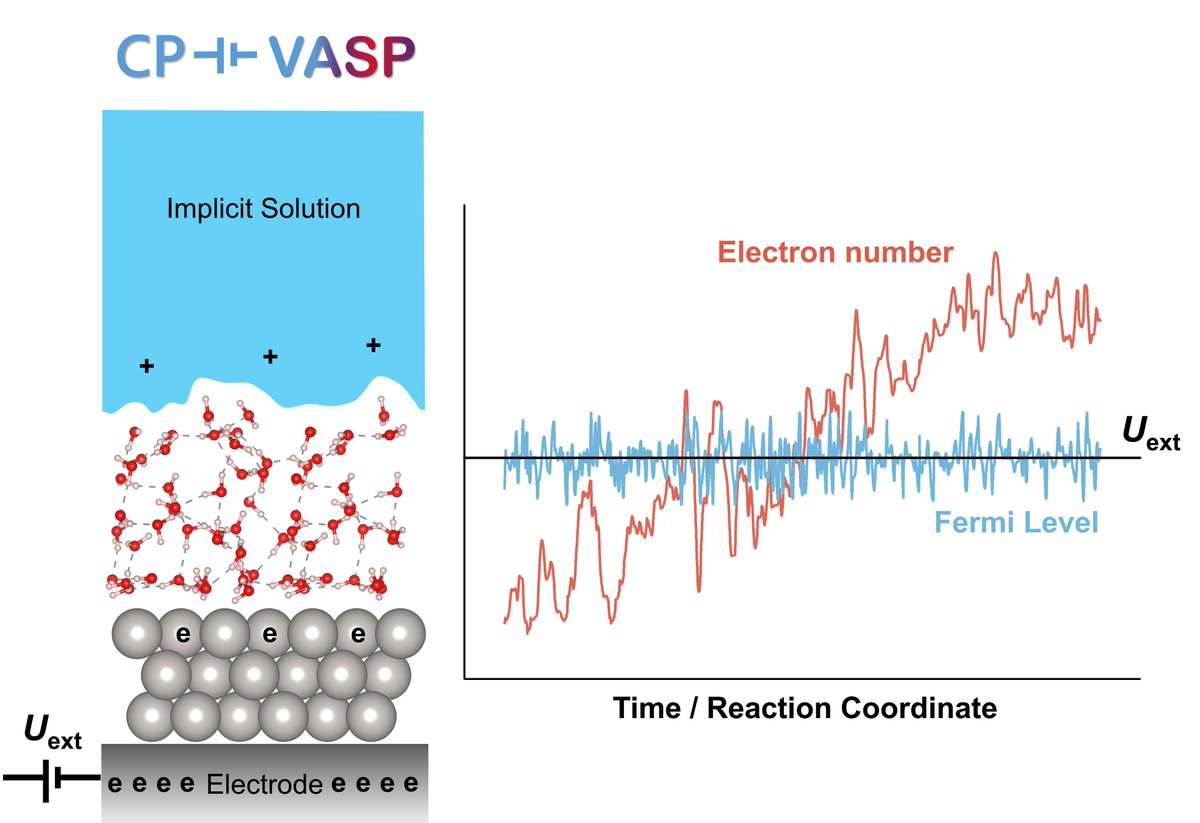
CP-VASP 2.0 is out! Make your constant-potential DFT calculations faster and more accurate! @ACSCOMP @ACSCATLDivision
github.com/yuanyue-liu-group…
2
14
102
6,638
Peichen Zhong retweeted

4 Oct 2024
Meet GUD: our new Generative Unified Diffusion model inspired by the Renormalization Group. It generalizes standard diffusion by a choice of basis, a prior and separate noise schedules per dimension. Main author Mathis Gerdes and w/ Miranda Cheng.
arxiv.org/abs/2410.02667
5
51
297
25,926