
Asset-Based Lender, Mgmt Consultant, Active Investor, Commercial Finance, Austrian Economics, Active Colorado dude. AZ Wildcat.
Joined February 2013
- Tweets 5,733
- Following 1,238
- Followers 622
- Likes 17,492
212 Photos and videos















Jun 10
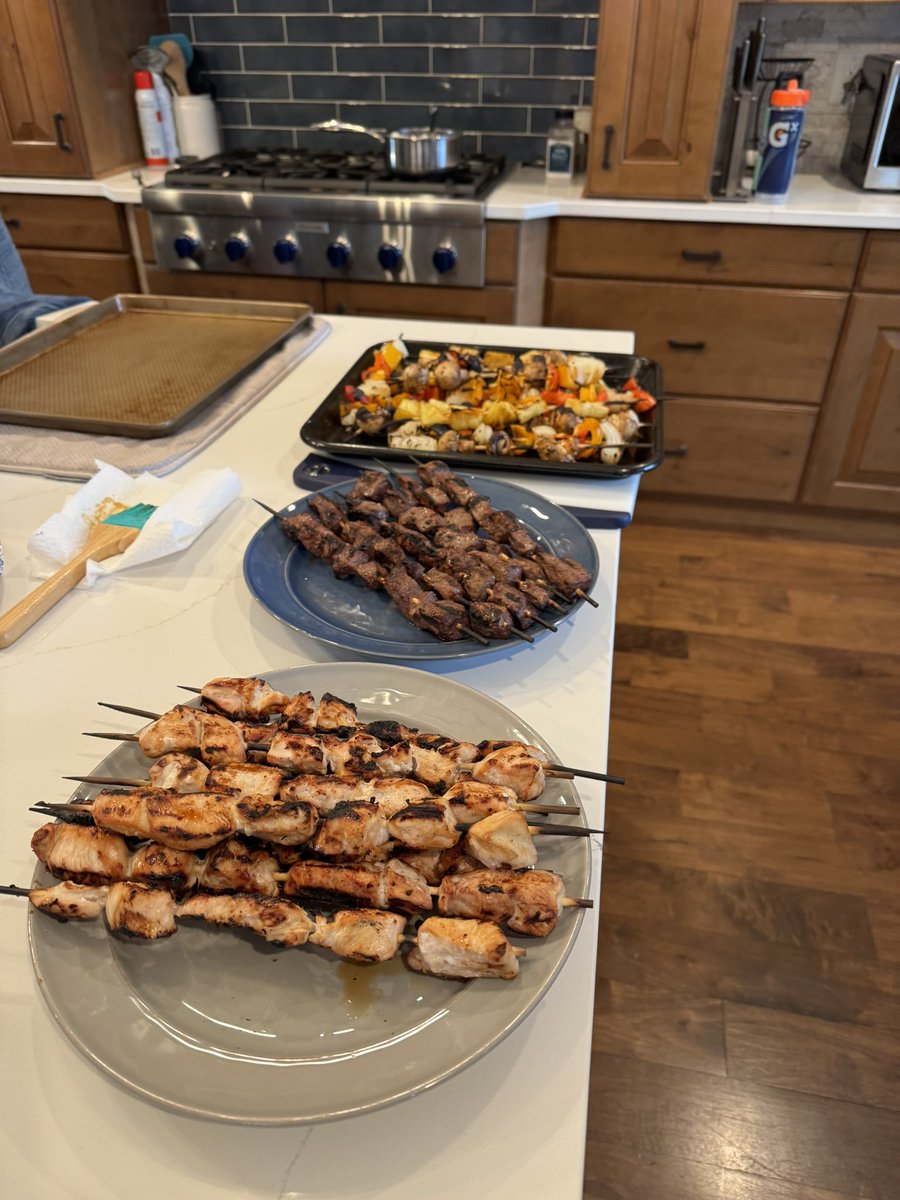
Land of the Free. Amazing 🇺🇸
Jun 10

Today, @NVIDIA is widely recognized as the most consequential technology company in the world. But when Founder and CEO Jensen Huang hatched the idea more than three decades ago, it was viewed as little more than an incredibly risky bet on a new approach to computing.
How did Huang, an immigrant from working class roots in Taiwan, build this company into what it is today? In the first installment of the Hoover Institution's Only in America series, @CondoleezzaRice sits down with Huang to explore why his rise—and that of NVIDIA—couldn't have happened anywhere else.
04:42 Jensen Huang's journey to the US
07:54 Jensen's experience at boarding school in Kentucky
14:23 How Jensen came to Silicon Valley
17:23 Founding NVIDIA
23:40 The evolution and growth of NVIDIA
27:08 Sustaining motivation amid challenges
29:01 America's exceptional tech sector
32:28 Why Huang is a "cautious optimist" on AI
35:10 Jensen Huang's Only in America story
20

Every single AI startup with $10B valuation and $100M revenue run rate:
Crusoe - $10B
Mercor - $10B
ElevenLabs - $11B
Baseten - $11B*
Harvey - $11B
Lovable - $12B*
OpenEvidence - $12B
Mistral - $14B
Nscale - $14.6B
Fireworks - $15B*
Sierra - $15.8B
Moonshot - $20B
Perplexity - $22.6B
Cognition - $26B
Scale - $29B**
DeepSeek - $52-59B*
Cursor - $60B*
Waymo - $126B**
xAI - $250B**
OpenAI - $852B
Anthropic - $965B
21 total companies.
*rumored / unannounced
**not fully independent
131
132
1,907
330,735
Jun 2
Amazing
Jun 2

The hardest problem in physical AI has never been the model, it has been the data (Save this).
Language models had an extraordinary training advantage that almost no one appreciated at the time.
The entire written output of human civilization, books, articles, code, scientific papers, social media, legal documents was created by humans, from the human perspective, to be consumed by humans.
The data and the learner were perfectly aligned from day one.
Physical AI has no equivalent resource, robots experience the world from an embodied, first-person perspective sensing depth, force, position and environment from inside a physical body operating in three dimensional space.
The entire internet's video archive is almost entirely third person footage and none of it tells a robot how to orient a gripper, recalibrate on a new surface, or recover from an unexpected obstacle.
The world's largest robotics datasets combined contain roughly 5,000 hours of physical interaction data, GPT-4 trained on the equivalent of hundreds of millions of hours of text.
The data gap between language AI and physical AI is not a 10x problem but rather a 100,000x problem.
NVIDIA's answer is Cosmos 3 and it is the culmination of a three-year program specifically engineered to close that gap.
The progression Jensen described on stage mirrors exactly how reinforcement learning evolved for language models.
Teleoperation, humans physically demonstrating tasks to robots is the physical world's equivalent of RLHF.
High quality, but it scales linearly with human operators and physical robots, making it catastrophically expensive to replicate at the data volumes needed for general intelligence.
Omniverse simulation gave developers a way to generate synthetic training environments at scale, the physical world's equivalent of reinforcement learning with verifiable rewards.
But Cosmos 3 goes beyond both.
It is a unified omnimodel built on a novel Mixture of Transformers architecture, two parallel towers, one autoregressive and one diffusion trained on 20 trillion tokens of multimodal data, nearly one billion images, 400 million real and synthetic videos, spatial audio, text, and action data from both humans and robots.
The critical breakthrough is perspective invariance.
Cosmos 3 can take third-person footage that exists in abundance and reproject it into first-person perception data that robots can actually learn from.
A security camera recording of someone picking up a box, filmed from above and at an angle, can now be translated into the first-person sensory experience a robot arm needs to learn that same task.
This is the removal of the single most fundamental constraint on physical AI scaling.
Cosmos 3 opens the door to general-purpose robotic intelligence trained cheaply, updated continuously, and deployed across the physical environments, factories, warehouses, hospitals, construction sites, agriculture that represent the overwhelming majority of global GDP output.
The data center buildout is wave one, physical AI is wave two and the GPU demand that wave two will generate as hundreds of billions of agentic systems come online is an order of magnitude larger than anything wave one has produced.
Come join Milk Road Pro and get our full framework for tracking the physical AI buildout including how we think about the Cosmos 3 ecosystem, which supply chain companies we believe will compound fastest as the data bottleneck breaks, and why we believe the GPU cycle is entering its most explosive phase, not approaching its peak.
Link below!
21

Nvidia is pulling off the most sophisticated financial loop in tech history.
They invested $40 BILLION in its own customers in just 5 months.
Here's why this could blow up the entire AI economy:
Nvidia generated $97 billion in free cash flow last year. Instead of sitting on it, Jensen started writing checks to every company in the AI supply chain.
Not small checks. We're talking about billions at a time.
And almost every single one of those companies turns around and spends that money on Nvidia chips.
Follow the money:
$30 billion into OpenAI. OpenAI is one of Nvidia's largest GPU customers and spends billions annually on Nvidia hardware through cloud providers.
$2 billion into CoreWeave, a company that exists exclusively to rent out data centers full of Nvidia GPUs.
$2 billion into Marvell for silicon photonics that connects Nvidia systems.
$2 billion into Lumentum for optical tech that powers Nvidia data centers. $2 billion into Coherent for the same thing.
$2 billion into Nebius, an AI cloud company deploying Nvidia infrastructure.
$3.2 billion into Corning, the glassmaker building three new US factories specifically to make fiber optic cables for Nvidia's next-gen systems.
$2.1 billion into IREN, a data center operator that just agreed to deploy 5 gigawatts of Nvidia-designed infrastructure.
And the list goes on.
Every single recipient either buys Nvidia chips directly, builds infrastructure that runs on Nvidia chips, or manufactures components that go inside Nvidia systems.
Matthew Bryson, an analyst at Wedbush Securities, said in a research note that Nvidia's dealmaking fits "squarely into the circular investment theme."
Bloomberg even published an entire interactive feature this week titled "AI Circular Deals: How Microsoft, OpenAI and Nvidia Keep Paying Each Other."
The piece maps how capital flows between the same handful of companies and gets counted as revenue multiple times along the way.
But here's the part that makes this genuinely complicated:
Nvidia's $5 billion investment in Intel from September is now worth over $25 billion. That's a 5x return in months.
Their private company portfolio went from $3.4 billion to $22.3 billion on the balance sheet in a single year. They booked $8.9 billion in gains from equity investments alone.
So when critics say "circular investing," Nvidia can point to Intel and say "we turned $5 billion into $25 billion, this is just smart capital deployment."
And they're not wrong. Some of these bets ARE paying off like crazy.
The real question is whether Nvidia is a chipmaker that happens to invest, or a venture fund that happens to sell chips. Because right now Jensen is doing both at a scale that has never existed in the semiconductor industry. No chipmaker in history has EVER invested $40 billion in its own ecosystem in five months.
Last fiscal year Nvidia invested $17.5 billion in private companies. Their SEC filing literally says those investments include "AI model companies that purchase its products directly or through cloud service providers."
They're saying it themselves: We invest in companies that buy our products.
On Nvidia's last earnings call, Jensen told investors their investments are focused on "expanding and deepening our ecosystem reach." Translate that from CEO-speak and it means "
we're funding the companies that fund us.
The bull case says Nvidia is building an unbreakable moat by financing the entire AI supply chain and ensuring it all runs on Nvidia hardware. The bear case says this is the most elaborate circular revenue scheme since the subprime mortgage era and it all breaks apart the moment one domino falls.
Both cases use the exact same evidence.
70
119
564
159,054
Andrew Wilhelmy retweeted

Apr 23
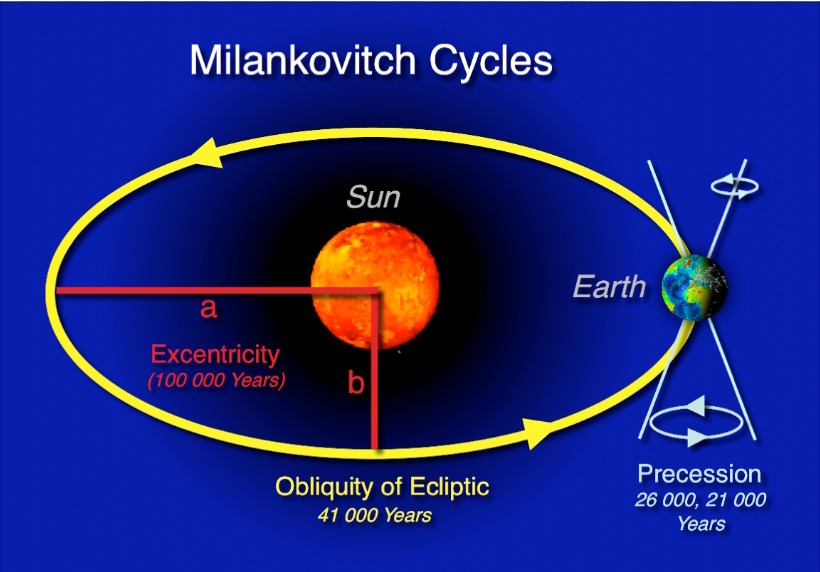
The Milankovitch cycles have been Earth's heart pacemaker for millions of years.
Orbital mechanics have dominated throughout. Cyclical shifts from icy glacial to warm interglacial periods - then back again - are not due to CO₂. They are a direct mechanical consequence of Earth’s positioning in space relative to the sun.
The three anomalies, known as the Milankovitch cycles, are 'eccentricity' (orbital shape), 'obliquity' (Earth's tilt), and 'precession' (a planetary wobble). These cycles dictate the distribution of solar insolation flux (sunlight), particularly at 65°N, which acts as the kill switch for ice sheets.
Earth is now in the Late Cenozoic Ice Age Glaciation; oddly unnoticed in a crisis about planetary warming. Global cooling is far more significant. An already cooling climate intensified 34 million years ago with the glaciation and geographical isolation of the Antarctic continent.
CO₂ is not the driver nor has it initiated the many warm interglacial cycles. Even the previous glacial period, known as the Eemian, was 2 degrees warming on average than today, yet CO₂ did not shift from a steady 295 ppm.
If the sheer tilt and wobble of the planet provided the energy to retreat miles of ice, then CO₂ was at best a faint secondary feedback in this process, nothing more.
73
586
1,314
26,193

Free for next two days
Apr 17

For the next 48 hours, @CallSignCourage is free.
Watch it. Share it. Pass it on. x.com/Heritage/status/204513…
2,766
9,805
39,387
17,342,950
Andrew Wilhelmy retweeted

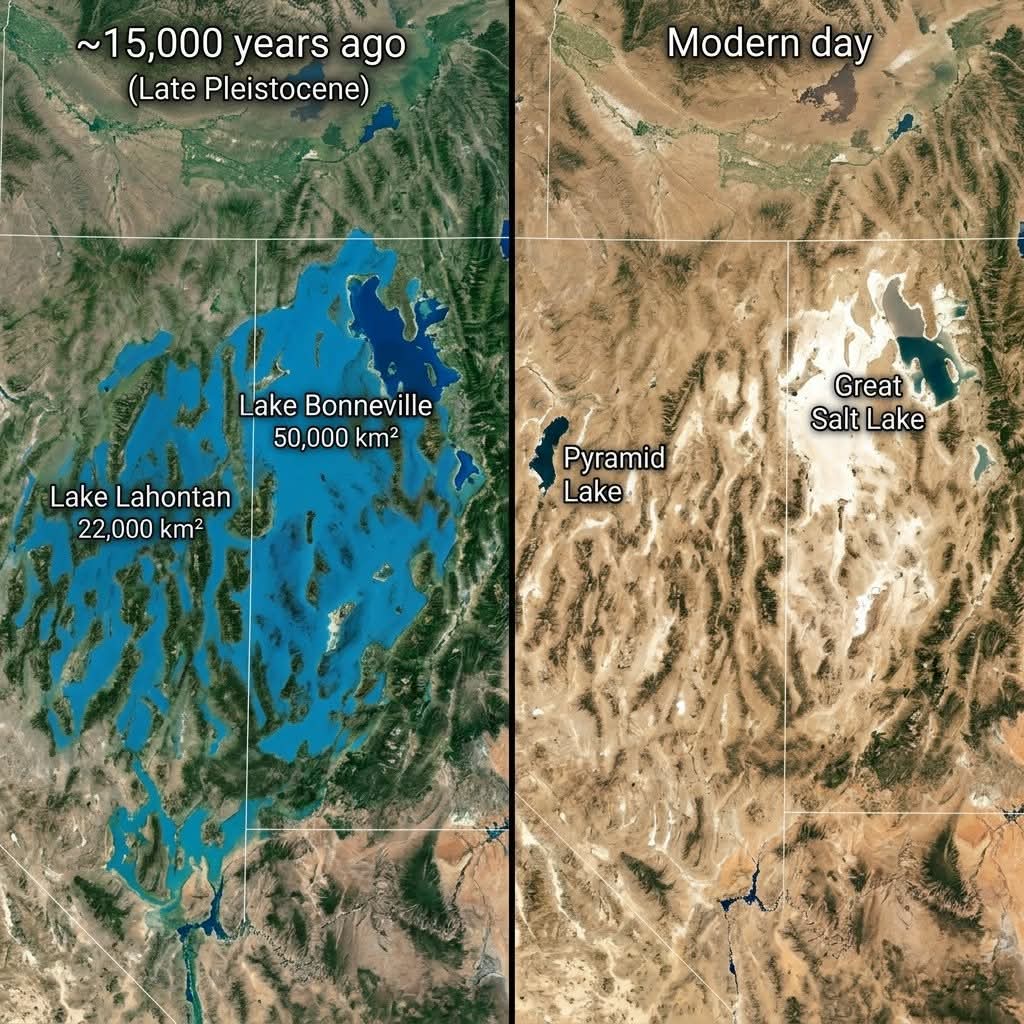
15,000 years ago, the American West held massive inland seas... Lake Bonneville and Lake Lahontan.
Today, they’re mostly gone.
No industry. No emissions. Just natural climate variability driving huge changes.
Climate has never been static, and pretending we can fine-tune it with policy is not science, it’s hubris.
Worse, those policies often restrict affordable energy… keeping billions in energy poverty.
Reliable energy means clean water, food, medicine, and resilience.
Denying that in the name of “climate stability” isn’t just misguided... it’s immoral.
97
362
1,411
43,501
Andrew Wilhelmy retweeted

Apr 14
.@mlevchin: "Socialism sucks."
"Take it from somebody who spent his first 16 years under the 'warm embrace of collectivism' as a certain mayor recently put it—socialism sucks."
"The only people who do well in redistribution of wealth are the ones doing redistribution."
"It's fundamentally corrupt. There's not enough bad things I can say about socialism."
Apr 13

BREAKING: Max Levchin (@mlevchin), Co-Founder of PayPal & CEO of @Affirm — HQ Tour
A Masterclass in: Espressos → Big Lebowski → PayPal lessons → Affirm → Economics of AI
The Dude abides.
“The net IQ of the world Is about to go up 50 points”
Result: As intelligence becomes normalized, bad actors & "fine print" companies will get exposed faster.
We cover:
• Capitalism vs the “warm embrace” of socialism
• You can’t perfectly time an IPO
• The best time ever to be a CS CEO
• AI collapsing the cost of intelligence
• Great economic shift underway
Strikes & gutters, ups & downs.
Recorded at Affirm HQ, March 30, 2026
𝐓𝐈𝐌𝐄𝐒𝐓𝐀𝐌𝐏𝐒
(00:00) Max Levchin, Co-Founder & CEO at Affirm
(01:35) Inside Affirm's office espresso bar
(06:46) How the love for espressos started at age 5
(10:30) Truth about bad coffee beans
(13:51) Strava & cycling
(14:56) Meeting Alfred Lin & Tony Hsieh over poker
(21:14) Onboarding 800K Shopify merchants in one week
(22:59) Big Lebowski in every shareholder letter
(32:11) The PayPal lesson that built Affirm
(35:25) Being a technical CEO
(37:57) Why this is the best time to be a technical CEO
(42:10) Should engineers still learn to code?
(44:48) Side quest with AI
(46:59) Companies AI will destroy
(49:46) How AI has changed engineering at Affirm
(50:54) Agentic commerce & DoorDash
(52:28) Devolution of Credit
(55:06) Biggest misconceptions about BNPL
(57:42) Being a public company CEO
(01:07:01) Advice for private companies
(01:11:09) Creating his own economy
(01:14:29) Can AI help solve the $39T debt problem?
(01:16:00) Learnings
(01:17:46) Will average IQ rise or fall?
15
167
1,093
143,586
Andrew Wilhelmy retweeted

Apr 14
What climate activists don’t want you to know about the March 2026 heatwave in the western U.S.
35
153
935
18,255
Apr 10
Colorado is run and controlled by the radical left. From Polis on down. Has been for a long time. Things will never change unless the people in power change.
Apr 10

Hundreds of Colorado business leaders call for action as nearly 100 companies leave the state cbsnews.com/colorado/news/co…
29
Andrew Wilhelmy retweeted

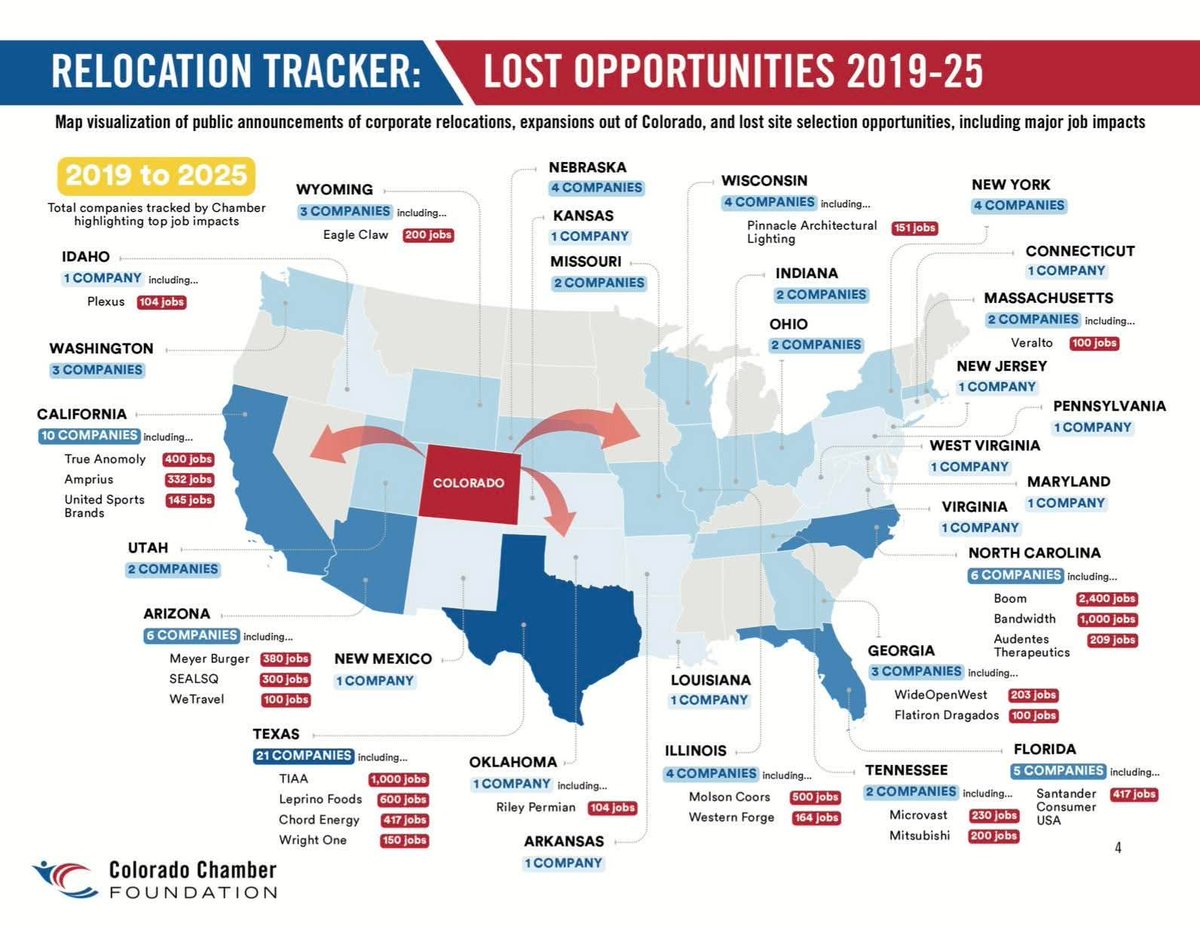
Yesterday, the Colorado Chamber Foundation released a new report tracking companies that have relocated or chosen to grow outside our state, offering a data-driven look at business competitiveness in our state.
📊 Since 2019, Colorado has seen:
• 98 company relocations or missed opportunities
• 13,600 lost jobs tied to those decisions
• 27 companies choosing to grow elsewhere in just the past year
Colorado has many strengths, but this data shows we are at a critical moment. The Chamber Foundation is focused on strengthening our business climate to keep Colorado competitive, support job growth, and ensure a healthy economy long-term.
Read the full report: cochamber.com/2026/04/06/new…
#ColoradoBusiness #EconomicGrowth #Competitiveness #Jobs
20
71
203
7,600

Andrew Wilhelmy retweeted
Supreme Court Begs Colorado To Please Just Be Normal For Once buff.ly/lu7SpiD

61
636
4,087
123,366
Mar 30
Great info.
Mar 30

Claude vs. Claude Code vs. Cowork.
If you've been confused about which one to use and when, this post will clear that up in under two minutes.
Anthropic now offers three distinct ways to interact with Claude, and each one targets a fundamentally different workflow. Think of it as: Chat for thinking, Code for building, and Cowork for doing.
Here's a quick breakdown:
1️⃣ Claude Chat
This is the conversational AI assistant most people already know. You type a prompt, Claude responds, and you iterate together.
- Turn rough ideas into structured plans through conversation
- Write emails, reports, essays, and long-form content
- Research and summarize complex topics in minutes
- Analyze documents, PDFs, and images
- Build interactive prototypes through Artifacts
The key here is that everything happens through conversation. You're thinking with Claude, not delegating work to it.
It's available on every device, has a free tier, and supports persistent memory across sessions.
The tradeoff is that it has no direct access to your local files (upload only), and it can't generate raster images natively.
2️⃣ Claude Code
This is a terminal-native coding agent. You describe what you want in plain English, and Claude reads your codebase, writes code, runs tests, fixes errors, and ships the result.
- Build and debug entire features across the full codebase
- Write, run, and fix tests automatically
- Manage git workflows and create pull requests
- Spawn multiple parallel agents working on different parts of a task simultaneously
It handles the full development cycle end to end, from planning to execution to testing. With the CLAUDE(.)md configuration file, you can teach it your project's conventions, patterns, and constraints so it writes code the way your team expects.
The tradeoff is a steeper learning curve compared to Chat, and token costs can add up during heavy sessions.
3️⃣ Claude Cowork
This is the newest addition. Anthropic describes it as Claude Code for the rest of your work.
It's an agentic desktop assistant that automates file management and repetitive tasks through a GUI. You describe an outcome, and Claude plans, executes, and delivers finished work: formatted documents, organized file systems, spreadsheets with working formulas, and synthesized research.
- Direct local file access and editing (no upload/download cycle)
- Schedule recurring tasks automatically
- Assign tasks remotely via Dispatch from your phone
- Computer Use lets Claude control your screen directly
It runs inside a sandboxed virtual machine on your computer, so Claude can only access folders you explicitly grant. You don't need to know how to code to use it.
The tradeoff is that your computer must stay awake for tasks to run, and it's still in research preview.
Here's how to think about choosing between them:
→ If you need to think through a problem or get writing/research help, use Chat
→ If you're building software and want an autonomous coding partner, use Code
→ If you have a clearly defined deliverable that involves local files and desktop workflows, use Cowork
All three are included in the same subscription starting at $20/month, which makes it one of the highest-leverage subscriptions in productivity software right now.
I've put together a visual below that maps the workflow of each product side by side.
If you want to go deeper into Claude Code specifically, I wrote a detailed article covering the anatomy of the .claude/ folder, a complete guide to CLAUDE(.)md, custom commands, skills, agents, and permissions, and how to set them all up properly. Link in the next tweet.
26
Mar 30
Good stuff.

A poor diet is the #1 reason people can't lose fat.
After coaching 900 people, the ones who lose the most do the same thing, pick 3-4 simple meals on repeat.
Here's the list:
1. Chipotle

85
Andrew Wilhelmy retweeted

Mar 29
Arizona-Michigan is the second game on Saturday night.
9
7
352
16,726
Andrew Wilhelmy retweeted

Mar 28
Millions Gather To Express Total Ignorance About Political System buff.ly/dktuSLN

357
4,943
26,169
291,896
Andrew Wilhelmy retweeted

Mar 27
If you don’t prioritize, everything seems urgent and important.
If you define the single most important task for each day, almost nothing seems urgent or important.
Oftentimes, it’s just a matter of letting little bad things happen (return a phone call late and apologize, pay a small late fee, lose an unreasonable customer, etc.) to get the big important things done.
The answer to overwhelm is not spinning more plates—or doing more—it’s defining the few things that can really fundamentally change your business and life.
140
286
2,489
100,005