learning how macromolecular phase transitions program cellular functions. interested in single-molecule biophysics, disordered proteins and RNA.
Joined February 2019
- Tweets 702
- Following 756
- Followers 1,892
- Likes 4,525
24 Photos and videos

Pinned Tweet

18 Oct 2022
How do RNAs phase separate without proteins? 💧💧🩸🩸
We are excited to share this story with you (preprint) "RNAs undergo phase transitions with lower critical solution temperatures".
biorxiv.org/content/10.1101/…
A longer thread will follow soon. @gable_wadsworth @PappulabWashU
4
31
131
New preprint from our lab!
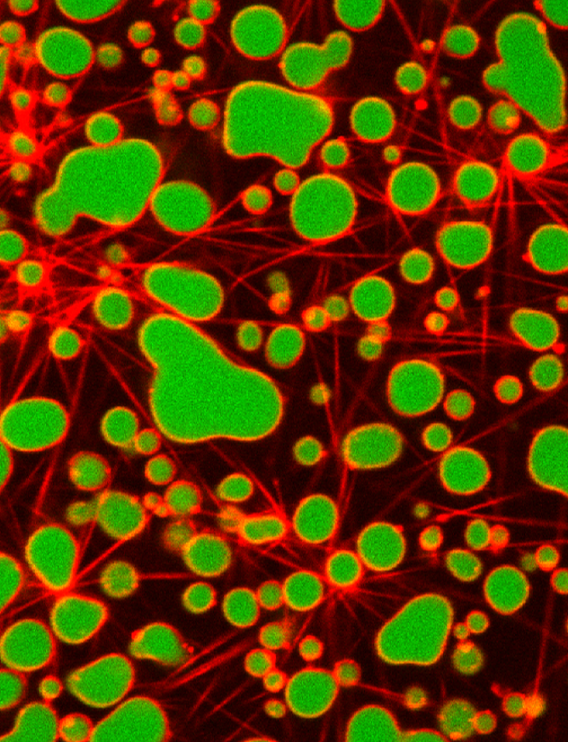
How do condensate material properties encode function? Combining experiments and modeling, we show that condensate interfaces can act as hubs for microtubule (MT) assembly, with MT assembly dynamics tuned by viscoelasticity.
biorxiv.org/content/10.64898…
1
21
90
5,531
What physical principles actually govern whether stress granules promote or suppress amyloid formation?
Check out our new preprint led by an outstanding collaborative team comprising our group and Tanja Mittag’s group at St. Jude CRH.
biorxiv.org/content/10.64898…
8
34
3,546
27 Oct 2025
📢 Abstract deadline Nov 1!
Join us at the FASEB Conference on Biomolecular Phase Transitions (Jan 11–15, 2026, Melbourne, FL), showcasing cutting-edge research on condensates in health & disease, and therapeutic frontiers.
~30% talks from abstracts!
events.faseb.org/event/48019…
4
10
1,035
5 Sep 2025
Excited to announce the 2026 FASEB Conference on Phase Transitions in Cellular Signaling & Disease!
An exciting speaker lineup and >30% of talks will be chosen from submitted abstracts.
tinyurl.com/3erxt4tk
📅 Jan 11–15, 2026; 📍 Melbourne, Florida 🌴
7
24
2,028
3 Jul 2025
Latest work on RNA condensation from the Banerjee lab, led by a superstar graduate student, Tharun Mahendran.
Biomolecular condensates can enhance RNA percolation, leading to the emergence of multi-phasic RNA condensates.
nature.com/articles/s41557-0…
1
27
116
4,954
Priya R. Banerjee retweeted

8 May 2025
Check out this tour de force study by Sangwoo Park and his incredible team of collaborators.
Biophysical properties of single nucleosomes are responsible for A and B compartments in cell nucleus.
7 May 2025

"Native nucleosomes know where to go!”
Our Condense-seq paper is now published in Nature!
📄 nature.com/articles/s41586-0…
I’m deeply grateful to my PhD advisor @taekjip and our incredible collaborators @MuirLab , @binzmit , Erika Pearce, and Ben Garcia lab!!
19
87
10,683
Priya R. Banerjee retweeted

16 Apr 2025
DNA binding and mitotic phosphorylation protect polyglutamine proteins from assembly formation: Cell cell.com/cell/fulltext/S0092…
10
49
3,295
Priya R. Banerjee retweeted

2 Apr 2025
📢Excited to share our new paper in @NaturePhysics : Cooperative hydrodynamics accompany multicellular-like colonial organization in the unicellular ciliate Stentor!
How do single-celled organisms benefit from teamwork? Let’s dive in! #Multicellularity
nature.com/articles/s41567-0…?
13
31
286
13,668
2 Apr 2025
Happy to share our new preprint on small molecule mediated inhibition of aging of biomolecular condensates.
2 Apr 2025

In our new preprint, we study the physical aging of biochemically active condensates formed by an engineered Tau protein into disease-linked amyloid fibrils — and investigate whether small molecules can counteract this transition. @BanerjeeLab_UB
biorxiv.org/content/10.1101/…
🧵1/3
1
14
53
4,708
Priya R. Banerjee retweeted

24 Mar 2025
Tunable metastability of condensates reconciles their dual roles in amyloid fibril formation
doi.org/10.1101/2024.02.28.5…
5
14
1,018
28 Feb 2025
New preprint in collaboration with @jerelleaj!! We show that the 2’-OH group of ribose sugar plays a crucial role in RNA condensation, while its absence in DNA inhibits phase separation and percolation, a transition linked to condensate arrest. 1/2
biorxiv.org/content/10.1101/…
1
5
25
3,106
28 Feb 2025
This observation led us to investigate the impact of sugar modifications on RNA condensation. We found that 2'-O-methylation (2'-O-Me) negatively regulates RNA condensation and promotes reversibility, suggesting that 2'-O-Me serves as a tunable switch for RNA condensation. 2/2
2
1
398
Priya R. Banerjee retweeted

22 Jan 2025
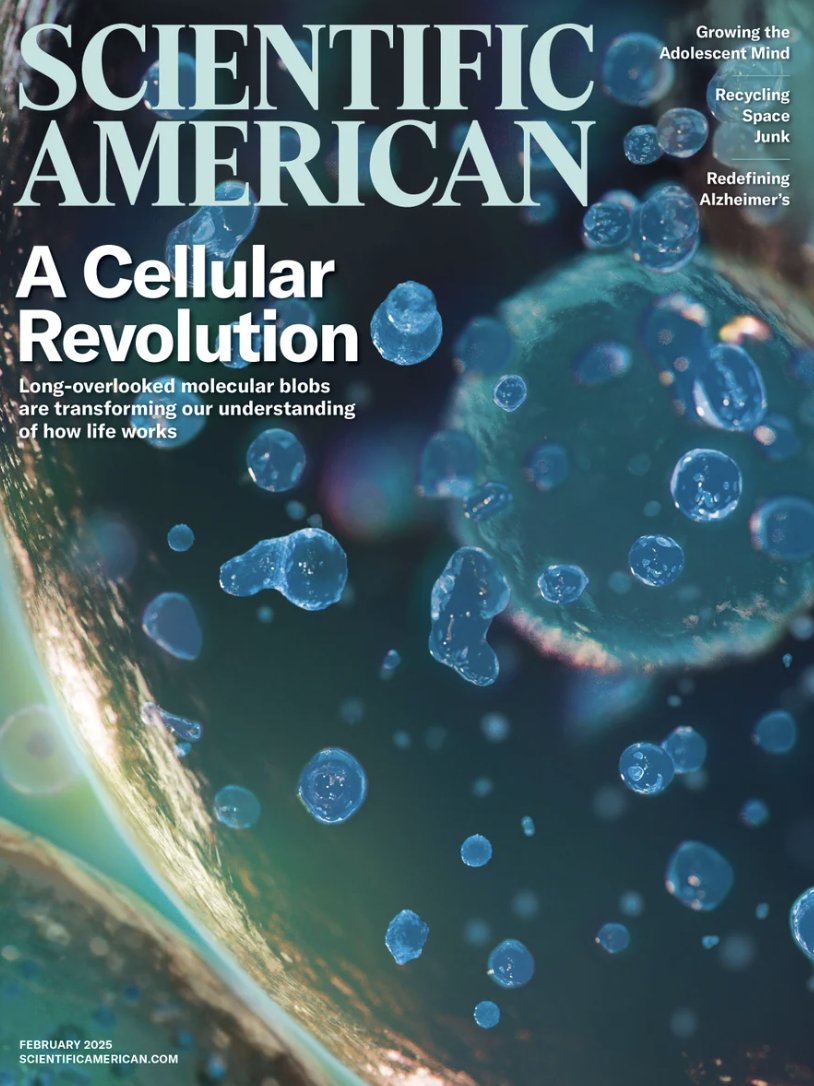
Excited to see this (cover) article on condensates come out in Scientific American. Nice quotes from me and many folks in the field. scientificamerican.com/artic…
4
26
114
6,963
Priya R. Banerjee retweeted

6 Dec 2024
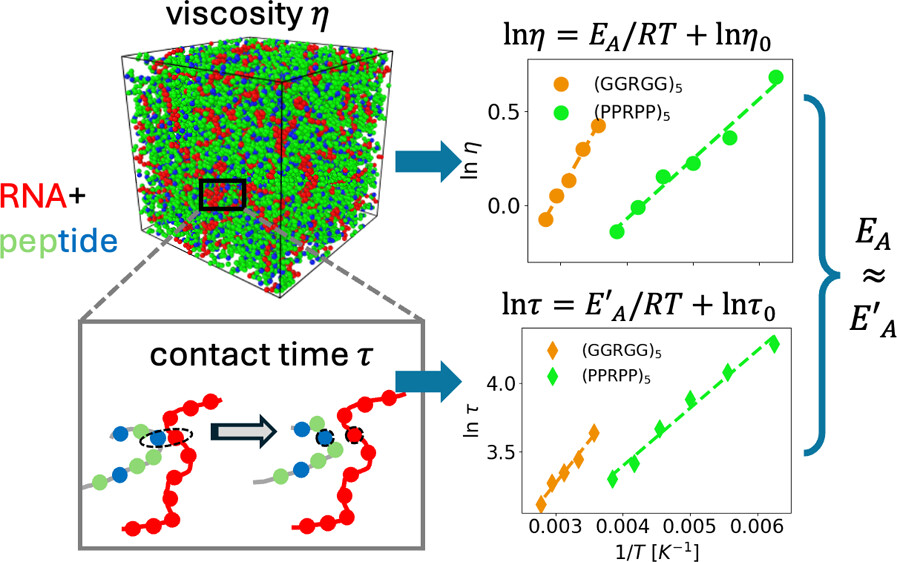
In collaboration with @BanerjeeLab_UB, we dive a little deeper into the microscopic interactions and sequence patterns shaping condensate activation energies pubs.acs.org/doi/10.1021/acs…. For more context, see also our prior work science.org/doi/10.1126/scia…
8
17
1,269
Priya R. Banerjee retweeted

29 Nov 2024
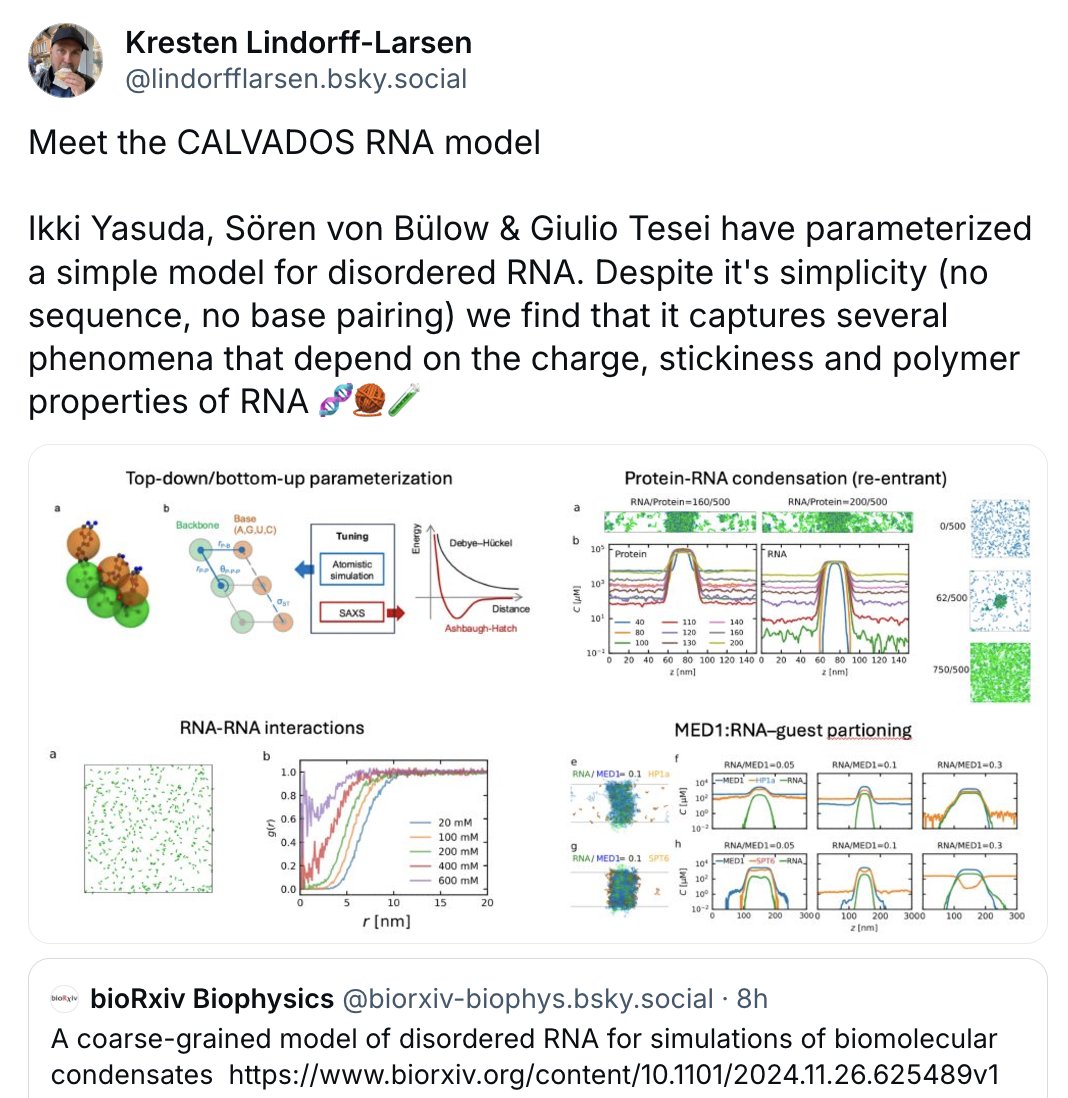
Meet the CALVADOS RNA model on bioRxiv or on 🦋
1
24
72
7,454
Priya R. Banerjee retweeted

29 Oct 2024
“I still believe that finding mind lodged in biological matter is the most profound question that physics can pose. And that the breadth of physics is a good base from which to begin.” This is what we believe too at @PRX_Life
28 Oct 2024

This award is very hard to respond to. I have received many hundred congratulatory notes, from former students, post-docs, Princeton University juniors and seniors, funding agencies and foundations, authors, signature collectors, amateurs, elementary school neural network followers, and on and on. An astonishing fraction of them has found their way into useful and interesting Neural Network careers by a casual interaction in class, at a meeting, hearing what I had to say about their ideas, learning from thinking about how I worked with a class, or from being my teaching assistants... There are some whom I remember well, and others for whom my reaction is “are they certain that our interaction sparked a single usable thought?” Yet they go on and comment “you changed my life” and follow on to explain that they heard me lecture when they were 15, and have been a member of the Neural Network brigade of the research army ever afterward.
I cannot make detailed comments to most of my letter writers. In sum I can only say that I tremendously enjoyed the interactions that the Neural Network community provided me with; that the mutual interactions have given me much pleasure over the years; that the community interested both in brain and in artificial brain has proved a good way for science to develop even if institutions have not always been sympathetic. Often these institutions found the enthusiasm infectious, after a period of doubt. In short, we often have won--. No, perhaps all we know is that we have not yet lost. I still believe that finding mind lodged in biological matter is the most profound question that physics can pose. And that the breadth of physics is a good base from which to begin.
1
10
1,244
Priya R. Banerjee retweeted
29 Oct 2024
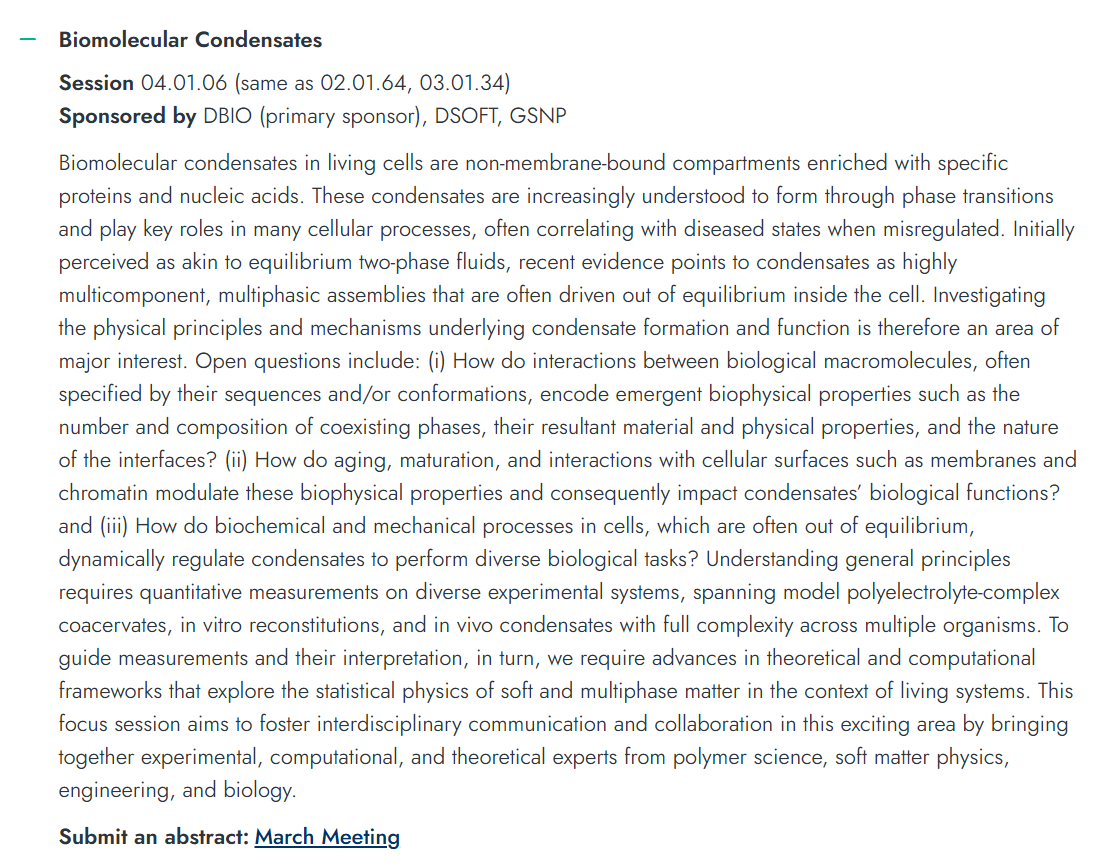
The #APS deadline for abstracts has been extended to Oct 31! This is an excellent venue to showcase your work if you work in computational/experimental cellular biophysics featuring biomolecular condensates. Co-organized together with @hbozhao, Yaojun Zhang, Patrick McCall
5
10
1,181
Priya R. Banerjee retweeted

15 Oct 2024
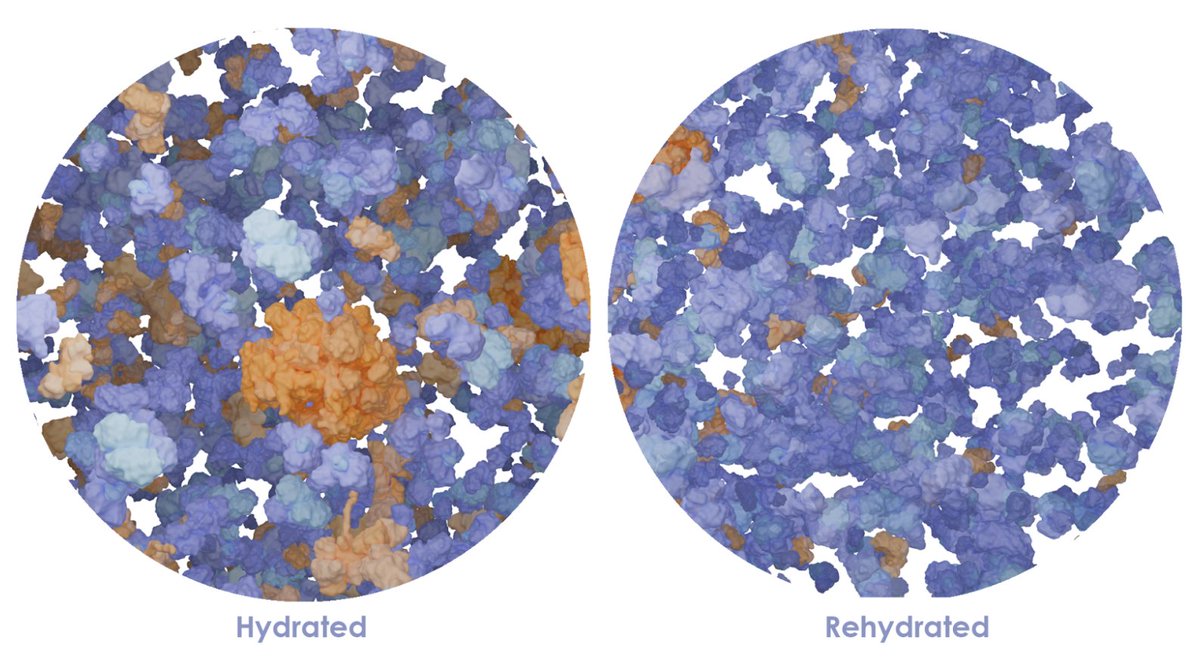
📢New paper alert!! With @boothbylab @alexholehouse @fried_lab we take a look at how an entire proteome survives desiccation. TLDR: Desiccation tolerance is encoded in specific residues on the protein surface, and occurs primarily in biosynthetic enzymes. shorturl.at/U5VS1
3
28
88
9,160
Priya R. Banerjee retweeted

6 Oct 2024
RNA-driven phase transitions in biomolecular condensates. In this review or our #RNA focus issue, @BanerjeeLab_UB and colleagues take an RNA centric view of understanding ribonucleoprotein condensates. dlvr.it/TF3BLc
19
82
7,978