US Department of Energy Chief of Staff
Joined April 2009
- Tweets 2,344
- Following 3,044
- Followers 980
- Likes 2,287
74 Photos and videos





Carl Coe retweeted

Jun 13
Jimmy Carr nailed something a lot of us feel but can’t explain.
We’re living better than 99.9% of humans who ever walked the earth, hot showers, modern medicine, endless entertainment, kids that actually survive infancy, yet so many of us feel miserable.
He calls it “life dysmorphia.” We get used to how good we have it (the hedonic treadmill), then compare ourselves to everyone else and tank our own happiness.
As he puts it: happiness = quality of life minus envy.
Marcus Aurelius put it perfectly: “Very little is needed to make a happy life; it is all within yourself in your way of thinking.”
When was the last time you caught yourself feeling unhappy despite objectively having it pretty damn good?
256
1,242
6,931
478,577
Carl Coe retweeted

Jun 12
Been brushing up on the discourse and I’ve decided that every single person is richer than me is a greedy bastard and every single person poorer than me is a loser. I and only I have the exact right amount of money.
198
954
10,576
211,326
Carl Coe retweeted

Jun 9
Today, I’m proud to share the release of @ENERGY’s finalized Fusion Science & Technology Roadmap. Developed with input from industry, National Labs, & academia, it sets a unified national strategy to move fusion from breakthrough to deployment.
Read here: energy.gov/articles/energy-d…

10
30
102
8,363
Carl Coe retweeted

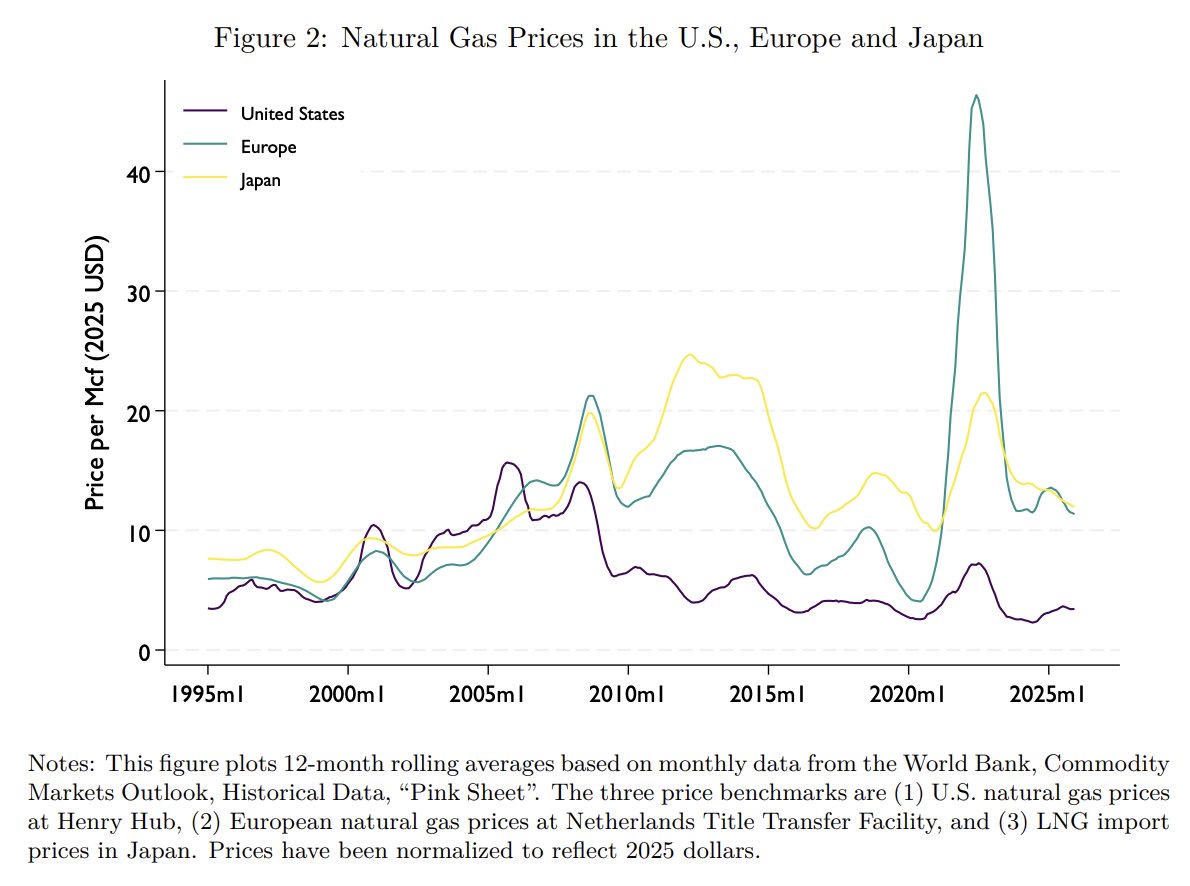
The United States is the world's largest exporter of natural gas — a remarkable change from decades ago, when America was dependent on the often-hostile OPEC nations for its energy needs. That's probably saved us as much as $4 trillion in the past two decades.
That change is largely thanks to the "Shale Revolution," the development of fracking and horizontal drilling technology that is now responsible for 36 percent of total U.S. production.
In a new @nberpubs paper, Berkeley's Lucas W. Davis uses data on gas prices in the United States, Europe, and Japan to estimate the savings generated by the Shale Revolution.
The effect is obvious in the plot below: Starting in 2007, American prices diverge sharply from Europe and Japan. We're also more insulated from big shocks.
He pegs the total as between $3.1T and $4.3T between 2007 and 2025. That's $164B to $227B per year — between $500 and $700 per person per year.
nber.org/papers/w35245
38
143
719
318,744
Carl Coe retweeted

May 23
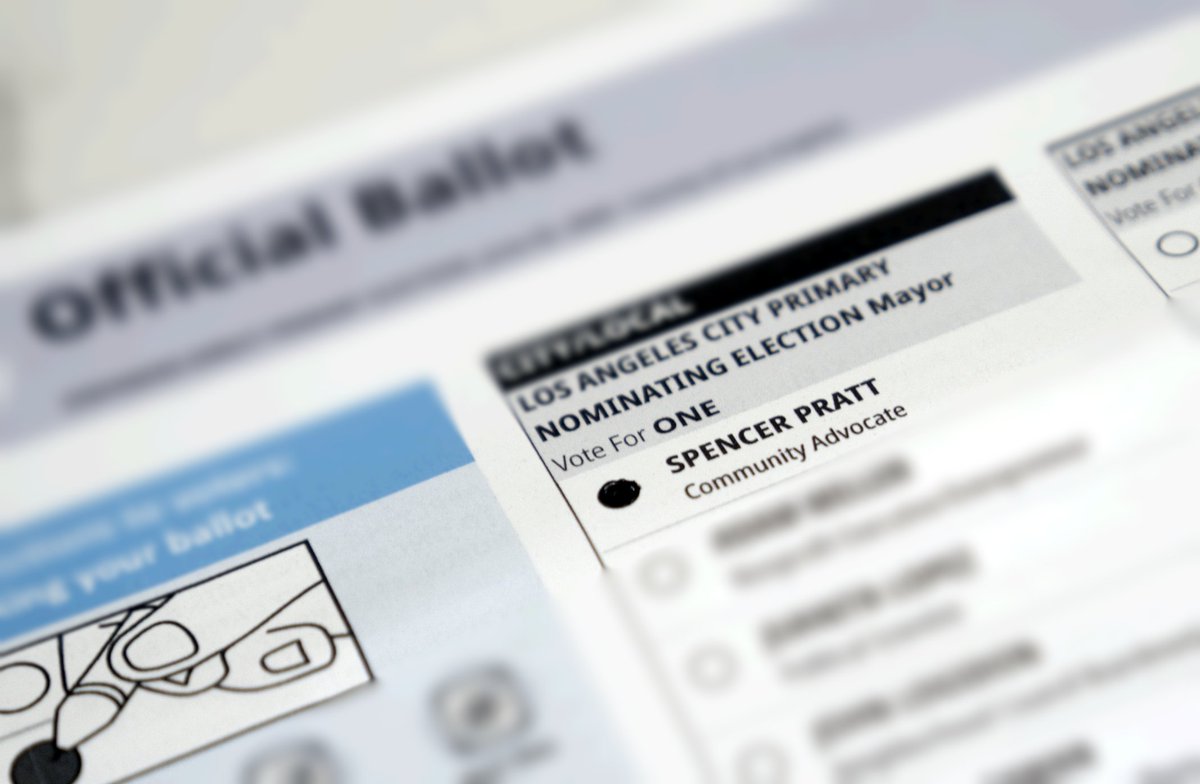
Everyone is trying to claim me for their tribe. There’s no R next to my name, there’s no D next to my name. I’m not part of a political party, because I hate politicians. I’m just Spencer, husband to Heidi, father to Ryker and Gunner, and I’m a pissed off Angeleno who loves my city and is fed up with what corrupt politicians have done to her.
2,615
15,001
102,720
2,164,078

May 23

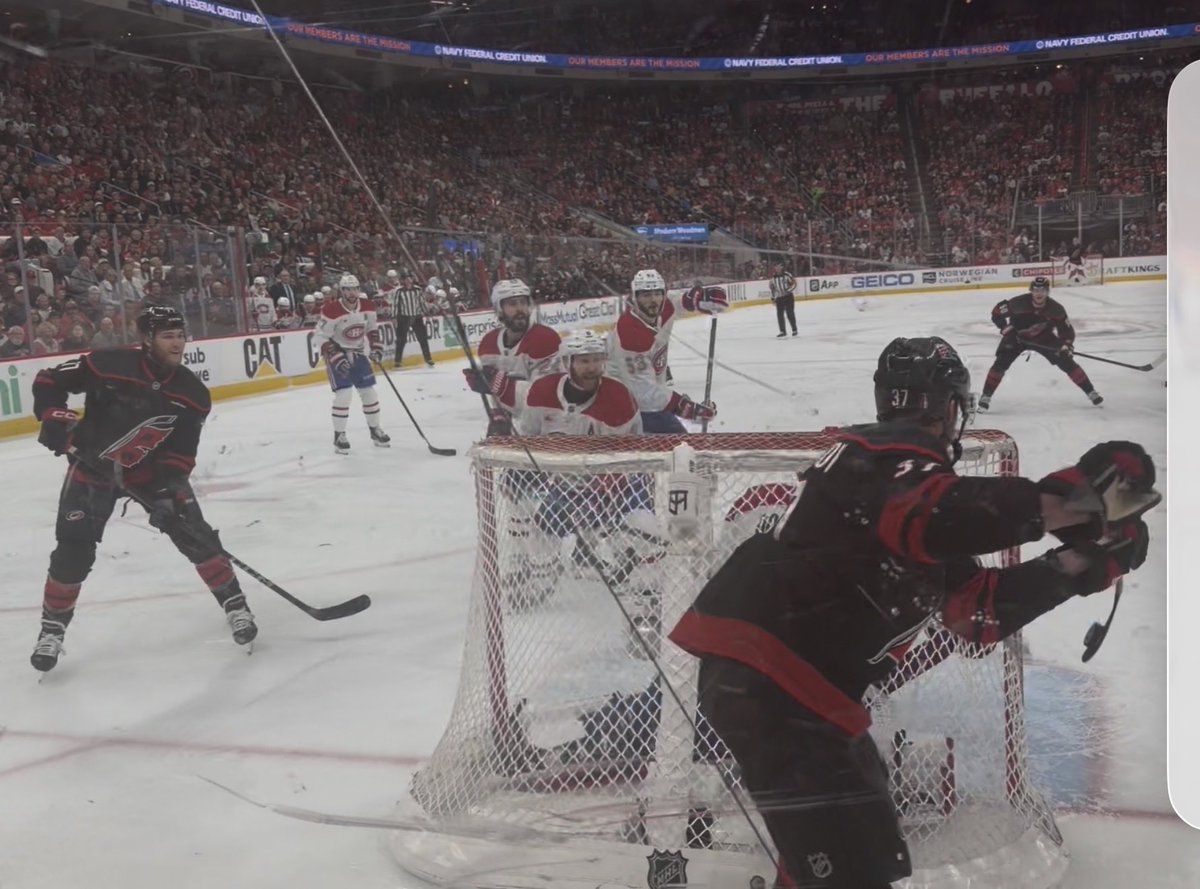
Andrei Svechnikov went for the 'Michigan' 😳
Trying this in the CONFERENCE FINALS?! 👀
105

My first interview with US Secretary of Energy @SecretaryWright and @ScottNolan, Founder of @GeneralMatter.
This conversation is on nuclear and how we're going to power the AI data center buildout.
0:07 Powering the AI data center boom
3:25 Biggest energy bottlenecks over the next five years
6:03 Ramping power generation before we have SMRs
16:06 Bridging the nuclear transition with natural gas
21:39 What if we’re underestimating how much power we’ll need for AI
27:10 Staying ahead of China
34:07 Why AI is hated the fear of AI data centers driving up electricity prices
40:21 Increasing baseload capacity
42:50 Building hundreds of gigawatts by 2050
49:37 Copying the SpaceX playbook
53:14 Incentivizing founders to build ahead of demand
59:03 “If you want to build big things in America, come talk to the government”
36
105
631
107,097
Let's go!!

We're convening the leaders of energy abundance tonight in Utah.
We can't wait to see you there! ⚡ ⚡
1
5
801
Carl Coe retweeted

May 22
The only thing worse than a scarcity of energy is a scarcity of ambition.
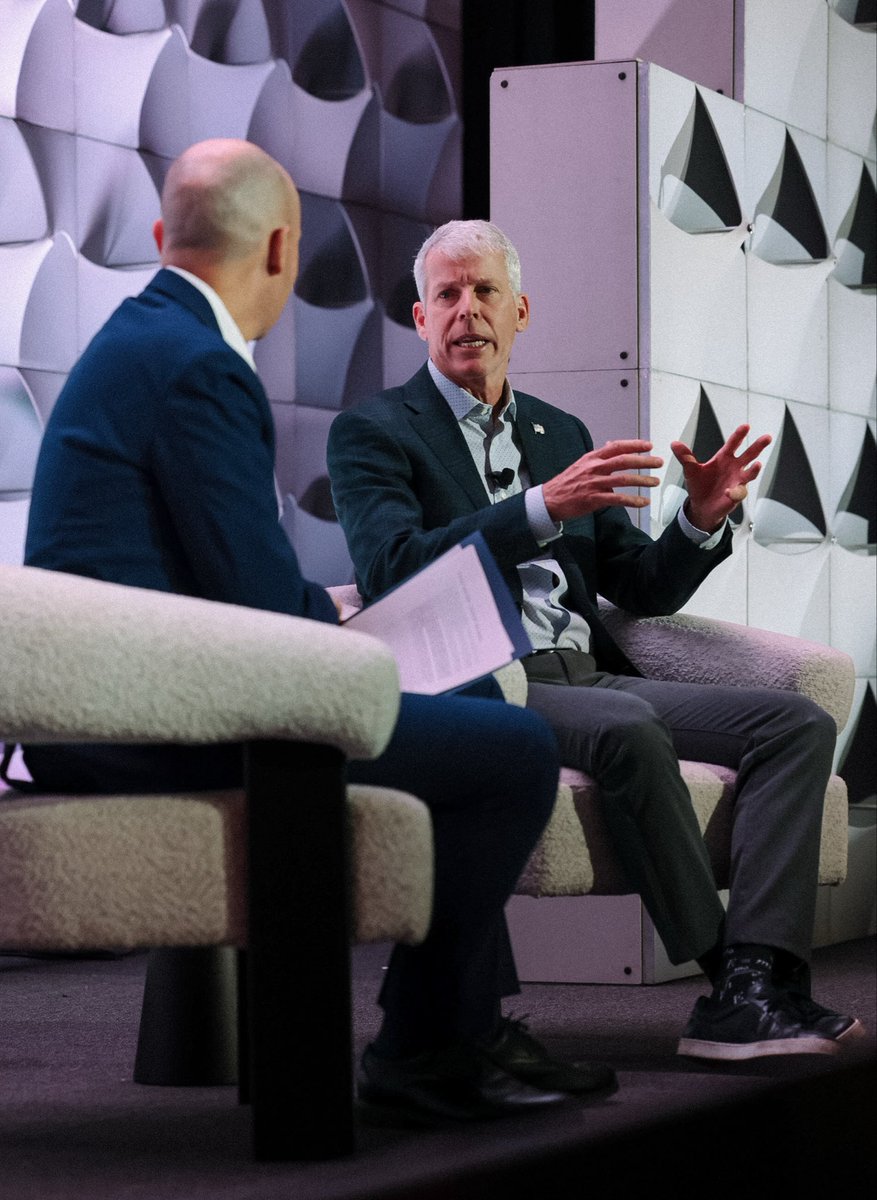
Those who joined us at Operation Gigawatt Summit understand that abundant energy is about far more than keeping up with demand. It’s about expanding what’s possible: lowering costs for families, curing disease, strengthening national security, and improving quality of life.
Today, I joined @SecretaryWright for a conversation about energy abundance, nuclear power, manufacturing, and America’s capacity to build again.
Utah is helping lead a new era of reliable, affordable and abundant energy.
74
24
118
17,502
Carl Coe retweeted

On January 6th I followed the crowd into the Capitol and shouted. Police stood by the whole time, hanging out with us and sometimes directing us places.
At one point near the House Chambers I was walking downstairs when a trio of some special section, secret service looking men started pointing guns in my direction.
Confused and annoyed, I walked the other way and when I saw a normal police officer asked him why they were doing that.
He informed me a protestor (Ashli Babbit) had been killed, and advised me to leave the building.
I walked towards the exit and after a short rest on the bench I left.
I harmed nobody and damaged no property that day and complied with all police orders.
What I received for that was a pre-dawn raid at my parents house, where my 1 month post-partum wife and I were staying, on Biden's first day in office. His DOJ had signed the order to arrest me 3 hours after his inauguration.
In the subsequent weeks I received death threats online and harassing phone calls, something that would be ongoing for the next few years.
I was banned from Meta and Paypal. My wife and I were both debanked by PNC and banned from Airbnb. My wife was detained at the airport for hours with our newborn daughter.
I was charged with 4 misdemeanors and the 1512 unconstitutional felony. The government offered to drop the misdemeanors if I pled to the felony. The felony was a lie, so I refused and went to trial.
At trial the prosecution for 2 days straight was allowed to show footage to the jury of things that occurred around the Capitol I wasn't present for "for context." When we asked to put forward footage that contradicted the prosecution's "context" we were not allowed. They could show what they wanted, we could not.
Police officers were then put on the stand for the next 2 days who cried about their experiences. I had no idea who they were. They admitted they never saw me or interacted with me.
Nevertheless like every other J6er, I lost, and was sentenced to 4 years and $22k in fines and restitution. Yet even after the Supreme Court overturned the felony, the judge would not let me out until my misdemeanor sentences of a year were maxed out. Because she can't count she actually kept me in longer - to the extent she intervened at the last minute to make the prison release me on a Sunday, something that is against BOP rules. My family sat outside the prison gates the Friday before practically the whole day waiting in vain because of this pettiness.
But the government wasn't satisfied with their pound of flesh: after my release they took me back in for resentencing, to attempt to have me resentenced after the fact to my misdemeanors consecutively, so I'd be taken from my family again and have another 1.5 years behind bars. This time I won, as they had no legal precedent and it skirted on violating double jeopardy since I had served my full prison time. Even still, it cast a cloud over the holidays and cost me another 20k my family couldn't afford.
People ask whether prison was bad, and yeah of course prison sucked. It was a hard and violent place. I was present for a stabbing, and was lucky to avoid two fights and a race war.
But dealing with Biden's DOJ and the DC Judiciary was the real trauma - they would grind down your spirit by weaponizing the legal system and use the endless procedure to bankrupt you. I had nightmares for months after release that I had somehow been hit with new charges.
By the time I was pardoned by President Trump, I had spent literally every single day of Biden's presidency either in prison or under some form of supervision. I had incurred over $300k in legal fees and over $1 million in lost business.
It was a reign of terror, and yet it was a mere foreshadowing of what they had planned for anyone else who opposed them under Kamala. The country should never forget it.

5,278
20,872
54,946
2,367,181
Carl Coe retweeted

May 21
"Data centers use huge amounts of power, so they must raise your electric bill."
It feels logical.
A Berkeley Lab Brattle study proves it's wrong: 🧵
ALT AI-generated image using the following prompt - realistic photo, a family around a suburban kitchen table with bills, title text "Do data centers raise your electric bill?"
6
20
56
1,760
Beutiful....we forget how much kindness and good is in the world.
May 20

❤️ A pregnant, homeless, drug-addicted woman walked up to a police officer and said: “I’m done. I need help.”
He immediately let her sit in his patrol car, bought her cheeseburgers (made it a full meal), treated her with total dignity, and personally drove her to a treatment center.
In a world full of negative cop stories, this is the kind of quiet humanity we need more of. One officer saw a broken person asking for help and actually showed up like a human being.
Respect. Small acts like this can literally save lives.
2
127
Well done @ts_fisher!
May 18

Hosting @SecretaryWright at the @CatoInstitute is the highlight of my career so far
I thought I had a handle on the connections between liberty and energy, but Sec Wright gave me more to think about
3
177
Carl Coe retweeted

May 18
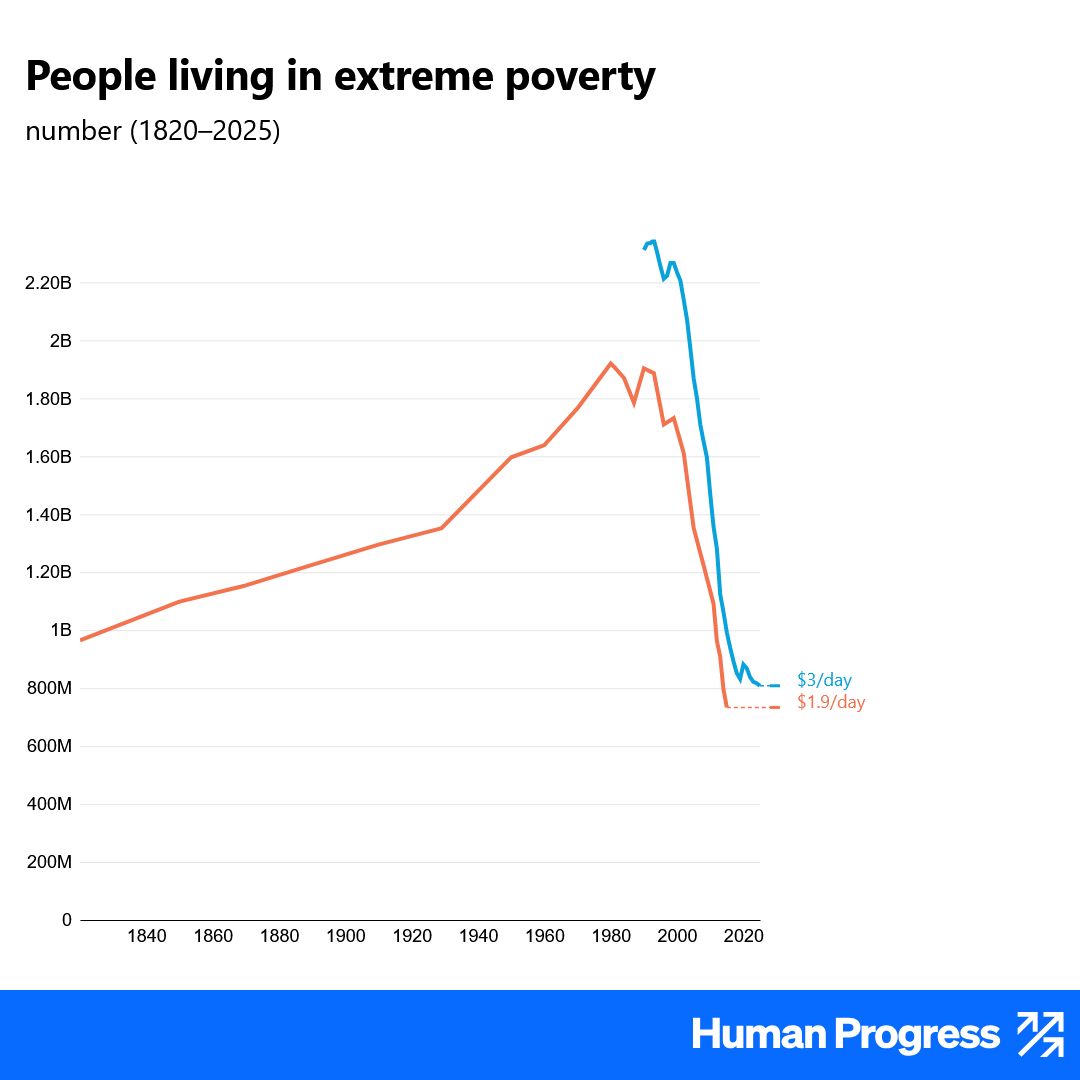
Today, despite the global population surpassing 8 billion, fewer people live in extreme poverty than 200 years ago, when the global population was just over 1 billion.
14
118
384
26,591
Carl Coe retweeted

May 18
You’re looking at a solar complex in Ravena, New York, built in one of the cloudiest regions of the country: Upstate NY.
This was prime farmland.
Now it’s an industrial complex that only converts at 15% of its annual potential in this climate.
The perimeter fencing is displacing wildlife in every direction.
The rural character of the area is destroyed forever.
177
1,130
2,445
52,598
Carl Coe retweeted

May 17
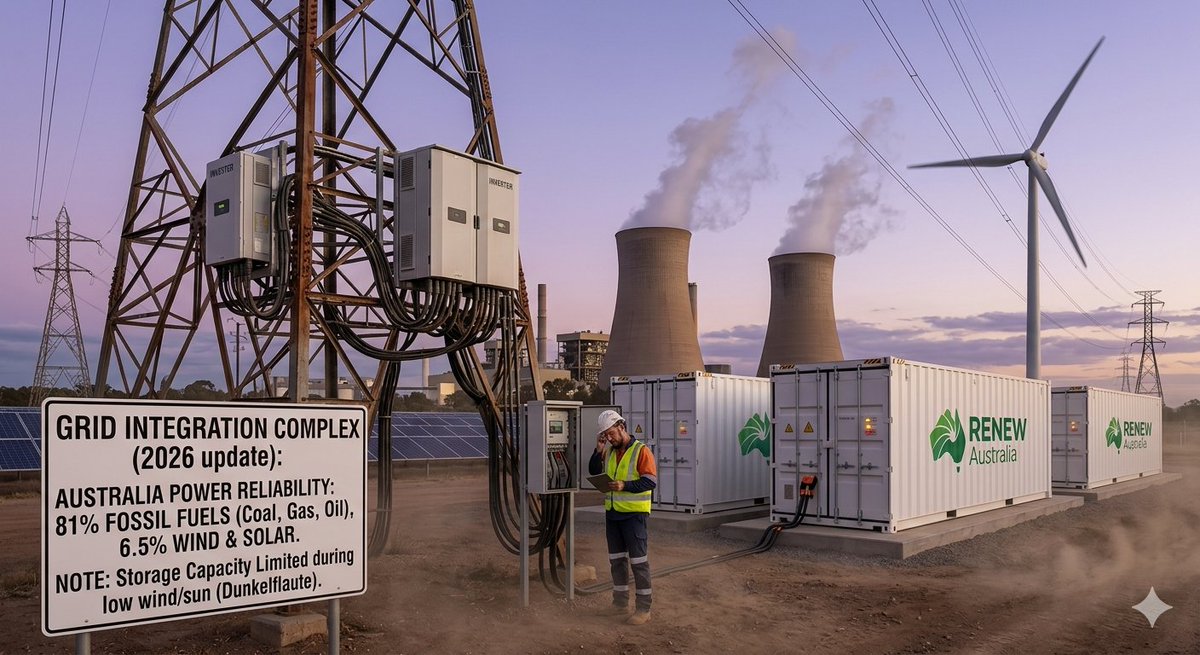
As of 2026, 81% of the world's primary power is still provided by coal, oil and gas.
Wind and solar give just 6.5% across all transport, heating and industry, despite the massive scale-up of renewables since 1988. Global primary energy consumption is still rusted on to fossil fuels, and probably always will.
The story gets worse. Renewables are not a viable energy source without substantial backup from fossil fuels. How did this disastrous mismatch happen?
According to recent data from the Energy Institute Statistical Review and the IEA, decades of government incentives, feed-in tariffs and tax credits have heavily driven the deployment of wind and solar. But get this? The energy is fundamentally incompatible with the existing world power grids.
This wasn't about changing the climate. It was, and is, an economic pivot. Wealthier Western nations have subsidised two generations of wind and solar power, yet they failed utterly to recognise the incompatibility of renewable power with existing grid networks. They have drastically underinvested in the infrastructure for the grid upgrades or the battery storage required to handle the volatile, intermittent nature of renewable energy.
Traditional grids rely on synchronous generation (large spinning turbines in coal, gas or hydro plants). These provide natural inertia and keep the grid frequency stable at 50 or 60 Hz. Wind and solar use inverter-based technology, which cannot provide this essential stability.
It's not that no thought was given to battery storage, but the sheer scale required was vastly underestimated.
Now we're falling behind. Building grid-scale battery systems capable of backing up a nation for days of low wind and sun (known as a Dunkelflaute) faces massive physical constraints - specifically in mineral mining for lithium, cobalt, copper, plus the staggering costs.
You cannot mine the quartz, smelt the silicon, forge the steel or transport the massive blades of a wind turbine without high-density heat and power. This is only provided by coal, oil, and gas. Furthermore, because wind and solar are intermittent, they require rapid-start gas peaker plants or spinning coal reserves to idle in the background, ready to jump in the second the weather shifts.
The grid struggles to handle this thermodynamic mismatch. We are trying to plug intermittent, weather-dependent sources into an industrial grid that demands absolute, second-by-second equilibrium. We have had more than a century to refine grid efficiency.
Rebuilding the world's power grids to handle this incompatible energy isn't just difficult - it is a fresh financial black hole. According to the McKinsey Global Institute, achieving net zero will require a staggering $275 trillion in cumulative capital spending by 2050 - a massive portion of which must be diverted just to overhaul and rebuild these incompatible power grids and storage systems.
The renewable supply chain won't rescue us either. It's firmly anchored in the fossil fuel economy. After 40 years of guilt, heavy subsidies and political momentum, fossil fuels still carry the heavy cross of sustaining human civilisation.
63
473
858
14,154
Carl Coe retweeted

May 15
I intend to sue @jrpsaki and @MSNOWNews over the below clip. To be clear:
• Contrary to her monolog and blatant lies, I have NEVER been on the board of ALT5 — not now, not ever. Any person with basic access to Google and willing to open a company’s annual report or proxy statements would know this.
• I have had zero involvement in any merger discussions involving any public entity I do not run or control.
• I have zero business interests in China. No properties, no investments, nothing!
I joined this trip for one reason: as a loving son who adores my father and wouldn’t miss being by his side for this incredible moment. During the bilateral talks, @LaraLeaTrump and I went to the Great Wall of China.
More to come…
x.com/Emolclause/status/2055…
8,245
15,806
70,530
1,844,610
Carl Coe retweeted

May 15
95% of the YoY energy price increases was the week of winter storm Fern according to the report they cite.
I'm disturbed to learn data centers caused winter storm Fern.
Interestingly, peak demand in Q1 of '26 was LOWER than '25.

Power prices on the largest US grid jumped 76% in the first quarter as data center demand surged, increasing pressure on the operator to ease consumer strain bloomberg.com/news/articles/…
7
12
56
6,704
Carl Coe retweeted

May 14
Washington Post carefully explains that many of the loudest claims against data centers are "badly overstated"
washingtonpost.com/opinions/…
62
67
381
111,027