
Joined July 2023
- Tweets 6,834
- Following 226
- Followers 302
- Likes 59,679
257 Photos and videos







Climate Of The Apes retweeted
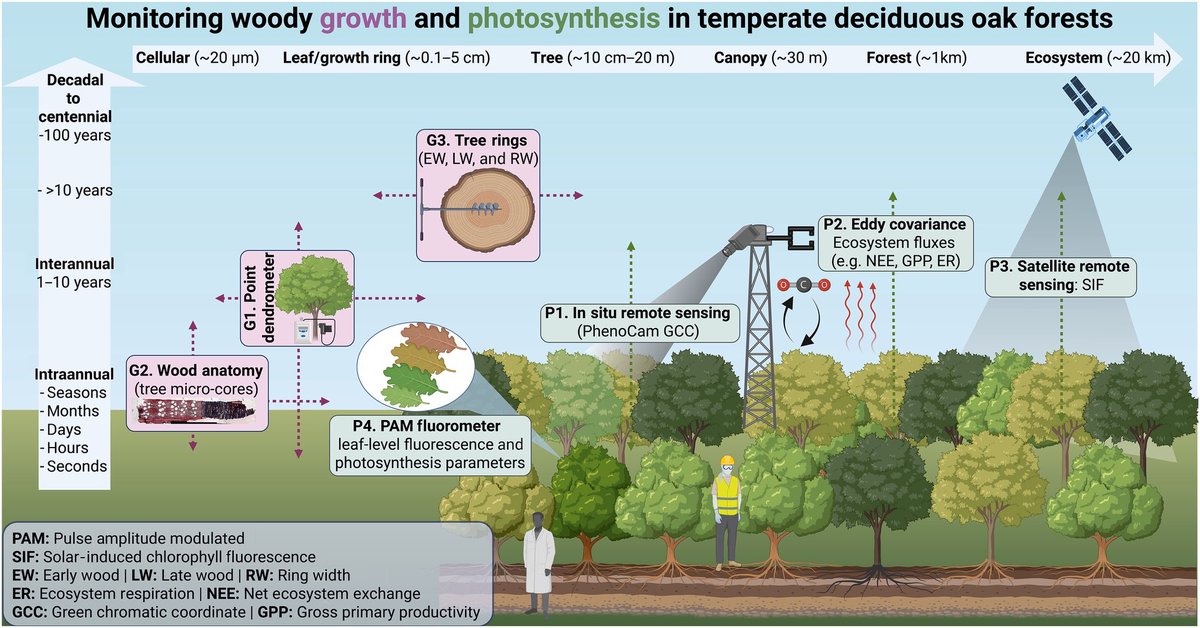
This photosynthesis-growth decoupling intensifies with interannual variability in vapor pressure deficit (r = 0.86, P < 0.05), suggesting that by assuming tight coupling between photosynthesis and woody biomass, current earth system models may overestimate long-term carbon sequestration in forests.
science.org/doi/10.1126/scia…

2
7
10
389
Climate Of The Apes retweeted

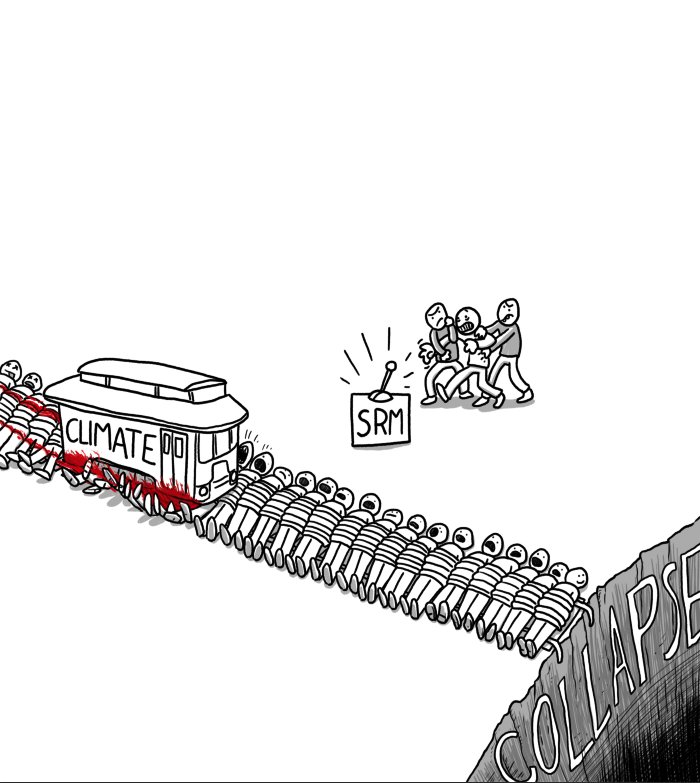
Stratospheric aerosol injection (#SAI) could become a geopolitical status symbol, influencing deployment decisions through prestige and power considerations rather than climate goals alone.
A new study argues that highly visible and exclusive forms of SAI may signal national power and leadership in international politics.
If SAI acquires status value, countries could pursue larger deployments or engage in competitive “prestige races” independent of climate risks and benefits.
The authors call for research into which SAI configurations are most likely to function as status symbols and shape future governance challenges.
direct.mit.edu/glep/article-…
1
1
182
Climate Of The Apes retweeted
Adding olivine to coastal surf zones could enhance ocean alkalinity enhancement (#OAE) and carbon removal, while posing only limited and short-lived risks from trace metal release.
Researchers found that turbulent surf-zone conditions increased olivine dissolution and alkalinity generation, with sand grains helping accelerate weathering through abrasion.
Although nickel and chromium concentrations briefly spiked during the early stages of the experiment, levels quickly returned to background seawater values.
The results suggest that olivine deployment in surf zones could be an effective and relatively low-risk marine carbon dioxide removal strategy.
egusphere.copernicus.org/pre…
1
2
40
Climate Of The Apes retweeted
Could? It will - we refuse to cool the earth and Oceans down. Earth’s permafrost could soon release hidden ‘deep carbon,’ supercharging warming
Melting permafrost is releasing carbon into the atmosphere, but scientists may have underestimated just how bad the situation may be, a new analysis finds yahoo.com/news/science/artic…
Net release of CO2 from thawing permafrost soil carbon predicted to occur earlier in this century - by Yi Xi et al. science.org/doi/10.1126/scia…
1
16
37
664
Climate Of The Apes retweeted
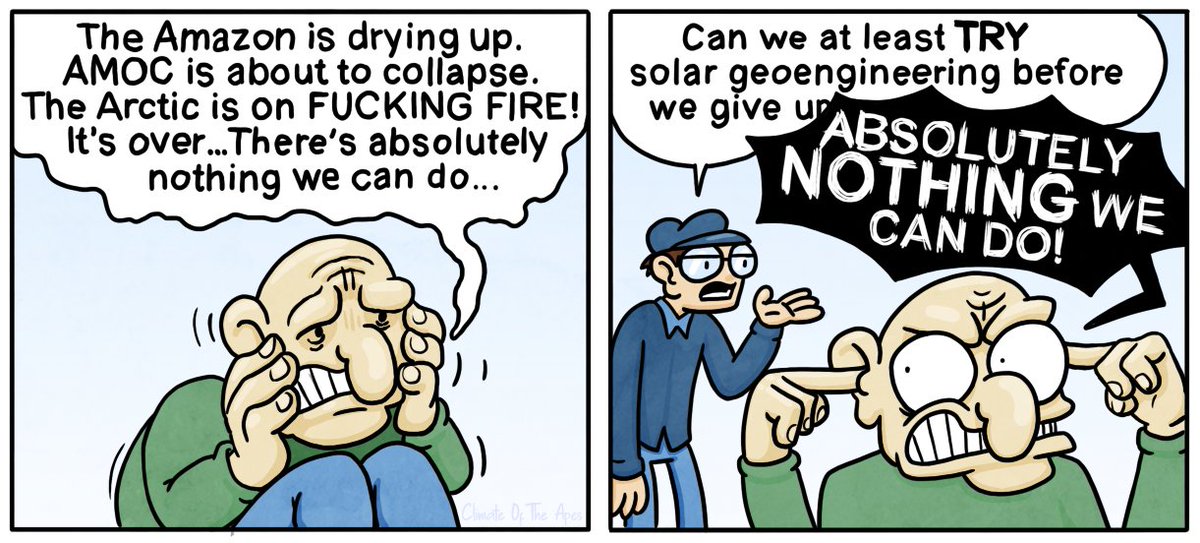
Arctic-only #SolarGeoengineering could substantially reduce Arctic warming without worsening the Northern Hemisphere–Southern Hemisphere temperature imbalance.
Using 36 CMIP6 climate models, researchers found that Arctic-focused stratospheric aerosol injection (SAI) could halve Arctic warming in some scenarios while maintaining a stable interhemispheric temperature difference.
In the median model, this would require sulfur dioxide injections rising to 4.1 Mt SO₂ per year by 2100. However, uncertainties remain over how such interventions could affect tropical rainfall patterns.
iopscience.iop.org/article/1…
1
1
1
76
Climate Of The Apes retweeted
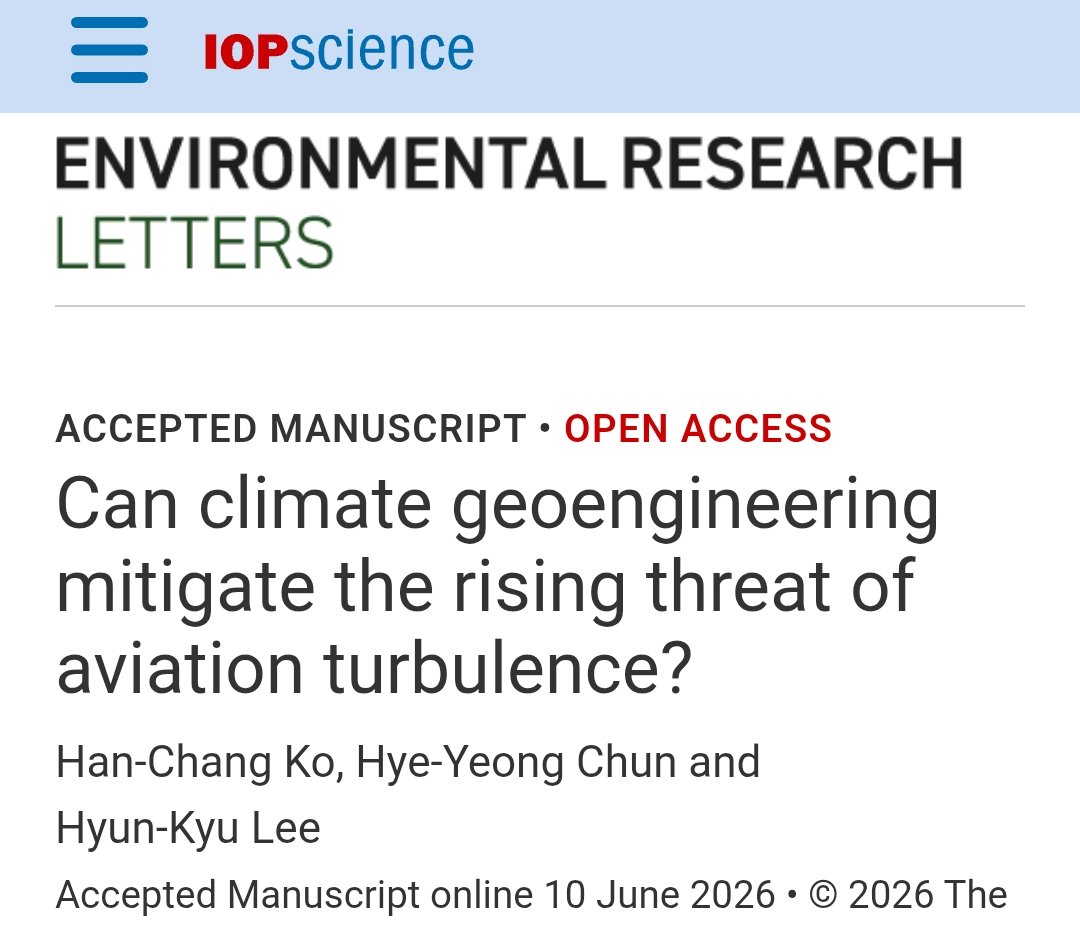
Stratospheric aerosol injection (#SAI) could reduce aviation turbulence below present-day levels, counteracting the increases in turbulence projected under global warming.
Using simulations from three climate models and multiple climate scenarios, researchers found that geoengineering through SAI not only offsets warming-driven increases in aviation turbulence but may reduce turbulence in major hotspot regions.
However, the magnitude of the effect varies across models and deployment scenarios, highlighting uncertainty in outcomes.
The study identifies aviation as a potentially overlooked beneficiary of climate intervention while emphasizing the broader risks and uncertainties associated with large-scale geoengineering.
iopscience.iop.org/article/1…
1
2
75
Climate Of The Apes retweeted

Jun 13
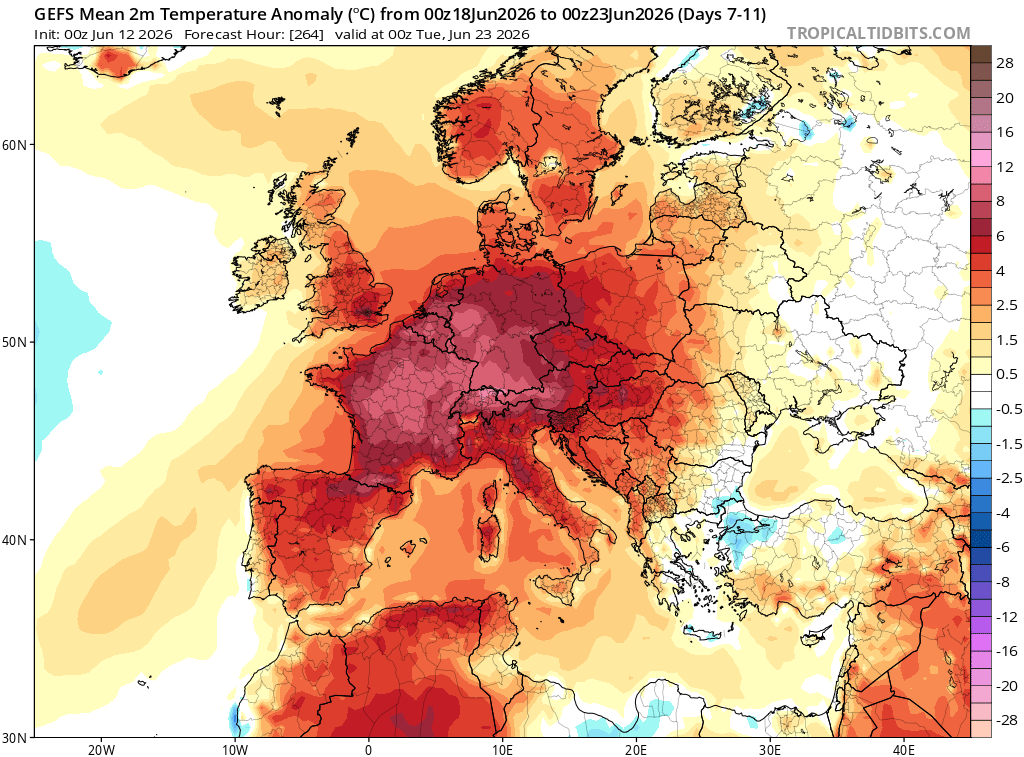
France is heading towards its second heatwave... BEFORE the summer solstice! 🔥🌡️🥵
It’s just nightmarish, morbid, and foreshadows how difficult life will be in the 21st century. 😰
I’m thinking of the ecosystems that can’t take it anymore... 🌲✝️
Map via @Kevin_Fillin
192
384
1,058
47,724
Climate Of The Apes retweeted

10 Climate Insights You Can’t Ignore.
Record heat, dying oceans, failing carbon sinks, and a “great climate race” we’re currently losing. What does the latest “10 New Insights in Climate Science” really mean for our future?
Watch: youtu.be/0rKhgC-4s7s

4
5
112
Climate Of The Apes retweeted
Artificial Intelligence and Solar Radiation Management
aethersymposium.com/issue-3/…
1
1
66
Climate Of The Apes retweeted

Jun 14
Starting soon!
Jun 12

Sunday 6/14 at 10am PT on Climate Chat: Students Fighting To Force Polluters to Pay: Carbon Fee & Dividend with Katharine Gage. How a student movement is forming around carbon pricing.
YouTube Live & Recorded link:
@LeonSimons8 @drivingmzstacey @radsci
youtube.com/live/D4UhcCRXuj0
4
8
879
Climate Of The Apes retweeted

Jun 14
Another major environmental catastrophe that impacts on climate and world trade, but it is not on the radar.
The following link is a good video of the Sargassum problem, a pelagic seaweed floating on the surface of the ocean.
When we sailed across the Atlantic Ocean, we got stuck three times in giant mats of Sargassum. The video gives a good explanation of what happens in the Caribbean when it washes ashore, but it misses the major environmental and economic implications that have a profound impact on world trade and marine life in an entire ocean.
The Sargassum starts off from the coast of Brazil; it picks up nutrients from the Amazon and grows at an accelerated rate. It can double in biomass every 10 days. The weed crosses the South Atlantic to Africa and flows up the west coast, picking up more nutrients from the Congo and Gambia as well as agricultural run-off. By the time it reaches North Africa, Cape Verde, it takes a left turn and starts heading back across the Atlantic to the Caribbean.
There should only be 1 million tonnes of the weed in the Atlantic, but there are now 40 million, and it is expanding year on year. Sargassum is a plant, and like all plants, it requires nutrients such as phosphate. However, the massive amount of weed uses up all the phosphate and then biochemically defaults to absorbing arsenic, which sits below phosphate in the periodic table.
The Equatorial Atlantic is now devoid of phosphate, which means there is almost no phytoplankton, zooplankton or fish. When we conducted our citizen science project, 5000 samples were collected by 25 yachts at around 15 deg. North, and the results all confirmed that the Equatorial Atlantic was effectively dead.
The results were not ignored by the academics; instead, they attacked the Citizen Science project, this has become the subject of a reports by seethroughnews.org.
Given the phytoplankton, such as coccolithophores and diatoms, have exhibited a regime shift, it also means the SML oil surfactant layer is gone, which means evaporation across the air-water interface has increased and aerosol/cloud formation has decreased.
Satellite.
Imagery confirms a 10% increase in humidity and a 10% decrease in cloud formation and rain.
This is climate change TICC, the consequences.
Impact on Central America, the survival of the tropical rainforests, mangroves, coral reefs, 25% of all marine life in the Atlantic and water supply for the Panama Canal. 6% of world trade and 40% of USA trade pass through the canal, and it has been totally missed as a major economic and environmental catastrophe.
GOES centre for marine research:
Seahorsepoint.org
The video below was taken in the middle of the Atlantic Ocean from our sailing vessel Copepod. Via Howard Dryden
35
307
689
63,443
Climate Of The Apes retweeted
"Planes for SAI May Be Closer and Cheaper Than Previously Thought"
srm360.org/news-article/plan…
1
2
116
Climate Of The Apes retweeted
"Trees may store less planet-heating carbon than hoped."
theguardian.com/environment/…
2
1
139
Climate Of The Apes retweeted

Jun 13
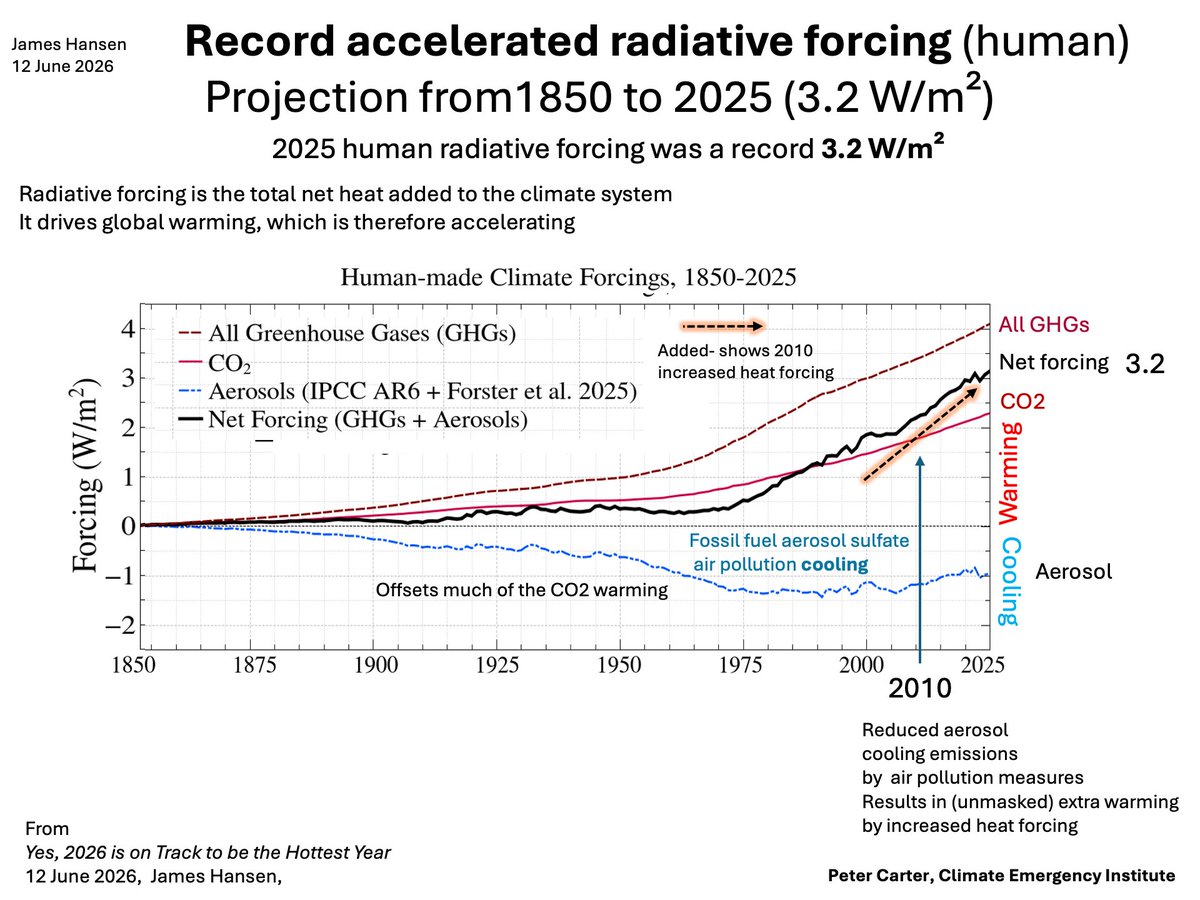
RECORD ACCELERATED RADIATIVE HEAT FORCING, 2025
Nice image from Hansen. 2025 was record 3.2 W/m²
Acceleration obvious from 1960, also increased 2010 with the reduction of aerosol cooling. Drives global warming that can therefore only continue to increase, and accelerate.
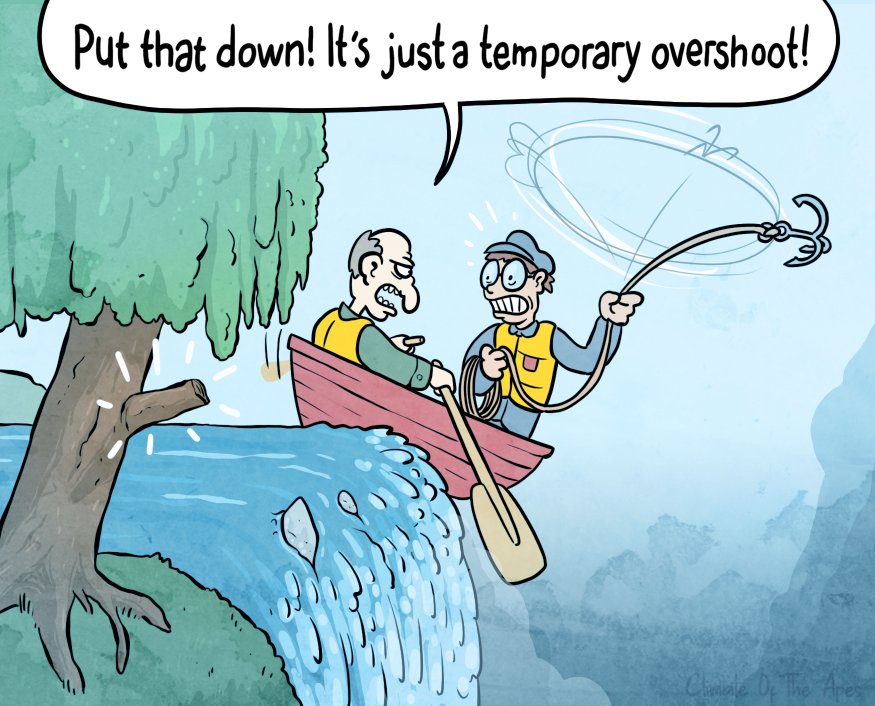
1.5°C is no temporary overshoot as we are told.
mailchi.mp/.../yes-2026-is-o…... #climatechange #globalwarm
5
48
90
1,705
Climate Of The Apes retweeted

Jun 13
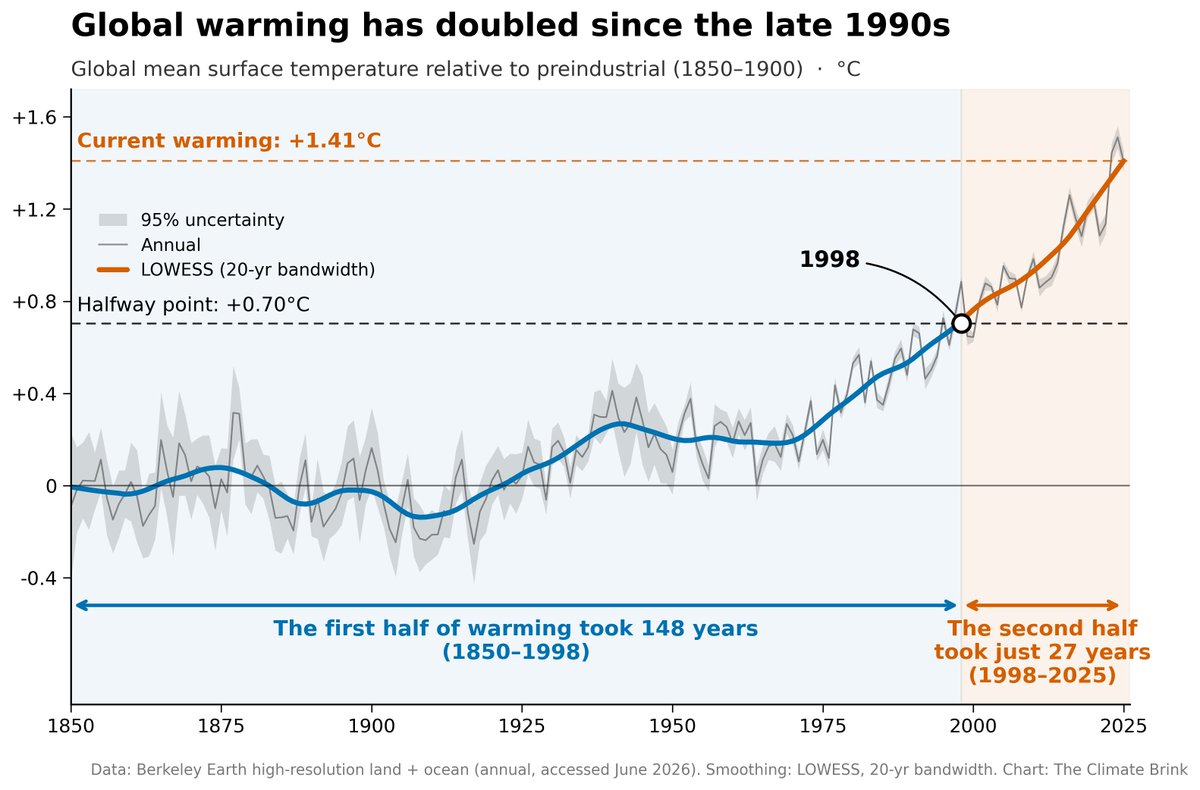
Been trying to point this out for 15yrs. It's on steroids & it's going to get to ~3C much earlier than was anticipated by the IPCC. And there is no stopping it now. Maybe back in the 70s we might have had a chance at limiting it. But the impacts of 1C are now clearly catastrophic for civilization #XRwasRight 🔥😔
Jun 12

The world has warmed by around 1.4C since 1850.
It took 148 years for the first half of that warming to occur, and just 27 years for the second half!
17
50
120
4,035
Climate Of The Apes retweeted

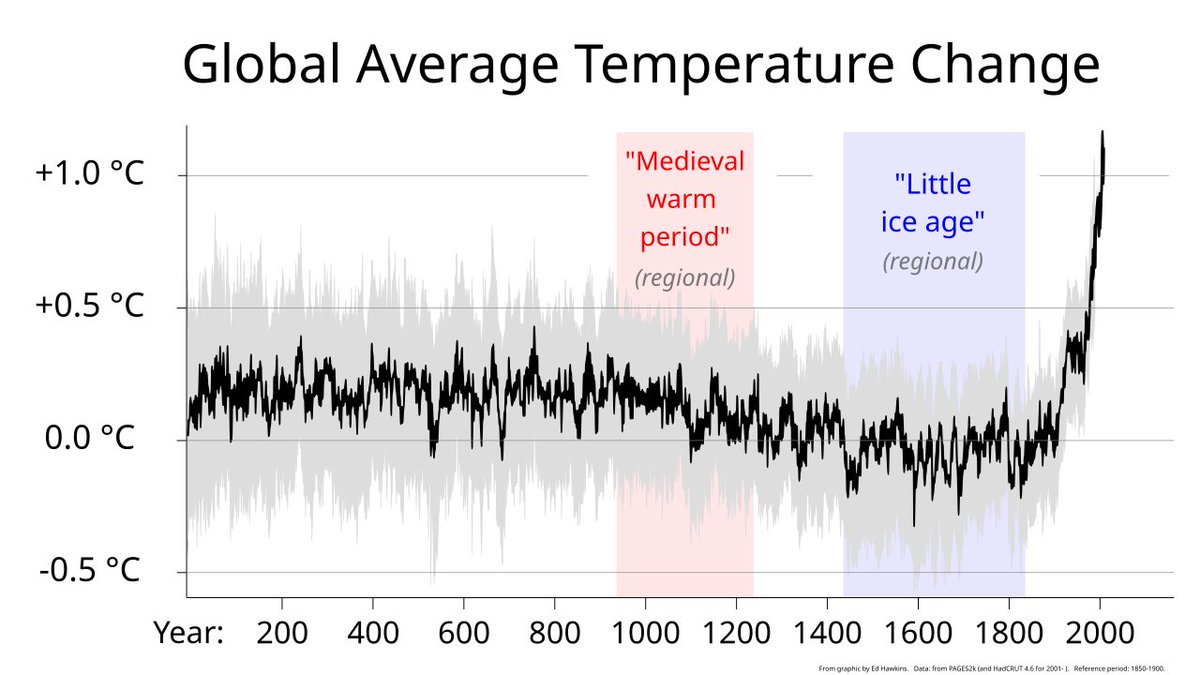
I mean, I’m all for putting things into perspective, but when it comes to global warming, zooming out a couple thousand years is not exactly reassuring.
Jun 13

Zoom out your graph to include just a few thousand little years. And…. Breathe. Happy weekend!
243
1,366
23,324
744,164
Climate Of The Apes retweeted

Insane self-blinding of the US. They are throwing away their investment in the ocean observation system and its benefits.
The only explanation I can think of: they don’t want the people to know what their fossil fuel emissions are doing to our oceans.
easternherald.com/2026/06/13…
61
501
1,061
14,192
Climate Of The Apes retweeted

Jun 12
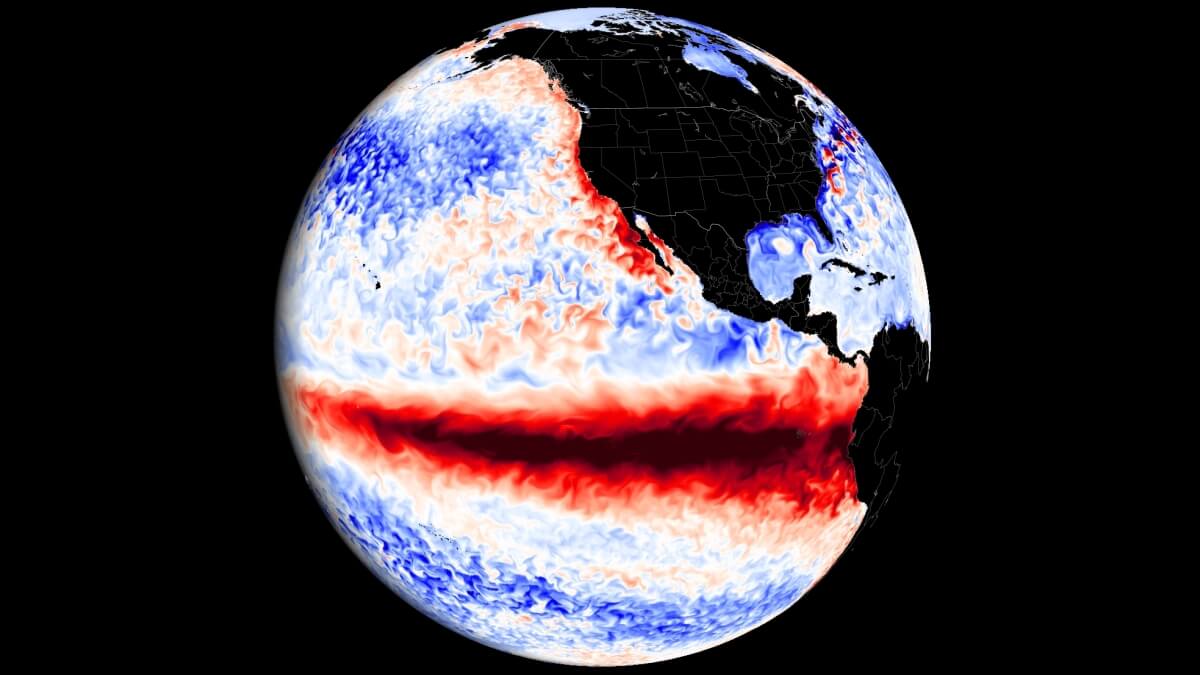
Hold on to your rice paddies, NASA satellites are detecting a major sea-level rise across the tropical Pacific as the Super El Niño rapidly strengthens. If forecasts verify, late 2026 /2027 will see extreme floods and crops impacted. The climate system is sending another warning.
34
311
815
26,445
Climate Of The Apes retweeted
Jun 13
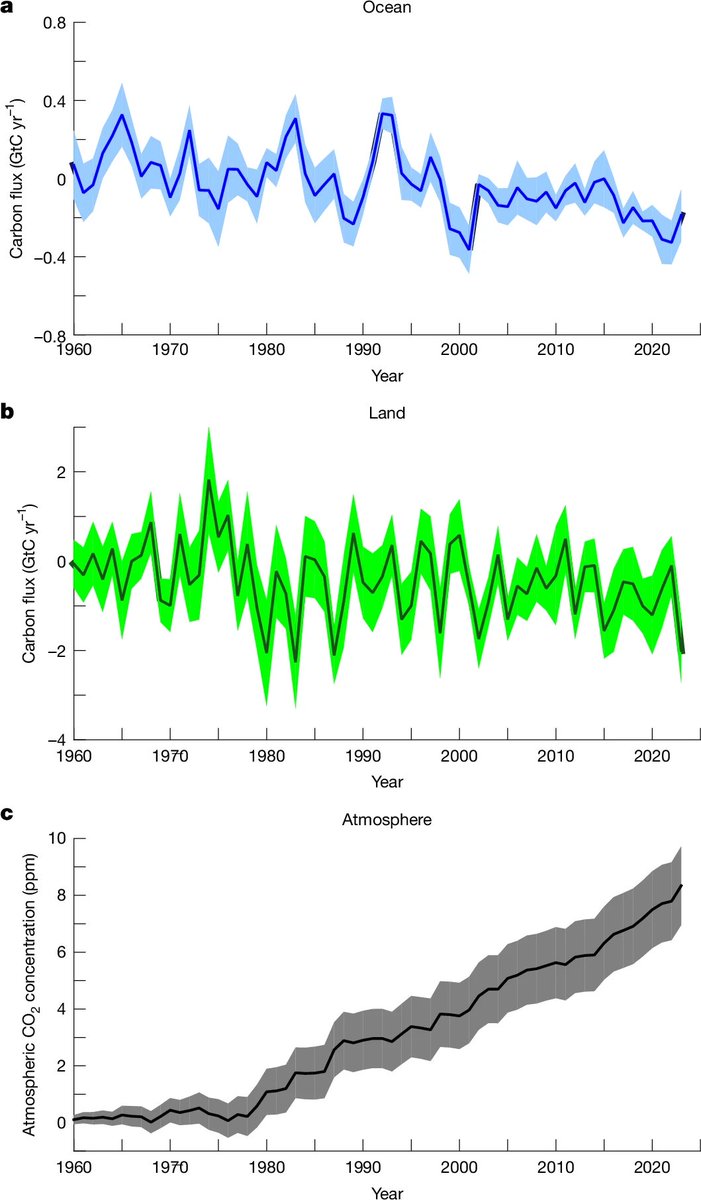
The ocean sink is 15% larger than the land sink, consistent with recent evidence from oceanic and atmospheric observations3,4. Climate change reduces the efficiency of the sinks, particularly on land, contributing 8.3 ± 1.4 ppm to the atmospheric CO2 increase since 1960. The combined effects of climate change and deforestation have turned Southeast Asian and large parts of South American tropical forests from CO2sinks to sources. This underscores the need to halt deforestation and limit warming to prevent further loss of carbon stored on land. Improved confidence in assessments of CO2 sources and sinks is fundamental for effective climate policy.
Jun 13

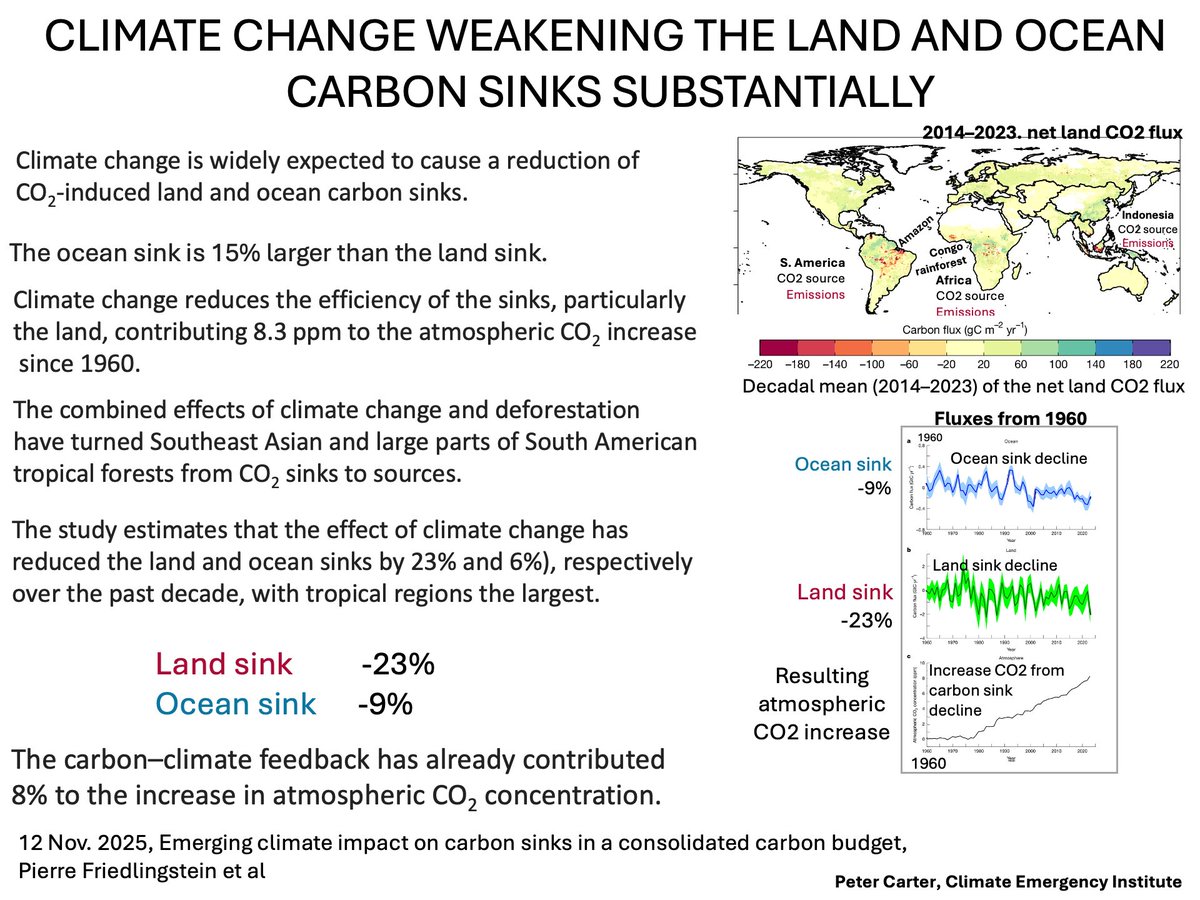
CLIMATE CHANGE WEAKENING CARBON SINKS
Climate change has reduced the efficiency of the sinks, particularly the land, contributing 8% of the increased atmospheric CO2 since 1960.
The effect of climate change has reduced the land and ocean sinks by 23% and 6%), respectively over the past decade, with tropical regions the largest. Land sink reduced 23%
nature.com/articles/s41586-0…
#CO2 #climatechange #globalwarming
3
30
45
3,087