
Joined October 2009
- Tweets 13,185
- Following 489
- Followers 2,472
- Likes 11,509
2,162 Photos and videos





Pinned Tweet

3 Nov 2022
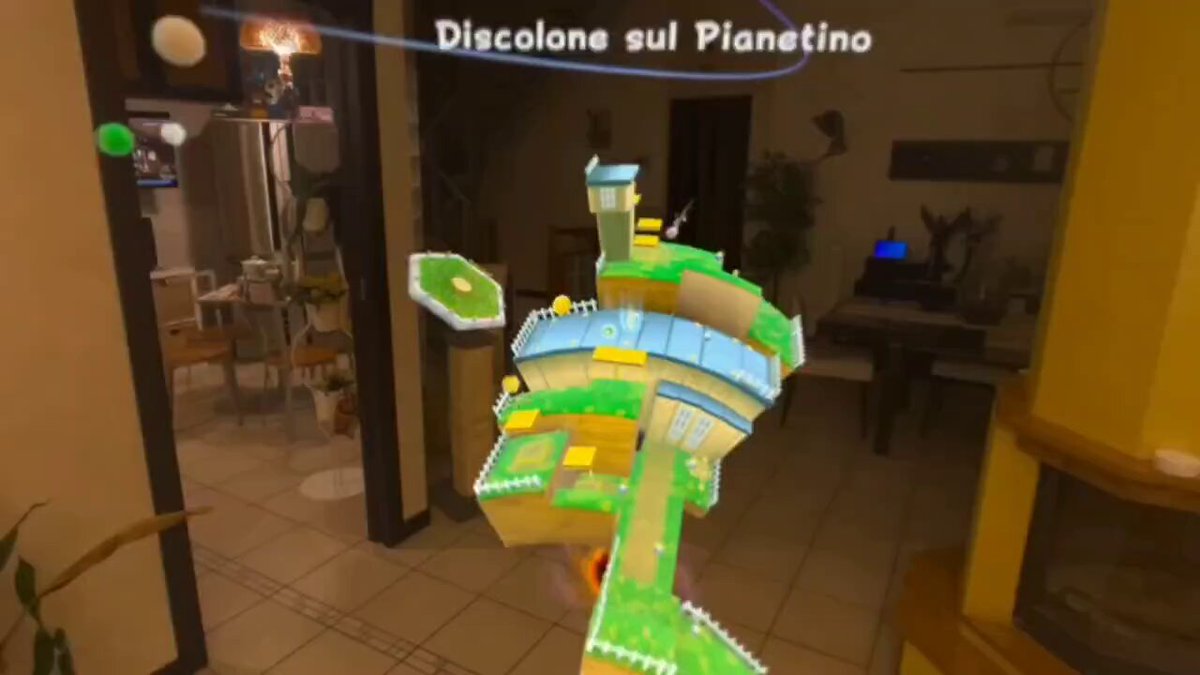
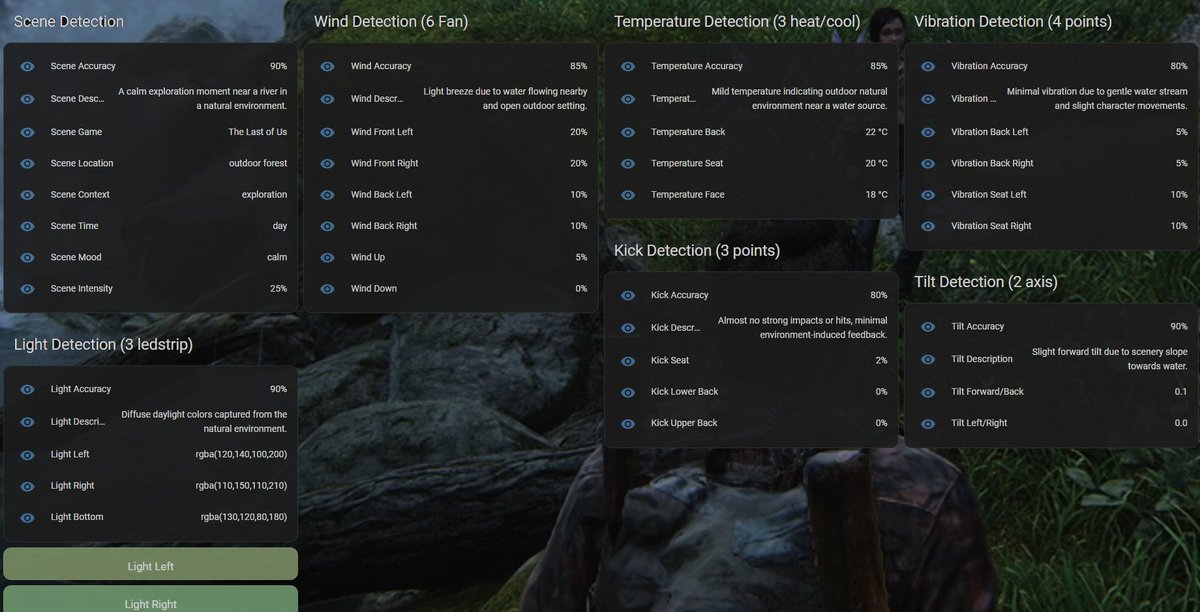
My home VR setup "Holodeck" - Metaverse gaming/social/work - simracing/simflight
youtu.be/eKomzQTztkQ
9
2
18
Clodo / Fabrizio Carimati ᯅ retweeted

May 9
Parliamo di AI.
Henri Bergson, 1907, L'Évolution créatrice. C'è una vespa, la Sphex, che paralizza il bruco di cui si nutre la sua larva colpendolo con il pungiglione esattamente nei nove gangli nervosi giusti, in sequenza, senza margine di errore. Non ha mai studiato anatomia. Non ha studiato niente. Lo fa e basta, dalla prima volta, perfettamente, ogni volta.
Bergson si ferma su quel gesto e prova a rispondere a una domanda che oggi sembra cretina e invece è la più seria di tutte: di che cosa stiamo parlando, esattamente, quando una creatura compie un atto prodigioso senza sapere quello che fa? Lo chiama istinto, lo distingue dall'intelligenza, e mette in chiaro una cosa: se la vespa non sa, qualcosa sa attraverso di lei.
Però non abbiamo parlato di AI.

8
5
64
4,060
Clodo / Fabrizio Carimati ᯅ retweeted

Apr 23
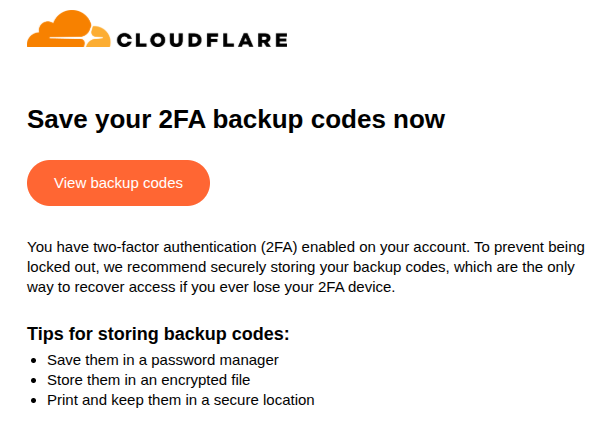
Nooooooooooooooo @Cloudflare; telling folks to store 2FA codes in their password manager defeats the purpose of 2FA!
57
22
274
29,576
Clodo / Fabrizio Carimati ᯅ retweeted

Let's shift focus and explain why the #EU #AgeVerification concept is fundamentally flawed.
Assume:
1. The production app is released.
2. It's 100% secure, 100% private (fantasy land, but stick with me)
3. It cryptographically challenges every step, including hardware attestation which requires a physical device.
4. Every single other attack vector in the surrounding environment is somehow magically patched.
aka - it's working exactly as intended/designed.
It does not protect against a relay attack.
This is a threat they considered and somewhat addressed here: github.com/eu-digital-identi…
With the current design, there's nothing preventing someone running a verification-as-a-service; a remote Android device which returns a valid attestation. Remember, it's not returning "I am over 18", it returns "someone is over 18". Neither the verifier, nor the app has any way to link the session ID to a physical device.
Their own docs state this clearly:
Remote Cross-Device Presentation:
"Note that the Wallet Instance does not see any difference between the cross-device flow and the same-device flow. In both cases, it receives an OpenID4VP-compliant presentation request over the Wallet Instance-platform API described in the previous section."
This is a known & well-understood attack vector in all remote credential presentation models; it's just not mitigated in this one... primarily because they can't. CTAP 2.2 won't work with all app flows, hardware attestation doesn't mitigate relay attacks, on-demand liveness detection would be too intrusive & potentially privacy-invasive & timing calculations don't reveal anything useful... all the available options to resolve this break the core design; completely anonymous age verification.
The Architecture & Reference Framework (ARF) is technically sound in some respects. They considered external threat actors and discussed solutions to mitigate them, including ZKP. However, the EC applied the wrong threat model, thus arriving at the wrong conclusion.
Yes, you need to protect against malicious verifiers, phishing sites, session hijacks, data brokers et al... but that's addressing external threats, it doesn't protect the architecture from the user itself.
In virtually every other scenario, the user and system's interests are aligned; protect my biometric asset at all costs.
Specifically for age verification, most users do not want to present ID simply to access a website, so whilst the system may adequately protect from external threats, if the user wants to bypass the system, they can... and the architecture doesn't consider this.
Every single applied mitigation assumes the user is the protected party, not the threat actor.
To those people claiming "it requires physical access to the device and root, this is BS/hyperbole", you too applied the wrong threat model & completely missed the point. These disclosures demonstrate that you, the user, are the threat actor they haven't considered.
You have your device.
You can root your device.
You can create a chrome extension, just as I did.
Ironically, it's precisely those under 18 who can't pass verification who are motivated to bypass it.
So where does that leave us?
A system which replaces "I am over 18" with "someone is over 18", with absolutely no guarantee that it's true... which is the entire purpose of the app.

Bypassing #EU #AgeVerification using their own infrastructure.
I've ported the Android app logic to a Chrome extension - stripping out the pesky step of handing over biometric data which they can leak... and pass verification instantly.
Step 1: Install the extension
Step 2: Register an identity (just once)
Step 3: Continue using the web as normal
The extension detects the QR code, generates a cryptographically identical payload and tells the verifier I'm over 18, which it "fully trusts".
This isn't a bug... it's a fundamental design flaw they can't solve without irrevocably tying a key to you personally; which then allows tracking/monitoring.
Of course, I could skip the enrolment process entirely and hard-code the credentials into the extension... and the verifier would never know.
35
263
839
75,353
Clodo / Fabrizio Carimati ᯅ retweeted

‼️🇪🇺 The EU's new Age Verification app was hacked with little to no effort.
When you set it up, the app asks you to create a PIN. But that PIN isn't actually tied to the identity data it's supposed to protect. An attacker can delete a couple of entries from a file on the phone, restart the app, pick a new PIN, and the app happily hands over the original user's verified identity credentials as if nothing happened.
It gets worse. The app's "too many attempts" lockout is just a counter in a text file. Reset it to 0 and keep guessing. The biometric check (face/fingerprint) is a simple on/off switch in the same file. Flip it to off and the app skips it entirely.
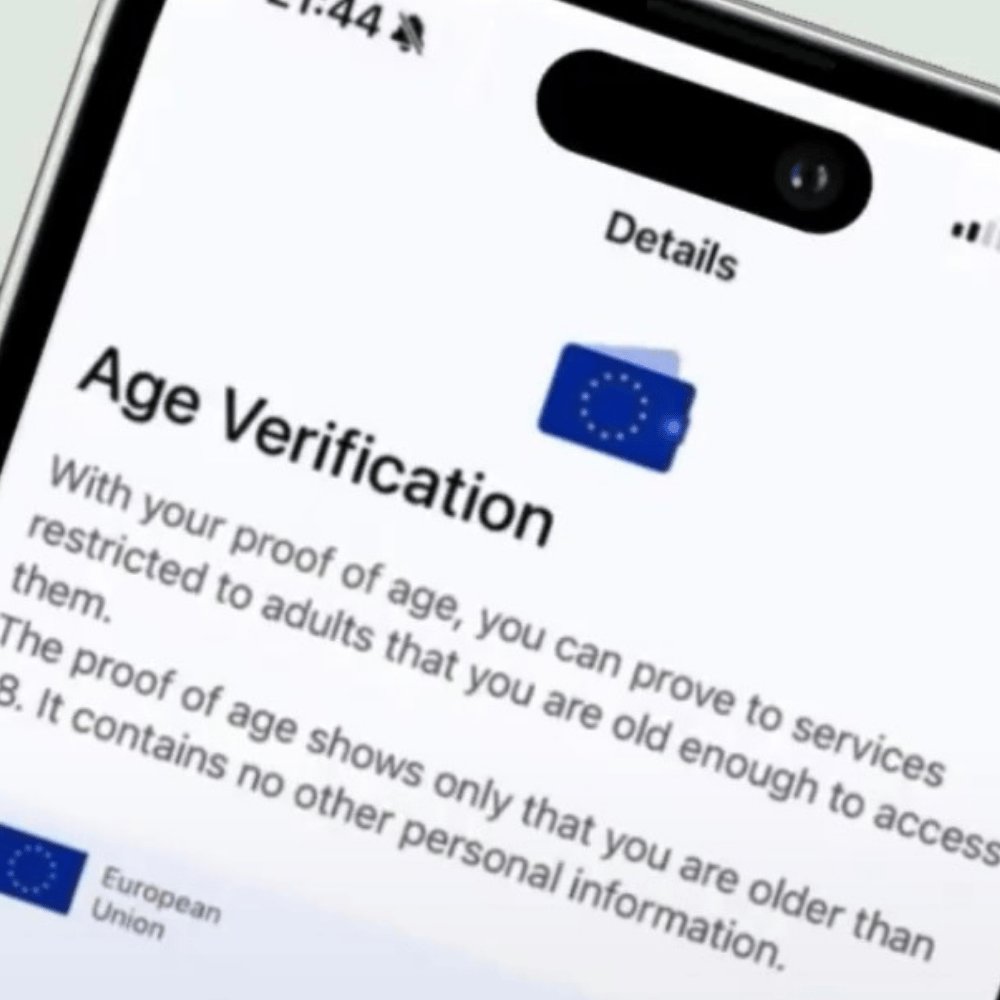

648
6,339
23,490
1,030,661
Clodo / Fabrizio Carimati ᯅ retweeted
Hacking the #EU #AgeVerification app in under 2 minutes.
During setup, the app asks you to create a PIN. After entry, the app *encrypts* it and saves it in the shared_prefs directory.
1. It shouldn't be encrypted at all - that's a really poor design.
2. It's not cryptographically tied to the vault which contains the identity data.
So, an attacker can simply remove the PinEnc/PinIV values from the shared_prefs file and restart the app.
After choosing a different PIN, the app presents credentials created under the old profile and let's the attacker present them as valid.
Other issues:
1. Rate limiting is an incrementing number in the same config file. Just reset it to 0 and keep trying.
2. "UseBiometricAuth" is a boolean, also in the same file. Set it to false and it just skips that step.
Seriously @vonderleyen - this product will be the catalyst for an enormous breach at some point. It's just a matter of time.
.@vonderleyen "The European #AgeVerification app is technically ready. It respects the highest privacy standards in the world. It's open-source, so anyone can check the code..."
I did. It didn't take long to find what looks like a serious #privacy issue.
The app goes to great lengths to protect the AV data AFTER collection (is_over_18: true is AES-GCM'd); it does so pretty well.
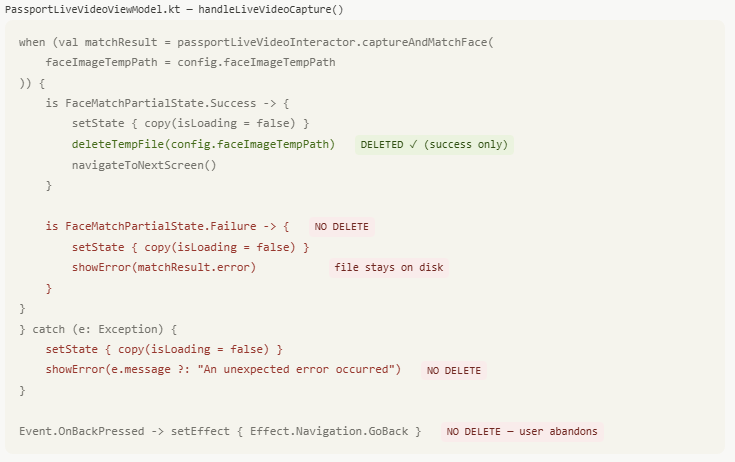
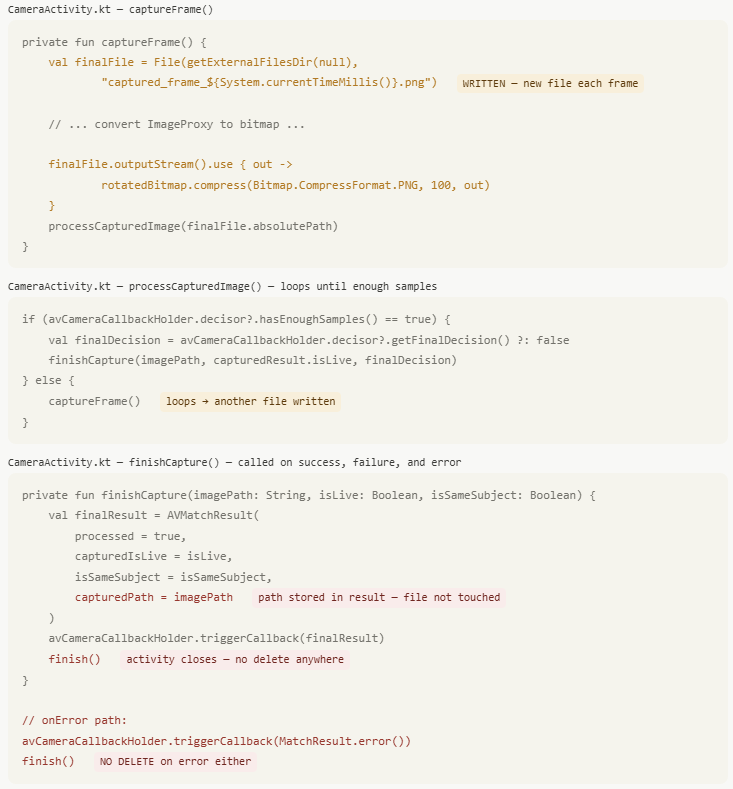
But, the source image used to collect that data is written to disk without encryption and not deleted correctly.
For NFC biometric data:
It pulls DG2 and writes a lossless PNG to the filesystem. It's only deleted on success. If it fails for any reason (user clicks back, scan fails & retries, app crashes etc), the full biometric image remains on the device in cache. This is protected with CE keys at the Android level, but the app makes no attempt to encrypt/protect them.
For selfie pictures:
Different scenario. These images are written to external storage in lossless PNG format, but they're never deleted. Not a cache... long-term storage. These are protected with DE keys at the Android level, but again, the app makes no attempt to encrypt/protect them.
This is akin to taking a picture of your passport/government ID using the camera app and keeping it just in case. You can encrypt data taken from it until you're blue in the face... leaving the original image on disk is crazy & unnecessary.
From a #GDPR standpoint:
Biometric data collected is special category data. If there's no lawful basis to retain it after processing, that's potentially a material breach.
youtube.com/watch?v=4VRRriyD…
656
6,065
24,319
3,390,187
Clodo / Fabrizio Carimati ᯅ retweeted
Apr 17
🛡️ La nuova app #UE per la verifica dell'età dei minori è un colabrodo: dati biometrici esposti, sistema aggirabile troppo facilmente.
Un progetto pensato per proteggere i giovani che non riesce a proteggere nemmeno sé stesso.
👉 youtube.com/watch?v=SL6l5aKv…
#privacy #techpolicy
7
21
96
4,576
Clodo / Fabrizio Carimati ᯅ retweeted

Apr 12
VR devs should take note
Apr 12

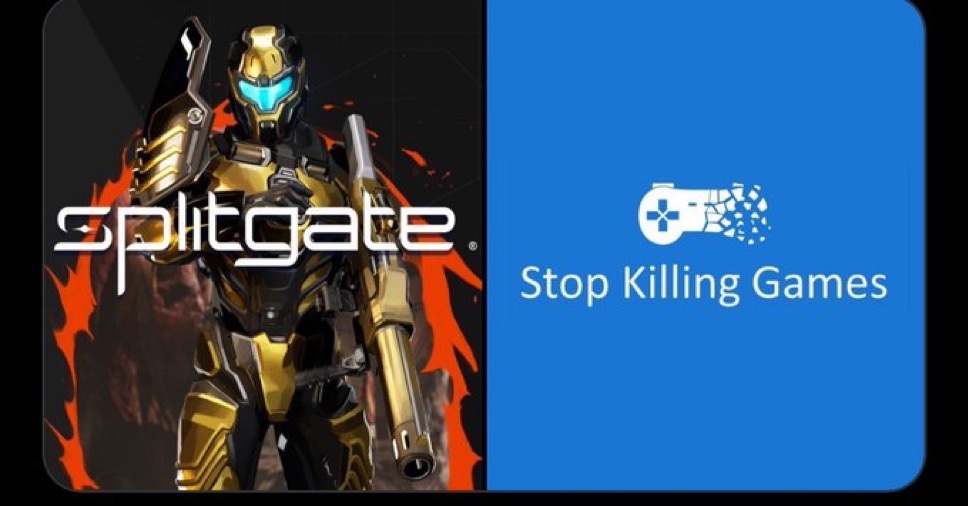
Splitgate is implementing peer-to-peer (P2P) servers as part of its end-of-life plan, ensuring the original game remains playable even after official servers are shut down.
The developer 1047 Games directly acknowledged the StopKillingGames movement as part of the motivation behind the decision.
The studio said it has seen the ongoing conversations around preserving online games and wants to make sure players do not lose access to a title they have invested time and passion into.
Starting with the server shutdown, the original game transitions to player-hosted matches through P2P networking, allowing fans to continue playing multiplayer matches without relying on centralized infrastructure.
The developers are also unlocking cosmetics and preserving core content so the experience remains intact.
This is exactly the kind of responsible end-of-life planning many players have been asking for across the industry.
This should be standard practice for online-only titles
14
18
177
9,390
Clodo / Fabrizio Carimati ᯅ retweeted

Dato il successo che sta ottenendo, mi tocca fare coming out: ho avuto io la stupida idea di creare #PUCS, il portale (satirico) della PA più pazzo del mondo.
pucs.it
Mi sono decisamente divertito a farlo, spero abbia strappato un sorriso anche a voi.
340
371
2,630
189,566

La polizia ha pubblicato una foto degli scontri di Torino modificata con l’AI
ilpost.link/dkFtNAqelk
128
245
902
72,284
2 Dec 2025
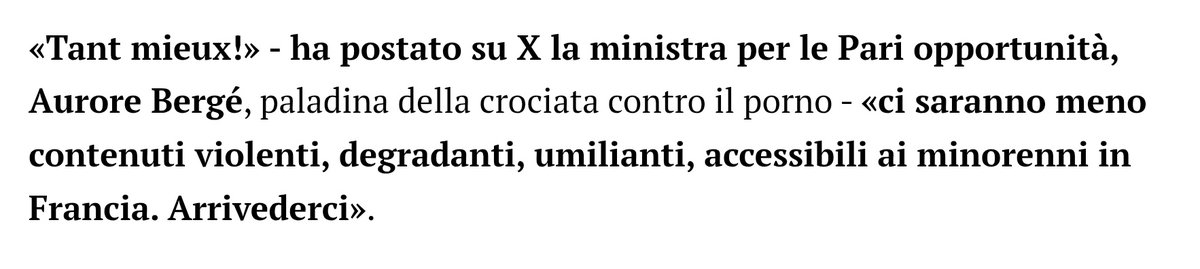
Fun fact: ho visitato l'unico sito italiano con obbligo age verification per vedere se han implementato i controlli previsti da AGCOM, e da allora il sito web di @repubblica mostra roba hentai (negli ADV).
1
4
337
25 Nov 2025
Giuro che è andata così.
Stavo giocando in VR con un amico, audio da remoto
"Ehi pausa, $figlia (12 ANNI) deve chiedermi qualcosa"
...
"Papà alzi il visore che ti faccio una foto?"
"Oh 💘 ok"
..
"Ma amore, come mai?"
"Eh niente, me l'ha chiesto Roblox".
1
198
12 Nov 2025
Raccomando ai siti porno di disattivare l'incolla di clipboard per sicurezza de no'altri, il token va digitato tutto.
6
271
1 Nov 2025
L'unico sito italiano nella lista dei 46 porno agcom.
Hentai a parte, ha il TOS (Terms and Conditions) porno, alcuni legal nerd si eccitano così.
(Tralascio il fatto che è il paese in cui son cresciuto, il che è sospetto 😅)
1
1,213
16 Oct 2025
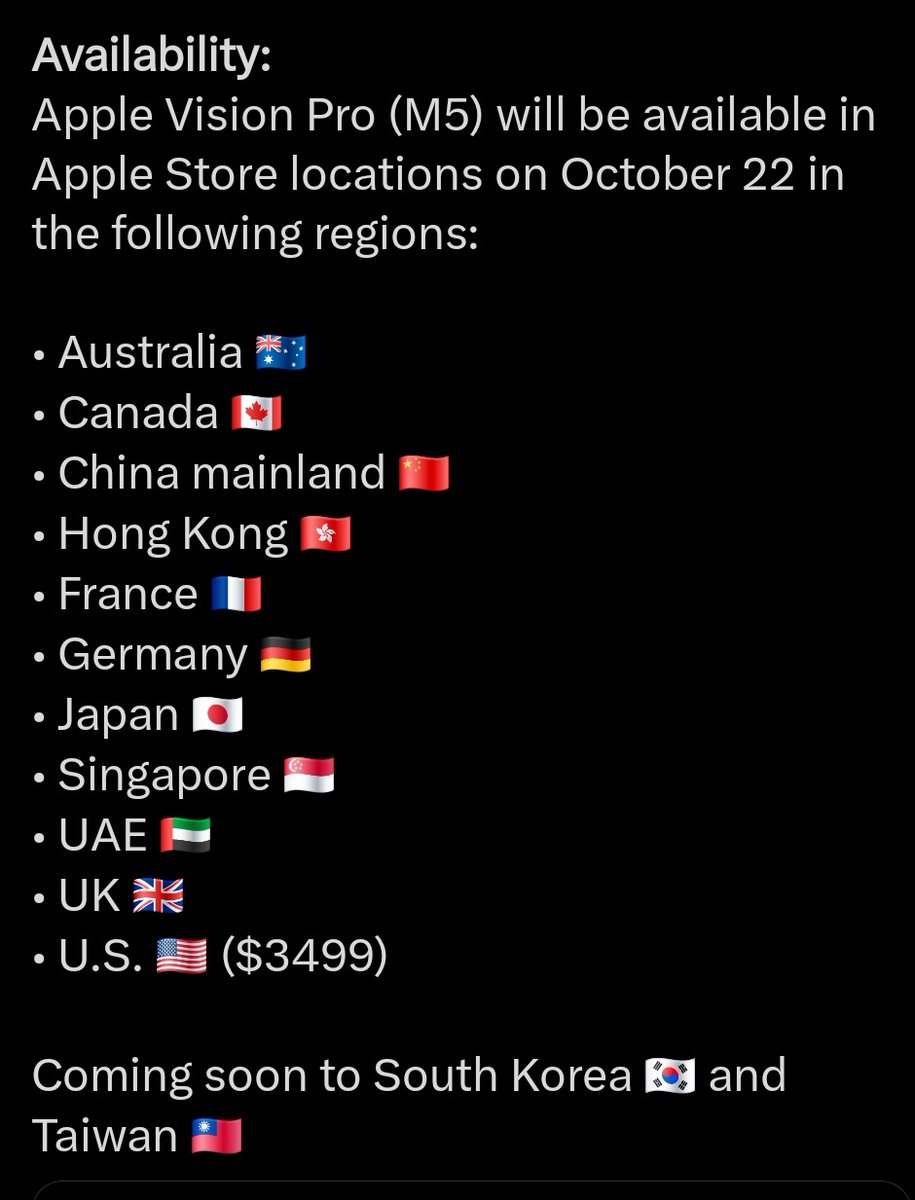
Impressionante come Apple consideri l'Italia un mercato irrilevante.
(Ho il primo visionPro, comprato in USA a febbraio 2024, da allora han aperto a vari mercati, e quella è la lista dei mercati del nuovo modello)
1
154
13 Oct 2025
Qui su X vedo roba falsa, nei commenti chiamano Grok, che conferma che è falsa.
Quindi mi chiedo cosa aspettano a fare dei community notes con AI.
Ma poi mi rispondo "per non abbassare il volume utenti di X"
x.com/Frenkie_Woody/status/1…
13 Oct 2025

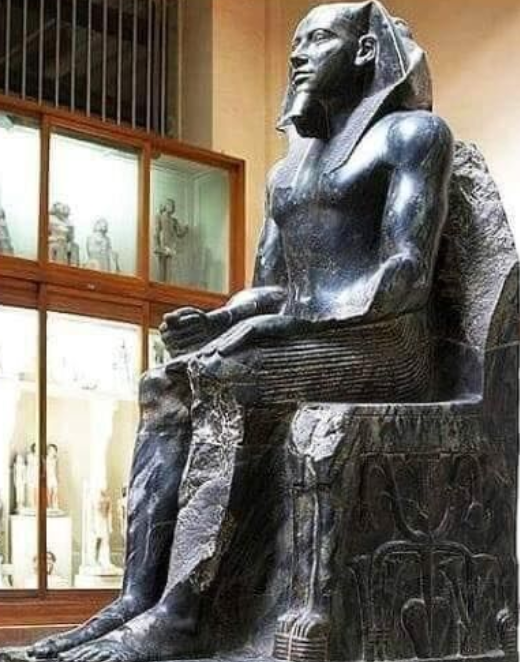
Stiamo Cercando l'acqua su Marte, ma ancora non sappiamo come gli Egizi hanno potuto scolpire queste statue in Diorite. Al tempo conoscevano solo il rame, e la Diorite è una delle pietre più dure esistenti, che può essere lavorata solo con attrezzi diamantati.
1
185
Clodo / Fabrizio Carimati ᯅ retweeted

17 Sep 2025
I reimagined my living room with World Labs. Gemini helped design it, World Labs generated the 3D environment, and VPS localized it to my space 1:1 scale.
I can now step into a persistent redesign in mixed reality and explore it as though it exists physically. How it was built:
51
168
1,277
122,010
Clodo / Fabrizio Carimati ᯅ retweeted

15 Sep 2025
It's the economics.
No developer can afford to pay the inference cost for every conversation you have with an NPC. So either you pass that on to the user, at an exorbitant price, or run the model locally, which would tank the performance of the game.
5
1
41
1,612
9 Sep 2025
Domanda su #globalsumudflottilla
Ce l'ho in casa io, che son un due di picche, una camera 360 decente... loro che si aspettano attacchi, ed è importante dimostrarli, nessuno ha un footage di sto drone, solo l'impatto?
2
1
188
9 Sep 2025
(No commenti politici o su credibilità, non entro nel merito, solo non capisco perché mal attrezzati proprio su queste cose)
1
99
Clodo / Fabrizio Carimati ᯅ retweeted

2 Sep 2025
Per chi è interessato ad analisi su #PiracyShield, riporto i rif. di un paper recente su (in)efficacia & collateral blocking dei ticket in @AGCOMunica APS.
edu.nl/khcra
Autori : @RaffySommy - Anna Sperotto - @antoniopradoit - Jeroen van der Ham - Antonia Affinito
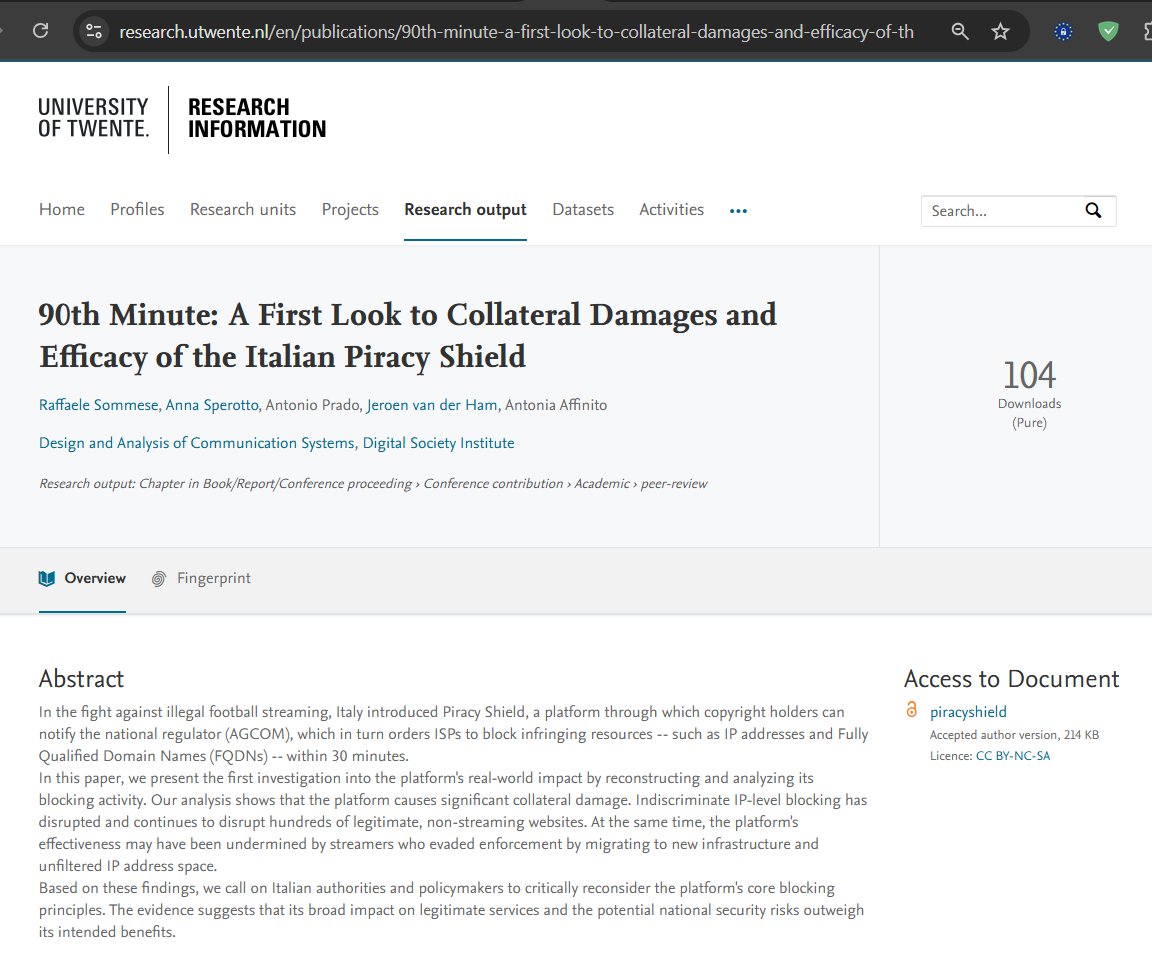
ALT https://research.utwente.nl/en/publications/90th-minute-a-first-look-to-collateral-damages-and-efficacy-of-th Link ad abstract e download del paper
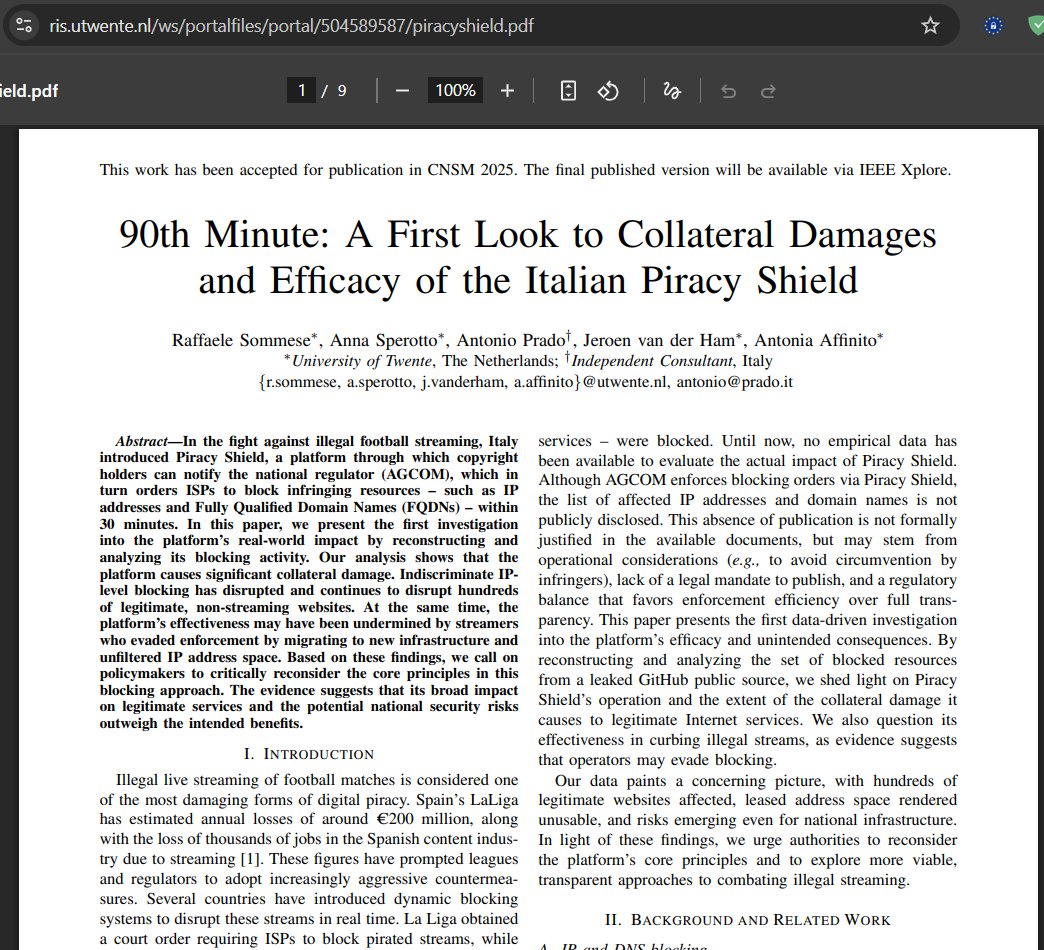
ALT https://ris.utwente.nl/ws/portalfiles/portal/504589587/piracyshield.pdf Link diretto al paper
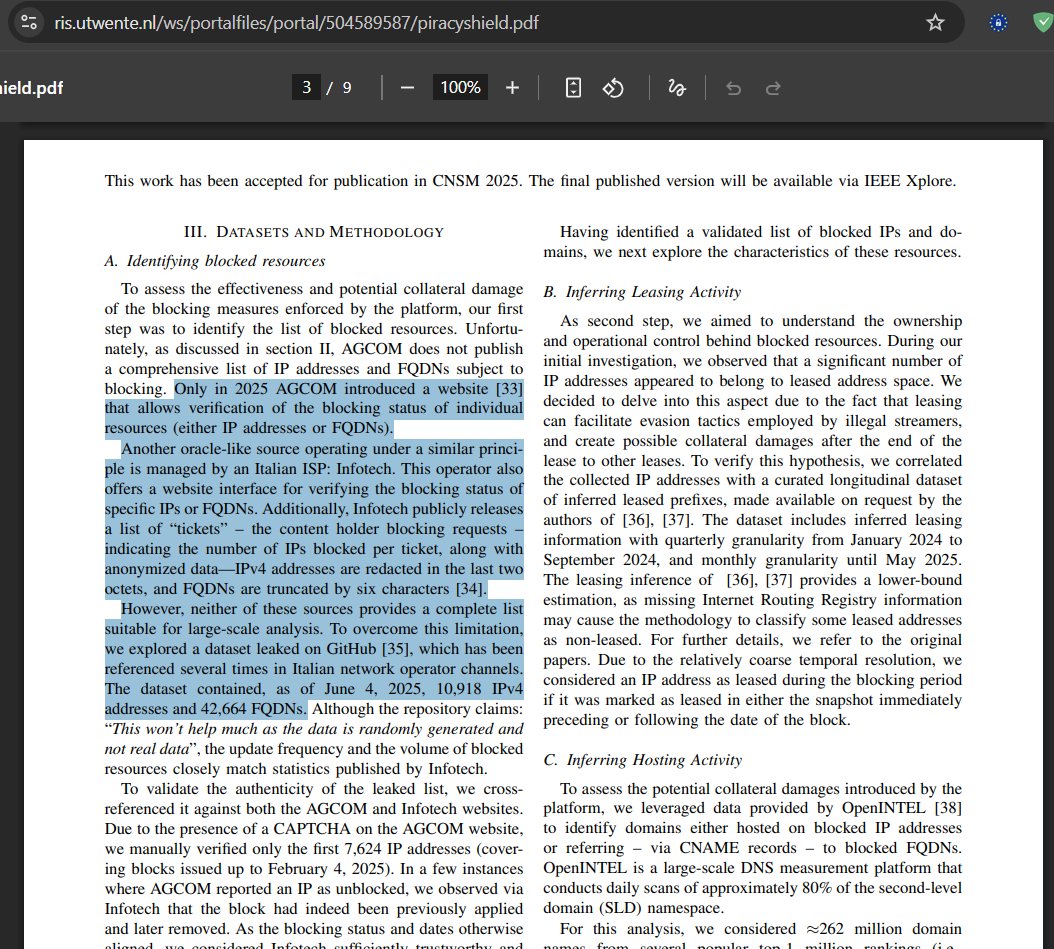
ALT https://ris.utwente.nl/ws/portalfiles/portal/504589587/piracyshield.pdf Passaggio relativo all'utilizzo dei dataset IP/FQDN leakati pub & alla loro validazione tramite il form ufficiale BlocchiPS AGCOM la dashboard terza by Infotech
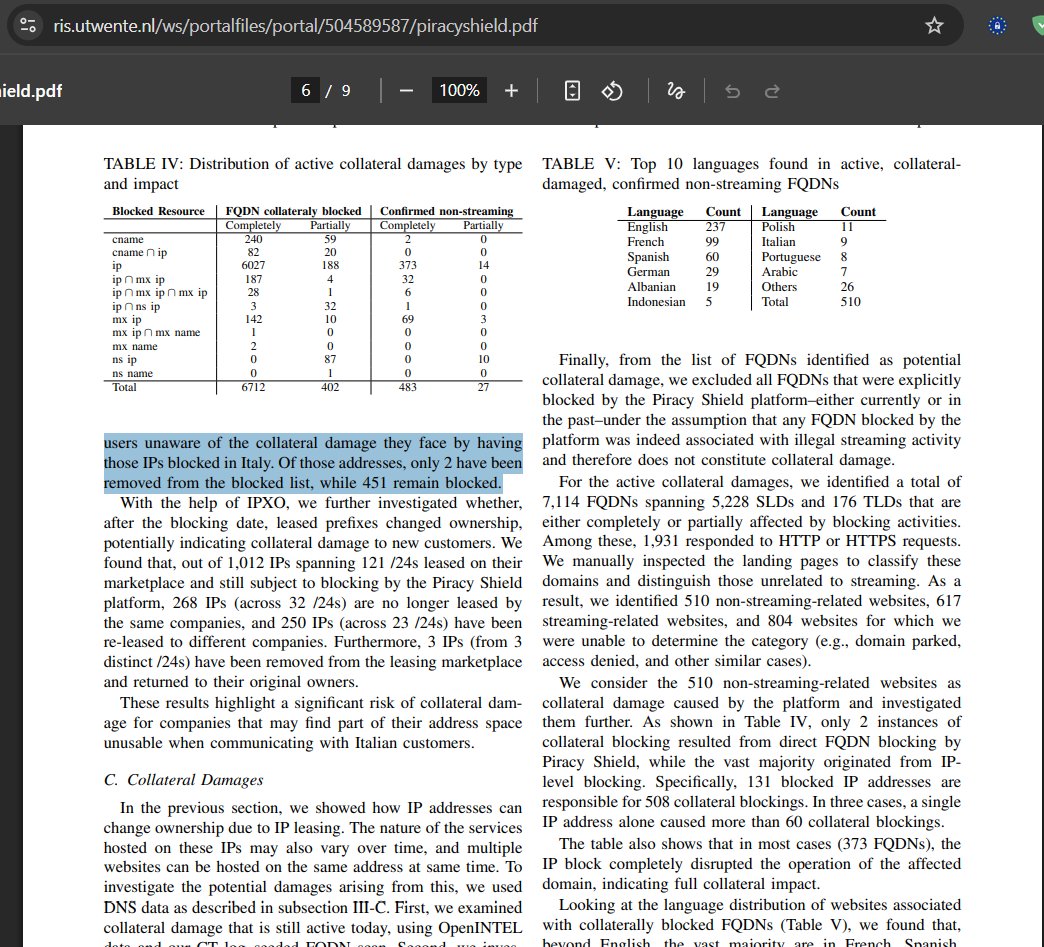
ALT https://ris.utwente.nl/ws/portalfiles/portal/504589587/piracyshield.pdf Passaggio relativo agli IP coinvolti in danni collaterali
1 Sep 2025

New paper: we reconstruct #PiracyShield and measure its impact. Result: broad IP blocks cause real overblocking (hundreds of legit sites hit) and are easy to evade (IPv6, fast moves). Accepted at #CNSM2025.
research.utwente.nl/en/publi…
11
34
4,056