
Sr. Advisor at PSG Private Equity; Former President of International Data Corporation (@IDC) - opinions are mine
Joined March 2008
- Tweets 6,010
- Following 743
- Followers 6,721
- Likes 6,158
703 Photos and videos


Mar 9
52,000 tech workers have lost jobs so far in 2026. Block just cut 40% of its workforce. Morgan Stanley slashed 2,500 roles — while posting record revenue. Everyone says the same thing: AI is taking jobs.
I think that narrative is dangerously incomplete.
A landmark Anthropic study dropped last week — the first to use actual Claude usage data mapped against 800 real occupations. The headlines ran with "75% of programming tasks are covered by AI." Here's the number nobody ran: there is currently little systematic increase in unemployment for the most AI-exposed workers. The study's own authors called for "humility."
The displacement story assumes a fixed pool of work being divided between humans and machines. But the pool has never been fixed. Not with electricity. Not with the PC. Not with the internet.
What AI is actually doing — right now, at scale — is enabling work that simply wasn't happening before. The financial model that never got built. The competitive intelligence that never got done. The analysis permanently deferred because the economics of execution never penciled out.
Clay Christensen called it "competing against non-consumption." It's the most powerful and invisible force in the AI and jobs debate — and it's getting almost zero attention.
Yes, the layoffs are real. Yes, the human cost deserves to be taken seriously. But Jack Dorsey didn't cut 40% of Block because AI automated his workforce. He cut it because Wall Street has spent three years rewarding efficiency over growth, and AI handed him the narrative.
The story of what's being created is still loading. We're making major policy and career judgments at the worst possible moment in the data cycle.
My latest piece breaks this down in full — including what the Anthropic data actually shows, why the productivity paradox is hiding non-consumption gains in plain sight, and why this time may not be as different as the headlines suggest.
Would love to hear your read on it.
open.substack.com/pub/crawdp…
2
180
Mar 4
The "AI will kill SaaS" narrative has a fundamental problem. It treats SaaS as if it were one thing. It isn't.
SaaS is a delivery and business model — not a product category. When people say AI will kill it, they're actually asking two very different questions:
- Will AI change how enterprise software is delivered and priced? Probably yes. Consumption-based models and agent-driven interfaces are already reshaping that layer.
- Will AI eliminate the need for the applications themselves? This is where the argument gets sloppy.
After nearly four decades watching technology markets get called wrong at the moment of maximum noise — the mainframe, client-server, on-premises — I've learned to treat peak disruption panic as a signal. Not to ignore the threat. But to ask a more precise question.
The survivability of any enterprise software company right now comes down to one thing: what kind of moat have they built?
Horizontal workflow tools with no proprietary data and no network effects? Harder road.
Vertical data powerhouses sitting on irreplaceable industry-specific data? AI doesn't threaten that moat — it deepens it.
Systems of record embedded in compliance and governance workflows? These don't get replaced by systems that might hallucinate.
And if SaaS is really being disrupted — where is the revenue going? We don't have a clear winner outside the existing ecosystem yet - and may not for a while.
I've written up the full framework in my latest Substack lnkd.in/em46CNNW. The question isn't will AI kill SaaS. It's which SaaS companies built something worth keeping.
1
121
Feb 20
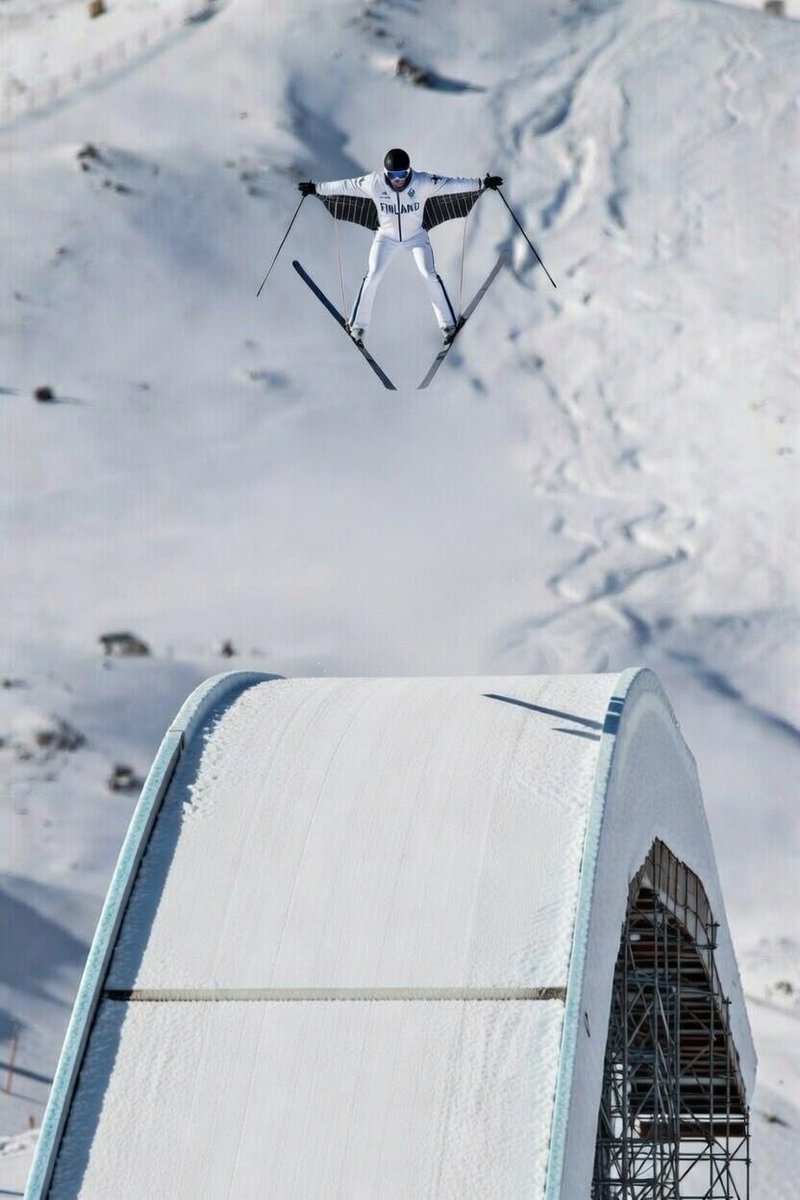
I have noticed many of the Winter Olympic events have been modernized or added. It’s time to modernize ski jumping. I propose flying squirrel suits. Any takers?
2
150
Feb 17
What Does a Real AI Moat Look Like in 2026?
With the rapid evolution of AI, the old playbook for defensibility is crumbling. Proprietary data, fine-tuned models, and even compute scale—once considered unassailable advantages—are being eroded by open-source innovation, synthetic data, and hardware leaps. So, what actually holds up as a durable moat in AI?
Here’s what matters now:
Data Feedback Loops & Network Effects: It’s not about having data, but about systems where usage generates better data, which in turn improves the AI, driving even more usage.
Embedded Workflow Capture: AI that becomes the backbone of business processes is far harder to displace than a dashboard widget.
Domain-Specific Reasoning: Deep, institutional expertise—baked into your models and workflows—can’t be copied overnight.
Human-AI Collaboration: The real moat is in unique protocols where people and AI learn together, building trust and judgment that competitors can’t replicate.
Integration Lock-In: The more your AI orchestrates across systems and teams, the higher the switching cost—not because of technical barriers, but because of the institutional knowledge and trust that accumulates.
Building these moats isn’t about features—it’s about compounding advantages:
Optimize for learning velocity, not just raw performance.
Invest in data labeling philosophies and exception handling.
Build trust and governance into every layer.
Focus on flywheels, not just features.
The key question for every leader:
"How much better will our AI be in 12 months than our competitors’, even if they start copying us tomorrow?"
If your answer is rooted in compounding learning, trust, and network effects—not just more data or talent—you’re on the right track.
Ready to future-proof your AI strategy?
Dive deeper and subscribe to my Substack for actionable insights and leadership frameworks: lnkd.in/eVjX5qge
#AI #DataMoat #MachineLearning #DigitalTransformation #Leadership
open.substack.com/pub/crawdp…
1
3
187
Feb 7
Most companies are preparing for AI wrong.
They're investing in models, hiring data scientists, and building dashboards.
But they're missing the fundamental shift that's about to change everything.
Here's what nobody's talking about:
AI agents won't just execute workflows. They'll discover entirely new use cases for your data that no human analyst would ever find.
Think about it:
→ An agent might discover that support ticket sentiment payment method product usage cadence predicts churn better than anything in your existing models
→ Another might find that weather patterns in supplier regions social media sentiment inventory velocity creates a signal you never knew existed
This is the new competitive battleground.
Two companies with similar data and similar AI capabilities.
One has rigid systems built for predefined questions.
The other has flexible architectures that let agents explore, discover, and activate new patterns in days—not months.
Guess which one compounds its advantage quarter after quarter?
The winners won't be the ones with the most data or the best models.
They'll be the organizations whose systems can:
✓ Support agent-driven exploration across siloed datasets
✓ Preserve context so agents interpret data correctly
✓ Capture what agents learn in real-time
✓ Operationalize discoveries before competitors see them coming
The gap is widening fast.
Your competitors are deploying AI agents too.
The question is: will your data architecture let those agents teach you something new about your business?
Or will inflexible systems blind you to the insights waiting to be uncovered?
I wrote about this in my latest piece — how the separation of data plane (execution) and control plane (governance) needs to evolve for agent-driven discovery.
Please give it read open.substack.com/pub/crawdp…
3
2
352
Feb 3
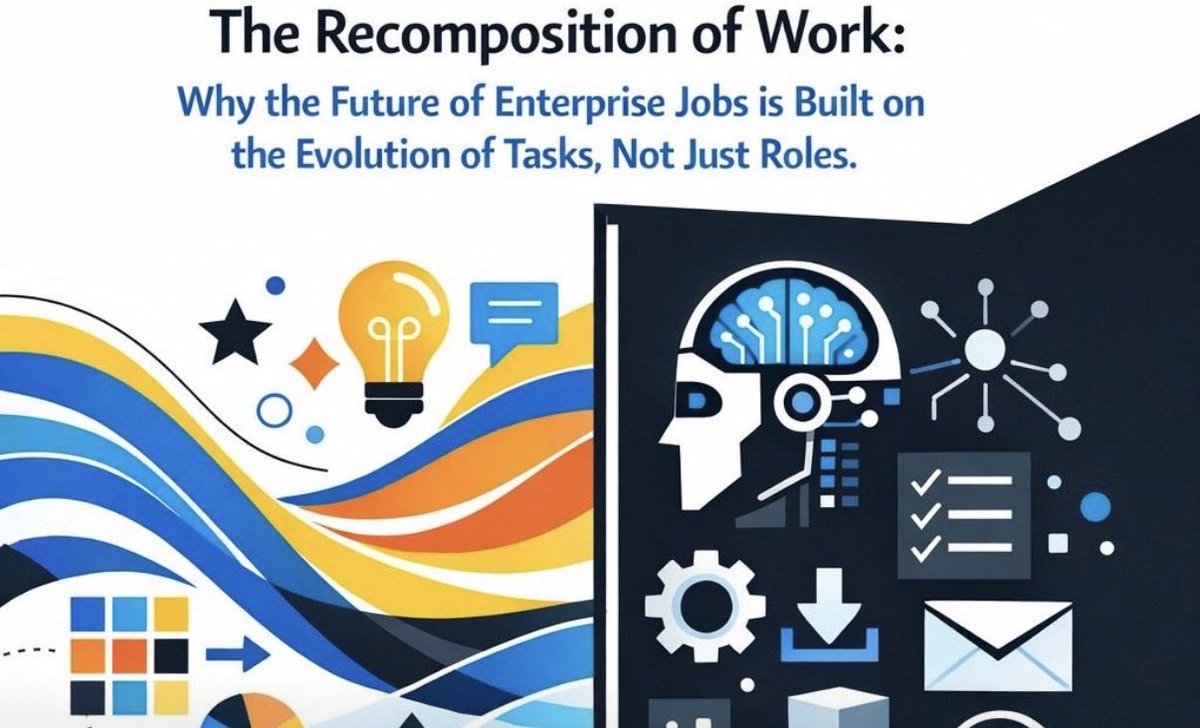
The future of work isn’t just arriving—it’s being recomposed.
Forget the old narrative that AI is simply a “job killer.” The real story is far more nuanced—and far more exciting. AI is fundamentally transforming the architecture of work by reshaping the tasks that make up every job, not just the roles themselves. open.substack.com/pub/crawdp…
1
119
Jan 29
What if we’re not in an AI bubble, but an AI supercycle? My thoughts…open.substack.com/pub/crawdp…
1
231
Jan 26
My latest Substack post. Vibe coding and its potential impact on SW. open.substack.com/pub/crawdp…
1
1
1
291
Jan 22
I'm excited to announce that I've joined PSG Equity's team in Boston as a Sr. Advisor.
PSG has built an impressive track record partnering with software companies at inflection points, and I'm looking forward to working alongside their team to support portfolio companies as they scale. The software sector continues to evolve rapidly, and I'm eager to help navigate the opportunities and challenges ahead.
I'll also continue sharing insights on technology trends and the evolving software landscape through my advisory work with IDC and writing on Substack, LinkedIn, and X. The intersection of investing and technology has never been more dynamic, and I'm energized to contribute to both the PSG community and the broader tech conversation.
Looking forward to the journey ahead.
#PrivateEquity #SoftwareInvesting #TechPerspectives
1
1
9
430
Jan 17
AI isn’t just a feature anymore—it’s the new operating system for SaaS.
Last night I had the opportunity to speak with some business leaders about AI. We talked much about the intersection of SaaS and AI. I made the point that the next SaaS revolution isn’t about adding AI features—it’s about embedding AI agents across apps.
Customers don’t just want “smarter tools”; they want outcomes for long standing challenges.
AI agents deliver by:
✅ Orchestrating workflows across fragmented systems
✅ Personalizing experiences at scale
✅ Driving faster ROI and continuous optimization
SaaS leaders: stop selling features. Start delivering intelligent collaboration. The winners will be those who turn software into an autonomous workforce.
#AI #SaaS #Innovation #CustomerValue #FutureOfWork
1
104
7 Dec 2025
IMO, the models are commoditizing. It’s all about the SaaS use cases and associated APIs.
7 Dec 2025

I strongly believe that eyeballs (B2C) are a poor metric for AI platform supremacy, API (B2B) is a better metric, hands down! The fact is that we cannot analyze the AI vendors without first separating B2B and B2C sides and then putting these together.
2026 will be the AI dust settlement year, as in 2026 economics and business model of AI heavyweights will be under intense scrutiny.
I will argue that we were right, @dvellante. @OpenAI's growth is stalling as Google has picked up the B2C side through their stellar distribution channels along with their model breadth model improvements, and on B2B side combination of Anthropic AWS, Google's focus on B2B side, and Microsoft's (with other models OpenAI's proprietary APIs) story are jibing well with enterprises. I am confident that we will turn out to be right! Sam Altman and company are biting more than they can chew.
Following clip is from @theCube POD, latest episode from Dec 5, 2025
Reference: Dave is mentioning our discussion from our Jan 19, 2024 (within 2 months of release of #ChatGPT to the public) discussion on @theCube in Palo Alto, wrt Dave's Breaking Analysis titled, "ChatGPT won’t give OpenAI sustainable first-mover advantage". Here's are the Breaking Analysis details in written format: siliconangle.com/2023/01/19/… and Breaking Analysis details in video format: youtube.com/watch?v=nLCThKK6…. This was a great discussion, a referenceable discussion at a big pivot in in the history of AI, IMHO.
#AIwar #CodeRed @furrier @EdLudlow @amasad @MarshaCollier @btaylor @jpatel41 @Craw @neeraj @rneelmani @RealStrech @rishabincloud @rwang0 @jordannovet @nyike @dylan522p @ShellyKramer @IsabelleBiscuit @dfloyer @ggilbert41 @BobLaliberte @pnashawaty @IsForAt @GoogleCloudTech @GoogleAI @Azure @jonfortt @dee_bosa #AWSreInvent #reInvent
1
1
2
521
Crawford Del Prete retweeted

17 Oct 2025
Today, on the last day of @Dreamforce 2025, I sat down with @IDC President, Crawford Del Prete, @Craw at the Analysts and Media lounge and compared notes about the state of the industry, and the progress being made by @Salesforce. Here is a clip from that conversation, full video will be posted next week.
Safe travels to all the folks who came to visit our beloved city, #SanFrancisco this week, for this event!
cc @dvellante @furrier @jonfortt @EdLudlow @Benioff @MarshaCollier @JoannMoretti @matteastwood #DF25
1
12
448