
Entrepreneur, business owner, former Chief Fintech Advisor, coder, worked in finance, trained as an engineer. - not financial advice
Joined February 2008
- Tweets 5,768
- Following 1,066
- Followers 777
- Likes 2,126
287 Photos and videos










Denis Pitcher retweeted

Jun 11
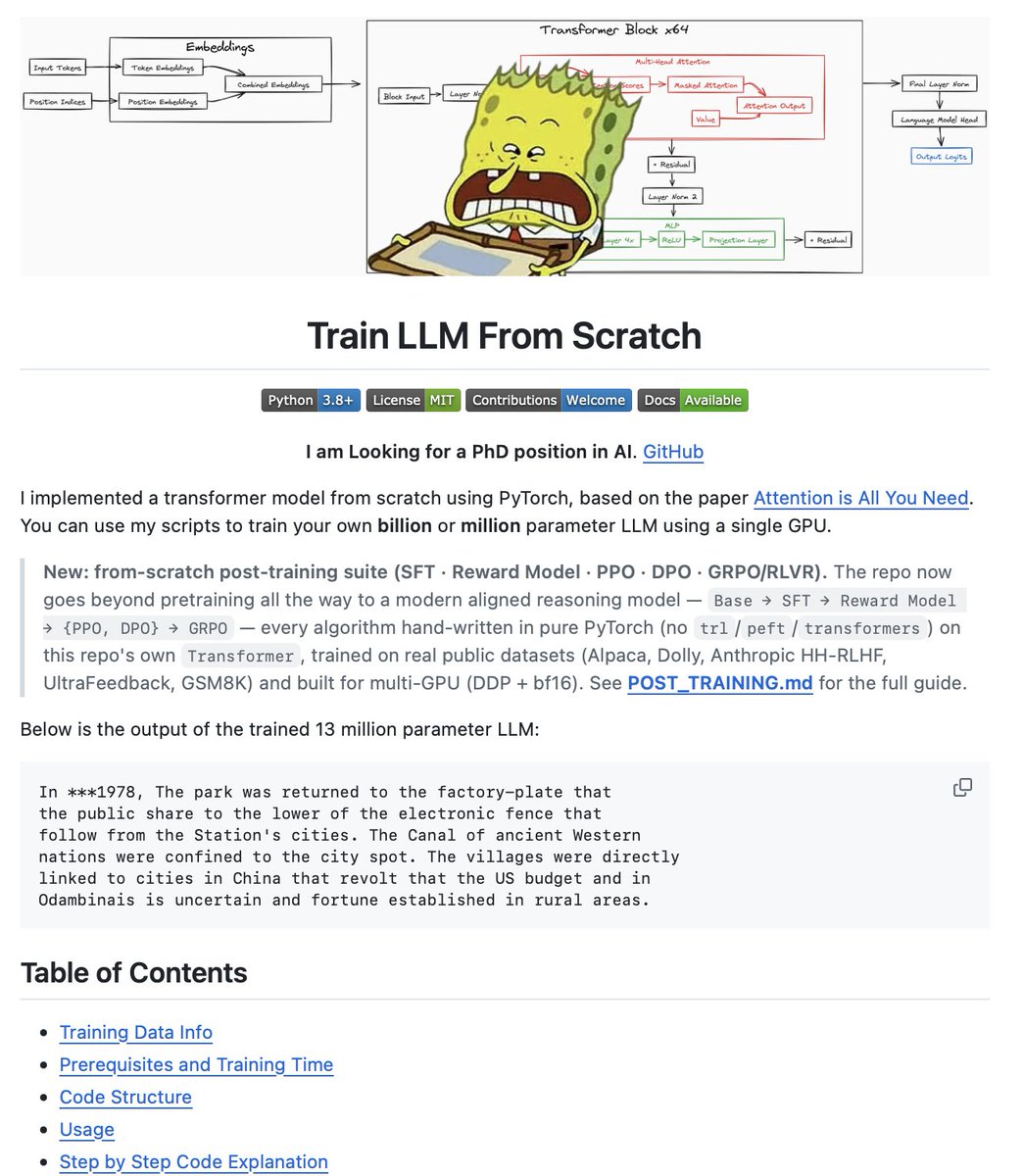
Train your own LLM from scratch!
A step-by-step repo that walks you through building and training a transformer model from scratch using PyTorch. From downloading training data all the way to generating text.
The architecture is built from the ground up following the original "Attention is All You Need" paper. MLP, single head attention, multi-head attention, transformer blocks, and the full transformer model - all coded and explained with detailed diagrams at each step.
Training data comes from The Pile - a diverse 825GB open-source dataset covering books, articles, code, websites, and more. The repo includes scripts to download it, preprocess and tokenize it using tiktoken, store it in HDF5 format, and feed it into training batches.
You can train a 13M parameter model on a single Colab T4 GPU. At 13M parameters the model starts generating proper grammar and coherent short sentences. For billion-parameter training you need at least an A100 or RTX 4090. The repo includes a full GPU compatibility table so you know exactly what's possible on your hardware.
Includes a complete SFT and RLHF guide as a separate notebook for taking your trained model further.
Key capabilities:
• End-to-end pipeline: data download → preprocessing → training → text generation
• Full transformer implementation from scratch with PyTorch
• Trains models from 13M to 2B parameters on a single GPU
• Training data from The Pile (825GB, 22 diverse datasets)
• Tokenization via tiktoken (r50k_base)
• SFT and RLHF guide included
100% open source.
I've shared the link in the replies!
25
323
1,762
66,490
Denis Pitcher retweeted

Jun 10
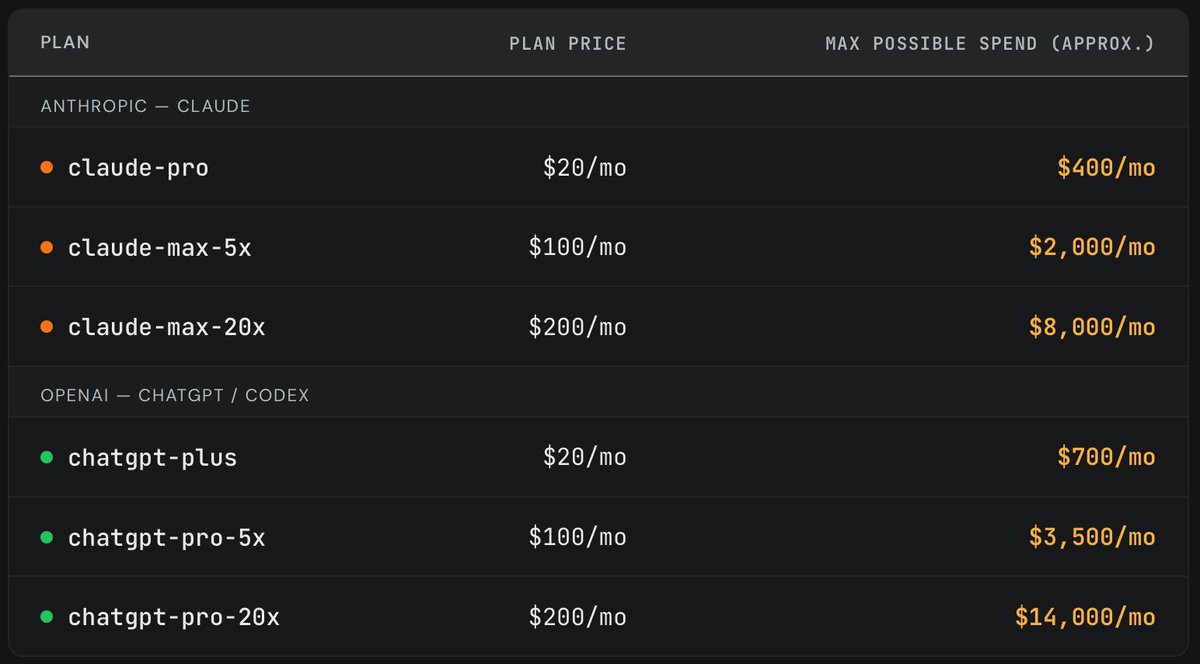
Recently, we purchased one of each Anthropic/OpenAI subscription plan and randomly ran long horizon coding tasks until we exhausted the weekly limit. It's widely believed that a $200/month plan maxes out at ~$2000/month worth of tokens (assuming API pricing). However, we found that the subscriptions are actually far more generous. (2/4)
190
574
6,040
3,462,763

Jun 11
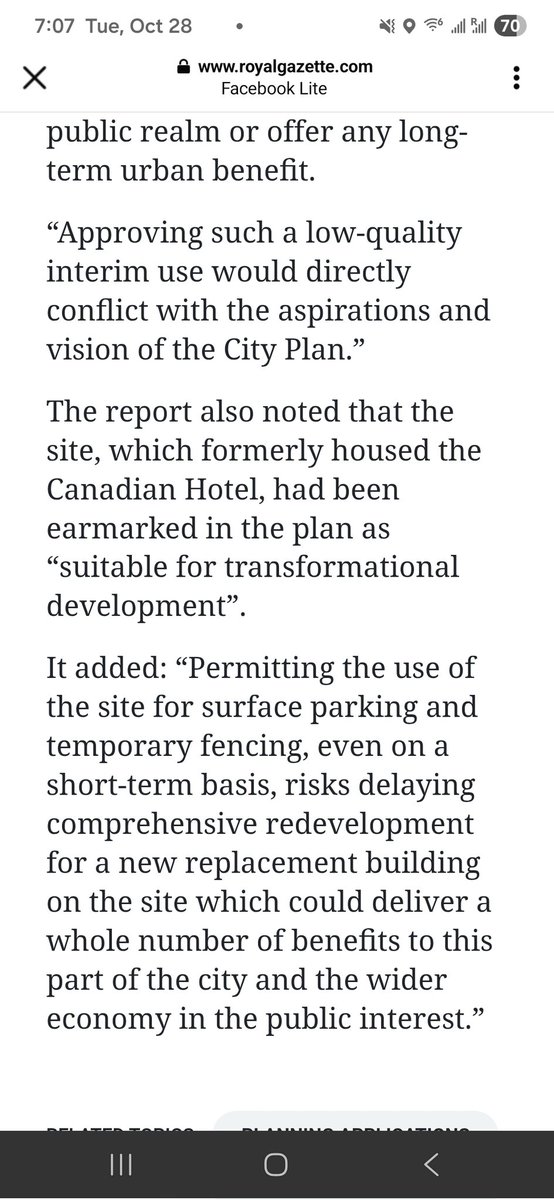
Regular reminder that online scheduling systems aren't as easy to get right as people think.
royalgazette.com/general/new…
1
1
25
Jun 10
The end of the AI subsidy will bring interesting market changes and dynamics as frontier models get appropriately priced.

AI subscriptions are dead
Claude Fable 5 will only be on the Anthropic subscription until June 22nd. After that, you will need to pay for usage per token
This will be the start of a much larger trend
Frontier models will no longer be included in subs
You’ll pay a fee and it will only get you access to older, much cheaper models
If you want access to that dank AI sour diesel, you’re going to need to pay for every token you use. No more subsidies
And it make sense. The subsidies were just a Ponzi scheme
For those that don’t know, when you pay $200 a month for an AI sub, you get thousands of dollars of tokens
These AI companies actively lose tremendous amounts of money because of these subscriptions. GDPs of most countries every year are lost on your $200 Claude Max sub
The investor money is running dry. IPOs are coming because of this. And with IPOs need to come profitability
The golden age of paying $200 a month and being able to code on 40 Claude Code instances and getting a usage reset every 5 minutes are about to die
The party couldn’t continue ever. You can’t just leverage the entire global economy for years and expect nothing to break. Now it’s time to pay up
Means a few things:
1. Time to be responsible when it comes to which models you use. You don’t need Fable 5 for GPT 5.5 Xhigh for everything. Build the skill of knowing when to use cheap models
2. Local LLMS/hardware will come even more in demand. I’m currently running GLM on my Mac Studio. It’s great. Is it Fable? No. But it gets the job done for free on simple tasks. Learn about local LLMs
3. This is the beginning of the wealth gap expansion. Those that can afford to spend $10,000 a month on Fable 5 will build incredible products that eat up more and more of the economy. Those that can’t afford Fable 5 will have an insane disadvantage
4. The government will need to step in eventually. There will be too much civil unrest. I hope the answer isn’t free money. That won’t do anything. I hope the answer is education/access to AI resources for ALL. Universal Basic Opportunity
5. You need to seriously reconsider where your money goes every month. If you are complaining about AI prices and in the back of your mind you know your skill set is becoming quickly irrelevant, all while spending money every month on Netflix, Xbox Live, Paramount , drugs, DoorDash, Uber, and other things that bring nothing positive to your life, you are simply doing it wrong. AI is an investment in yourself. It’s an investment in your relevance to the global economy. You need to make sure you make that investment
The pieces on the board are quickly moving around. The rules are changing. The battlefield is shifting. If you’re not strategizing accordingly, you’re cooked.
45
Denis Pitcher retweeted

Jun 8
Our statement on the UK government’s demand that all content on all devices sold or used in the country be scanned, on the presumption of nudity, using a dystopian combination of age verification and content scanning. This proposal will not safeguard children. It endangers us all.
signal.org/blog/pdfs/2026-06…
739
8,549
41,335
2,729,436

Andrej Karpathy: paying $20/month for a subscription isn't "using AI" - most people never even started
the gap was never access. everyone has the same model, in the same tab, one click away.
the dead list: copy-pasting prompts all day, arguing with the model in circles, rewriting the same code 5 times, asking it questions like it's google, "the AI just doesn't get it"
what actually separates the top 1%:
→ they configure the tool instead of just opening it
→ they give it context, rules and memory, not one-off prompts
→ they build systems the model runs inside, not single chats
→ they think in workflows, not in questions
→ they make AI do the work while everyone else watches it type
that's the real skill. not prompting harder. building around it.
most people sit next to the tool. almost nobody makes it work for them.
one group types questions. the other group ships systems.
you're not behind on access. you're behind on leverage.

Boris Cherny (Claude Code's creator): I deleted my IDE in November and hasn't opened it since. I writes more code than ever.
his actual words on stage:
I don't prompt Claude anymore. I have loops that are running. They're the ones prompting Claude. My job is to write loops.
the progression he described:
→ a year ago: writing code by hand with autocomplete
→ then: running 5-10 Claudes in parallel, prompting each one
→ now: he doesn't prompt at all - he writes the loops that prompt Claude
what it's already done inside Anthropic:
• ~3x more code shipped per engineer (he says that number is already outdated and higher)
• Cowork - a full product - built in ~8 days, 100% with Claude Code
• designers, the finance guy, even the chief of staff now ship code
his advice to founders: give everyone as many tokens as possible, and underfund every project on purpose - 2 engineers a pile of tokens instead of 4.
the roles are melting into one "builder."
Watch this, than read the article below
20
46
391
71,406
Denis Pitcher retweeted

Jun 4
The jobs data coming out continues to suggest the opposite of what a lot of people had thought would happen.
Just take engineering, as the prime example of the area with greatest AI impact (and perceived risk). Most companies now have far more software projects than ever before because of AI, and effectively only engineers are going to be the ones doing that work.
You can get by for a while by being non-technical building software, but eventually someone has to understand what the thing is that got built, has to maintain it, has to fix security issues that come up, upgrade the systems beneath it, and so on. That’s all jobs.
Now apply that to a number of other job functions. AI is going to cause companies to hire more in sales because agents can let them process more leads and do more customer research. AI will cause an explosion of new marketing roles because of how much more efficient it is to launch campaigns and target. The list goes on.
AI is going to have the opposite effect that lots of people thought on jobs.

What if AI is actually creating more jobs than it is replacing?
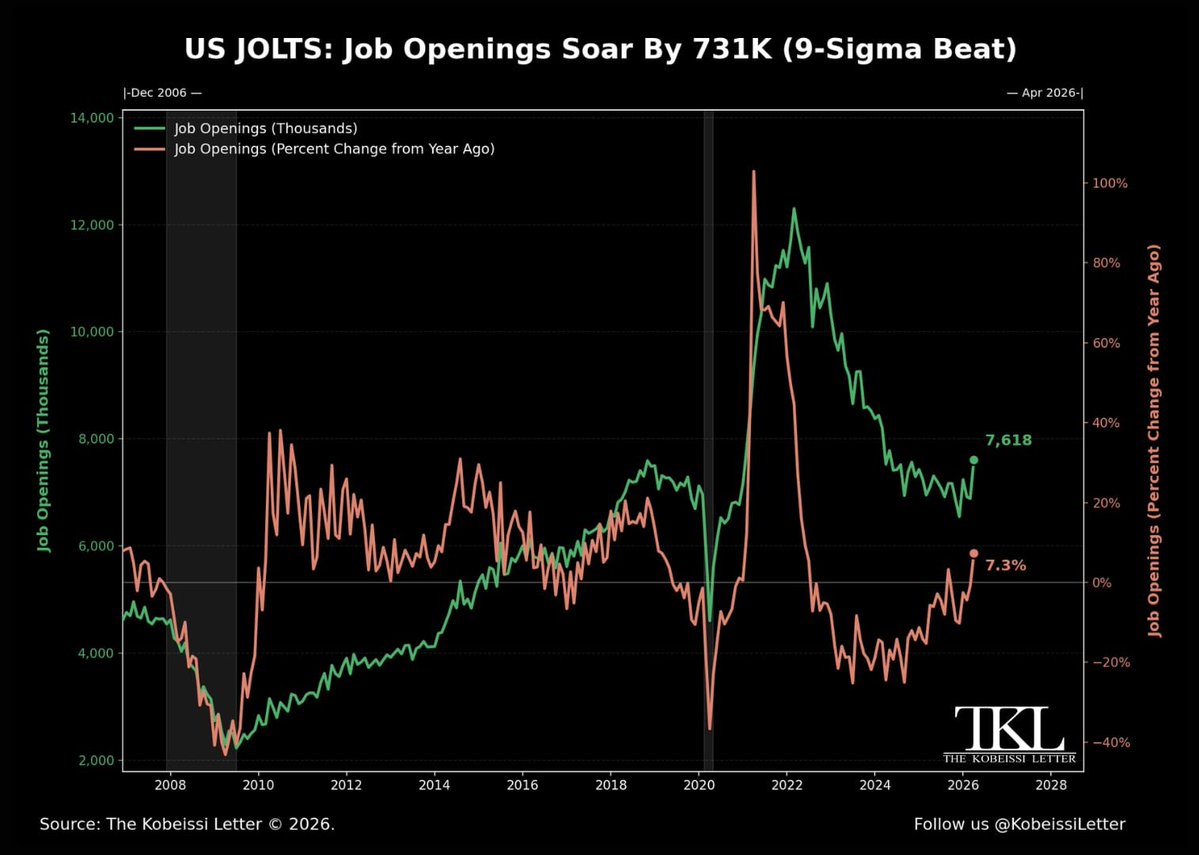
The latest JOLTs data showed that US job openings surged by a massive 731,000 jobs in April.
Markets were expecting no change, resulting in the largest beat in JOLTs history.
As a result, available employment hit 7.6 million for the month, the highest since May 2024.
And, job openings in the professional and business services sector surged by a massive 668,000.
The labor market's bull case from AI is underpriced.
85
86
536
167,374
Jun 1
This is worth paying attention to. Local workstation/laptop compute has reached a maturity to be able to run top models locally.
This will reshape how business uses AI and open the door to autonomous agents, particularly with enhancements like openshell.

NVIDIA RTX Spark: a 1-petaflop superchip, the full CUDA and RTX ecosystem, and Windows-native agents. A new beginning for personal computers.

38
Jun 1
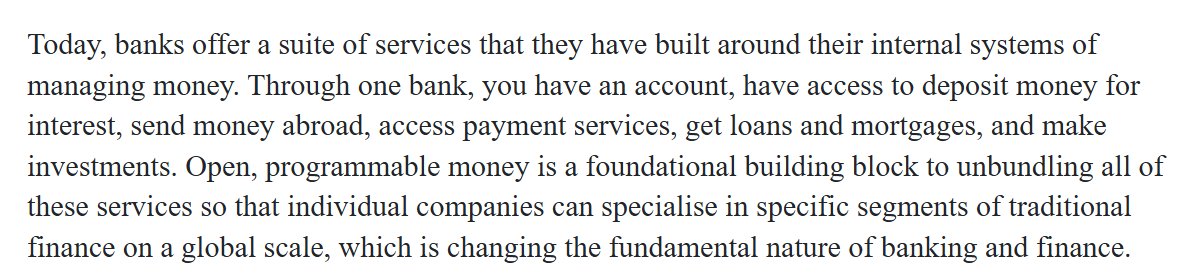
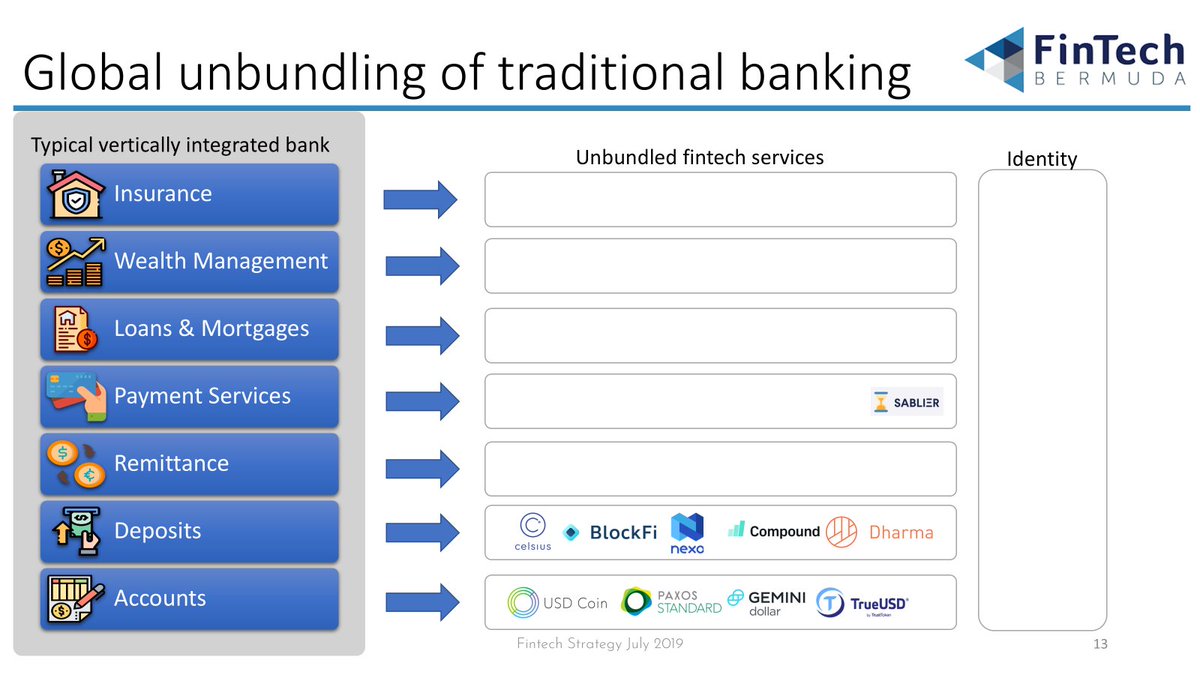
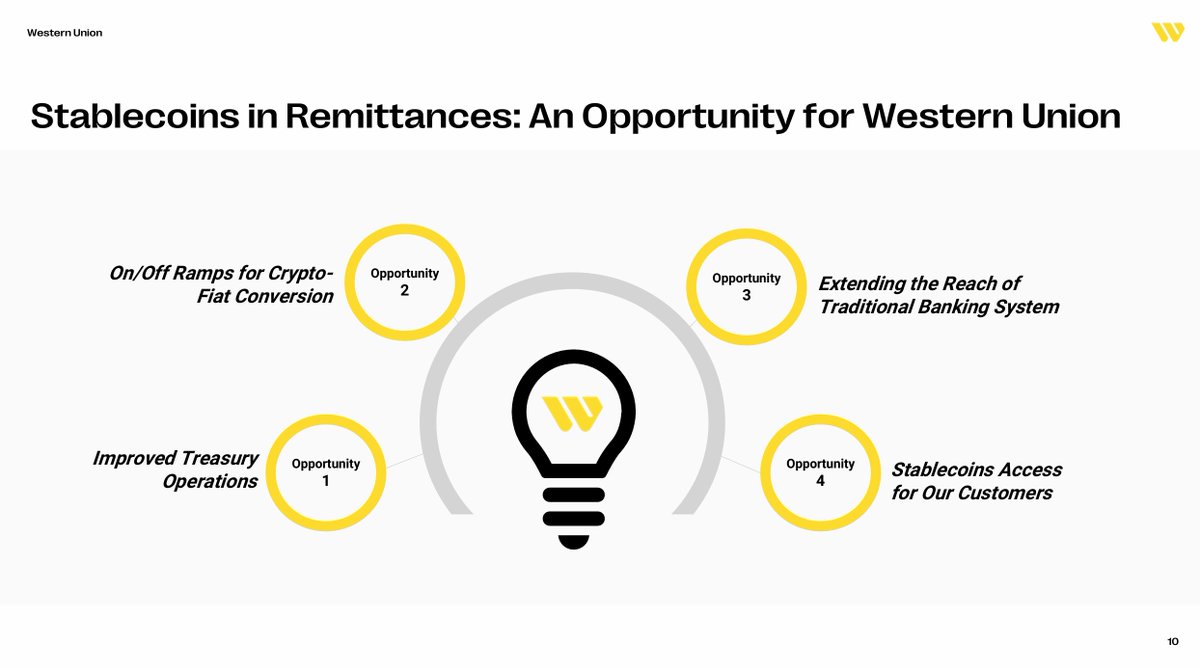
If you understood the tech behind traditional finance and crypto it was obvious that this was coming.
Crypto rails (eg stablecoins) would unbundle banking into component parts that could enabled specialized rebundling.
royalgazette.com/opinion-wri…
May 31

Starting a neobank is now incredibly cheap. With crypto rails, most of the stack comes out of the box for free. That makes CAC the dominant cost driver, and the whole business becomes a game of acquiring customers for less than they’re worth. The way to keep CAC low is to specialize. Teams often start by focusing on a narrow segment, like farmers in one region, young people in high-inflation economies, or expats in Asia, and build features and marketing tailored precisely to them. The result is great for consumers: they get financial experiences designed for exactly who they are.
1
86

Ça fait un moment que je me pose des questions sur le bilan (provisoire) de Milei en Argentine. On lit tout et son contraire. Alors j'ai arrêté de lire les commentaires et j'ai regardé les chiffres bruts.
L'Argentine, c'est l'expérience grandeur nature que les économistes attendaient depuis 50 ans. Même pays. Même peuple. Même culture. On change UNE variable : la méthode économique.
Avant : des décennies de gestion étatiste et péroniste, "redistributive". Le résultat concret ? 211% d'inflation, 42% de pauvreté, un État en déficit permanent qui finance son train de vie en faisant tourner la planche à billets.
Puis arrive Milei. Méthode inverse, brutale, assumée : on coupe, on déréglemente, on arrête d'imprimer.
Deux ans plus tard (photo à son arrivée (fin 2023) vs aujourd'hui) :
Inflation annuelle : 211% → 31%
Inflation mensuelle : 25% → ~2%
Déficit public : −5% du PIB → 1,8% (excédent)
Croissance : −1,6% → 4,4%
Pauvreté : 42% → 28%
Sans débat. Jugez par vous-mêmes.
Et le point essentiel : ces gains ne vont pas "aux riches" ou "aux marchés". Ils vont d'abord aux plus pauvres.
L'inflation est l'impôt le plus injuste qui existe — elle frappe ceux qui n'ont aucun actif pour se protéger. La diviser par 7, c'est rendre du pouvoir d'achat à ceux d'en bas. Et 14 points de pauvreté en moins, ce sont des millions de gens, pas une ligne Excel.
Pendant un siècle, on a expliqué aux Argentins que l'État les protégerait en dépensant toujours plus. Résultat : un des pays les plus riches du monde en 1910, ruiné. On vient d'inverser la méthode. Regardez le résultat.
À un moment, il faut accepter ce que les faits racontent : sur le terrain économique, la méthode libérale a livré en deux ans ce que des décennies de socialisme avaient promis sans jamais tenir. Et ça profite d'abord aux plus modestes.
On peut détester le style de Milei — la tronçonneuse, l'outrance, les sorties improbables, il n'a rien d'un homme d'État classique. Mais on ne juge pas une politique économique au style de celui qui la mène. On la juge à ce qu'elle fait à la vie des gens.
Et les chiffres ont parlé.
429
6,186
18,671
447,932
May 30
Mastercard secures crypto license to expand their push into stablecoins.
decrypt.co/369158/mastercard…
45
May 30
In 2019 I was laughed out of an advisory board meeting of former central bankers for presenting a vision that digital fiat as an open standard of money would drive the global unbundling of traditional banking.
Awesome to see the vision accelerating and Bermuda being well positioned.
May 28

Prompt your neobank idea into reality
After spending several weekends studying 166 providers across various layers of the neobank stack, excited to share this output
neobank.build
48
Denis Pitcher retweeted

May 29
Thought experiment: if every company suddenly had infinite free compute, what new products would emerge?
My take: with very few exceptions, not much would change. The bottleneck is figuring out what people want, and it’s not so easy to apply compute to solve that.
268
100
1,318
247,740
May 28
Good writeup on the future of interoperability between tokenized deposits and stablecoins and the role each has to play.
May 28

Stablecoins and tokenized deposits will co-exist not compete
1
35
May 28
People shouldn't be debanked for opinions.
May 27

The US Treasury ending reputational risk to "end debanking" is just one of the many very fascinating ways in which the Trump administration is manipulating public opinion.
Reputational risk requires banks to e.g. scan for adverse media, incl. social media s.a. X or LinkedIn and even what you say in public Telegram groups, on the people they are offering services to.
This is indeed a major factor for debanking: one harmful article on you or your business and your account may be closed or denied.
What the Treasury is not telling you is that the entire AML system is built on risk – and that the administration has added to the items to scan for like no other.
The list for risks now includes:
"anti-American" views
"anti-Capitalist" views
"anti-Christianity" views
"extremism on migration, race, and gender"
"hostility towards those who hold traditional American views on family, religion, and morality"
as well as newly added AI/data center opposition and Data center protest movements
In short, the Trump administration is telling you that it is ending debanking – while in reality, it is causing the debanking of its political opponents like no administration before.
Don't believe their lies.
21
Denis Pitcher retweeted

May 26
Warning from Apple to Canada on Bill C-22 "As you know, this may be one of the last times we're permitted to discuss the consequences of this legislation publicly."
"That's because of the bill's secrecy provisions which forbid companies like Apple from even discussing the orders we receive with our users or the public." @Apple
131
2,262
5,829
492,695
Denis Pitcher retweeted

May 24
Great article here on DeepSeek.
Their real story is not cheaper chatbots, but architecture that turns hardware scarcity into strategy.
DeepSeek is not trying to sell coding seats, it is trying to make Chinese memory, accelerators, and systems useful for frontier AI.
Every recent DeepSeek move attacks a bottleneck that makes frontier models dependent on elite HBM-heavy GPU stacks: MoE activates only parts of a model, DSA reduces long-context attention cost, and V4-Pro’s official card says CSA/HCA cuts 1M-token single-token inference FLOPs to 27% and KV cache to 10% of V3.2.
Engram, a separate research line, pushes the same logic from another side: let static knowledge live in scalable lookup memory, then fetch it predictably from host memory instead of forcing every fact through dense computation.
That sounds like engineering detail until you see the business consequence.
If models need less HBM and less brute-force compute, then second-best chips, abundant LPDDR, NAND, and customized ASICs become less second-best.
Reuters has already reported a permanent 75% DeepSeek V4-Pro price cut, while noting Huawei Ascend supply constraints and expected supernode availability, which is exactly the kind of feedback loop that they wanted.
DeepSeek is not only optimizing models for benchmarks, it is optimizing AI for a different industrial base.
The prize is not the app layer.
The prize is making scarcity programmable.


34
115
603
148,721
Denis Pitcher retweeted

May 23
The card tap, explained.
That card tap isn’t a Visa card. It is an @OpenPasskey card.
We hold our own IIN under ISO/IEC 7812, the same registry Visa and Mastercard use to identify issuers. Our card runs the same EMV chip standard as your bank card. Any acquirer that adds our routing entry can accept it on the terminals they already have. No new hardware.
The chip signs with a P-256 key that never leaves the secure element. Non-custodial, the customer holds their own keys.
Settlement runs on @base flashblocks, so confirmation lands in about 300ms.
May 21

What does Australia's first retail payment in AUD stablecoin look like? A Sunday lunch at a Sydney Malaysian takeaway.
Card tap, phone tap, or QR from any wallet. Customer pays @AUDD_digital, merchant keeps it or cashes out to AUD.
No Visa. Settled on @base in seconds.
44
18
286
58,412
Denis Pitcher retweeted
May 21
Great post on FDEs. Everyone should read it if you’re interested in this job category. This is a job that is going to be around as long as AI keeps changing rapidly, which it inevitably will.
People often wonder why isn’t this like just deploying other forms of technology in the past, like cloud.
Because something like cloud adoption affected a fairly concentrated set of users (developers and IT), and generally didn’t require a fundamental change to the workflows of employees to get the benefits of the new service being delivered on the cloud. At best you went to one training session and you were done.
With agents, the work to implement them is not only highly technical, but they directly impact the underlying workflows that people participate in. This means there’s a ton of technical work and change management that comes with it.
Further, the pace of change of cloud wasn’t nearly as quick, so there was a lot more time for best practices to propagate. Now, every model change means either something new can be done that wasn’t possible before, or some piece of scaffolding is now redundant or holding you back.
This is why it’s commonly easier for a vendor or partner that’s seen the implementation hundreds or thousands of times help do the work, even with internal support from the customer.
So, this job isn’t going away any time soon, and will be a great path for a lot of technical talent, especially early career.

70
182
1,717
589,000
Denis Pitcher retweeted

Public Safety Canada (@Safety_Canada) has now received its second Community Note on X over misleading claims about its proposed surveillance legislation, Bill C-22, the Lawful Access Act.
The government claims that all G7 countries have lawful access frameworks with “technical obligations” for electronic service providers. But the technical obligations envisioned under Bill C-22 go much further by proposing broad metadata retention requirements that have failed legal challenges abroad. The Court of Justice of the European Union has already rejected broad mandatory metadata retention measures as incompatible with fundamental privacy rights. Canadians should be asking why Ottawa is pushing surveillance powers that courts in other democratic jurisdictions have already found excessive.

(1/2) All G7, Five Eye partners and most EU countries have lawful access frameworks that include technical obligations for electronic service providers.

ALT Text: Bill C-22. An act to keep Canadians safe.
Community note
The EU Court of Justice has ruled twice that general and indiscriminate mandatory data retention by service providers is unlawful, meaning most EU countries lack equivalent frameworks to Bill C-22's metadata retention requirements. curia.europa.eu/juris/document… curia.europa.eu/juris/document…
24
512
1,337
26,307