
Robotics professor at the University of Vermont. Also into xenobots, crowdsourcing, evolution, machine learning, artificial intelligence.
Joined April 2008
- Tweets 3,721
- Following 1,931
- Followers 7,879
- Likes 4,478
975 Photos and videos

Pinned Tweet

19 Jan 2020
Discussing computer designed organisms (AKA "Xenobots") with CNN anchor @FWhitfield.
Joint work with @drmichaellevin, Douglas Blackiston and @Kriegmerica.
youtube.com/watch?v=Q_pFkP1P…
7
20
123
Jun 10
Geoff Hinton came up and started talking to me at a conference several years back...
3
12
76
15,559
Jun 10
It was only years later that I learned they were childhood friends.
1
15
1,003
Jun 10
I was so sorry to hear about Inman Harvey's passing.
As my MSc advisor, Inman introduced me to the world of research. From an overstuffed chair that'd seen better days, he offered piercing criticism, droll humor, tales from his life, and subtle encouragement, just when needed...
1
2
20
1,387
Jun 10
He was also overly generous with his time. Our meetings never actually ended. I just excused myself when I was "full".
1
8
533
Jun 10
An anecdote illustrating his humility. At a conference in Cancun, he casually mentioned that he'd introduced his boyhood friend Geoff Hinton to neural networks "over there" (pointing to a distant beach) a few decades' back. He related this 16 years after I'd been his student.
6
455
Josh Bongard retweeted

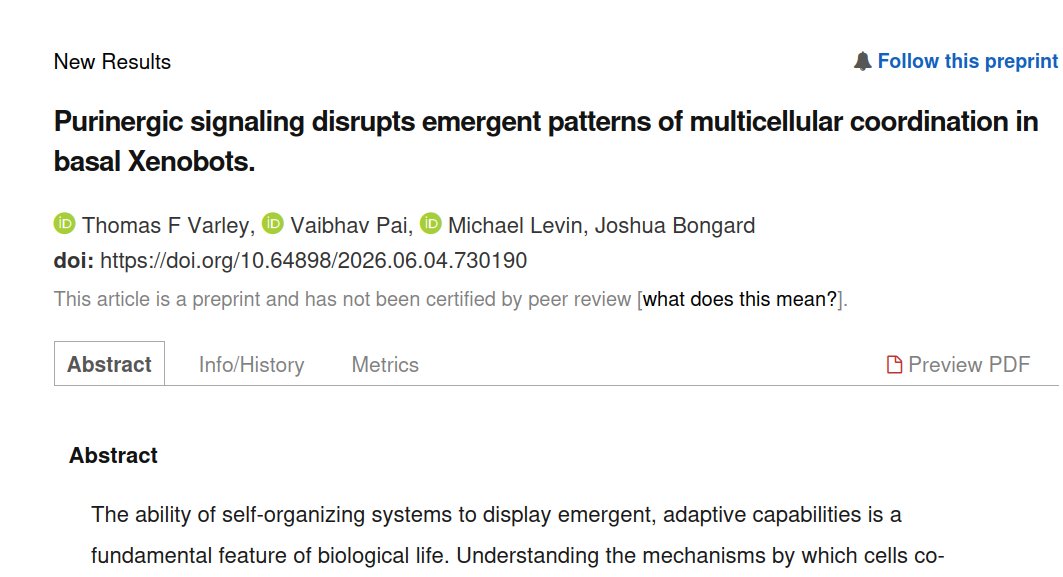
New paper with @DoctorJosh @drmichaellevin and co-first author @pai_vaibhav! If you're interested in emergence, multicellularity, and information processing in living systems, this one is for you. (Link below). 1/N
5
21
65
8,419
Josh Bongard retweeted

Jun 9
New GS episode dives into how @drmichaellevin and @halehf gave Xenobots a functional nervous system.
What happened shocked everyone...
"Mike's proposal was: what happens if we give neurons to this completely new, motile body? Would they even mature into neurons? What kind of nervous system would they build? And how would having a brain change the way it behaves?"
"This system has just been dropped into a new universe it doesn't understand — all its usual constraints are gone. And it's like: what do we need? We need a way to navigate. So let's build a sensory system. It's arming itself with equipment."
"The most surprising thing was this overexpression of genes for visual perception — the lens, photoreceptors, rods and cones, every type of retinal cell. It was like: whoa, why did that come up?"
For those who enjoyed my last episode with Mike and Earl, this is the part 2 with the incredible Haleh Fotowat ⬇️
10
35
198
11,727
May 29
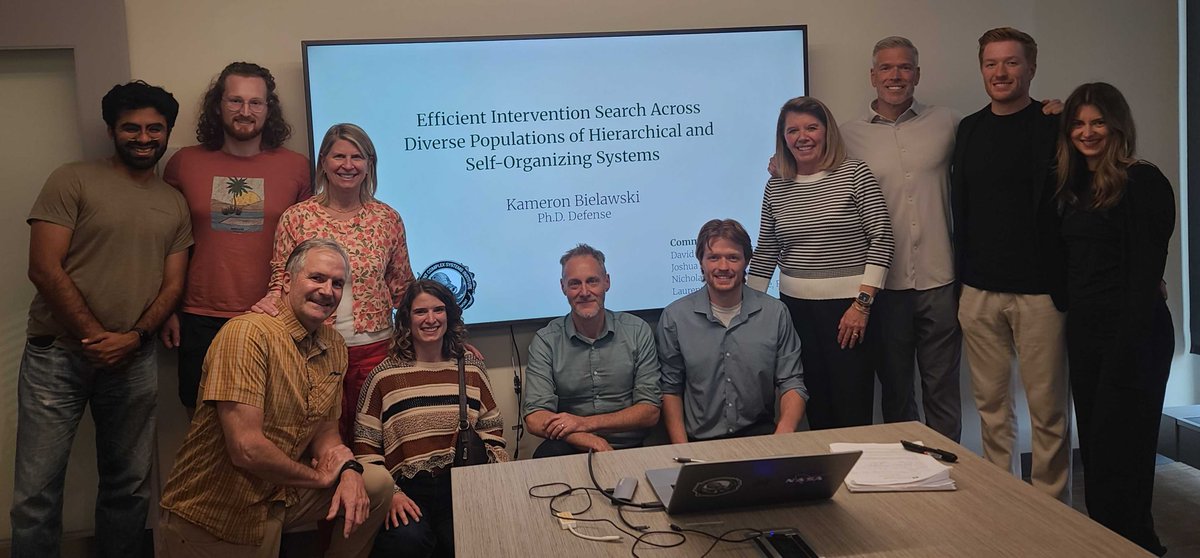
Congratulations to **Dr.** @KamBielawski for successfully defending his PhD thesis today!
3
2
24
2,849
Josh Bongard retweeted

May 29
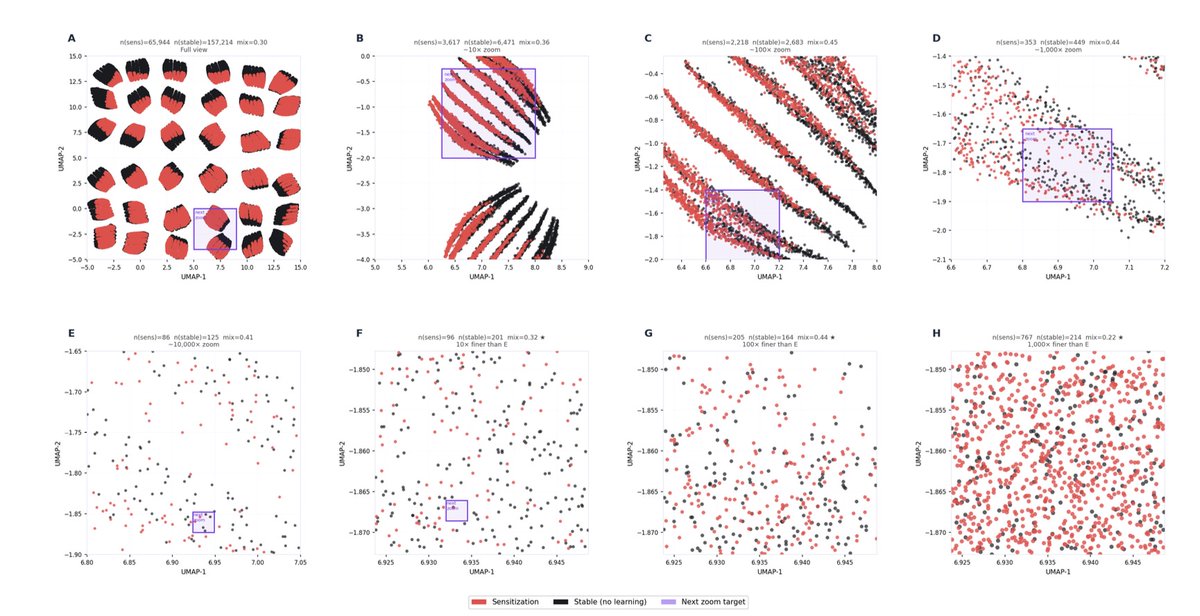
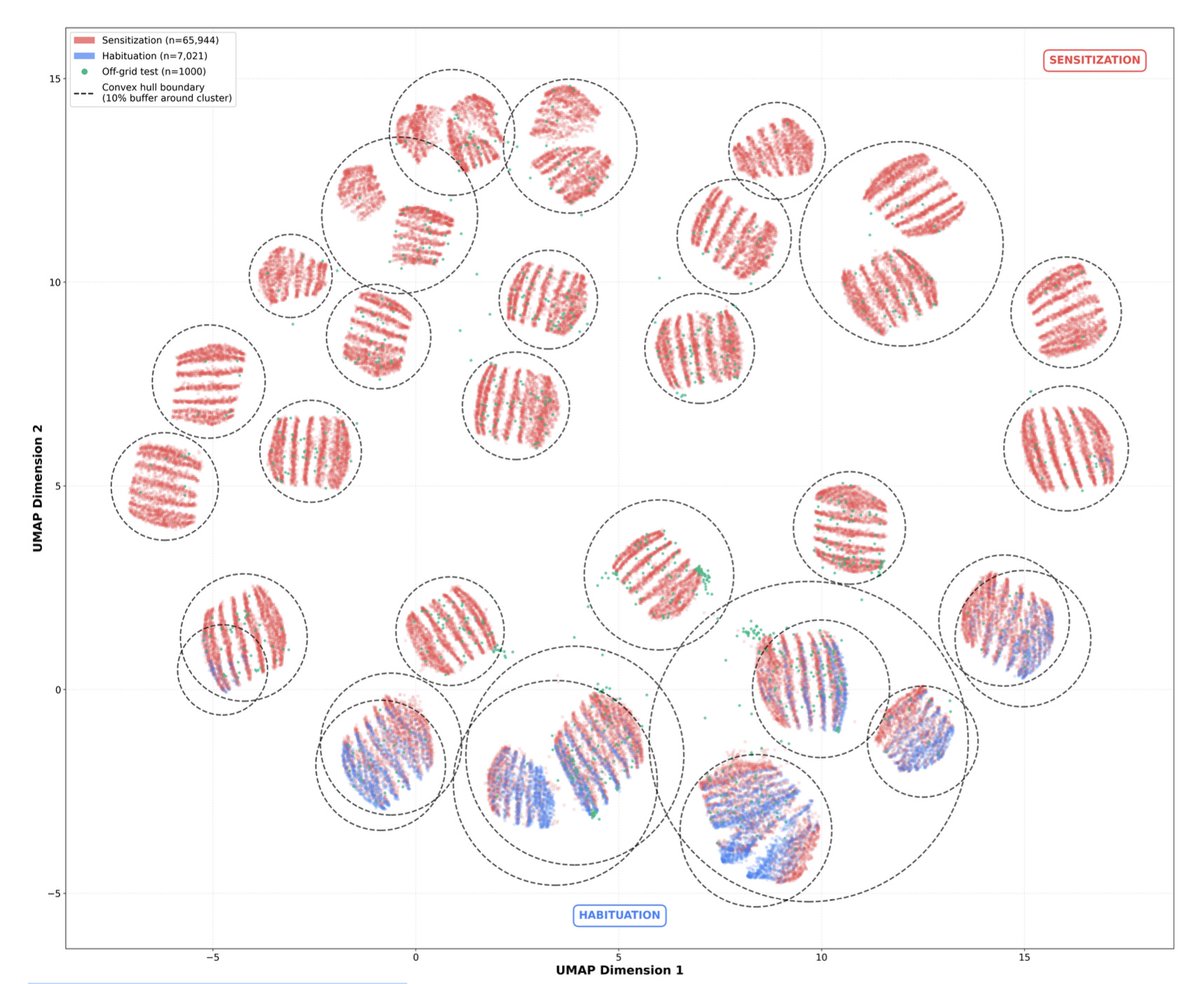
A lot of people have suggested over the centuries that ecosystems might have some degree of cognition. What would that look like? Could there be recognizable memory phenomena on the scale of population dynamics? Here's a #preprint where amazing high-school student @asamanta42, @HananelHazan, and I use a model system - in silico predator-prey dynamics - and analyze the possibility of several kinds of learning:
arxiv.org/abs/2605.30109
(the basics are kind of like thoughtforms.life/but-where-…, but some very cool new stuff here, including the interesting and unique pattern of learning-compatible values in the parameter space).
58
201
1,267
91,956
Josh Bongard retweeted
May 16
More #preprints:
Giving Simulated Cells a Voice: Evolving Prompt-to-Intervention Models for Cellular Control
arxiv.org/abs/2505.02766
@namlehai @DrPatrickE @YanboZhang3 @DoctorJosh
ZapGPT: Free-form Language Prompting for Simulated Cellular Control
arxiv.org/abs/2509.10660
@namlehai @DrPatrickE @YanboZhang3 @DoctorJosh
Advancing the Scientific Method with Large Language Models: From Hypothesis to Discovery
arxiv.org/abs/2505.16477
@YanboZhang3 @hectorzenil and many others!
13
44
212
11,329
Josh Bongard retweeted
May 14
New #preprint, @PigozziFederico:
arxiv.org/abs/2605.06746
"The Causally Emergent Alignment Hypothesis: Causal Emergence Aligns with and Predicts Final Reward in Reinforcement Learning Agents"
"A hallmark of life on Earth is the ability of agents to exert causal power and be drivers of subsequent events. This is key to cognition at all scales. Causal emergence, measuring the degree to which an agent exerts unique predictive power on its future, is one consequence of causal power. Indeed, recent discoveries have shown that biological agents, even minimal ones, increase their causal emergence after learning new memories. However, there is a major knowledge gap regarding how causally emergent artificial agents are. We focused on Reinforcement Learning (RL) of neural-network agents across an array of environmental conditions, encompassing different algorithms, agent architectures, and six environments arranged on a complexity spectrum. For consistency, we computed the causal emergence of their latent-space representations over their lifetimes. We used the recently proposed {\Phi}ID to estimate causal emergence and tested how it related to learning performance. Our results suggested a Causally Emergent Alignment Hypothesis: successful agents exhibited causal emergence that was consistently predictive of final reward early in training and whose representational dynamics aligned with reward improvement in most tasks. This idea suggests that causal emergence may be a previously undisclosed axis of reorganization of neural representations in RL agents, with the potential to establish causal relationships and interventions that will lead to better RL agents. Our work also highlights the alignment between causal emergence and learning as another way biological and artificial creatures compare."
24
87
422
19,369
May 7
Evolutionary robotics course,
student project highlight reel.
youtu.be/34WwH1SRIfQ
1
1
27
1,180
May 7
The final lecture of evolutionary robotics course:
Self-replicating Xenobots.
So long, and thanks for all the fish!
youtu.be/_V9XFNvw3a4
3
39
160
15,395