Advaita Vedanta, Arsha Vidya Kendram (Swami Dayananda Saraswati ji), Ramakrishna-Vivekananda and Sri Ramana Maharshi, IIT Mumbai, RT ≠ endorsement
Joined August 2022
- Tweets 17,905
- Following 157
- Followers 210
- Likes 36,691
85 Photos and videos
Raghav Kumar Dwivedula retweeted

Curiously the quadratic formula is known in Brazil as Bhaskaras formula. Turns out the Portuguese started translating Indian texts from 1519 and took it to Europe and the new world. Over the next 200 years, all manner of mathematical, medical and philosophical concepts boom in Europe, which for some reason are also in Indian texts.
Interestingly multiple scholars invent the same science around the same time unknown to each other like Calculus.
Jun 13

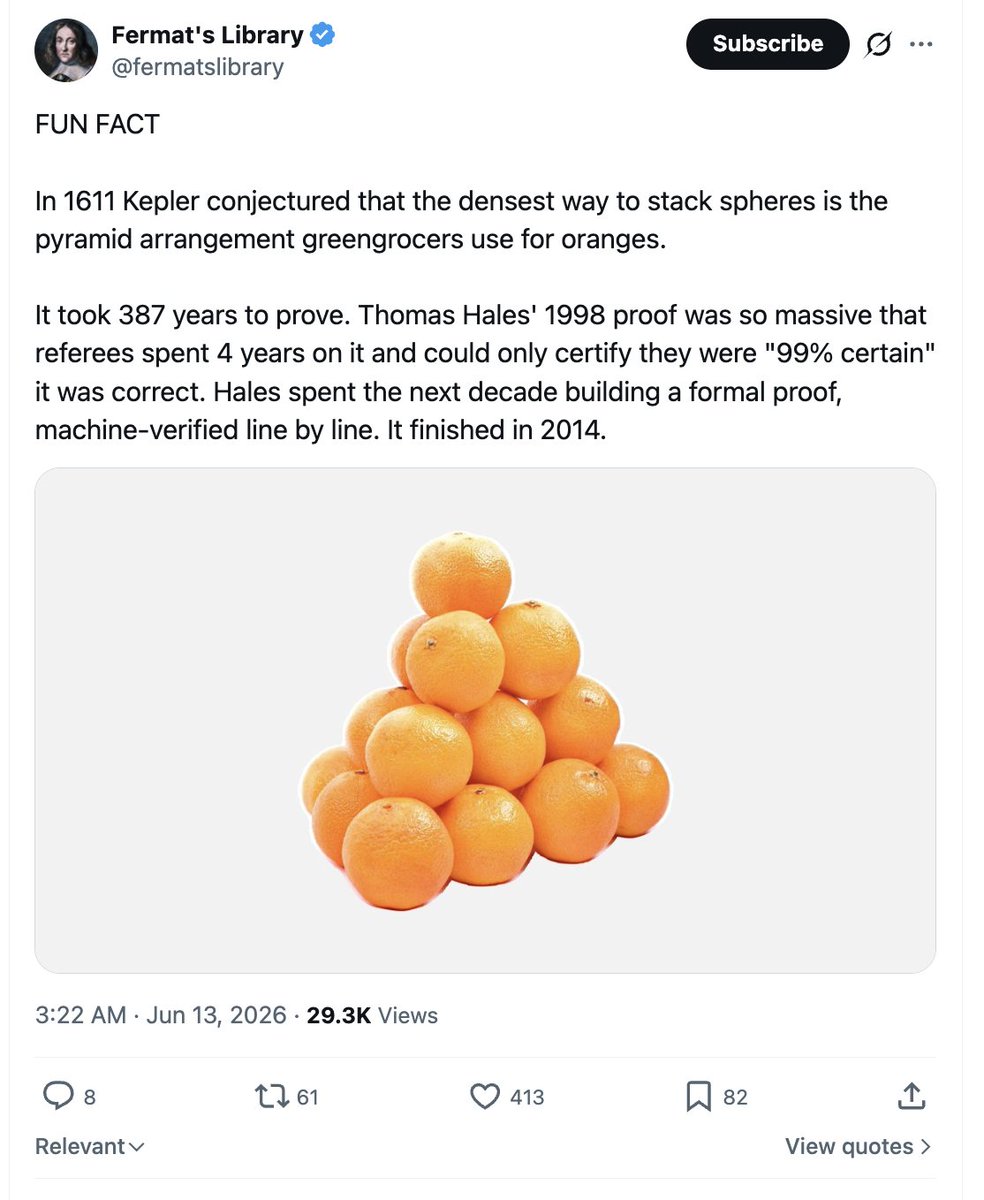
Nah... that is not even the best part. Here is the real FUN FACT:
In the Aryabhatiya (Ganitapada, Verse 21), written in 499 CE, Aryabhata introduces the mathematics of stacking. He explicitly lays out the formula for finding the total number of items in a pyramid pile with a triangular/square base. For a pyramid stack where each side of the base has 'n' spheres:
Total Spheres = [ n × (n 1) × (n 2) ] / 6
Think about the timeline here. Johannes Kepler conjectured that this layout was the densest in 1611. Aryabhata had already mapped out the exact algebraic discrete-volume matrix to count every single individual sphere within that dense packing formation 1000s yrs earlier.
Fun Fact is still not over. Fast-forward to the 12th century. The legendary mathematician Bhaskara II takes Aryabhata’s foundation & elevates it into a poetic, highly advanced art form in his textbook, the Lilavati. Bhaskara creates a dedicated mathematical category called Citi-Ghana (the volume of a pile). He did not just give 1 formula; he realized that different stacking bases create different geometric properties. He breaks down eqns for:
- Triangular-based pyramids (where spheres rest in the gaps of a triangular grid)
- Square-based pyramids (the standard grocery-stack style)
- Oblong piles (where the base is a rectangle)
To solve these, Bhaskara had to utilize Varga-Sankalita (the sum of squares of natural numbers) & Ghana-Sankalita (the sum of cubes). While Western mathematics at the time was struggling with basic arithmetic using Roman numerals, Indian scholars were utilizing advanced series expansions to handle the discrete boundaries of 3 dimensional sphere packing.
Now the Fun Fact is over 🙏🙏
7
98
303
7,089
Raghav Kumar Dwivedula retweeted

34
90
646
26,259
Raghav Kumar Dwivedula retweeted

Claim 1: "Understanding & translation of the Rig Veda had to be done by Westerners because much was lost in India"
Status: False. Vedas were never "lost" in India. They were preserved through a complex, oral transmission system (incl. permutations) for millennia,

Your argument of what?
Nothing I said in my entire post is factually false.
Stop trying to pick random debates or grandstand.
1
26
143
10,163
Raghav Kumar Dwivedula retweeted

Disgusting arrogance paired with an irresistible drive to hand out nothing more than crumbs off your plate.
242
1,001
5,725
653,283

Conor Neill: "18 years of school trained you to ruin conversations"
"You finish your pitch and the customer says, 'Your product is too expensive!' You arrive home, you're a few minutes late, your partner says, 'You are always late.' A dirty plate is left on the table... 'You never wash the dishes.' What do you say in this moment?"
The problem:
"Most of you... went through 14 years of school where you were taught one way to respond to questions. Teacher asks a question: 'How do you spell cats?' Student: 'C-A-T.' Teacher: 'What is the biological process called osmosis?' Student puts hand up, explains in detail the process through which cell membranes allow water to go from one side to the other."
He continues:
"For 14 years you've been taught that you receive and answer a question. If you went to university, you probably had another 3, 4 years where you gave answers to questions."
On why answering is the worst response:
"In real life, in persuasion, in getting to what the other person is really about, what their needs really are... the worst thing you can do is give an answer to a question."
He explains:
"If someone says 'your product is too expensive' and you say 'No it's not! It's only €1,000'... you've lost every chance to understand what else is behind their reasoning. If you get home and your partner says 'you're always late!' and you say 'No no no! Tuesday I definitely was here on time'... you're gonna have a crap weekend."
The insight:
"You've had 14... if not 18 years of training that you answer questions. And it's going to cause fights in your home life. It's going to cause problems at work. It means you're not selling anything. Because when someone says 'your product is too expensive'... that's not what their real issue is. When someone says 'I will have to speak to my boss'... that's not what their real issue is."
On emotion and thinking:
"When your partner says 'you're always late'... emotion goes up. And what happens? This part disconnects. The higher emotion goes... the lower thinking goes."
The implication:
"The way to make someone stupider is insult them, object to them, tell them they are wrong. When asked a question, there's an emotional reaction."
On why you must practice:
"If you don't practice this response, you're not going to be able to do it in the moment."
He lists the objections:
"'You're always late!'... 'You never wash the dishes!'... 'You never do your part of the share!'... 'Your product is too expensive!'... 'Your competitor is better!'... 'You failed us 3 years ago!'... 'I don't trust your company!' If you don't practice this habit of not giving an answer... you're not going to be able to do it in the heat of the moment."
Neill calls this "Conversation Aikido":
"Martial arts are about using the energy, the force of the opponent against them. In judo, if someone punches you, you pull their arm and allow the energy to keep flowing. In Aikido, the concept is you go towards the punch. Go towards the energy."
He explains:
"If someone punches you... if someone asks you a question... if someone objects, says you're wrong... the Aikido method is go towards and see the world from their view. In Aikido, you learn to go towards the punch, dodge it, and look... and you are seeing the world in the same direction as the person who's attacking you."
The technique:
"When you are asked a question or given an objection... say 'I understand' and repeat in your words what they're saying. Then give an open question back."
Example:
"'Your product is too expensive!' → 'I understand that money is an important factor for you. What other criteria will be used in taking this decision?'"
He adds:
"It takes some habit to start to be able to give 'I understand' and fill in good words. You will have to work on this quite a few times over the next 10 years to find the set of words that captures what the other person feels... what's behind it."
He explains with an example:
"'You're always late!' → 'I understand you feel frustrated.' 'I understand you feel let down.' Then: 'What can we do now?' 'What happened during the day?' 'What would you like to talk about?'"
On unlearning:
"This takes 14 years of it being drummed into you... 4 more, 18 if you went to university. It's gonna take you at least 18 years to get out of the habit of responding to questions with answers."
The lesson:
"We live in an uncertain world and we don't have the answers. But by giving the answer, we shut down the possibility of hearing what's really going on in the other person's mind... in the other person's business... what other things are going on."
On the 4th question:
"I guarantee that if you do it 4 times... the answer to your 4th open question begins to be the real underlying need, issue, interest of the person you're listening to."
54
214
3,407
141,043
Raghav Kumar Dwivedula retweeted

BREAKING: Iran directly rejects Trump's new claim of a deal being signed tomorrow, saying the insistence on signing the deal on specifically Sunday is engineered around his own birthday, calling it a "propaganda event" that Trump is trying to turn into a unilateral "symbolic occasion" for himself, along with his UFC White House event, per Fars.
The Iranian negotiating team says it "will not permit such a media and ceremonial manoeuvre," explicitly stating that the memorandum of understanding has not been finalized and no signing will happen.
926
5,714
20,386
1,722,606
Raghav Kumar Dwivedula retweeted

Hilarious Even Orry Called Out Dhruv Rathi as "Dhruv Tatti".
Orry:
"Dhruv Tatti used my pic in thumbnail for click bait & his entire video was not about me"
"Also Dhruv Rathi is Anti National"
"Because make video which suits it's Propaganda"
Even Orry Caught His Agenda.
🤡
141
1,206
8,337
289,272
Raghav Kumar Dwivedula retweeted

There you go again @TVMohandasPai. We went through this before and when I challenged you publicly to compare track records while I was in industry, you ran away. You avoid addressing the issue that you lack any tech background and expertise, being a mere bean counter/admin who exploited India’s tech youth with wage arbitrage to enrich yourself. The “big industry” you built was about exploiting our hard working youth as coolies. I advocated that Indian tech talent be channeled into Indian IP, and not rented out. You are obliged to suck up to the Murthy family without whom you were a nobody. History has proven that India should have followed China example of domestic IP and not the quick buck selfish approach. Compare Indian industrialists in tech with China’s. Why is India dependent on foreign licensing like a beggar? India has immense talent but its industrialists have been short sighted, selfish and arrogant. Now Indian youth face massive challenges unlike China’s as a result. The total market value of India’s tech industry is a mere 1% of the global tech market cap. Shameful for a nation of talented youth.

So says a big big failure and economic refugee @RajivMessage who did nothing useful in tech in his life and now points fingers at others. This failed fellow is now abusing others who built his big industries, created huge jobs.
111
432
1,646
106,247
Raghav Kumar Dwivedula retweeted

You did great work until now. But there is truth in Rajiv's words. R&D was only in IT processes not in technology itself. Even 10% of the profits were poured in tech r&d in separate companies would have seen results by now.
4
32
4,593
Raghav Kumar Dwivedula retweeted

Infosys missed the boat when Vishal Sikka was at the helm, had the money to invest. Atleast admit the miss in strategy @TVMohandasPai
Jobs could have been created with a R & D based approach also
2
4
29
5,202
Raghav Kumar Dwivedula retweeted

Jun 13
Nah... that is not even the best part. Here is the real FUN FACT:
In the Aryabhatiya (Ganitapada, Verse 21), written in 499 CE, Aryabhata introduces the mathematics of stacking. He explicitly lays out the formula for finding the total number of items in a pyramid pile with a triangular/square base. For a pyramid stack where each side of the base has 'n' spheres:
Total Spheres = [ n × (n 1) × (n 2) ] / 6
Think about the timeline here. Johannes Kepler conjectured that this layout was the densest in 1611. Aryabhata had already mapped out the exact algebraic discrete-volume matrix to count every single individual sphere within that dense packing formation 1000s yrs earlier.
Fun Fact is still not over. Fast-forward to the 12th century. The legendary mathematician Bhaskara II takes Aryabhata’s foundation & elevates it into a poetic, highly advanced art form in his textbook, the Lilavati. Bhaskara creates a dedicated mathematical category called Citi-Ghana (the volume of a pile). He did not just give 1 formula; he realized that different stacking bases create different geometric properties. He breaks down eqns for:
- Triangular-based pyramids (where spheres rest in the gaps of a triangular grid)
- Square-based pyramids (the standard grocery-stack style)
- Oblong piles (where the base is a rectangle)
To solve these, Bhaskara had to utilize Varga-Sankalita (the sum of squares of natural numbers) & Ghana-Sankalita (the sum of cubes). While Western mathematics at the time was struggling with basic arithmetic using Roman numerals, Indian scholars were utilizing advanced series expansions to handle the discrete boundaries of 3 dimensional sphere packing.
Now the Fun Fact is over 🙏🙏
17
494
1,399
30,470
Raghav Kumar Dwivedula retweeted

It's interesting how lay people (typically not scholars or Indologists) underestimate the intellectual rigour and continuity of India's indigenous traditions.
They tend to apply the same framework they apply for the Middle East to India.
Iraqis forgot about Hammurabi, Ashurbanipal, et al., Egyptians forgot about Khufu, Hatshepsut, et al.; Arabs forgot about Gindibuʾ, Karibʾīl Watār, et al.
These figures were (re)discovered by archaeologists and epigraphers in the 18th-20th centuries.
The accounts of az-Zabbāʾ/Zenobia in medieval Islamic historiography drew from both indigenous (Arab, Syriac) & Greco-Roman/Byzantine sources while the account of Dārā (Darius III) in Firdawsī's Šāhnāmah drew almost entirely from the Alexander Romance tradition (via Syriac translations from Greek, which were later translated into Pahlavi/Middle Persian)
Therefore, it must stand to reason than Indians also must've forgotten the names of rulers like Candragupta, Aśoka, etc. prior to the arrival of Westerners, no?
Yet this is clearly not true.
Although the Brāhmī script used in the inscriptions had changed so much as to be unrecognizable, Candragupta (Sandracottus of the Greeks) was well known through texts and plays like Viśākhadatta's Mudrārākṣasa, which were completely independent of Greco-Roman sources like Megasthenes.
The names of Aśoka Maurya and his sons Daśaratha and Samprati are recorded in the Puranic vaṃśāvalis and he is glorified in Buddhist sources such as the Divyāvadāna (which contains a section known as the Aśokāvadāna) and Srilankan chronicles like the Dīpavaṃsa and Mahāvaṃsa.
A manuscript of the Divyāvadāna in Sanskrit (or Sanskritized Prakrit) was discovered in Nepal in 1824, so the text was continually being copied.
One could argue that modern Persians had no knowledge of Old Persian for over 1,500 years (until the script was deciphered in the 19th century) and minimal knowledge of Avestan.
The Zand and Dēnkard commentaries composed by medieval Zoroastrians dasturs and mobeds often differs from modern philological readings.
Yet in the case of the Vedas, there is a largely unbroken chain or recitation reinforced by the śikṣās, prātiśākhyas, etc. and interpretation based on the Nirukta (the Naighaṇṭuka, Naigama, Daivatakāṇḍa-s of Yāska), Vyākaraṇa (Aṣṭādhyāyī Vārttikas Mahābhāṣya, along with the Uṇādisūtras and Phiṭsūtras), etc.
Therefore, the commentaries by Bhaṭṭabhāskara, Sāyaṇa, Veṅkaṭamādhava, Skandasvāmin, Mahīdhara/Uvaṭa are quite close to modern philological interpretations, simply because formal study of Sanskrit (including Vedic Sanskrit) never truly disappeared in India.
Even the study of the medieval Prakrits never disappeared among the Hindus and Jains.
Most people nowadays think of the 16th century grammarian Mārkaṇḍeya as the final Prakrit grammarian, yet Rāmaśarman Tarkavāgīśa composed his grammar of Prakrit and Rāmapāṇivāda composed his Kaṃsavaho and Usāṇiruddho less than two centuries before Norwegian-born German Indologist Christian Lassen's published his Institutiones Linguae Prakriticae.
When it comes to continuity, one can't treat the Indian Subcontinent the same way as the Middle East, Iran, or Central Asia, yet the fact that they rehash the same arguments regardless just highlights that these sorts of arguments (whether applied to India OR the Middle East) are ultimately rooted in racial paternalism ("the White Man's Burden," yet applied to history).

Claim 1: "Understanding & translation of the Rig Veda had to be done by Westerners because much was lost in India"
Status: False. Vedas were never "lost" in India. They were preserved through a complex, oral transmission system (incl. permutations) for millennia,
11
81
242
8,199
Raghav Kumar Dwivedula retweeted
Satavahanas in Puranas decoded!
🔥🔥🔥
For years, many historians dismised the Purāṇas as unreliable mythology.
However, consider the Puranic Andhra (Satavahana) kings.
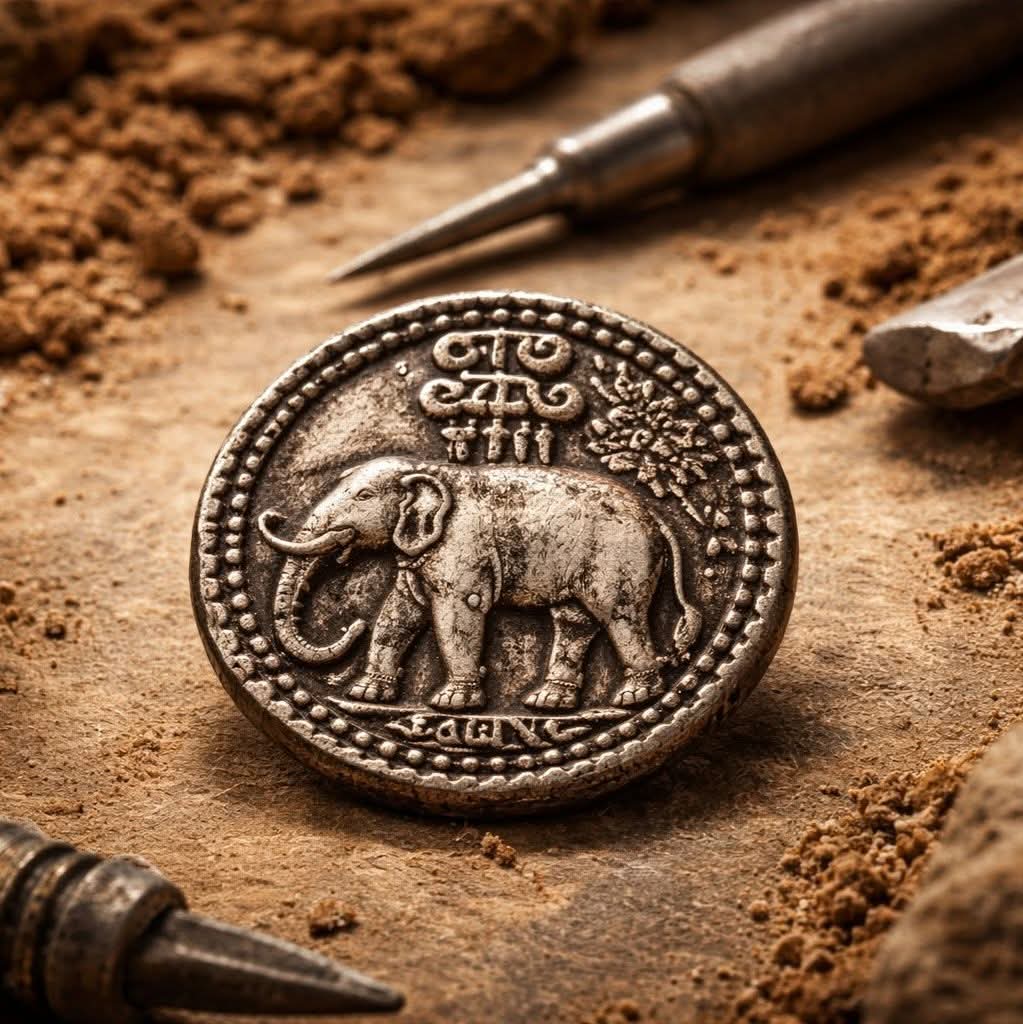
The Purāṇas say that about 30 Andhra rulers ruled for roughly 450 years. When we list the kings and add their regnal years from the Matsya Purāṇa, we get ~382 years.
Now compare this with archaeology!
Coins and inscriptions show the Satavahanas ruling roughly 1st century BCE to early 3rd century CE – about 330–350 years. The match is astonishing.
Even the individual kings line up!
Simuka, Krishna, Satakarni, Hāla, Gautamīputra, Yajña Śrī Satakarni – all preserved in the Purāṇic lists.
What this shows is simple. The Purāṇas were not inventing dynasties, though the data often needs some refinements.
They were preserving historical memory, sometimes imperfectly, but often with remarkable accuracy!
2
41
103
2,793
Raghav Kumar Dwivedula retweeted

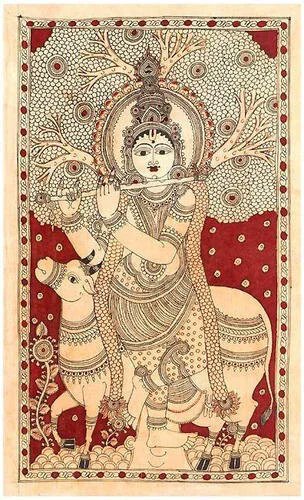
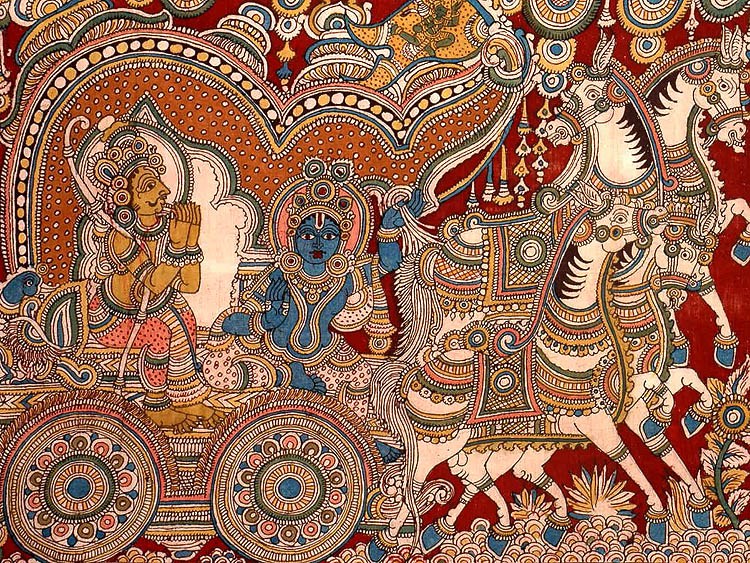
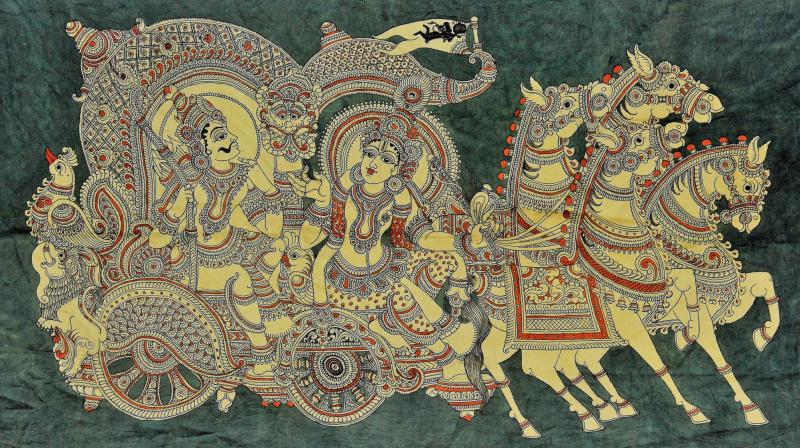
Kalamkari, originally called Vraata Pani in Telugu, is an ancient textile art from Andhra Pradesh dating back to over 3,000 years.
x.com/praveenvar1625/status/…
Mar 26

KALAMKARI TEXTILE ART FROM ANDHRA PRADESH IS A 3,000-YEAR JOURNEY OF CHEMISTRY, CRAFTMANSHIP, AND TRADE.
The history of textiles in Andhra Pradesh is a 3,000-year journey of chemistry, craftsmanship, and trade. From the ancient production of natural dyes to the refined narrative art of Kalamkari, the region has long been a global hub for high-quality fabrics.
Ancient Textile Dyeing (c. 1000 BCE – Early CE)
Archaeological evidence and ancient texts suggest that the Telugu-speaking regions were pioneering centers for textile technology as early as the Iron Age.
The Indigo Mastery :
Ancient Andhra Pradesh was famous for its mastery over Indigofera tinctoria. By 3,000 years ago, local communities had perfected the fermentation process required to extract deep blue pigment from green leaves.
Mineral and Plant Mordants :
To make dyes permanent, ancient artisans used "mordants" (fixatives). They utilized local alum and iron-rich clay to ensure that colors survived repeated washing and harsh sunlight.
The Red Revolution :
The use of Madder (Rubia cordifolia) and the roots of the Oldenlandia umbellata (Chay root) allowed the region to produce a vibrant, "fast" red that became highly coveted in Roman and Middle Eastern markets.
The Origins of Kalamkari :
The word Kalamkari is derived from the Persian words Kalam (pen) and Kari (craftsmanship). While the name gained prominence during the Golconda Sultanate, the technique itself is rooted in the ancient temple traditions of the Andhra region.
1. Srikalahasti Style (The Temple Art) :
Originating in the Chittoor district, this style was born from the need to create visual aids for religious storytelling.
The Technique:
Artisans use a bamboo pen (Kalam) to freehand draw scenes from the Ramayana, Mahabharata, and Puranas directly onto cloth.
Purpose:
These were originally used as "Padas" (large scrolls) or backdrops in temples to educate those who could not read the scriptures.
2. Machilipatnam Style (The Trade Art) :
Based in the Krishna district, this style evolved due to the heavy demand from the Dutch and British East India Companies.
The Technique :
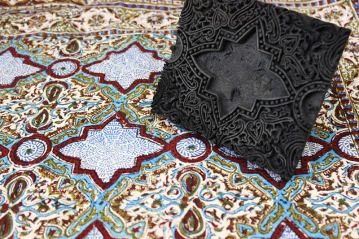
Unlike the freehand Srikalahasti style, this involves hand-carved wooden blocks for the outlines, though the intricate coloring is still often done by hand.
Aesthetics:
The designs are more decorative, featuring floral patterns, "Tree of Life" motifs, and Persian-influenced borders.
The 23-Step Process :
The longevity of Kalamkari is due to its rigorous, purely organic process. Even today, traditional practitioners follow steps that have remained unchanged for centuries:
01. Bleaching: The cloth is treated with cow dung and sun-dried to whiten it.
02. Myrobalan Treatment: The cloth is soaked in a mixture of milk and crushed Myrobalan (nut) seeds. This prevents the dyes from bleeding.
03. The Charcoal Outline: Initial sketches are made using burnt tamarind twigs.
04. Black Dye (Kasim): Created by fermenting iron scraps with jaggery and water for 21 days.
05. Multi-Stage Washing: The cloth is washed in flowing river water (like the Swarnamukhi or Krishna rivers) after every color application to remove excess minerals.
1
6
9
131
Raghav Kumar Dwivedula retweeted
Talent and capital are both precious. They seek each other.
You have to incentivize your best people to stay and grow the pie instead of shrinking the pie by using social justice policies.

Anthropic's CTO is Indian. 🇮🇳
(Rahul Patil)
Anthropic's CFO is Indian. 🇮🇳
(Krishna Rao)
India doesn't have OpenAI.
India doesn't have Anthropic.
India doesn't have DeepMind.
Anthropic restricted access to Fable 5 and Mythos. It's the US which now has the power and intelligence both along with Indians working for them.
Wars aren't just fought with nuclear weapons. It's high time India starts thinking about this and invest heavily on building it's own frontier AI labs !
8
47
216
4,652
Raghav Kumar Dwivedula retweeted

Jun 13
That's it. No mention of Imamate. No infallibility. No cursing the Sahaba. No occultation. No 'my father appointed me.' No 'whoever rejects my Imamate is a kafir.'
Just pure, unadorned Sunni piety. The same advice Abu Bakr, Umar, and Uthman would give.
5
3
56
2,581
Raghav Kumar Dwivedula retweeted

Jun 13
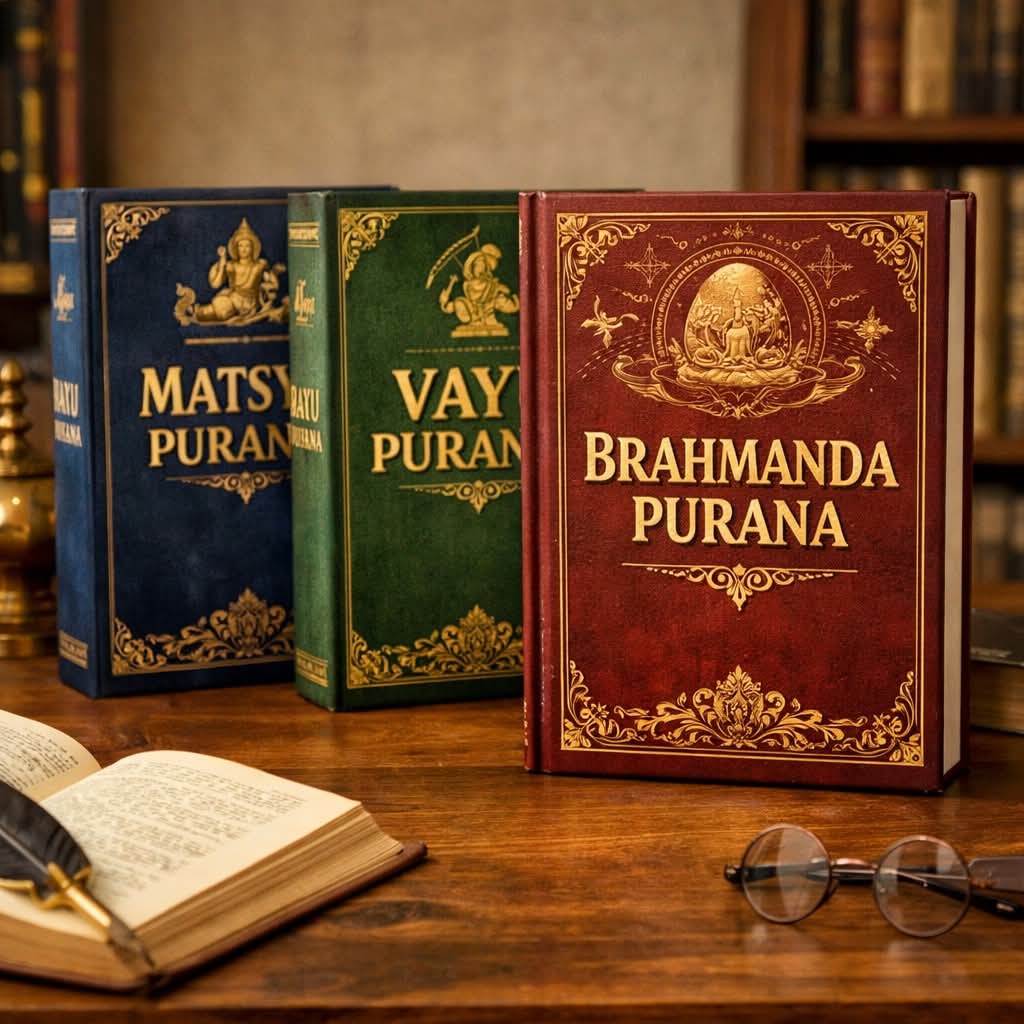
The shocker from Brahmanda Purana!🔥
The three oldest Puranas are Matsya, Vayu and Brahmanda Purana.
All three contain not only the list of kings who lived after the Kurukshetra War upto Shatavahanas, but they also contain the total years each king ruled!
The Brahmāṇḍa Purāṇa gives cumulative dynastic durations.
Bṛhadrathas (940 years), Pradyotas (138 years), and Śiśunāgas (350 years). That adds up to 1428 years.
This gives the Kurukshetra War date as 1792 BCE, with Mahāpadma Nanda's coronation at 364 BCE.
This is just one year away from the 1793 BCE date of Dr Ashok Bhatnagar!
Suddenly, we are no longer looking at floating mythology. We are looking at a connected historical chain with numerical continuity.
Texts like the Vishnu Purana preserve the sequence but compress the data. In contrast, the Brahmāṇḍa, Matsya, and Vāyu Purāṇas retain the full chronological engine, king lists plus regnal years. The result is a framework where the Mahābhārata is not an undated epic but part of a calculable timeline, converging toward the late 2nd millennium BCE and align with precise astronomy based dates like 1793 BCE!
Shiva Shiva!!
If this data is taken seriously, the implication is powerful: ancient Indian texts were not merely storytelling traditions. They were also custodians of historical memory, encoded in numbers.
7
16
41
2,566
Raghav Kumar Dwivedula retweeted

United States wants complete data access for its Big Tech, threatens sovereigns if they want data localisation, and now pulls the plug on frontier AI models to the extent that even foreign nationals in labs developing such tech are excluded. This isn't madness. This is logical. Jiski lathi, uski bhains. And no one lends you the lathi.
12
104
422
13,717
Raghav Kumar Dwivedula retweeted

Demonstrating its longstanding expertise in cultural heritage conservation, the Archaeological Survey of India (ASI) has emerged as a key partner in the preservation and restoration of the historic temple complexes at Vietnam’s My Son Sanctuary.
From 2016 to 2022, ASI successfully carried out the conservation and restoration of the A, H, and K temple groups in partnership with the My Son Management Board.
Building on the success of this collaboration, a new five-year project launched in February 2025 focuses on the E and F temple groups. The initiative includes comprehensive documentation, scientific conservation, structural stabilization, and capacity-building measures aimed at ensuring sustainable site management in accordance with international conservation standards.
Through these efforts, India has contributed to the conservation, protection, and restoration of more than 60% of the ancient temple structures within this UNESCO World Heritage Site, many of which have sustained severe damage from vandalism and the effects of war.
#12YearsOfVikasBhiVirasatBhi #CultureUnitesAll #ASI #asi #ASIAbroad #unescoworldheritage
@narendramodi @MinOfCultureGoI @gssjodhpur @Rao_InderjitS @tourismgoi @AmbHanoi @MIB_India @PIB_India @incredibleindia @DDNewslive
1
11
61
1,955
Raghav Kumar Dwivedula retweeted

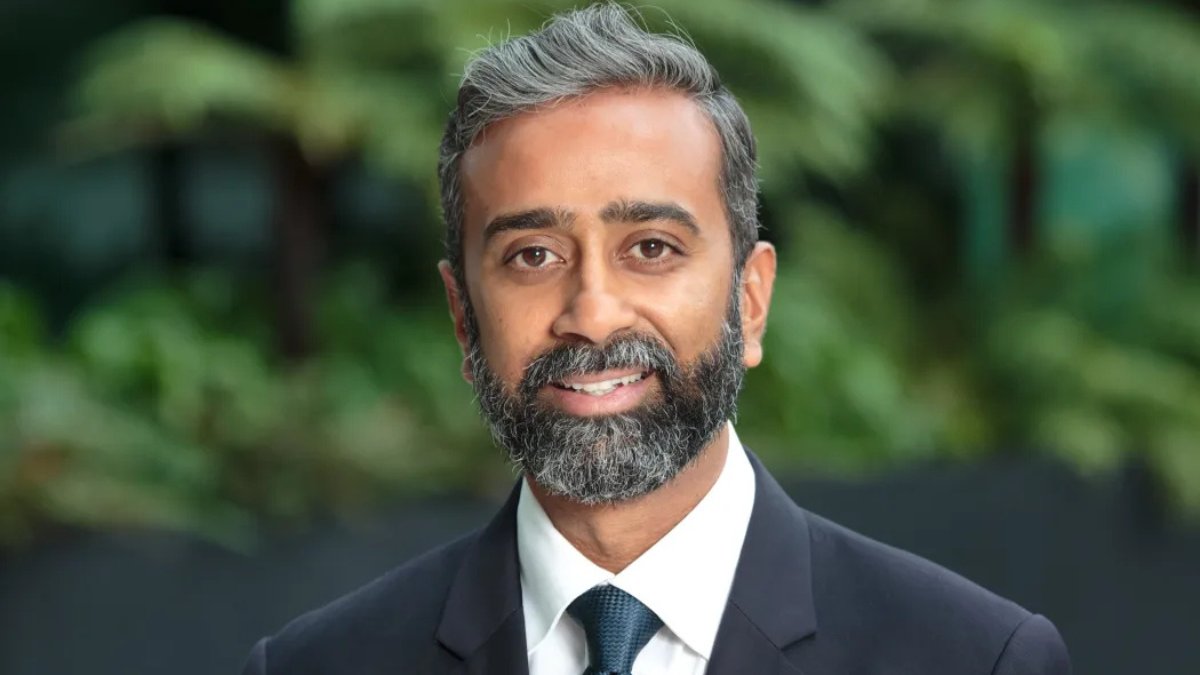
On the left is Nikhil Ravishankar. He went to school in New Zealand, worked all his life in NZ. Yet in 2025 when he was appointed CEO of Air New Zealand, the wave of online racism directed at him became such a tsunami that the country's 3 leading media outlets, the New Zealand Herald, 1News and Radio New Zealand, had to shut down their comments section. The sheer volume of racist comments made it impossible for moderators to do their job. It was like half the population of New Zealand had decided to be racist on Ravishankar.
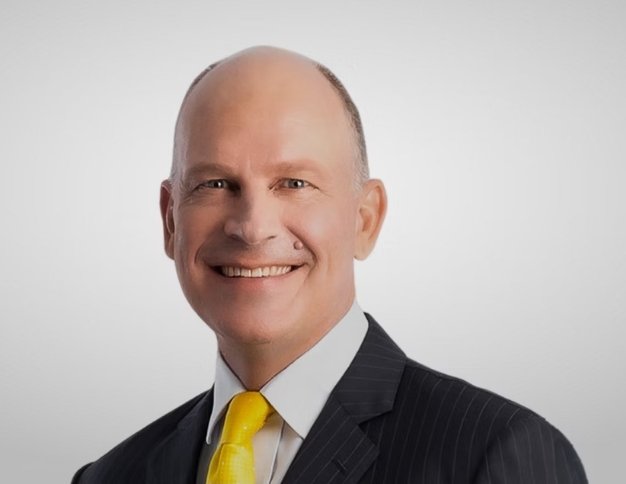
On the right is Air India’s current CEO - New Zealander Campbell Wilson whose appointment in 2022 attracted no such backlash in India. Wilson hails from Christchurch, arguably the most racist city in New Zealand.
154
2,405
6,550
172,017