
the Pandemic Fund Civil Society Board Members Focal Point and @frontlineaids. Personal views. Stop russian aggression! Ukraine - 603,628 km²
Joined November 2010
- Tweets 2,315
- Following 1,014
- Followers 516
- Likes 423
83 Photos and videos
Olya Golichenko retweeted

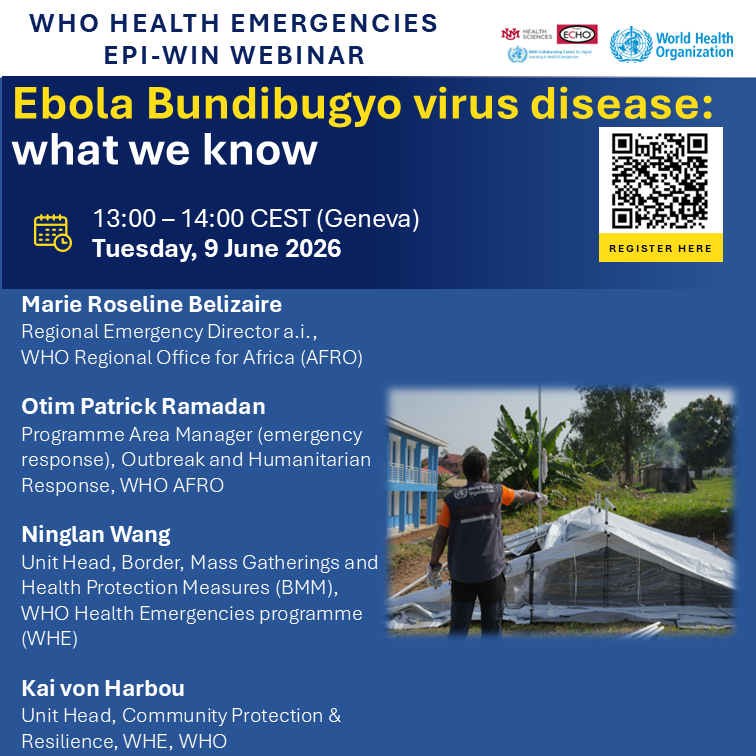
Join this @WHO EPI-WIN webinar to learn more about the ongoing #Ebola outbreak tomorrow and:
➡️the latest epidemiological situation
➡️WHO's recommendations to stop the outbreak
➡️importance of preparedness and readiness for neighbouring countries
Jun 8

What do we know about the ongoing #Ebola outbreak caused by the Bundibugyo virus?
Join @WHO Health Emergencies experts for a webinar on the latest developments and response efforts.
🗓️ 9 June 2026
🕐13:00 CEST (Geneva)
Register now by scanning the QR code ⬇️
8
19
1,084
Olya Golichenko retweeted

The most valuable commodity in an #Ebola outbreak isn’t a vaccine, diagnostic, or treatment—it’s trust.
Sustainable health security is built through partnership, transparency, and shared responsibility.
#Ebola #GlobalHealth #HealthSecurity #PublicHealth
1
13
29
1,327
Olya Golichenko retweeted

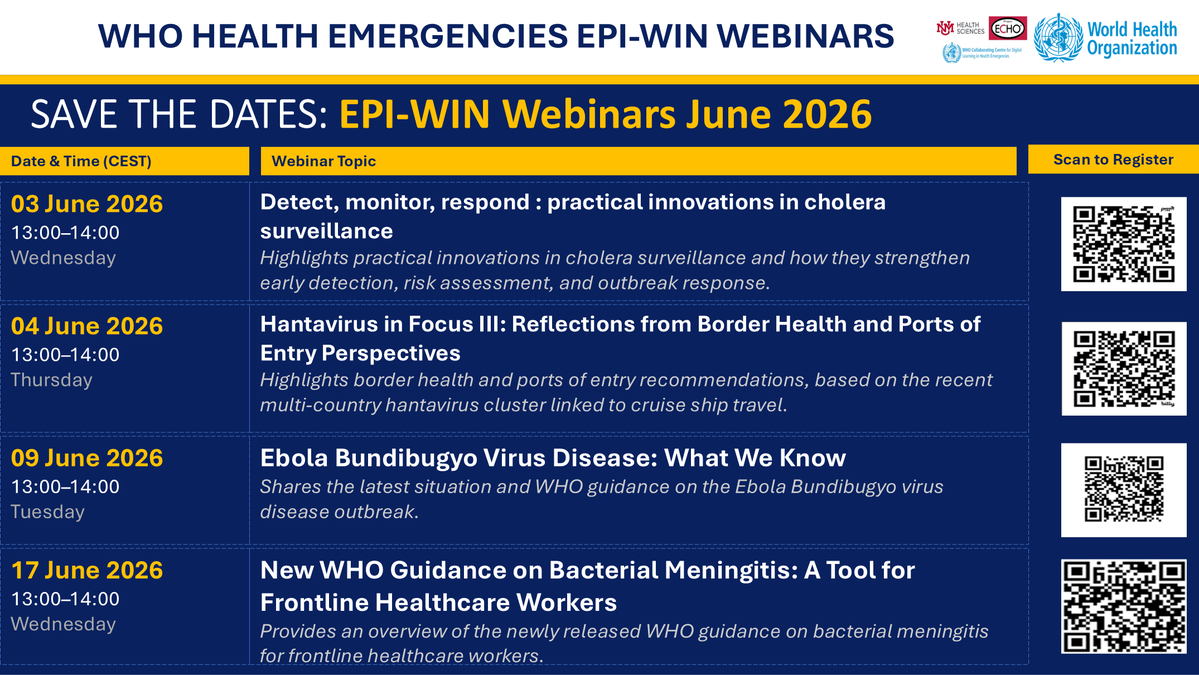
𝗦𝗮𝘃𝗲 𝘁𝗵𝗲 𝗱𝗮𝘁𝗲𝘀!
Do join us for the WHO Health Emergencies EPIWIN webinars in 𝗝𝘂𝗻𝗲 𝟮𝟬𝟮𝟲, covering:
• #Cholera practical innovations in surveillance
• #Hantavirus in Focus III
• #Ebola Bundibugyo virus disease
• Bacterial #meningitis tool
• Ebola Readiness Series (12 sessions)
1. 𝗧𝗶𝘁𝗹𝗲: Detect, monitor, respond: practical innovations in cholera surveillance
𝗗𝗮𝘁𝗲 𝗮𝗻𝗱 𝗧𝗶𝗺𝗲: Wednesday 3 June 2026, 13.00 – 14.00
𝗪𝗲𝗯𝗽𝗮𝗴𝗲 :bit.ly/4nTHNE1
𝗥𝗲𝗴𝗶𝘀𝘁𝗿𝗮𝘁𝗶𝗼𝗻 𝗹𝗶𝗻𝗸: bit.ly/3PJT2Cf
2. 𝗧𝗶𝘁𝗹𝗲: Hantavirus in Focus III: reflections from the Border health and Points of Entry perspective
𝗗𝗮𝘁𝗲 𝗮𝗻𝗱 𝗧𝗶𝗺𝗲: Thursday 4 June 2026, 13.00 – 14.00
𝗥𝗲𝗴𝗶𝘀𝘁𝗿𝗮𝘁𝗶𝗼𝗻 𝗹𝗶𝗻𝗸: bit.ly/3RTjAl7
3. 𝗧𝗶𝘁𝗹𝗲: Ebola Bundibugyo Virus Disease: what we know
𝗗𝗮𝘁𝗲 𝗮𝗻𝗱 𝗧𝗶𝗺𝗲: Tuesday 9 June 2026, 13.00 – 14.00
𝗪𝗲𝗯𝗽𝗮𝗴𝗲: bit.ly/4dPfbXT
𝗥𝗲𝗴𝗶𝘀𝘁𝗿𝗮𝘁𝗶𝗼𝗻 𝗹𝗶𝗻𝗸: bit.ly/49uhnTn
4. 𝗧𝗶𝘁𝗹𝗲: New WHO guidance on bacterial meningitis: a tool for frontline healthcare workers
𝗗𝗮𝘁𝗲 𝗮𝗻𝗱 𝗧𝗶𝗺𝗲: Wednesday 17 June 2026, 13.00 – 14.00
𝗥𝗲𝗴𝗶𝘀𝘁𝗿𝗮𝘁𝗶𝗼𝗻 𝗹𝗶𝗻𝗸: bit.ly/4eb59l5
5. 𝗘𝗯𝗼𝗹𝗮 𝗥𝗲𝗮𝗱𝗶𝗻𝗲𝘀𝘀 𝗟𝗲𝗮𝗿𝗻𝗶𝗻𝗴 𝗦𝗲𝗿𝗶𝗲𝘀
𝗗𝗮𝘁𝗲 𝗮𝗻𝗱 𝗧𝗶𝗺𝗲: Thursday 13.00 -14.00 CEST starting 11 June 2026 (to be confirmed)
𝗥𝗲𝗴𝗶𝘀𝘁𝗿𝗮𝘁𝗶𝗼𝗻: lnkd.in/dFY9yksx
As part of WHO's support to countries at risk of Ebola virus disease (EVD) introduction, the EPI-WIN Ebola Readiness Learning Series will provide a practical platform for knowledge exchange, operational learning, capacity strengthening, and dissemination of readiness guidance.
@Chikwe_I @ChungongStella @mvankerkhove
3
6
426
Olya Golichenko retweeted

May 29
Ebola is a terrible disease because you often catch it while caring for someone you love – a husband, a child, a mother.
Stopping transmission means helping communities recognize symptoms early, access testing quickly and get timely care.
81
159
341
55,152

May 26
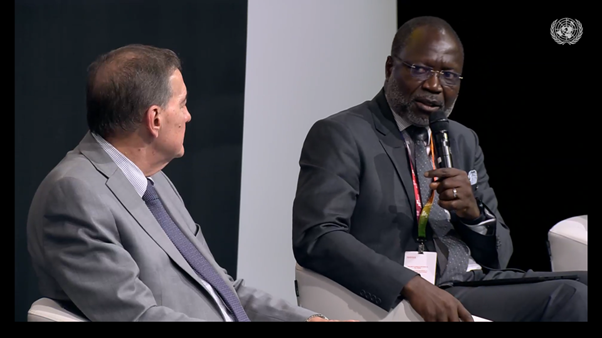
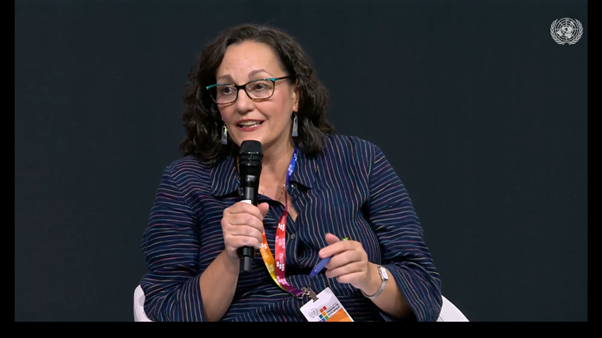
🎥Watch Nina Jamal @fourpawsint & Ben Weingrod @Pandemic_Fund Board Member discuss civil society & governments engagement in #PPPR #HLM ➡️shorturl.at/UXHUV In 🇫🇷 via🌐@Loretta40009912 @uwaliraye @Arush_Lal @rani_action @Dr_JeanKasey @rosemarymburu @Chikwe_I @aggrealuso 1/
1
2
73
May 26
💪@UN #PPPR #HLM will take place in Sept 2026. Nina @fourpawsint: ‘Civil society leading with the evidence, leading with the stories of communities, and working with @Pandemic_Fund so that countries can access resources’. @rani_action @rosemarymburu @TheIndPanel @Arush_Lal 3/
1
1
2
105
May 26
🎥Multi-stakeholder Hearing on #PPPR #HLM indico.un.org/event/1022672/ will be broadcast live webtv.un.org/en in six languages. No need to register to view online. 🗓️9 June 2026, 09:00–16:00, all times US Eastern ✅ @rani_action @rosemarymburu @Arush_Lal @aggrealuso 4/
1
61
May 26
Don't miss this week's key events: 1. Special #CSO #RANA @AfricaCDC briefing on #Ebola 2. Friends of the 2026 @UN #PPPR #HLM meeting. Further details in a brilliant @rani_action playbook ⤵️ @Loretta40009912 @uwaliraye @Arush_Lal @fourpawsint @aggrealuso @wurie_aminata #UNHLM

In the @rani_action Playbook: Sounding the Alarm 🚨 #Ebola is back 🔙 Reform emergencies centre stage at #WHA79 🌍 #Hantavirus active situation 🐁 Welcome signal, finance required #GHRI 🪙 Latest from @CEPI @IVIHeadquarters @CFR_org 📰 & more! mailchi.mp/rani/sounding-the…

1
1
137
Olya Golichenko retweeted

Hace un par de días pude contar en un webinar de @WHO el operativo del hantavirus, con especial atención a la coordinación entre @proteccioncivil y @sanidadgob.
Aquí la intervención:
17
19
43
10,917
Olya Golichenko retweeted

May 18
Face aux crises sanitaires, climatiques et géopolitiques qui s’entremêlent, l’Assemblée mondiale de la santé rappelle une évidence : la coopération est plus nécessaire que jamais.
Ces dernières semaines encore, l’action collective a fait la différence.
Je salue l’engagement de l’OMS dans l’évaluation des risques et la coordination de la réponse face à l’hantavirus et à ebola. Cher @DrTedros, la France continuera à vous appuyer.
634
461
1,907
156,184
Olya Golichenko retweeted

May 18
Hay una pandemia que nadie quiere frenar: la del egoísmo. Y esa, también se contagia.
El mayor riesgo para la salud global ya no es la falta de ciencia, sino la falta de conciencia. Por eso, cuando otros recortan, España duplica su ayuda.
Porque ninguna sociedad merece llamarse civilizada si abandona a los suyos. Cuidar de quien no puede cuidarse no es caridad. Es lo que nos hace humanos.
5,490
10,841
37,019
667,715
Olya Golichenko retweeted

"Fourth, communicable diseases.
On HIV, we took an important step forward by prequalifying lenacapavir in tandem with guidelines on its use, supporting the first 14 countries to roll it out.
Lenacapavir is one of the most powerful and promising tools in the history of HIV: a longacting injectable given every six months, it’s the next best thing to an HIV vaccine.
On tuberculosis, WHO supported countries to expand access to rapid TB diagnostics, including new tests that can be used near the point-of-care.
We also accelerated the rollout of shorter, safer, and more effective treatment regimens;.
And the TB Vaccine Accelerator is working with countries to prepare for the rapid integration of new TB vaccines into health systems should they succeed in phase three trials.
On malaria, WHO prequalified the first treatment developed specifically for newborns and infants, as well as three new rapid diagnostic tests that can detect strains of malaria that other tests miss.
On hepatitis, the Global Hepatitis Report published just last month shows that since 2015, the annual number of new hepatitis B infections has dropped by 32 percent, and hepatitis C-related deaths have fallen by 12 percent globally.
On sexually transmitted infections, WHO issued a first recommendation for the use of doxycycline post-exposure prophylaxis to help prevent infections among key populations"-@DrTedros #WHA79
1
2
9
1,193
Olya Golichenko retweeted
"For 78 years, this Assembly has been where the world meets to confront shared threats with a shared response.
Multilateralism is not easy. But it’s worth it.
National sovereignty and international cooperation are not mutually exclusive; they are mutually reinforcing.
When I was in Tenerife last week, supporting the disembarkment of passengers from the MV Hondius, it occurred to me that the cruise ship is a lot like our world.
The passengers on the ship were from many different countries. But they faced a shared threat.
Our mission was just to keep everyone safe, and to get everyone home.
It’s the same with our world. We are all in the same boat.
We are stronger and safer together – as one world.
That’s why WHO was created in 1948.
That’s why it remains relevant today.
And that’s why it’s vision must remain our driving force this week: The highest attainable standard of health – not as a luxury for some, but a right for all.
As Prime Minister @sanchezcastejon said yesterday, we need a contagion of solidarity.
I wish you all a very productive 79th World Health Assembly"-@DrTedros #WHA79
4
3
16
10,657
Olya Golichenko retweeted
"In addition to outbreak response, we also responded to the health needs of millions of people affected by humanitarian emergencies.
That included dispatching $150 million of supplies to 97 countries and territories.
In Gaza, together with our partners, we organized the transport and shipment of 515 trucks of lifesaving emergency health supplies, coordinated more than 82 Health Cluster partners, and supported over 2700 medical evacuations.
In Sudan, since the start of the conflict in 2023, we have delivered more than 3000 metric tons of medical supplies, responded to outbreaks of cholera, dengue and malaria, and we are providing direct support to hundreds of health facilities.
And in Ukraine we provided almost 20,000 health consultations, supported the medical evacuation of more than 1200 patients, and provided training to more than 3000 health workers.
In all these places, we continue to see attacks on health care as the alarming and illegal new normal of conflict.
In 2025, WHO verified 1385 attacks on health care in 19 countries and territories, causing 1984 deaths and 1187 injuries among health workers and patients.
Of course, WHO does not work alone. As the Health Cluster lead of the UN Inter-Agency Standing Committee, we coordinate over 1500 partners.
We also coordinated the deployment of more than 100 international emergency medical teams who, together with their national counterparts, provided over 1.8 million medical consultations in more than 17 countries"-@DrTedros #WHA79
2
2
8
1,558
Olya Golichenko retweeted
"Second, response.
In addition to the outbreaks of Ebola and hantavirus that we are responding to now, in the past 12 months, WHO detected 4.2 million signals and supported countries to respond to 50 emergencies in 82 countries, preventing disease spread and saving lives.
We released almost 30 million U.S. dollars from the WHO Contingency Fund for Emergencies to support the rapid response to emergencies in 40 countries.
And through the Global Outbreak Alert and Response Network – GOARN – we coordinated 58 deployments to support emergency response in 16 countries.
Last year, we supported the DRC to respond to an outbreak of Ebola, which it controlled within six weeks, deploying more than 100 experts, 150 tonnes of supplies, and vaccinating 47,000 people.
In 2025 we also supported Tanzania and Ethiopia to control outbreaks of Marburg virus disease.
And in September, I declared an end to mpox as a public health emergency of international concern.
We also continued to respond to the global resurgence of cholera, deploying more than 50 million doses of oral cholera vaccine from the global stockpile.
And we launched the first WHO guidelines for the diagnosis and treatment of meningitis, and supported the response to meningitis outbreaks with 4 million doses of vaccine.
We also continue to work with partners towards our long-held dream of eradicating polio.
Last year, 52 cases of wild polio were reported from just 24 districts in Pakistan and Afghanistan – a 50% decline from 2004.
So far this year, six cases have been reported.
In addition, countries around Lake Chad mounted a joint vaccination campaign that reached more than 83 million children;
And with partners, WHO vaccinated over 600 000 children in Gaza, controlling the Strip’s first recorded polio outbreak in 25 years"-@DrTedros #WHA79
5
2
7
2,275
May 19
Congratulations @Pandemic_Fund and @WHO @Chikwe_I on this important work! @rani_action
@TheElders @Arush_Lal @Loretta40009912 @fourpawsint

"First, prevention and preparedness.
Through the @Pandemic_Fund with the World Bank, WHO supported 70 countries to develop and implement 41 projects to strengthen surveillance, laboratory networks, workforce capacity and multisectoral coordination.
Twenty-one countries completed joint external evaluations, 195 states parties submitted their annual IHR reports, and 25 countries completed their National Action Plan for Health Security.
The Global Health Emergency Corps ran its second simulation exercise, Exercise Polaris two, involving 600 health emergency experts and 25 partner organizations from 26 countries and territories.
And just this weekend we just launched our the Global Health Emergency Strategy, with a target to have 10 percent of the world’s health workforce ready to respond to emergencies by 2030.
The R&D Blueprint for Epidemics brought together global expertise to prioritize research and close preparedness gaps for high-risk pathogens, including avian influenza, Rift Valley fever, Oropouche disease, and Ebola.
The WHO Hub for Pandemic and Epidemic Intelligence launched an update of the Epidemic Intelligence from Open Sources system – EIOS – which harnesses the power of AI to support more than 120 countries who use the platform every day to quickly identify new threats.
Through the International Pathogen Surveillance Network, over 309 partners across 101 countries are also strengthening genomic surveillance to better track pathogens, detect new variants, and guide faster responses to emerging threats.
In the past year, the Global Influenza Surveillance and Response System, GISRS – a network of 165 institutions in 136 countries – tested more than 11 million clinical specimens and shared 65 000 virus samples with WHO Collaborating Centres.
Through the Pandemic Influenza Preparedness Framework – PIP – WHO signed eight new agreements, giving us access to more than 940 million vaccine doses in the event of an influenza pandemic, as well as antivirals, syringes and diagnostics.
The WHO BioHub coordinated 17 sample shipments to laboratories in ten countries, to guide research and development of countermeasures.
We were also on the ground, supporting countries to prevent outbreaks of high-threat diseases.
We supported preventative vaccination for Ebola for approximately 170 000 front line workers in the Central African Republic, DRC, Guinea Bissau, Uganda and Sierra Leone.
We also established a new stockpile for a monoclonal antibody against Ebola, with hundreds of treatment courses ready to be shipped in 24 hours if an outbreak is confirmed.
After a three year break we re-established preventive cholera vaccination, allocating 50 million doses to Bangladesh, DRC and Mozambique, thanks in part to a doubling of supply.
And to protect against outbreaks of yellow fever, we supported the vaccination of more than 38 million people in the DRC, Guinea-Bissau, Niger and Uganda"-@DrTedros #WHA79
1
18
Olya Golichenko retweeted
"Now to WHO’s work to support Member States to prevent, prepare for and respond to health emergencies.
Most notably last year, Member States adopted the WHO Pandemic Agreement and the amended International Health Regulations entered into force.
Although Member States have not yet reached consensus on the Pathogen Access and Benefit Sharing system – the PABS annex – they have committed to continuing negotiations, and I have every confidence that they will finalise it.
WHO took many other steps last year to strengthen health emergency preparedness and response, in two key areas."-@DrTedros #WHA79
2
2
8
1,646
Olya Golichenko retweeted

Thank you @DrTedros for your leadership and remarkable coordination.Safeguarding population health continues to guide our collective response efforts
I also extend passengers’ thanks to WHO, ECDC, the Neth doctors, and the Spanish authorities. Their support is truly appreciated.

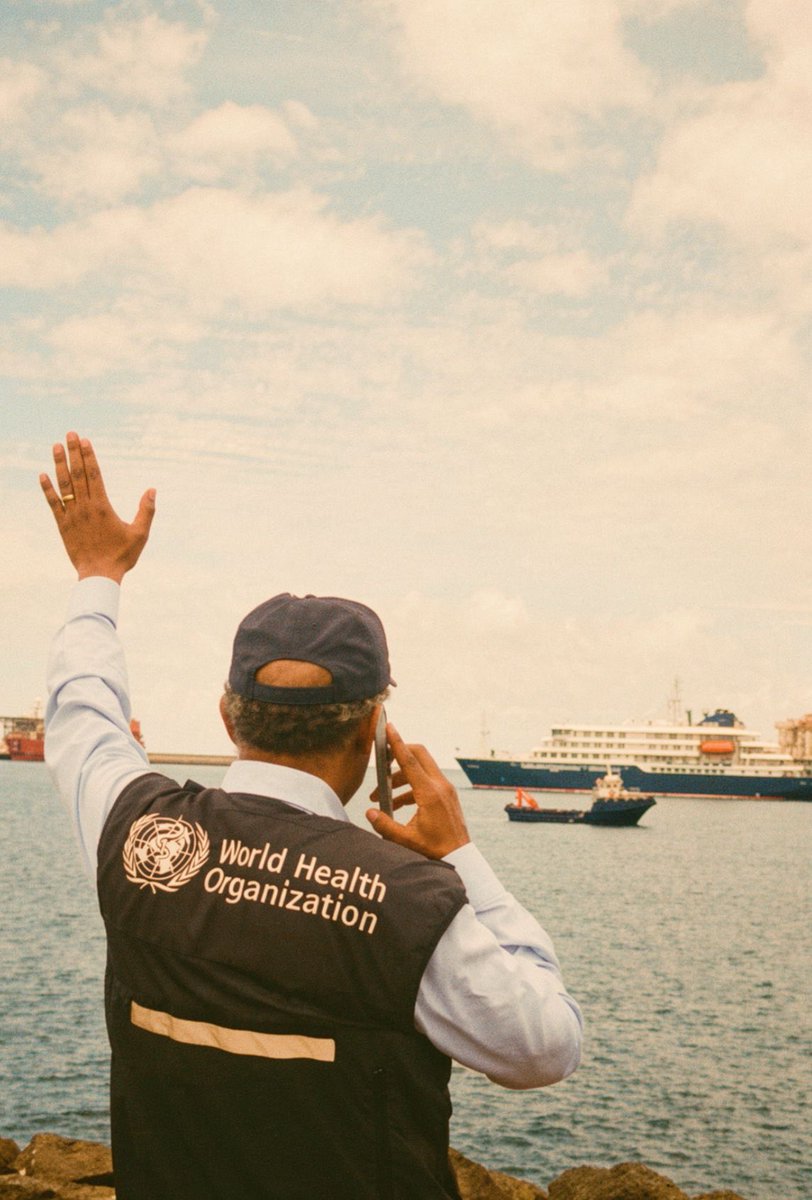
I just spoke with Dr @FreddyBanza5, the @WHO staff still on board of MV Hondius, and captain Jan Dobrogowski to get the latest updates. I used the opportunity to express my appreciation @ECDC_EU and the Dutch medical teams on board.
Last Tuesday, Freddy was deployed from the @WHOAFRO Emergency Hub on short notice to travel to Praia, Cabo Verde, following the request to conduct detailed epidemiological and environmental investigations before the ship could disembark. He immediately committed to serve on this mission.
This is not the first major WHO operation Freddy has actively participated in. Since 2012, he has supported several Ebola responses in the region, served as the deputy regional incident manager for COVID-19, and as the incident manager for cholera in the DRC.
#hantavirus
2
7
29
1,411
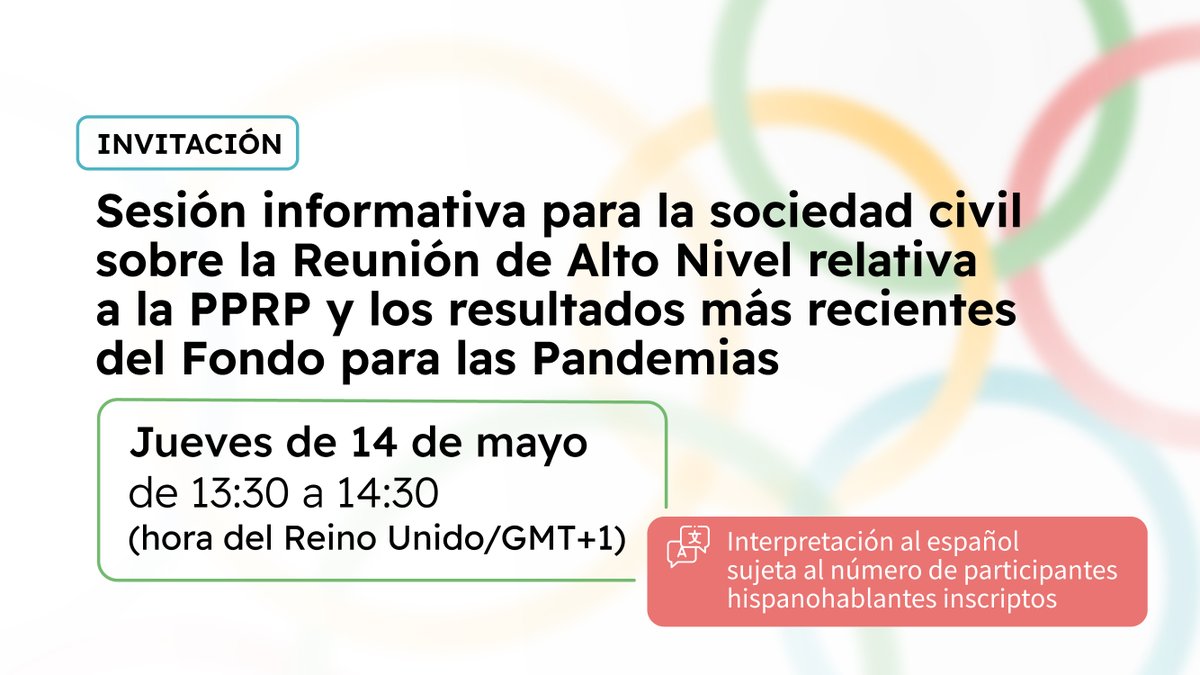
INVITACIÓN para organizaciones de la sociedad civil. Para registrarse: shorturl.at/nsA8J Les animamos a revisar y suscribirse a las solicitudes clave: shorturl.at/pHlSr @Pandemic_Fund @rani_action @TheElders @Arush_Lal @Loretta40009912 @Catwoman_alc @yops83
29