
Joined February 2022
- Tweets 1,028
- Following 1,765
- Followers 669
- Likes 2,809
51 Photos and videos









In DeFi, a bad upgrade is a loss of funds.
In identity, a bad upgrade costs you the user.
Soulbound tokens don't transfer. They don't get rewritten. One bad init or upgrade path = permanent damage.
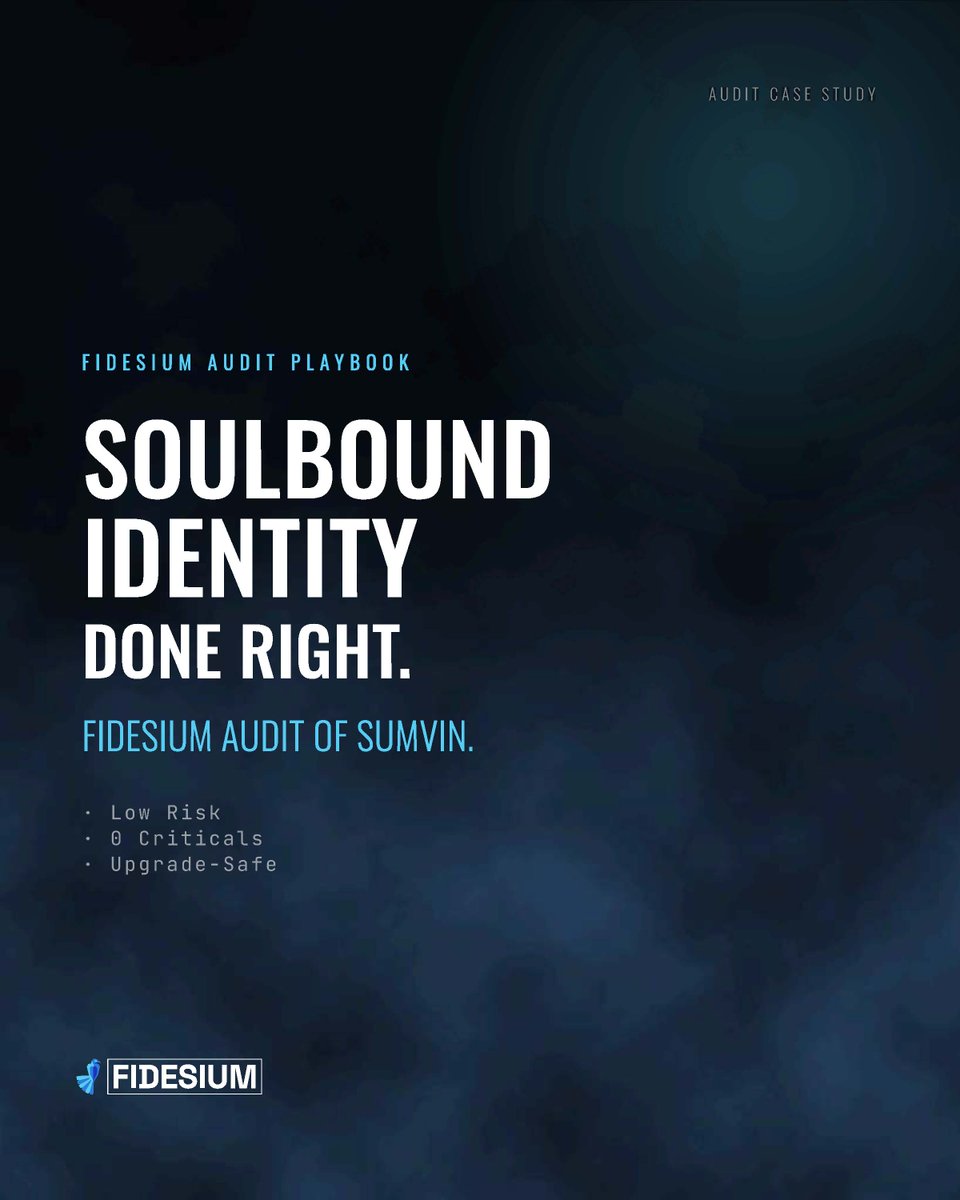
Last month we shipped an audit of @sumvin 's soulbound identity contracts.
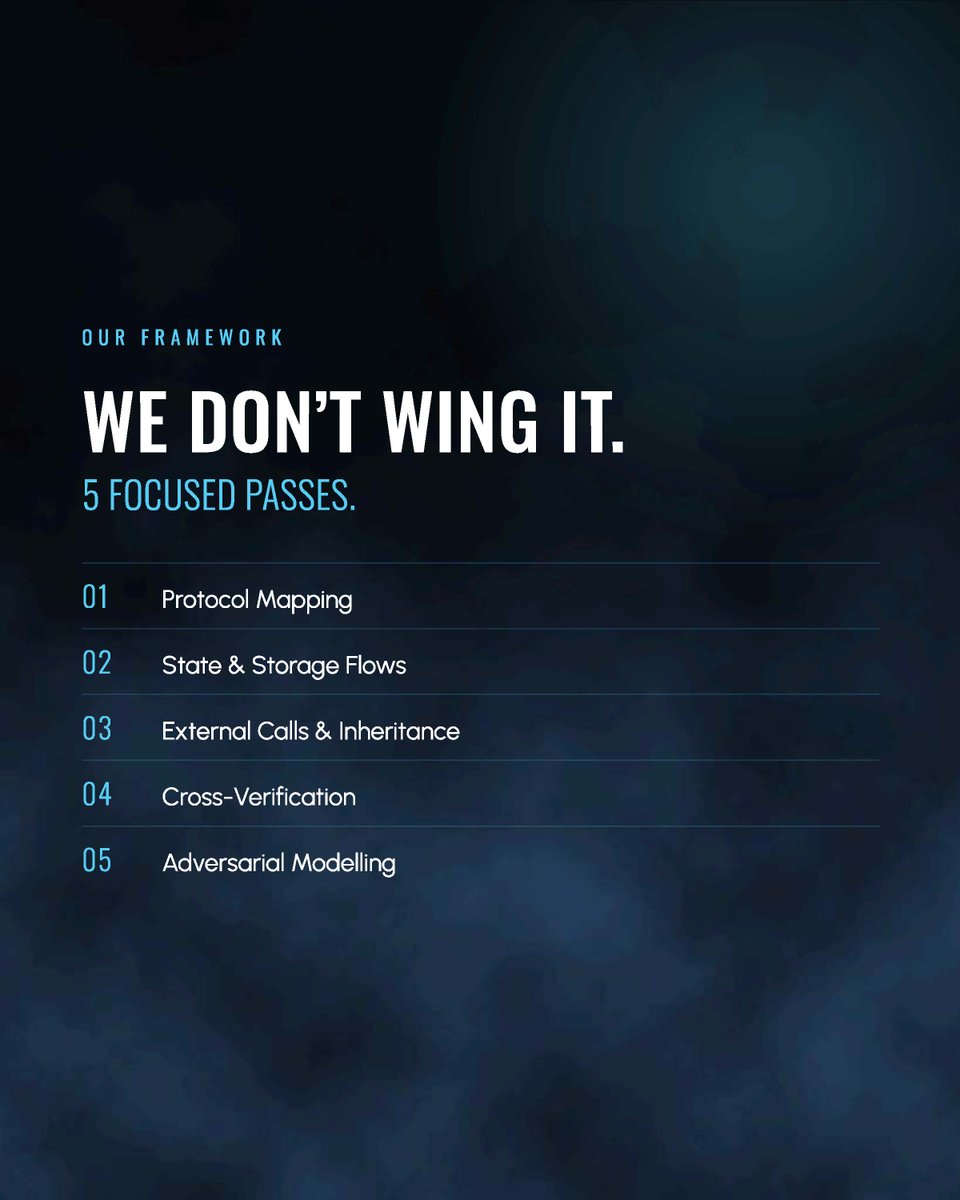
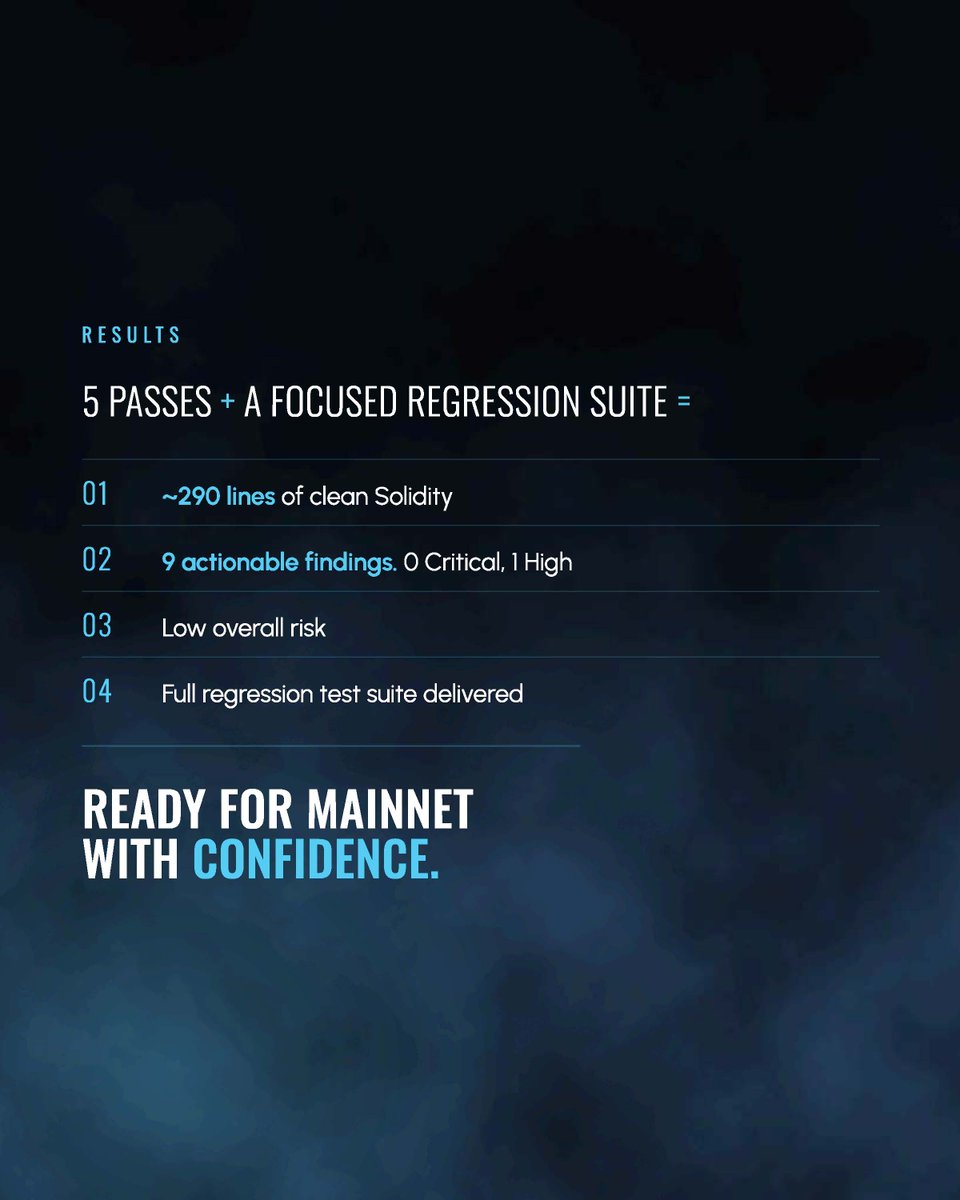
5 focused passes. ~290 lines of Solidity. 9 findings (0 Critical, 1 High). Low risk overall. Full regression test suite delivered with the report.
If you're building identity, attestation, or any issuer-controlled protocol: don't ship blind.
Get an audit that ships runnable tests, not just a PDF.
Full breakdown in the images.

1
2
24

Jun 8
I’m re-reading The Psychology of Money and one chapter keeps jumping out at me: Room for Error.
It’s a lesson I’ve learned the painful way.
More than once.
I’ve never been particularly good at building room for error into my plans. Whether it was money, business, health, or even my own energy levels, I often assumed things would go roughly to plan.
They rarely do.
What I’ve realised is that you need to build your margin far earlier than you think you need it.
Because when things are going wrong, that’s the worst possible time to start creating a safety net.
You won’t want to.
You’ll be stressed, emotional, tired, distracted, or scrambling to solve the immediate problem.
The reason you build room for error isn’t because bad things are guaranteed to happen.
It’s because if they do, you’re prepared.
When something unexpected happens, instead of panic, it’s simply:
“That’s annoying, but I planned for this.”
That shift is powerful.
Not just financially, but psychologically.
You don’t lose days, weeks, or months trying to recover from something you never accounted for.
You don’t burn unnecessary energy trying to put out fires.
You keep moving.
What’s interesting is that room for error applies to almost everything.
Money is the obvious one.
But health is the same.
Leaving yourself enough energy to recover.
Enough time to rest.
Enough capacity to handle a bad week without everything falling apart.
Business is no different.
Cash reserves.
Extra time on projects.
Not operating permanently at 100% capacity.
The people building interesting things often focus on optimisation.
But increasingly I think longevity matters more.
If nothing goes wrong, great.
You’ve built a buffer that can be reinvested elsewhere.
More opportunities.
More freedom.
More experiences.
More growth.
But if something does go wrong, and eventually something will, you’ve already paid the insurance premium.
Having room for error isn’t pessimism.
It’s one of the most practical forms of optimism there is.
28
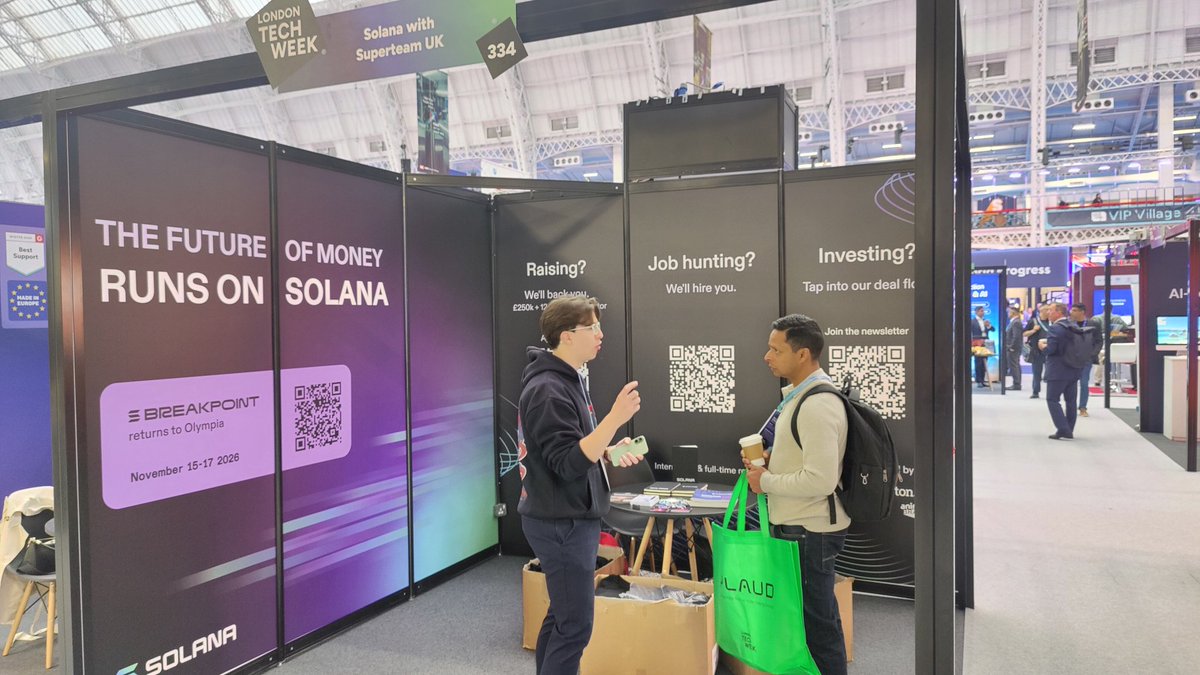
Starting the week of right with @LDNTechWeek and @solana
Surprises and prizes and special events.

2
2
16
653
Harry Crabtree 🦀 retweeted

🇬🇧 We’re unlocking complimentary London Tech Week Premium Passes (£795 value)
To enter:
→ Follow us
→ Like & RT
→ Comment “London” below
We’ll DM selected participants a promo code.
⚡ Priority will be given to members attending our London AI Coffee Salon event
Don’t miss your chance to meet the best builders in emerging tech and to join one of the world’s biggest technology gatherings

We’re at London Tech Week!
Looking for the room where the future of AI is being built - not discussed?
We’re hosting an intimate AI Coffee Salon for founders, researchers, investors, and operators working at the frontier.
Women-centred. Curated. Conversation-led.
No panels. No pitch decks. No badge scanning.
Just ambitious people and ambitious ideas.
Join us ↓

10
10
18
812
Massive supply chain attack live right now.
Big credit to @AikidoSecurity for spotting IronWorm: 30 npm packages from AsteroidDAO dropping a malicious Rust binary on preinstall. Steals 86 env vars, AWS/GCP/Vault/AI keys, drains Exodus wallets, then hides with eBPF rootkit Tor.
This is exactly why Web3 security isn’t one thing. It’s everything, all the time.
1
2
3
130
So proud of all the contributors. With enough voices maybe we can make London the heart of crypto
Jun 3

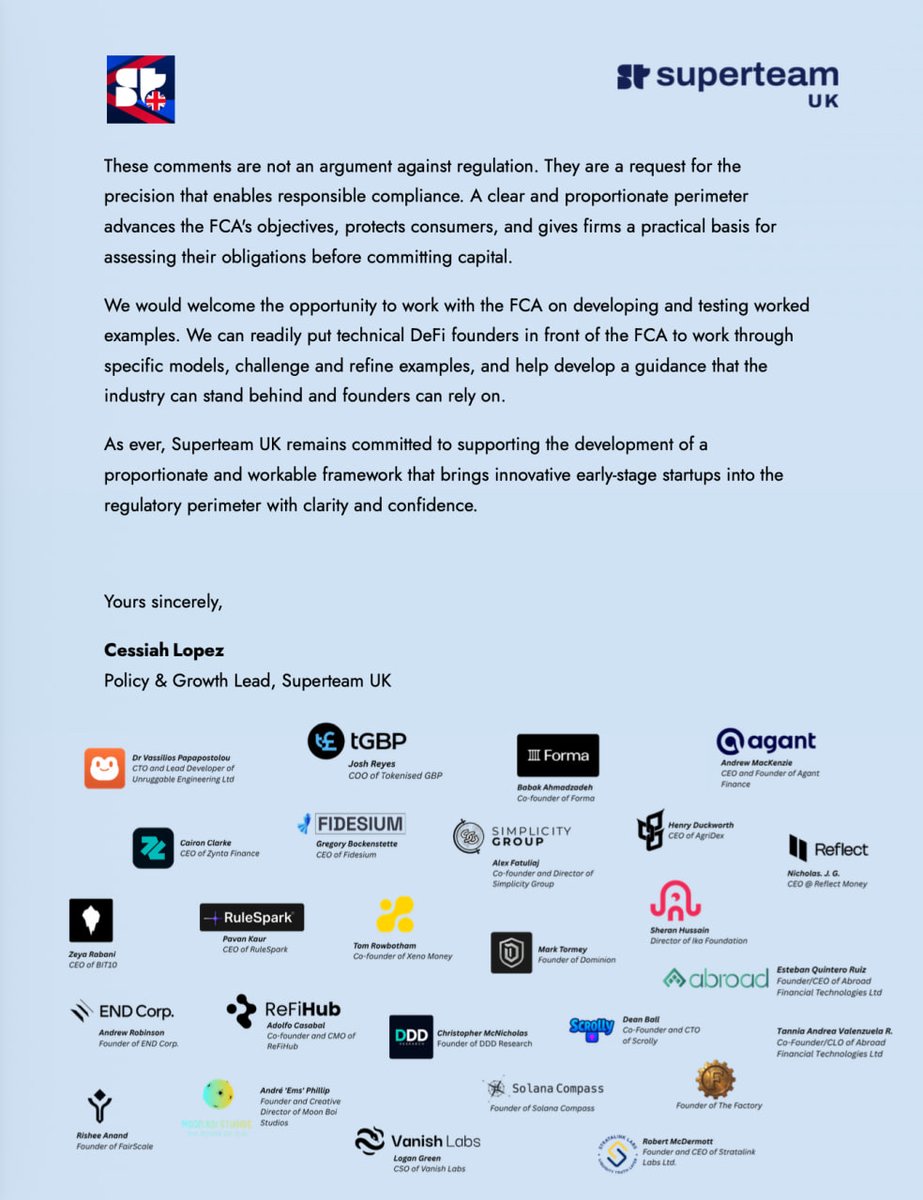
The future of DeFi in the UK shouldn't be decided without the people building it.
Today, we submit our response to the FCA's perimeter consultation.
Backed by 20 founders, all pushing for rules that can give DeFi a home here.
We fight for the progress we need. 🦾🇬🇧
1
1
7
365
Harry Crabtree 🦀 retweeted

Jun 3
🚨ALPHA WIRE🚨 ALPHA WIRE June 3rd
- BTC just got obliterated below $67K; worst single-day crash since April and third time re-testing February lows.
- @MicroStrategy sold Bitcoin for the first time since 2022 (32 BTC).
- U.S. Treasury sanctions Iran’s largest crypto exchange ( @nobitexmarket ) amid escalating tensions.
- @Grayscale launches low-fee @HyperliquidX staking ETF (HYPG) UK FCA warns Premier League clubs on crypto deals.
- Is the worst yet to come?
Follow @alphawirehq for more daily alpha
4
4
7
250
May 28
Great article and commentary
Worth a read.

2
78
Using the latest tools and agents to attack your own project is the the new necessary step in security.
You really want to do this before someone else does.

1
3
5
227
Harry Crabtree 🦀 retweeted

May 22
Your post made me curious and was something simply new.
Thanks for highlighting it
May 22

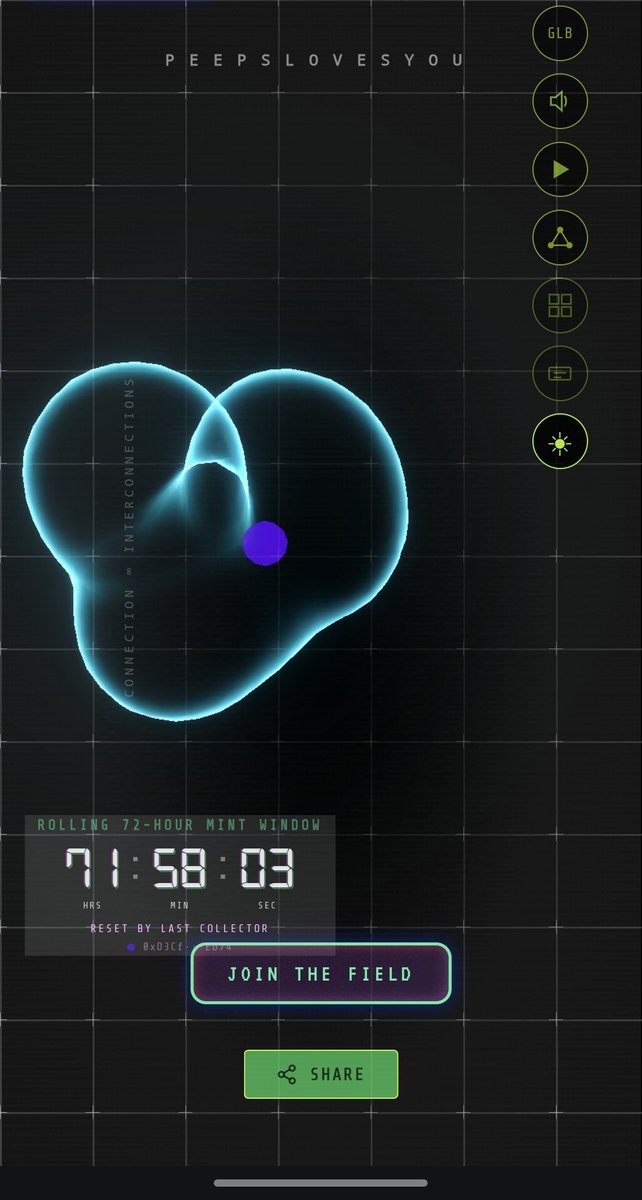
I just minted CONNECTIONS ♾️ INTERCONNECTIONS — a fully onchain artwork on Ethereum that dynamically updates to display every collector, together. @PeepingTallulah #PEEPSLOVESYOU #CONNECTIONSINTERCONNECTIONS peepslovesyou.com
1
1
4
144
Harry Crabtree 🦀 retweeted

May 18
CONNECTIONS ♾️ INTERCONNECTIONS
◈ FULLY ONCHAIN ◈ DYNAMIC ◈ ALIVE
MINT OPENS TODAY · 17:00 UTC
72 HOUR ROLLING MINT WINDOW
0.0011 ETH · MAX 12 PER TX
every collector becomes part of one
infinite shared composition.
the field grows with every voice.
25
22
73
11,077
Just read @asen_sec's article on AI replacing auditors, and while I agree with a lot of what he says I wonder if AI agents are actually getting better at auditing web3 code?
Or are we just seeing smarter prompting and agent workflows around models that haven’t meaningfully improved?
The moment the human steering sucks, the audit quality collapses pretty significantly.
It is definitely worth a read - x.com/asen_sec/status/205388…

2
2
11
758
Harry Crabtree 🦀 retweeted

Most Digital Asset startups fail for the same reason every startup fails: they ignore the fundamentals.
Tokens do not replace unit economics, and community does not replace product market fit. The technology is new; the rules of business are not.
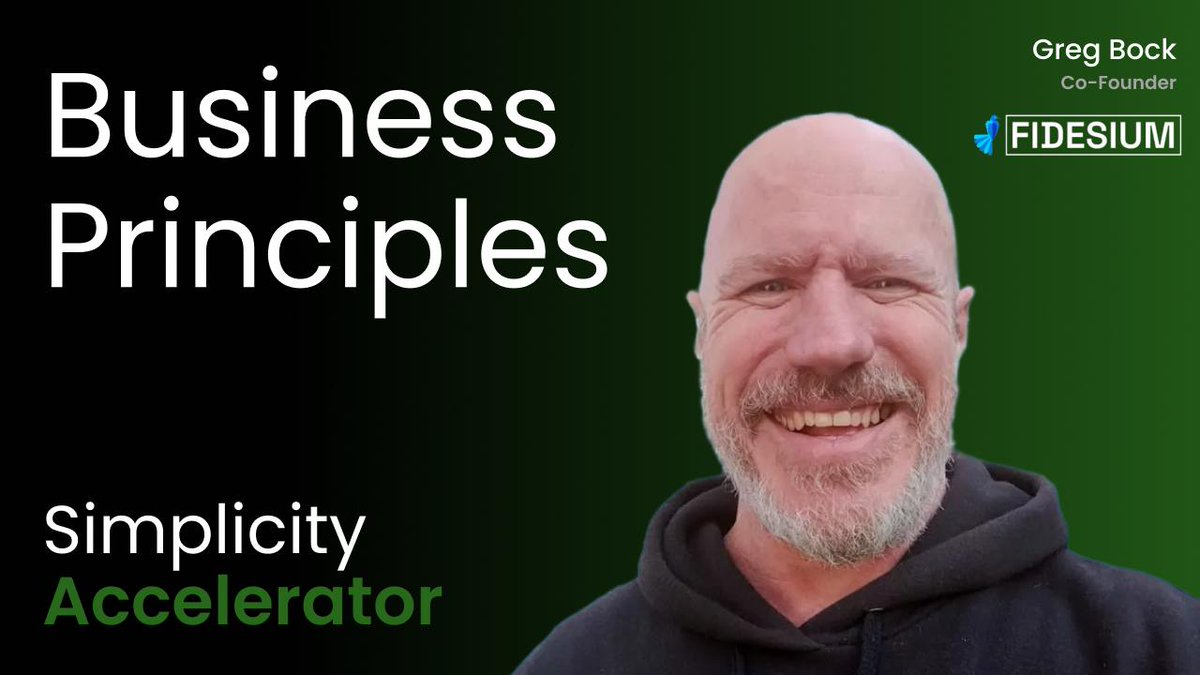
@bockus, Co-Founder of @Fidesiumapp, opened our accelerator with a lecture on what every founder needs to internalise before building a business: friction debt in the product, runway management through a bear, and how to identify a North Star Metric instead of chasing vanity numbers.
Watch the full lecture here:
youtube.com/watch?v=XzXiqAZo…
2
8
157
Harry Crabtree 🦀 retweeted
Apr 2
— CONNECTIONS ♾ INTERCONNECTIONS —
Coming soon - A personal project about US.
This is a prototype of a living artwork — a single organism that breathes, drifts, and reshapes itself in real time. Built entirely in code, no 3D modelling software. The geometry is generated procedurally — it’s not decorative, it’s a direct mathematical consequence of what lives within.
Everything is connected. Everything flows. The form is dictated by participation.
#creativecoding #generativeart #threejs #marchingcubes #digitalart #prototype
Mar 30

— CONNECTIONS ♾ INTERCONNECTIONS —
~ progress report 2. I've been prototyping an ecosystem with a direct mathematical response to the internal network.
~ It's alive, always in motion.
~ each person adding to a shared living artwork that gets richer the more people join.
~ thank you @arthr for taking the time to give me some feedback 🤌💚. i may reach out to more of you 🙏
6
8
29
1,214
Harry Crabtree 🦀 retweeted

May 5
We've raised $2.2B in committed capital to invest in the next generation of crypto.
Announcing Crypto Fund 5

351
315
2,810
668,096
Harry Crabtree 🦀 retweeted

May 4
boy do i love going micro viral on british x
literally zero reply bots. everyone is super friendly and invites for a pint. you check a new follower and they are doing oxford dphil in some esoteric math
May 3

don’t tell me there is a pub called the tokenhouse in central london and we didn’t do an ai meetup in it yet

10
3
155
11,650
May 1
Uk finally catching up

NEW: The UK's FCA clears asset managers to run fund registers on blockchain and process subscriptions directly onchain under existing rules, giving tokenized funds a clear regulatory path without needing separate experimental structures.


2
2
148