Curated community of expert longevity researchers, entrepreneurs, and investors. Non-profit. We host events- youtube.com/@LongevityGlob…. Tweets by @DrGlorioso.
Joined March 2022
- Tweets 4,767
- Following 1,196
- Followers 3,492
- Likes 1,335
220 Photos and videos

Longevity Global retweeted

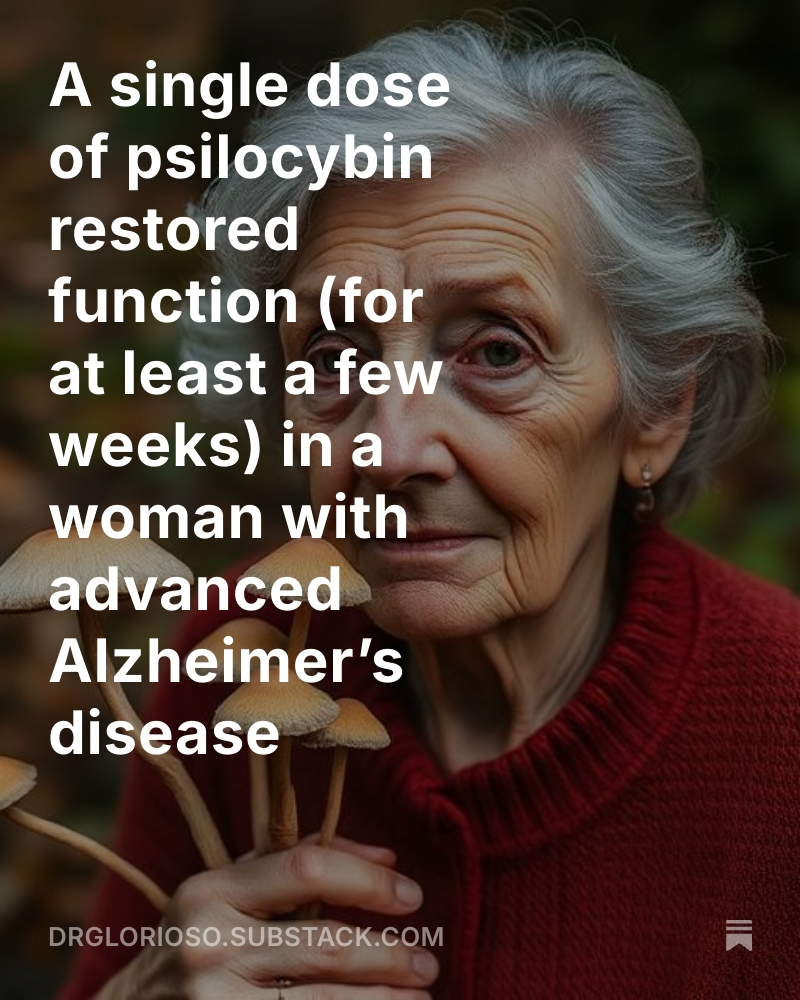
A single dose of psilocybin restored function (for at least a few weeks) in a woman with advanced Alzheimer’s disease
🧠 A case report published in Frontiers in Neuroscience on May 28, 2026 describes a late-stage Alzheimer’s patient recovering function following a “heroic” dose of psilocybin mushrooms.
🇧🇷 ⛪ The work came from the medical department of a São Paulo, Brazil association that public business records list as a religious or philosophical organization founded in 2025, with the senior author as its president- not under IRB so grain of salt is warranted.
👩🦳 The woman had chronic urinary incontinence, difficulty swallowing, flat affect, dependent mobility, and very little spontaneous interaction all of which reversed at least for the month or so they reported on. The effects started to fade at 1 month and they re-dosed her with 3 grams.
🐁 🧠 The idea that lost memories can be inaccessible rather than erased has a track record in mice. In 2007, Dr. Li-Huei Tsai's lab at MIT reopened access to old memories in mice with real brain atrophy, using an enriched cage with running wheels. In 2016, Dr. Susumu Tonegawa's group restored memories that looked gone by switching the cells that held them back on.
My take. The interesting hypothesis is that part of what looks like permanent loss in late Alzheimer's may be a network access problem, not only tissue that is gone for good and psilocybin may be able to help it. Controlled trials in earlier-stage cognitive impairment are already running and will give us further insight.
Full post: drglorioso.substack.com/p/a-…
2
7
298
Longevity Global retweeted
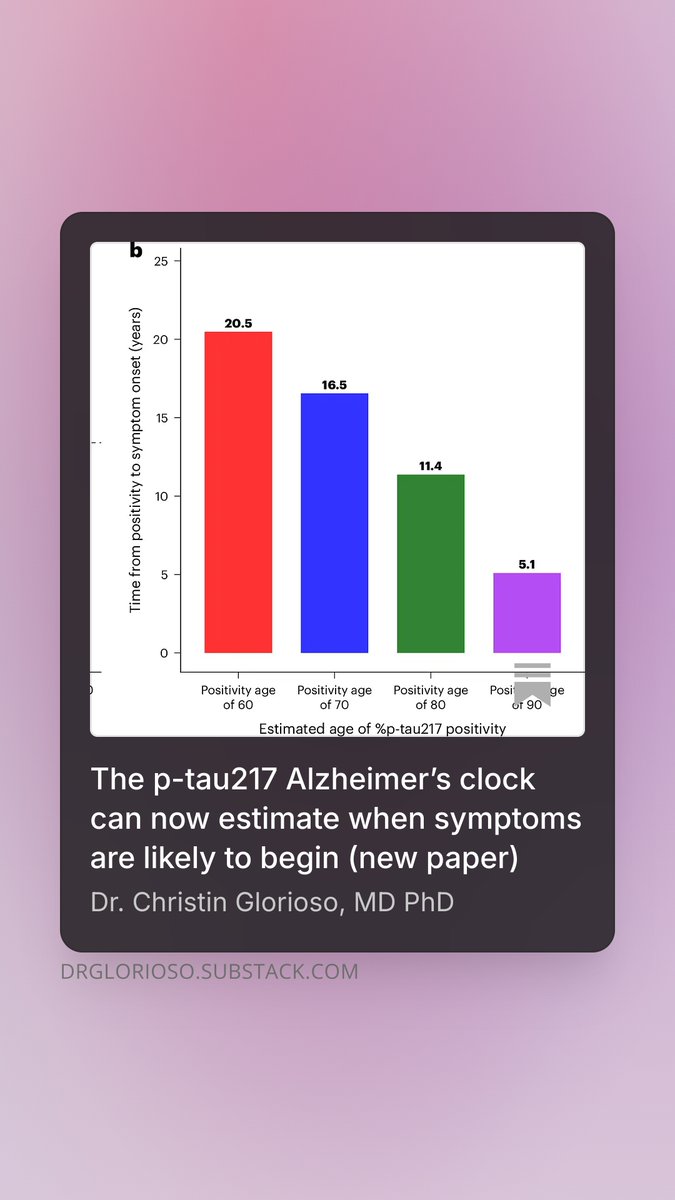
The p-tau217 Alzheimer’s clock can now estimate when symptoms are likely to begin (new paper)
In a new study in Nature Medicine, a team at Washington University in St. Louis built a model that estimates, from one blood draw, the age at which someone is likely to start showing Alzheimer's symptoms. A marker clinicians already use for diagnosis is starting to look like a timeline.
The bottom line is that a single measurement of p-tau217 can now estimate when symptoms might begin within about three to four years.
🩸 p-tau217 is a tau molecule, but what drives its rise is amyloid, so it climbs early, around the time amyloid becomes detectable and well before tau tangles show up on a scan.
⏱️ In the study of 603 older adults, the model estimated the age of symptom onset within about three to four years, a bit like reading tree rings to tell how far along the process is.
📜 In 2025 the FDA cleared the first p-tau217 blood test to aid diagnosis, and in 2026 this work pushed the question from whether the disease is present toward roughly when symptoms may begin.
📉 The number is not fixed. Amyloid-clearing antibodies lower it by 35 to 39 percent, and even oral semaglutide moved tau-related markers, an early hint that the pathway can be reached.
🧬 No single marker carries the whole picture. p-tau217 is strongest read as part of a panel that also captures neurodegeneration and overall brain aging.
The timing idea fits how I have long thought about brain aging, placing a person on a trajectory rather than sorting them into positive or negative.
One finding I am still a little skeptical of is the claim that becoming positive later in life leaves less time before symptoms, because the age at positivity here was modeled rather than measured directly. I would want longer studies that follow the same people serially with p-tau217 before I take that one as settled. What does hold up is that the marker moves early and reads out from a simple blood draw, which is what prevention has needed.
The real gains will come from layering markers rather than relying on one. Combining p-tau217 with neurofilament light and multi-omic signals, including the RNA-based brain aging clock we use at NeuroAge, should sharpen the estimate of where someone sits and where they are heading beyond what any single number can do. That layered, multi-omics direction is where I expect prevention to go.
Full post: drglorioso.substack.com/p/th…
#BrainHealth #Alzheimers #Longevity
4
7
447
Longevity Global retweeted

May 29
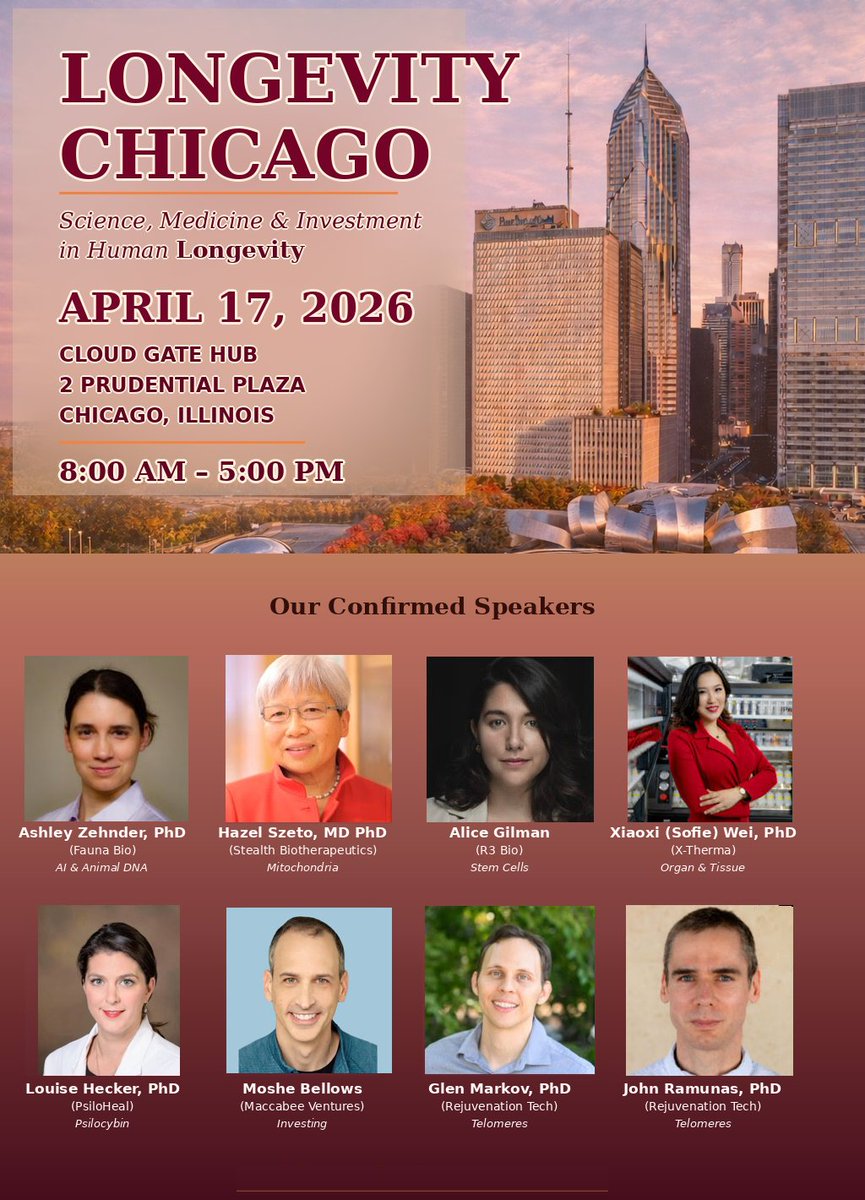
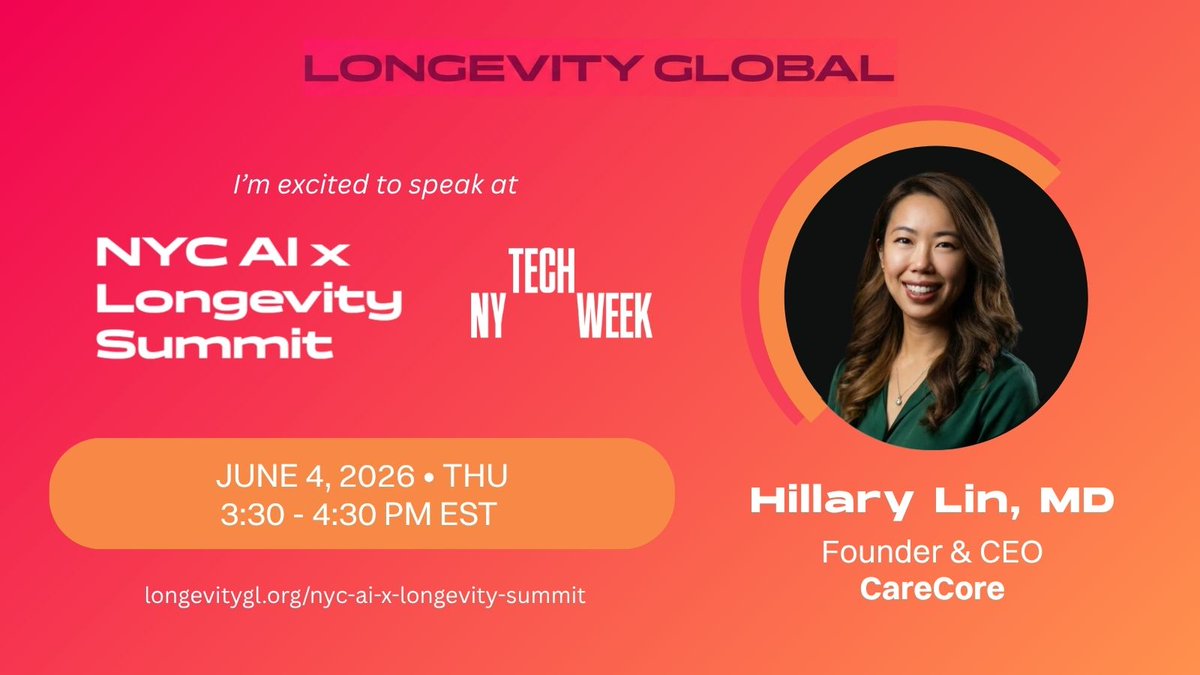
1/4 Speaking at NYC AI x Longevity Summit during NYC Tech Week on Jun 4–5.
I’m on the AI in Clinical Practice panel Thu 3:30–4:30p ET w/ @mishalreja, @NeilpDo Jim Donnelly, hosted by @LongevityGL.
2
2
6
537
Longevity Global retweeted

May 29
Will you be in NYC during @Techweek_?
Don't miss the @LongevityGL AI x Longevity Summit on June 4-5, bringing together researchers, founders, investors, and more.
Agenda and registration:
ow.ly/eBQT50Z5JIw
6
11
858
Longevity Global retweeted
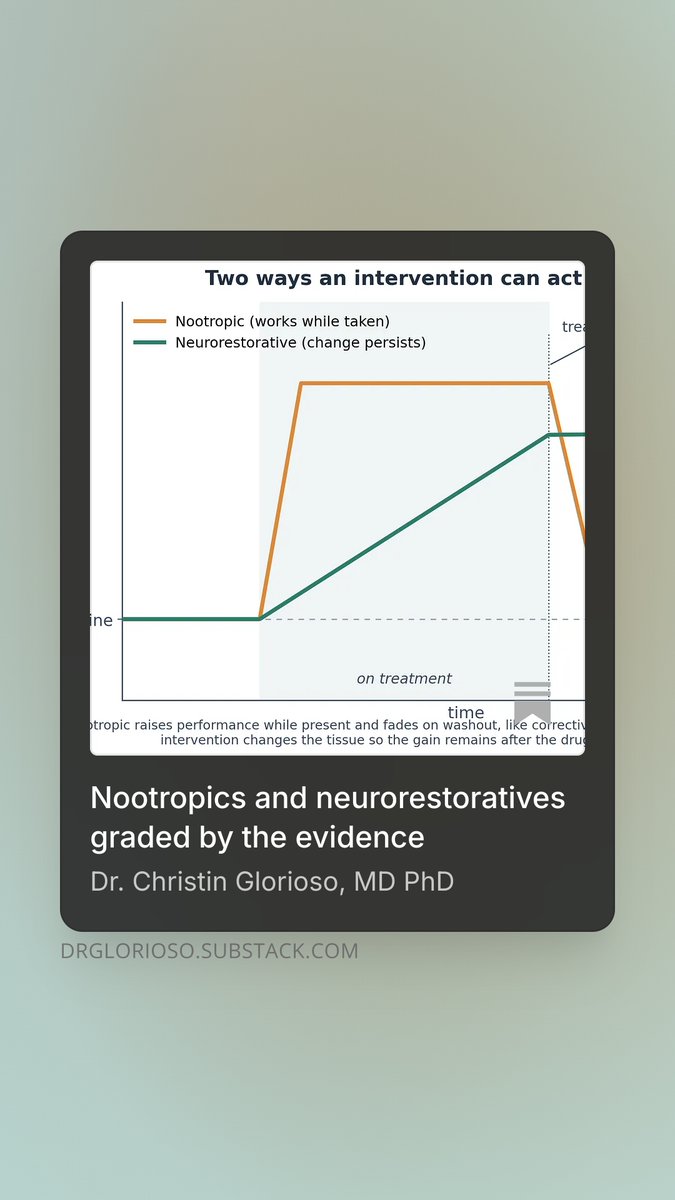
Nootropics and neurorestoratives graded by the evidence
The question I get most about brain supplements and drugs is about what works and what people should take.
The simplest way to classify a compound is to ask what happens after you stop taking it. If the benefit disappears within days, it was tuning the function of circuits that were already intact, which makes it a nootropic. If the benefit holds, the intervention changed something durable about the tissue, its connectivity, its vasculature, or its cellular state, which makes it neurorestorative.
Nootropics with best evidence in order:
1. Caffeine: blocks adenosine receptors to reduce the sense of fatigue and raise arousal, and it has more controlled trials behind it than any other cognitive enhancer, which makes it the reliable choice for alertness and sustained attention.
2. Caffeine with L-theanine: A 2025 meta-analysis of randomized trials found small-to-moderate improvements in attention and task switching.
3. Prescription stimulants- In people without ADHD a meta-analysis of 48 placebo-controlled trials found only small effects on inhibitory control and memory, and its authors noted that much of what healthy users feel may be improved energy and motivation rather than faster thinking.
4. Modafinil: A 2015 systematic review found measurable gains in attention and executive function in people who are not sleep deprived
5. Guanfacine: its effect is clearest in ADHD and minimal in healthy people
6. Creatine: A 2024 randomized trial found that a single high dose reduced the decline in processing speed and memory during overnight sleep deprivation, with a smaller effect in rested people.
7. Bacopa monnieri: A meta-analysis of nine trials found improvements in memory and attention
8. Nicotine: an agonist at nicotinic acetylcholine receptors, produces a measurable improvement in attention.
9. L-tyrosine, citicoline, alpha-GPC, and the racetams have thinner support, though not none.
Neurorestoratives:
1. Aerobic exercise: in a one-year randomized trial in older adults, a walking program increased anterior hippocampal volume by about 2 percent, while the same region shrank by about 1.4 percent in the control group.
2. Speed-of-processing training: In the randomized ACTIVE trial in older adults it lowered the risk of dementia by roughly 29% over 10 years
3. Mindfulness meditation and 3D video game training: controlled studies found gray matter increases on MRI
4. Anti-amyloid antibodies: In phase 3 trials, lecanemab and donanemab slowed clinical decline in early Alzheimer’s
5. B vitamins: In the VITACOG trial, high-dose B vitamins in older adults with mild cognitive impairment and elevated homocysteine reduced atrophy in the gray matter regions most vulnerable to Alzheimer’s disease 6. Omega-3: a 2025 analysis from the DO-HEALTH trial showed slowing of several DNA methylation agin clocks
Full post: drglorioso.substack.com/p/no…
3
5
447
Longevity Global retweeted

May 27
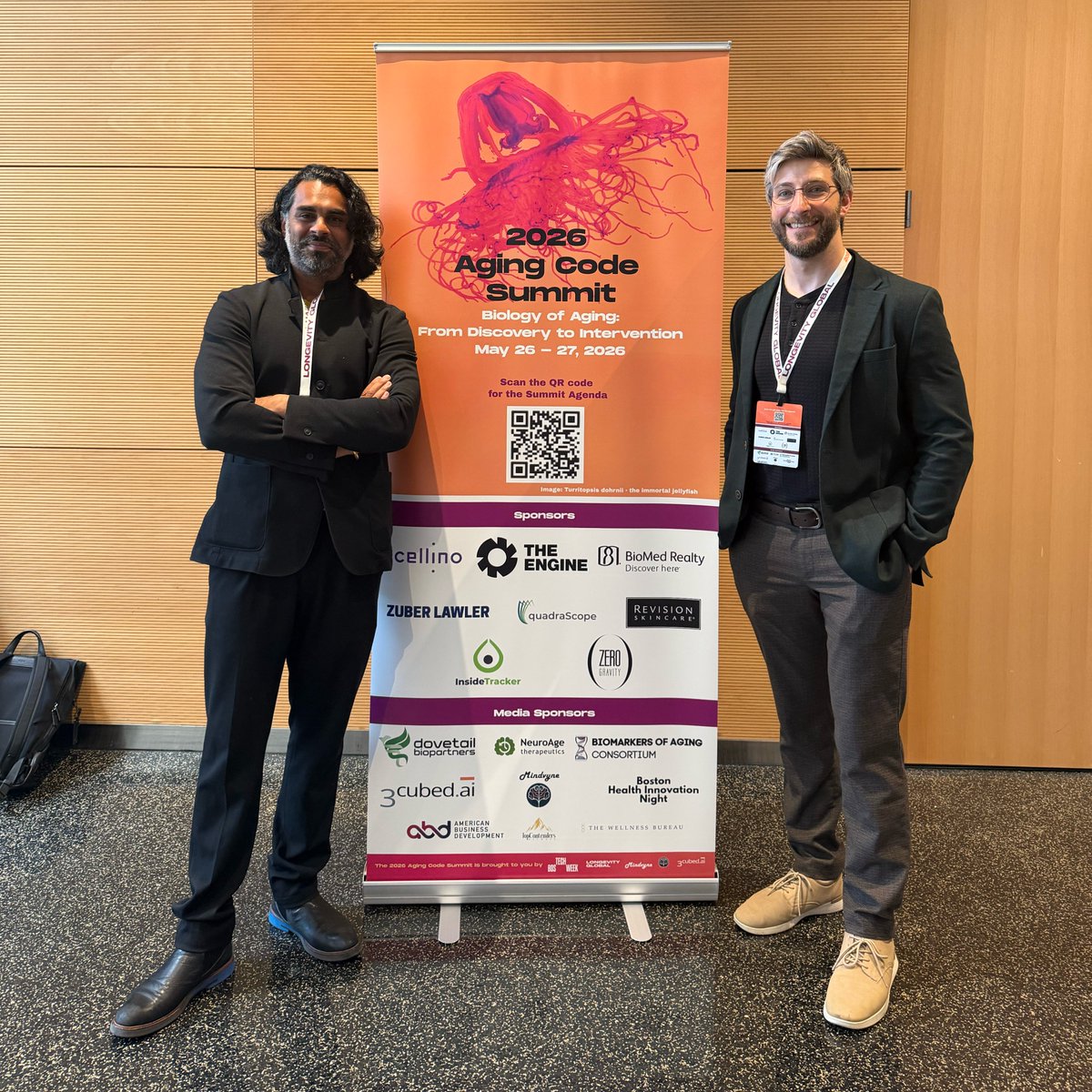
Just back from the Aging Code Summit during @Techweek_
If you've been watching longevity from the sidelines, this is where the actual conversation is. Omniscope is busy decoding the immune system, the definitive marker of health and aging.
omniscope.ai/lifetime
@LongevityGL
1
2
1
182
Longevity Global retweeted
May 28
Longevity medicine has a major bottleneck.
And it's not even the science.
It's care delivery.
Because most health decisions don’t happen in a doctor’s office.
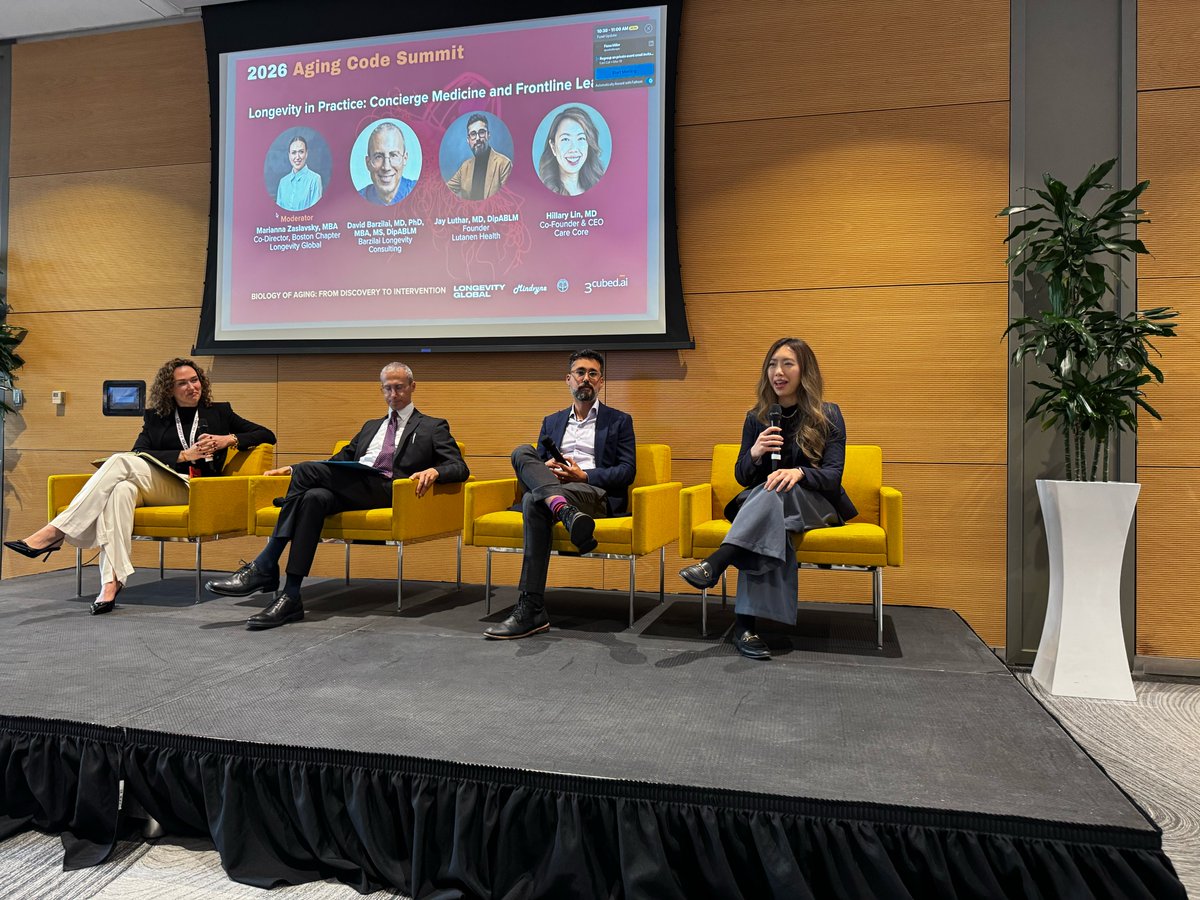
Spent the last two days at the Aging Code Summit in Cambridge with scientists, founders, investors, and clinicians working across biomarkers, therapeutics, AI, neurodegeneration, inflammation, regenerative medicine, and clinical trials.
The discovery engine is real.
But as a practicing longevity clinician, I kept thinking about the layer after discovery:
How does any of this actually reach people?
Not just the patient with time, money, and medical literacy.
Not just the person who can find the right concierge doctor.
And not just once a year, during a visit.
People make health decisions every day: in grocery stores, gyms, group chats, supplement aisles, lab portals, algorithm feeds, and anxious 11pm searches.
Most of those moments do not involve a physician.
So if the future of longevity is “clone more doctors,” we’re going to fail.
There will never be enough of us. And that’s not how people live.
The real opportunity is to build better surfaces for healthcare:
- tools that translate evidence into action
- systems that support follow-through
- guardrails against overtesting, overtreatment, and false certainty
- care models that meet patients where they already are
That’s the part I care most about building.
Longevity needs great science.
It also needs delivery models that make the science usable. @gocarecore
Thanks so much to @LongevityGL for another amazing meeting, and fellow speakers, organizers, and attendees: @Mindvyne @3cubedAi @DrGlorioso @justinqtaylor @NeuroAgeTX @agingdoc1 @usnehal @CoreViva @agelessrx_ @kpfortney @bioagelabs @lifebiosciences @JamieHeywood @microbeminded2 @polybioRF @mahdi_moqri @agingbiomarkers @manoliskellis @MIT_Picower @DrDorisDay @VincereBio @InSilicoMeds @hevolution_f @CellinoBio @MariZazzer
1
3
7
797
Longevity Global retweeted
May 28
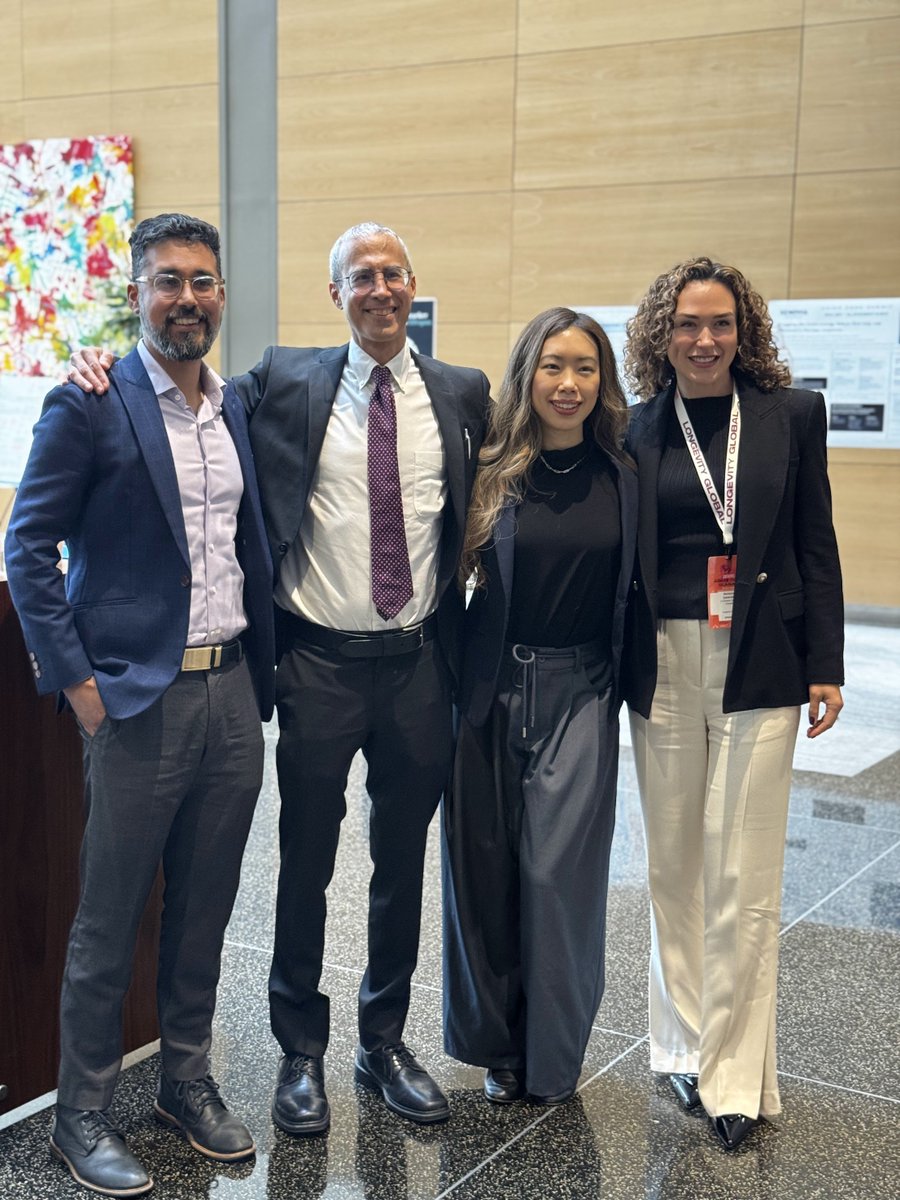
Much fun to reunite with fellow longevity physicians and brilliant speakers @agingdoc1, Dr. Jay Luthar, @MariZazzer @LongevityGL - can't wait till our next panel together 💪
1
2
237
Longevity Global retweeted
NeuroAge Therapeutics featured in Stat News article on Vitalist Bay.
Body scans, blood tests, and bodyoids
Most people in the longevity community are focused on preserving their health as long as they can — either to make it to the current outer limits of longevity, about 120 robust years or so, or to last long enough that science achieves what’s known as longevity escape velocity, where advancements keep piling up so that there’s no limit on how long life might last...
I stopped to talk with NeuroAge founder and CEO Christin Glorioso, a neuroscientist who was inspired to start the company because her grandmother developed Alzheimer’s. (Peterson’s mother had Alzheimer’s too; it was a common thread among attendees.) Using brain MRIs and blood biomarkers, the NeuroAge tests aim to help give people the tools to prevent dementia with both data and recommended interventions. Glorioso said she’d been able to grow her own hippocampus 1.5%, which she credited to some combination of hormone replacement therapy, better sleep, statins, VO2 max training, Norwegian 4X4 high-intensity interval training, and GLP-1 drugs.
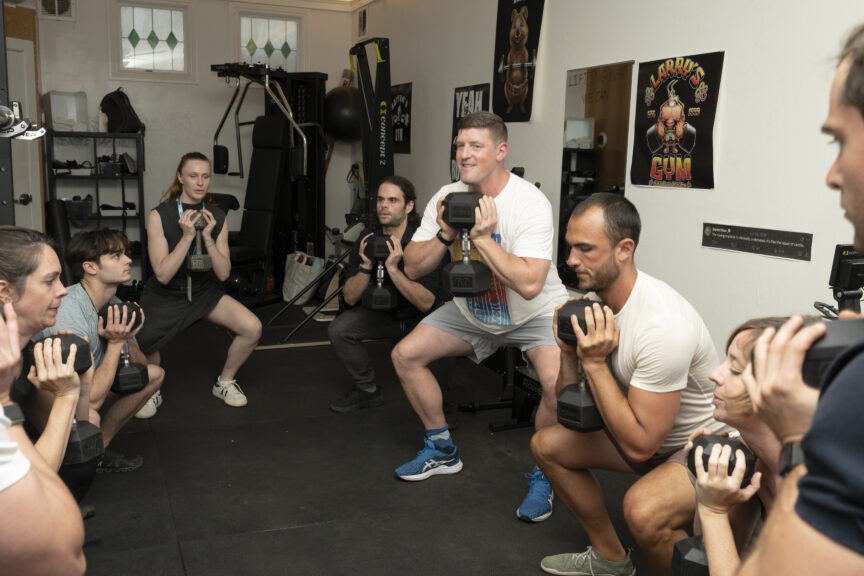
Beside her was Stephen Hubbard, a buff director of business development at NeuroAge and leader of the Biotech Barbell Club, who was also leading weightlifting sessions elsewhere on the Lighthaven premises. I asked about the political breakdown of the longevity crowd, having just wandered away from a speech by the grandson of economist Milton Friedman about seasteading and charter cities. There were a fair amount of libertarians and some fans of the Make America Healthy Again movement, Hubbard said, though he did not count himself among their ranks. “Can’t we have sanity around vaccines and pullups?” he said.
Whatever one’s goal, it was clear from the companies with booths set up at Vitalist Bay that there are ample opportunities in the business of longevity. Most of these were focused on personalized medicine. Along with Rythm ($79 a month), I spotted biological age testing company TruDiagnostic ($499 for a one-time test), brain age testing company NeuroAge ($1,398 for the most popular plan), and sleep testing company Empower Sleep ($1,200 for the basic plan)...
What motivated many people at Vitalist Bay was not so much the chance to live forever, it seemed, but more freedom to enjoy all the different things that make them feel happy and fulfilled in abundance. For that, the typical human lifespan simply isn’t long enough.
One ebullient woman at a weight-lifting session predicted she’d live about 5,000 years. I asked what she’d do with all those bonus millennia. “I don’t know,” she said. “But I’d like to find out.”
Full article: statnews.com/2026/05/27/long…
3
4
310
Longevity Global retweeted
Exercise Timing and Your Chronotype
I have historically been a night owl, and early-morning exercise left me yawning by 10am and depleted for the rest of the day.
Also my Oura ring data flags my evening workouts as detrimental to recovery, showing suppressed overnight heart rate variability and elevated nocturnal resting heart rate, which leads me to feel pressured to shift my workout earlier on the assumption that exercising at night is harmful.
What the science shows:
📱 📉 For Oura, WHOOP, or similar device users, suppressed HRV after evening exercise represents information about acute autonomic recovery rather than a verdict on long-term harm
🕐 Midday-afternoon exercise had lower all-cause mortality than morning-dominant timing in the general population
🌙 Evening exercise had the strongest mortality benefit in adults with obesity (61% lower)
⏰ The biggest risk signal was chronotype-exercise mismatch (early workouts in night owls, late workouts in larks)
⏱️ Learn your chronotype through MCTQ and/or genetic testing and match your workout to it
Full post: drglorioso.substack.com/p/ex…
1
2
4
245
Longevity Global retweeted

May 18
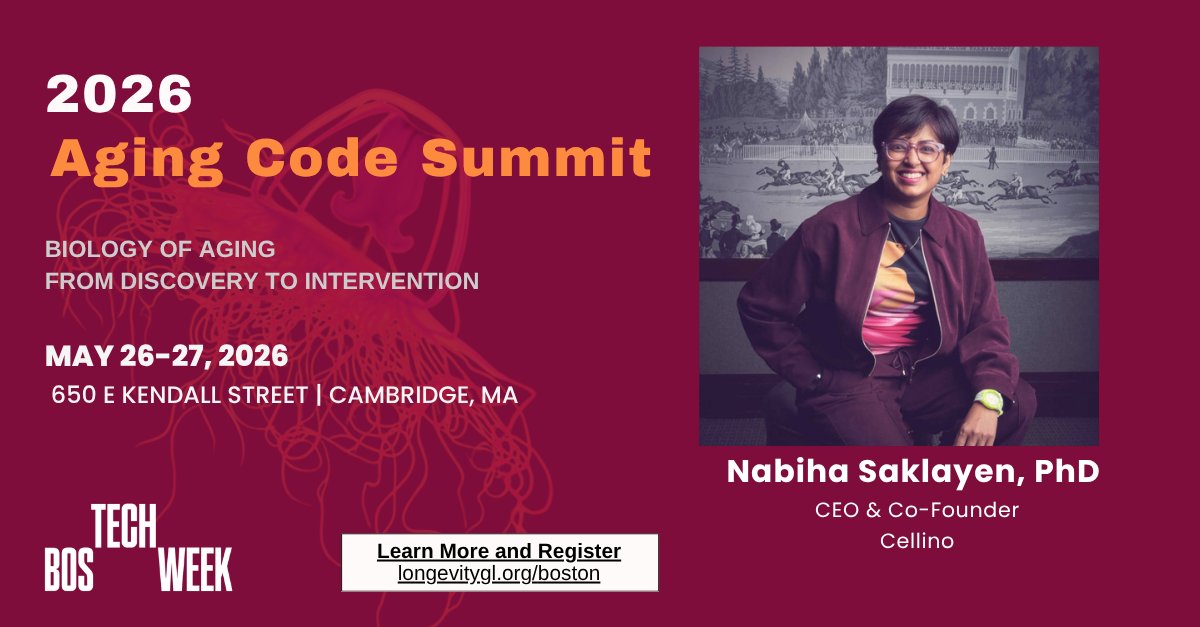
🗓️ Join @nabsicle, our CEO & Co-Founder, at @LongevityGL’s Aging Code Summit during #BOSTechWeek on May 26 at 1:30 PM ET to discuss #AI’s role in #AgingResearch. 👉 Use code CELLINOGUEST50 at longevitygl.org/boston.
2
3
213
Longevity Global retweeted
Some VCs have told me to “pick a lane”, here’s why I think this is fundamentally wrong
Biotech companies have been told to focus on either diagnostics or therapeutics but not both, which is a holdover from 1995 industry structure.
That structure no longer reflects the value proposition of Biotech in the age of AI. Foundation models need millions of multi-modal patient observations to learn patterns of disease progression and treatment response. Only the integrated company can generate that dataset.
A few things readers might not know:
🔬 Roche has spent ~$4.3B assembling integrated capability through M&A: $1.9B for Flatiron Health (oncology real-world evidence) and $2.4B for Foundation Medicine (cancer genomic profiling)
📊 Tempus reached public markets at a $6.1B valuation in June 2024 and reported ~$1.27B in 2025 revenue, up 83% year over year. 95% of top pharma companies by revenue are customers
💊 The integrated model can plausibly take Phase 2 to approval probability from ~10% to 30-50%, with per-approved-drug development cost falling 60-80%
🧬 Brain aging has measurable biomarkers decades before clinical Alzheimer's symptoms but we don't yet have the datasets that we need to create personalized therapeutics.
At NeuroAge, we are building an integrated closed loop system from day one. The consumer platform generates the privacy protected multi-modal data in that powers the AI to surface drug targets, and the same data tells us which patients are most likely to respond. That feedback loop only exists because the data and discovery live in one company.
The next decade of medicine will be defined by vertical specialists building this natively across brain aging, cardiometabolic disease, autoimmune disease, mental health, and rare disease. We will see the loops present in tech companies like Google and Tesla emerging in biotech, creating huge data advantages and finally executing with the speed that we need to cure diseases quickly.
Full post: drglorioso.substack.com/p/wh…
3
4
8
653
Longevity Global retweeted
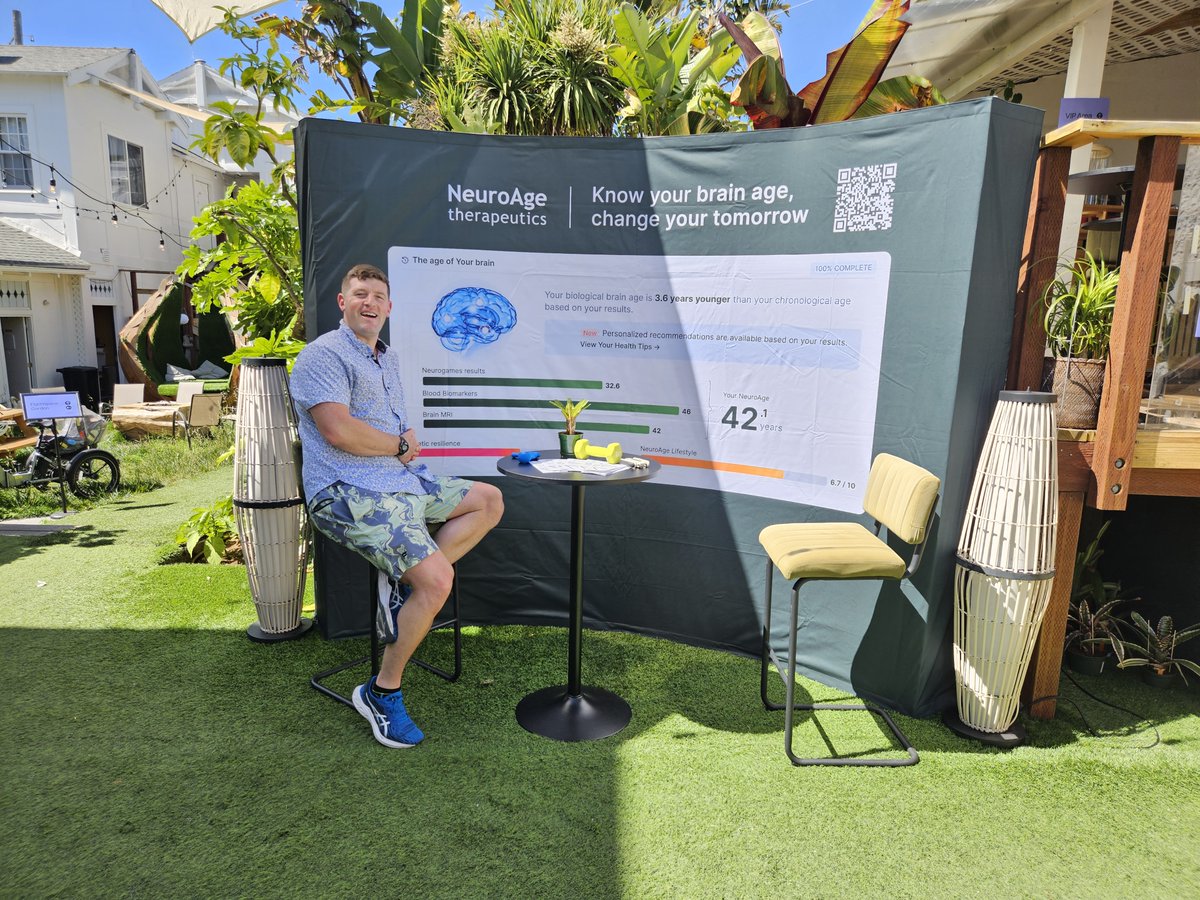
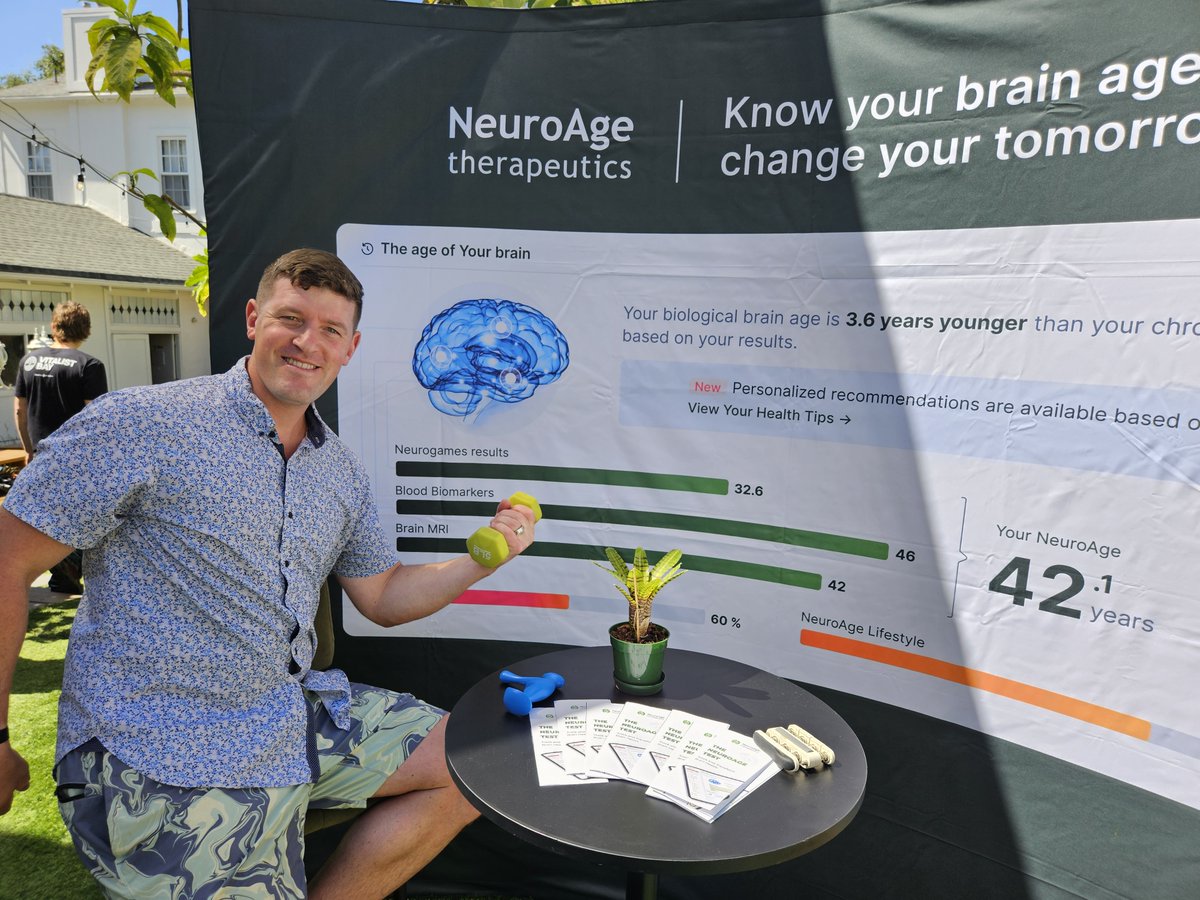
Looking forward to seeing some folks at the NeuroAge Therapeutics booth at Vitalist Bay tomorrow in Berkeley!
Come test your reaction time. Faster reaction time predicts sharper brain function and less future dementia risk- and you can train it! So where you are now is movable.
with @StephenGHubbard
3
4
243
Longevity Global retweeted
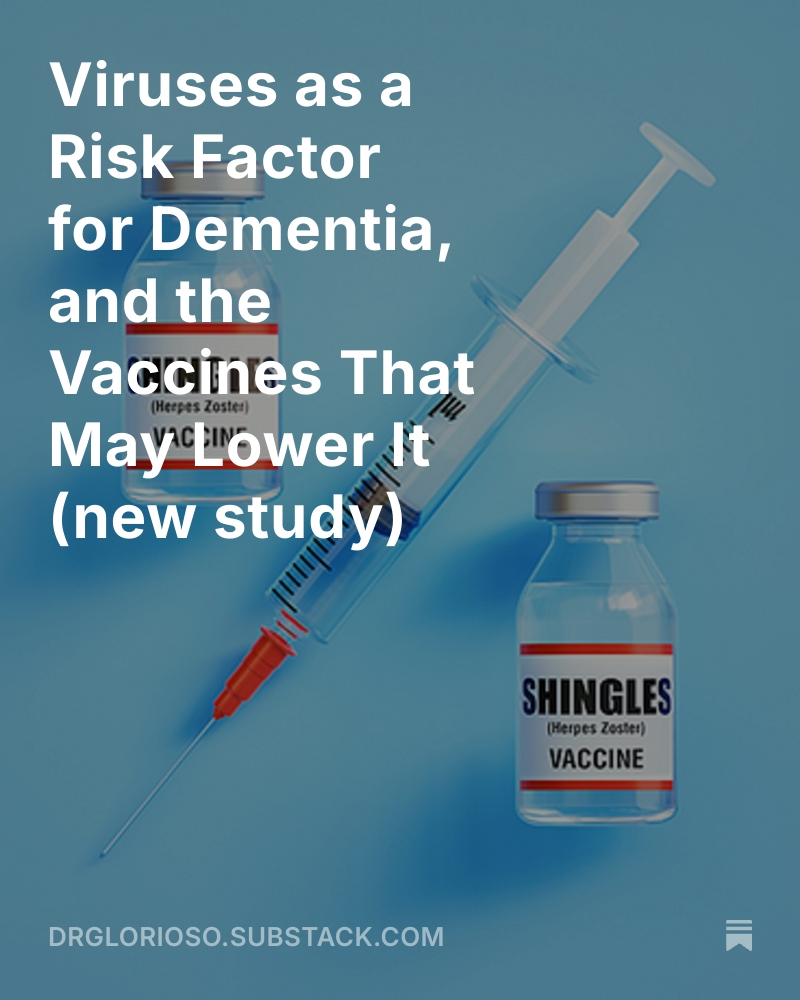
Viruses as a Risk Factor for Dementia, and the Vaccines That May Lower It (new study)
There is mounting evidence for viruses increasing dementia risk and the efficacy of vaccination to reduce this risk.
A new study of 1.5M older adults, published in Alzheimer's & Dementia last month, found that adults who received both doses of the recombinant shingles vaccine (Shingrix) had:
33% lower risk of any dementia
28% lower risk of Alzheimer's disease
33% lower risk of vascular dementia
Bottom line: viral reactivation in the brain looks like a real, modifiable contributor to dementia, and several routine vaccines may be functioning as inadvertent brain-health interventions.
📜 How the field got here:
1990s: Dr. Ruth Itzhaki finds HSV-1 DNA in Alzheimer's brains, especially in APOE4 carriers. Treated as fringe for two decades.
2010: Dr. Robert Moir shows amyloid beta has direct antimicrobial activity.
2022: Dr. Kjetil Bjornevik shows EBV is a near-necessary cause of MS (32-fold risk, Science).
2025: Welsh natural experiment in Nature shows the live shingles vaccine reduces dementia by ~20%.
2026: 1.5M Medicare adults, Shingrix → 33% lower dementia risk.
🧠 SARS-CoV-2 infection produces brain volume changes on MRI equivalent to 1-2 years of brain aging (Douaud, Nature 2022).
💉 High-dose flu vaccine: 55% lower Alzheimer's risk in adults 65 (Bukhbinder, Neurology 2026).
The jury is still out on whether treating active HSV-1 infections is protective for dementia. Everyone should consider yearly flu and COVID-19 vaccinationand shingles vaccination after 50 years old for brain health.
Link to full post: drglorioso.substack.com/p/vi…
#AlzheimersPrevention #BrainHealth #LongevityScience
2
5
237
Longevity Global retweeted
A New Study in 495 Centenarians Points to a Brain Aging Biomarker You Probably Have Not Heard Of
Most people know about blood pressure for heart disease and blood sugar for diabetes. Far fewer know that there's now a blood biomarker quietly building a case as one of the more informative readouts for brain aging.
A new JAMA Network Open paper followed 495 Japanese centenarians for 17 years. NfL (neurofilament light) predicted both cognition and lifespan more reliably than the classical Alzheimer's-specific markers did in this cohort.
🧬 NfL is released into blood when axons get damaged from any cause, including aging, stroke, MS flares, concussion, and neurodegeneration 📊 Each 1 SD higher NfL meant 36% higher mortality, even after adjusting for kidney function and APOE4
🧠 Phosphorylated tau did not predict mortality after full adjustment in this cohort. Only NfL did.
💉 Plasma NfL tests now run $200-400 at Labcorp, Quest, and several direct-to-consumer services
This does not replace amyloid and tau testing. It adds a different lens. Plaques and tangles are part of the story, but aging, vascular wear, and injury also drive cognitive trajectories, and NfL captures those. This is why brain aging assessment is moving toward multimodal panels that combine NfL with imaging and genetics, each catching what the others miss.
Link to full post: drglorioso.substack.com/p/a-…
#BrainAging #Longevity #BrainHealth
8
14
830
Longevity Global retweeted

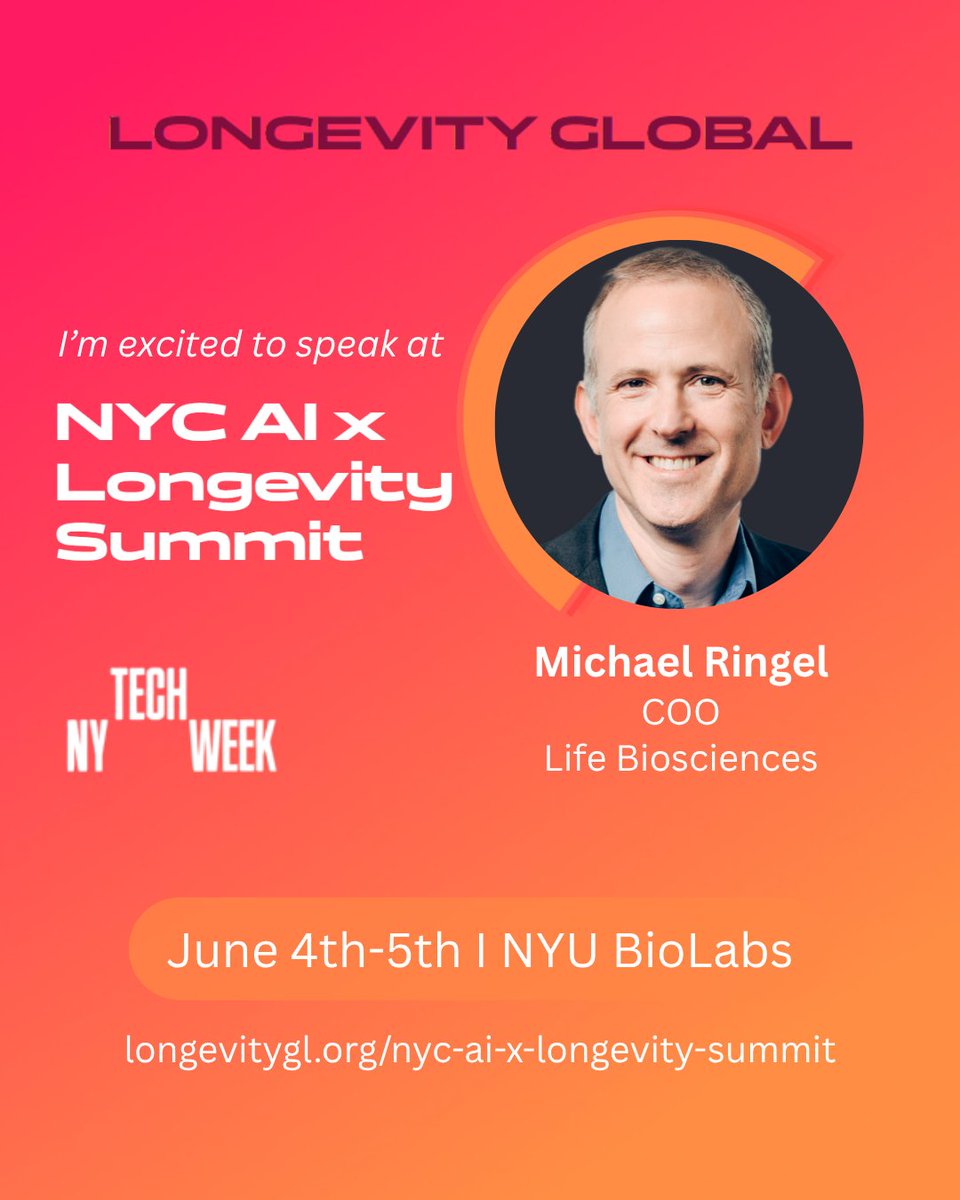
I'm speaking at the AI × Longevity Summit by @LongevityGL at @nyuniversity Langone BioLabs during NYC Tech Week by @a16z.
I will share work from @lifebiosciences using epigenetic restoration to reverse age-related diseases.
Registration: eventbrite.com/e/nyc-ai-x-lo…
1
1
190
Longevity Global retweeted

Excited to be speaking at the AI × Longevity Summit by @LongevityGL at NYU Langone BioLabs during NYC @ Tech Week by a16z.
I will share work from @ShiftBioscience focused on translating AI and multi-omics into clinically meaningful aging biomarkers and interventions. If you are serious about AI and longevity, you should be in the room.
Registration: eventbrite.com/e/nyc-ai-x-lo…
1
3
196
Longevity Global retweeted

Will do. Come to think of it a lot happening here in Boston, aging code summit next, later ARDD & biomarkers of aging. Enjoy the event, Steve is a lovely host for all his events and mega-connector across this special community.
1
1
1
110
Longevity Global retweeted
Excited to be speaking at the Aging Code Summit in Boston May 26-27. Hope to see some folks there!
RSVP: longevitygl.org/boston/
4
2
382
Longevity Global retweeted
The future of medicine is invisible, frictionless, AI-matched, continuous, and at home
This is not only going to be nice, it's also going to save us a lot of money
It is a Tuesday in 2036. The toilet has already finished a microbiome read and the bathroom mirror noticed a small new mole on my left temple that AI thinks is benign but wants to recheck in 3 mos.
I head out for a morning run. By the time I am back, the patch on my arm has logged the BDNF spike from the workout, a 38 percent rise from my pre-run level. BDNF is a growth factor that drives the formation of new connections between brain cells. The system updates my weekly plasticity score, with today’s run clearing the threshold for my brain health goals.
Overnight My GFAP trend, the brain inflammation marker that the patch on my arm has been tracking, crossed the threshold the system flags as worth investigating. GFAP is the protein that brain immune cells release when they are stressed or inflamed, and it has been climbing slowly for 19 weeks.
While I am making coffee, my phone surfaces the matching engine’s ranked recommendations for what to do about the GFAP drift. At the top is a Phase 2 trial for a brain-penetrant anti-inflammatory drug that targets the reactive astrocytes producing my signal. Drug delivery, blood draws, and continuous monitoring all happen from my home.
Below the trial, the engine surfaces lower-risk lifestyle options with smaller predicted effects on my GFAP signature. The trial drug has the highest predicted effect but with unknown side effects from a novel class, while the lifestyle alternatives are gentler and slower-acting and unlikely to fully reverse the drift on their own.
On the way to work, the self-driving imaging vehicle picks me up at my building and the cabin’s portable MRI maps hippocampal volume, cortical thickness, and white matter integrity. All come back within range for the trial, and the report arrives in my inbox before I reach the office.
The next decade is when biotech companies gain the chops and advantages of tech companies. Six shifts have to come together for that Tuesday morning to be ordinary:
📊 Diagnostics run continuously through devices you already use, not at scheduled appointments
➰ Biology is measured as real-time streams of dozens of biomarkers, not annual snapshots
🎛️ Monitoring connects directly to specific recommendations, not just alerts on your phone
🤖 AI matches you to treatments that worked for patients with your specific data profile, not population averages
💊 Drugs and doses are chosen to fit your full molecular profile, not the average patient
👨👩👧👦 🩺 Clinical trials find you when your data fits, instead of you searching for trials
The total addressable savings from a fully realized version of this vision is somewhere in the $1 to $2 trillion/yr range, or roughly 20 to 40% of current US healthcare spending.
What are we going to need to invest in to get there?
Full post: drglorioso.substack.com/p/th…
4
3
483