
PhD | Researcher @IFRI_, Geopolitics of Technology Center | US & Chinese technology policies | views are my own
Joined October 2019
- Tweets 504
- Following 1,135
- Followers 719
- Likes 2,187
31 Photos and videos

Pinned Tweet

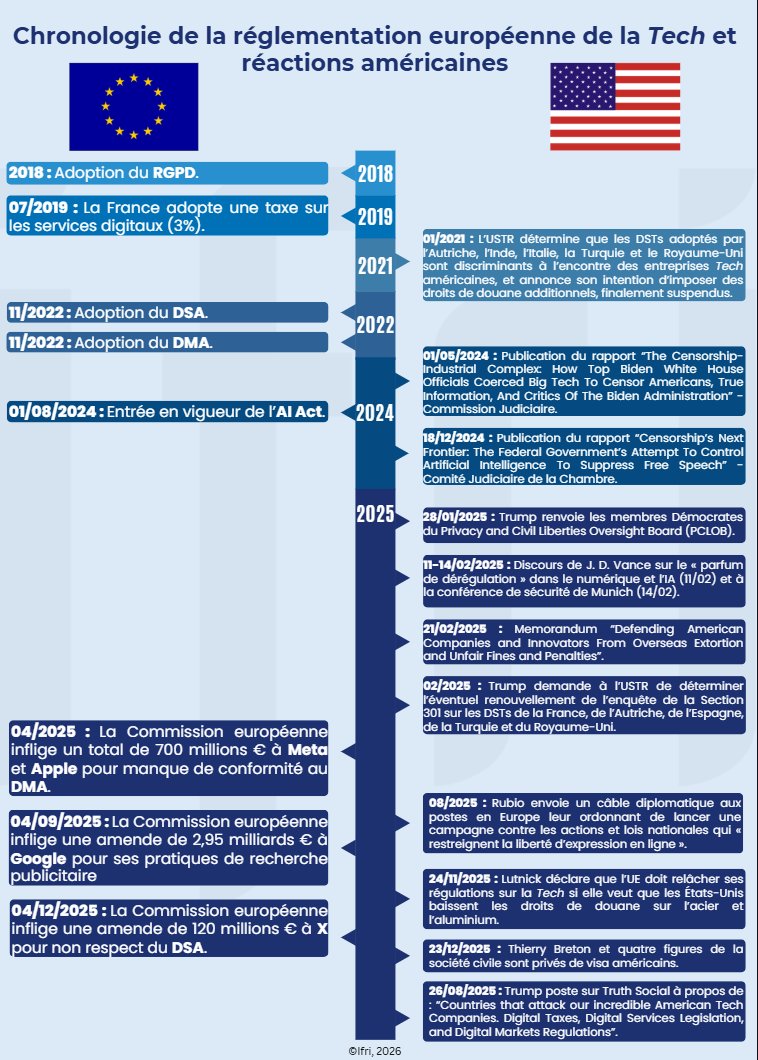
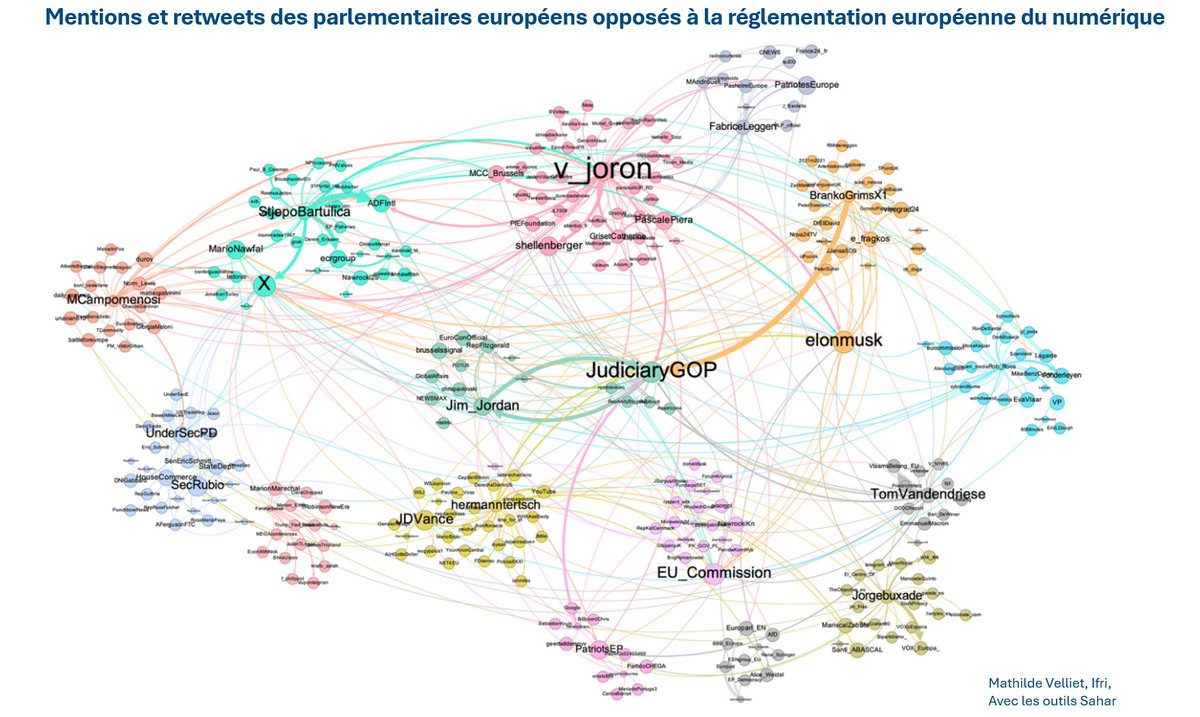
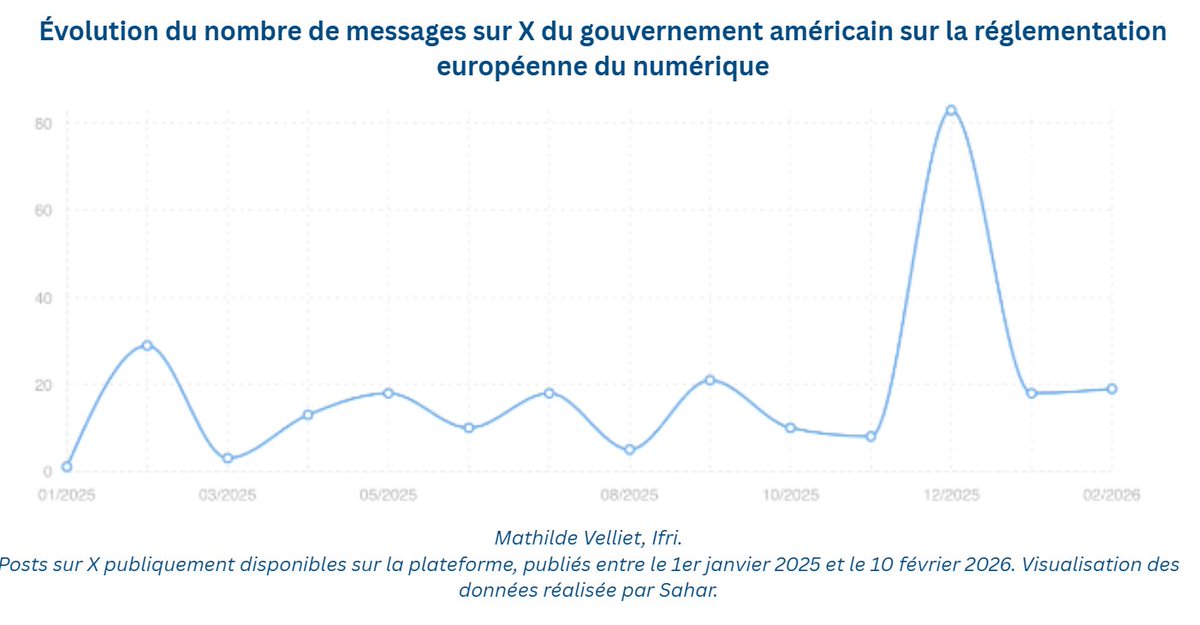
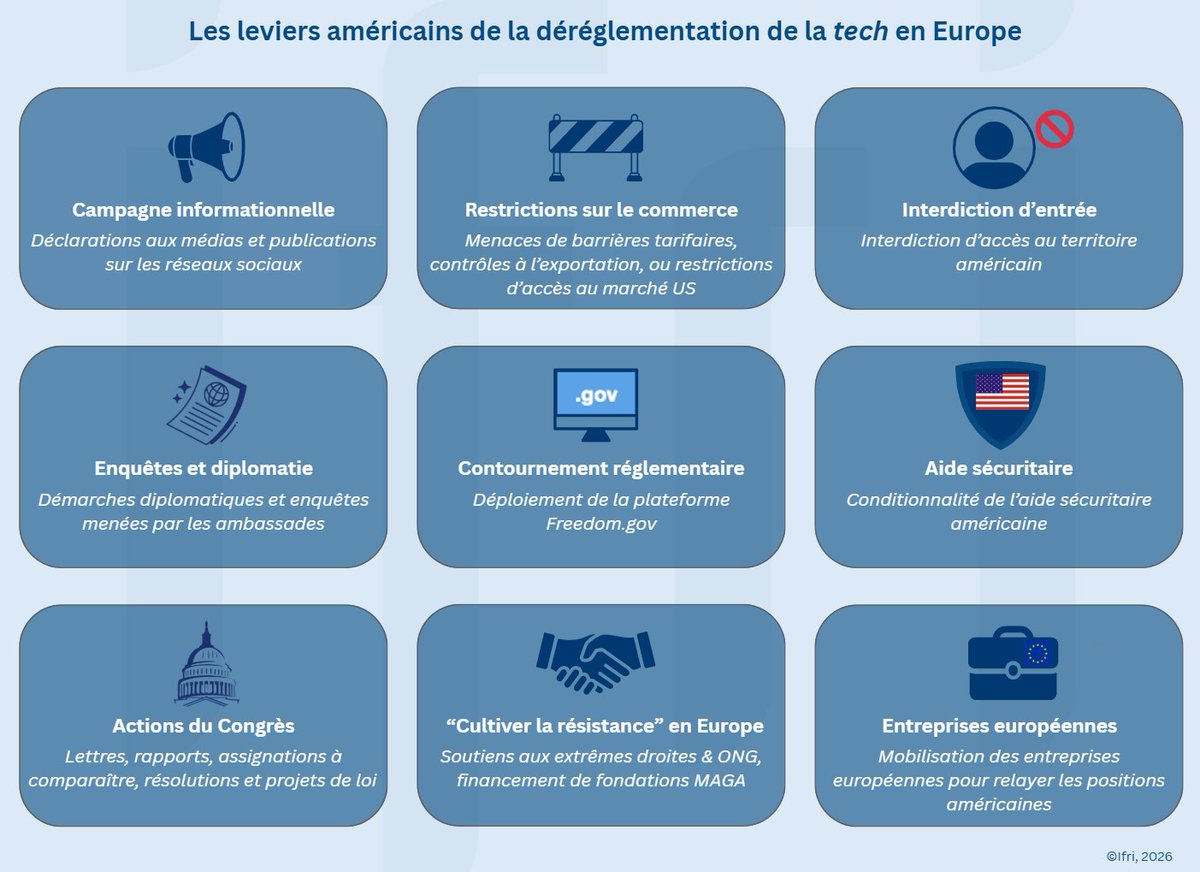
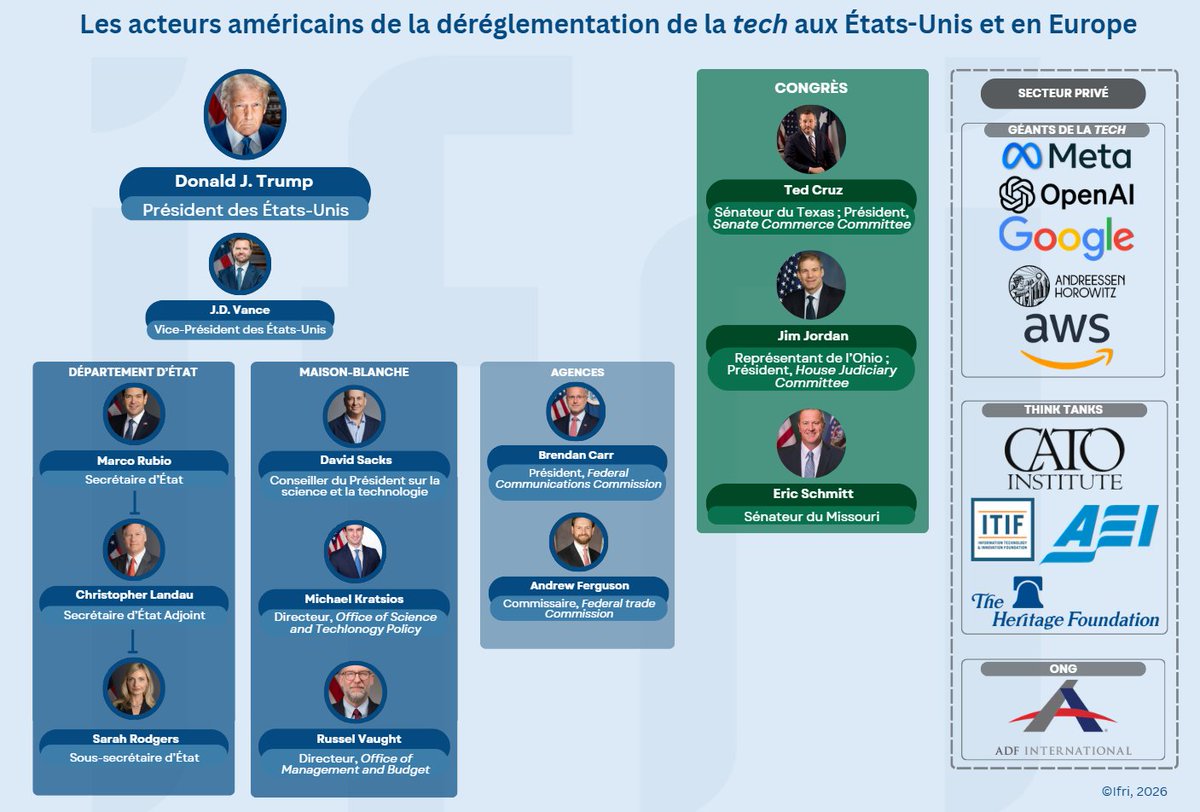
Depuis 2025, l’administration Trump a (re)lancé une offensive vigoureuse contre la réglementation du numérique, aux États-Unis et en Europe.
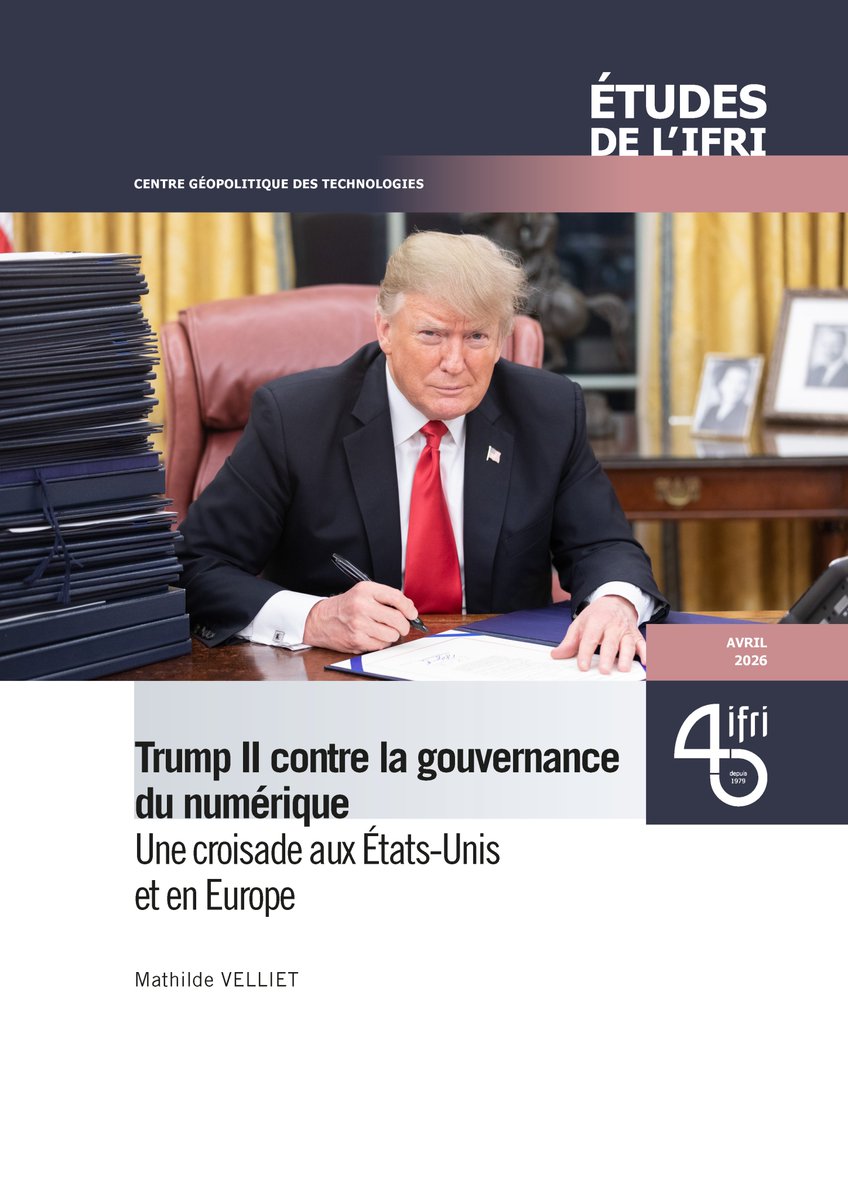
Un🧵sur cette campagne et ses conséquences, à l'occasion de la sortie de mon étude @IFRI_ à ce sujet aujourd'hui.
ifri.org/fr/etudes/trump-ii-…
4
9
11
1,296
Mathilde Velliet retweeted

Jun 10
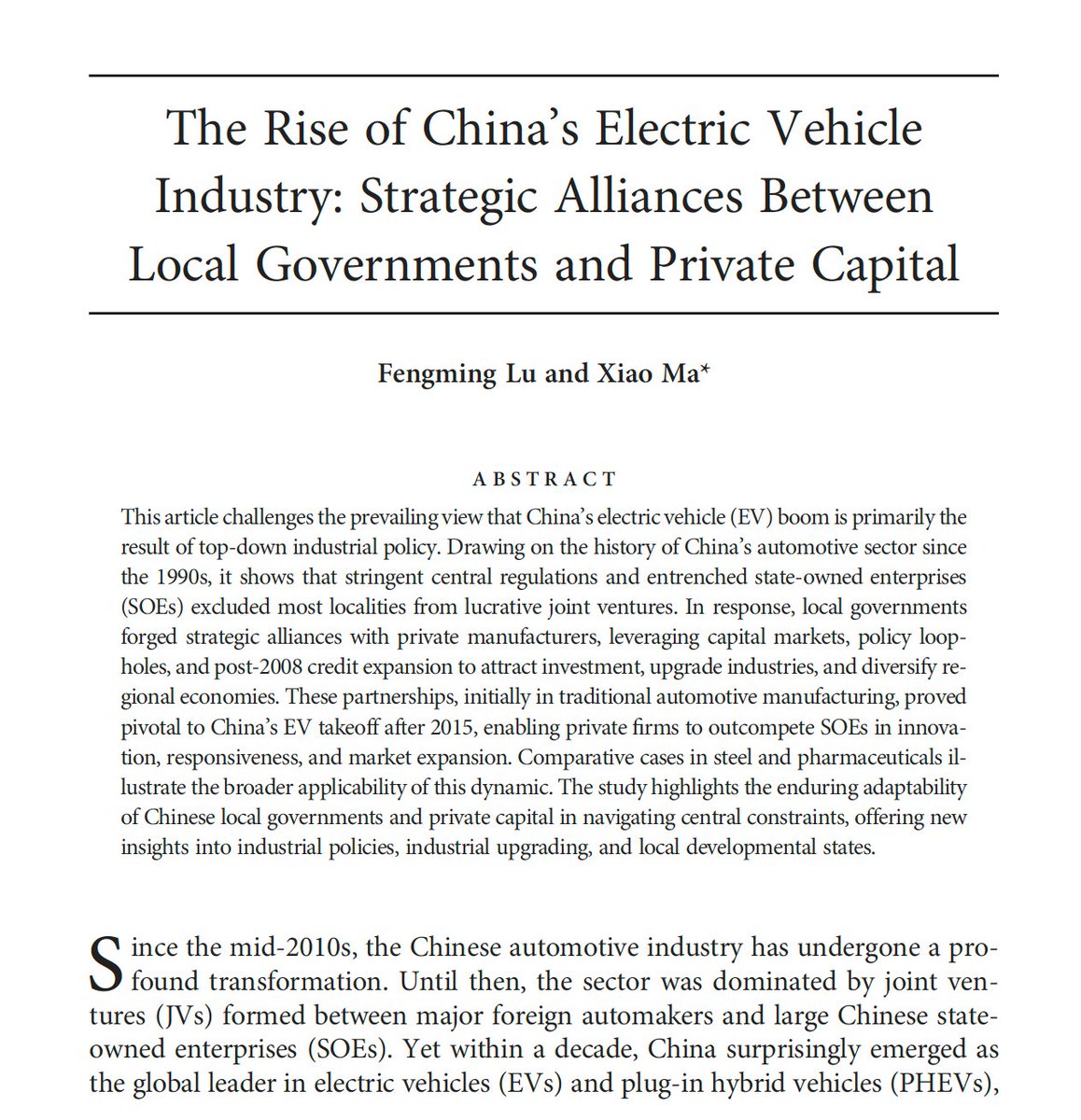
Why did private firms, not state-owned enterprises (SOEs), come to dominate China’s EV sector?
My new @ChinaJournal article (co-authored with Xiao Ma @maxiaoalex) challenge the "top-down industrial policy" narrative.
The real engine? Strategic alliances between local governments and private capital. 🧵
Based on 3 years of fieldwork, 60 interviews (with officials, entrepreneurs, and engineers), and rich first-hand accounts, we show how strict central regulations inadvertently drove local states to bet big on private EV players.
Here is the story: (1/15)
40
359
1,365
693,239
Très honorée de recevoir le 1er prix de l'@IHEDN pour ma thèse sur les politiques américaines de protection des technologies face à la Chine. Un signal encourageant pour une recherche à la croisée de l'éco politique et des enjeux de sécurité nationale. Merci au jury !

🎓 Remise des Prix scientifiques de l’#IHEDN 2026 !
Aujourd’hui, cap sur la recherche : l’Institut met à l’honneur celles et ceux qui, par leurs travaux, éclairent les enjeux stratégiques contemporains.
👏 Félicitations à nos lauréats !
Prix de thèse : Mathilde Velliet
« Entre sécurisation et arsenalisation. La fabrique des politiques américaines de protection des technologies stratégiques face à la Chine (2009-2025) ». @univ_paris_cite
➡️ Cette thèse de langue et cultures des sociétés anglophones retrace le durcissement progressif de la politique technologique américaine face à la Chine. Elle explique comment les technologies sont devenues un outil central de la rivalité stratégique entre Washington et Pékin, au service de la sécurité nationale et du maintien de la suprématie américaine.
Prix de mémoire : Luka Aleksic
« Les ambitions d’autonomie stratégique dans l’aéronautique de défense : une étude comparative des programmes Rafale, F-35, Eurofighter Typhoon et JAS 39 Gripen ». @UnivParis8, @IFGeopolitique
➡️Ce mémoire de géopolitique du cyberespace et data science analyse comment la France, les États-Unis, les pays du consortium Eurofighter et la Suède conçoivent l’autonomie stratégique dans l’aéronautique de défense. Il met en évidence les arbitrages entre indépendance nationale, coopération industrielle et dépendances technologiques dans un secteur hautement stratégique.
Prix spécial ex æquo :
Victor Martignac
« La constitution militaire. Etude critique du droit de l’engagement de l’armée de Terre sur le territoire métropolitain ». @AssasUniversite
➡️ Cette thèse de droit public met en lumière les ambiguïtés juridiques actuelles, notamment autour des dispositifs comme Sentinelle, et interroge la fragilité des fondements constitutionnels encadrant l’usage de la force militaire en sécurité intérieure. L’auteur plaide pour une clarification du cadre juridique afin de mieux distinguer sécurité intérieure et logique de guerre.
Louis Perez
« La régulation juridique internationale de l’intelligence artificielle militaire ». @AssasUniversite
➡️ Cette thèse de droit public analyse les enjeux de la régulation juridique internationale de l’intelligence artificielle militaire. L’auteur propose une définition rigoureuse de l’IA, débarrassée des visions fantasmées de « super-intelligence », afin de mieux encadrer ses applications concrètes. Son travail souligne que la régulation doit avant tout porter sur les usages et les effets opérationnels des systèmes d’IA, notamment dans le domaine militaire, plutôt que sur la technologie elle-même.
Ces recherches, exigeantes et passionnantes, illustrent la vitalité du dialogue entre monde académique et monde militaire - au cœur de la mission de l’#IHEDN.
@gouvernementFR @Armees_Gouv @SebLecornu @Matignon
1
50
Mathilde Velliet retweeted

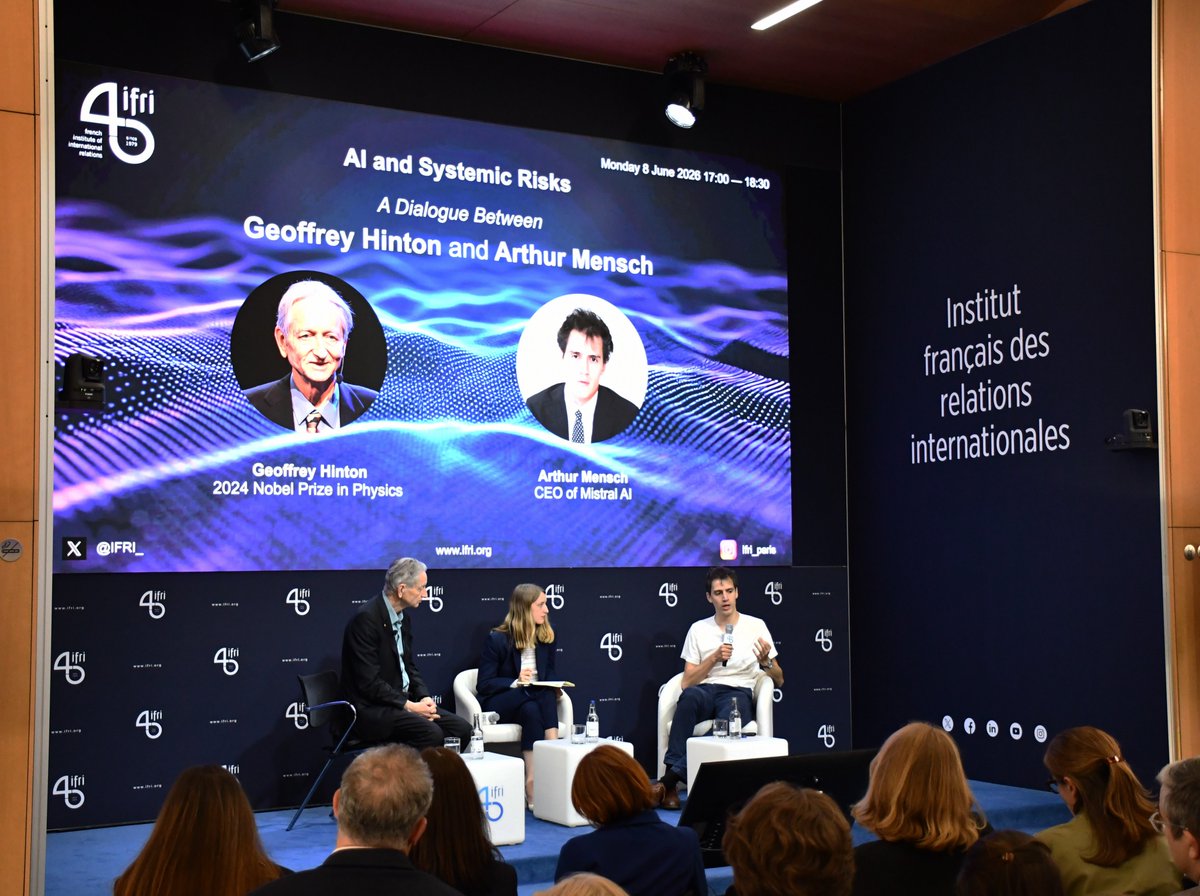
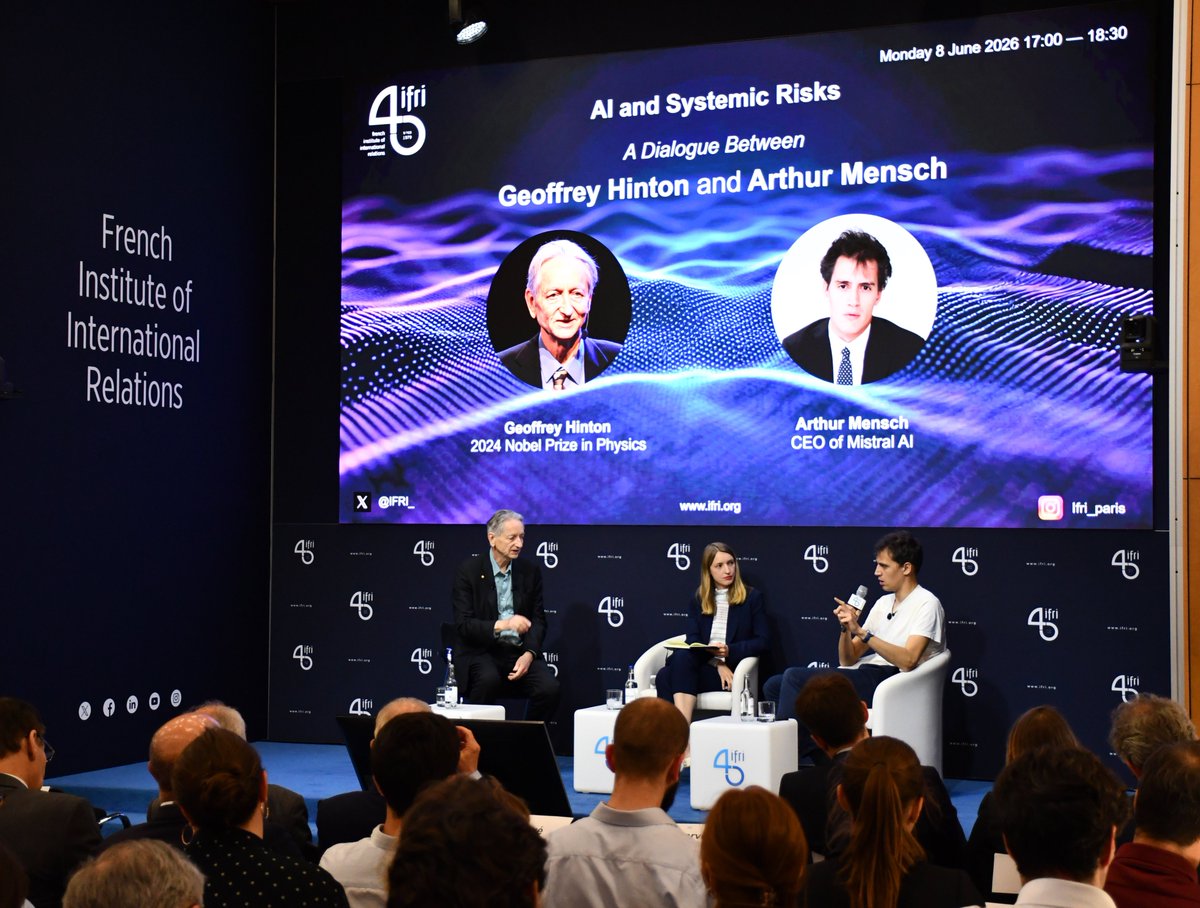
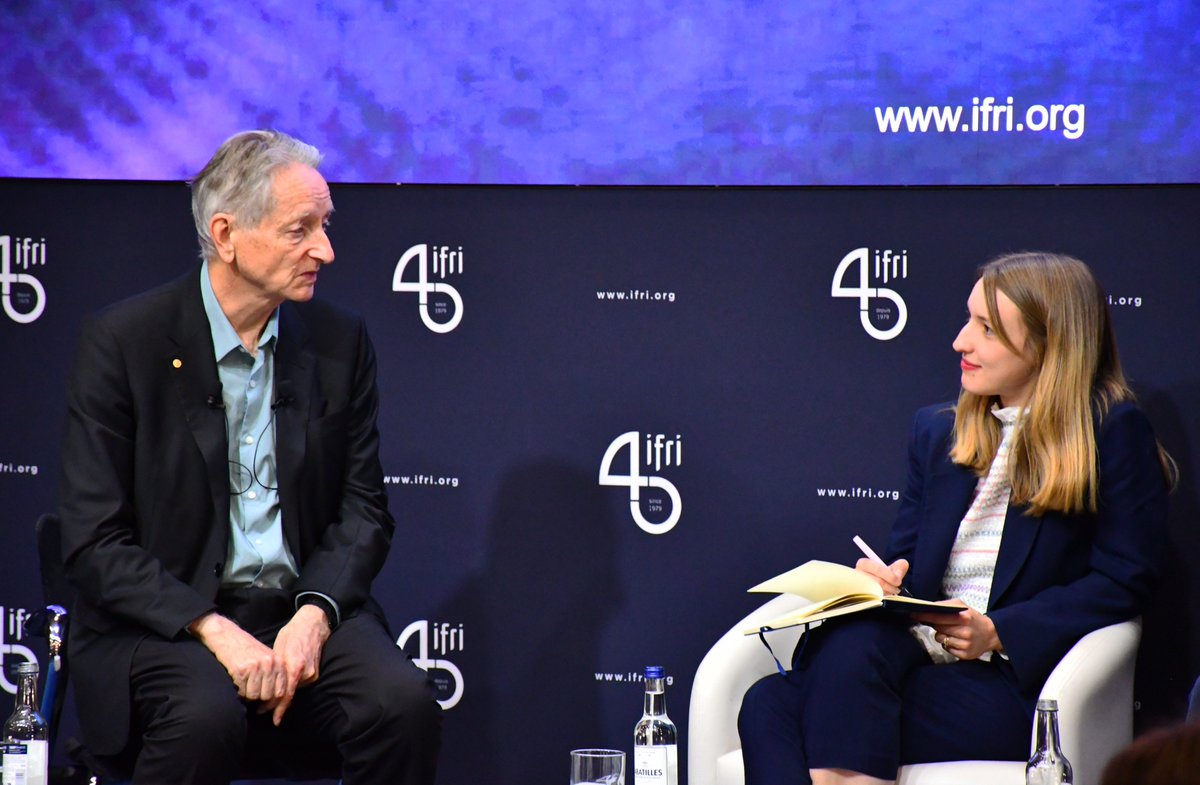
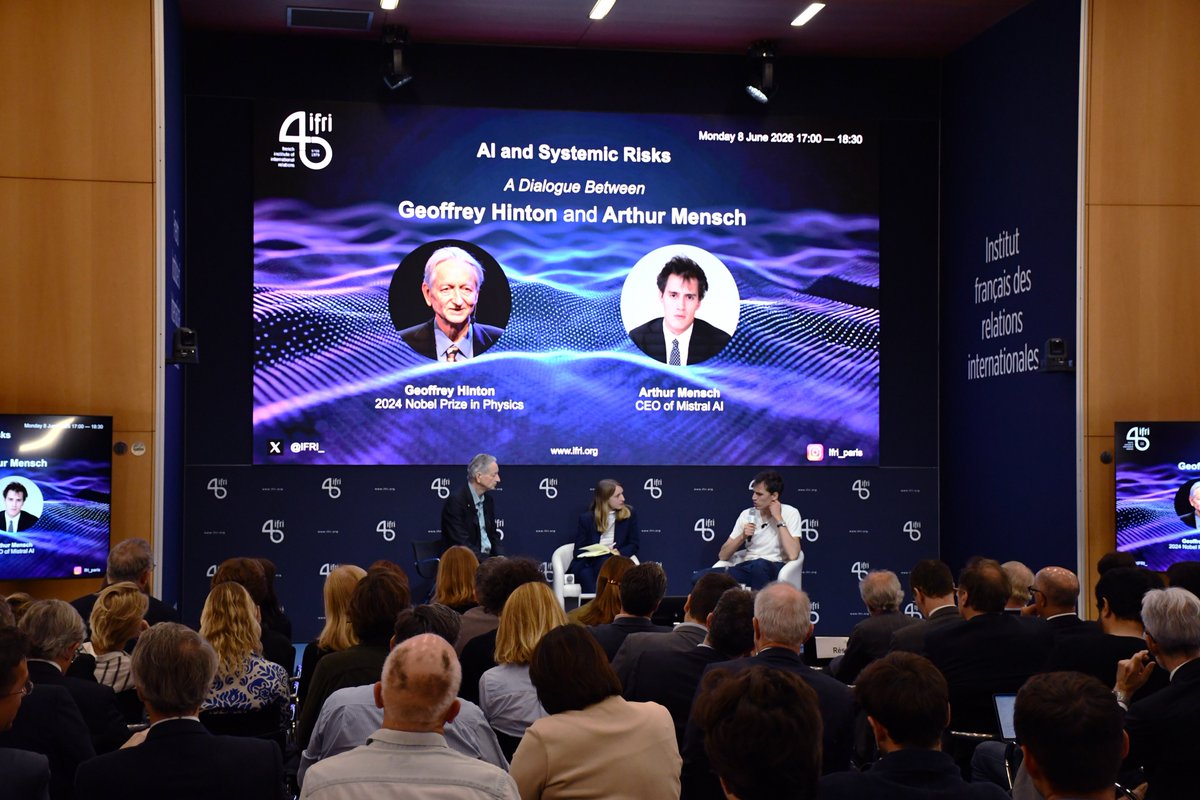
A stellar panel tonight at @IFRI_: @geoffreyhinton (2024 Nobel Prize in Physics) and @arthurmensch (CEO of @MistralAI) in conversation on AI and its systemic risks, moderated by Laure de Roucy-Rochegonde, head of Ifri's Geopolitics of Technology Centre.
More information:
ifri.org/fr/ia-et-risques-sy…
1
9
12
3,862

Mathilde Velliet retweeted
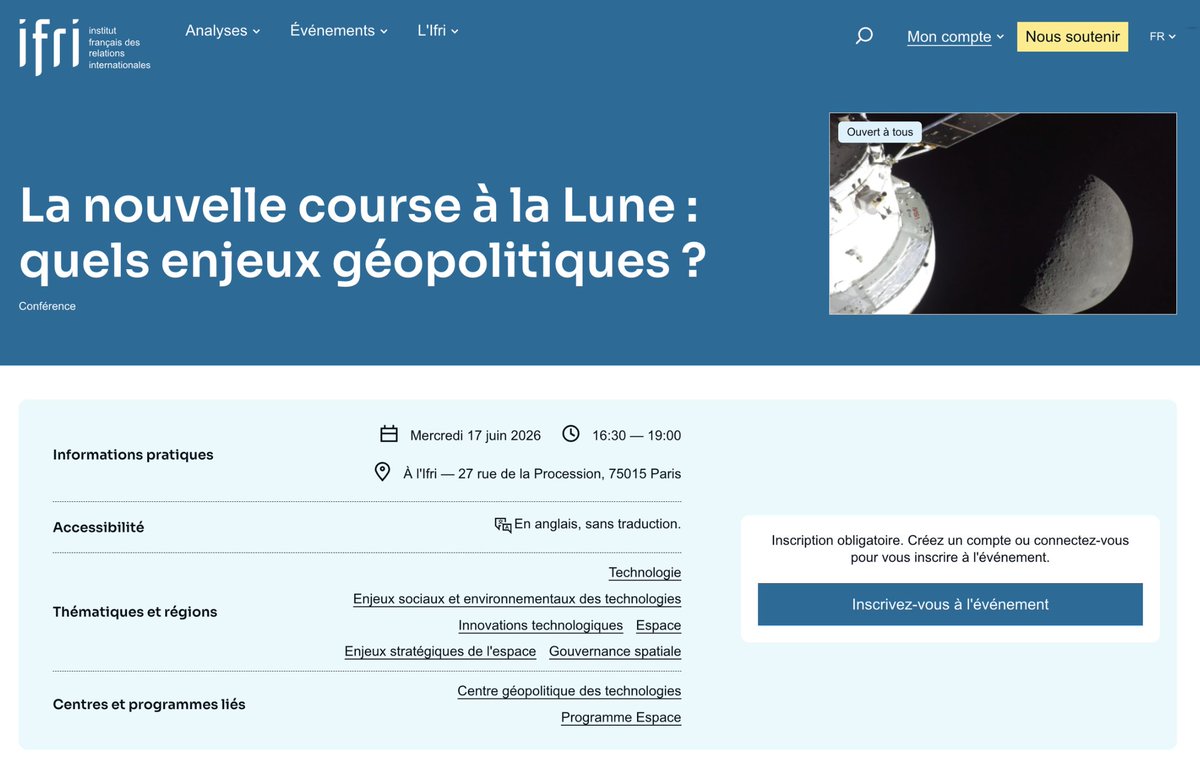
[Inscriptions conférence] 🌖 La nouvelle course à la Lune : quels enjeux géopolitiques ?
Alors que les États-Unis, la Chine et l'Inde concrétisent leurs ambitions lunaires, l'Europe cherche encore à définir sa position : doit-elle être un partenaire fiable ou un acteur stratégique autonome ?
Pour en débattre, le Programme Espace de l'Ifri sous la responsabilité de @paulwohrer organise une conférence le 17 juin 2026, de 16h30 à 19h à l'Ifri.
➡️ 16h30 - 17h | Ouverture :
Général Philippe Adam, Secrétaire général du Sommet international sur l’espace
➡️ 17h - 18h30 | Table ronde : Perspectives européennes sur la nouvelle course à la Lune
• @Alessandro__Ma, Responsable Défense, Sécurité et Espace, @IAIonline
• @AndreaRotter33, Chef de la division Politique étrangère et sécurité, Fondation @HannsSeidel
• @ZwaanTanja, Directrice adjointe et professeure à l'institut international de l'Air et de l'Espace, @UniLeidenNews
Modération : @CFArnould, Chercheuse senior au @BIGEurope
➡️ 18h30 - 19h | Conclusion : le rôle de l'Europe dans le programme Artemis
Scott Pace, Directeur du Space Policy Institute, George Washington University
Inscription obligatoire : ifri.org/fr/la-nouvelle-cour…
6
9
709
Mathilde Velliet retweeted

Jun 3
UPDATE: As expected, EU ambassadors endorsed the mandate for the European Commission to sign the Pax Silica on behalf of the bloc. Formal green light at the ministerial level is now expected at the TTE Council on 8 June.
Jun 1

The EU is set to join Pax Silica, the US-led initiative to secure supply chains (and counter China) for AI chips & critical minerals. After weeks of debate and US reassurances, EU ambassadors are expected to approve the move on Wednesday.
euronews.com/my-europe/2026/…
1
18
65
10,955
Mathilde Velliet retweeted

Today @POTUS signed an EO that keeps America leading in AI while putting frontier AI capabilities to work strengthening our cyber defenses.
AI systems are now the most powerful tools we have ever had to harden our cyber infrastructure and stay ahead of adversaries. It is a real blessing that these capabilities are being developed by American industry, and not by those who would use them against us.
whitehouse.gov/presidential-…
48
196
647
96,463
Mathilde Velliet retweeted
🇺🇸 États-Unis / 🇪🇺 Europe : la souveraineté numérique en question
Dans ce nouvel épisode du podcast "Le monde selon l'Ifri", @M_Hecker, directeur exécutif de l'Ifri, reçoit Anne-Thida Norodom, professeur de droit public à l'Université Paris Cité, et Emma Badaoui, doctorante en droit public à l'IRSEM et à l'Université de Bretagne occidentale pour décrypter les enjeux de souveraineté numérique auxquels l'Union européenne est confrontée dans ses relations avec les États-Unis.
🎧À écouter en entier ⤵️
ifri.org/fr/audio-le-monde-s…
➡️ ALLER PLUS LOIN :
Lire l'étude de l'Ifri d'Anne-Thida Norodom et Emma Badaoui, intitulée "(Extra)territorialité des données : quelle souveraineté pour l'Europe ?" ifri.org/fr/etudes/extraterr…

4
11
1,122
Mathilde Velliet retweeted

May 13
Tonight, the Secretary of the Treasury is personally vetting and approving each company that gets access to the most advanced U.S. AI model, because the risks of the model being misused to hurt US national security are so high.
Also tonight, Jensen Huang is flying on Air Force One with President Trump to Beijing to sell China the AI chips it will use to develop its own Mythos-level AI model as soon as possible.
The administration’s AI policy remains inconsistent and incoherent. It is impossible to justify these two approaches simultaneously.
29
195
930
117,923
Mathilde Velliet retweeted

May 7
This scoop from @Lingling_Wei says the US and China are considering an AI dialogue or crisis hotline.
Here's what I told her, drawing from past experience.
Dialogue is absolutely essential, but we need to level-set expectations based on the track record:
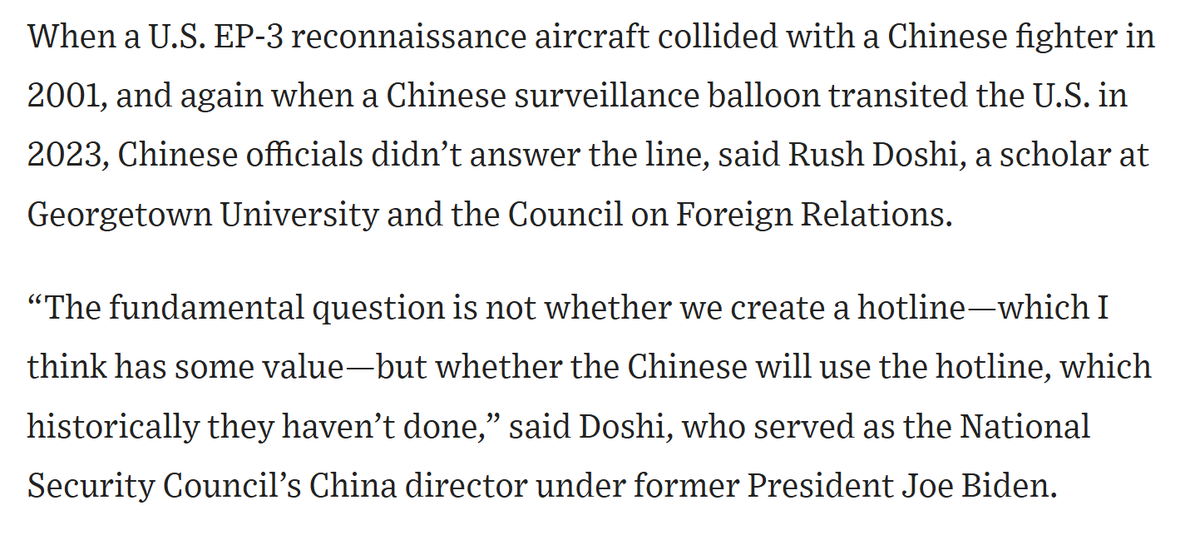
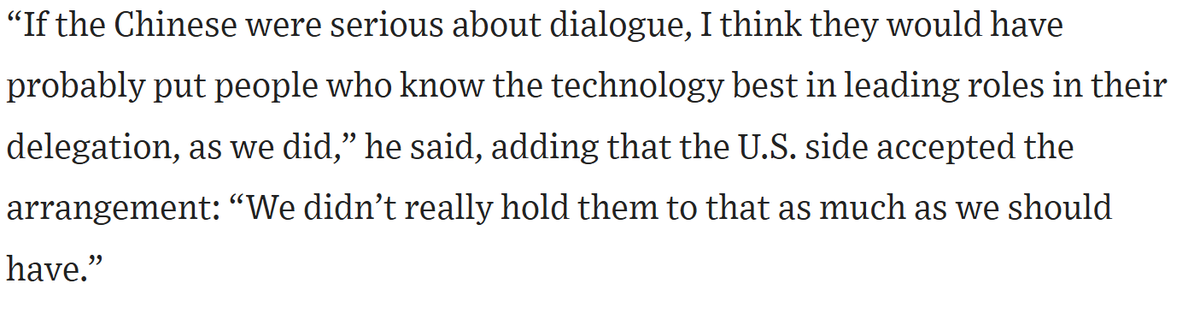
1) We negotiated an AI dialogue in 2023, but the PRC tried to extract concessions on unrelated issues to even hold it; when we held the dialogue, they didn't send the right folks.
2) We do have crisis comms lines, but the PRC has not picked up the phone during crises (from EP-3 to the balloon). An AI crisis line may face similar challenges.
In short, the PRC has for decades been less serious about risk reduction and crisis communications than the Soviet Union was. What we do have, they rarely use and frequently pull down when they are upset (we don't do this).
That needs to change. But that only happens if the world collectively pushes for a different outcome.
May 7

Exclusive: The U.S. and China are considering AI talks to manage risks and prevent crises as competition intensifies in a new tech era on.wsj.com/4wk96ew
12
61
213
88,202
Mathilde Velliet retweeted
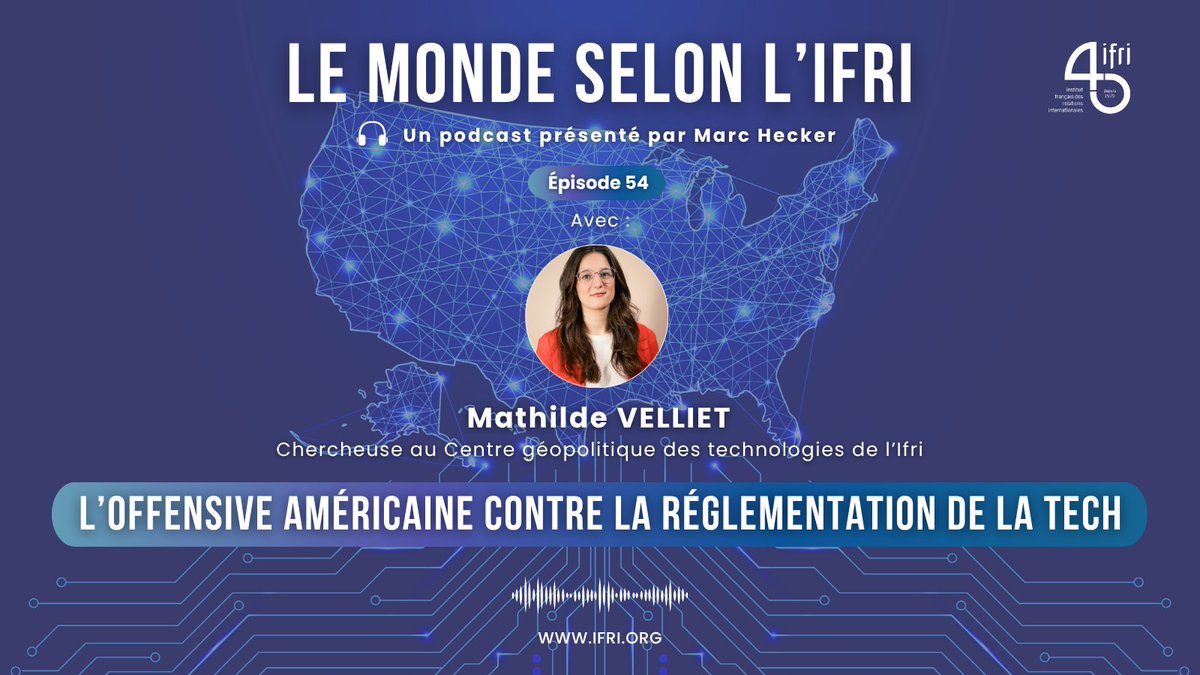
[🎧 #Podcast] 🇺🇸 🌐 L’offensive américaine contre la réglementation de la tech
Dans ce nouvel épisode du podcast "Le monde selon l'Ifri", @M_Hecker accueille @MathildeVelliet, chercheuse au Centre géopolitique des technologies de l'Ifri.
L'administration Trump II déploie une stratégie de déréglementation massive dans la Tech : suppression des garde-fous éthiques sur l'#IA, réduction drastique des effectifs de cybersécurité, démantèlement des équipes de lutte contre la désinformation. L'objectif affiché ? Éliminer dix réglementations pour chaque nouvelle règle adoptée, au nom de l'innovation et de la compétitivité face à la Chine.
À écouter ⤵️
ifri.org/fr/audio-le-monde-s…
1
9
9
1,674
Mathilde Velliet retweeted

Apr 22
I share some of Zichen Wang's concerns here. The SCMP has some of the best reporting in the world on China, and especially on the Chinese economy, but some of its mainland-related science and technology articles seem a little eccentric.
pekingnology.com/p/some-trou…
6
12
130
56,971
Mathilde Velliet retweeted

Apr 20
Great to speak with @PunchbowlNews' @Dareasmunhoz about the MATCH Act—one of several pieces of legislation due for markup by @HouseForeign on Wednesday—which would require companies to apply for a license to provide maintenance service to their lithography machines in China.
I told Punchbowl about our recent research at @AEIfdp diving into the SME supply chain. Julia Torres and I estimate that, absent U.S. action, the hundreds of deep ultraviolet lithography machines imported by Chinese companies will be more than sufficient to manufacture huge numbers of cutting-edge AI chips in the years ahead.
On the other hand:
“If you take away the parts and prevent them from being serviced, then Huawei is going to be sitting on tens of billions of dollars of wasted investment—unable to make chips at a really critical moment in the trajectory of the global AI industry,” Ryan Fedasiuk, a fellow at @AEI, said.
Grateful to @RepBaumgartner and @BrianMastFL for their leadership on this important issue.
punchbowl.news/article/tech/…
1
14
42
9,418
Mathilde Velliet retweeted

Apr 12
Make election interference great again, @JDVance.
359
1,516
10,677
358,803
Mathilde Velliet retweeted

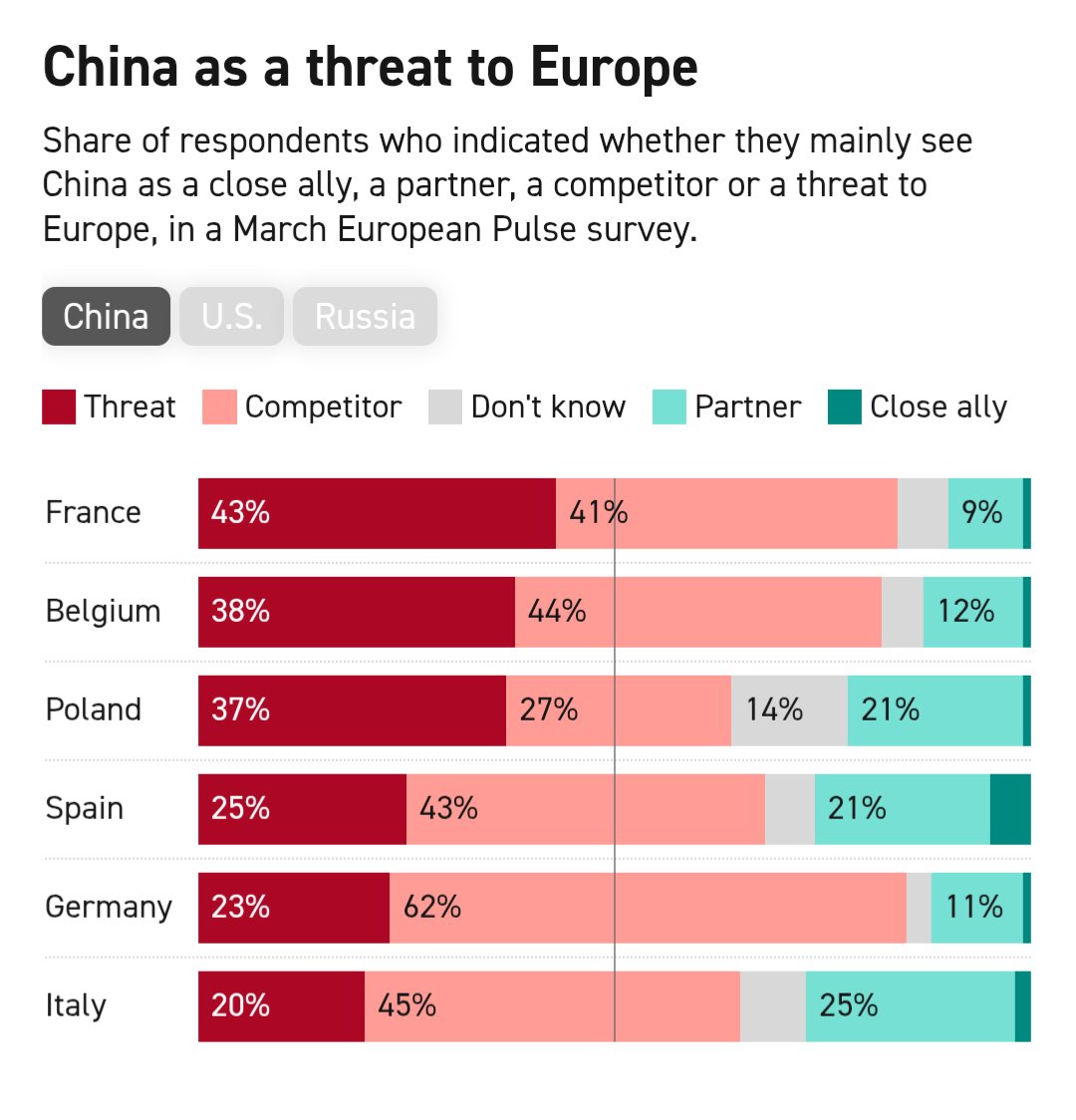
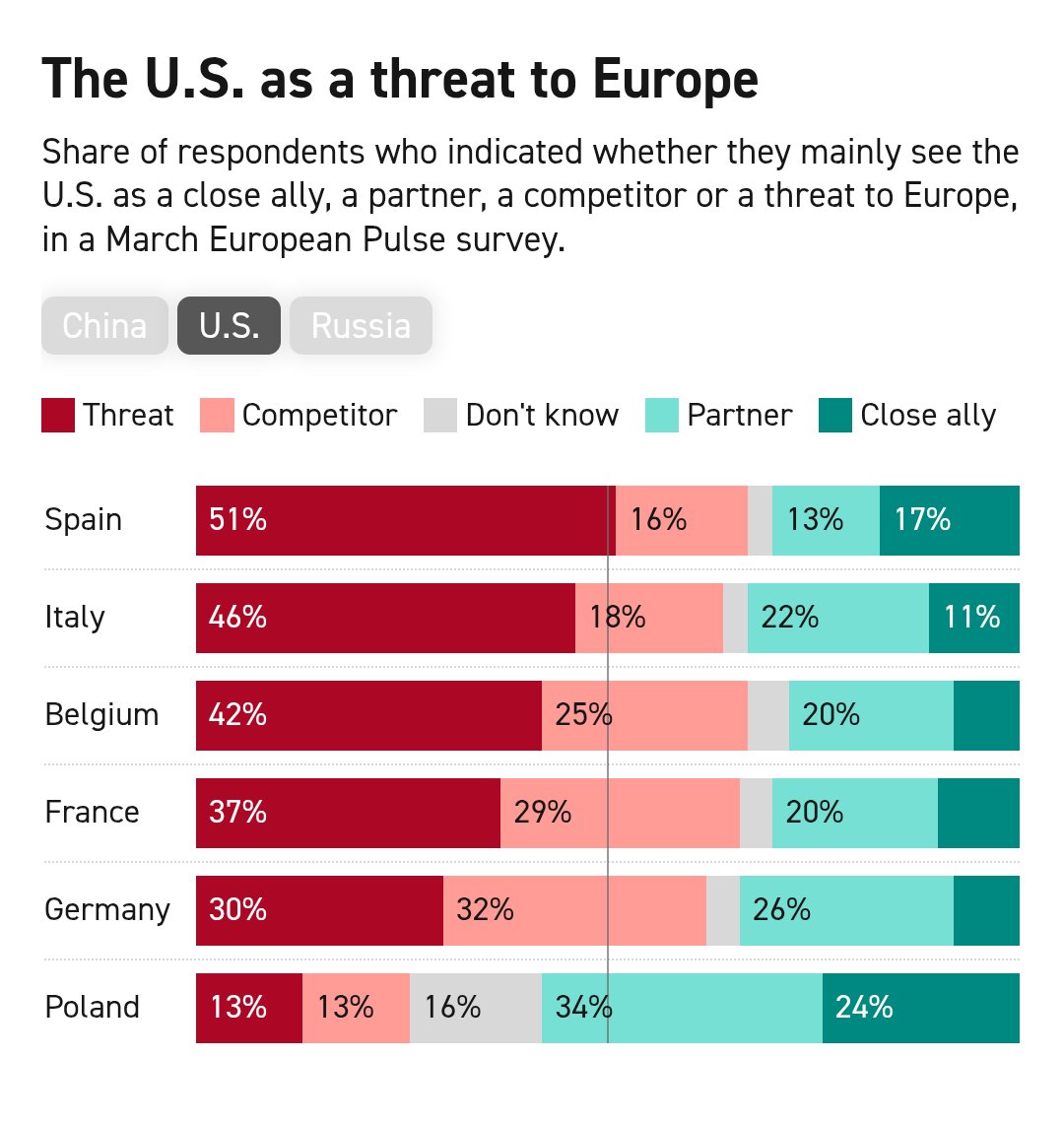
Politico polling of six EU countries shows 36.5% on average now see the US as a threat vs 31% for China
Most wary of China: France, Belgium and Poland.
Most wary of the US: Spain, Italy, Belgium
4
26
85
14,042
Mathilde Velliet retweeted
Apr 7
The great irony is that, for many years, the United States had been pressing and leaning on China to establish a robust export control system — to help with securing dual-use material and preventing diversion to various actors in Southeast Asia and the Middle East.
Ultimately, many of those calls went unheeded as several Chinese and Hong Kong entities facilitated transshipment and Beijing insisted it lacked the resources to implement a trade control system like the United States.
The past decade has totally inverted this dynamic as both sides, and particularly the United States, turned to export control and other national security tools to protect their supply chains. China began implementing its own bureaucratic machinery to keep pace with what it perceived as Washington’s overreach — implementing measures that in some cases extended well beyond the scope of initial U.S. restrictions.
We saw this play out in October with the announced rare earth licensing regime; and for many years before that — with opaque national security investigations designed to suspend certain American companies’ operations in China, and economic coercion deployed against faraway political rivals like Lithuania.
Today’s announcement brings us full circle: China has launched an ICTS-like investigation and review mechanism capable of singling out entities and even individual people deemed a threat to Chinese supply chains.
It’s a capability Beijing will almost certainly weaponize against the United States and its partners in the weeks and months ahead — even as the U.S. begins dismantling some of the machinery of economic security (like the ICTS office, or the delayed 1260H list) it had spent so many years preparing.
I wonder if we might even see its initial application in the run-up to the Trump-Xi Summit.
Apr 7

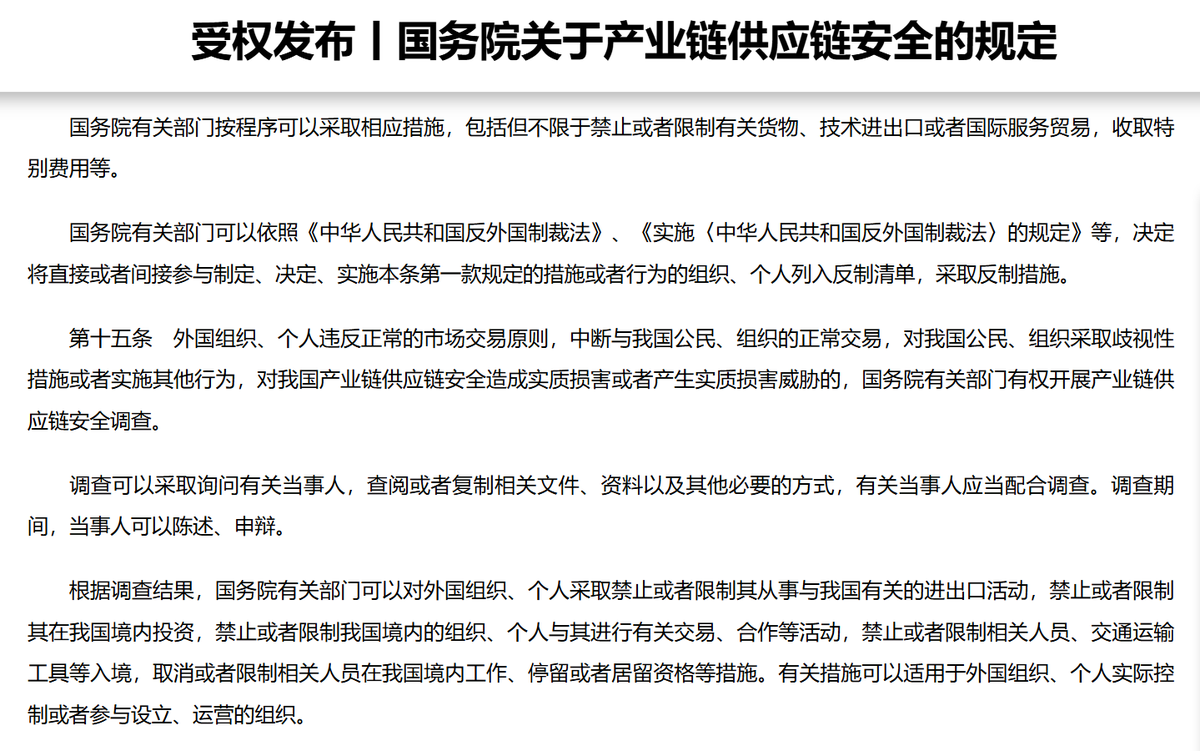
ICYMI: Chinese Premier #LiQiang has signed a decree of the State Council to unveil a set of regulations on industrial and supply chain security.
⚠️The document stipulates that China will establish a security investigation mechanism for industrial and supply chains, under which relevant departments may launch investigations and take countermeasures against foreign countries, regions or international organizations, as well as foreign organizations or individuals, that undermine China's industrial and supply chain security.
news.cn/politics/20260407/34…
4
11
20
5,945
Mathilde Velliet retweeted
Apr 7
The great irony is that, for many years, the United States had been pressing and leaning on China to establish a robust export control system — to help with securing dual-use material and preventing diversion to various actors in Southeast Asia and the Middle East.
Ultimately, many of those calls went unheeded as several Chinese and Hong Kong entities facilitated transshipment and Beijing insisted it lacked the resources to implement a trade control system like the United States.
The past decade has totally inverted this dynamic as both sides, and particularly the United States, turned to export control and other national security tools to protect their supply chains. China began implementing its own bureaucratic machinery to keep pace with what it perceived as Washington’s overreach — implementing measures that in some cases extended well beyond the scope of initial U.S. restrictions.
We saw this play out in October with the announced rare earth licensing regime; and for many years before that — with opaque national security investigations designed to suspend certain American companies’ operations in China, and economic coercion deployed against faraway political rivals like Lithuania.
Today’s announcement brings us full circle: China has launched an ICTS-like investigation and review mechanism capable of singling out entities and even individual people deemed a threat to Chinese supply chains.
It’s a capability Beijing will almost certainly weaponize against the United States and its partners in the weeks and months ahead — even as the U.S. begins dismantling some of the machinery of economic security (like the ICTS office, or the delayed 1260H list) it had spent so many years preparing.
I wonder if we might even see its initial application in the run-up to the Trump-Xi Summit.
Apr 7
ICYMI: Chinese Premier #LiQiang has signed a decree of the State Council to unveil a set of regulations on industrial and supply chain security.
⚠️The document stipulates that China will establish a security investigation mechanism for industrial and supply chains, under which relevant departments may launch investigations and take countermeasures against foreign countries, regions or international organizations, as well as foreign organizations or individuals, that undermine China's industrial and supply chain security.
news.cn/politics/20260407/34…
4
22
100
23,438
Depuis 2025, l’administration Trump a (re)lancé une offensive vigoureuse contre la réglementation du numérique, aux États-Unis et en Europe.
Un🧵sur cette campagne et ses conséquences, à l'occasion de la sortie de mon étude @IFRI_ à ce sujet aujourd'hui.
ifri.org/fr/etudes/trump-ii-…
4
9
11
1,296
@emile_marzolf @MathieuPollet_ @ClotildeBomont @mdups @LaurenceNardon @Lucas_Medv @CorentinSellin @guillaumgrallet in case of interest :)
107
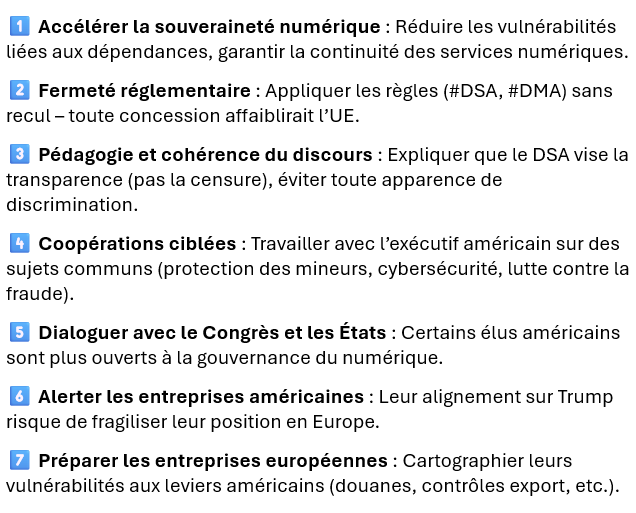
Comment l’Europe peut-elle faire face ? Quelques pistes en conclusion :
1
1
35
Si la chronologie de ce différend transatlantique est vouée à s'allonger, j'espère que cette étude vous aidera à le décrypter !
👉disponible sur ifri.org/fr/etudes/trump-ii-…
33