The Midwestern Regional Climate Center provides high-quality climate data and value-added tools for our nine-state Midwest region. Located at Purdue University.
🚨 What’s the U.S. Drought Monitor? Come take a deeper dive with NCEI about this critical product. See who the USDM benefits, current impacts in the West, and how you can read the map with a better understanding of how drought is assessed. Learn more: bit.ly/DroughtDefined
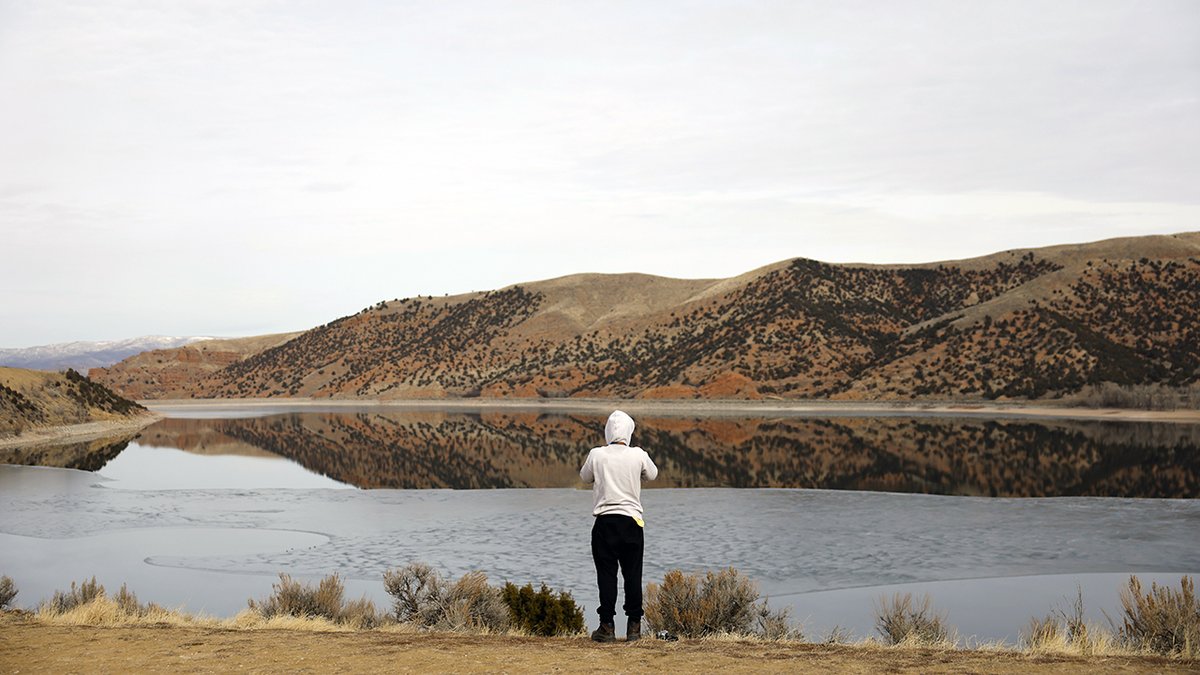
ALT A person peers at Echo Reservoir in Coalville, Utah. (Credit: GettyImages)
Rapidly developing drought conditions--also known as Flash Drought--have emerged across parts of the Midwest.
A webinar presented in combination with @NOAADrought@NOAANCEI is now available here ➡️youtube.com/watch?v=uVQt4f3l…
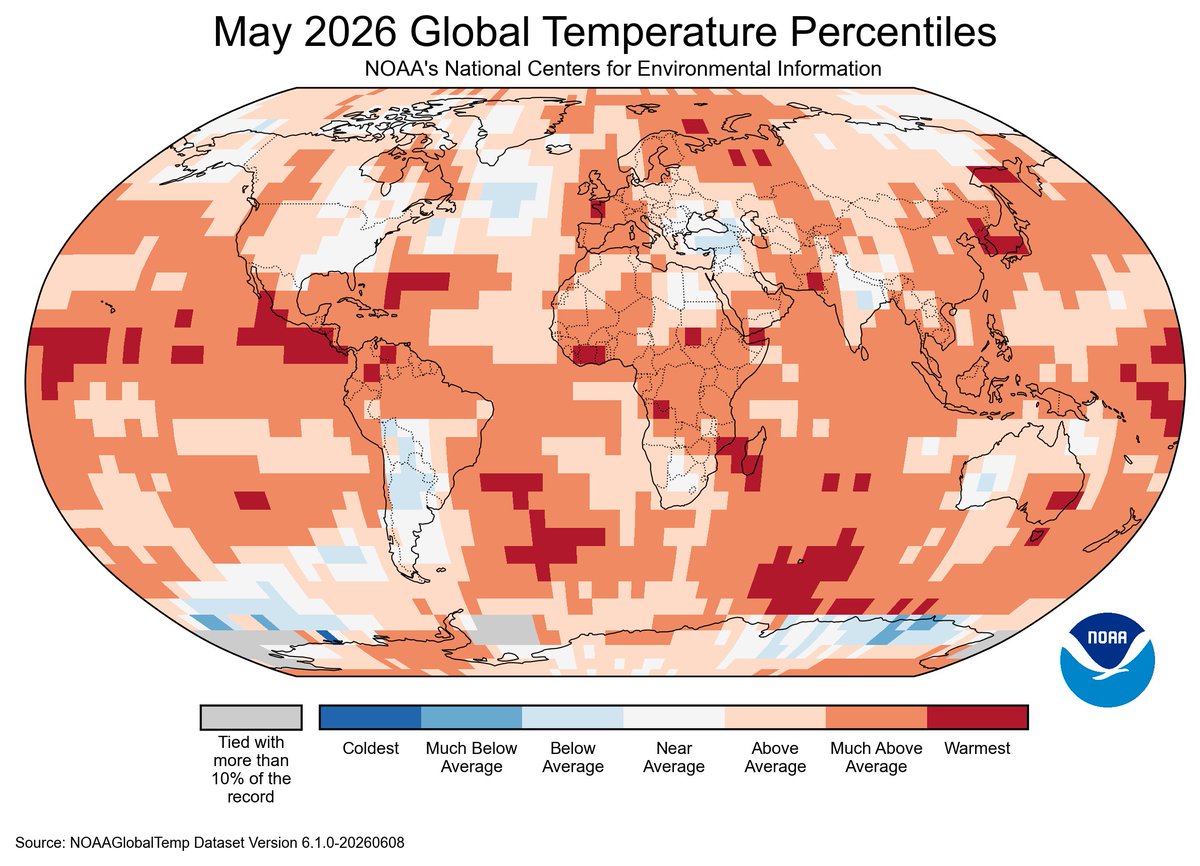
#May2026 just dropped, and it’s officially the second-warmest May on record! 🌡️
The quick stats:
🧊 Arctic sea ice hits second-lowest extent (third month in a row!)
🌀 Below-average tropical cyclone activity
Dive deeper with the full report: bit.ly/Global202605
ALT Map of the global temperature percentiles for May 2026 with warmer areas in gradients of red and orange, cooler areas in gradients of blue and gray indicates that it tied with more than 10% of the record.
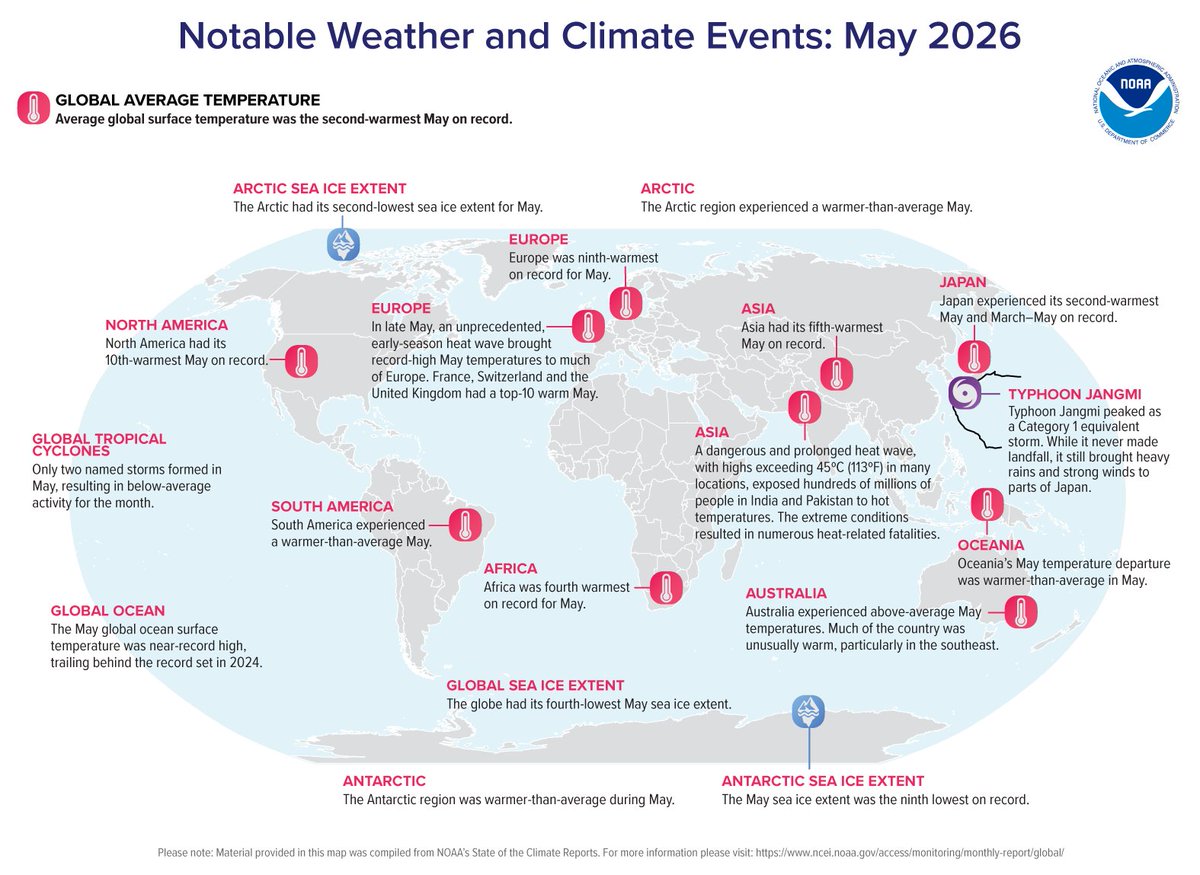
ALT Map of world showing locations of temperature highlights in May 2026 with text describing each event and title at top stating “Notable Weather and Climate Events: May 2026”.
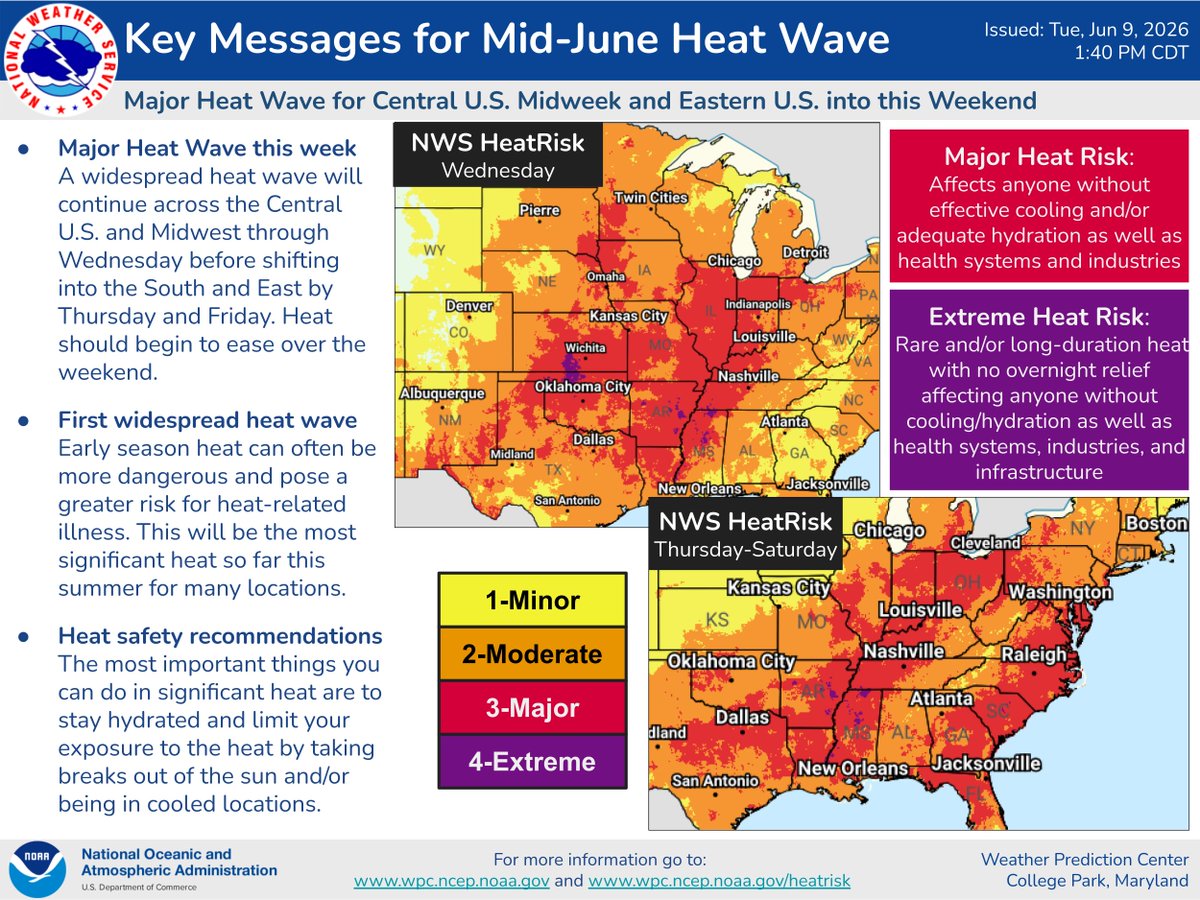
Temperatures will be above average for many this week across the Lower 48. High temperatures across the northern and central Plains could be 20-25 degrees above average tomorrow. By Thursday the Northeast will see temperatures well into the 90s.
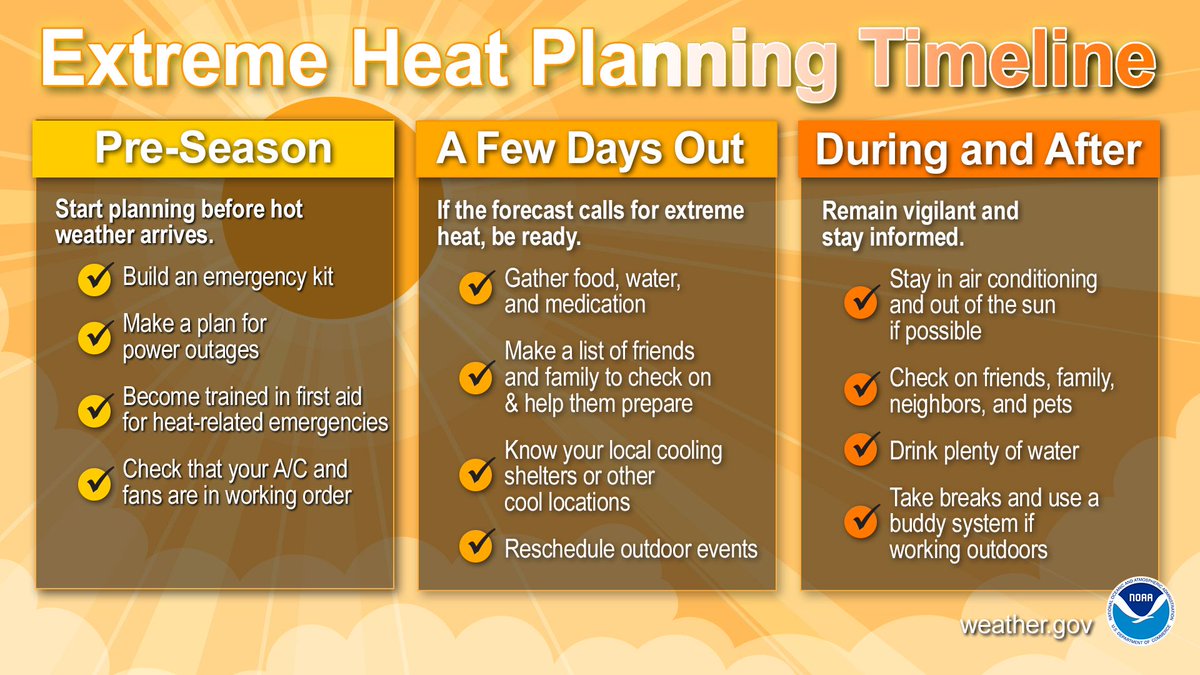
You can prepare for extreme heat ahead of time: weather.gov/safety/heat
ALT Extreme Heat Planning Timeline. Pre-Season - Start Planning before hot weather arrives: build an emergency kit, make a plan for power outages, become trained in first aid for heat-related emergencies and check that your air conditioner and fans are in working order. A few days out - If the forecast calls for extreme heat, be ready: gather food, water & medication; make a list of friends and family to check on and help prepare; know your local cooling stations or other cool locations; reschedule outdoor events. During and After - Remain vigilant and stay informed: stay in A/C and out of the sun if possible, check on friends, family, neighbors and pets, drink plenty of water, take breaks and use a buddy system if working outdoors.
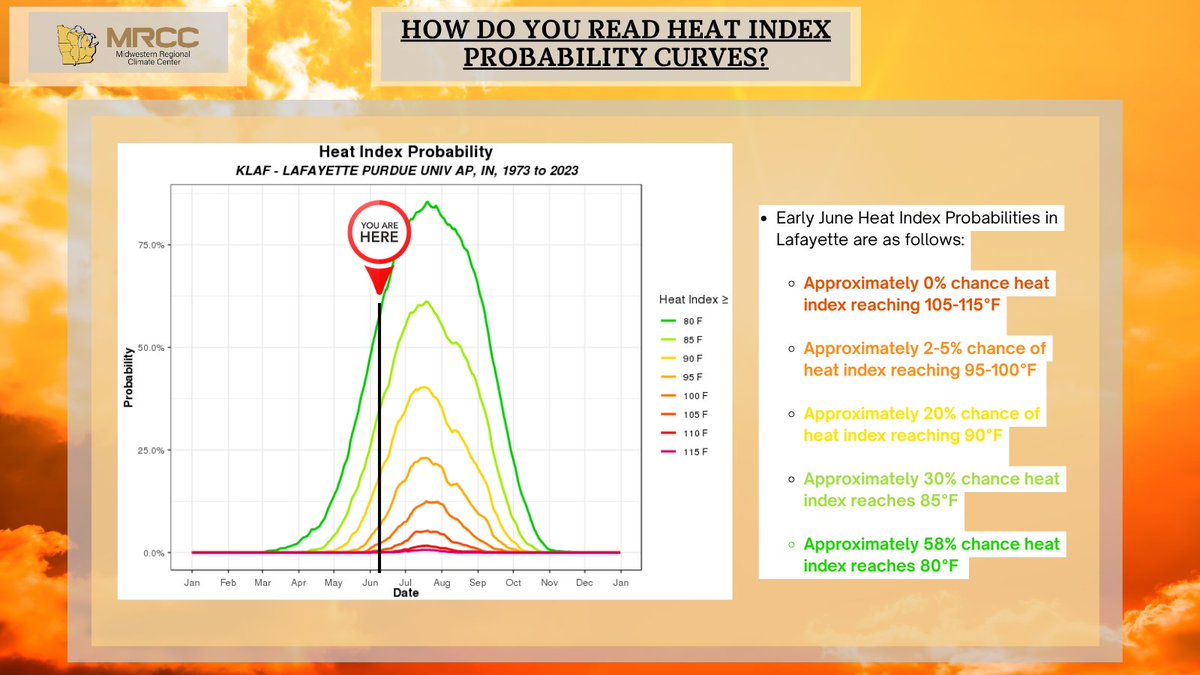
Tis the season of the heat index 🌡️
Our heat index probability curves now include the latest data through 2023! All the more reason to understand how to read our probability curves at different thresholds.
Check your location here ➡️mrcc.purdue.edu/clim/heatInd…
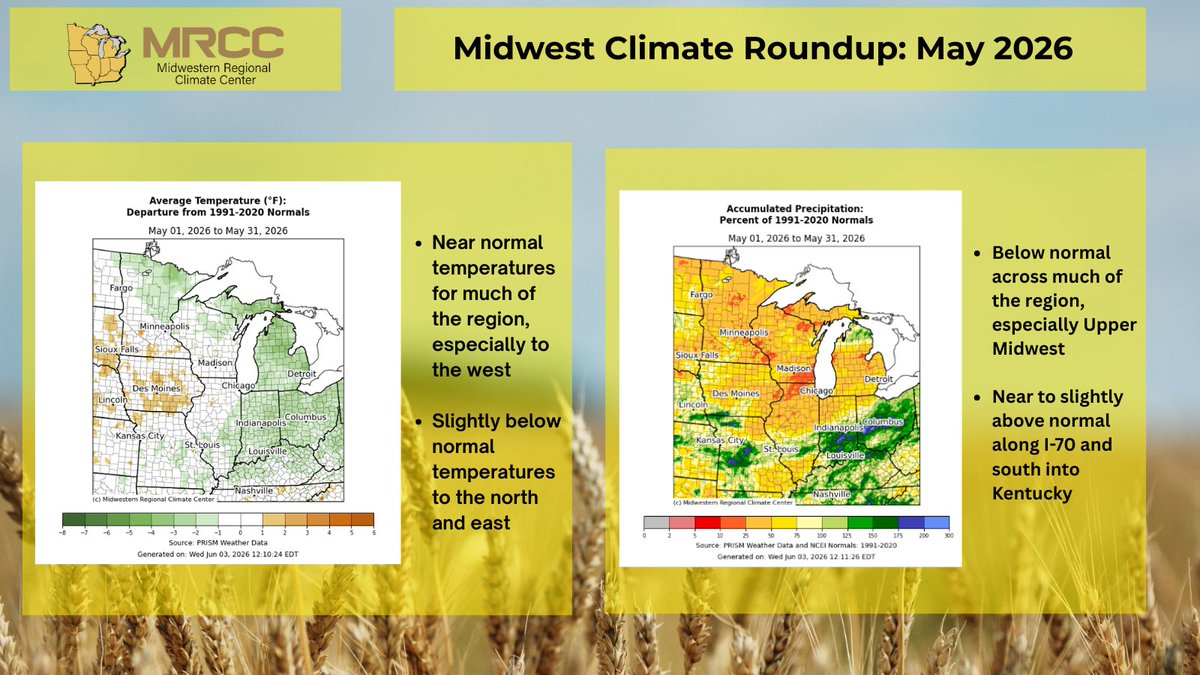
I was a normal to slightly cool May by temperature standards. Precipitation was lackluster across the Upper Midwest, with the most precipitation across the Ohio River Basin.
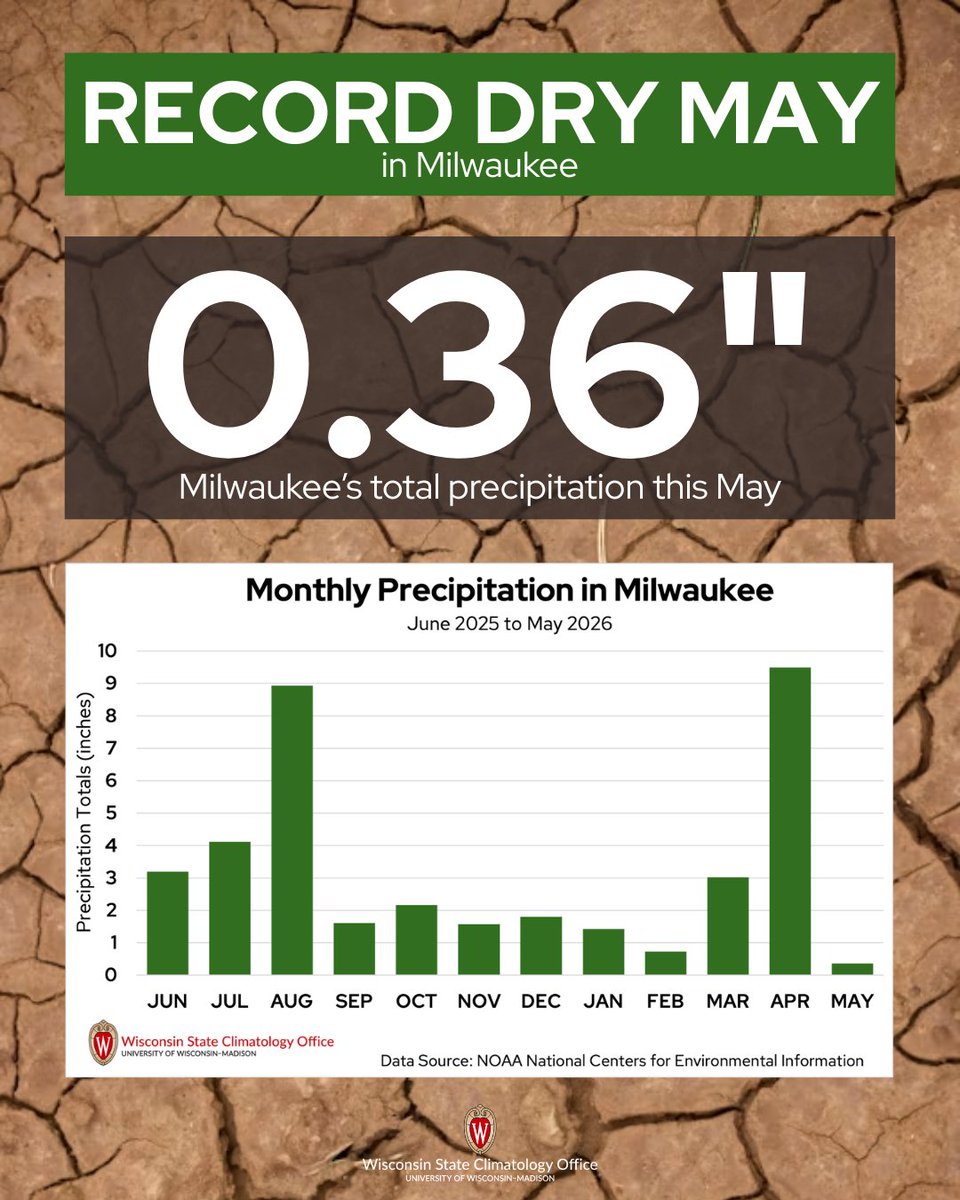
Milwaukee is a prime example of Wisconsin's precipitation ping-pong pattern.
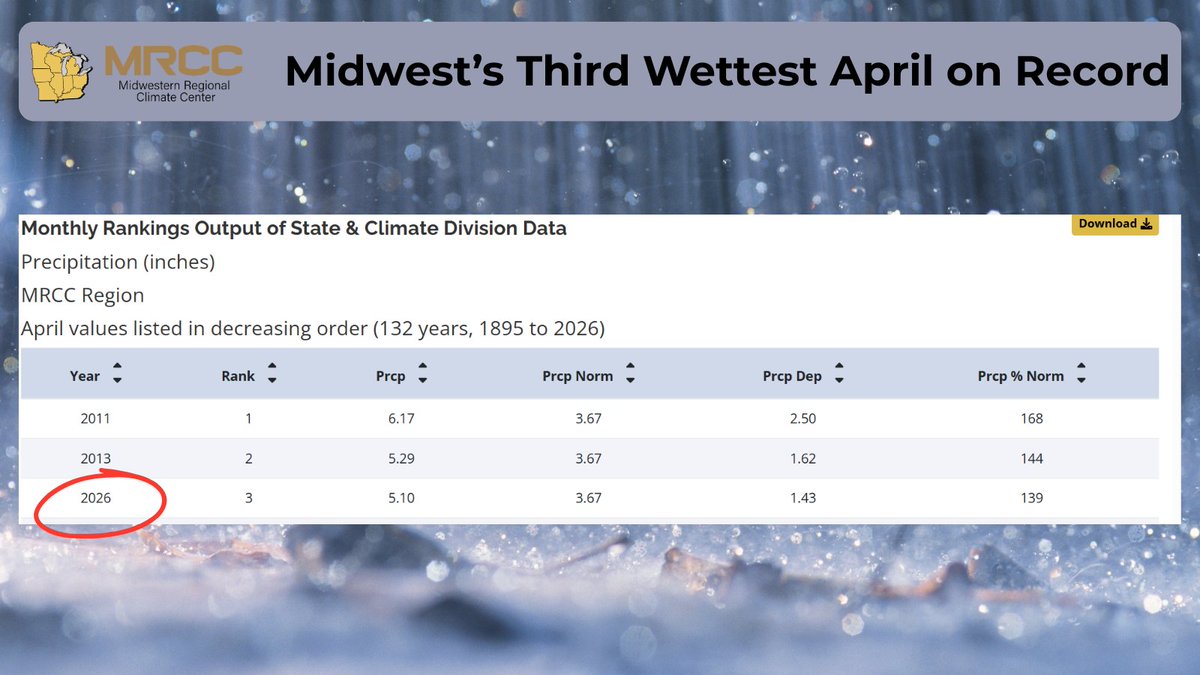
After recording its wettest April on record (9.49"), Brew City swung to its driest May, receiving just 0.36" of precip all month. That's 3.18" below the amount Milwaukee typically receives in May.
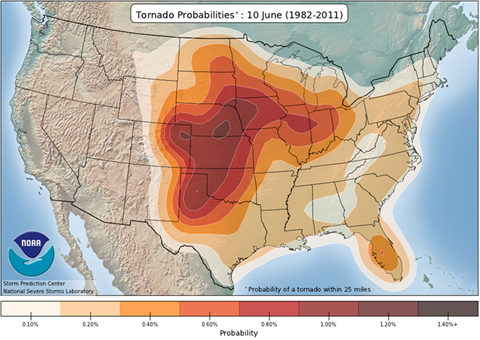
Tornadoes can happen any month in the Midwest, but higher probabilities shift north into places like Illinois, Iowa, and Minnesota in June.
You can find more tornado climatology and resources for the Midwest on the MRCC's Living With Weather page ➡️mrcc.purdue.edu/living_wx/to…
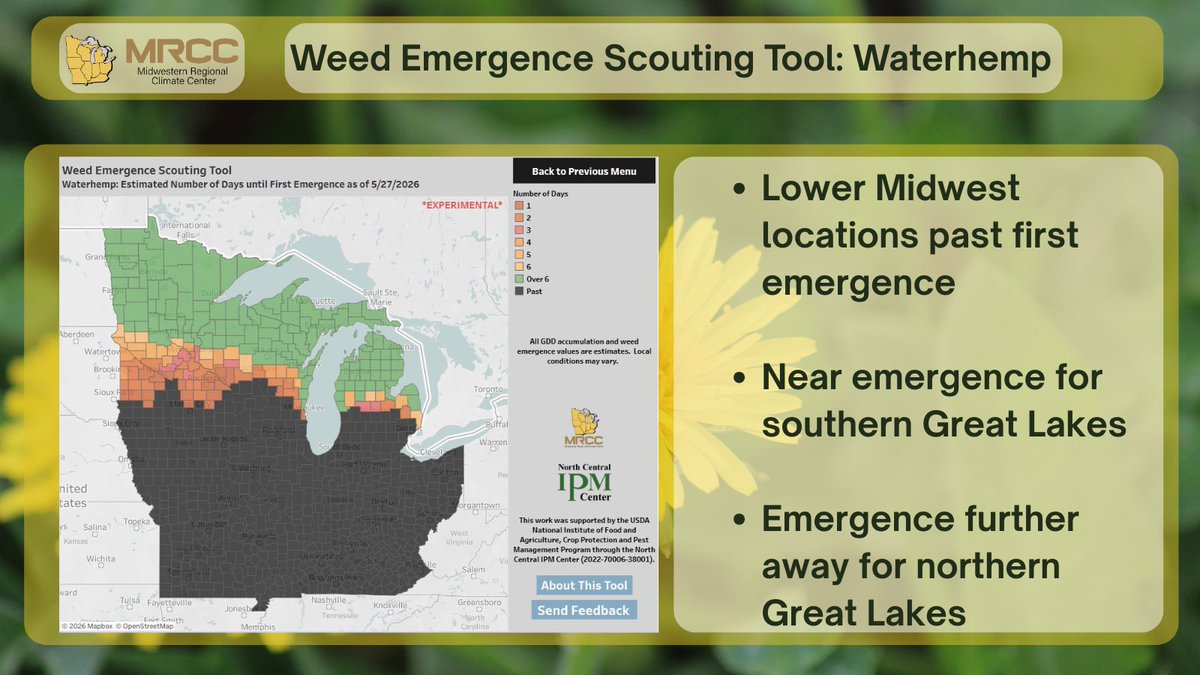
Let's talk the emergence of Waterhemp, a common weed across the Midwest.
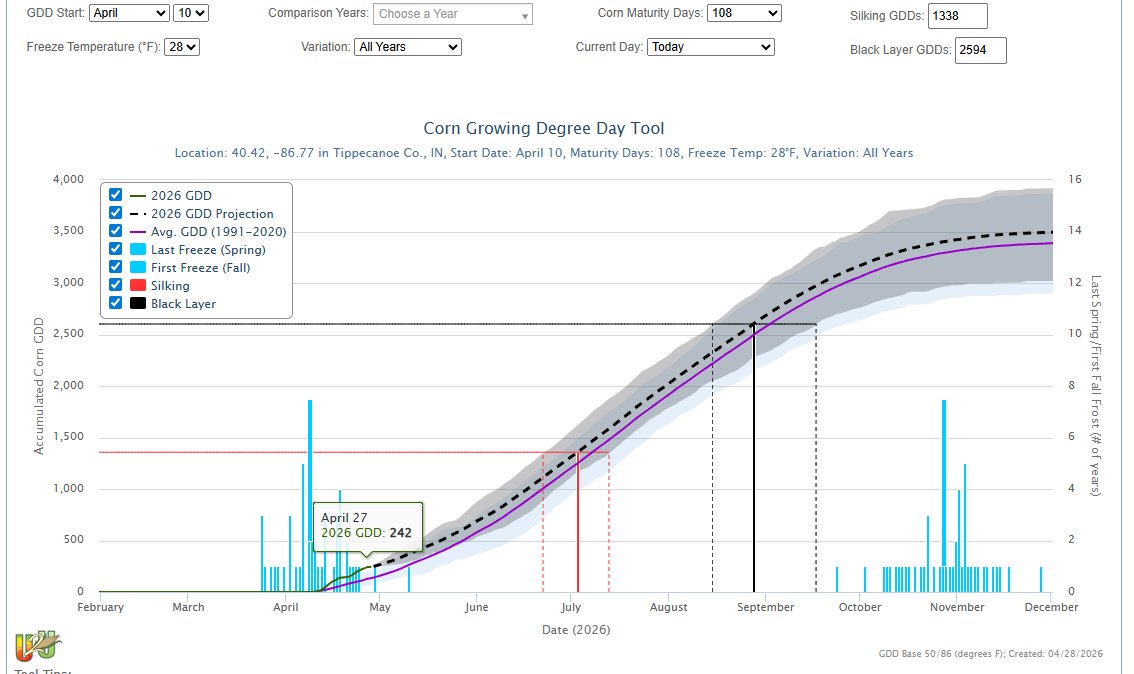
First emergence for Upper Midwest locations is still over a week away. Traditionally, Waterhemp emerges at 350 Growing Degree Day accumulations.
Learn more here ➡️mrcc.purdue.edu/WEST-Desktop
ALT First emergence of Waterhemp across the Midwest from WEST. Upper Great Lakes still over a week away from emergence, while much fo the rest fo the region, shaded in black, red, or orange, is less than a week within or past first emergence.
Potential flash drought in the Upper Midwest
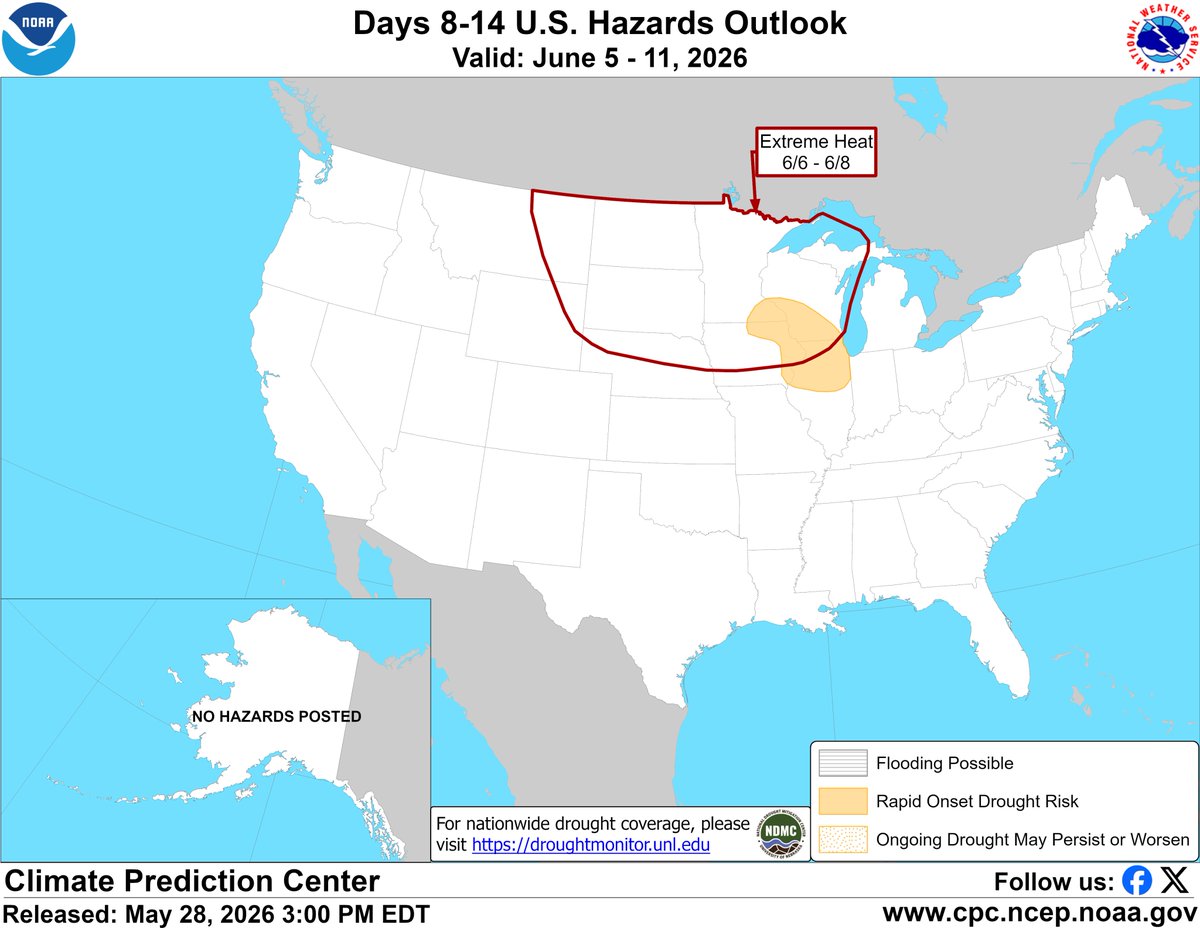
@NOAA’s @NWSCPC shows rapid onset drought risk for parts of MN, IA, WI, and IL between June 5-11.
The map also shows extreme heat moving into the region, which can be a factor in flash drought development. drought.gov
ALT A NOAA Climate Prediction Center map shows the Days 8–14 U.S. Hazards Outlook for June 5–11, 2026, highlighting a large area of "Extreme Heat" across the Northern Plains and Upper Midwest from June 6–8. A smaller, overlapping shaded region indicates a "Rapid Onset Drought Risk" across parts of Minnesota, Iowa, Illinois, and Wisconsin.
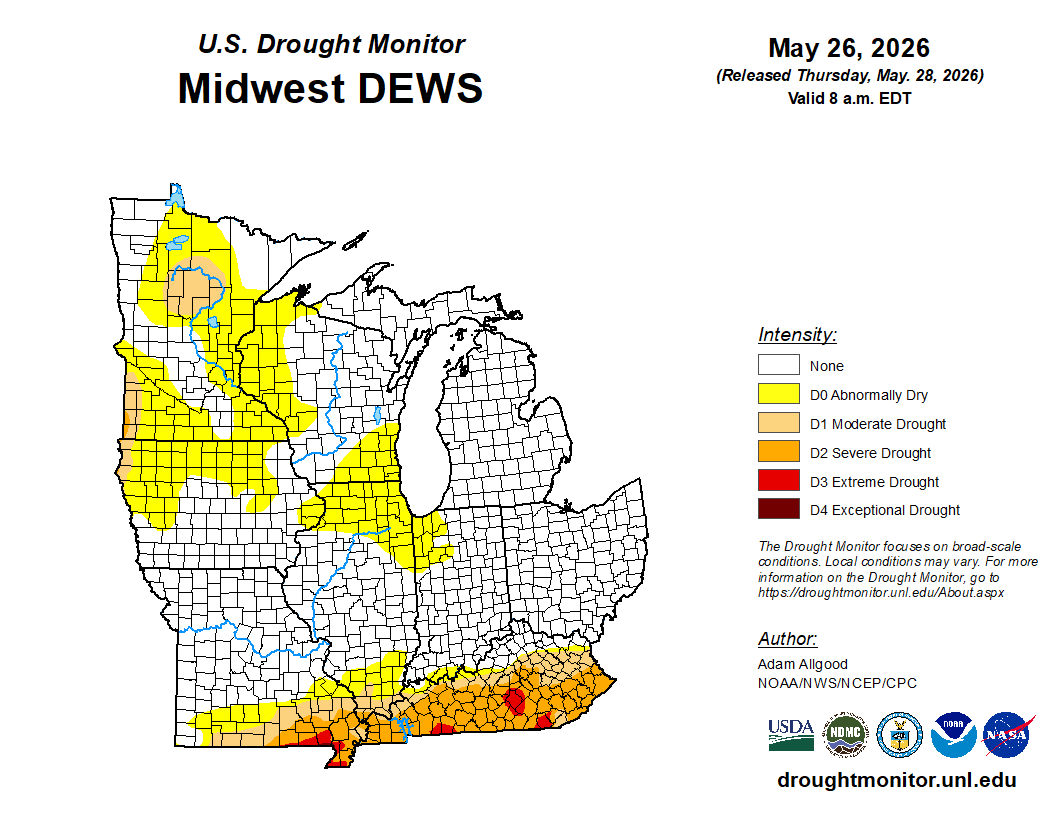
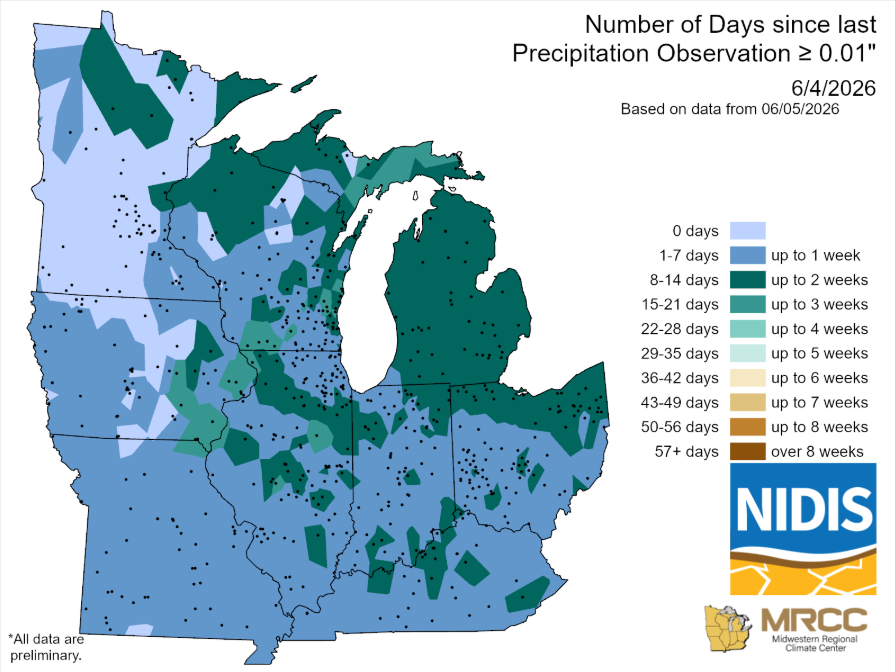
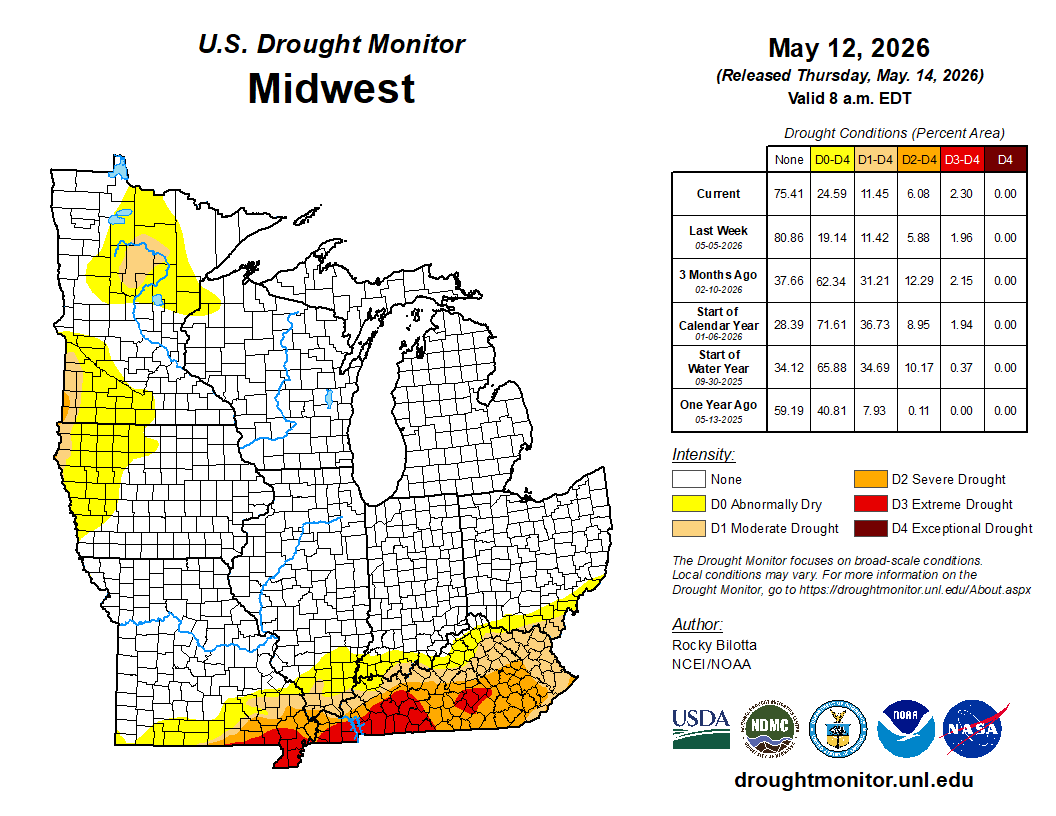
The Midwest has largely been drought-free the last 2 months (except KY).
But the northern and western Midwest have seen a drying trend in the last 30 days. The 6-10 day outlooks lean warm/dry. Drought may develop, especially in the Upper Midwest. drought.gov/@NOAA
ALT A U.S. Drought Monitor map focusing on the Midwestern United States with data valid through May 26, 2026, showing little drought outside of Kentucky, southern Missouri, and a few pockets in the Upper Midwest.
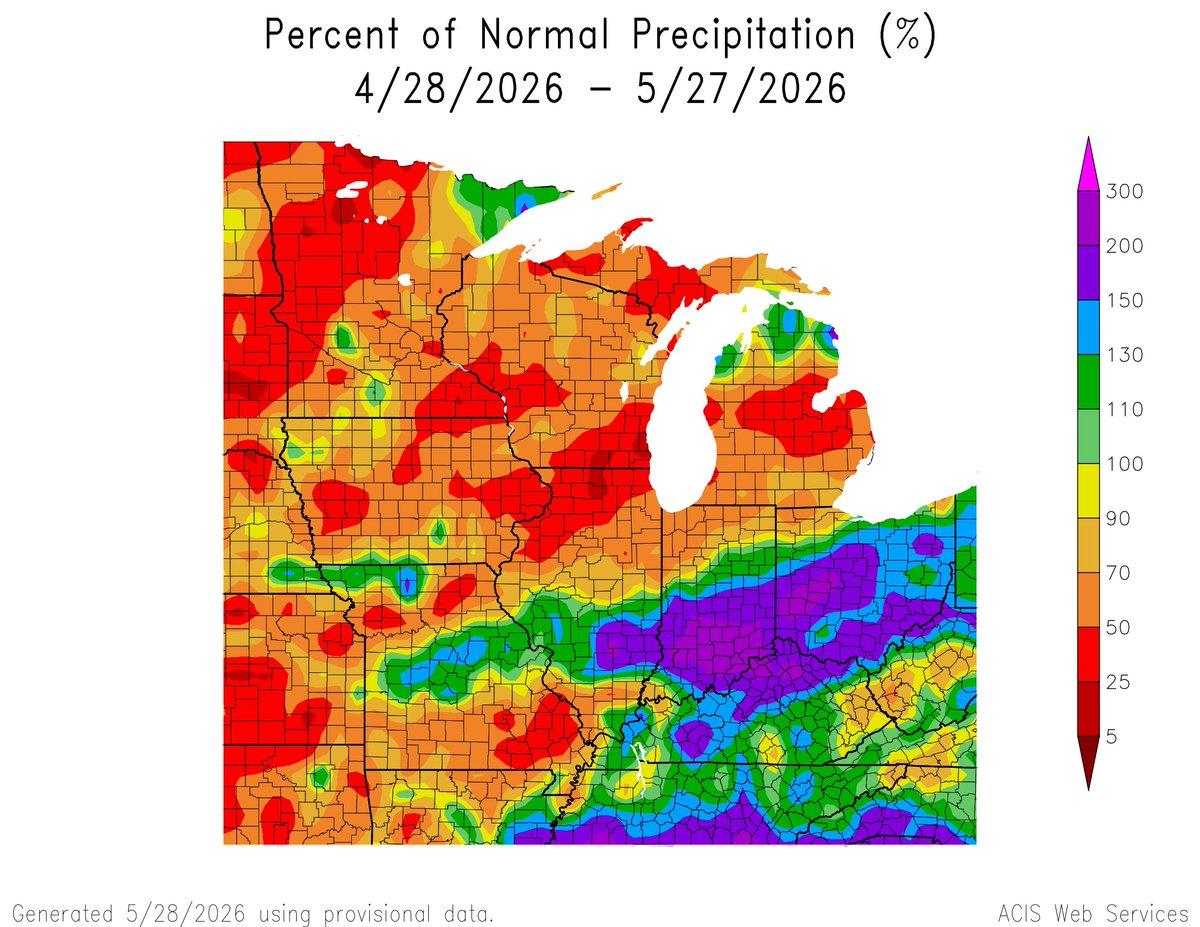
ALT A map of the Midwestern United States shows the percent of normal precipitation from April 28 to May 27, 2026, with a stark contrast between dry northern areas and wet southern regions. While areas like Wisconsin, Michigan, and northern Illinois experienced severe deficits under 50% of normal precipitation, a heavy band stretching across southern Illinois, Indiana, and Ohio received well over 150% to 300% of its normal rainfall.
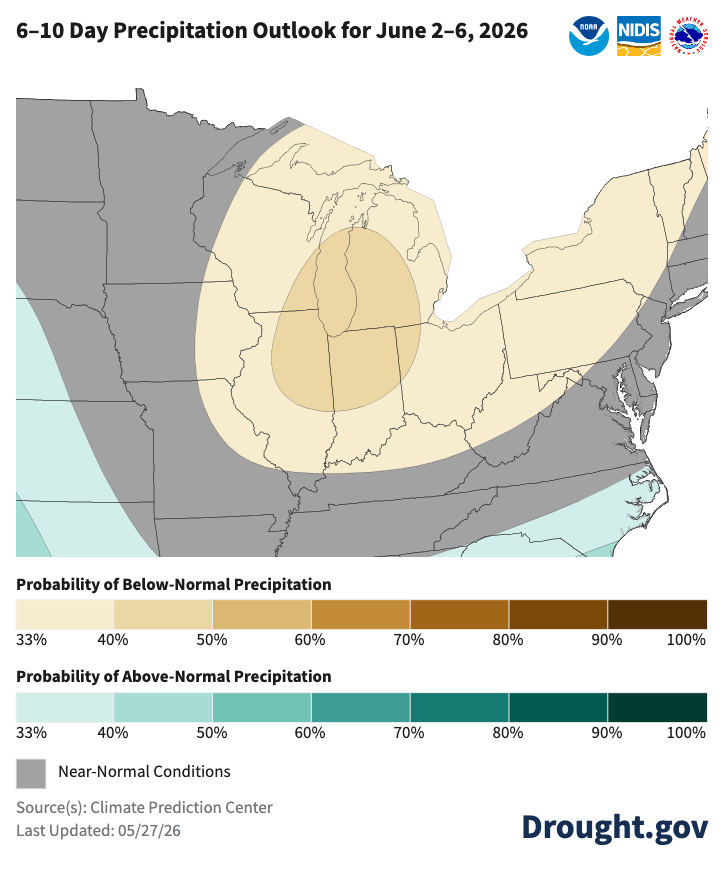
ALT A map of the Midwest showing the NOAA 6-10 Day Precipitation Outlook valid for June 2–6, 2026. Below-normal precipitation is expected for much of the Great Lakes/Midwest region.
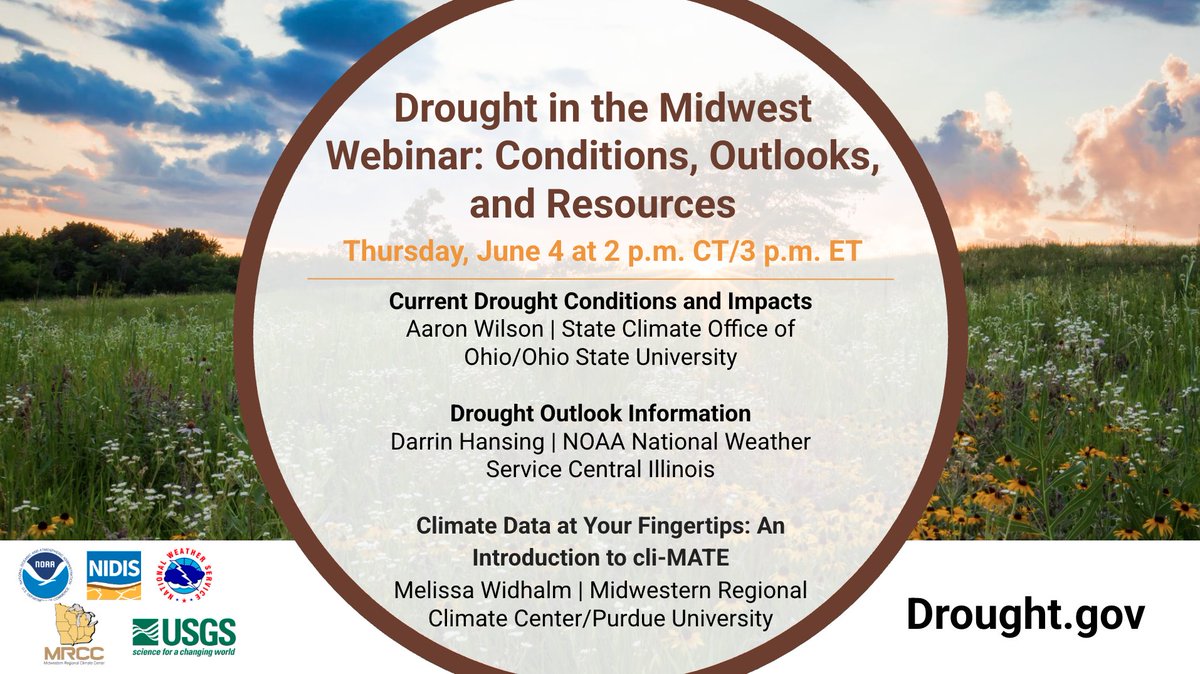
A webinar discussing the state of drought & climate data resources for Midwestern stakeholders will occur June 4, 2026 at 2PM Central/3PM Eastern, in partnership with @NOAADrought@USGS@NWSCPC.
Register here ➡️noaaresearch.webex.com/webap…
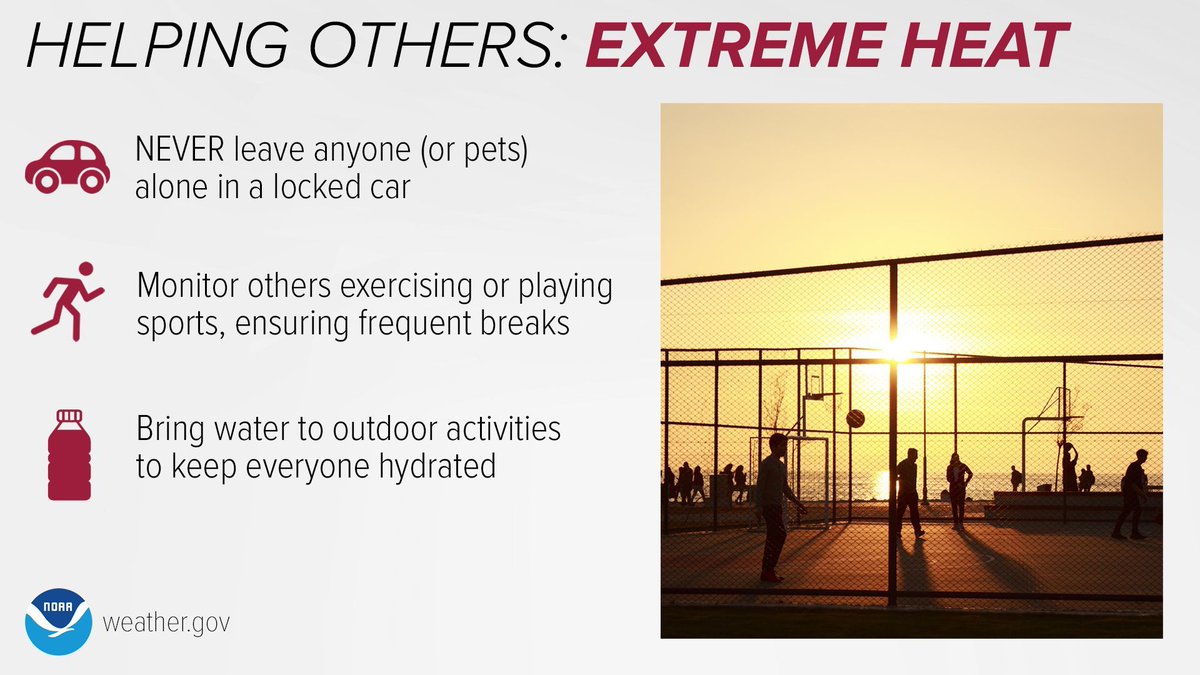
As temperatures climb, check in with your friends and family. Make sure they know what to do during extreme heat.
⚠️NEVER leave people or pets alone in a vehicle
🌳Take frequent breaks in the shade, if outdoors
💧Bring extra water to stay hydrated
✅Check weather.gov for the latest forecast
ALT Helping Others: Extreme Heat. Never leave anyone (or pets) alone in a locked car. Monitor others exercising or playing sports, ensuring frequent breaks. Bring water to outdoor activities to keep everyone hydrated.
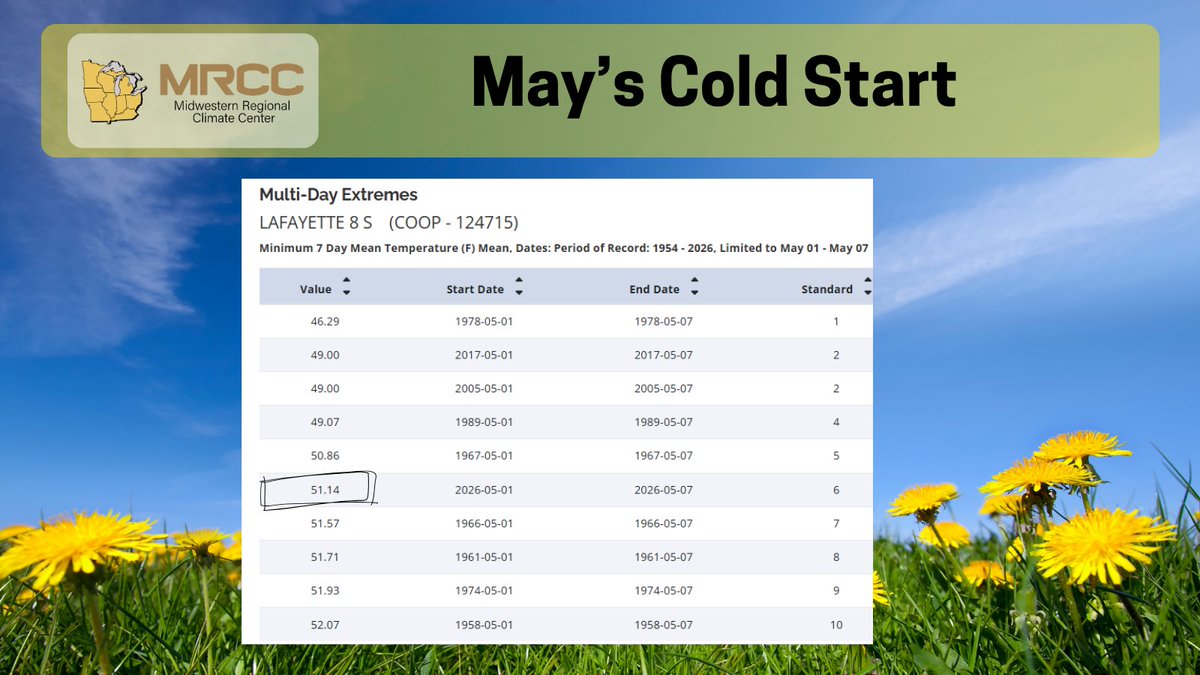
In the MRCC's home of Lafayette, the 1st week of May was the 6th coldest start to May on record and the coldest in almost ten years.
You can see how cold your first week of May was using the Multi-Day Extremes Tool on cli-MATE here➡️mrcc.purdue.edu/newclimate/s…
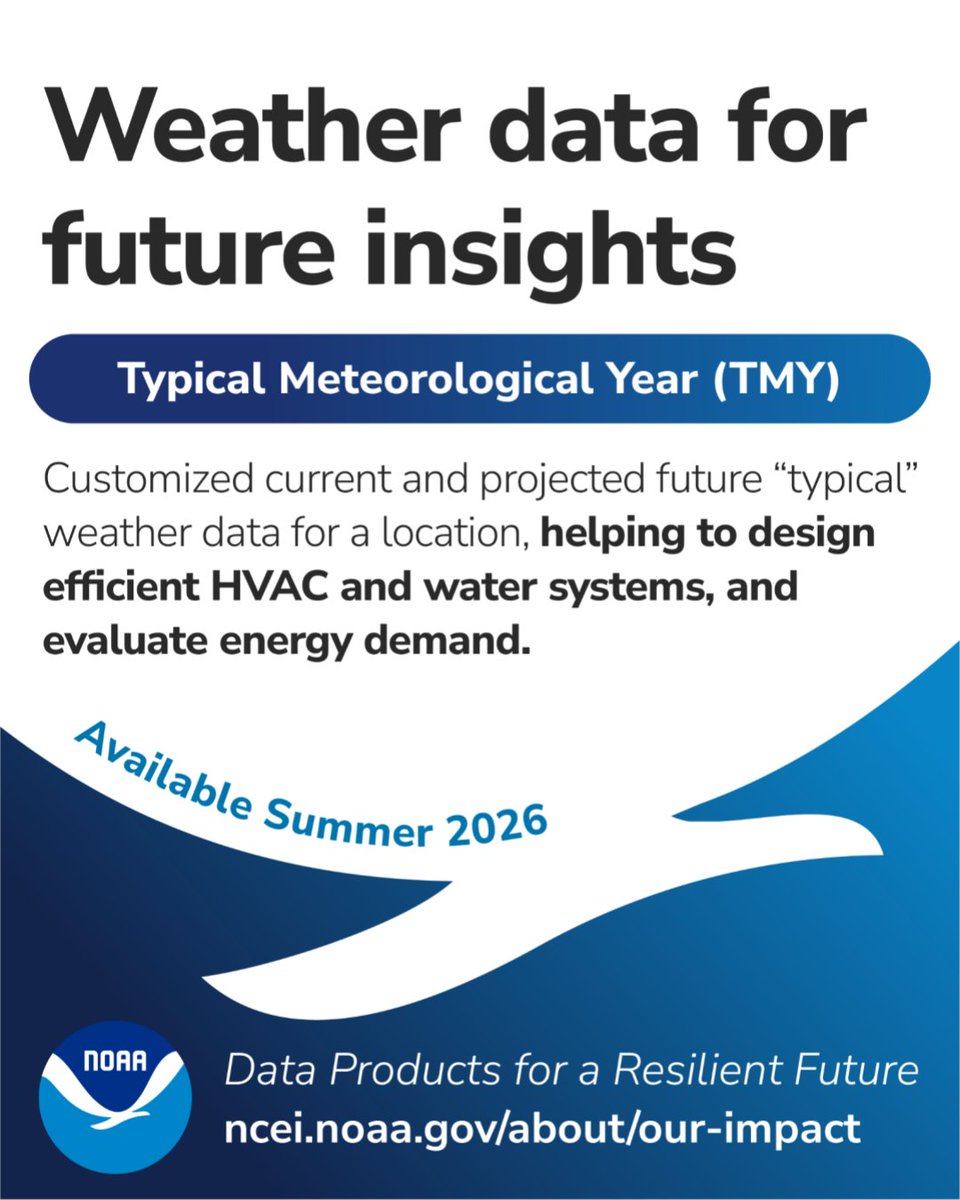
🌤️The Typical Meteorological Year (TMY) product is now live! TMY helps architects & engineers design buildings & infrastructure for today’s climate & the future using historical records projections. Learn more: bit.ly/4ueR1gr
ALT Image that resembles the NOAA logo that reads “Weather data for future insights - Typical Meteorological Year (TMY) - Customized current and projected future “typical” weather data for a location, helping to design efficient HVAC and weather systems, and evaluate energy demand. - Available Summer 2026 - Data Products for a Resilient Future”. A link to NCEI’s “Our Impact” page is provided and the NOAA logo is in the left hand corner.
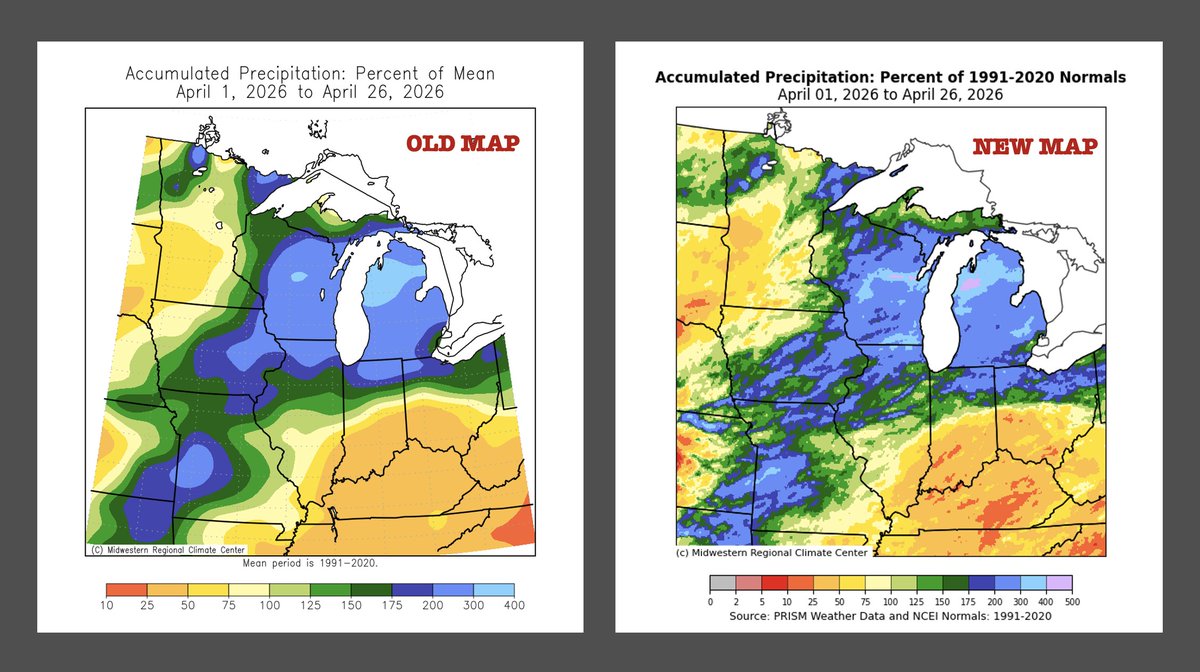
Healthy rains this spring alleviated drought concerns for much of the Midwest. The exception is parts of Minnesota and Iowa & more so Kentucky and the Missouri Bootheel, where a lack of precipitation has encouraged the development of D2 (severe drought) and D3 (extreme drought).