Programmer
Joined March 2009
- Tweets 238
- Following 179
- Followers 322
- Likes 1,475
Photos and videos
Juraj Gottweis retweeted

14 May 2024
It's such an honor to work on Project Astra with such an amazing team from across Gemini and Google DeepMind! While the #GoogleIO keynote was happening we had a last minute idea of watching the keynote with Project Astra. Check it out!

15
21
350
240,469
Juraj Gottweis retweeted

7 May 2024
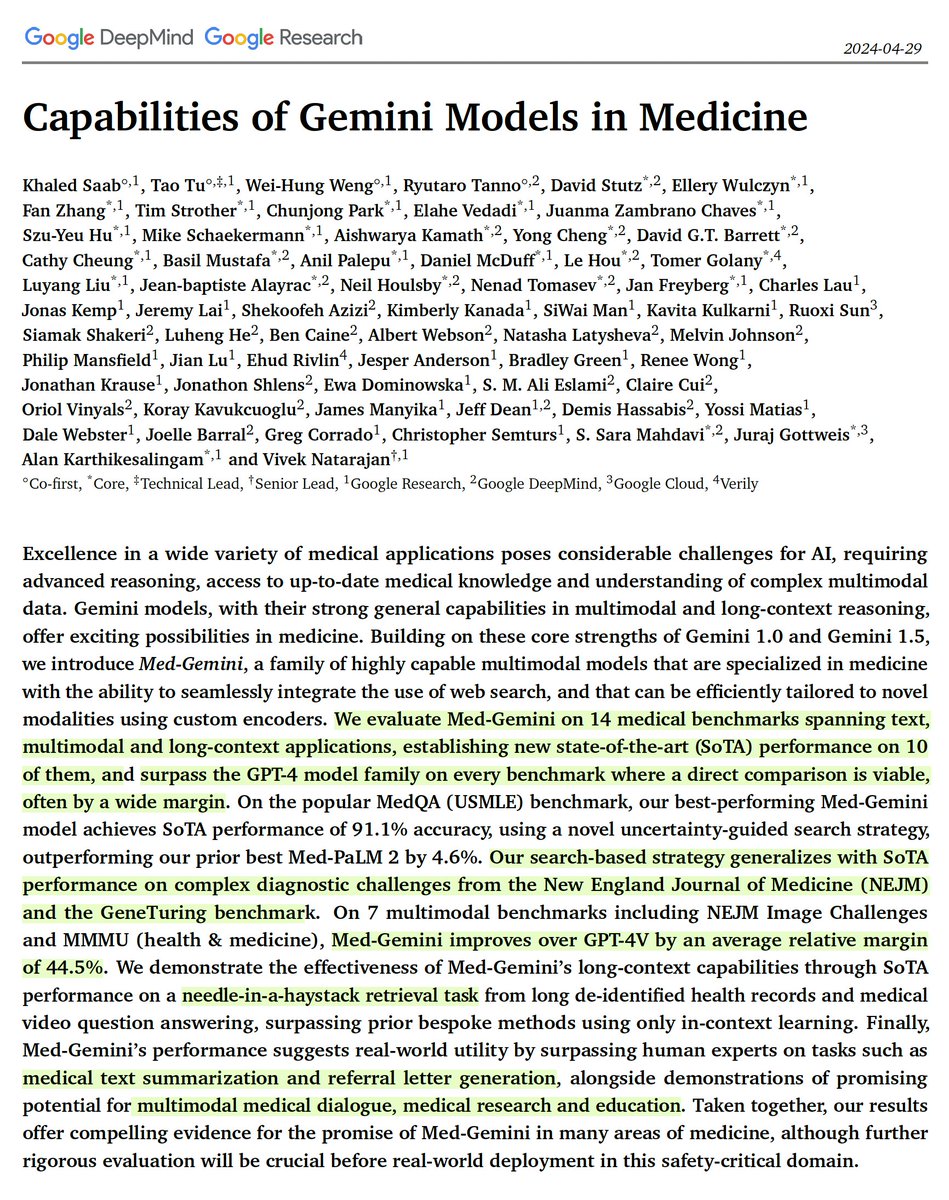
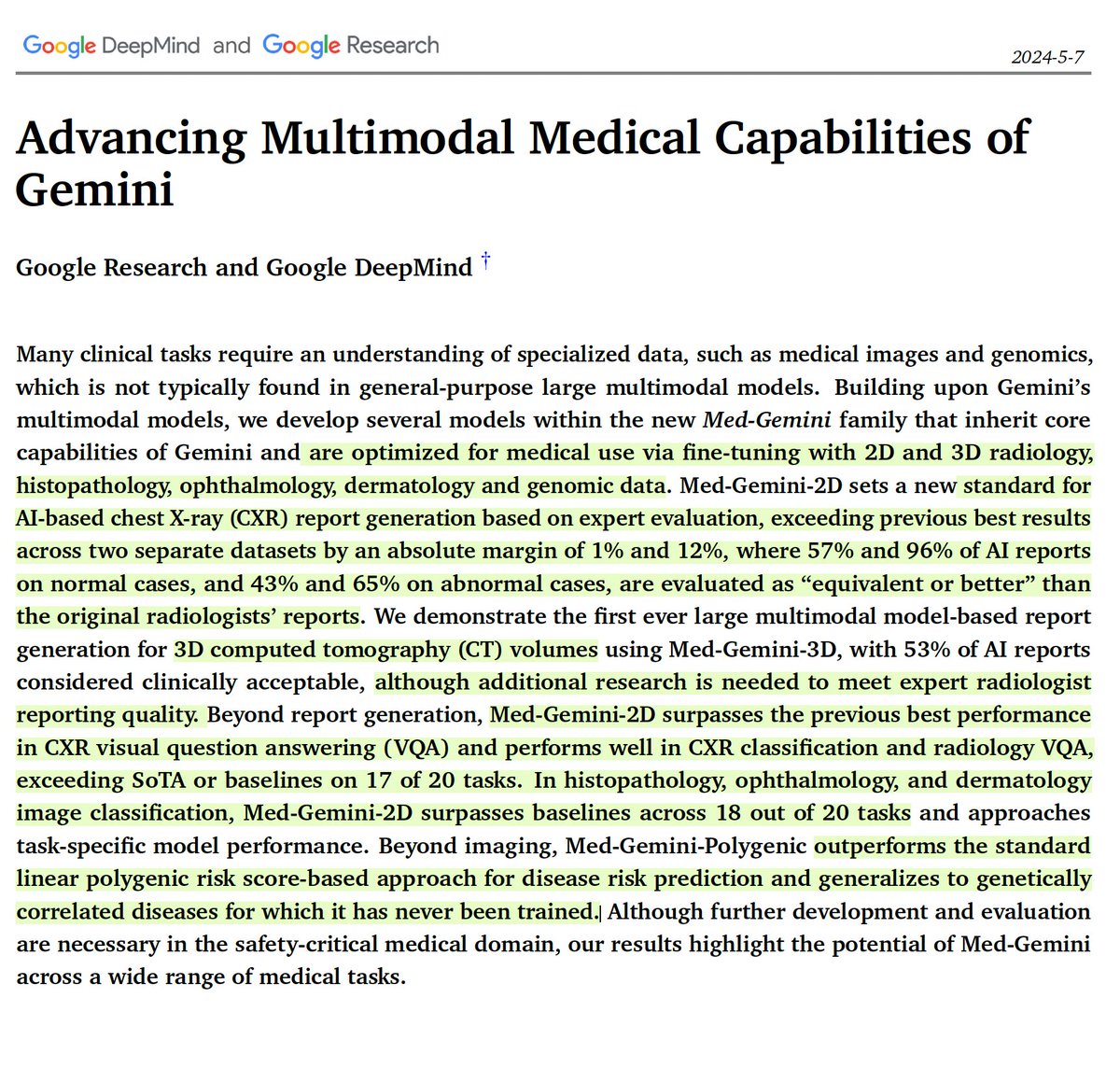
These Twin Gemini multimodal #AI model reports take the state-of-the-art of medical AI to a new level with diverse task capabilities
arxiv.org/pdf/2404.18416
arxiv.org/abs/2405.03162
@GoogleDeepMind @GoogleAI
2
56
178
40,469

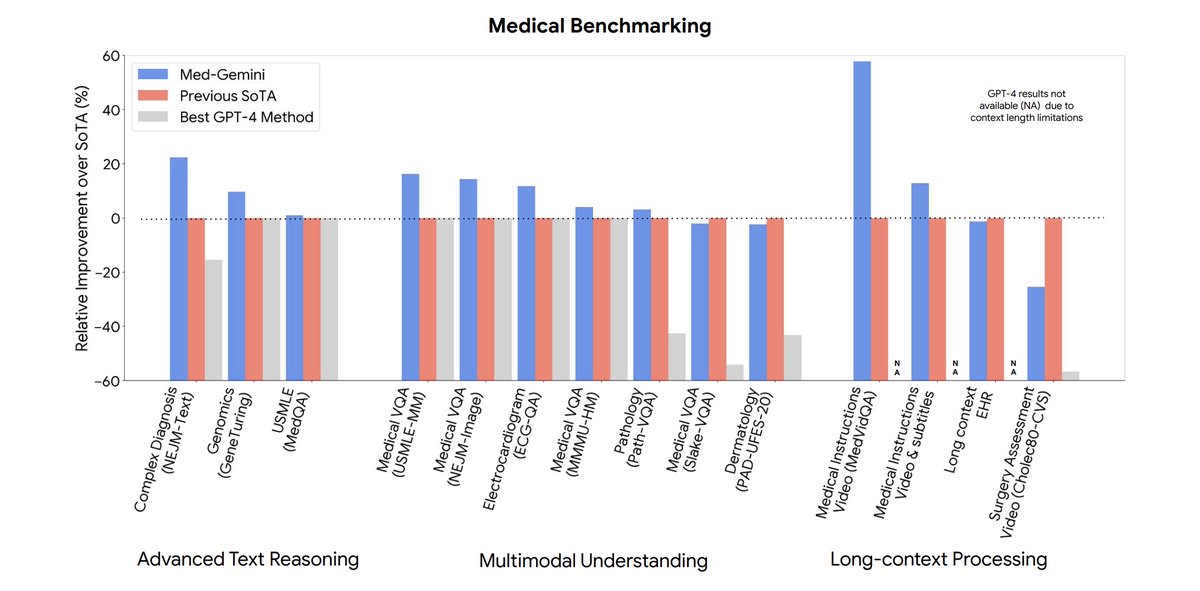
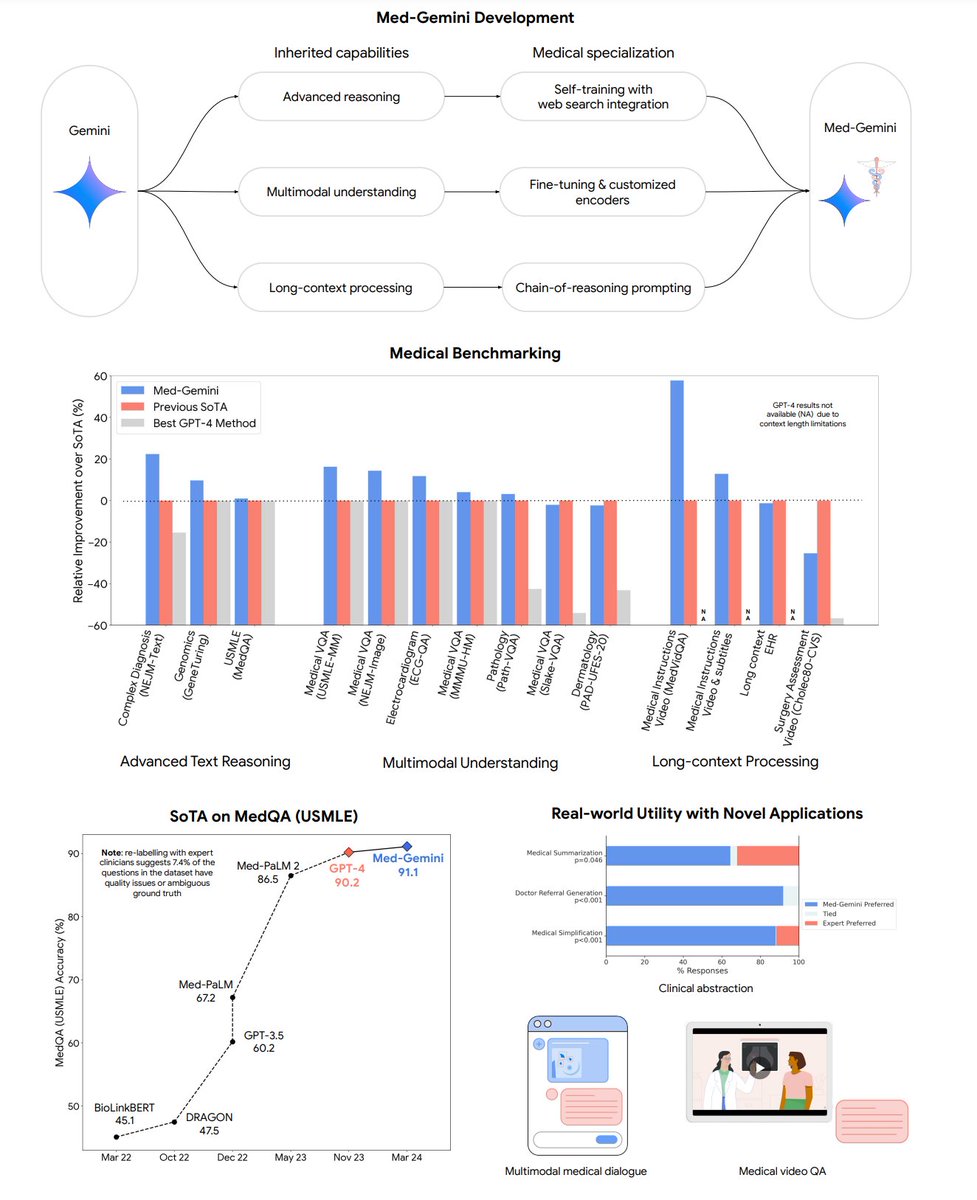
Results from our first ✨Med-Gemini✨models, variants of the base Gemini multimodal models that have been tuned for the medical domain.
The multimodal and long context capabilities of the Gemini models really shine in some of the capabilities.
Joint work with @vivnat @KhaledSaab11 @taotu831 @RyutaroTanno @davidstutz92 @dgtbarrett @HardyShakerman @3llery @weballergy @alan_karthi @ymatias @greg_corrado @joelle_barral @OriolVinyalsML @koraykv @JeffDean @demishassabis
many others
@GoogleDeepMind @GoogleHealth @GoogleAI
30 Apr 2024

Delighted to share ✨Med-Gemini✨ - our new family of multimodal models for medicine unlocking new possibilities for health - arxiv.org/pdf/2404.18416
More accurate multimodal conversations about medical images🩻, surgical videos📽️, genomics🧬, ultra-long health records📚, ECGs🫀 & more with state-of-art performance across multiple benchmarks
More accurate, up-to-date answers to medical questions with advanced reasoning and intelligent use of web-search
Long-context abilities. Summaries or referral letters from long health records, analyses of dozens of long research PDFs & more (1/6)
33
92
526
158,322
Juraj Gottweis retweeted

30 Apr 2024
Google announces Med-Gemini, a family of Gemini models fine-tuned for medical tasks! 🔬
Achieves SOTA on 10 of the 14 benchmarks, spanning text, multimodal & long-context applications.
Surpasses GPT-4 on all benchmarks!
This paper is super exciting, let's dive in ↓
20
198
1,031
142,070
Juraj Gottweis retweeted

30 Apr 2024
Delighted to share ✨Med-Gemini✨ - our new family of multimodal models for medicine unlocking new possibilities for health - arxiv.org/pdf/2404.18416
More accurate multimodal conversations about medical images🩻, surgical videos📽️, genomics🧬, ultra-long health records📚, ECGs🫀 & more with state-of-art performance across multiple benchmarks
More accurate, up-to-date answers to medical questions with advanced reasoning and intelligent use of web-search
Long-context abilities. Summaries or referral letters from long health records, analyses of dozens of long research PDFs & more (1/6)
17
107
564
307,121
Juraj Gottweis retweeted

21 Apr 2024
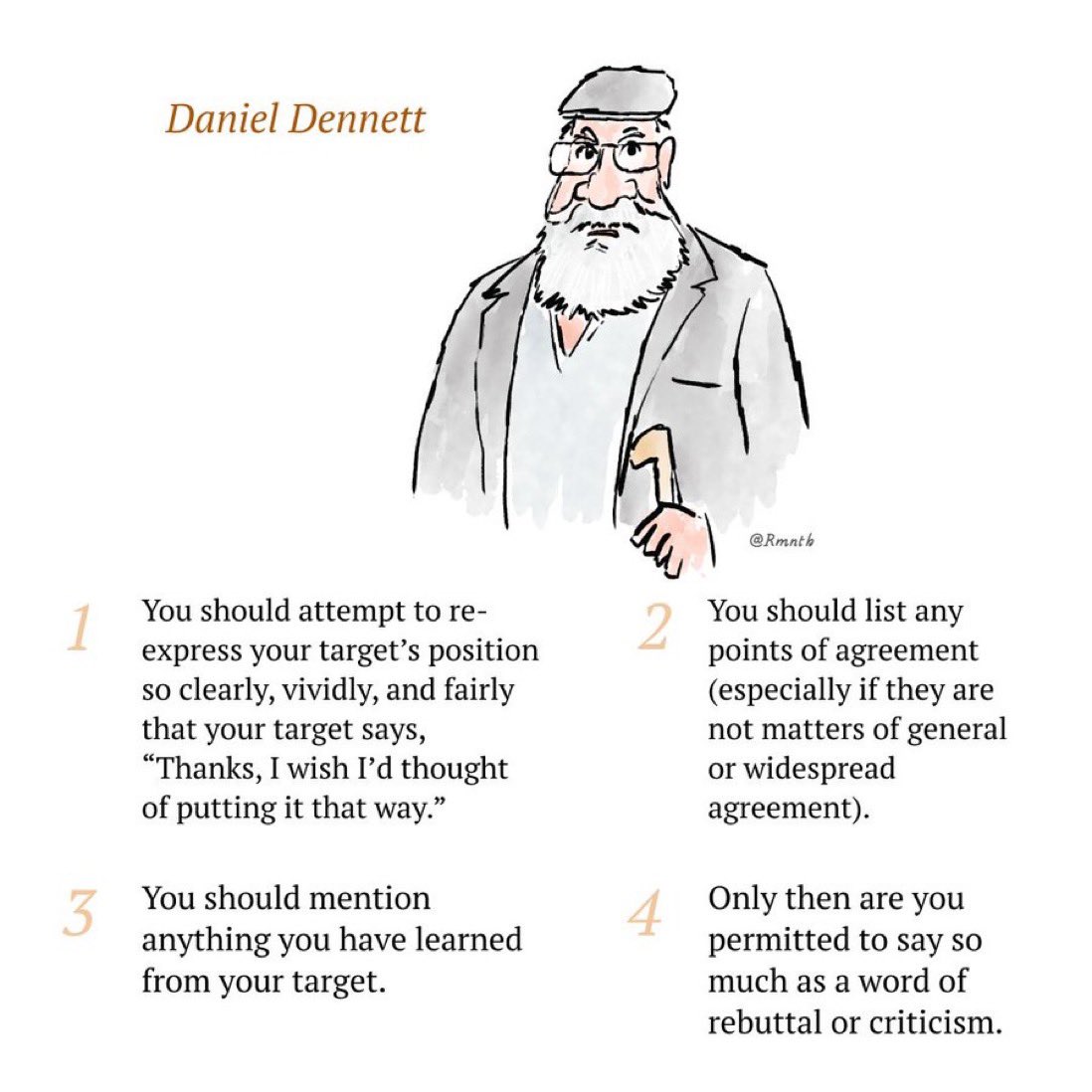
Also reminds of Munger’s maxim of not taking a side on a debate unless you can put the opposite argument better than the best supporter of the said counter argument.
(This also led me without an opinion on most topics 🙃)
19 Apr 2024

Daniel Dennett (28th March 1942 - 19th April 2024)
RIP
Dennett on how to criticise wisely
1
14
1,485
Juraj Gottweis retweeted

22 Mar 2024
Neuralink was kind enough to open their doors for me to tour their headquarters a few weeks back. It was an amazing experience and a day I'll never forget. This was at a company wide meeting at the end of the day. Thank you to everyone who made this possible. Hope y'all enjoy! I'm hoping to tell my story in full some day.
1,046
2,386
14,032
3,160,052
Juraj Gottweis retweeted

1 Mar 2024
Woman at Navalny’s funeral compares Putin and Navalny:
“One sacrificed himself to save the country, the other one sacrificed the country to save himself”
638
10,334
49,900
2,926,284
Juraj Gottweis retweeted

18 Feb 2024
We live in a time increasingly resembling the second half of the 1930s. I couldn't live with myself with the knowledge I didn't do more to stop another Hitler. In light of the Republican wavering and in memory of Navalny I will give $100 towards FPV drones for Ukr for every RT.
972
25,142
20,101
3,297,054
Juraj Gottweis retweeted

5 Feb 2024
Ten months ago, we launched the Vesuvius Challenge to solve the ancient problem of the Herculaneum Papyri, a library of scrolls that were flash-fried by the eruption of Mount Vesuvius in 79 AD.
Today we are overjoyed to announce that our crazy project has succeeded. After 2000 years, we can finally read the scrolls:
This image was produced by @Youssef_M_Nader, @LukeFarritor, and @JuliSchillij, who have now won the Vesuvius Challenge Grand Prize of $700,000. Congratulations!!
These fifteen columns come from the very end of the first scroll we have been able to read and contain new text from the ancient world that has never been seen before. The author – probably Epicurean philosopher Philodemus – writes here about music, food, and how to enjoy life's pleasures. In the closing section, he throws shade at unnamed ideological adversaries – perhaps the stoics? – who "have nothing to say about pleasure, either in general or in particular."
This year, the Vesuvius Challenge continues. The text that we revealed so far represents just 5% of one scroll.
In 2024, our goal is to from reading a few passages of text to entire scrolls, and we're announcing a new $100,000 grand prize for the first team that is able to read at least 90% of all four scrolls that we have scanned.
The scrolls stored in Naples that remain to be read represent more than 16 megabytes of ancient text. But the villa where the scrolls were found was only partially excavated, and scholars tell us that there may be thousands more scrolls underground. Our hope is that the success of the Vesuvius Challenge catalyzes the excavation of the villa, that the main library is discovered, and that whatever we find there rewrites history and inspires all of us.
It's been a great joy to work on this strange and amazing project. Thanks to Brent Seales for laying the foundation for this work over so many years, thanks to the friends and Twitter users whose donations powered our effort, and thanks to the many contestants whose contributions have made the Vesuvius Challenge successful!
Read more in our announcement: scrollprize.org/grandprize

2,250
14,325
63,819
26,353,683
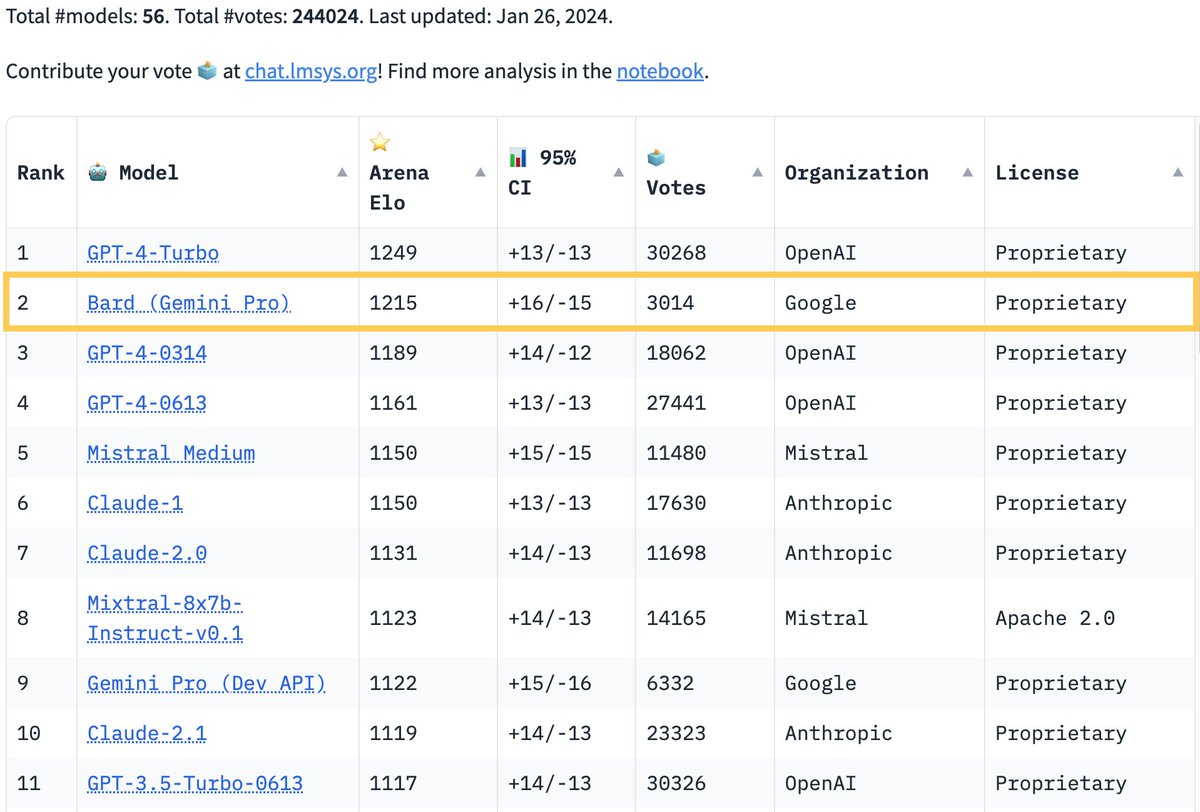
Bard, powered by the Gemini Pro-scale model, debuts at the #2 position on the independent lmsys leaderboard. 🔥
Give it a try at bard.google.com. Bard is much better & has many more capabilities since its debut in March, thanks to everyone on the Bard/Gemini teams!

🔥Breaking News from Arena
Google's Bard has just made a stunning leap, surpassing GPT-4 to the SECOND SPOT on the leaderboard! Big congrats to @Google for the remarkable achievement!
The race is heating up like never before! Super excited to see what's next for Bard Gemini Ultra release.
82
179
1,275
309,409

Google AI has better bedside manner than human doctors — and makes better diagnoses go.nature.com/48yGIcc
7
59
147
60,662
Juraj Gottweis retweeted

13 Jan 2024
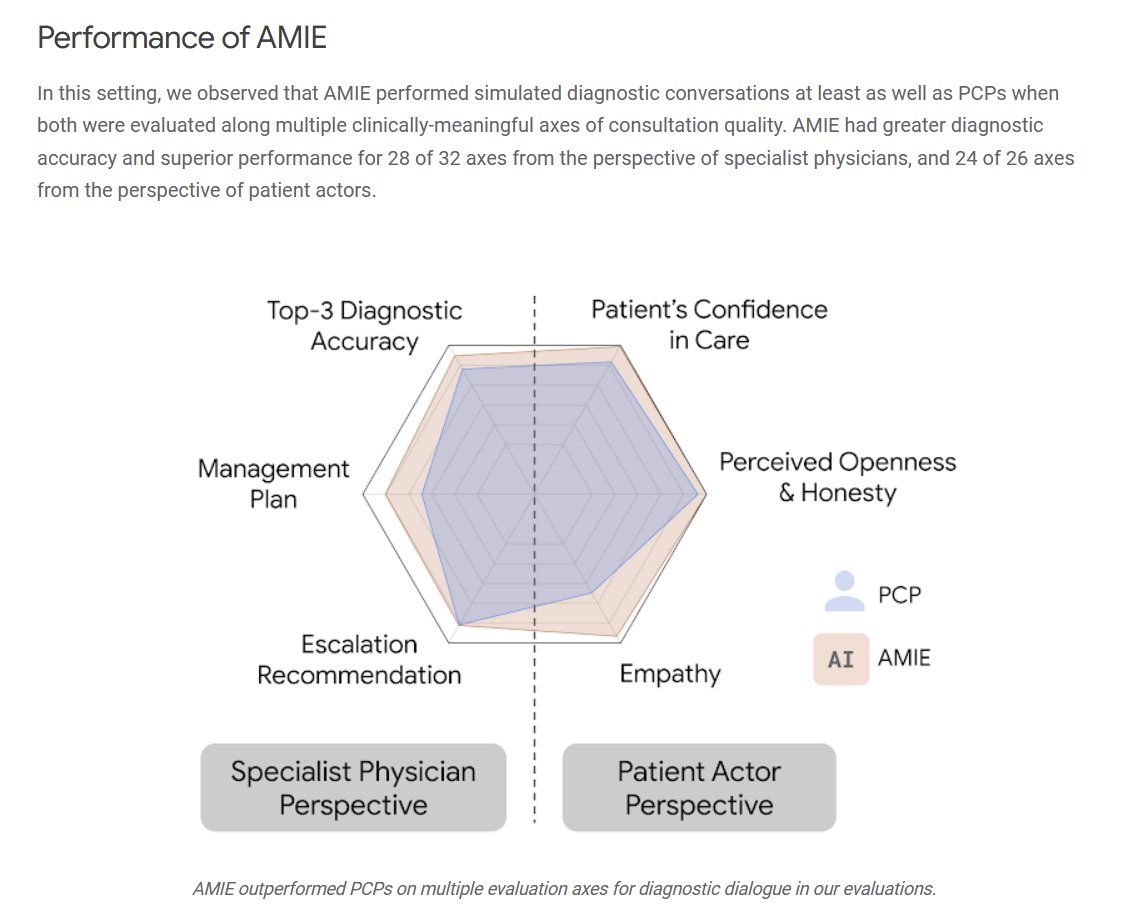
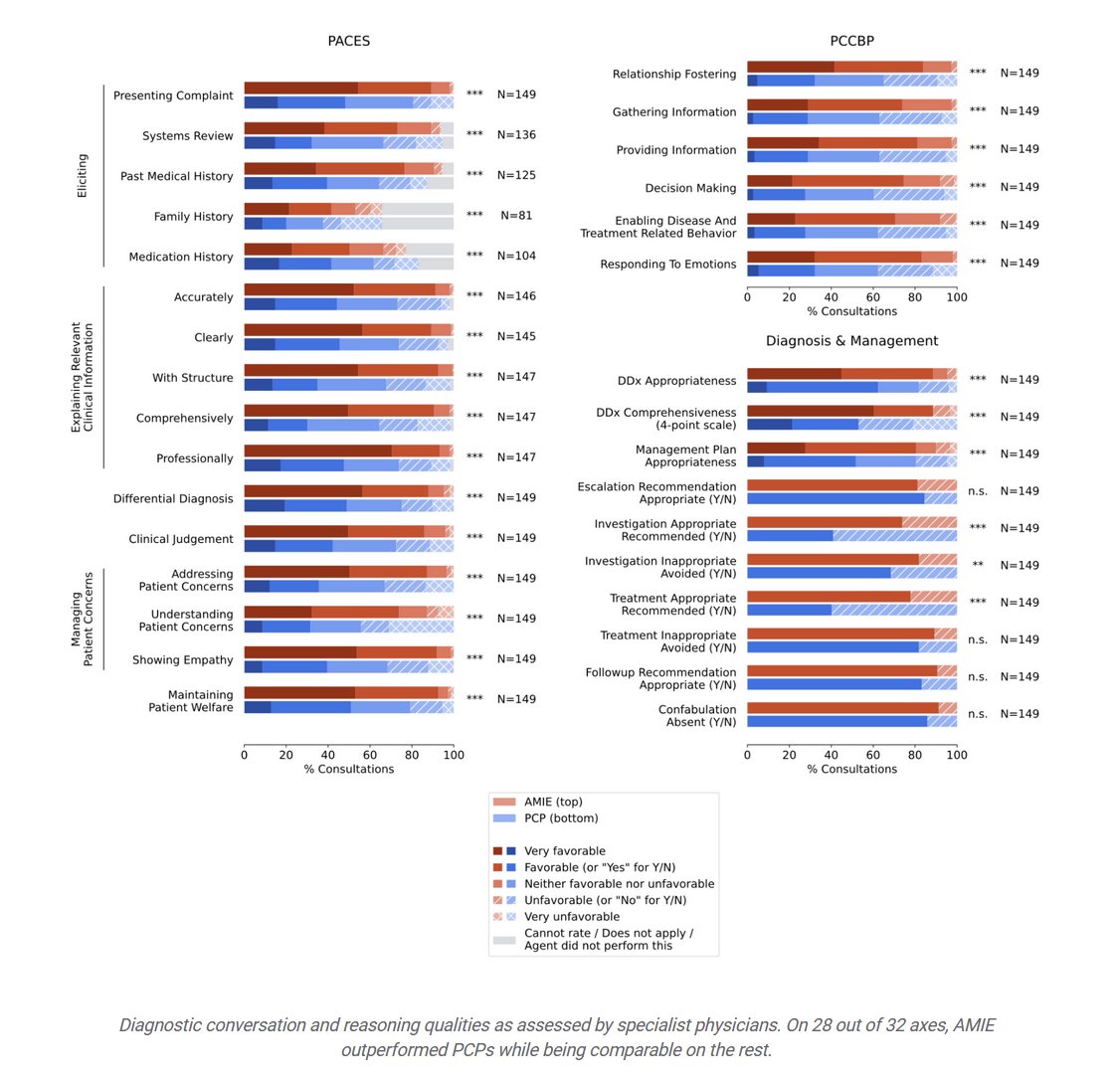
LLMs passed a Turing Test, of a sort, for doctors.
149 actors playing patients texted live with one of 20 primary care doctors or else Google's new medical LLM, AMIE. Specialist human doctors & the "patients" rated the quality of care. AMIE beat the docs. blog.research.google/2024/01…
40
296
1,277
258,556

Today, we shared our latest preprint introducing AMIE (Articulate Medical Intelligence Explorer), a large language model (LLM) based research AI system for diagnostic medical reasoning and conversations.🔗 goo.gle/3TZocp0
98
307
1,018
296,051
Juraj Gottweis retweeted
12 Jan 2024
Happy to introduce AMIE (Articulate Medical Intelligence Explorer) our research LLM for diagnostic conversations. AMIE surpassed Primary Care Drs in conversational quality & diagnostic accuracy in a "virtual OSCE"-style randomized study. Preprint ➡️ arxiv.org/abs/2401.05654 (1/7)
7
73
326
87,777
Juraj Gottweis retweeted

28 Dec 2023
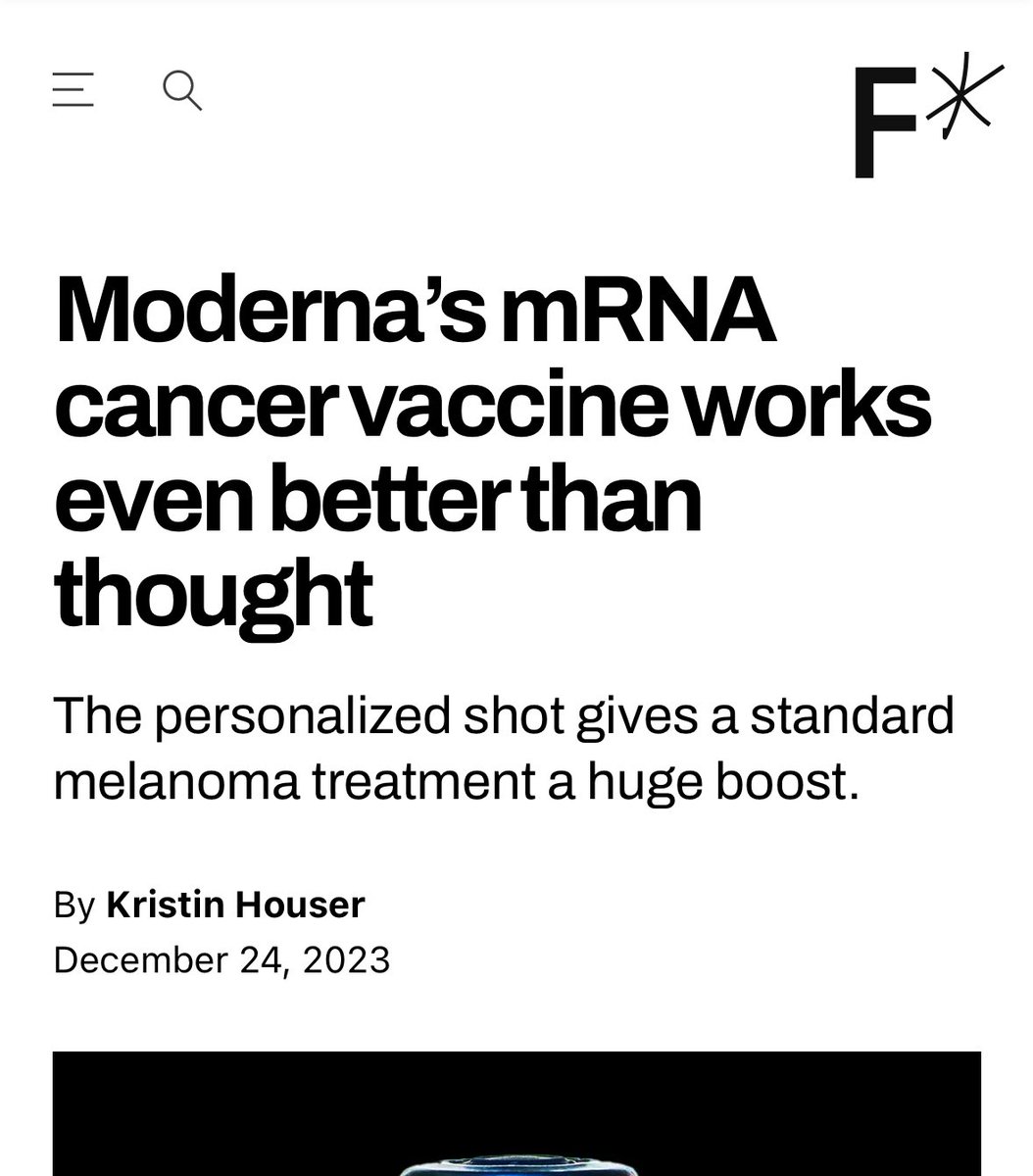
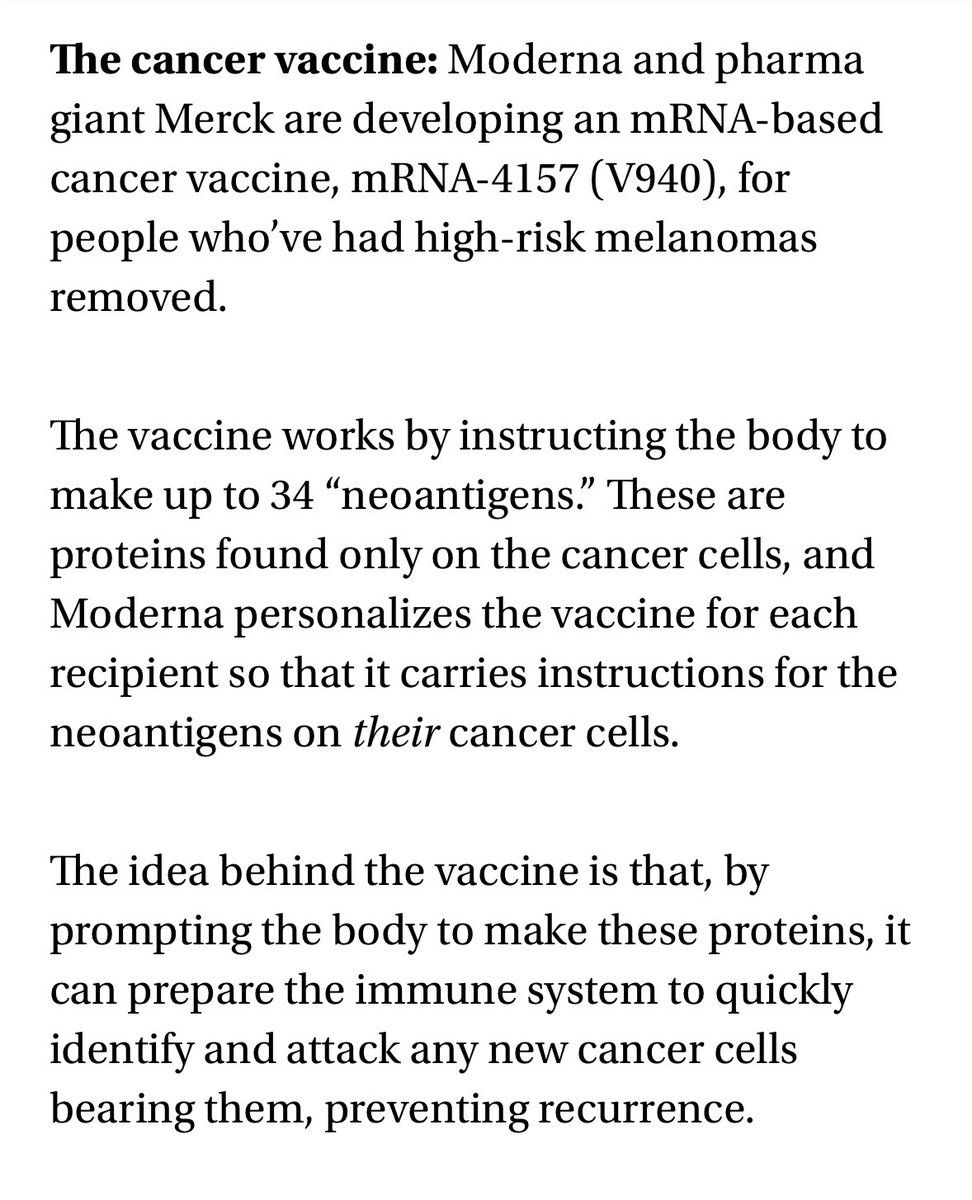
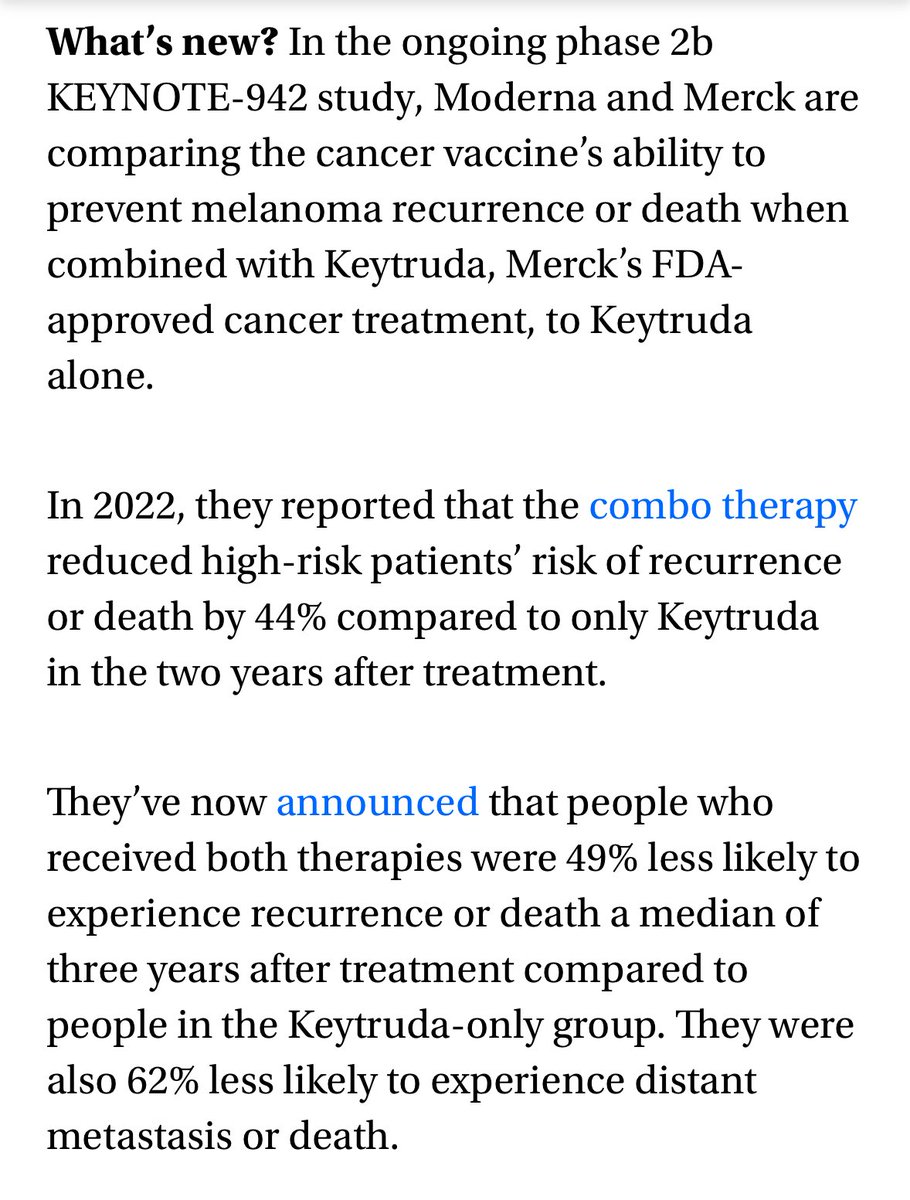
Good news of the day:
Patients receiving a new mRNA vaccine for skin cancer are “49% less likely to experience recurrence or death a median of three years after treatment.”
125
834
4,521
1,122,444
Juraj Gottweis retweeted

29 Nov 2023
“Today, in a paper published in Nature, we share the discovery of 2.2 million new crystals – equivalent to nearly 800 years’ worth of knowledge. We introduce Graph Networks for Materials Exploration (GNoME), our new deep learning tool that dramatically increases the speed and efficiency of discovery by predicting the stability of new materials.
With GNoME, we’ve multiplied the number of technologically viable materials known to humanity. Of its 2.2 million predictions, 380,000 are the most stable, making them promising candidates for experimental synthesis. Among these candidates are materials that have the potential to develop future transformative technologies ranging from superconductors, powering supercomputers, and next-generation batteries to boost the efficiency of electric vehicles.”
deepmind.google/discover/blo…
81
551
3,697
960,320
Juraj Gottweis retweeted

16 Nov 2023
Our new research with @StanfordMed demonstrates how Med-PaLM 2 can help identify gene-phenotype associations, resulting in a novel bigenic model for hearing loss in mice! (1/2)
goo.gle/3ML8adH
1
2
14
2,702
Juraj Gottweis retweeted

15 Nov 2023
Fun new @GoogleAI @GoogleHealth @StanfordMed preprint exploring the potential of LLMs for genetic discovery!
We found that our medical LLM, Med-PaLM 2, was able to accurately identify the murine genes that contained experimentally verified causative genetic factors for six biomedical traits including diabetes and cataract.
Further, as perhaps a more exciting result, Med-PaLM 2 was also able to analyze a list of genes with high impact alleles, which were identified by comparative analysis of murine genomic sequence data, and it identified a causative murine genetic factor for spontaneous hearing loss.
Based on this finding, our Stanford collaborators developed a novel bigenic model for hearing loss with experimental verification.
While still very early, the potential for LLMs in genetic and biomedical discovery at large is super exciting as we advance the capability of our models.
As next steps, we are working on a more scalable LLM based genetic discovery pipeline and expanding the work to rare diseases and humans. More to share soon!
Amazing work by @taotu831 and @apalepu13 and our @StanfordMed collaborators!
biorxiv.org/content/10.1101/…
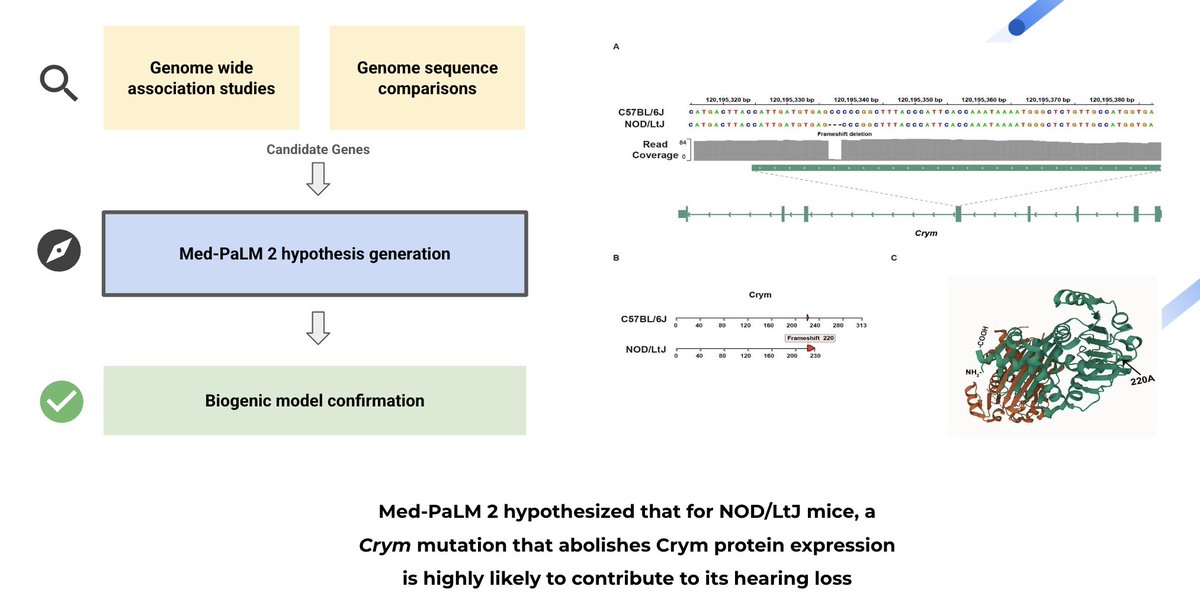

A baby step towards using LLM for Genetic Discovery. Med-PaLM 2 helps identify murine genes linked to hearing loss! While promising, limitations exist (tokenizer 🔡, quality of pretraining data✅) #AIforScience #GeneticDiscovery @GoogleAI @StanfordMed
biorxiv.org/content/10.1101/…
2
20
126
25,710
Juraj Gottweis retweeted

18 Sep 2023
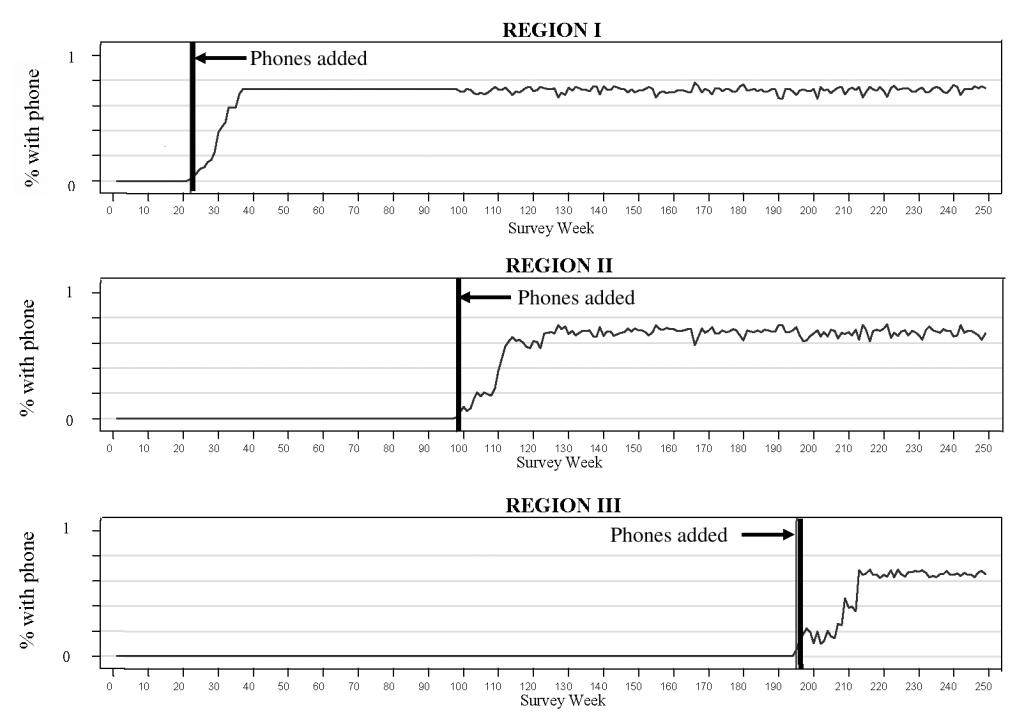
The adoption of cellphones by Keralan fishermen is, I believe, the most stunning example of the contribution of information technology to market performance.
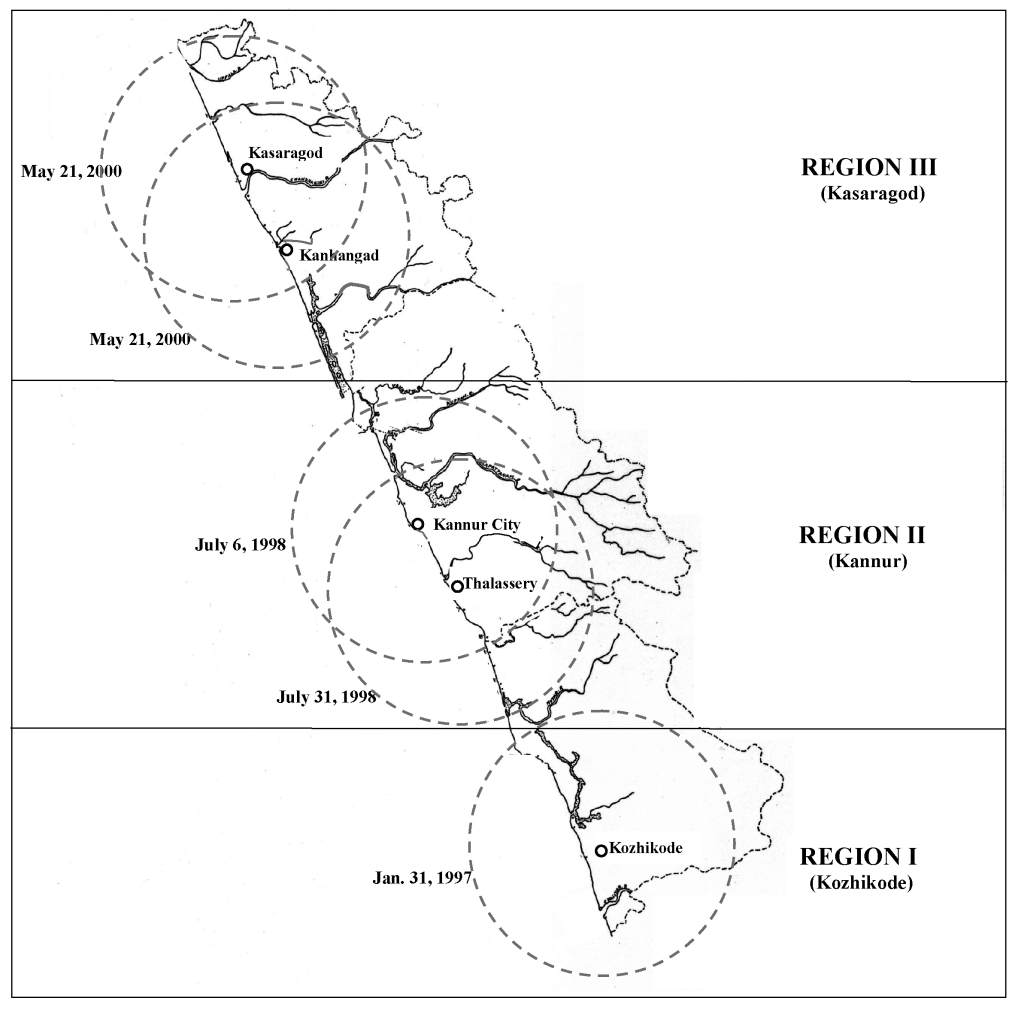
Take a look at this graph for background: in three different regions of Kerala, phones were adopted at different times.
Kozhikode got cellphones before Kannur, who got them before Kasaragod. Adoption by fishermen was fast when phones were finally introduced:
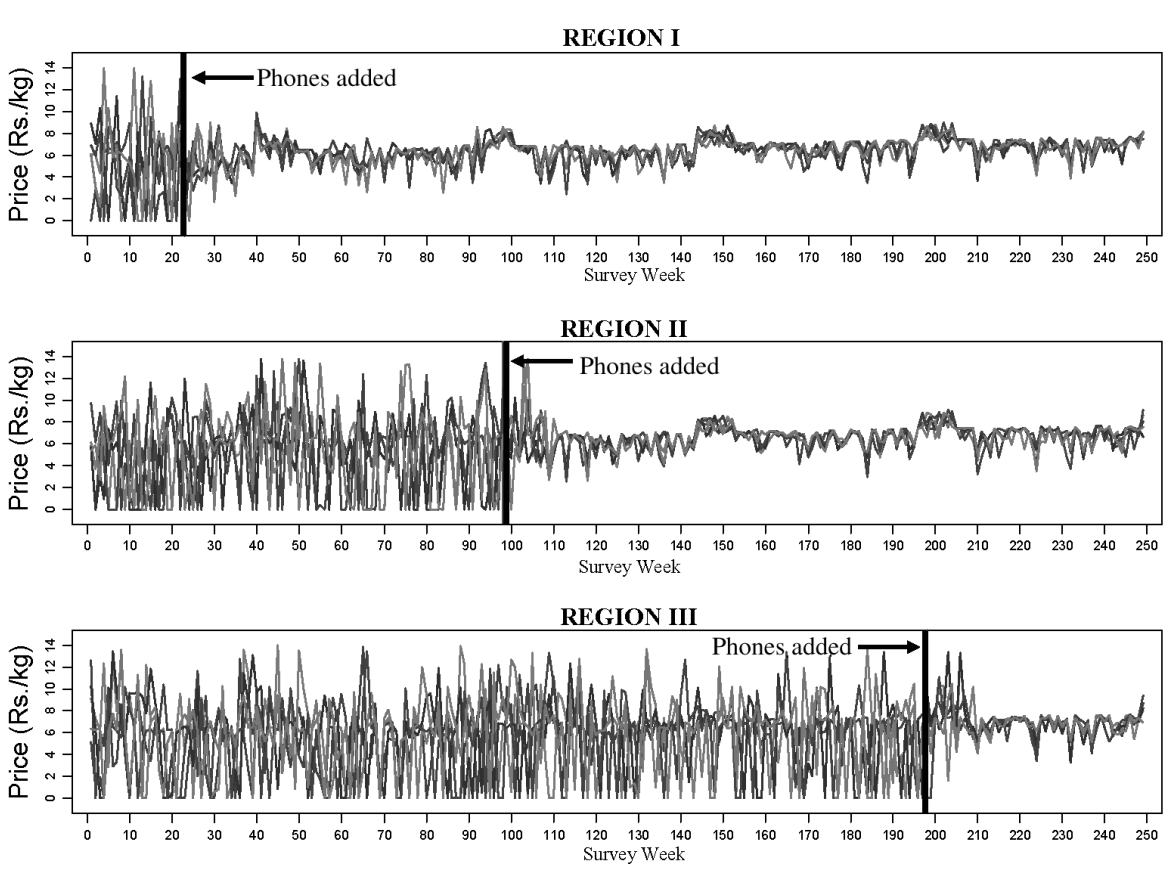
Now look at what happened to the price of fish after phones entered the scene:
The dispersion in prices virtually disappeared! The author of the study wrote about this that:
"Before any region had mobile phones, the degree of price dispersion across markets within a region on any given day is high, and there are many cases where the price is zero (i.e., waste). However, within a few weeks of mobile phones being introduced in Region I, there is a sharp and striking reduction in price dispersion. Prices across markets in the region rarely differ by more than a few rupees per kilogram on any day, compared to cases of as much as 10 Rs/kg prior to the introduction of mobile phones. In addition, the prices in the various markets rise and fall together and the week-to-week variability within each market is much smaller, since catchment zone-specific quantity shocks are now spread across markets via arbitrage. Further, there are no cases of waste in this region after phones are introduced.
"By contrast, price behavior in regions II and III appears largely unchanged after phones are introduced in region I. However, after mobile phones are introduced in region II, prices again become much less dispersed across markets on any given day, less variable within markets over time, and waste is ultimately eliminated, whereas region III again remains unchanged. Finally, the same pattern holds once region III adds phones."
Efficient information transmission enables efficient markets. It's amazing what technology can do.
Read the study here: jstor.org/stable/25098864
86
1,464
6,820
1,327,851