Joined April 2010
- Tweets 39,863
- Following 29,305
- Followers 83,648
- Likes 45,849
5,928 Photos and videos





Pinned Tweet

25 Sep 2021
.
Our Twitter banner is climate warming stripes of the Arctic Ocean since 1893.
Learn about climate warming stripes & their inventor
@ed_hawkins here: bit.ly/3m25t9s
and make your climate stripes here: showyourstripes.info
9
51
123
Oceanwire 🇺🇦🌻 retweeted

May 23
theguardian.com/us-news/2026…
The Trump Administration can conceal scientific reports, but not the #climatechange reality Americans will experience this Summer
@OrbPlanet @ECOWARRIORSS @AmericanYouthf1 @LuvSustainables @Oceanwire @WeDontHaveTime @XR_HOUSTON @hou_climate
11
9
1,313
Oceanwire 🇺🇦🌻 retweeted
Jun 12
#OceanHope
Progress! Mangrove Loss Worldwide Is Now Reversing—with More, Denser Forests Than 20 Years Ago
goodnewsnetwork.org/global-m…
3
1
169
Oceanwire 🇺🇦🌻 retweeted

Insane self-blinding of the US. They are throwing away their investment in the ocean observation system and its benefits.
The only explanation I can think of: they don’t want the people to know what their fossil fuel emissions are doing to our oceans.
easternherald.com/2026/06/13…
53
428
921
12,326
Oceanwire 🇺🇦🌻 retweeted

Just in: El Nino forms and expected to strengthen, say @NOAA forecasters
News release images: noaa.gov/news-release/el-nin…
#ElNino #ENSO @nws
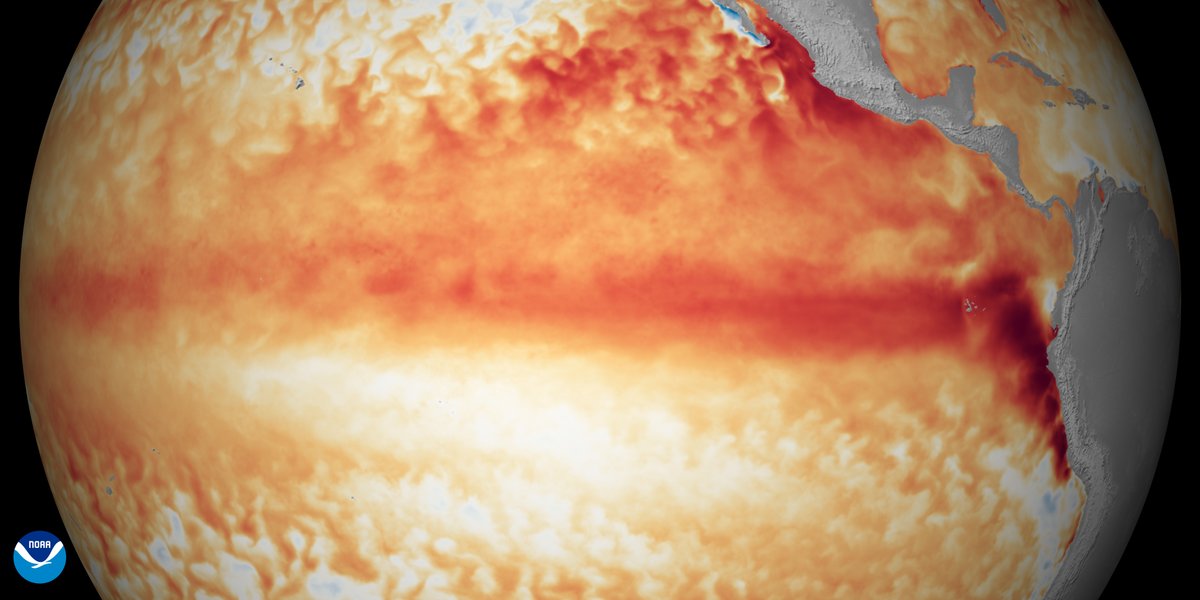
ALT Satellite imagery showing the difference from average sea surface temperatures at the equator in the tropical Pacific Ocean (depicted using various shades of red and orange for warmth) during the first week of June 2026, as compared with the baseline used by NOAA’s Coral Reef Watch. (Image credit: NOAA Satellites )
13
281
593
169,077
Oceanwire 🇺🇦🌻 retweeted

Jun 9
Wait. For. It. NASA animation shows Global temperatures warm slowly at first, then rapidly. Warming is accelerating! Here’s the truth. It’s real. It’s us. And we have to come to terms with it, and deal with reality, rather than deceiving ourselves, and hoping it goes away. It won’t… without intervention. #climate #globalwarming #science #climatechange
181
827
1,823
61,862
Oceanwire 🇺🇦🌻 retweeted

Imagine waking up and half the oxygen on Earth is gone.
Sounds impossible?
The oceans produce around 50% of the oxygen we breathe.
The planet's biggest life-support system isn't on land, it's underwater. 🧵👇 (1/5)
#WorldOceansDay

2
13
17
753

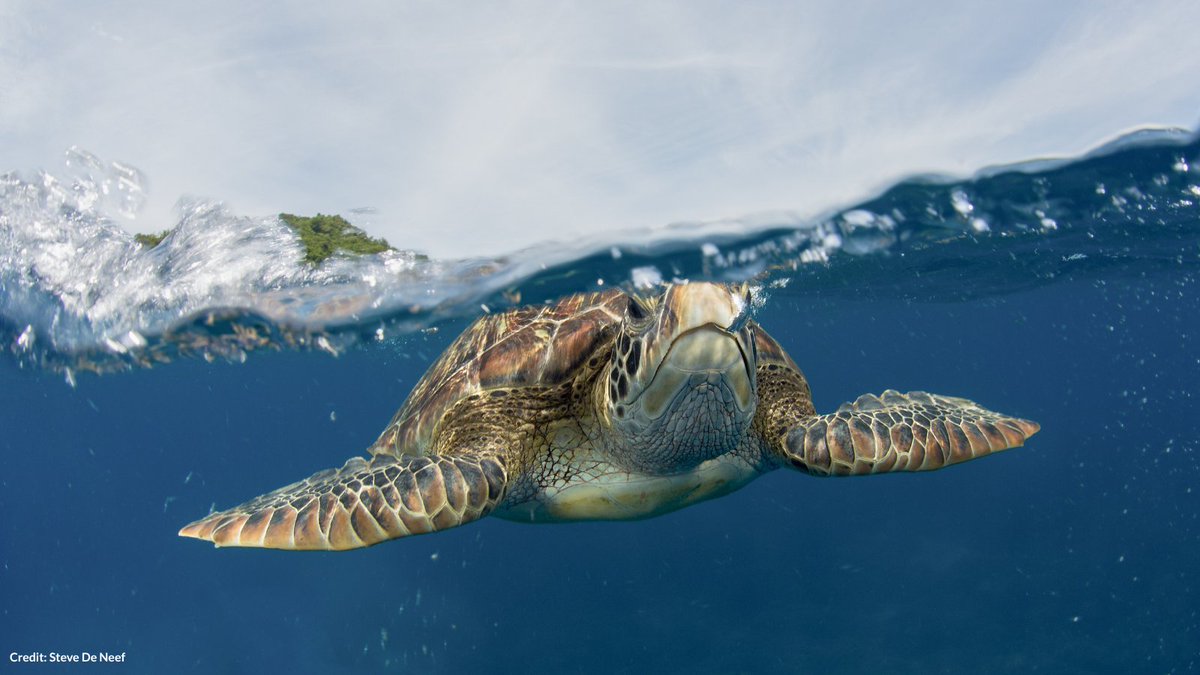
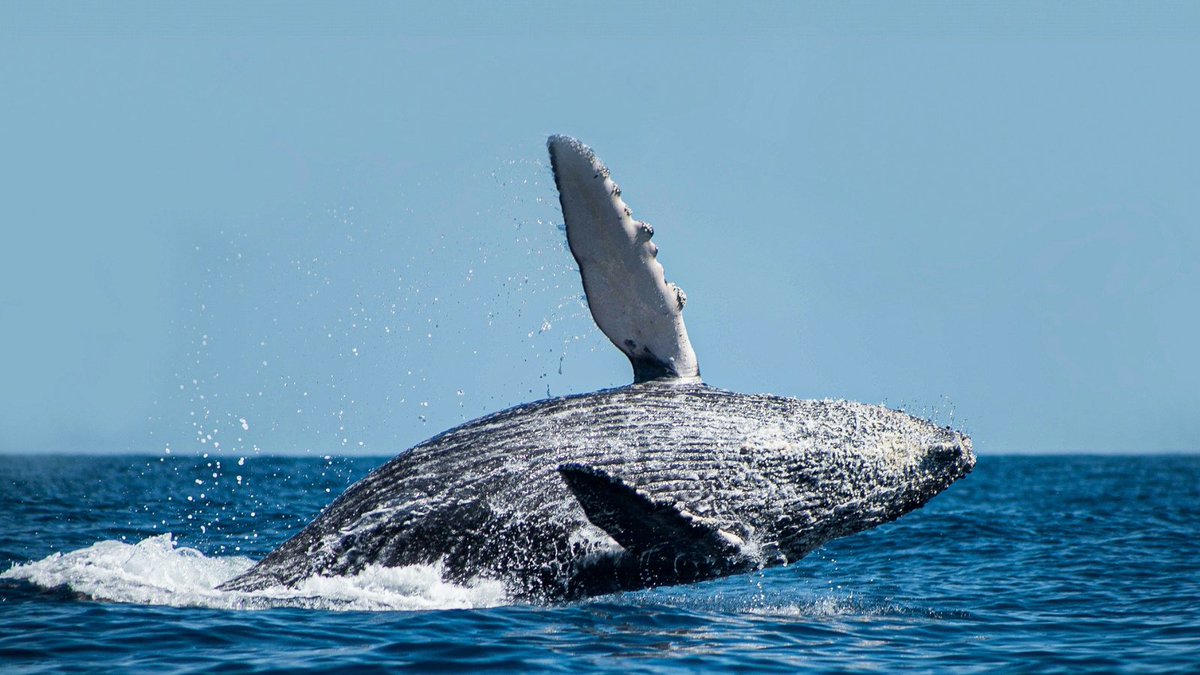
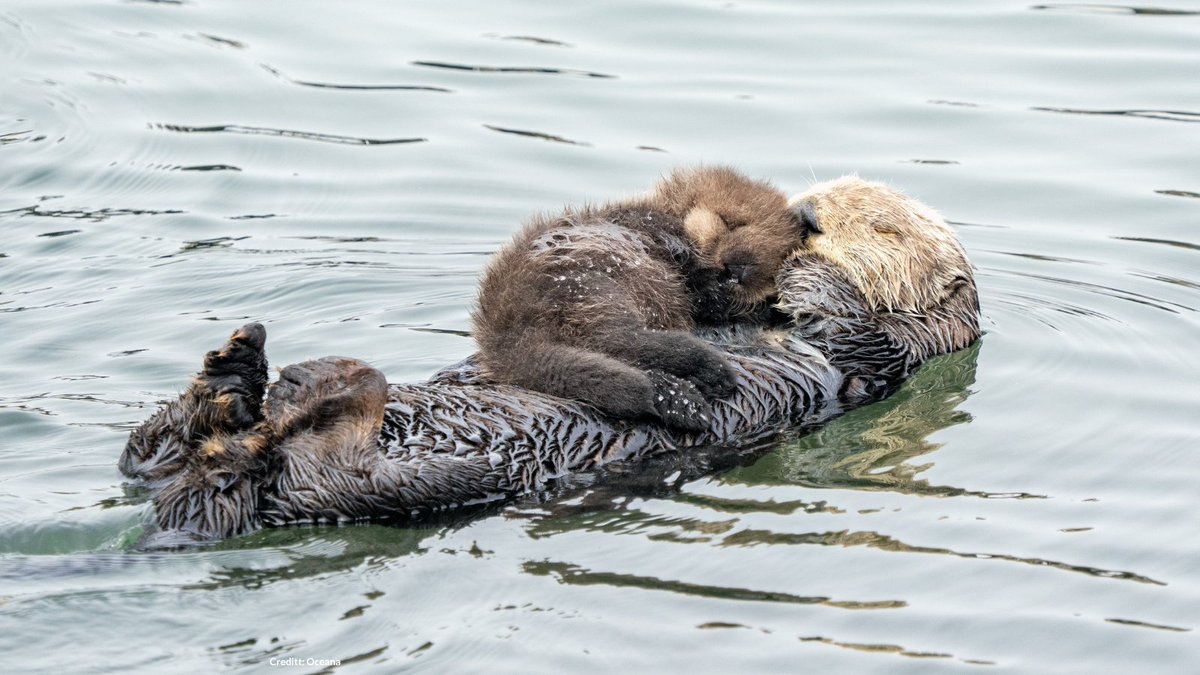
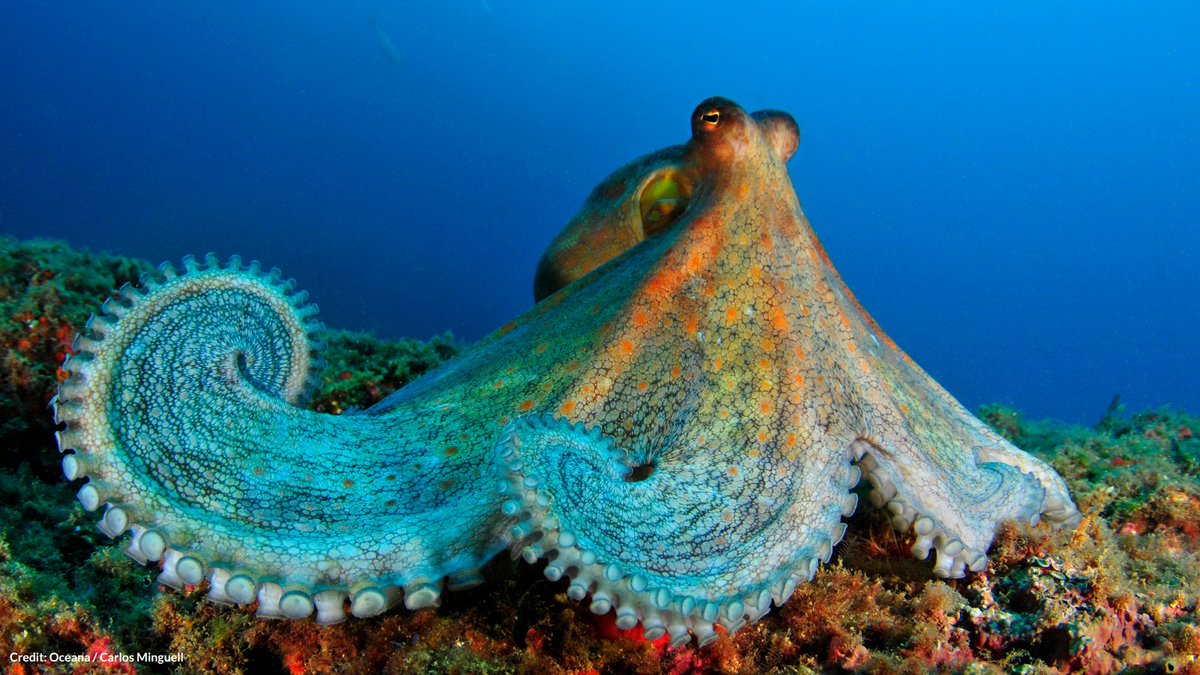
Happy #WorldOceansDay 💙
Our oceans sustain life around the world, from the wildlife within it to the communities who depend on it.
This Ocean Action Month, join us in protecting the future of our blue planet 👉 oceana.ly/4vrBpWX
8
165
474
7,108
Oceanwire 🇺🇦🌻 retweeted
Jun 8
Today is World Ocean Day and our oceans are being bombarded by all kinds of threats like pollution, over-fishing, acidification, etc…
But as a meteorologist, I’ll discuss the rapid warming!
We often focus on air temperatures. But the real story is in the oceans.
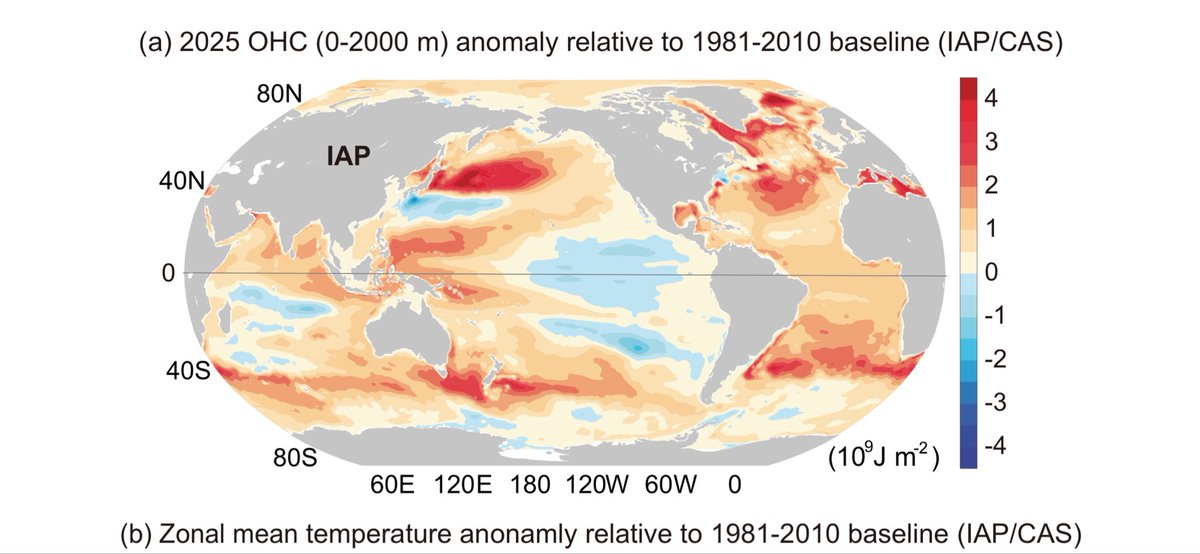
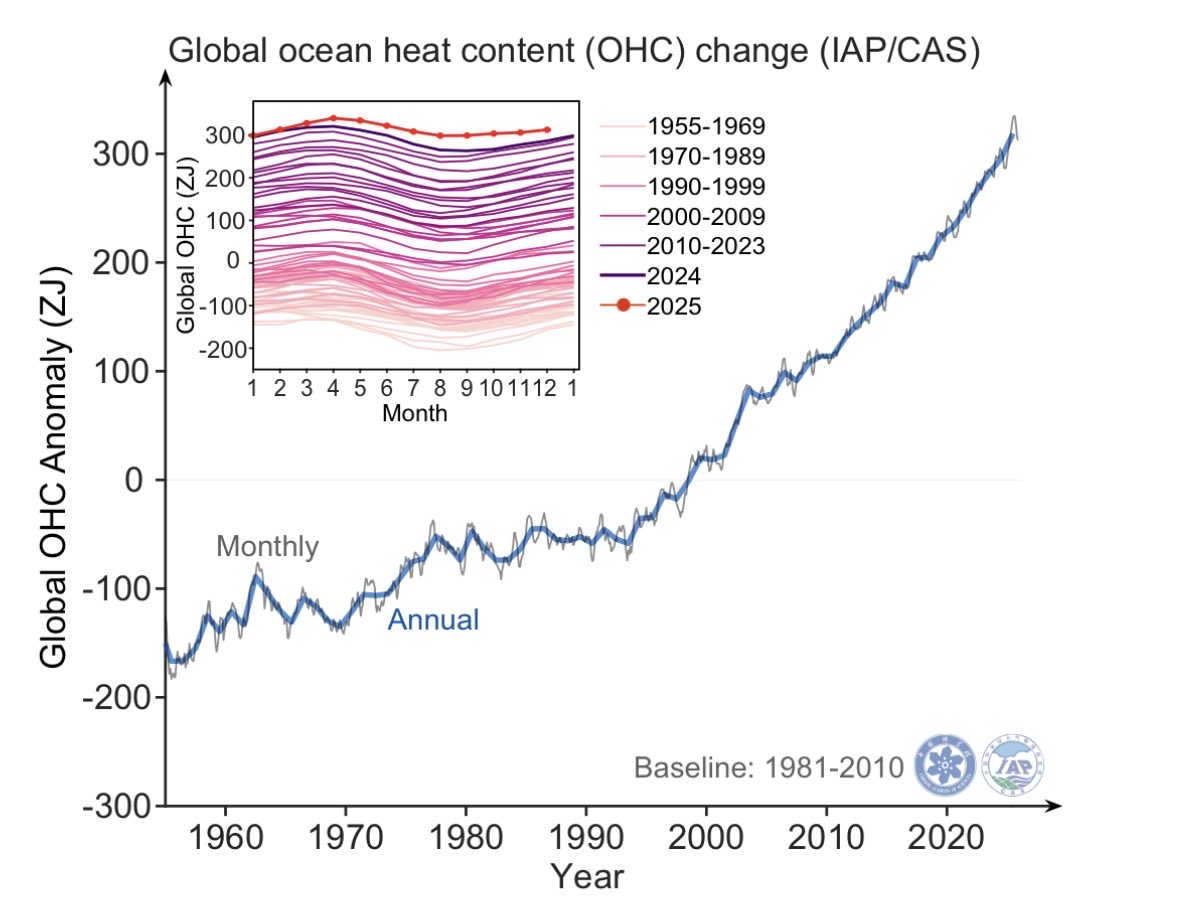
More than 90% of the excess heat trapped by greenhouse gases is retained in the ocean.
Each year a new assessment is released, and in 2025 the world’s oceans gained an astounding 23 zettajoules (ZJ) of heat.
In relatable terms that’s equivalent to:
🌊 37 years of humanity’s current annual energy consumption
🌊 About 380 million Hiroshima-sized atomic bombs worth of energy
🌊 More than 200 times the world’s annual electricity generation
And that’s just one year!
Why does this matter?
Warmer oceans can fuel marine heatwaves, coral bleaching and death, sea level rise through thermal expansion, contribute to bigger land heatwaves, and provide more energy for heavy rainfall and tropical cyclones. Ocean warming also stresses marine ecosystems that support fisheries, biodiversity, and coastal economies around the world.
The ocean has shielded us from much greater atmospheric warming by absorbing the vast majority of Earth’s excess heat. But that protection comes with growing consequences for ocean health.
On this World Ocean Day, it’s worth remembering that the ocean is not just responding to climate change, it’s bearing the brunt! We must protect our oceans.
#WorldOceanDay #Ocean #Climate #OceanHeat #ClimateChange
Paper link in 🧵
32
200
393
17,110
Oceanwire 🇺🇦🌻 retweeted

Ocean currents have a huge impact on our planet. That's why it is beyond stupid for Trump to dismantle America's huge network of ocean sensors. sciencefocus.com/news/amoc-w…
261
1,328
2,778
31,388
Jun 7
#OurAmazingOcean
Progress! Papua New Guinea Sets Up Protected Ocean the Size of UK–Over 77,000 Square Miles
goodnewsnetwork.org/papua-ne…
4
2
166
Jun 3
#WhaleWednesday
Increased Sightings of the Two Largest Whale Species Decimated By Hunting Provides New Hope for Survival ✨️
goodnewsnetwork.org/increase…
3
2
181
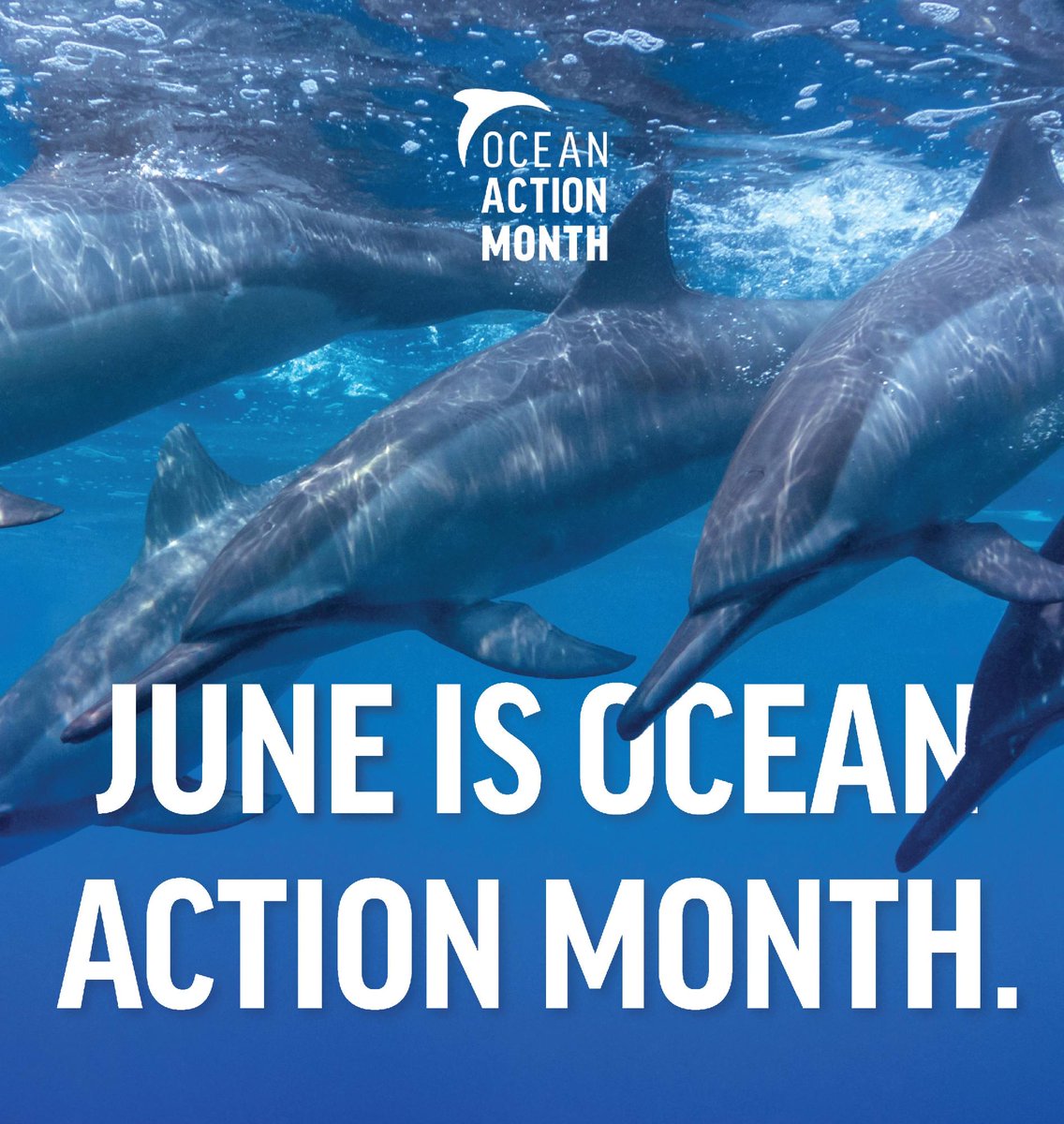
It’s #OceanActionMonth — and your voice matters!
✍ Sign a petition
📣 Share the message
🌊 Become a Wavemaker with Oceana
Every action adds up. Start today: oceana.ly/4dMiChW
1
54
134
3,374
Oceanwire 🇺🇦🌻 retweeted

Jun 1
Science gasps for breath. They are removing all the ocean monitors to understand changes in currents and climate, and the excuse is a master class in obfuscation & double speak . (1/2) nytimes.com/2026/06/01/clima…
238
4,792
8,683
508,005
Oceanwire 🇺🇦🌻 retweeted

even as the risk of flesh-eating bacteria in warming waters is increasing alarmingly, the T***p administration is removing ocean monitors to gauge changes in currents & climate. (see the horrific article in this week's New Yorker, if you can bear to read it.)
Jun 1

Science gasps for breath. They are removing all the ocean monitors to understand changes in currents and climate, and the excuse is a master class in obfuscation & double speak . (1/2) nytimes.com/2026/06/01/clima…
16
406
1,137
23,416
May 29
#EndPlasticPollution #HeroesOfTheEarth 🌟
3 Teens Win Earth Prize for Asia Inventing Tamarind Powder That Easily Removes Microplastics
goodnewsnetwork.org/3-teens-…
1
3
131
May 26
#EndPlasticPollution #materialsscience
Promising!
Scientists Unveil Hemp Alternative to Plastic That Can Withstand Boiling Water and Stretch to 1,600% its Size
This is a really interesting article!
goodnewsnetwork.org/scientis…
2
232
May 23
#OurAmazingOcean
Progress!
Seabed life triples after bottom trawling ban in Scotland protected area
news.mongabay.com/short-arti…
3
5
276
Oceanwire 🇺🇦🌻 retweeted

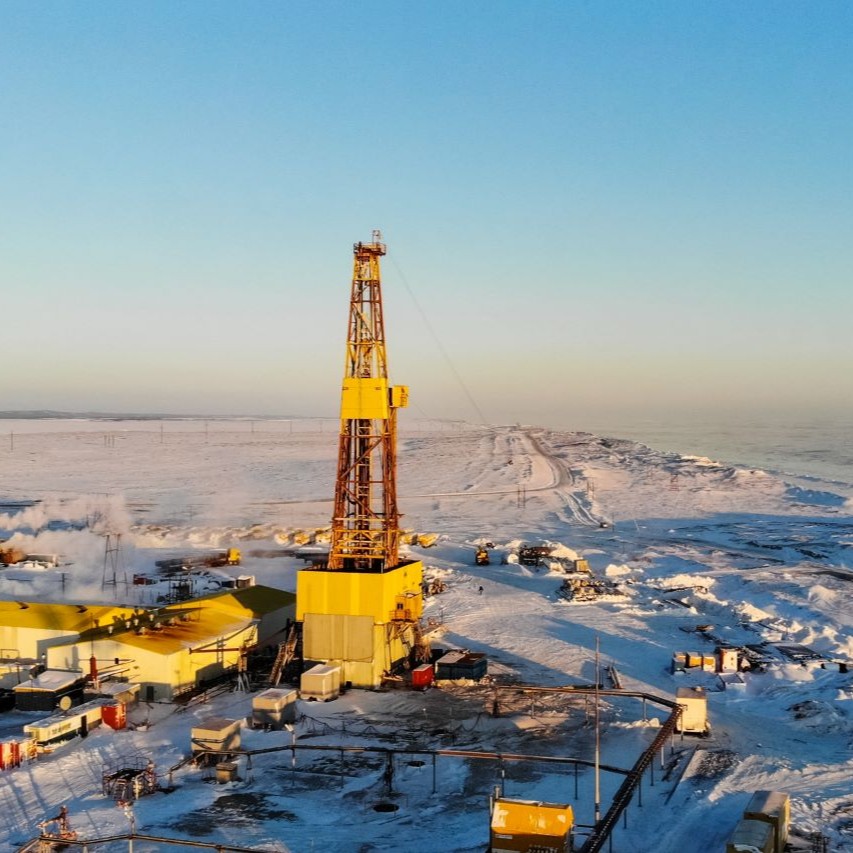
BIG OIL HAS NO BUSINESS BEING ANYWHERE NEAR PRISTINE ALASKAN WILDERNESS.
May 21

The Trump administration is speeding up permitting for oil and gas drilling in the Alaskan wilderness, destroying a vital nesting area for migratory birds.
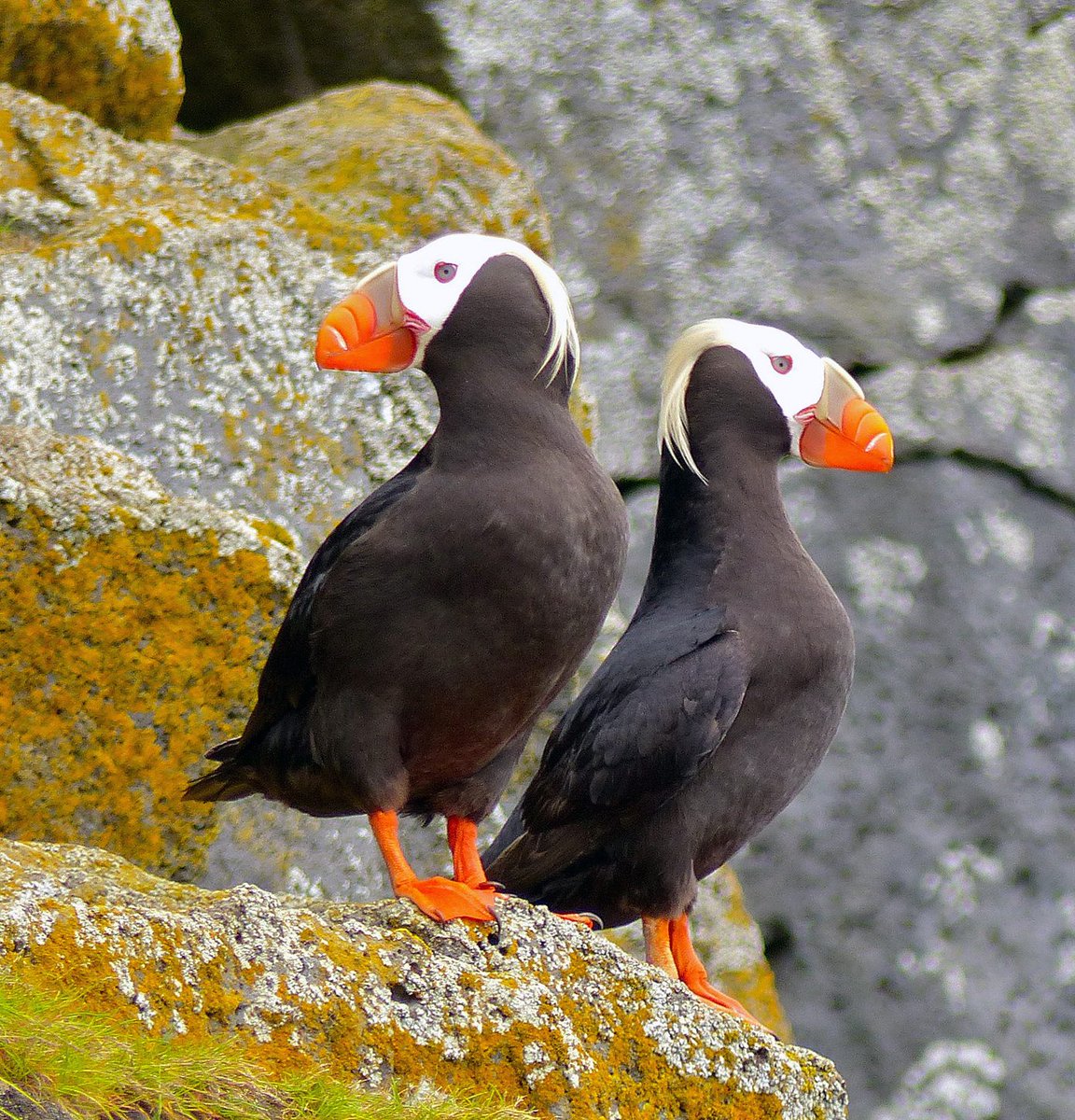
20
2,666
13,563
112,563
Oceanwire 🇺🇦🌻 retweeted
May 17
#OurAmazingOcean
Rare Split-Colored Lobster Caught Near Cape Cod is Donated to Aquarium: A One in 50 Million Catch (LOOK)
goodnewsnetwork.org/rare-spl…
2
6
371