
Joined October 2013
- Tweets 11,723
- Following 517
- Followers 996
- Likes 7,104
2,324 Photos and videos


Pinned Tweet

If NATO breaks, every American pays for it.
Not in theory — in your wallet, your job, your security, your kids’ future. A NATO rupture isn’t “Europe’s problem.” It’s an American recession, an American vulnerability, an American decline. Carafano is right to sound the alarm.
Here’s the part nobody says out loud:
A fractured NATO doesn’t create sovereignty. It creates vacuums. And vacuums don’t stay empty.
Cheering a rupture isn’t cheering sovereignty — it’s cheering a vacuum.
And in geopolitics, vacuums get filled by actors who don’t share our interests or our standards.
For decades, the U.S. has benefited from something no rival can replicate:
a stable, wealthy, aligned Europe that anchors the world’s largest economic relationship.
The transatlantic alliance isn’t charity.
It’s the capability floor for American power.
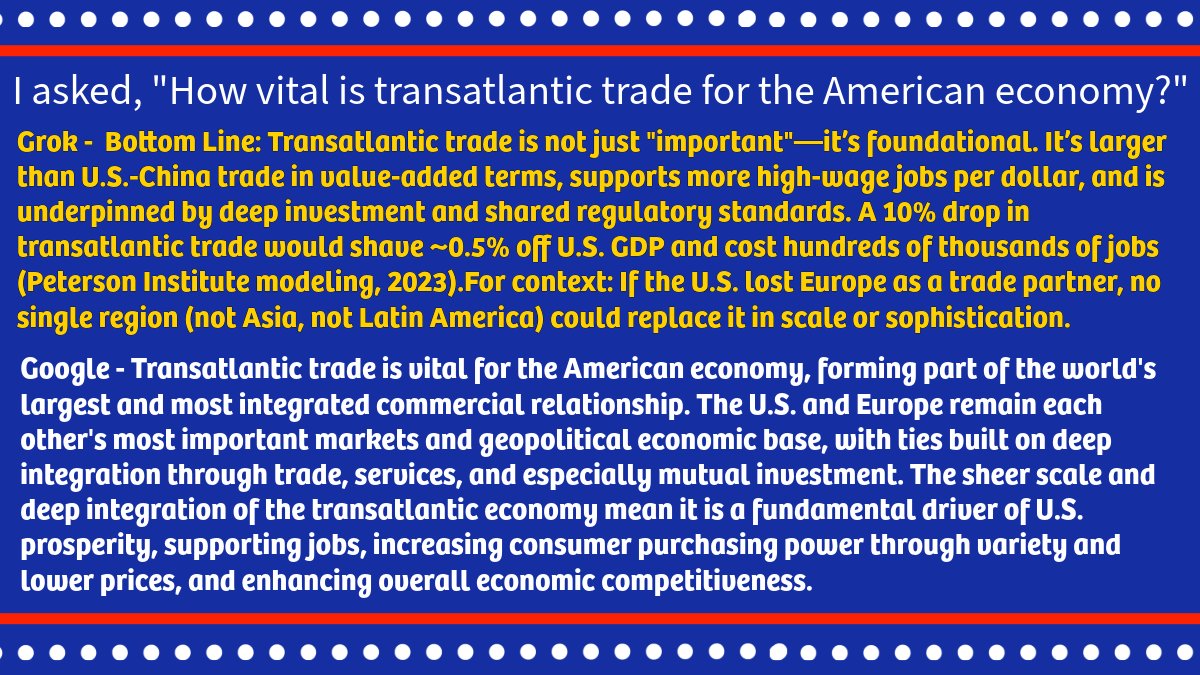
Transatlantic trade isn’t a side‑story. It’s the backbone of American prosperity:
- It’s larger than U.S.–China trade in value‑added terms.
- It supports more high‑wage American jobs per dollar.
- It’s built on deep investment, shared standards, and integrated supply chains.
- A 10% drop in transatlantic trade shaves ~0.5% off U.S. GDP.
That isn’t a rounding error — it’s a systemic shock.
Break NATO, and you don’t just lose a military alliance.
You destabilize the economic engine that underwrites American strength.
Security is the literal infrastructure of trade.
When Europe becomes unstable, capital moves, supply chains fracture, markets tighten, adversaries expand influence, and the U.S. loses leverage everywhere at once.
Ukraine isn’t just defending its territory.
By defending Europe’s stability, Ukraine is defending the transatlantic trade America depends on.
That’s what “America First” actually looks like when you strip away the slogans and look at the geometry.
If you want a strong America, you want a strong NATO.
If you want American prosperity, you want a stable Europe.
If you want American leverage, you want the alliance intact.
You cannot have a strong America surrounded by a broken world.
Everything else is noise.
25
7
39
4,774
Plz Call Me Doc🥼*not an actual Doc retweeted

Jun 10
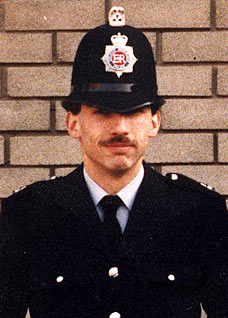
Remember the murder of Stephen Oake? Perhaps you don’t. It was in the news at the time, but it was nothing like as huge a story as the tragedy of Henry Nowak or the horrible maiming of Stephen Ogilvie in Belfast. There were no marches, no protests, no agonised debates about immigration.
Yet the case was, objectively, every bit as significant as the more recent horrors. DC Oake was stabbed to death by Kamel Bourgass, an Algerian national who had arrived in Britain on the back of a lorry three years earlier, and had become radicalised through the terrorist network Al-Muhajiroun.
Why wasn’t his death a bigger deal? Oake was a brave man who died in the line of duty. His murderer was an illegal immigrant. There was a religious radicalisation angle.
The answer, I think, is that Oake died in 2003, when our media and political leaders did not consider it quite proper to dwell on stories about white men being killed by immigrants. Making too much of a fuss was said to “stoke far-Right narratives”.
What we are seeing now is partly the result of decades of repression, deflection and dissembling, a breakdown in trust between the old media and the country at large. That is what makes it so bitter.
68
700
2,475
54,749
Will the GOP return to the modern conservatism that won the Cold War and made America the leader of the Free World? DeSantis's brand of leadership tells me it will. x.com/i/broadcasts/1qGvvvMbN…
13
Plz Call Me Doc🥼*not an actual Doc retweeted

Jun 5
Iran has never won a war, but has never lost a negotiation.
The United States military stands ready to finish the job if Tehran doesn’t quickly come to their senses.
587
345
1,991
122,458
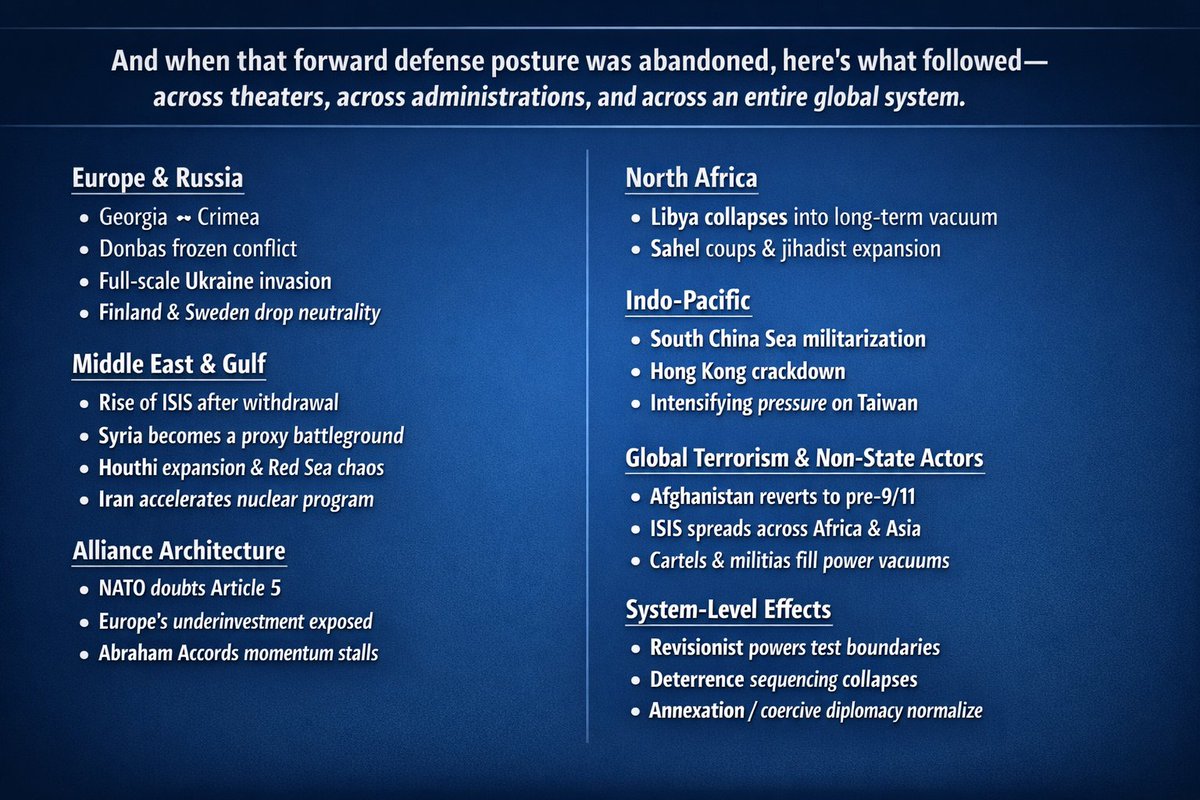
We treat alliances as static treaties. In practice, they are hard-power logistics designed to forward-deploy friction. Shifting to isolationism misreads the drivers of prosperity. Economic agency is earned by maintaining global stability, not by abandoning the tools that secure it.

You’re working off a set of assumptions that don’t match how the system actually functions.
Bottom line: You’re treating NATO as a cost center. It’s the opposite. It’s the stability engine that keeps American prosperity possible. The price of maintaining it is small. The price of losing it is enormous.
“How do we pay?” NATO isn’t a bill. It’s the insurance structure that keeps the world’s largest economic relationship stable. The cost of maintaining it is trivial compared to the cost of losing it.
“We already contribute more than anyone else.” We contribute more because we have more at stake. The scale of U.S. investment, trade, and global exposure is larger than any other member. Burden tracks benefit.
“Without NATO, we’d save money.” We’d spend more. Without NATO, the U.S. would have to replace the deterrence, stabilize Europe alone, secure supply chains alone, and absorb the economic shock of a fractured continent. The “savings” disappear once you count second‑order costs.
“They won’t assist.” Europe is doing more now than at any point since the Cold War. Defense spending is up across the board, multiple states exceed 2%, and Europe is carrying most of the economic load in Ukraine. The freeloading narrative is outdated.
“Why didn’t NATO help in the Middle East?” Because NATO isn’t mandated to. Article 5 is geographically limited to Europe and North America. Middle East operations are U.S.‑led by choice, not alliance obligations. When asked, European states have joined as coalition partners, not under NATO authority.
“What value do they have?” A stable, aligned Europe anchors the world’s largest trade relationship, supports millions of American jobs, and prevents adversaries from filling strategic vacuums. NATO isn’t charity. It’s economic and geopolitical infrastructure.
“Let them fend for themselves.” A fractured Europe doesn’t create U.S. independence. It creates vacuums, and vacuums get filled by actors who don’t share our interests. The result is recession, supply‑chain disruption, higher defense costs, and reduced leverage for the U.S.
15
Plz Call Me Doc🥼*not an actual Doc retweeted

Jun 5
🇺🇸🇺🇦 House Leadership's dam being breached on this issue is more important than the actual substance of the bill. The Ukraine Support Act has pretty modest provisions that I expect the Trump Admin will not even utilize.
Congress can and should go further with additional legislation.

18 House Republican ayes on Ukraine aid bill:
— Bacon
— Bresnahan
— Carey
— Fitzpatrick
— Garbarino
— Gimenez
— Hurd
— Joyce
— Kiggans
— LaLota
(1/2)
10
20
335
21,161

Plz Call Me Doc🥼*not an actual Doc retweeted

While Russia bombs Ukraine and kills civilians, President Trump is bizarrelysending a delegation to a conference in Russia to discuss economic development.
I challenged Secretary Rubio today to explain why we would send any U.S. official to a such an event designed to prop up Putin's war machine.
406
3,308
11,194
559,543
Plz Call Me Doc🥼*not an actual Doc retweeted

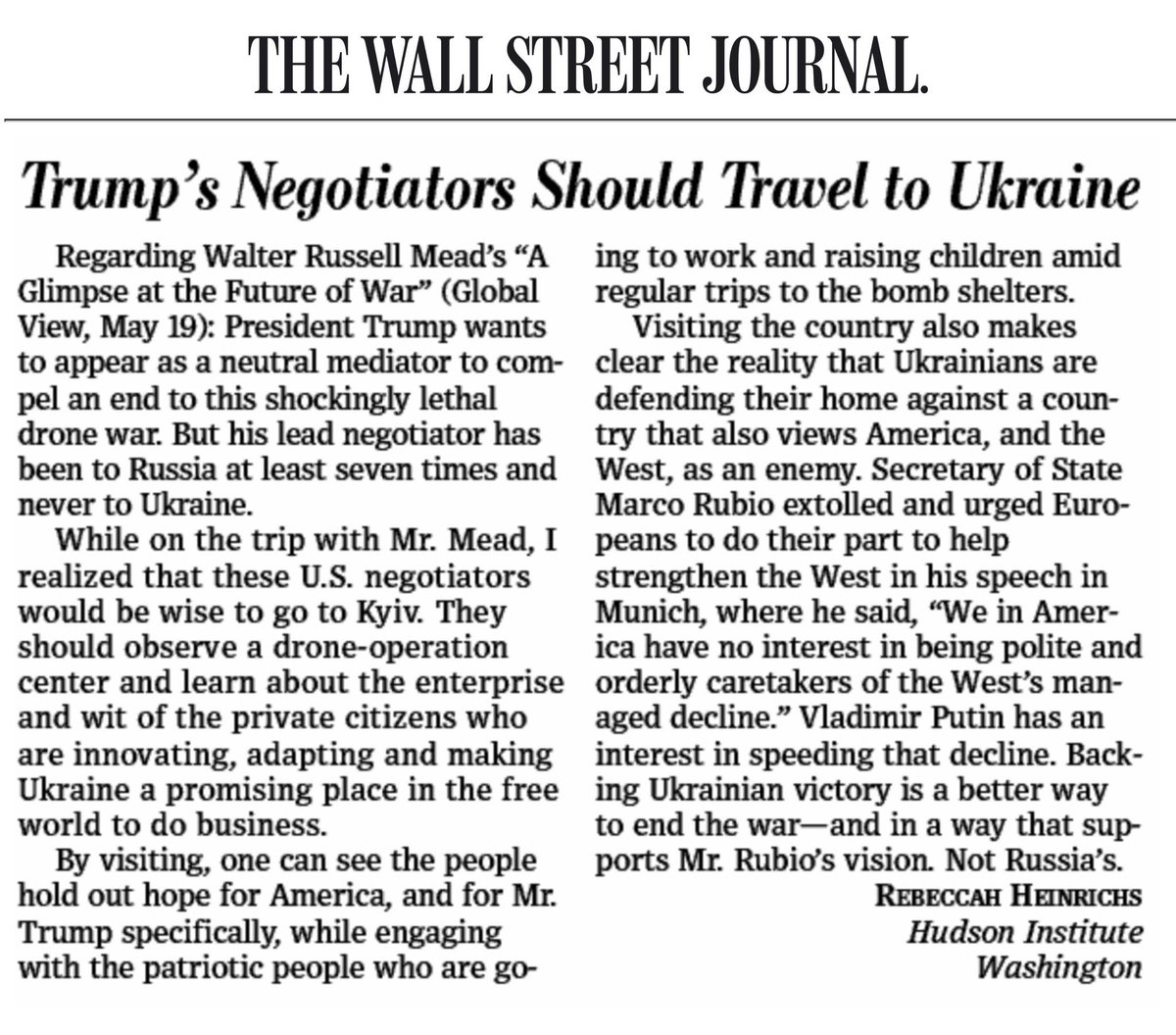
The President’s goal to end Russia’s war against Ukraine would be more achievable if his envoy didn’t travel only to Russia.
26
123
430
36,435
Plz Call Me Doc🥼*not an actual Doc retweeted

May 30
Russia has been at war with the West for years. The risk of escalation by Russia increases if we continue to fail to acknowledge that and don’t take action to inflict consequences on them for their Gray Zone operations. The Kremlin only respects strength.
May 29

Russian state TV presenter Sergei Karnaukhov confirmed that the attack on Romania was not accidental.
He called for missile attacks on Poland and Romania, and stated that NATO would be intimidated and would be unable to respond to Russia.
97
588
1,855
61,675
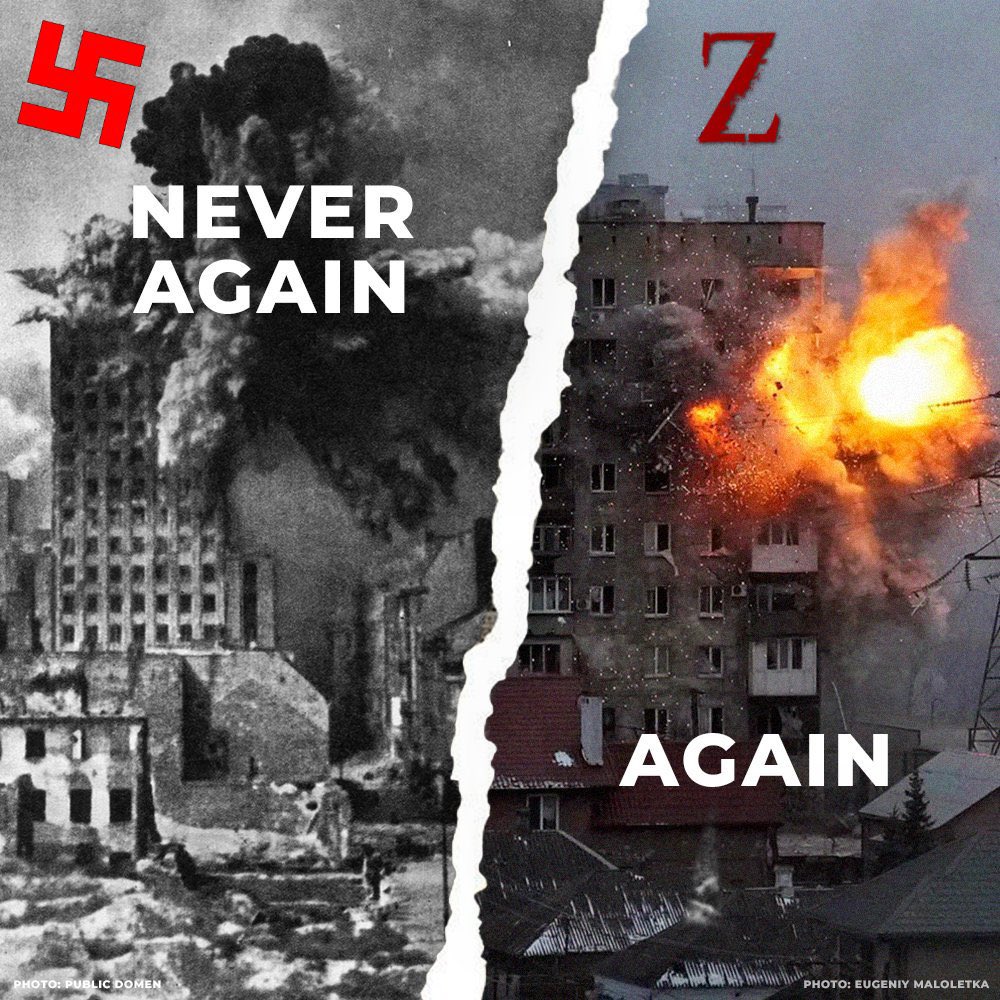
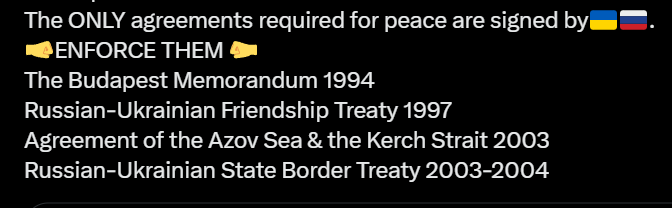
Tolerating Russia's deliberate destruction of homes doesn't buy peace. It just lowers the global baseline for safety. Security isn’t free; it’s earned. Enforce acceptable behavior now, or the cost to rebuild it later will be unaffordable. The anti-Free World bloc must be stopped.
Conceding to coercion isn't peace; it just delays the next war. Power governed by restraint creates stability. Power used for coercion makes human safety impossible. Force cannot be allowed to redraw internationally recognized borders.
12
The push for European self-reliance directly triggers the reciprocity paradox. Fracturing Allied industrial integration doesn't just isolate Europe; it actively erodes our defense primacy and costs us jobs. True deterrence requires integration, not defensive economic isolation.
May 16

⚡️ Pistorius: We need more European solutions for what we are now forced to buy elsewhere.
19
Plz Call Me Doc🥼*not an actual Doc retweeted

May 5
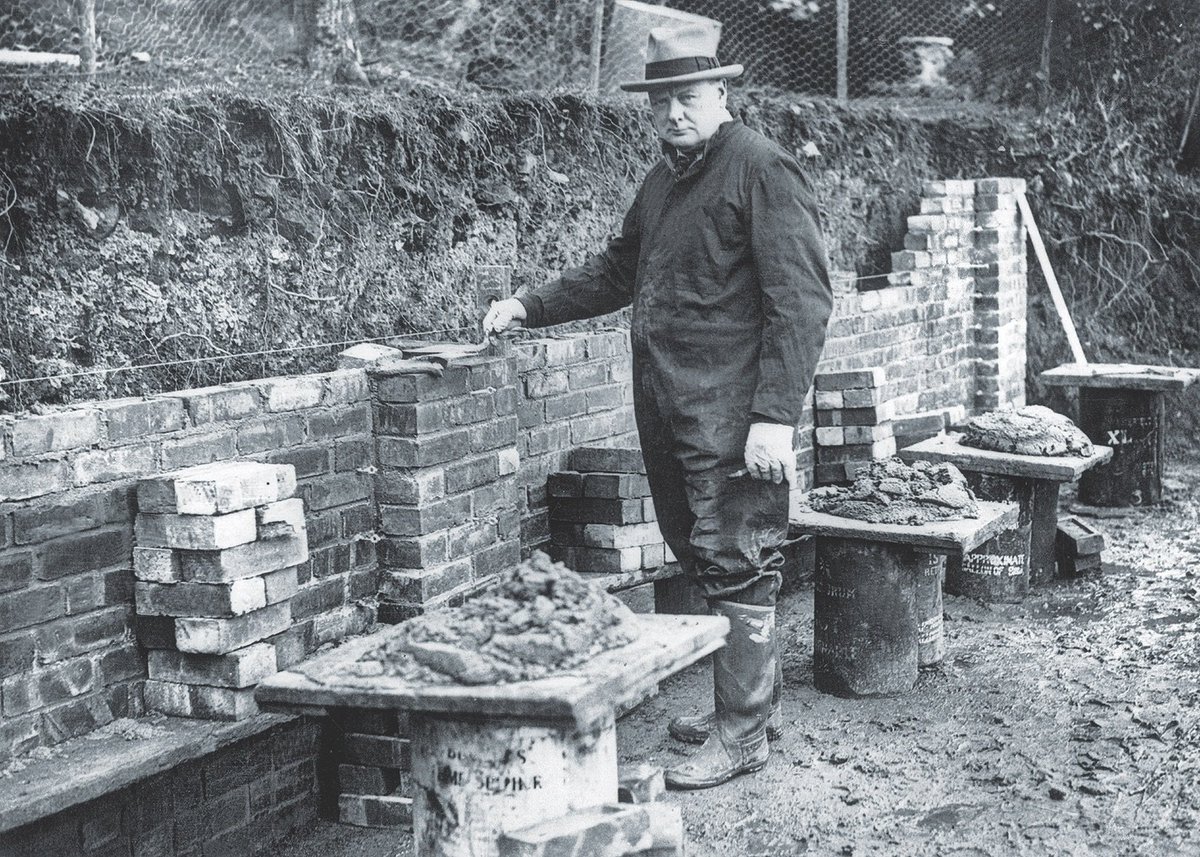
Winston Churchill fought his depression with bricks. He'd lay them for hours at his country home in Kent. He joined the bricklayers' union. And in 1921 he wrote about why it worked. It took psychology another 75 years to catch up.
He called his depression the "Black Dog." It followed him for decades. His method for fighting it back was as basic as it sounds: laying brick after brick, hour after hour.
Churchill spelled out his theory in a long essay for The Strand Magazine. People who think for a living, he wrote, can't fix a tired brain just by resting it. They have to use a different part of themselves. The part that moves the eyes and the hands. Woodworking, chemistry, bookbinding, bricklaying, painting. Anything that drags the body into a problem the mind can't solve by itself.
Modern psychology now calls this behavioral activation. It's one of the most-studied depression treatments out there. Depression sets a behavior trap. You feel bad, so you stop doing things, and doing less means less to feel good about. Feeling worse makes you do even less. The loop tightens until you can't breathe inside it.
Behavioral activation breaks the loop from the action side. You schedule the activity first, even when every part of you doesn't want to. Doing it produces small rewards: a wall gets straighter, a painting fills in, a messy room gets clean. Those small rewards slowly rewire the brain. Action comes first, and the feeling follows.
Researchers at the University of Washington put this to the test in 2006. They studied 241 adults with major depression and compared three treatments: behavioral activation, regular talk therapy, and antidepressants. For the people who were most severely depressed, behavioral activation matched the drugs. It beat the talk therapy. A 2014 review of more than 1,500 patients across 26 trials backed up the result.
Physical work like bricklaying does something extra on top of this. It crowds out rumination, the looping bad thoughts that grind people down during the worst stretches of depression. Bricklaying needs both hands and gives feedback brick by brick: each one is straight or crooked. After an hour you can see exactly how much wall you built. No room left for the mental chewing.
The line George Mack used in his post, "depression hates a moving target," is good poetry. The science behind it is sharper. Depression hates a brain that has somewhere else to be.
May 4

Winston Churchill used to lay 200 bricks per day to keep his mind busy when feeling down. Depression hates a moving target.
853
11,518
56,178
6,907,583
Institutions funded by crisis view resolution as a threat to their solvency. When alarm is the product, the goal isn't success — it's the permanent management of your anxiety. Don't fund the loop. Focus on the mechanics, not the noise.
Apr 24

In response to the Trump administration’s rollback of pollution standards and attacks on clean energy, state and local leaders are quickly reshaping climate and energy policy around affordability, reliability, and tangible public benefits. ampr.gs/4sUCYen
15
Plz Call Me Doc🥼*not an actual Doc retweeted
Apr 12
If it’s not close, they can’t cheat.
Hungarians showed up at the polls and made it not close.
Apr 12

🎯 Apologists trying to credit Orbán for conceding are intentionally missing the point. He would’ve done anything to stay in power had he thought it possible. Hungarians made it impossible. Trying & failing to destroy democracy receives no credit. He didn't stop; he was stopped.
4
35
344
9,919
Plz Call Me Doc🥼*not an actual Doc retweeted

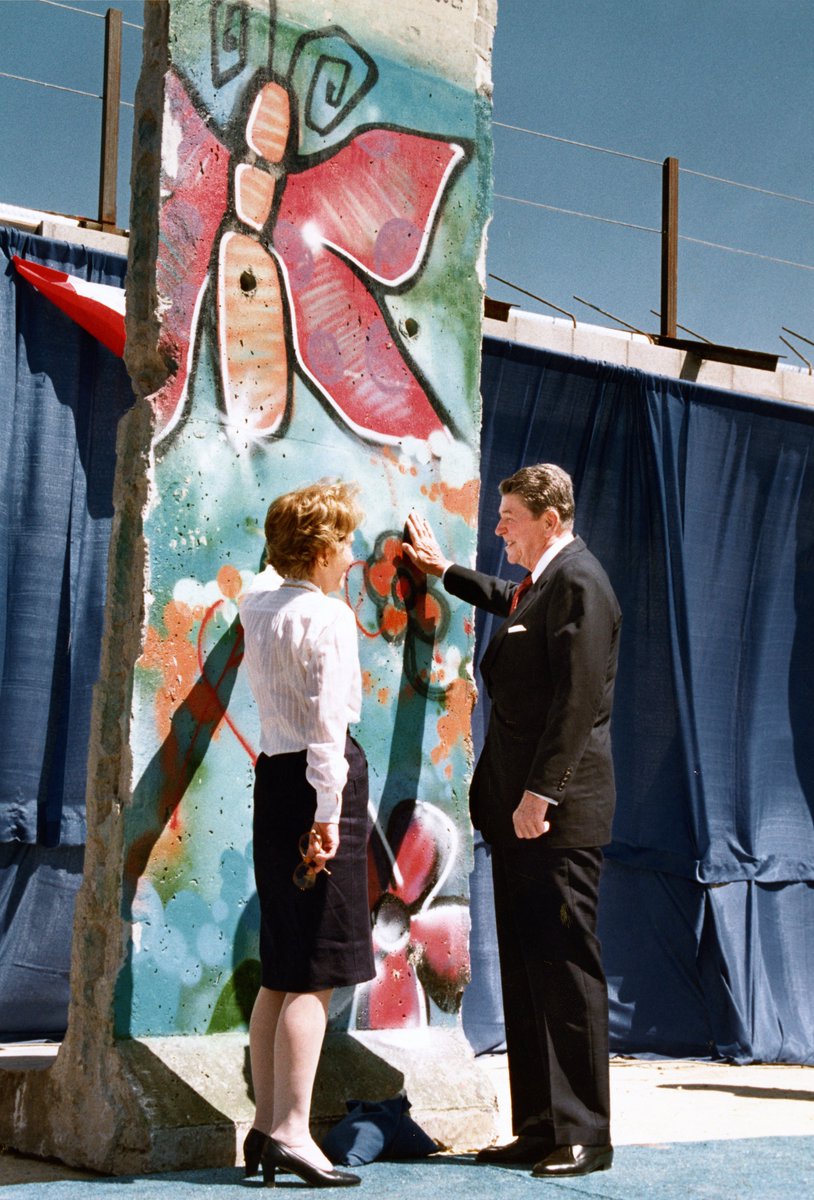
On this day in 1990, the Reagan Library received a piece of the Berlin Wall, transforming a symbol of division into one of hope and freedom. Today, this historic piece stands at our museum as a reminder of the role President Reagan played in bringing a peaceful end to the Cold War.

9
68
331
6,365
Hungary is running a live experiment this weekend: does the nat‑pop undercurrent still dominate, or is the traditional center‑right finally reconstituting itself? The countercurrent Tsiza Party has led most polls, will the vote follow?

After nearly two decades in power, Hungary's far-right Prime Minister Viktor Orbán, a key international ally of President Trump, could be ousted as leader by the opposition center-right Tisza Party leader Péter Magyar. CBS News' @EmmetlyonsCBS has more on what to know ahead of Hungary's parliamentary elections on Sunday.
1,216
Some analysts note that Hungary’s election carries outsized weight for a small country. Its position inside the EU and its role in regional security mean even modest political shifts can ripple far beyond its borders. The impact is larger than the conversation suggests.

5/5. Orbán is down 23 points in the latest independent polling.
nytimes.com/2026/04/09/opini…
1
41
Plz Call Me Doc🥼*not an actual Doc retweeted

Apr 9
A community college professor taught the same study skills lecture for 30 years, and the video quietly became one of the most watched educational recordings on the internet.
His name is Marty Lobdell. He spent his career as a psychology professor watching students fail not because they were lazy, but because nobody had ever taught them how their brain actually works under the pressure of learning something hard.
The lecture is called "Study Less Study Smart." Over 10 million views. Passed around in Reddit threads, Discord servers, and university study groups for over a decade. And the core insight buried inside it has been sitting in cognitive psychology research for years, waiting for someone to explain it in plain language.
Here is the framework that completely changed how I think about effort.
Your brain does not sustain focus the way you think it does. Studies tracking real students found that the average learner hits a wall somewhere between 25 and 30 minutes.
After that, efficiency doesn't just decline. It collapses. You're still sitting at your desk, still looking at the page, but almost nothing is going in.
Lobdell illustrated this with a student he knew personally. She set a goal of studying 6 hours a night, 5 nights a week, to pull herself out of academic probation. Thirty hours of studying per week. She failed every single class that quarter.
She wasn't failing because she lacked effort. She was failing because she had confused time spent near books with time spent actually learning. The 25-minute crash hit her at 6:30pm every night. She spent the next five and a half hours sitting in the wreckage of her own focus and calling it studying.
The fix sounds almost too simple. The moment you feel the slide, stop. Take five minutes. Do something that actually gives you a small reward. Then go back. That five-minute reset returns you to near full efficiency. Across a six-hour window, the difference is not marginal. It is the difference between thirty minutes of real learning and five and a half hours of it.
The second thing he taught destroyed something I had believed about how memory actually works.
Highlighting feels productive. Going back over your notes and recognizing everything feels like knowing. But recognition and recollection are two completely different cognitive processes, and your brain is very good at making you confuse them.
You can see something you've read before and feel completely certain you understand it, even when you couldn't reconstruct a single sentence from memory if the page were blank.
He proved this live in the room. He read 13 random letters to his audience. Almost nobody could recall them. Then he rearranged the same 13 letters into two words: Happy Thursday. The whole room got all 13 without effort.
Same letters. Same count. The only thing that changed was meaning.
The brain stores meaning. Not repetition. The moment new information connects to something you already understand, the retention changes entirely.
This is what the cognitive psychology literature calls elaborative encoding, and it is the mechanism underneath every effective study technique.
The third principle was the one that hit me hardest, and the one almost nobody applies.
Lobdell cited research showing that 80 percent of your study time should be spent in active recitation, not passive reading. Close the material. Say it back in your own words.
Teach it to someone else, or to an empty chair if no one is around. The struggle of retrieval is where the actual learning happens. Reading your notes again is watching someone else do the work.
His parting line has stayed with me longer than almost anything else I have read about learning.
He told the room that if what he shared didn't change their behavior, they hadn't actually learned it. It would just live in their heads as something they had heard once and felt good about.
He was right. And most people leave every lecture exactly like that.
The students who remember everything aren't putting in more hours.
They stopped confusing the feeling of studying with the fact of it.
216
4,849
18,674
1,900,864
Plz Call Me Doc🥼*not an actual Doc retweeted
If we didn’t have NATO we’d have to create it. It’s not charity- it’s necessary for American security.

From @SASCGOP Chairman @SenatorWicker & @HASCRepublicans Chairman @RepMikeRogersAL —
"We welcome NATO Secretary General Mark Rutte’s visit to Washington. We look forward to hearing how allies are implementing their historic commitment, driven by President Trump, to spend 5% of GDP on defense and what more they will do to respond to Iran’s threats. We are also interested in hearing about any positive developments in the UK-led effort to ensure freedom of navigation in the Strait of Hormuz. Free passage and commerce are vital to our shared security and prosperity..."
72
44
189
28,134
The loudest voices online are almost never the most informed. Serious people don’t need volume — they need accuracy, context, and proportion. The country isn’t short on opinions; it’s short on adults.
37