
Teacher; 14x Ironman; Kona WC; UDL and assessment specialist; Sailor; "Captain"
Joined June 2018
- Tweets 7,887
- Following 2,293
- Followers 1,137
- Likes 8,215
321 Photos and videos












Randy Swift retweeted

It seems that parents are waking up to the uselessness and student hatred of @iReady and they are on the defense. The teachers have been warning the public for years about how bad this product is. But after all, who cares about what the teachers say even though they are on the ground seeing it first hand every day.

Ed-tech publishers are scrambling to gaslight the public about how much screen time they've been subjecting kids to. Case in point: @CurriculumAssoc's new revisionist PR campaign for #iReady. Any of the tens of millions of teachers and students and parents who've been forced into the i-Ready matrix see right through this. Full story @ 👉epostasy.com/p/screen-time-l… 👈#edtech #education #teaching #screentime #publicrelations #pr #crisiscoms #mendacity #gaslighting
8
9
42
3,012
Randy Swift retweeted

May 20
Here's another i-Ready story ICYMI:
I-Ready vs. parents and teachers: How the ed tech tool became a villain in schools - Chalkbeat chalkbeat.org/2026/05/19/ire…
7
18
39,192
Randy Swift retweeted

Apr 30
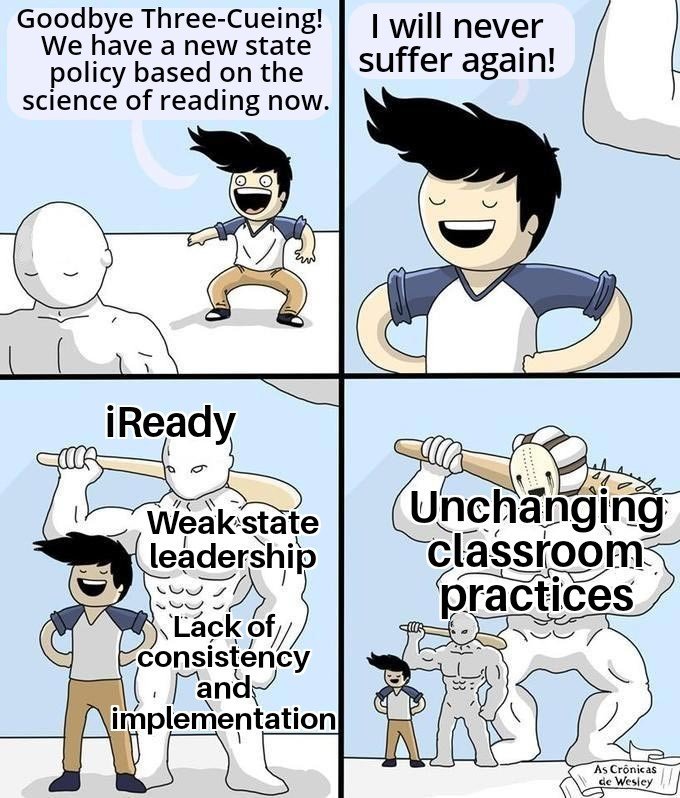
Passing new reading laws doesn’t guarantee reading gains.
10
4
47
2,043
Randy Swift retweeted

***Some Important Information During High Stakes Testing Season***
“You don’t fatten the pig by weighing it.”
As a therapist, and as a former principal, this quote hits harder every single spring.
Because right now, across the United States, we are weighing… and weighing… and weighing… and somewhere along the way, we’ve confused measurement with growth.
Here’s the reality. In the United States, students take annual standardized tests from grades 3–8, often tied to school ratings, funding, teacher evaluation, and sometimes even student promotion. Meanwhile, countries that often outperform or rival us academically, like Finland, take a very different approach. Finnish students typically take just one major standardized test at the end of high school. Their system relies more on teacher-led assessment, trust, ongoing feedback, and meaningful learning rather than constant high-stakes exams. Despite far less testing, they have historically performed at or near the top internationally in reading, math, and science.
Let that sink in.
Less testing… strong outcomes… healthier students.
So what’s happening to our kids? We’re not just measuring learning. We’re putting pressure on developing brains and bodies. Research and data show that many students experience significant test anxiety, especially with high-stakes assessments. That anxiety can show up as stress, fear of failure, stomachaches, headaches, sleep problems, panic, shutdown, avoidance, and difficulty concentrating.
And beyond the stress, too much testing can narrow the curriculum and shift the focus from real learning to test performance. It can reduce curiosity, creativity, play, exploration, and a true love of learning. Children do not fall in love with learning by being constantly measured. They fall in love with learning when they feel safe, curious, successful, challenged, connected, and inspired.
The opportunity cost matters too. Every hour spent preparing for a high-stakes test is an hour not spent reading great books, doing science experiments, creating art, solving real-world problems, building relationships, exploring interests, moving, playing, collaborating, or learning deeply.
Some studies have found that students may spend 20–25 hours per year just taking standardized tests, with some grades losing multiple full school days to testing. That does not even include the weeks of review, practice tests, test-taking strategies, schedule disruptions, makeup testing, and the emotional buildup before the test.
So the question is not just, “How much testing is too much?”
The question is: What are we giving up?
As a former principal, I believe assessment matters. We need to know how students are doing. But assessment should inform instruction, not dominate the school experience. It should help us understand students, not define them. It should guide learning, not replace it.
Instead of only asking, “How did they score?” we should also be asking: Do they feel safe enough to learn? Do they feel confident, capable, and supported? Can they think, create, problem solve, and collaborate? Are they developing curiosity and a love of learning? Do they believe in themselves?
Because those are the things that actually predict long-term success.
This isn’t about eliminating assessment. It’s about using it wisely. We need more low-stakes feedback, performance-based learning, teacher judgment, professional trust, creativity, curiosity, meaningful projects, and balance between accountability and humanity.
In other words,
Grow the pig. Don’t just keep weighing it.
To every student right now,
You are more than a score. You are more than a percentile. You are more than a test.
And to every educator and parent
Let’s remember what really matters.
Because long after the test is over, what stays with a child is not the score.
It’s how they felt.
-Dr Bryan Pearlman
“Maslow Before Bloom”
BryanPearlman.com
4
7
24
3,577
Randy Swift retweeted

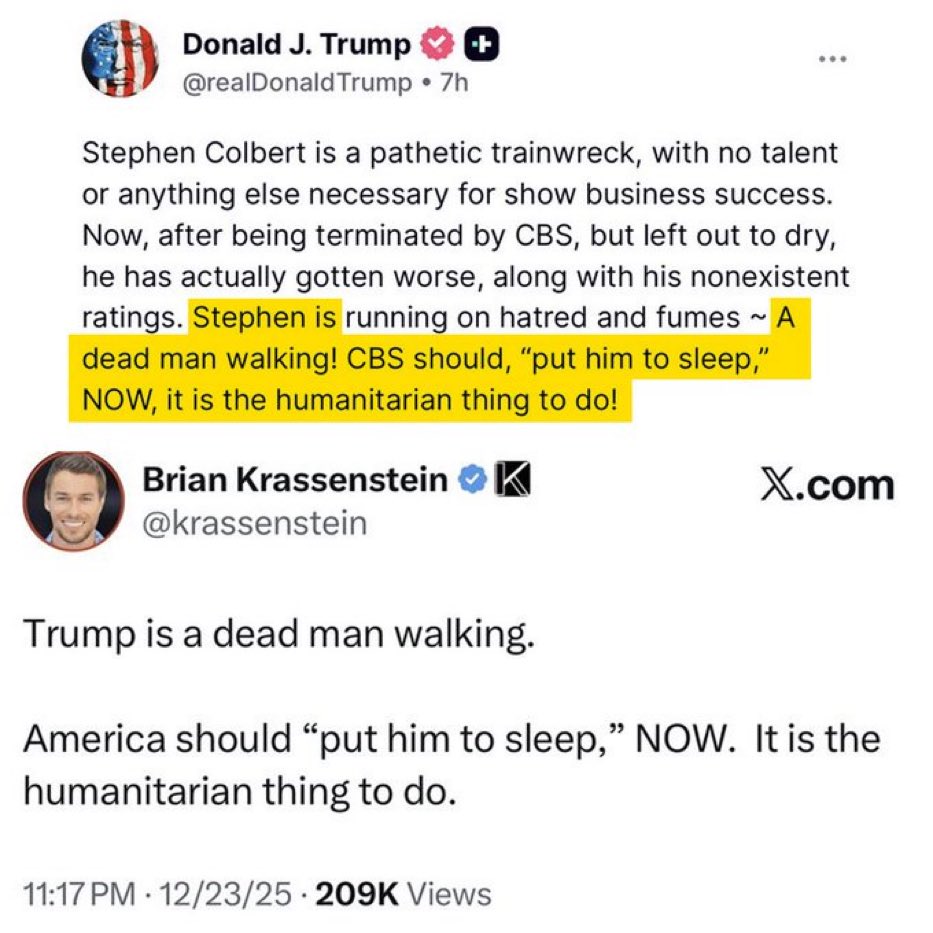
RETWEET if you stand with Jimmy Kimmel against Donald Trump!

1,567
26,203
64,366
658,783
Randy Swift retweeted

Apr 24
The price of gas under Biden was 600% lower.
1,673
4,625
43,864
882,418
Randy Swift retweeted

Apr 23
New school year. First day of school.
I hand each of my new 7th graders a math activity featuring 6 pre-worked examples and 6 related practice problems, with 6 fully-worked solutions on the back.
And start going over the examples at the board.
Students (about three examples later, and practically in unison): "Can we just do these ourselves?"
Me (taken by surprise but figuring we could give it a shot): “If you can…”
They could.
And they did.
I discovered the untapped potential of worked examples that day—and every schoolday afterward.
And I never went back to explaining at the board again.
Sound far-fetched?
Are you a math teacher?
Try this:
Create 6 fully-worked examples—none too hard, none too easy—and place them at the top of a page, with all steps shown.
Create 6 related practice problems and place them at the bottom of the page, surrounded by plenty of workspace, and strategically scrambled to prevent mere mimicry.
Create a fully-worked solution for each of the 6 practice problems, and place them on the back of the page, for instant feedback.
Distribute a copy to each student, and then enjoy answering genuinely interesting math questions and working with individual students in your new role as the “sage at the side.”
Or, if that all seems like too much, check out YouTeachYou, the first k-8 math method with an example for everything. With 10 books, over 560 activities, and over 10,000 fully-worked examples, it’s got you, your curriculum, and your students completely covered.
See YouTeachYou.org for examples.
7
13
113
12,090
Randy Swift retweeted
Apr 22
Every math teacher has felt the frustration.
You go over an example problem at the board. The students listen and copy it down. Everything seems fine.
And then you notice the copying errors.
Seriously, how hard can it be to copy a math problem correctly?
Pretty hard, actually.
If the problem is accompanied by an explanation, the student has to decide which to pay attention to; trying to focus on both at the same time can produce a form of cognitive overload called the split-attention effect.
If not—if the problem is being performed silently or being narrated—there's still the unfamiliar material problem. Symbols a student has never seen before. Brand new operations. Puzzling new procedures. The student doesn't know the math yet; transcribing it correctly at first sight is a big thing to ask.
And then there's something called 𝘴𝘢𝘤𝘤𝘢𝘥𝘪𝘤 𝘴𝘶𝘱𝘱𝘳𝘦𝘴𝘴𝘪𝘰𝘯: in the moment it takes for a student to shift their focus from the board to the paper, their memory literally goes blank. Math can easily go missing in that moment.
Add in wildly different processing rates, fine-motor skills, and amounts of working memory, and copying mistakes in the multi-student classroom are no longer inexplicable; they're inevitable.
Or I should say they 𝘸𝘦𝘳𝘦 inevitable, because now they can be avoided entirely.
How?
By cutting out the copying completely and putting pre-worked examples on the page itself.
Enter YouTeachYou, the first k-8 math method with an example for everything.
Because math students need reliable examples to work with (and can be less than reliable when copying them down themselves).
See YouTeachYou.org
3
11
54
17,226
Randy Swift retweeted

Apr 18
Most people can no longer read because we've stopped teaching students how
Reading comprehension used to cover the intent & subtext of whole pieces
Now, it means the bare minimum of understanding the explicit message of single sentences
Shameful
44
120
814
26,743
Randy Swift retweeted
I find it mind boggling how we generally expect students to grow one grade level per year, yet we put students who are 3-4 (and even more) grade levels behind and expect them to master grade level standards. We are asking of them more growth than we would a gifted student. This madness has to end.
36
38
288
11,109
Randy Swift retweeted
Apr 13
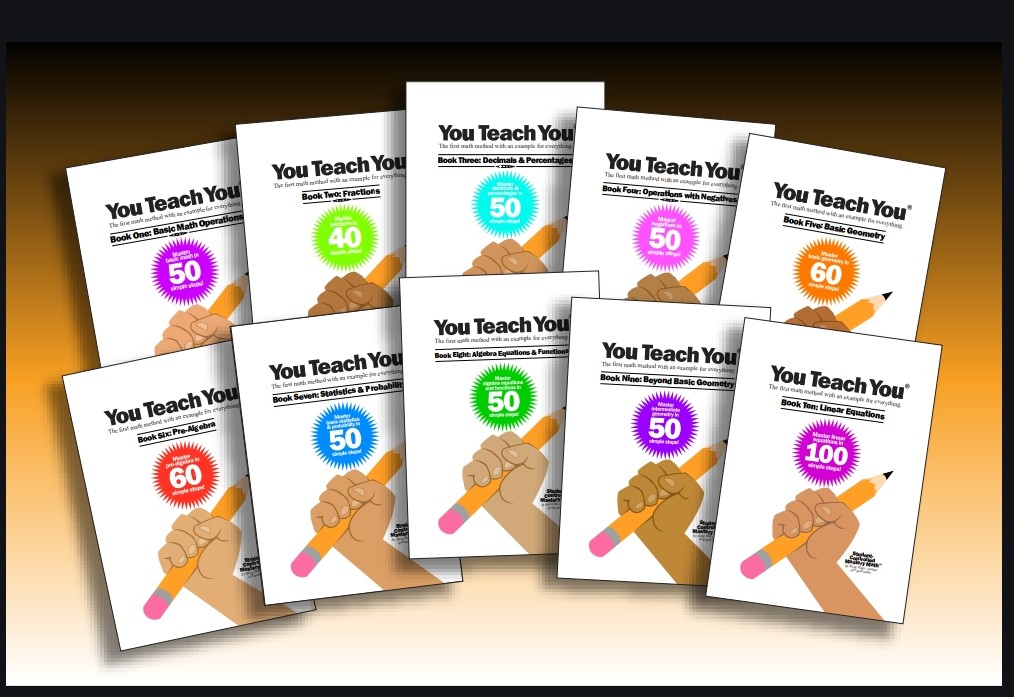
After 30 years of trial and error in the classroom and every spare moment outside of it, here it is—You Teach You, the first k-8 math method with an example for everything.
Every concept, every special case, every sticking point—strategically scrambled with practice problems to produce mastery, not mimicry.
Math with nothing missing. Finally.
See YouTeachYou.org.
1
9
82
5,370

Apr 8
#iteachmath #btcthinks @thinkingclassrm @BTCthinks thoughts?
Debate 50 - Is There Fake Math? youtu.be/kO8jcnxbqj4?si=fwjf… via @YouTube
1
33
Randy Swift retweeted

Apr 6
If students struggle with fraction arithmetic, algebra is inaccessible. If they struggle with basic number operations (including times tables), fractions are inaccessible. Math is hierarchical & gaps compound. There's no way around it. We have to get math right in primary.
84
383
2,168
63,530
Randy Swift retweeted

This has become our most-read piece ever—a sign of the times, amidst the Ed Tech backlash.
A labor of love from a long list of our teachers, featuring @moultano @ScreenTimeTalez @parthurgraff.

2
4
20
768
Randy Swift retweeted

Mar 31
I think it is time to focus on the Science of Assessment @reading_league @AEIsagepub @TheNCII @CECMembership @nasponline @ILAToday @NCTM
Mar 30

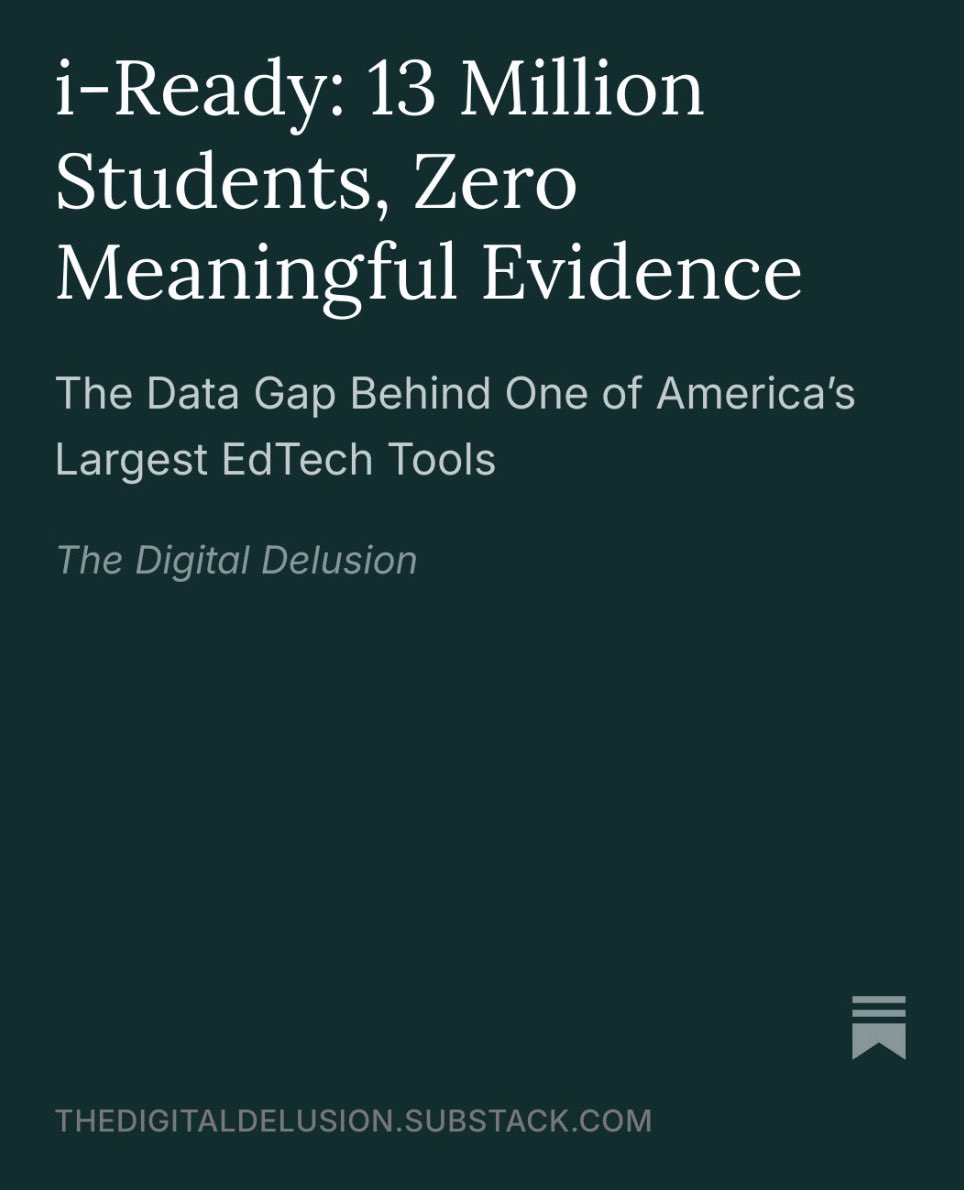
“Fifteen years. Thirteen million students. Not a single high-quality, independent study showing i-Ready improves learning.”
And in Georgia? We kept it on the approved list…because it’s widely used.
That’s not evidence-based leadership.
That’s lowering the bar for kids.
We should demand better.
@georgiadeptofed @GwinnettSchools @DDGA13
open.substack.com/pub/thedig…
5
16
59
4,823
Randy Swift retweeted

Mar 29
It’s time to go back to paper and pencil standardized testing, so the cart doesn’t drag the horse. Students learn better and test better on paper, period. #education #teachersoftiktok #edleadership #principalsoftiktok #testing
25
23
132
4,837
Randy Swift retweeted

6 Jul 2025
Research has shown that excessive screen time in children can actually lead to thinning of the brain's cortex, the part responsible for critical thinking and reasoning.
Check out this interactive guide for parents to break the addiction to screens:
amzn.to/407g3RE
21
79
378
634,007
Randy Swift retweeted

Another great, important read. Well worth three minutes of your time.
edsource.org/2026/math-fact-…
1
11
432
Randy Swift retweeted
I wish @iReady was held accountable for this. They should be required to send a rep to a school board meeting to discuss the programs data in district they serve. Put a rep in front of them and make them explain why the program is showing no growth.
Mar 23

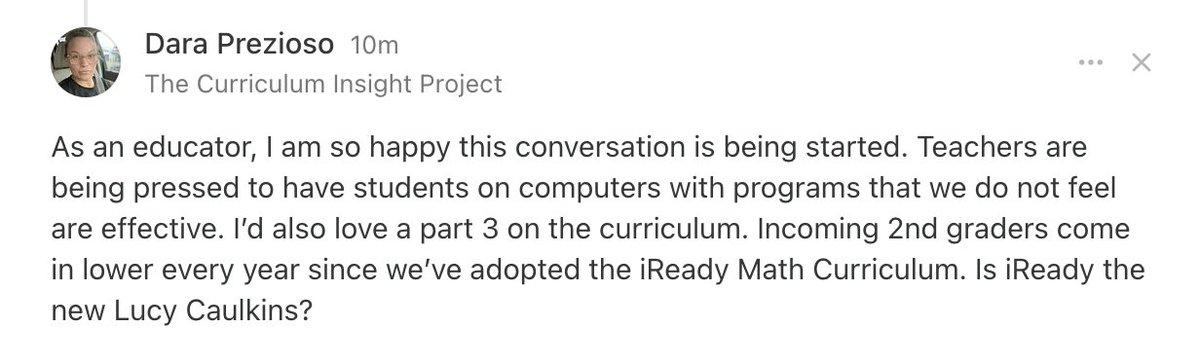
"Incoming 2nd graders come in lower every year since we’ve adopted the iReady Math Curriculum. Is iReady the new Lucy Caulkins?"
A comment on the latest from @CurriculumIP: "We're ready to break up with iReady"
10
6
47
2,780